Search
Find insights, training programs, and workshops
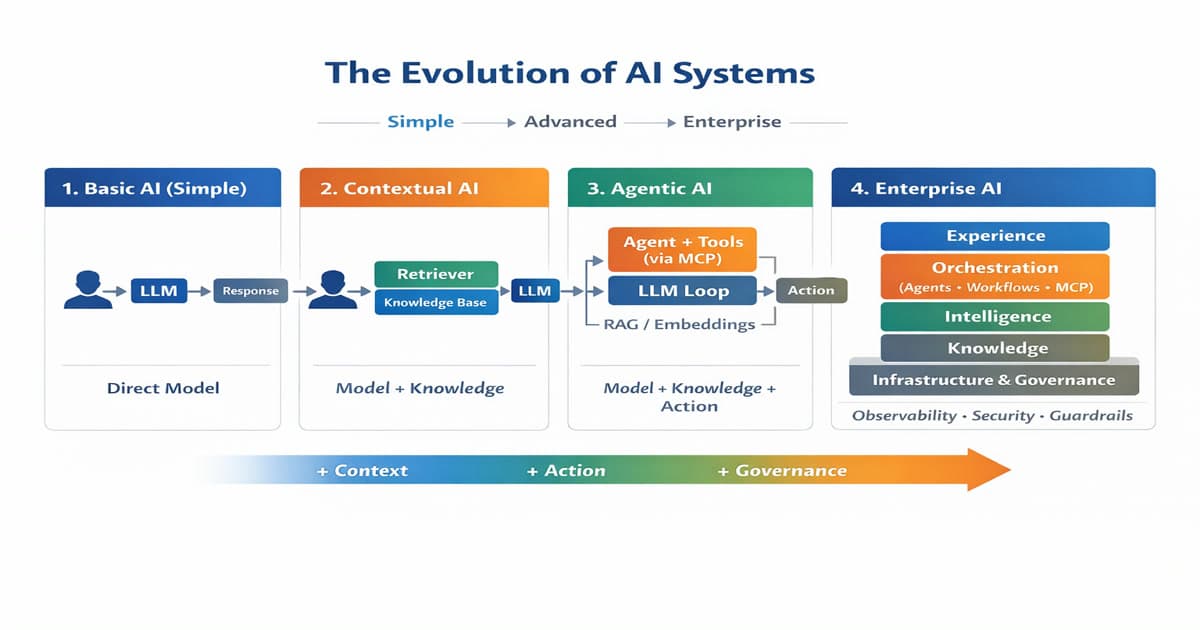
A structured guide explaining how AI systems evolve from simple model usage to governed platforms, and how to scale complexity without losing architectural control.
...before responding. Risk Level: Moderate Governance Need: Data access control Retrieval architecture standards Logging This stage delivers business value. But governance must now scale. Agentic AI (Model...
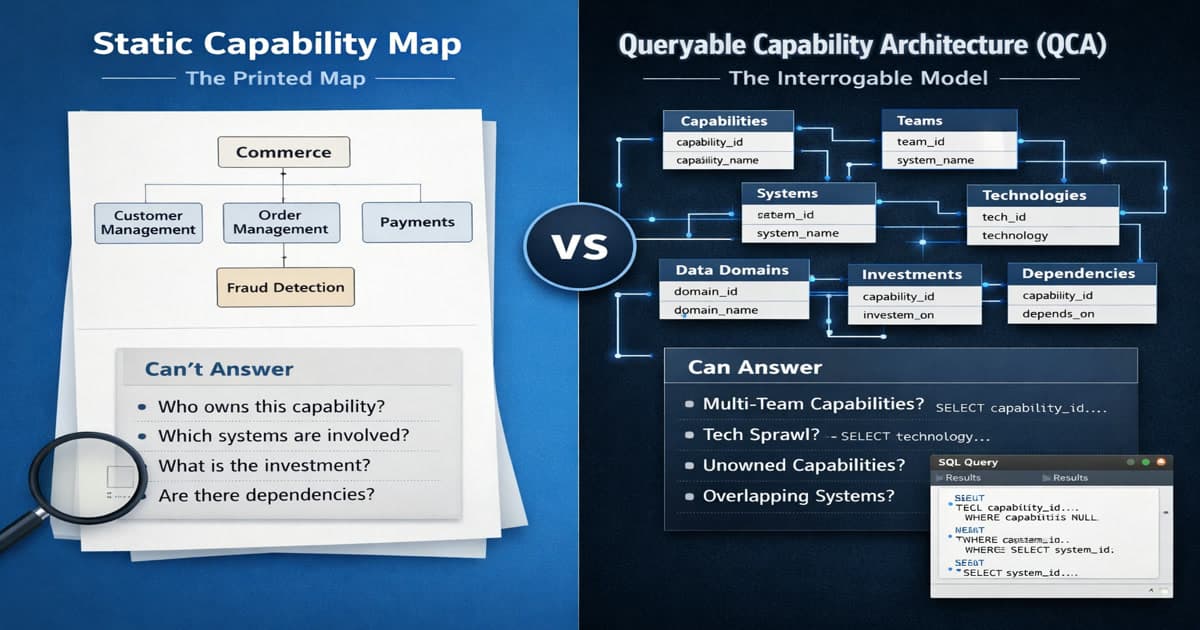
Why traditional capability maps fail to support governance decisions and how Queryable Capability Architecture turns static maps into interrogable decision systems.
...teams may claim responsibility for the same capability. This creates: duplicated systems inconsistent standards unclear accountability Static maps rarely surface these conflicts. Capability Redundancy Organizations...
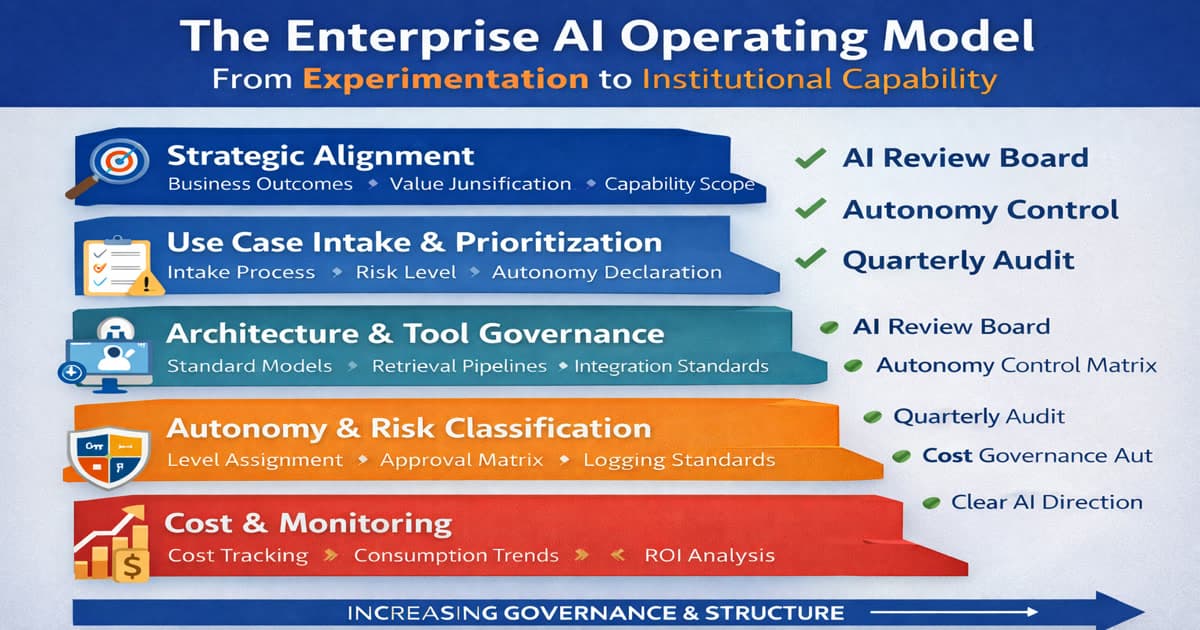
A structured executive guide explaining how to move from AI experimentation to an Enterprise AI Operating Model with governance, autonomy control, and cost discipline.
...development. Discipline precedes innovation. Architecture & Tool Governance AI systems must follow architectural standards: Approved LLM providers Standardized retrieval pipelines Controlled tool exposure Defined...
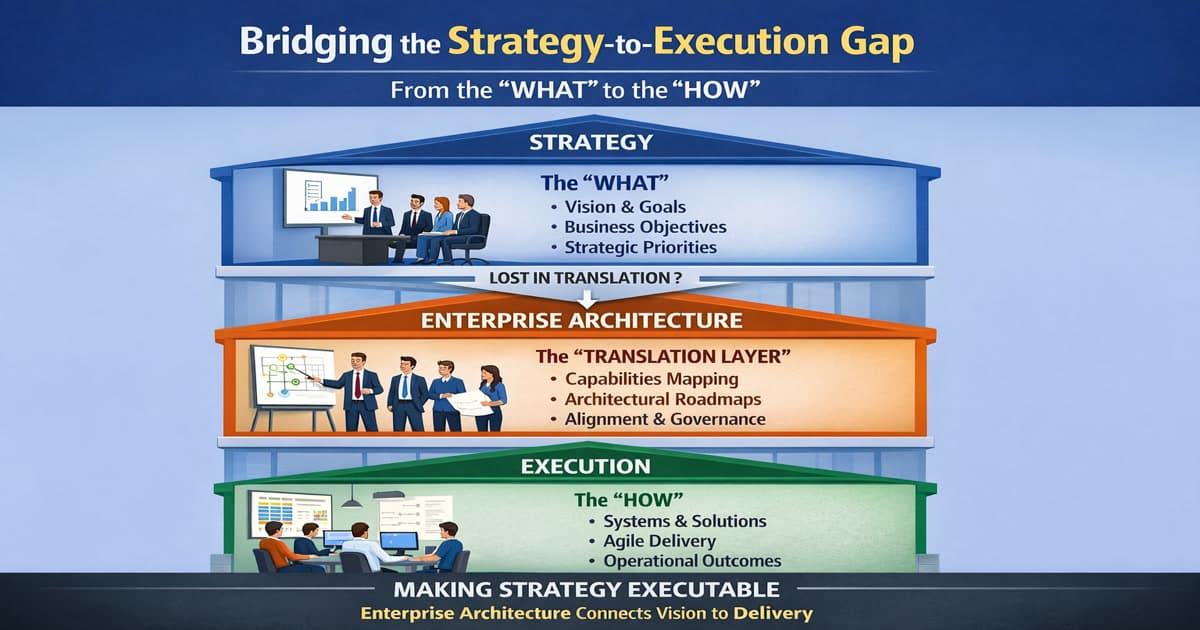
Why strategic intent evaporates before it reaches engineering teams — and how Enterprise Architecture creates the translation layer that makes organizational strategy executable.
...Architecture's primary job. And most EA practices are not doing it. They are drawing diagrams. Writing standards. Approving designs. But not systematically translating strategic intent into something a...
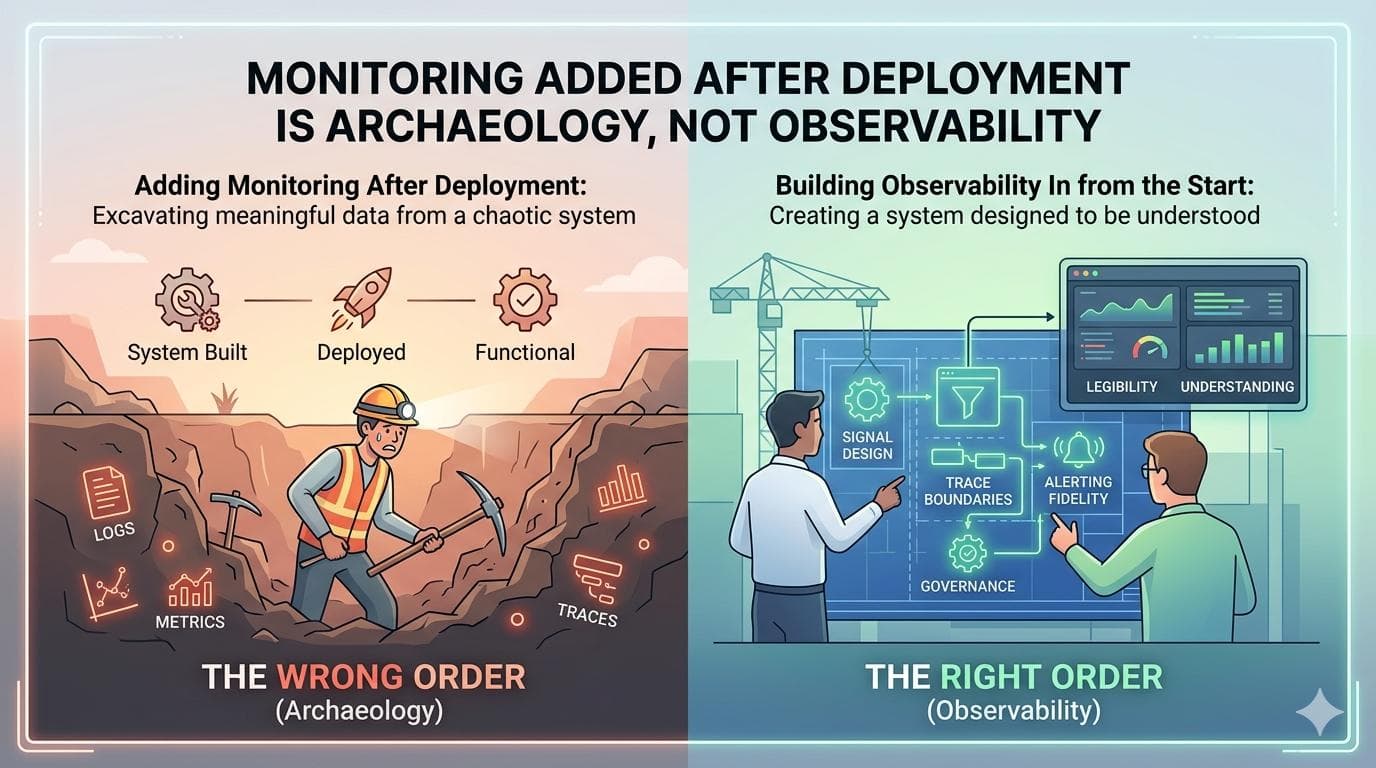
Observability is not a monitoring add-on. It is an architectural constraint. Systems built without observability baked in cannot be understood, cannot be governed, and cannot be improved. The OSAF model tells you exactly where your architecture is blind.
...volume is treated as an architectural health metric. Pillar 5: Observability Governance Observability standards that exist only in a wiki are not standards. They are suggestions. Observability Governance...
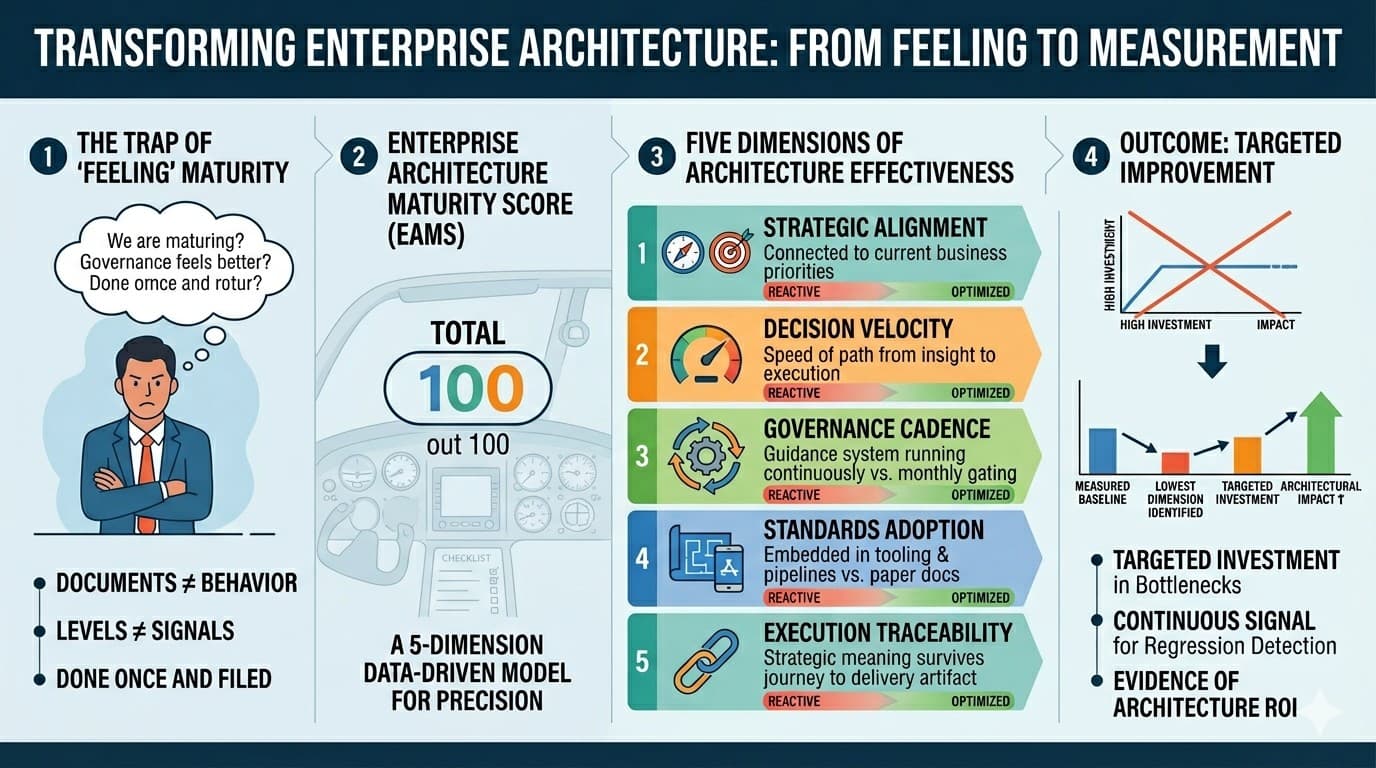
Enterprise architecture maturity is not a feeling. It is a score. Organizations that cannot measure their architecture maturity cannot improve it. The EAMS model gives you the score.
...score: Governance runs continuously. Decisions are validated at the point they are made. Dimension 4: Standards Adoption Do standards exist on paper, or in practice? This dimension measures the gap between...
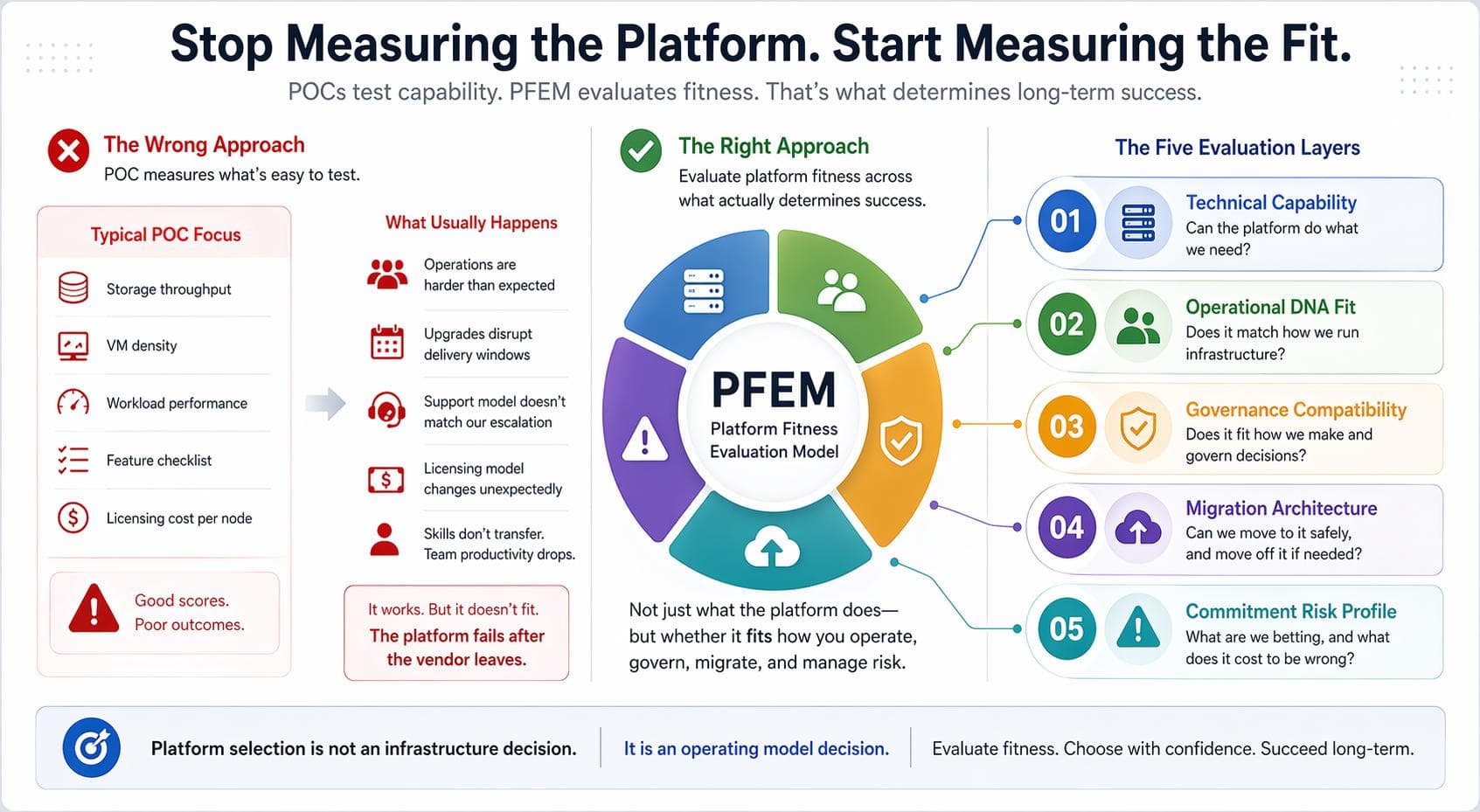
Most organizations evaluate private cloud and HCI platforms by running a technical POC. The POC passes. The platform fails. The reason is structural — and fixable. The Platform Fitness Evaluation Model (PFEM) tells you what to measure instead.
...isolation, quota management, and access boundaries at the team level? Policy enforcement: Can platform-level standards be enforced programmatically, or does governance depend on manual review? Architecture alignment:...
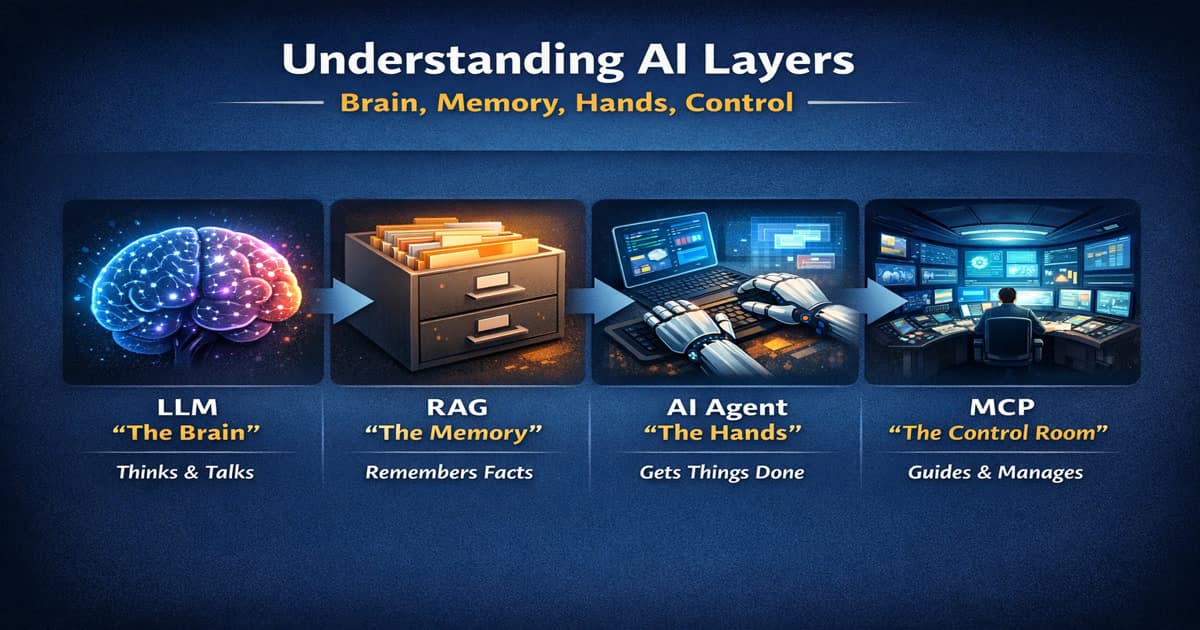
A clear executive guide explaining LLM, RAG, AI Agents, and MCP using the Brain model to prevent enterprise AI instability.
...doing Activities: Restrict agent permissions Standardize retrieval pipelines Introduce tool exposure standards Define approval checkpoints Success Metric: No autonomous agent without defined boundary Phase...
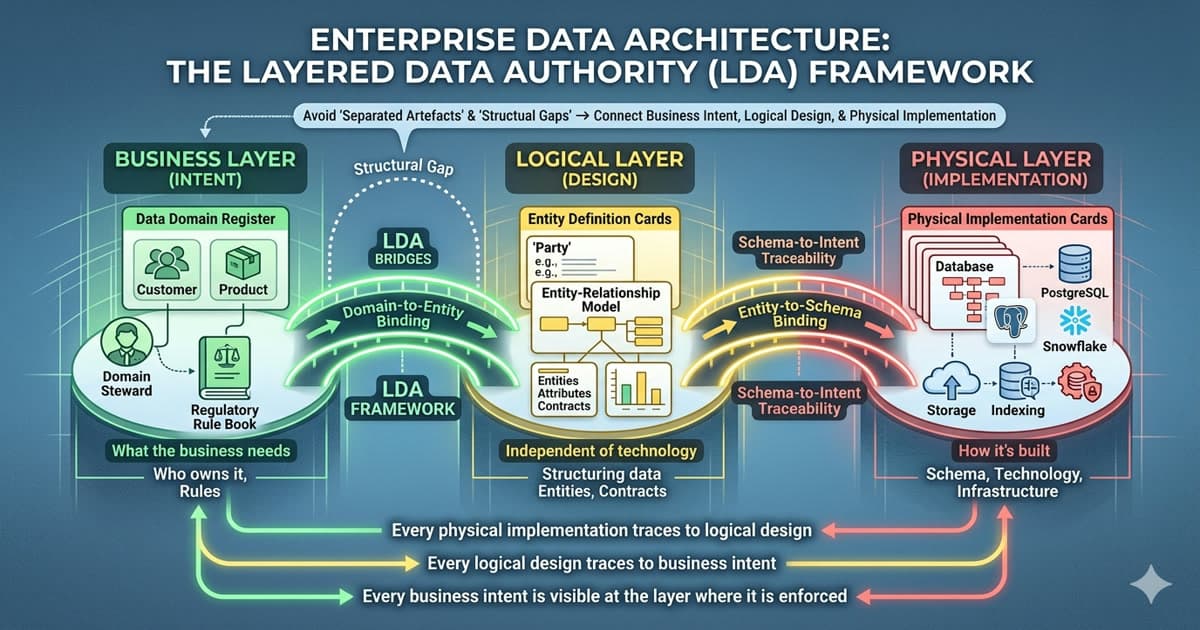
Most enterprises build data architectures one layer at a time. Business, logical, and physical layers exist as separate artefacts owned by separate teams. That separation is the structural gap that makes data estates ungovernable.
...of three explicit binding contracts. Not because of good intentions. Not because of documentation standards. Because of named, enforced contracts between the layers. Binding 1: Domain-to-Entity (Business...
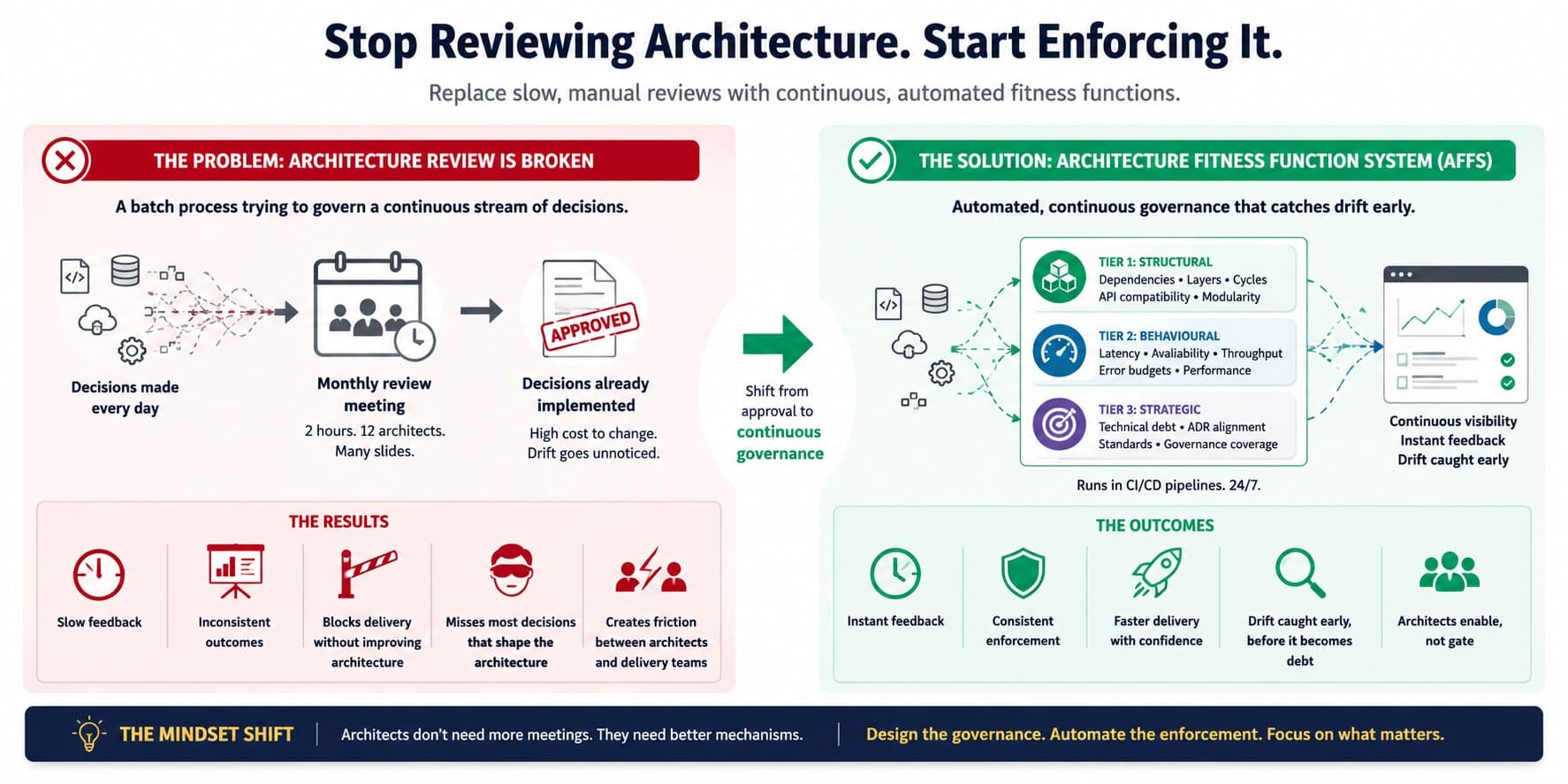
The architecture fitness function literature solved code-level governance. It never made the claim that the board itself becomes optional. Here is the missing argument — and the economics that prove the board is the slower and more expensive option.
...the threshold? Architecture entropy — has the modularity score declined beyond the acceptable range? Standards compliance — does every service in the domain conform to the current architecture standard? Decision...