An orchestrator routes work and synthesizes results, and in synthesizing it quietly decides between agents. AIDRA puts authority at the merge point.
This week, five organizations in New Zealand and Australia posted jobs titled "AI Governance" — not AI Strategy, not Enterprise Architecture. Here is what those job descriptions are missing, and how AIDRA fills the gap.
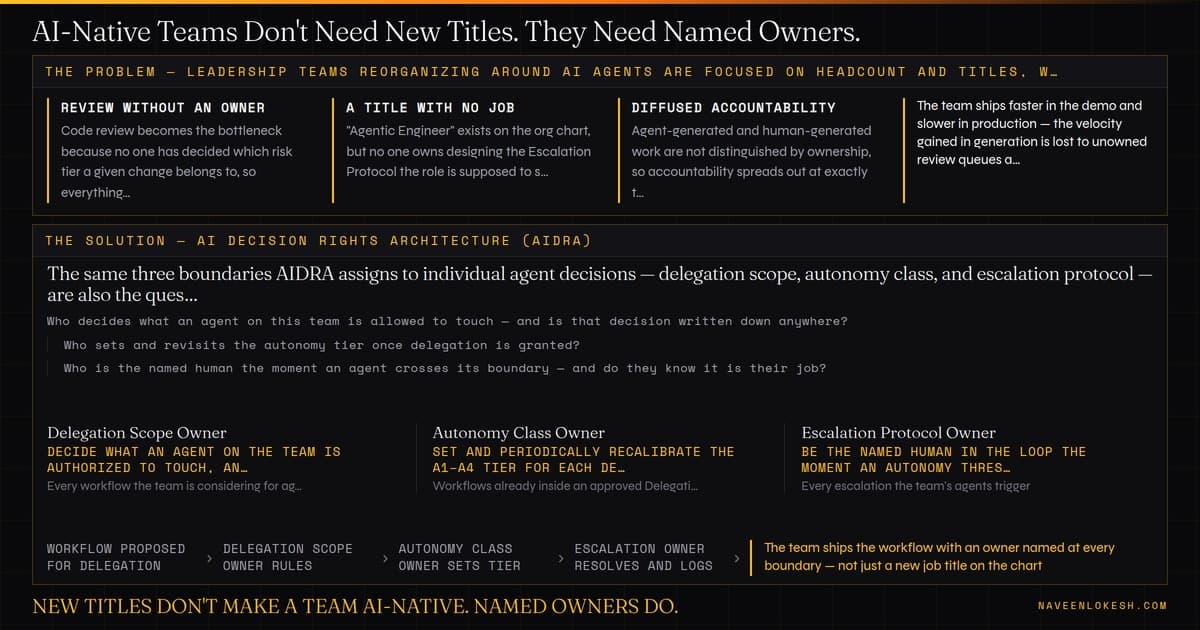
AI-native team redesigns keep adding new job titles and calling it done. The actual failure mode sits at the decision boundary. Here is what changes when you apply AIDRA to team design instead of headcount.
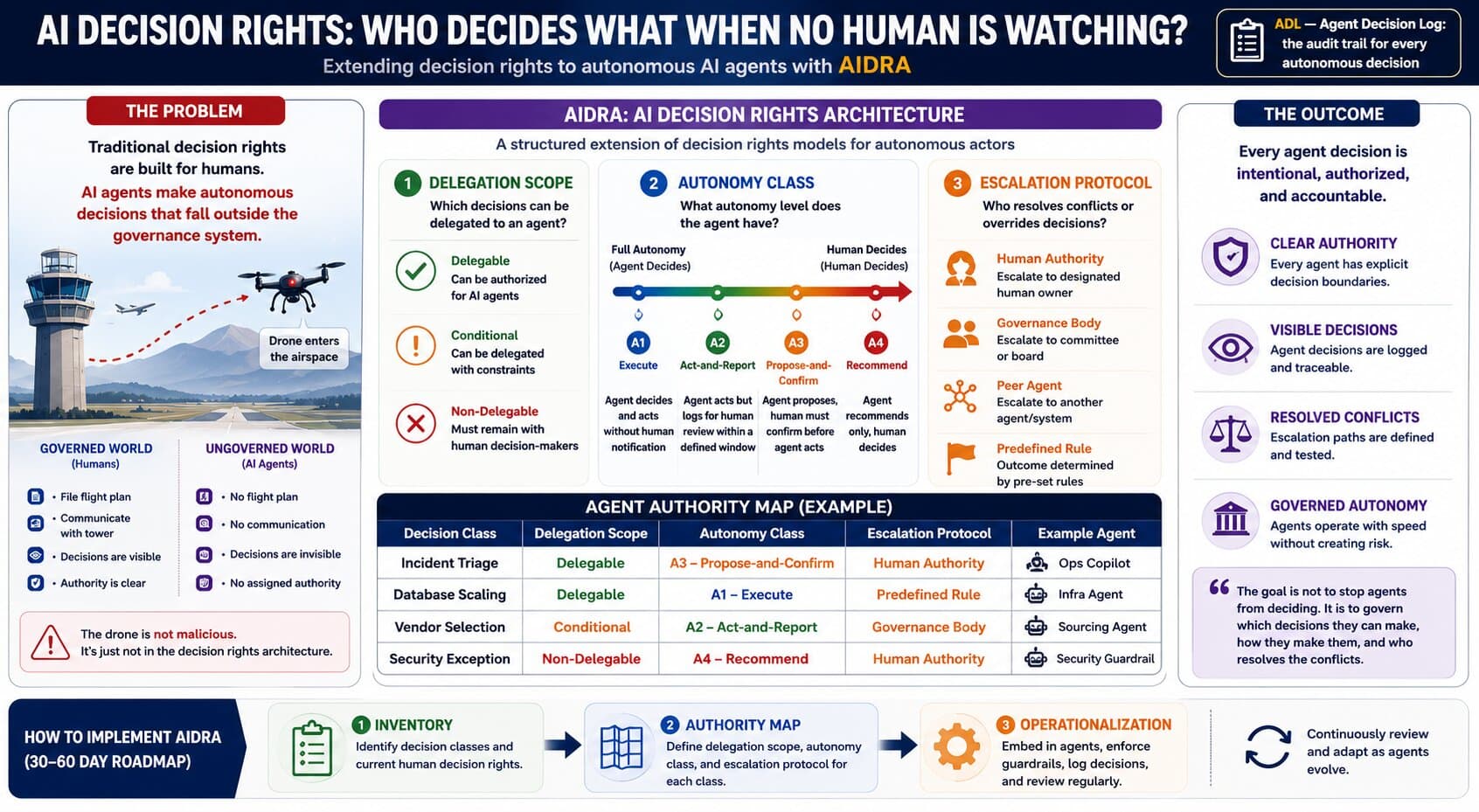
Decision rights models assume human decision-makers. AI agents breach that assumption silently. Here is how to extend decision rights to cover autonomous actors before the first ungoverned decision becomes a production incident.
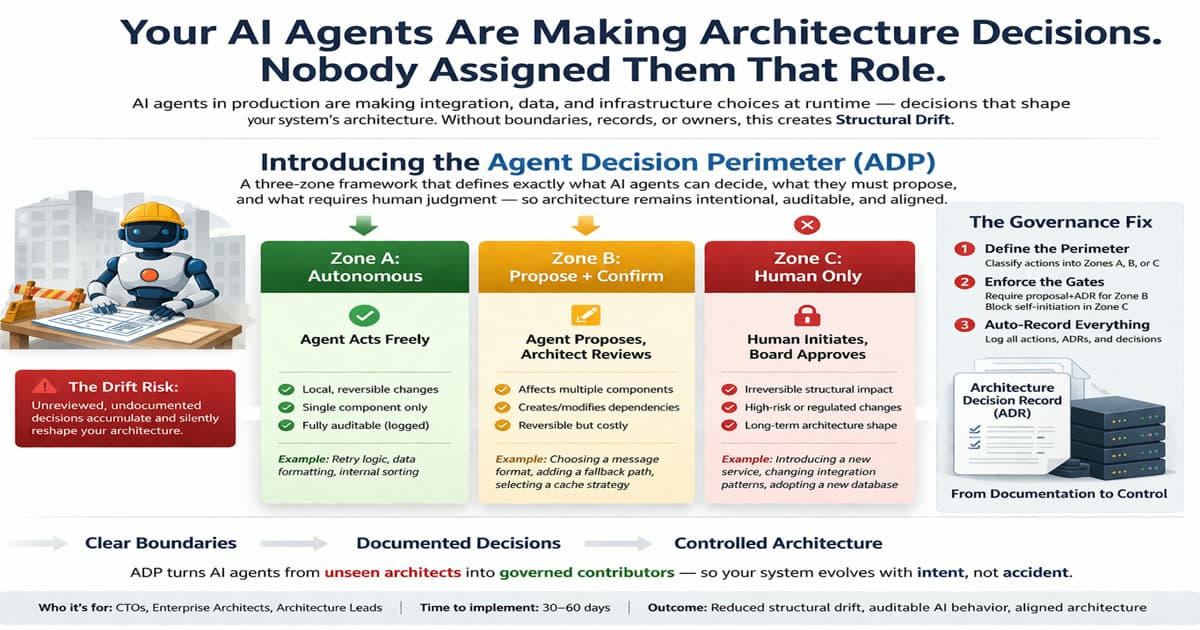
AI agents are making micro-architecture decisions in production. No ADR recorded them. No review board approved them. No architect ever saw them. Here is the structural fix.
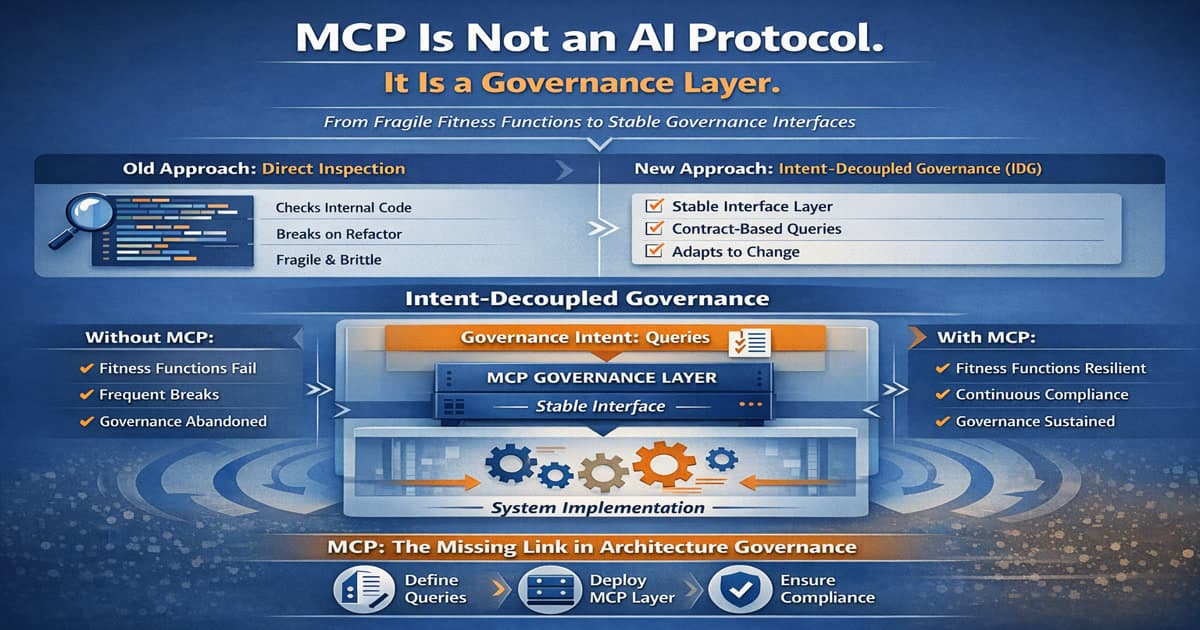
MCP is classified as an AI integration protocol. It is actually a governance primitive — the stable interface layer that architecture fitness functions have been missing for years.
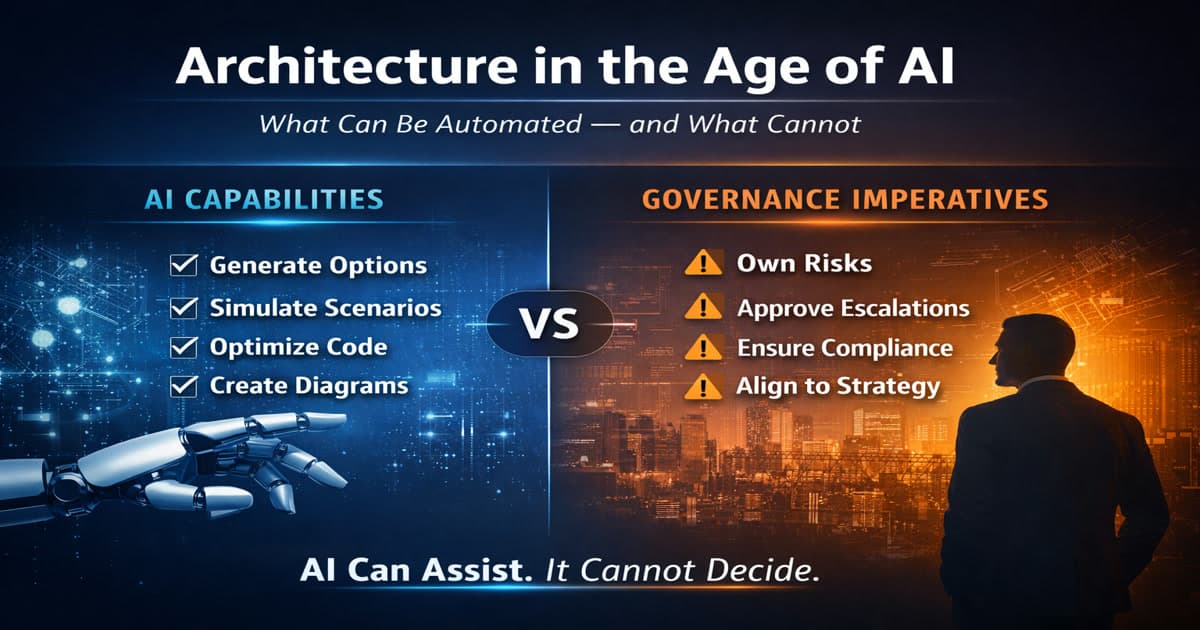
A governance-driven perspective explaining why software architecture cannot be automated because decision accountability and consequence ownership cannot be delegated to AI.
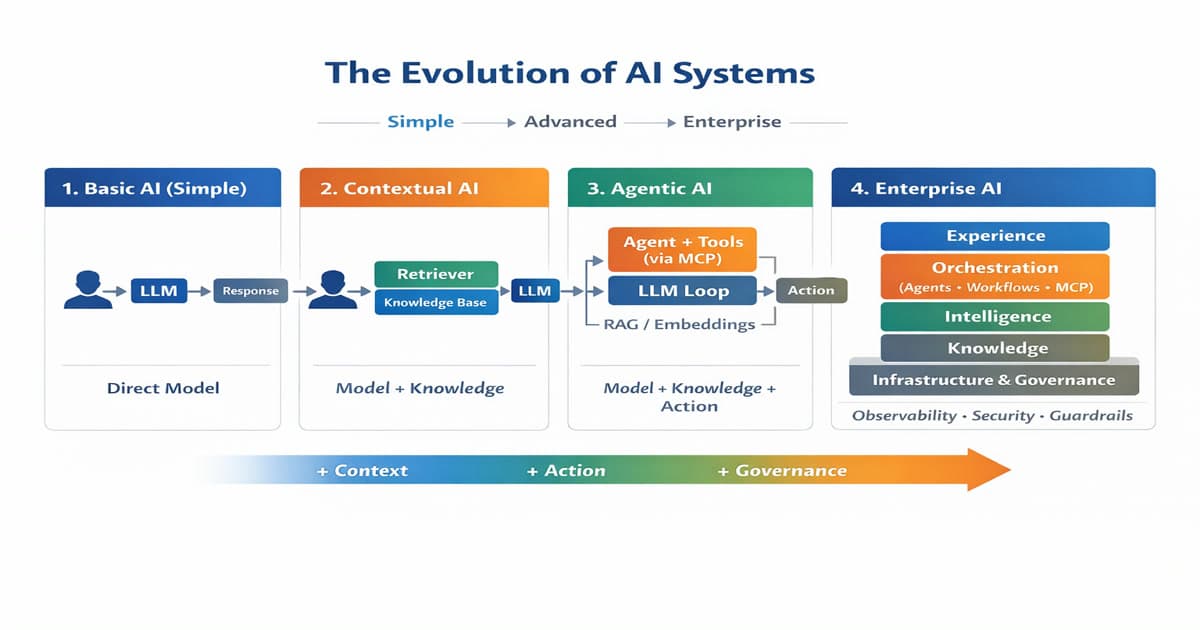
A structured guide explaining how AI systems evolve from simple model usage to governed platforms, and how to scale complexity without losing architectural control.
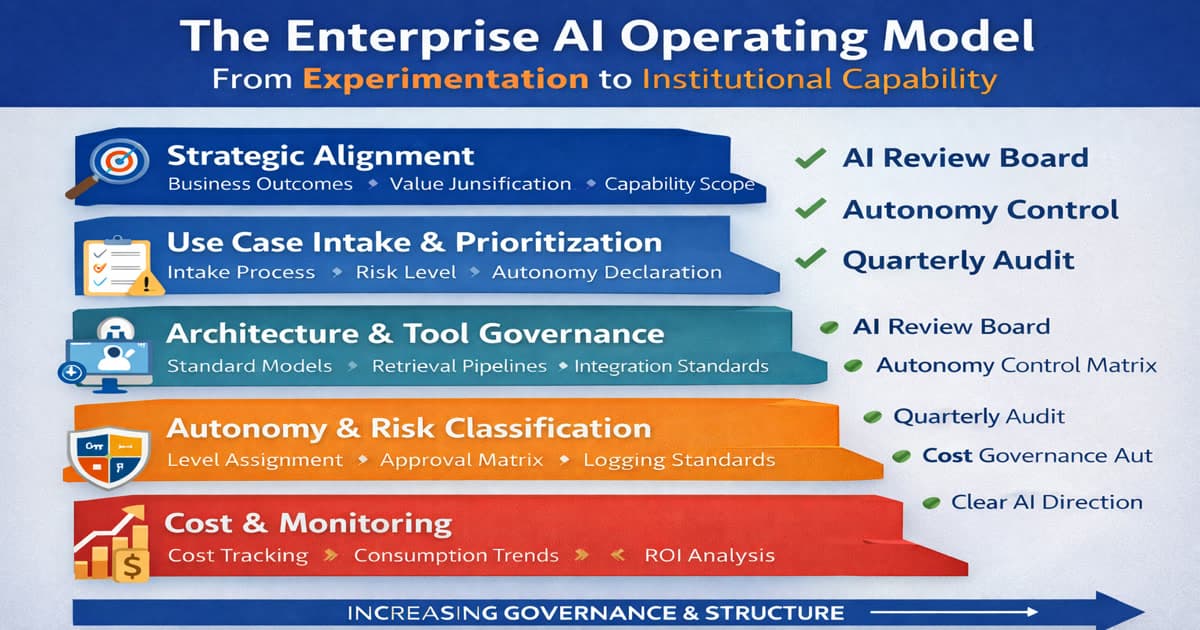
A structured executive guide explaining how to move from AI experimentation to an Enterprise AI Operating Model with governance, autonomy control, and cost discipline.
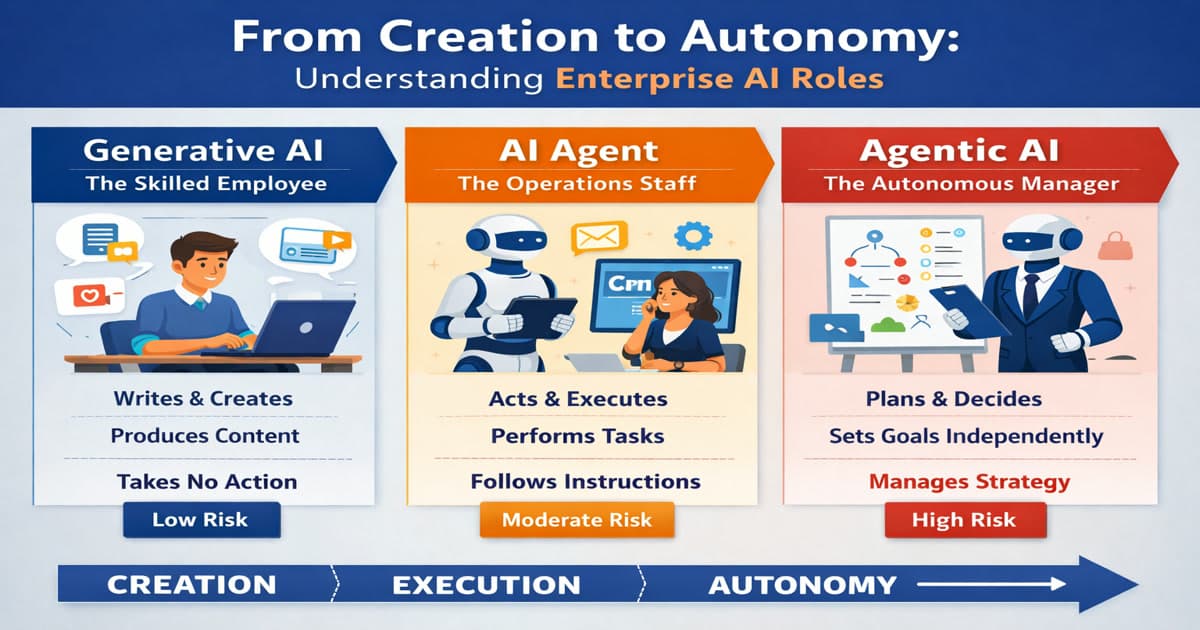
A clear executive guide explaining Generative AI, AI Agents, and Agentic AI using a corporate office analogy to prevent autonomy risks in enterprise AI.