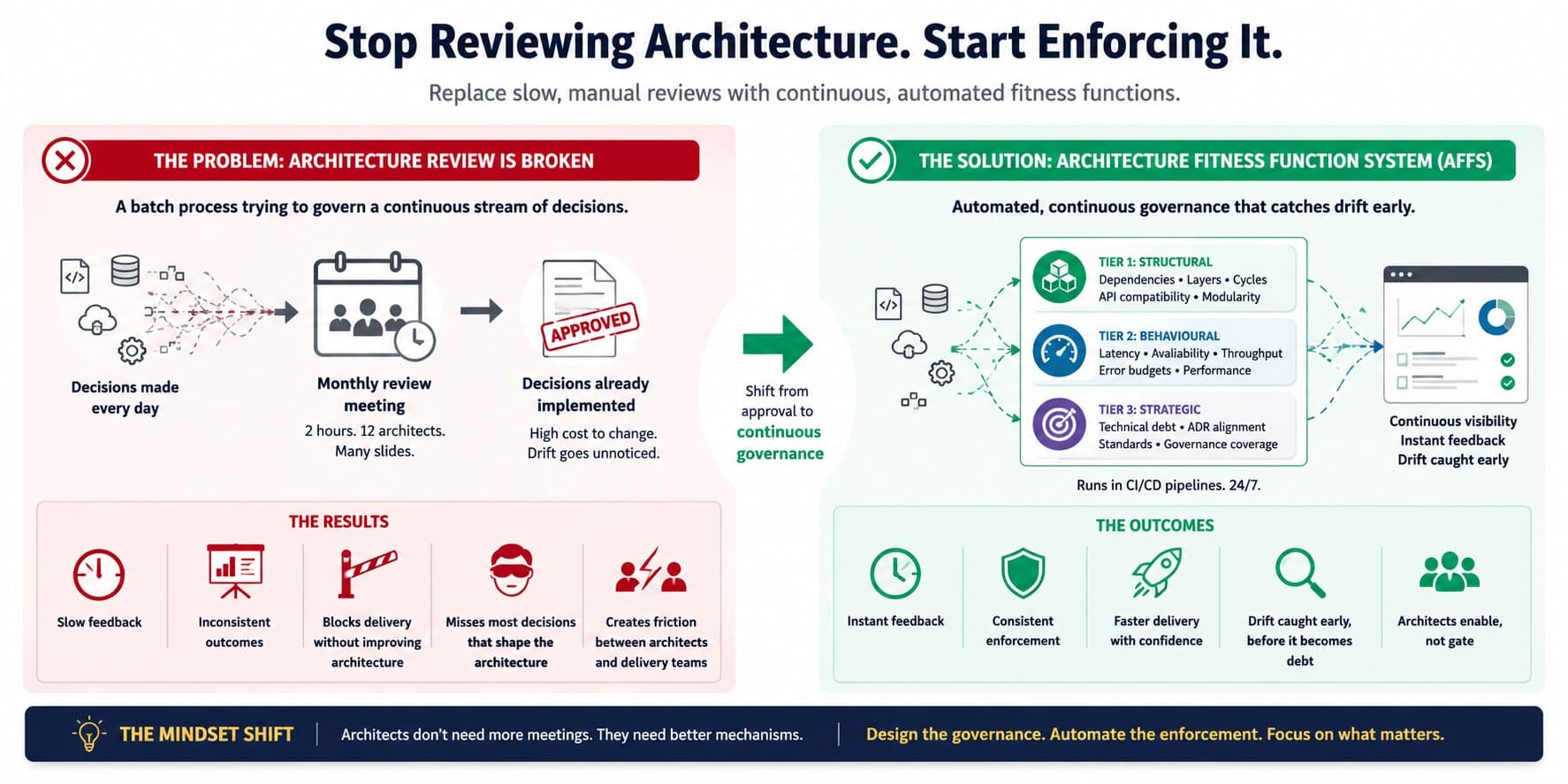
The architecture fitness function literature solved code-level governance. It never made the claim that the board itself becomes optional. Here is the missing argument — and the economics that prove the board is the slower and more expensive option.
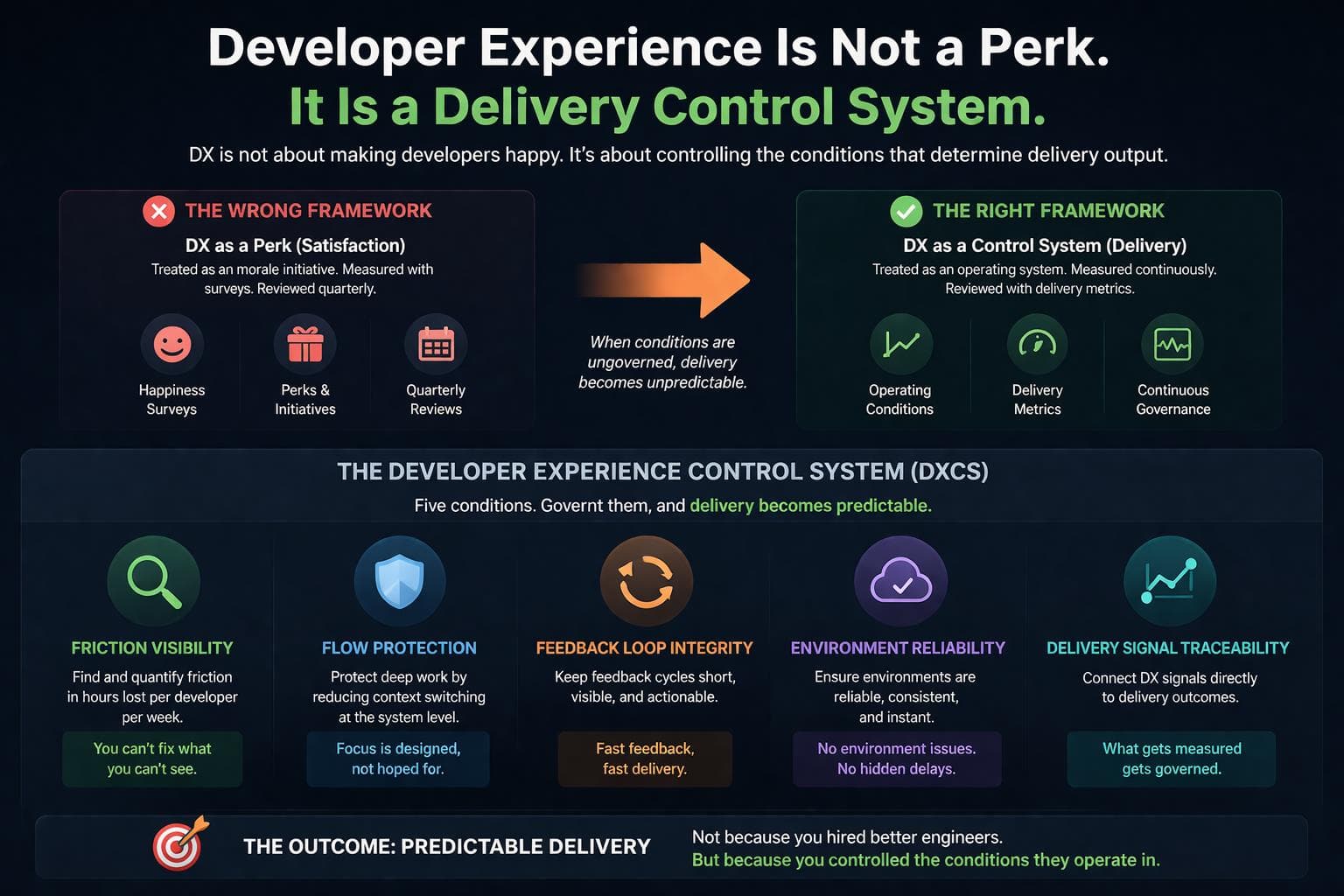
Developer experience is not about making developers happy. It is about controlling the conditions that determine delivery output. Organizations that treat DX as a perk have removed the control system from their delivery engine without knowing it.
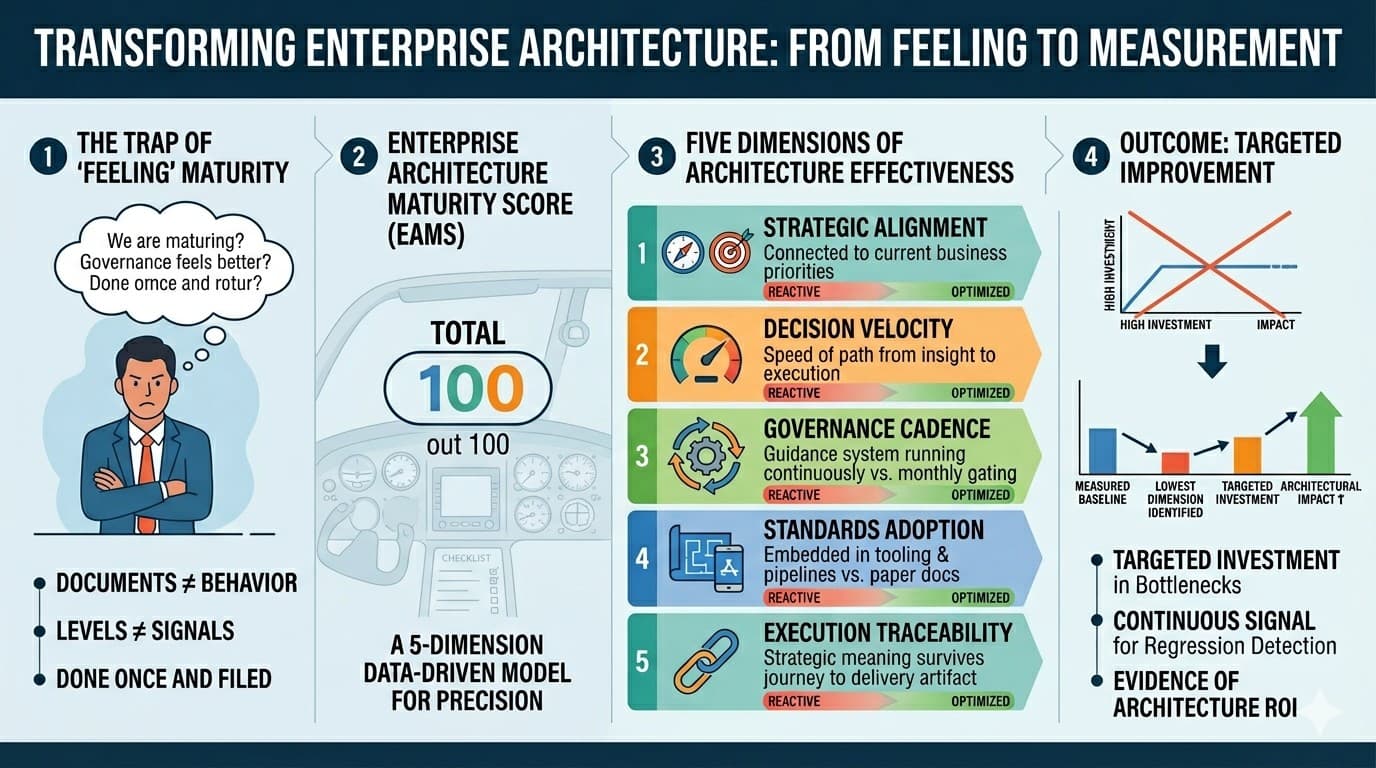
Enterprise architecture maturity is not a feeling. It is a score. Organizations that cannot measure their architecture maturity cannot improve it. The EAMS model gives you the score.
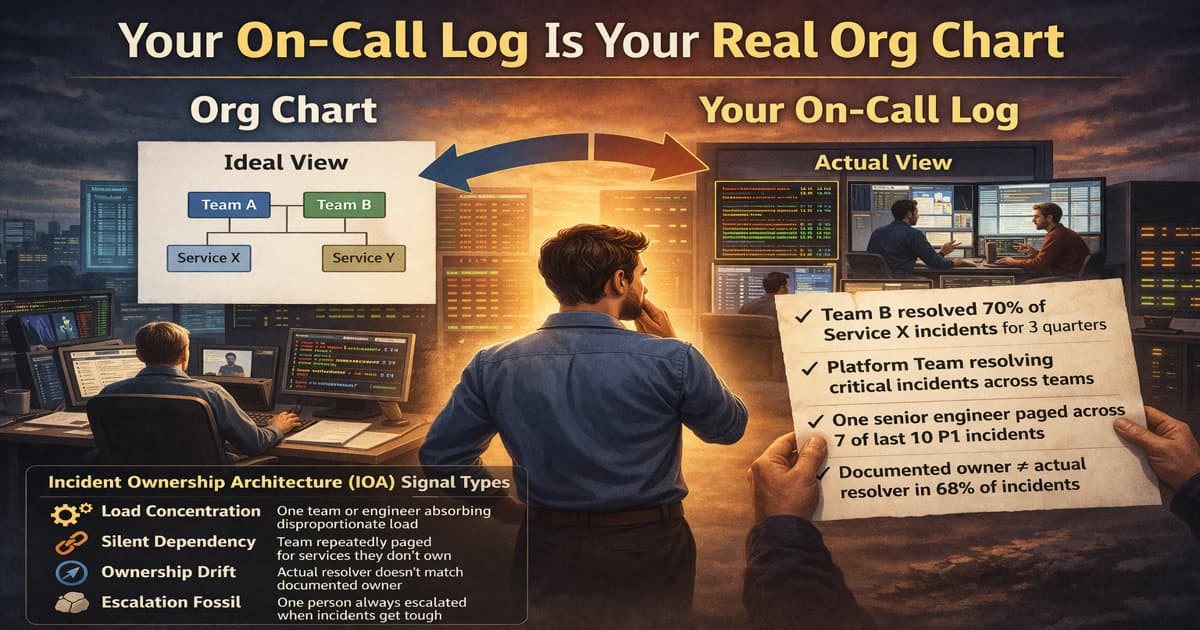
Why on-call rotation data is the most accurate org chart your engineering organisation has — and almost nobody uses it to make structural decisions.
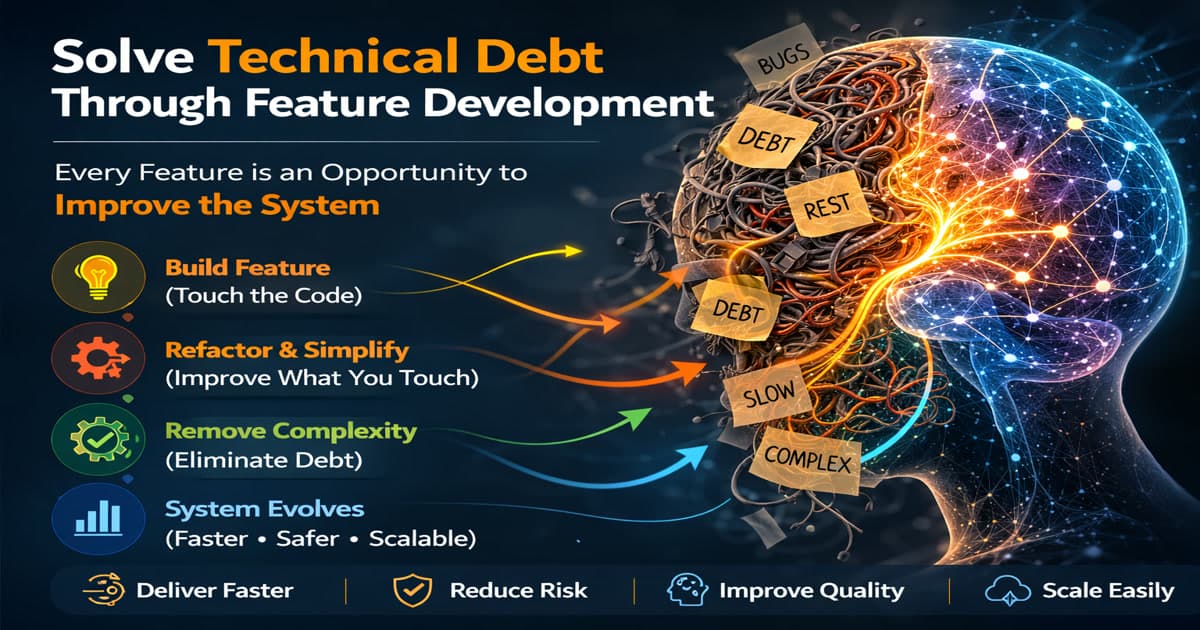
A practical framework explaining how organizations can systematically reduce technical debt while delivering new features, instead of running disruptive modernization programs.
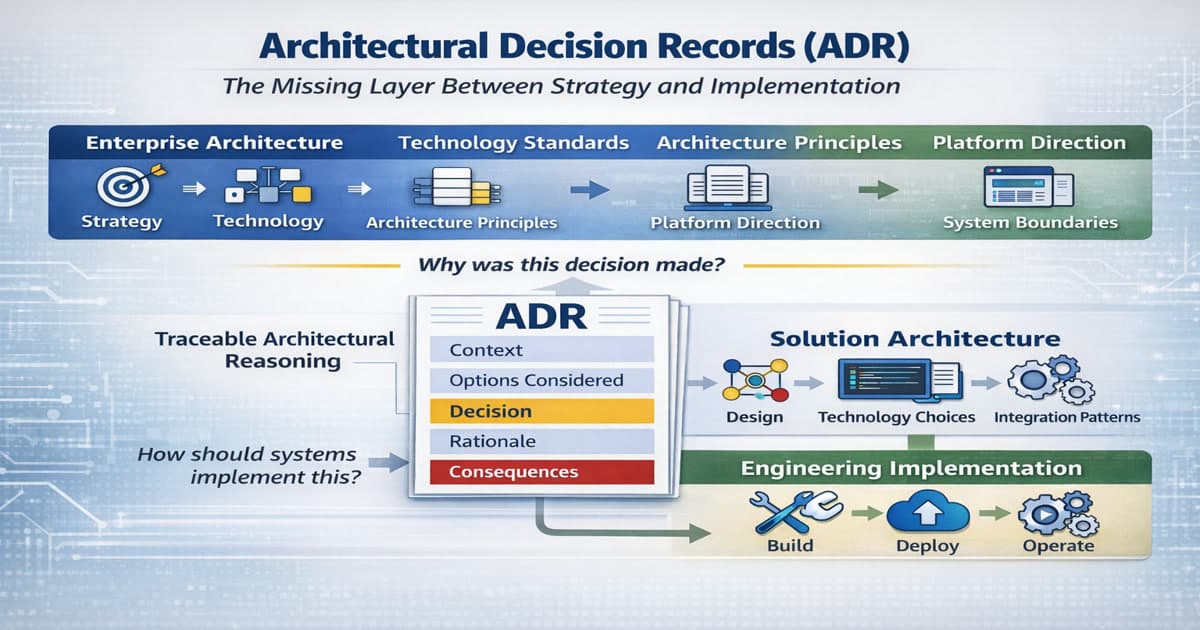
A practical guide explaining why Architectural Decision Records (ADR) are the missing link between enterprise architecture strategy and engineering implementation.
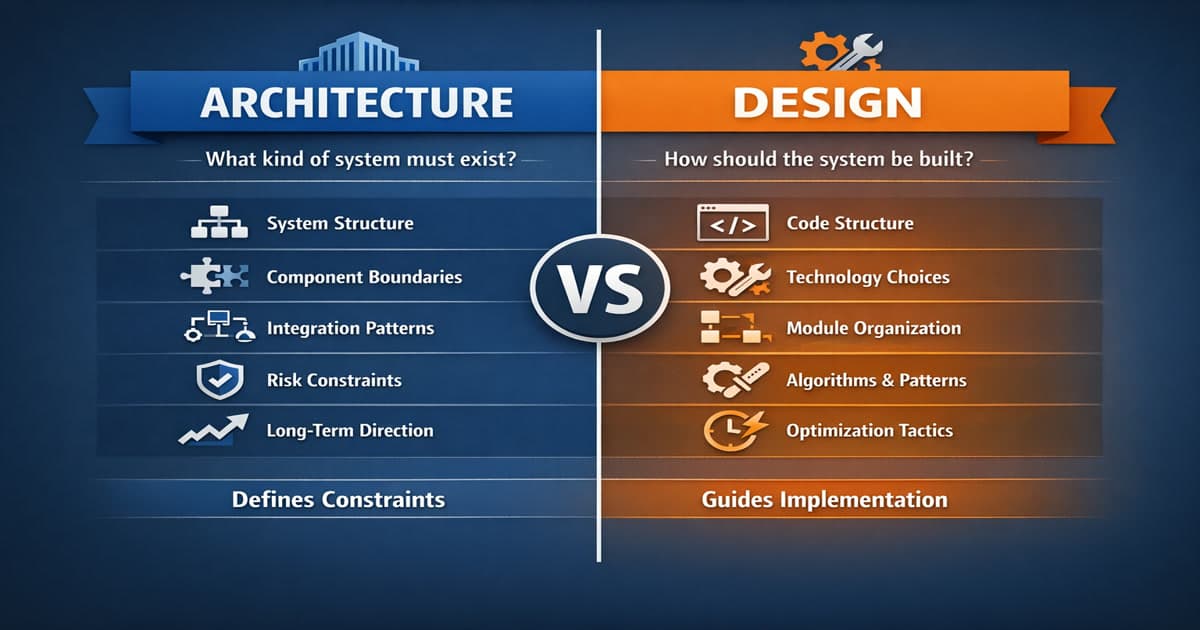
A clear explanation of the difference between architecture and design, why organizations confuse them, and how this confusion creates structural instability in technology systems.
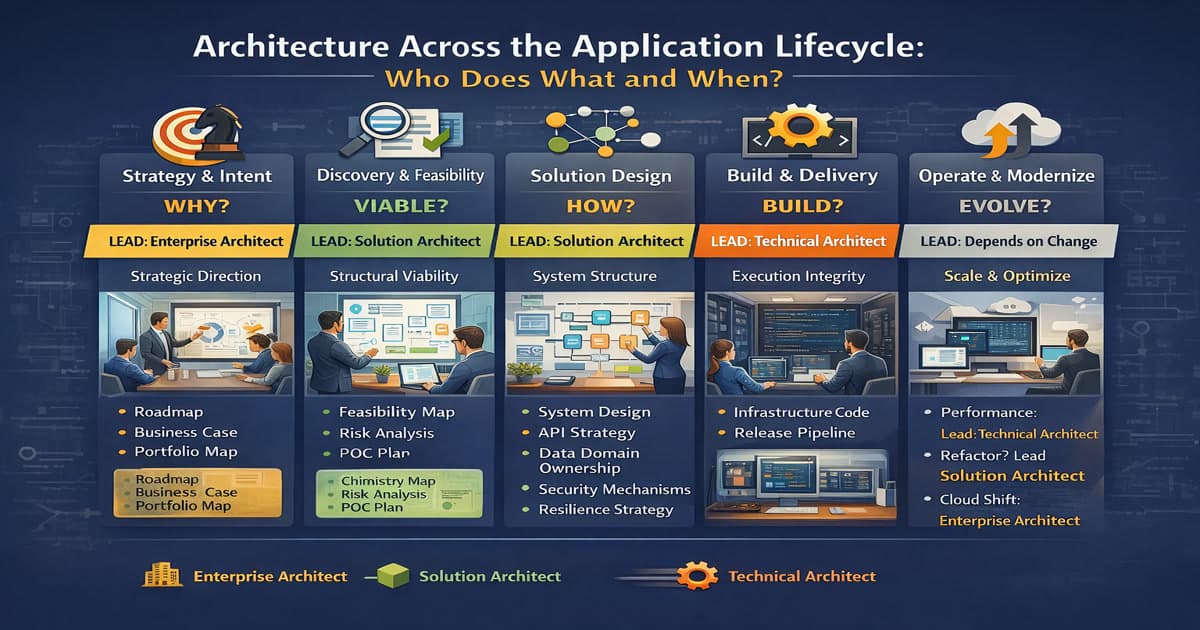
A practical guide explaining which type of architect is required at each stage of the application lifecycle to prevent governance friction and structural instability.
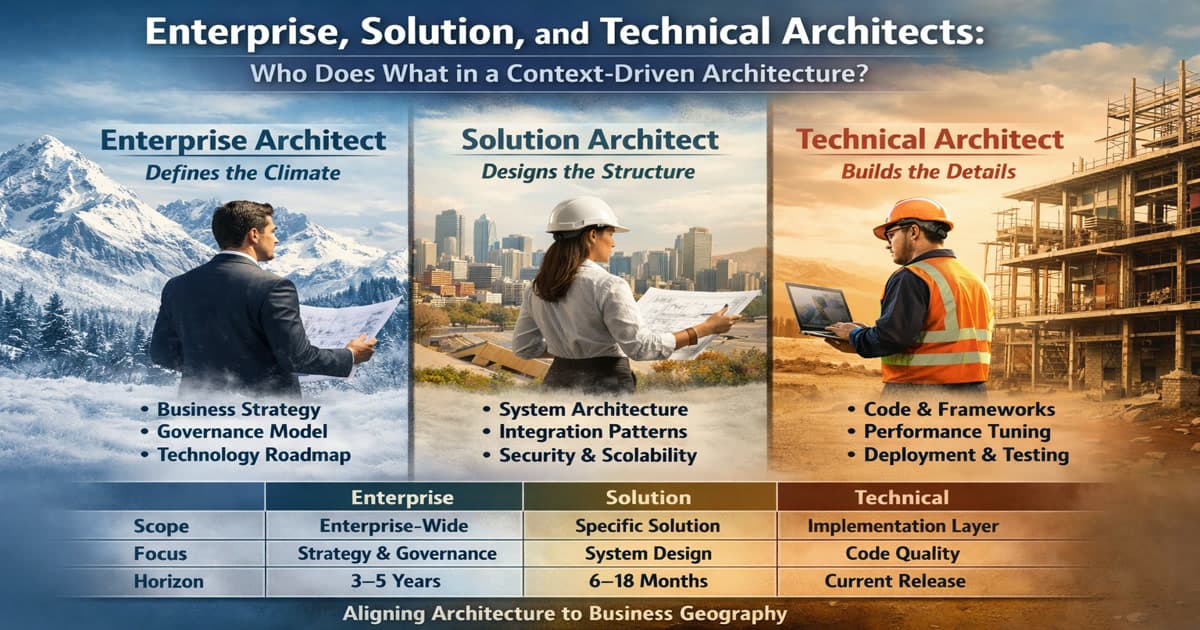
A structured executive guide explaining the difference between Enterprise, Solution, and Technical Architects using Context-Driven Architecture to clarify responsibilities and reduce structural misalignment.
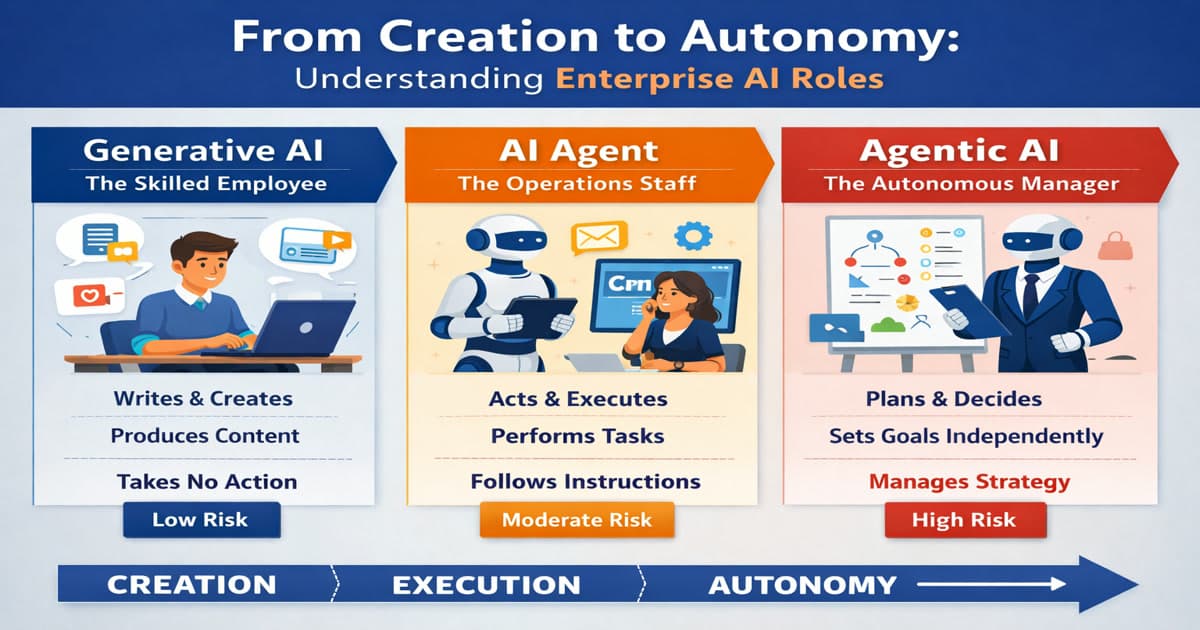
A clear executive guide explaining Generative AI, AI Agents, and Agentic AI using a corporate office analogy to prevent autonomy risks in enterprise AI.