Search

Find insights, training programs, and workshops

Standards & Reference Architectures
Intermediate (SA, EA)4-5 hoursReference architecture library starter + standards register + architecture principles catalogue

How to create, govern, and operationalise architecture standards and reference architectures — the agreed patterns and structures that create consistency, reduce duplication, and accelerate delivery at scale.

Quick Navigation Start here — What standards are Types of standards What reference architectures are Creating standards that get adopted Governing...

1 dayIntensive
PracticalStandards exercise
AI Operating Model & Team Design
Intermediate4-5 hoursAI operating model blueprint + team role map + governance forum design

AI success is not just about tools. It depends on how teams are organised, who owns what, how standards are set, and how delivery, governance, and platform capabilities work together.

...with the model. No one is sure who owns the platform. Product teams run their own experiments without standards. Governance shows up late. Procurement buys tools in silos. Data teams, engineering teams,...

1 DayStrategy
Operating ModelDesign
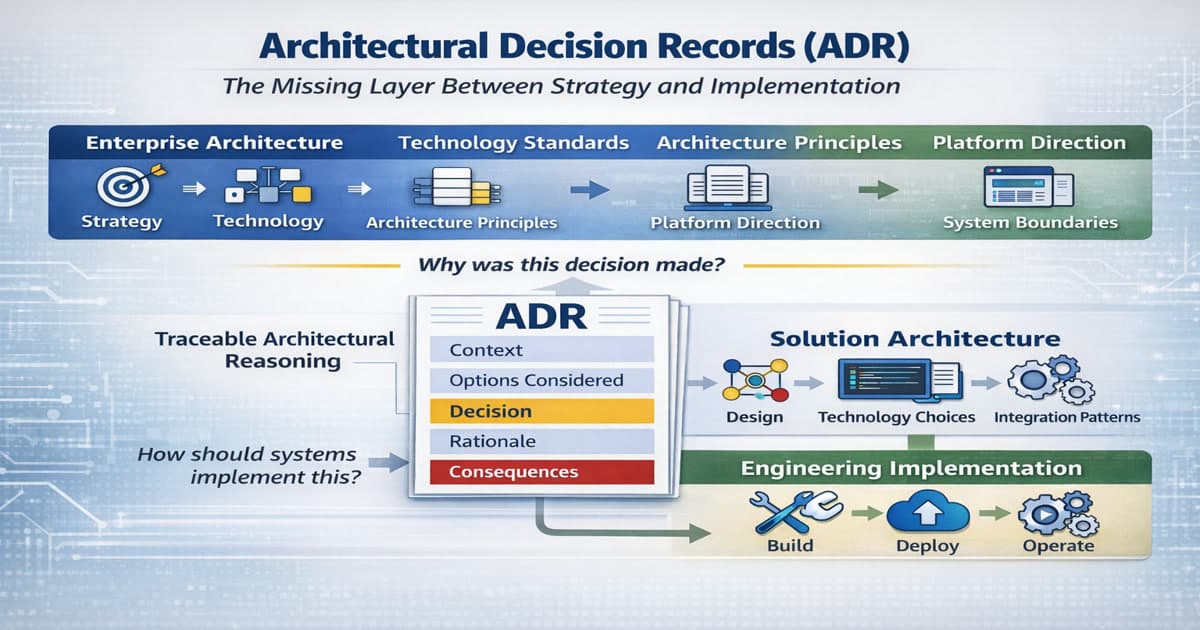
Architectural Decision Records (ADR): The Missing Layer Between Strategy and Implementation

A practical guide explaining why Architectural Decision Records (ADR) are the missing link between enterprise architecture strategy and engineering implementation.

...typically operate across three levels. Enterprise Architecture Defines strategic direction: Technology standards Platform strategy Integration principles Capability models This answers: What should the technology...

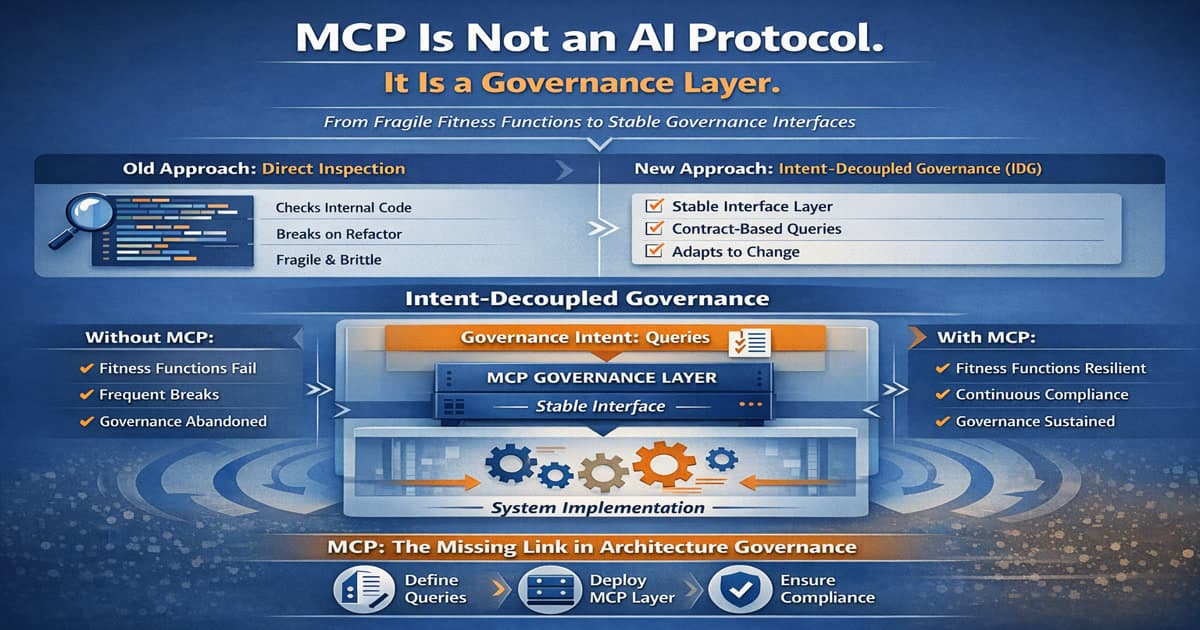
MCP Is Not an AI Protocol. It Is a Governance Layer.

MCP is classified as an AI integration protocol. It is actually a governance primitive — the stable interface layer that architecture fitness functions have been missing for years.

...functions that do not break when teams refactor, governance that survives delivery change, and architecture standards that are enforced continuously — not reviewed periodically The Building Inspector and the Electrician...

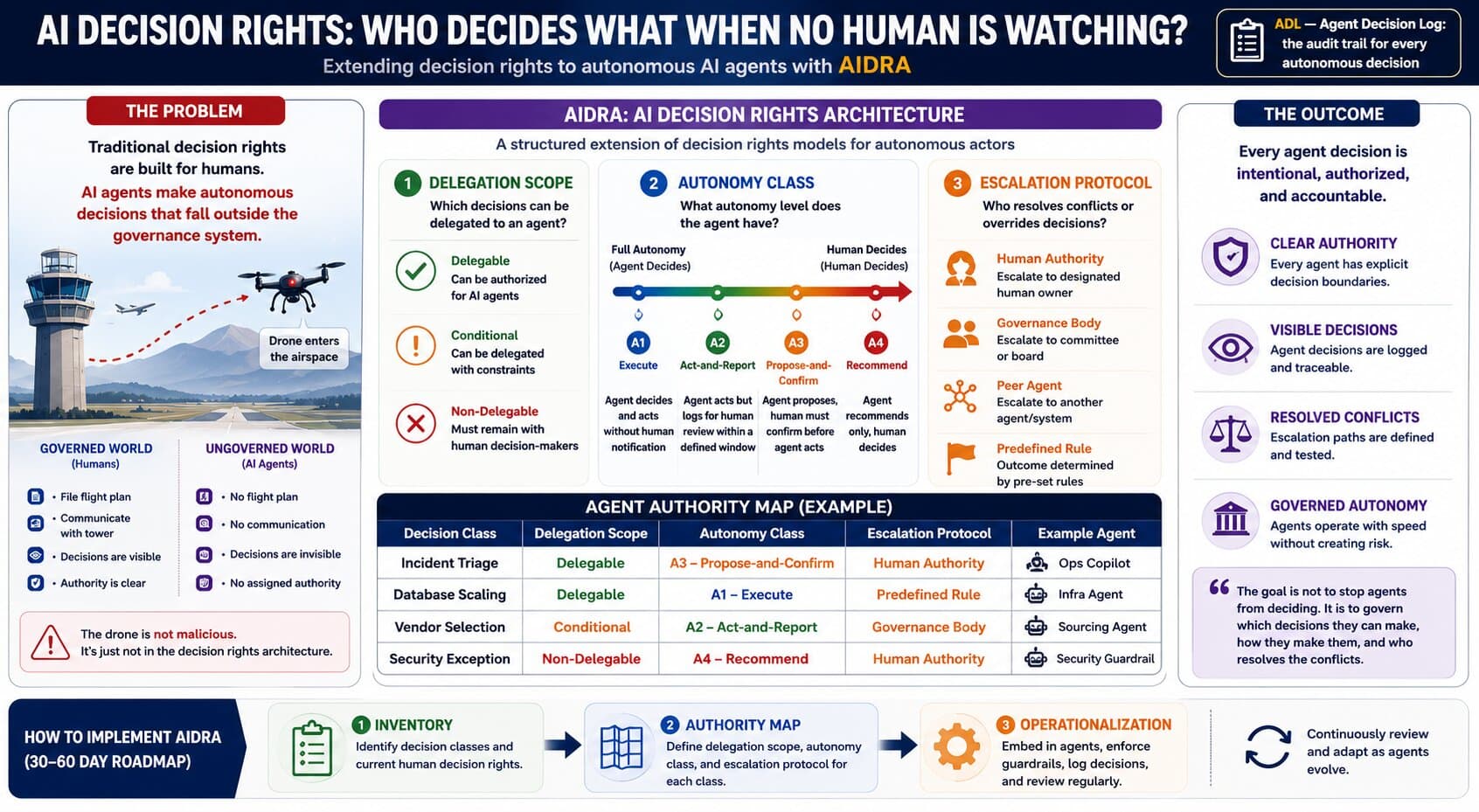
AI Decision Rights: Who Decides What When No Human Is Watching?

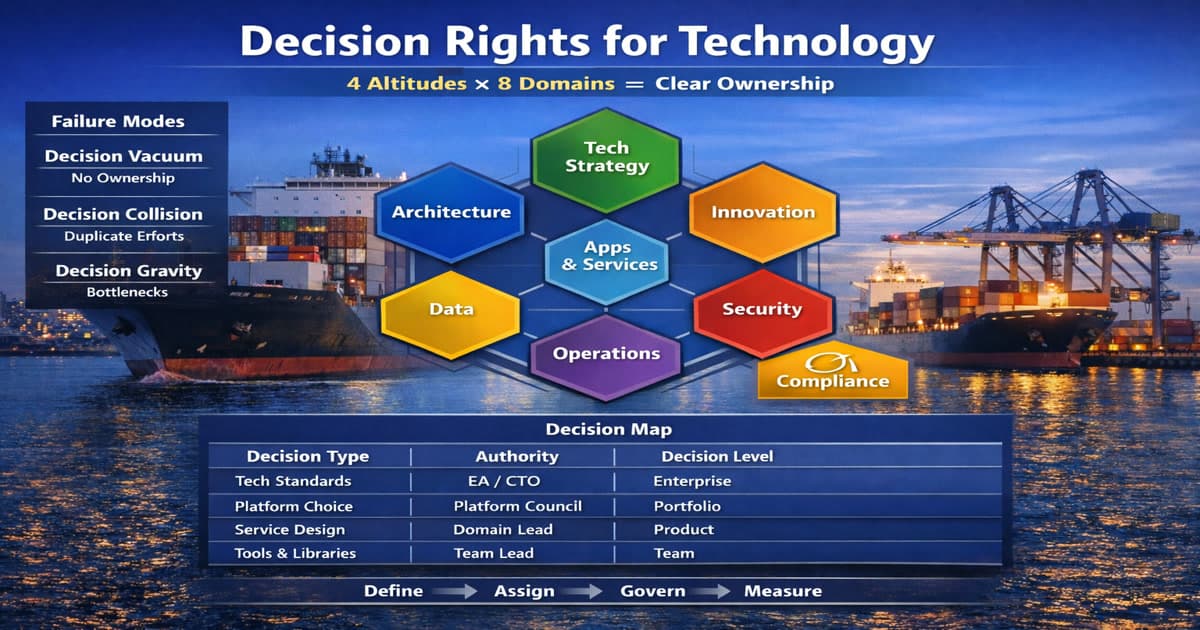
Decision rights models assume human decision-makers. AI agents breach that assumption silently. Here is how to extend decision rights to cover autonomous actors before the first ungoverned decision becomes a production incident.

...Human Actors Decision rights models assign authority to people. Enterprise architects decide platform standards. Domain architects decide integration contracts. Engineering leads decide implementation approaches....

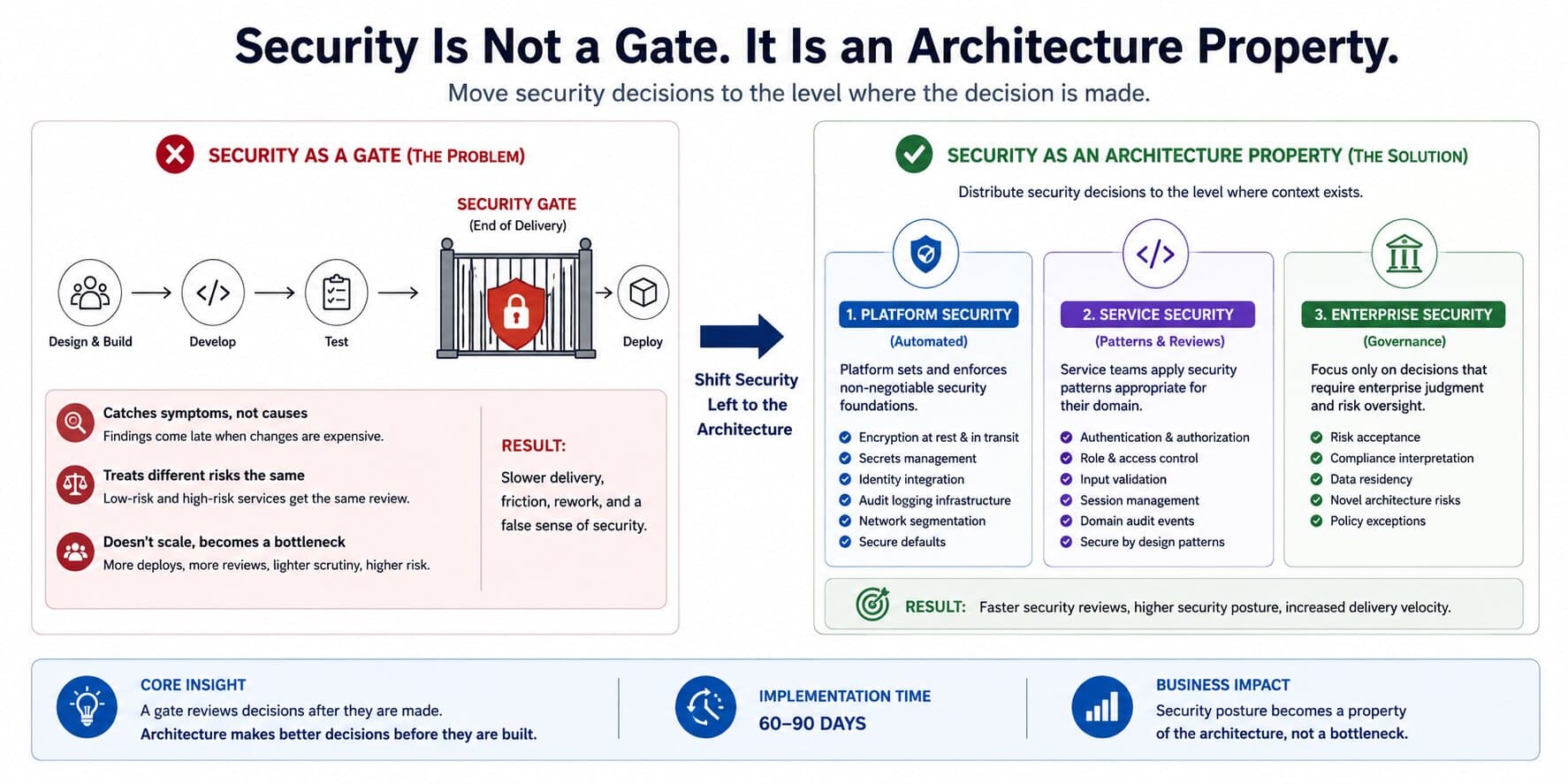
Security Is Not a Gate. It Is an Architecture Property.

Security is treated as a gate at the end of delivery. It should be an architecture property designed into three distinct boundaries. Here is the model that fixes the friction between security and delivery.

...the same gate. Both receive the same checklist. The payment API needs penetration testing, encryption standards, and audit logging. The log processor needs none of these. But both get reviewed, both require...

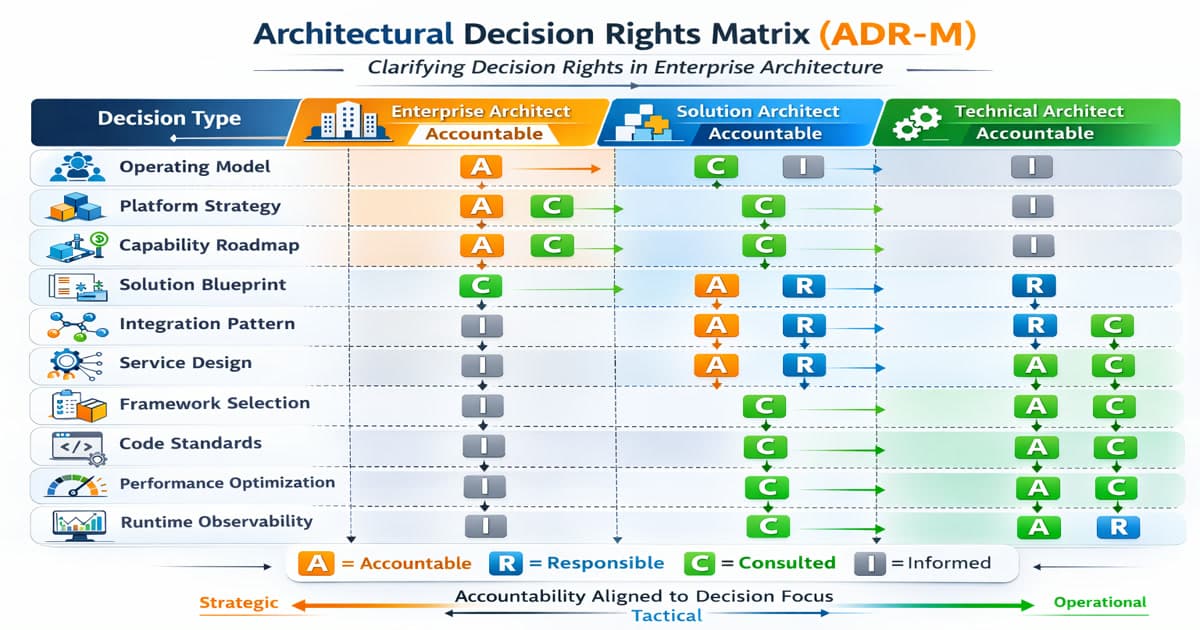
Architectural Decision Rights Matrix: Governing Enterprise, Solution, and Technical Architecture

A governance framework introducing the Architectural Decision Rights Matrix (ADR-M) to clarify accountability between Enterprise, Solution, and Technical Architects in Context-Driven Architecture.

...Decision Type Enterprise Architect Solution Architect Technical Architect Framework Selection I C A Code Standards I C A CI/CD Design I C A Performance Optimization I C A Observability Implementation I C A...

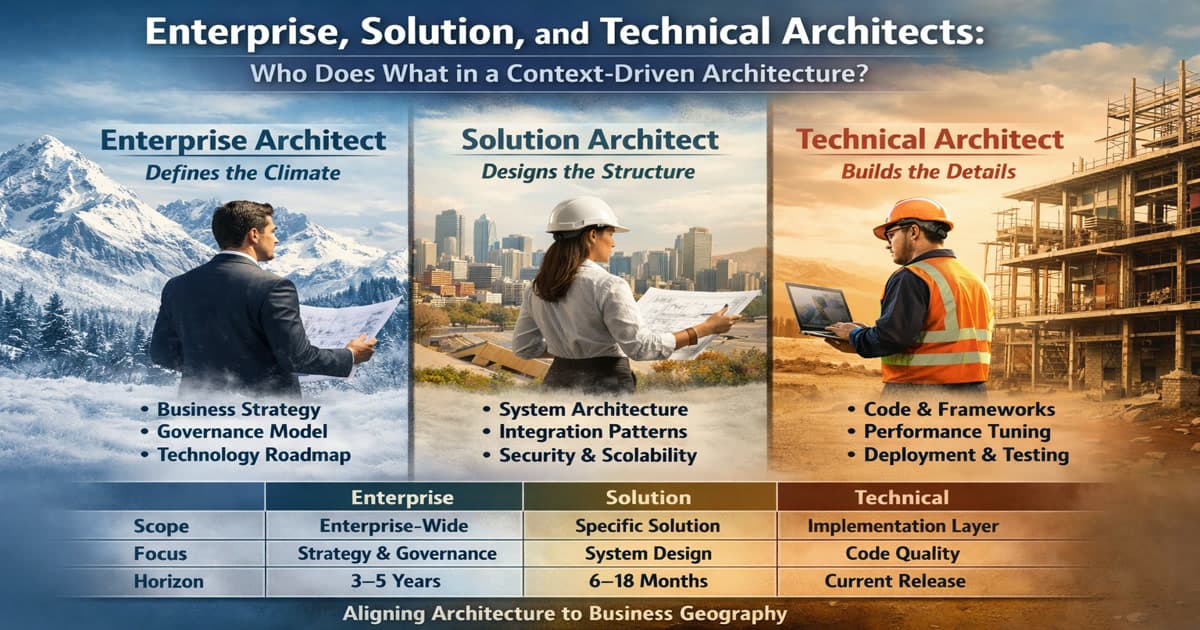
Enterprise, Solution, and Technical Architects: Who Does What in a Context-Driven Architecture?

A structured executive guide explaining the difference between Enterprise, Solution, and Technical Architects using Context-Driven Architecture to clarify responsibilities and reduce structural misalignment.

...The Enterprise Architect determines: This region has heavy snowfall Roofs must be sloped Load-bearing standards must increase Insulation budget is justified They do not design the roof. They define the environmental...

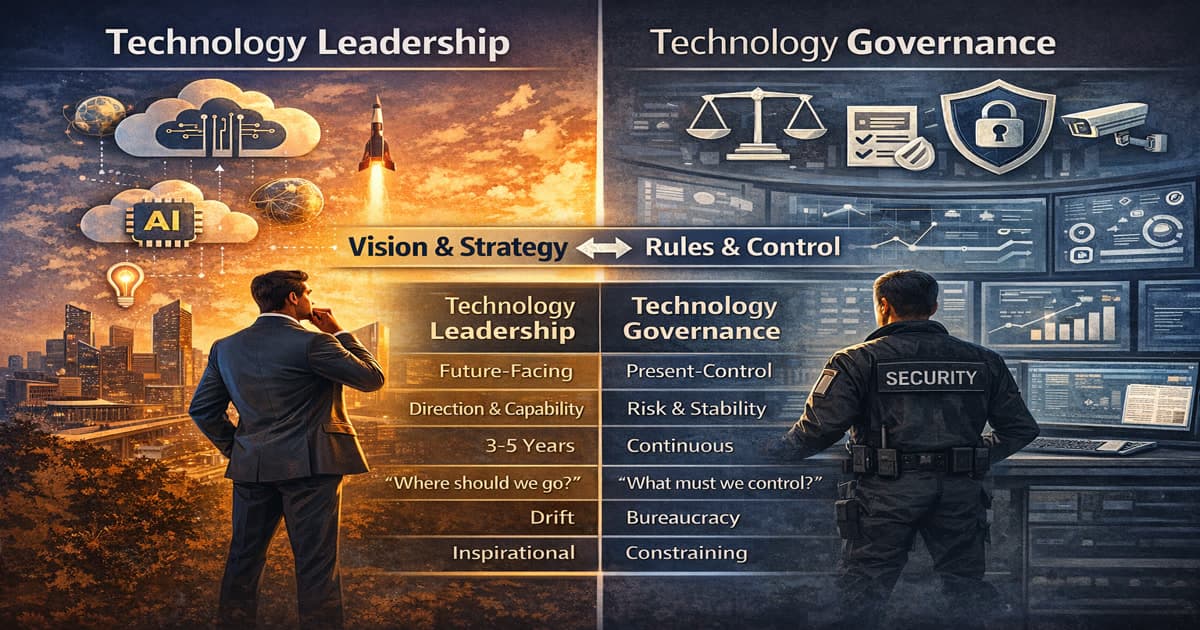
Technology Leadership vs Technology Governance: Why Confusing the Two Creates Structural Instability

A structured executive guide explaining the difference between Technology Leadership and Technology Governance, and why confusing the two creates instability in enterprise execution.

...Mechanism Technology Governance is boundary-facing. It answers: Who is accountable for decisions? What standards are mandatory? What risks are unacceptable? How are exceptions managed? What is the approval...

The AI Evolution Stack: How AI Systems Mature from Simple Models to Governed Platforms

A structured guide explaining how AI systems evolve from simple model usage to governed platforms, and how to scale complexity without losing architectural control.

...before responding. Risk Level: Moderate Governance Need: Data access control Retrieval architecture standards Logging This stage delivers business value. But governance must now scale. Agentic AI (Model...