Search

Find insights, training programs, and workshops

Requirements, Constraints, Trade-offs & Compromise
All levels — SA, EA, TS5-6 hoursTrade-off framework + constraint register template + requirements classification guide

The art of making the best possible architectural decision given what is required, what is constrained, and what must be sacrificed.

Quick Navigation Start here — What architecture really is Functional vs non-functional requirements Constraints Competing priorities Trade-off thinking The art of compromise Documenting decisions Putting...

1 DayIntensive
PracticeReal decisions
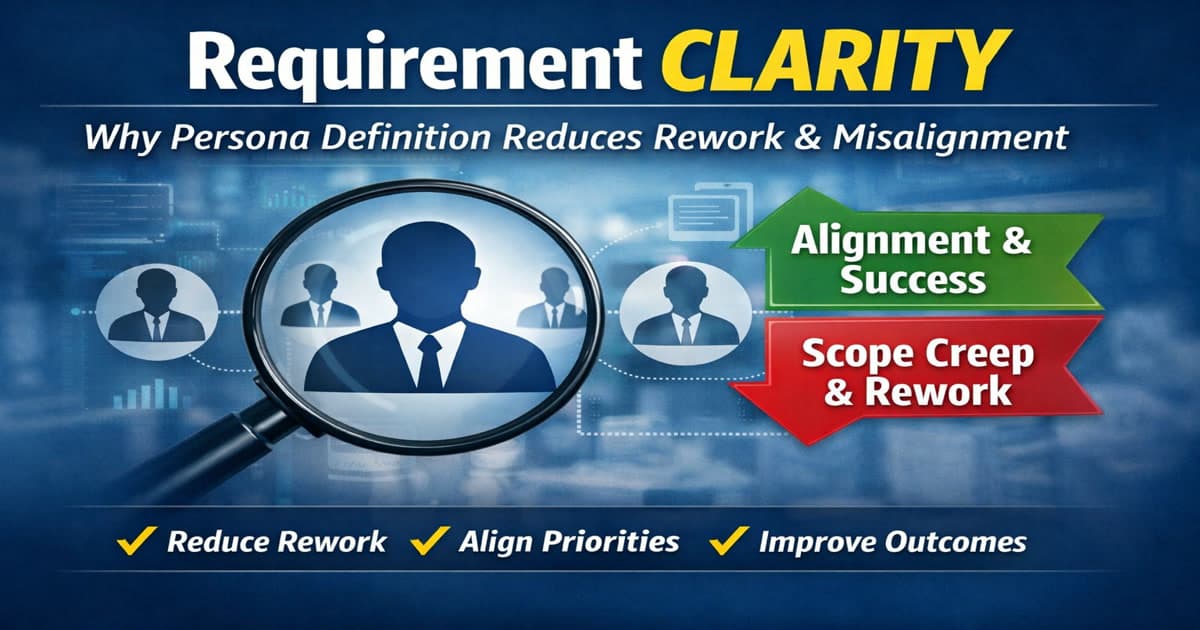
Requirement Clarity: How Structured Persona Definition Reduces Rework and Misalignment

A structured framework for defining personas that eliminates scope creep, reduces rework, and aligns engineering delivery with actual user needs — before development begins.

...Summary Who this is for: CIOs, CTOs, Product Leaders, Engineering Heads Problem it solves: Ambiguous requirements leading to scope creep and rework Key outcome: Clear ownership, measurable alignment, reduced...

Quality Attributes / -ilities
SA, EA — Intermediate5-6 hoursQuality attribute reference card + -ility prioritisation matrix

The non-functional characteristics that determine whether a system is truly fit for purpose — scalability, reliability, availability, performance, security, maintainability, and more.

...it works under real conditions. Architecture is driven by quality attributes more than by functional requirements. Features can be added incrementally. Quality attributes must be designed in from the start....

1 DayIntensive
SA · EARoles
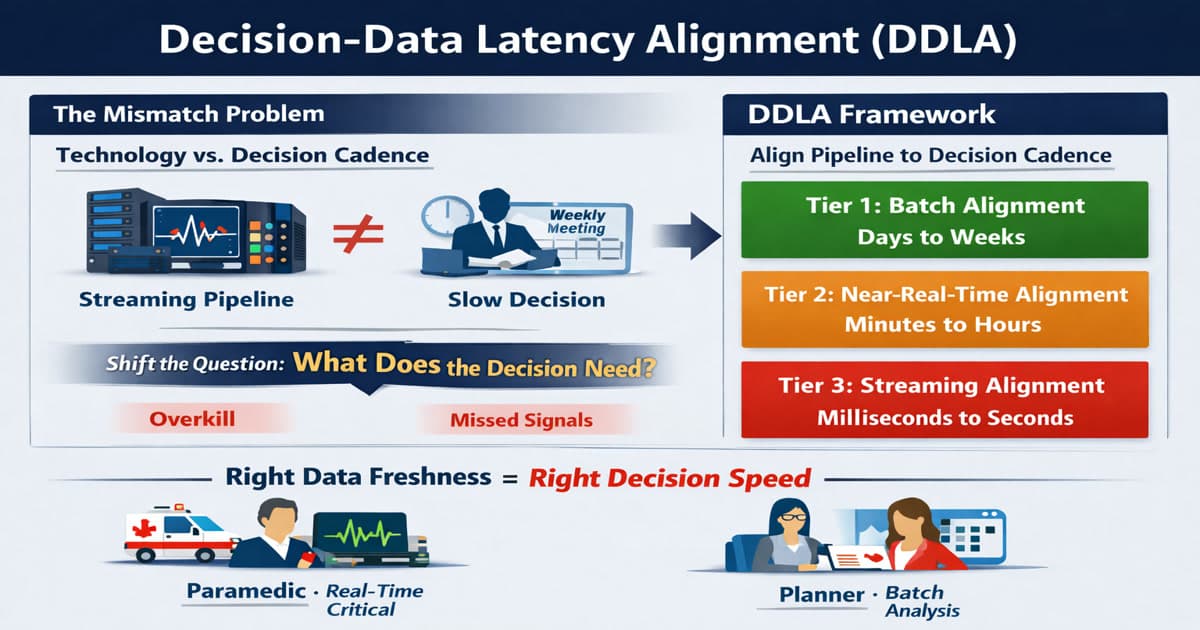
Batch vs Real-Time Is the Wrong Debate.

Organisations debate batch versus real-time as if it is a technical preference. It is not. It is a structural mismatch between data freshness and decision cadence — and the mismatch is where the cost lives.

...Organisations choosing data pipeline patterns based on technical preference rather than decision cadence requirements Key outcome: A structural model called Decision-Data Latency Alignment (DDLA) that matches...

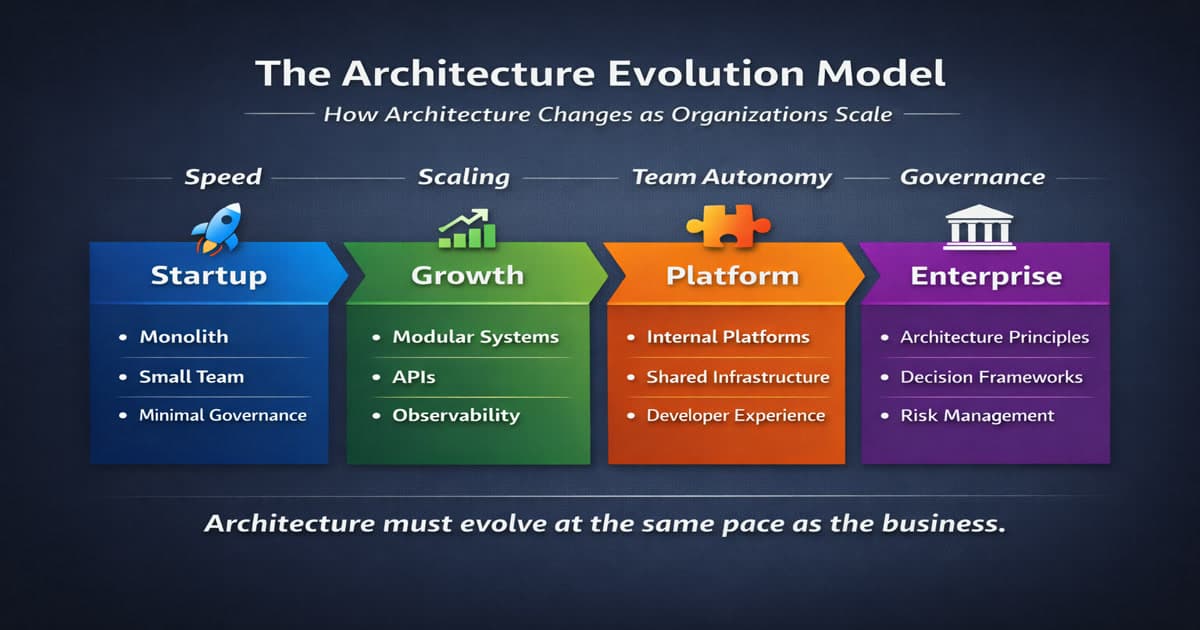
The Architecture Evolution Model: How Architecture Changes from Startup to Enterprise

A practical framework explaining how software architecture evolves from startup experimentation to enterprise-scale governance, and what architectural practices are needed at each stage.

...Enterprise Architecture Each stage introduces: greater scale greater system complexity greater governance requirements The mistake many organizations make is jumping to the final stage too early. Startup Architecture...

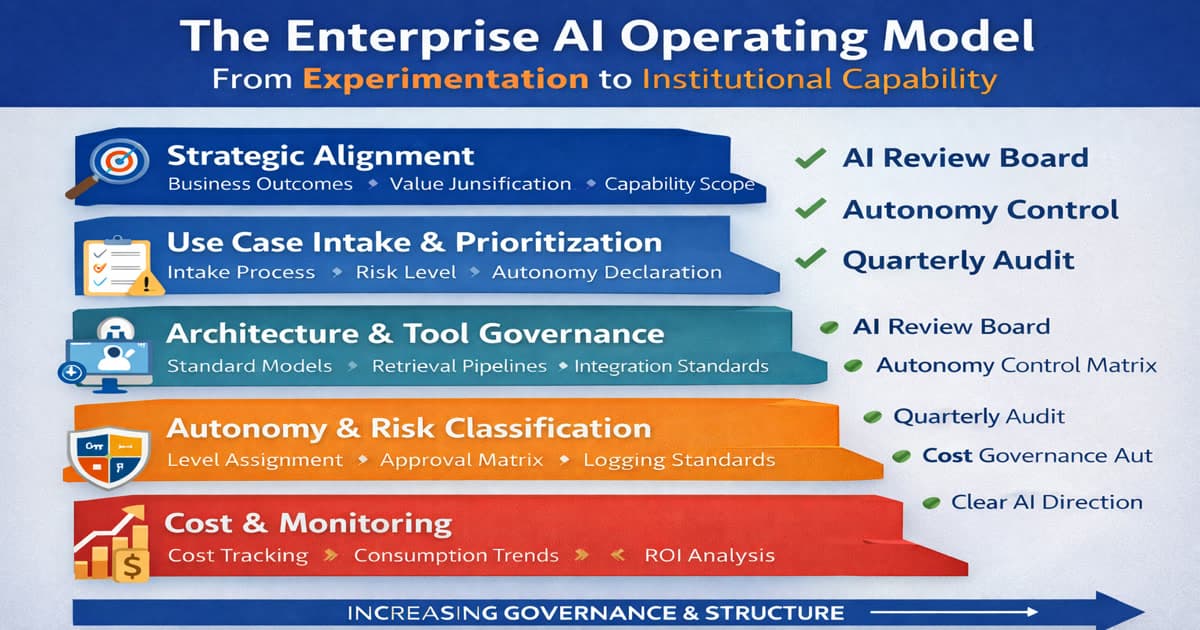
The Enterprise AI Operating Model: From Experimentation to Institutional Capability

A structured executive guide explaining how to move from AI experimentation to an Enterprise AI Operating Model with governance, autonomy control, and cost discipline.

...providers Standardized retrieval pipelines Controlled tool exposure Defined integration patterns Logging requirements AI must integrate into your architecture review process. Not bypass it. Autonomy & Risk...

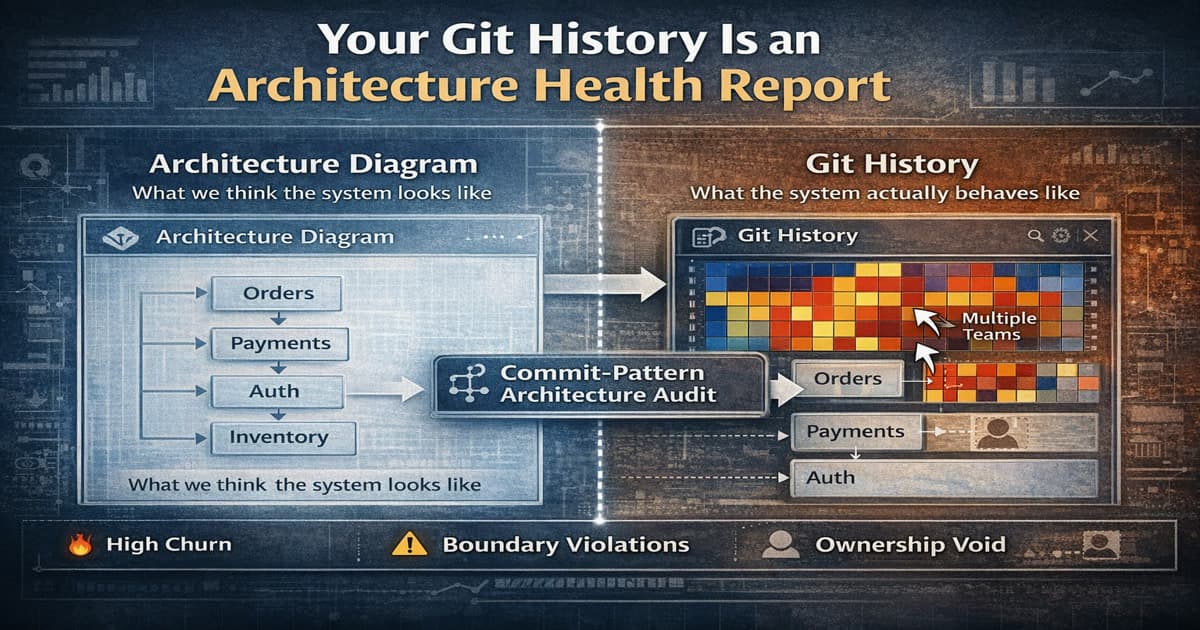
Your Git History Is an Architecture Health Report. Nobody Is Reading It.

A practical architecture technique showing how Git commit patterns reveal structural instability, boundary violations, and ownership gaps in software systems.

...change. High churn often indicates: unstable design unclear boundaries frequent refactoring evolving requirements Example indicators: modules modified in nearly every release components constantly patched...

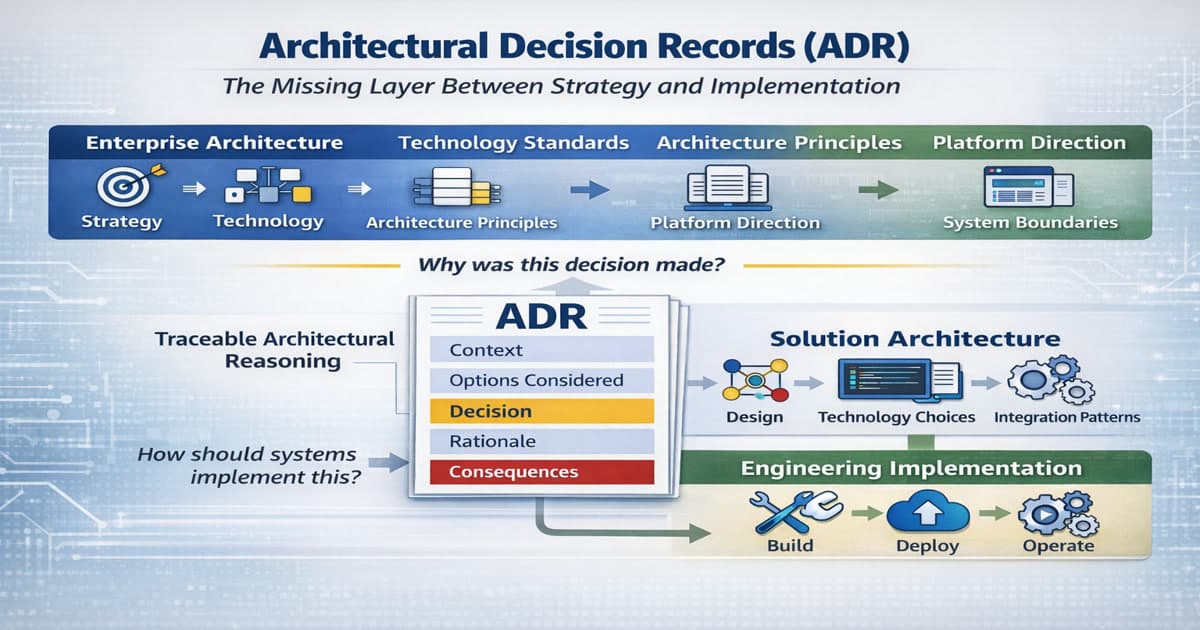
Architectural Decision Records (ADR): The Missing Layer Between Strategy and Implementation

A practical guide explaining why Architectural Decision Records (ADR) are the missing link between enterprise architecture strategy and engineering implementation.

...introduce? Example: Increased operational complexity Event ordering considerations Additional monitoring requirements A good ADR is typically one page. Its power comes from clarity, not length. Why ADRs Matter...

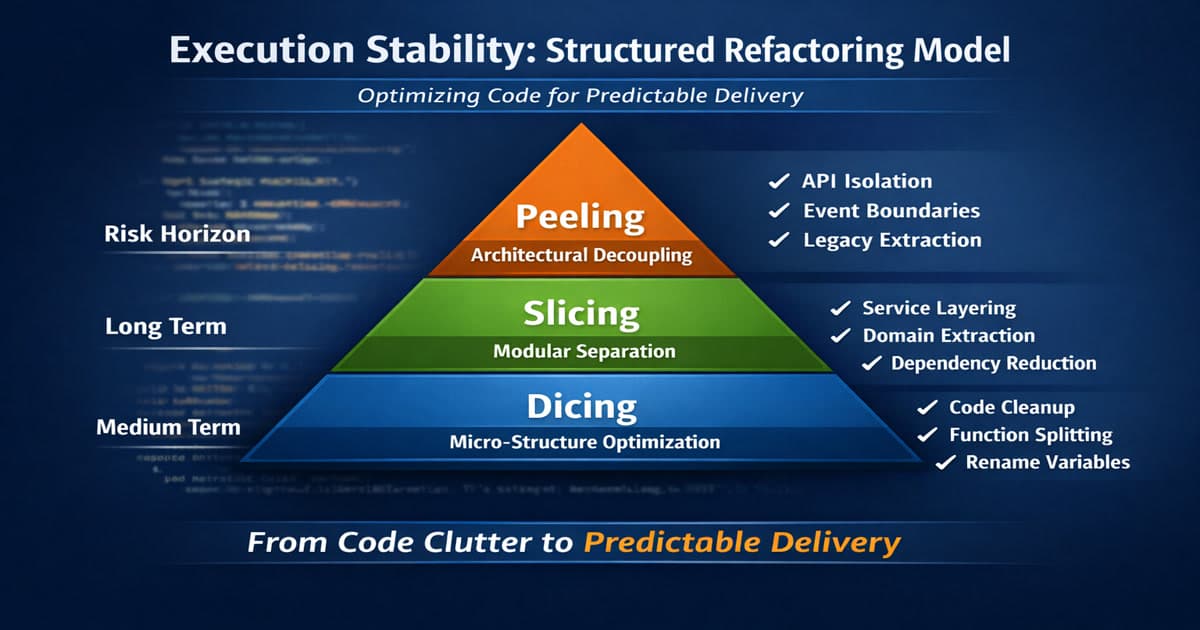
Execution Stability: How Structured Refactoring Improves Delivery Predictability

A practical framework for reducing delivery slowdown caused by unmanaged structural code complexity — improving cycle time, reducing regression risk, and clarifying ownership boundaries.

...topology. It must be governed carefully. When to Use Peeling Scaling limitations Regulatory isolation requirements Platform modernization initiatives Acquisition integrations Business Impact Reduced blast...

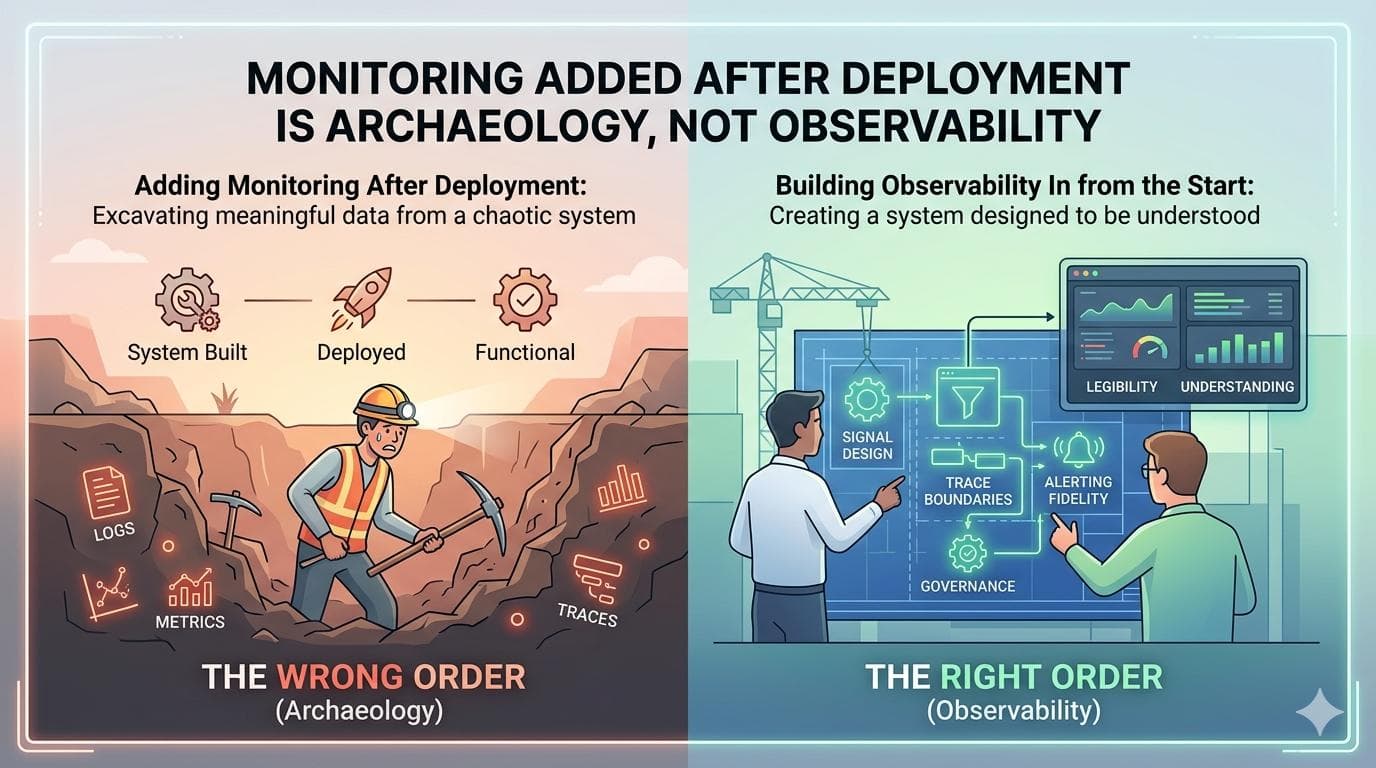
Monitoring Added After Deployment Is Not Observability. It Is Archaeology.

Observability is not a monitoring add-on. It is an architectural constraint. Systems built without observability baked in cannot be understood, cannot be governed, and cannot be improved. The OSAF model tells you exactly where your architecture is blind.

...service joins the platform with no signal contract and a custom logging format. Present: Observability requirements are part of the architecture review checklist. A service cannot graduate to production without...