Search

Find insights, training programs, and workshops

Why Architecture Exists
All levels — SA, EA, TS3-4 hoursArchitecture purpose framework — complexity · alignment · risk · change · shared understanding

Why architecture exists — managing complexity, aligning technology with business, reducing risk, enabling change, and creating shared understanding across teams.

Quick Navigation Start here — Why does architecture exist? The problem architecture solves Reducing complexity Aligning technology with business Managing risk Enabling change Architecture as communication Putting...

Half-dayIntensive
PurposeWhy it matters

Context-Driven Architecture: Why Software Design Must Adapt to Business Geography

Just as buildings must adapt to snow, desert, or tropical climates, software architecture must align with business geography to improve predictability and reduce complexity.

...Architectural decisions copied from trends without considering business environment Key outcome: Reduced complexity, improved system resilience, controlled cloud costs, stronger delivery predictability Time...

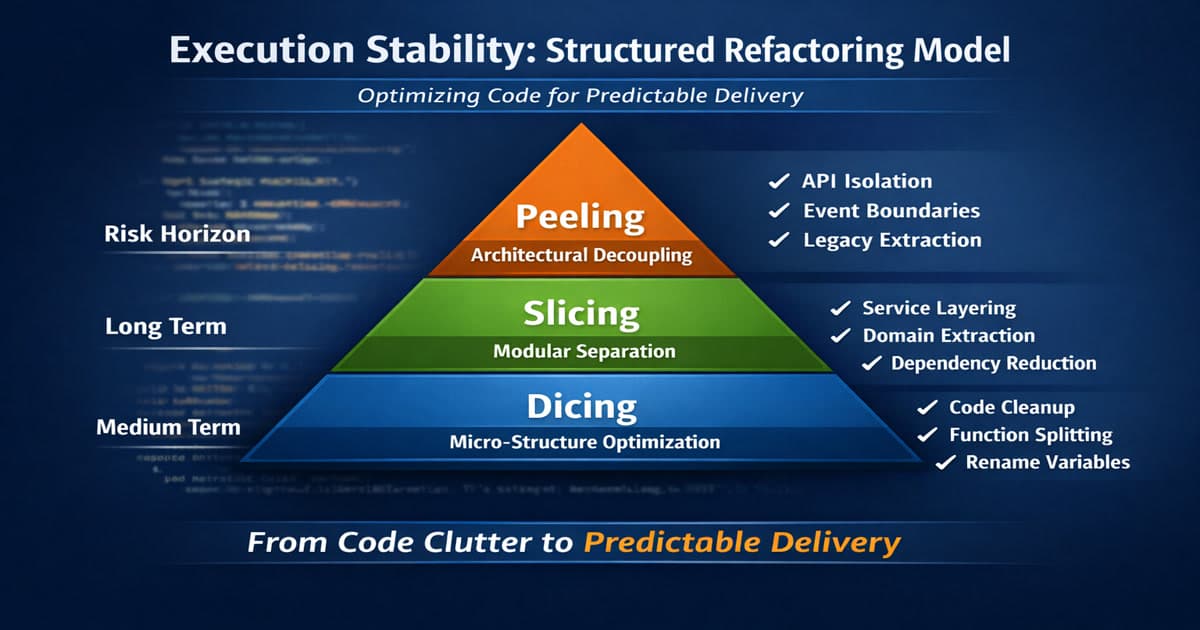
Execution Stability: How Structured Refactoring Improves Delivery Predictability

A practical framework for reducing delivery slowdown caused by unmanaged structural code complexity — improving cycle time, reducing regression risk, and clarifying ownership boundaries.

...Principal Engineers Problem it solves: Growing delivery slowdown caused by unmanaged structural code complexity Key outcome: Reduced regression risk, improved cycle time, clearer ownership boundaries Time...

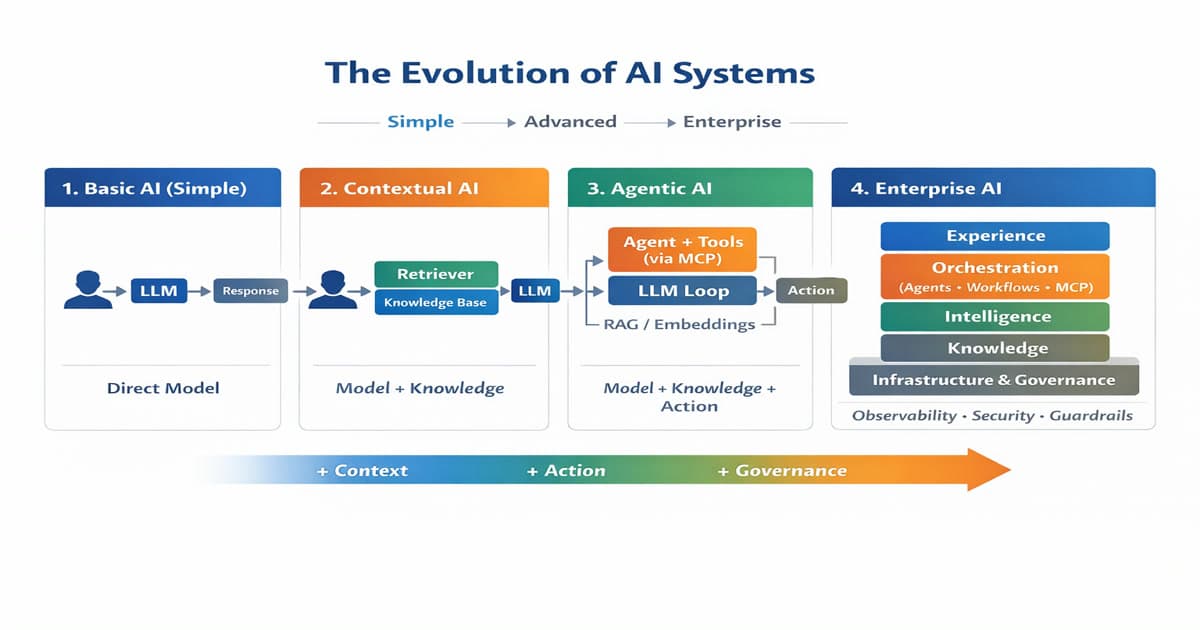
The AI Evolution Stack: How AI Systems Mature from Simple Models to Governed Platforms

A structured guide explaining how AI systems evolve from simple model usage to governed platforms, and how to scale complexity without losing architectural control.

...leaders, architects, founders scaling AI beyond experimentation Problem it solves: AI systems growing in complexity without proportional governance Key outcome: A clear evolution model --- Simple → Contextual...

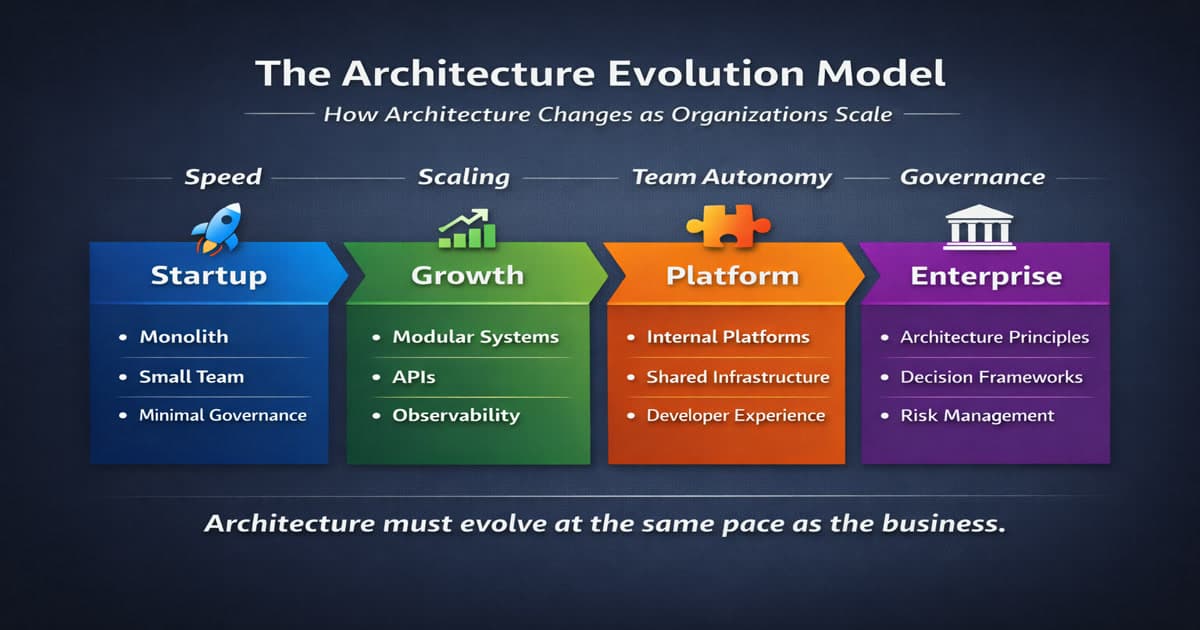
The Architecture Evolution Model: How Architecture Changes from Startup to Enterprise

A practical framework explaining how software architecture evolves from startup experimentation to enterprise-scale governance, and what architectural practices are needed at each stage.

...Both approaches fail. Architecture is not static. It evolves with the scale of the organization, the complexity of systems, and the level of operational risk. A startup does not need architecture governance...

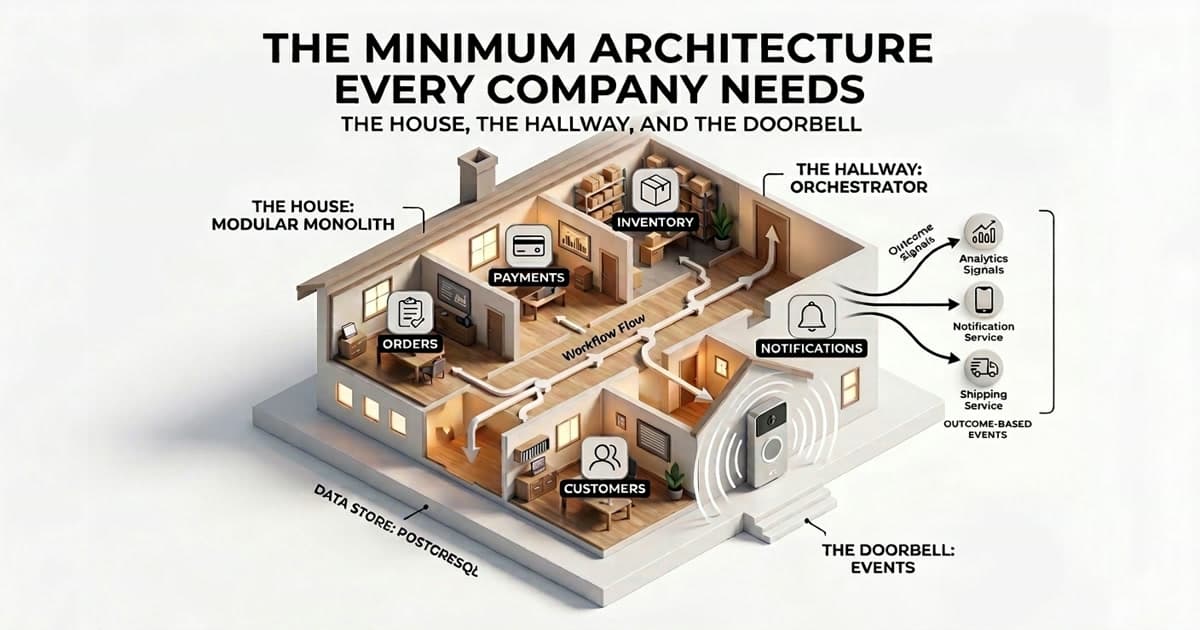
The Minimum Architecture Every Company Needs: The House, the Hallway, and the Doorbell

A practical architectural model explaining why most companies only need a modular monolith, a workflow orchestrator, and outcome-based events.

...Business impact: Faster development, lower operational overhead, clearer system structure The Architecture Complexity Trap Modern architecture discussions quickly become complicated. Teams start talking about:...

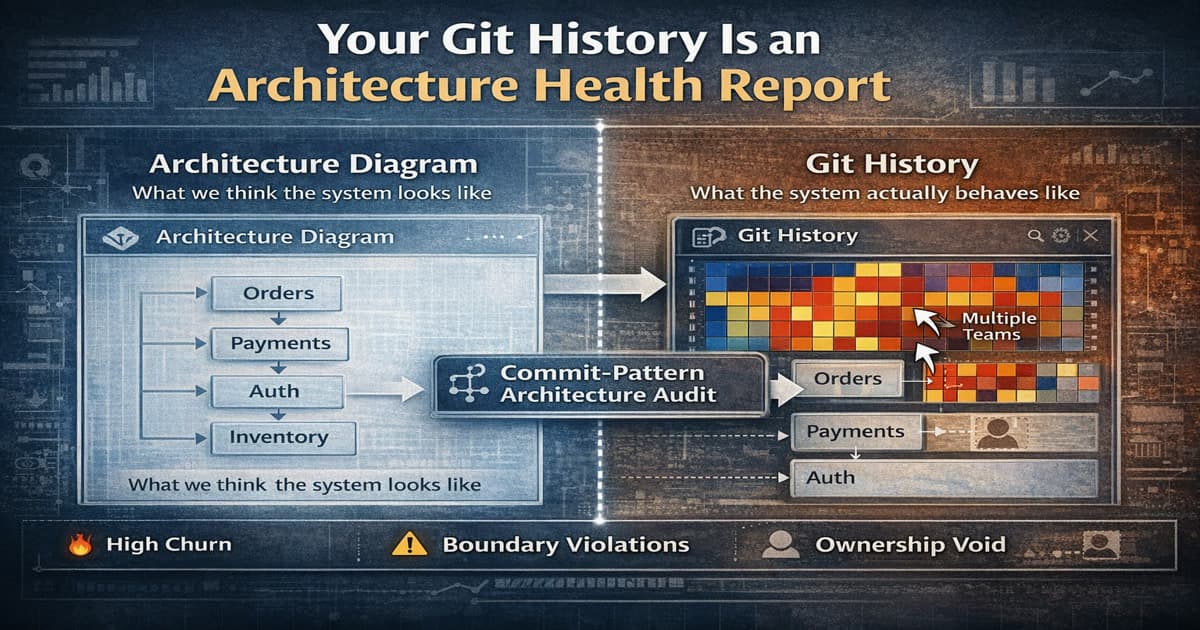
Your Git History Is an Architecture Health Report. Nobody Is Reading It.

A practical architecture technique showing how Git commit patterns reveal structural instability, boundary violations, and ownership gaps in software systems.

...systems evolve through code changes, not diagrams. Every day engineers commit changes that reveal: where complexity accumulates which modules are unstable which teams are crossing boundaries which parts of...

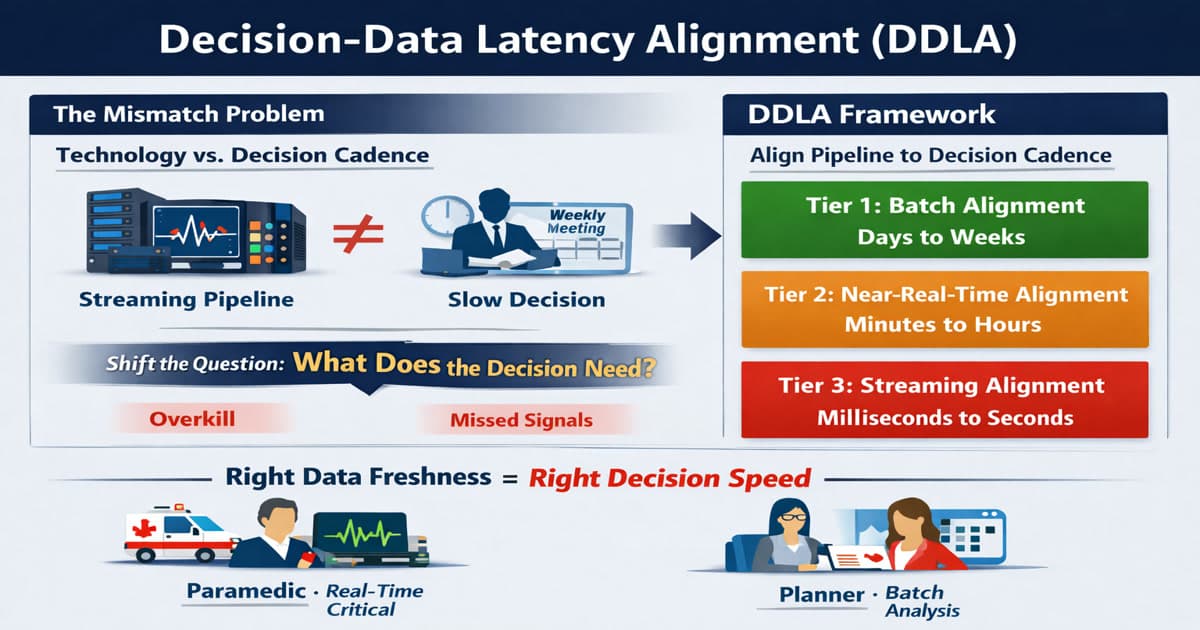
Batch vs Real-Time Is the Wrong Debate.

Organisations debate batch versus real-time as if it is a technical preference. It is not. It is a structural mismatch between data freshness and decision cadence — and the mismatch is where the cost lives.

...feeds happens once a week in a planning meeting. The freshness is not being used. The cost is real. The complexity is real. The operational burden is real. And none of it is producing faster decisions. It...

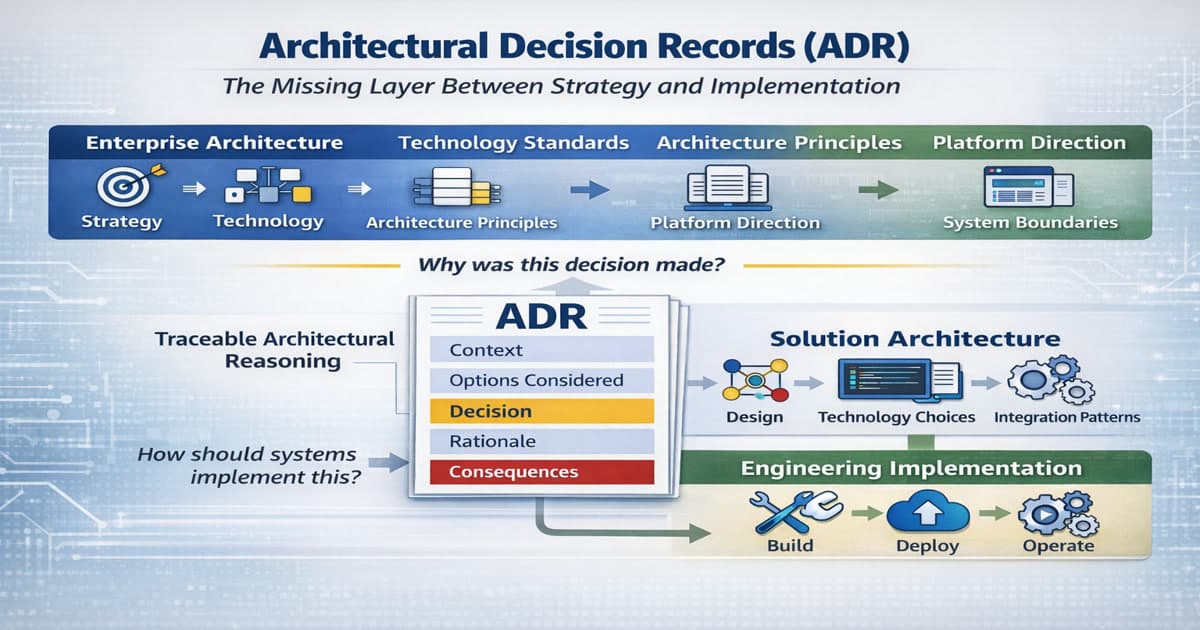
Architectural Decision Records (ADR): The Missing Layer Between Strategy and Implementation

A practical guide explaining why Architectural Decision Records (ADR) are the missing link between enterprise architecture strategy and engineering implementation.

...event-driven workflows Consequences What trade-offs does this introduce? Example: Increased operational complexity Event ordering considerations Additional monitoring requirements A good ADR is typically one...

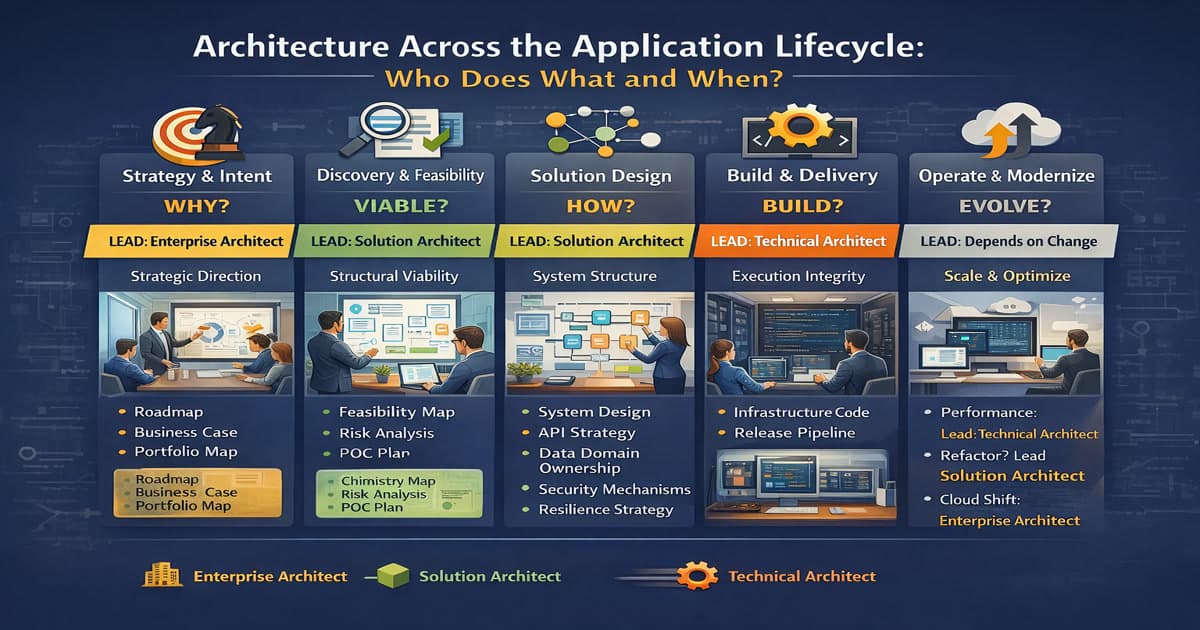
Architecture Across the Application Lifecycle: Which Architect Is Needed When?

A practical guide explaining which type of architect is required at each stage of the application lifecycle to prevent governance friction and structural instability.

...Is this initiative structurally viable? Typical Decisions New capability or extension? Integration complexity Regulatory implications Data sensitivity Non-functional risk estimation Primary Architectural...