Search
Find insights, training programs, and workshops
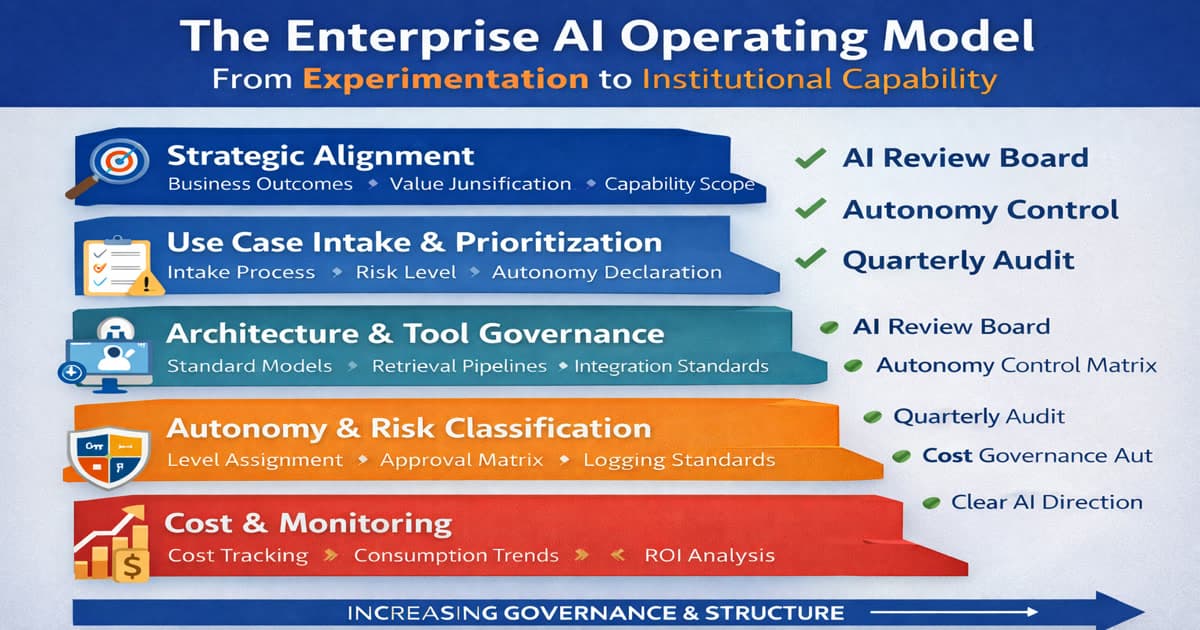
A structured executive guide explaining how to move from AI experimentation to an Enterprise AI Operating Model with governance, autonomy control, and cost discipline.
...independently Run pilots without cross-review Six months later: Costs fluctuate unpredictably Security escalations slow progress Compliance reviews increase friction Executives hesitate to scale...
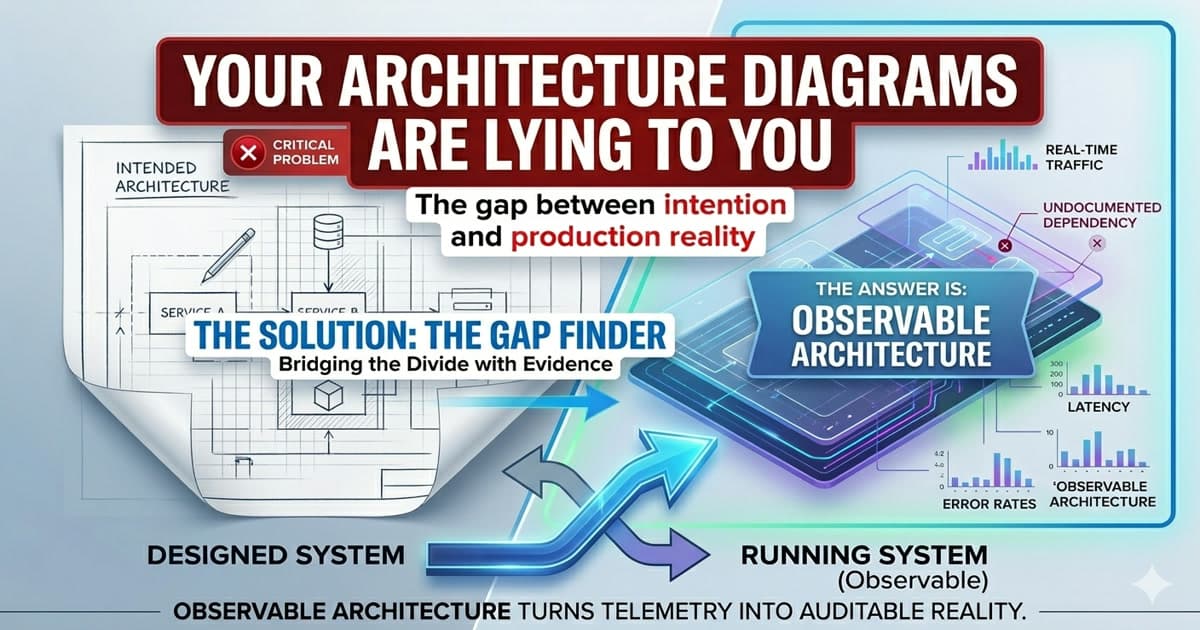
Why architecture diagrams describe a system that no longer exists, and how Observable Architecture uses production telemetry to reveal what is actually running.
Executive Summary Who this is for: Solution Architects, Enterprise Architects, Senior Engineers, Security Architects Problem it solves: Architecture diagrams describe the intended system, not the running...
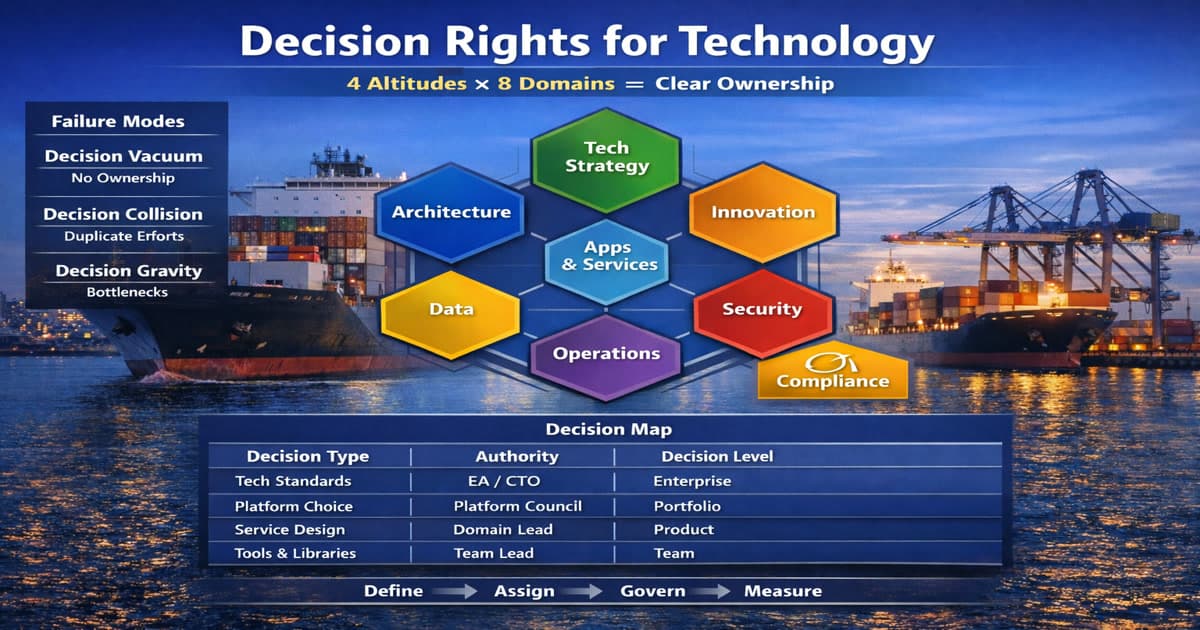
Why most enterprises confuse escalation ladders with decision rights — and how Technology Decision Domain Architecture maps exactly who decides what, at which altitude, before the conflict arrives.
...constraints for the entire organization Architecture principles, approved cloud providers, mandatory security standards Domain Decisions that govern a bounded business or technology domain Domain platform...
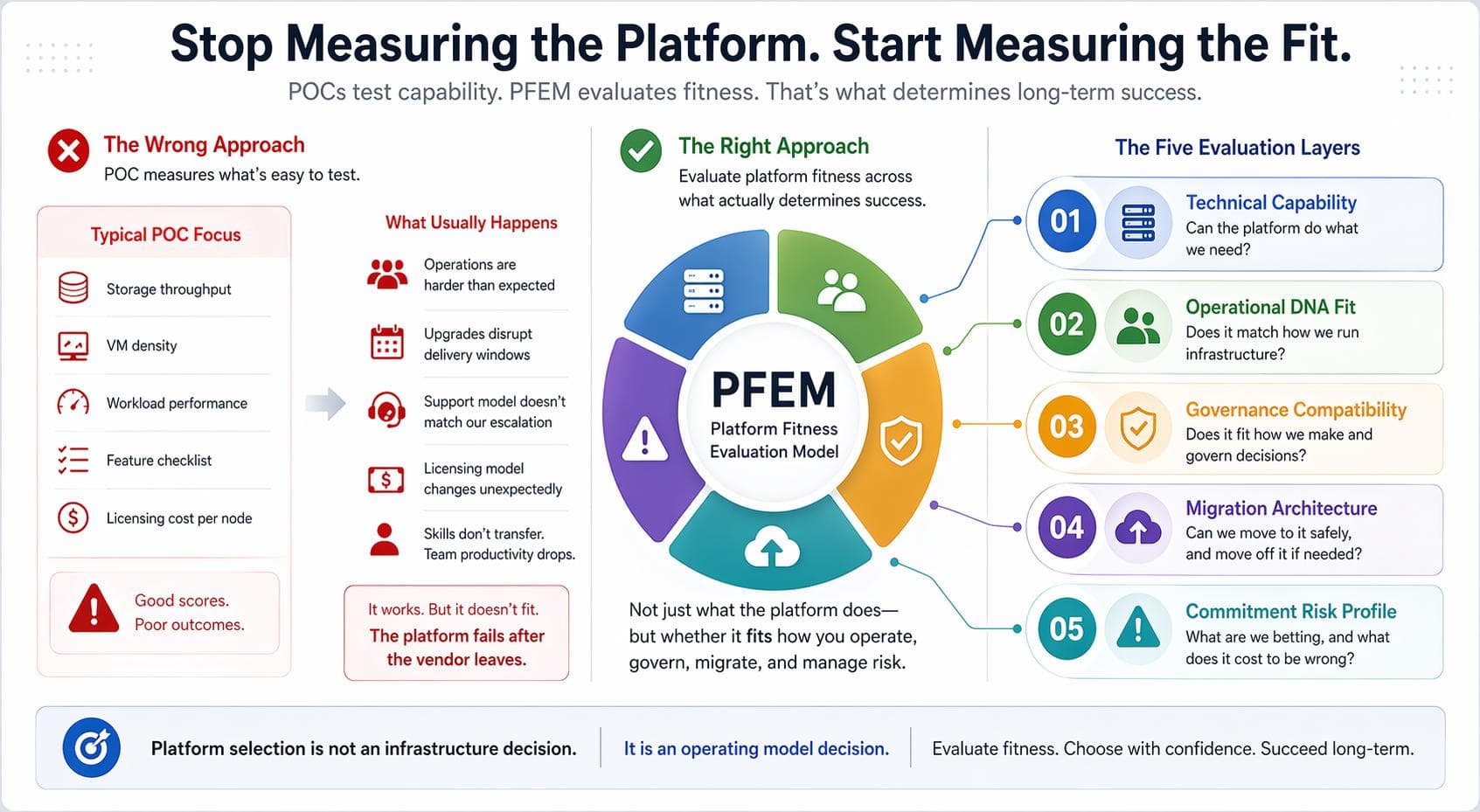
Most organizations evaluate private cloud and HCI platforms by running a technical POC. The POC passes. The platform fails. The reason is structural — and fixable. The Platform Fitness Evaluation Model (PFEM) tells you what to measure instead.
...profiles VM and container density at production scale Integration with existing monitoring, backup, and security tooling Upgrade path clarity across major versions Vendor roadmap alignment with your architecture...
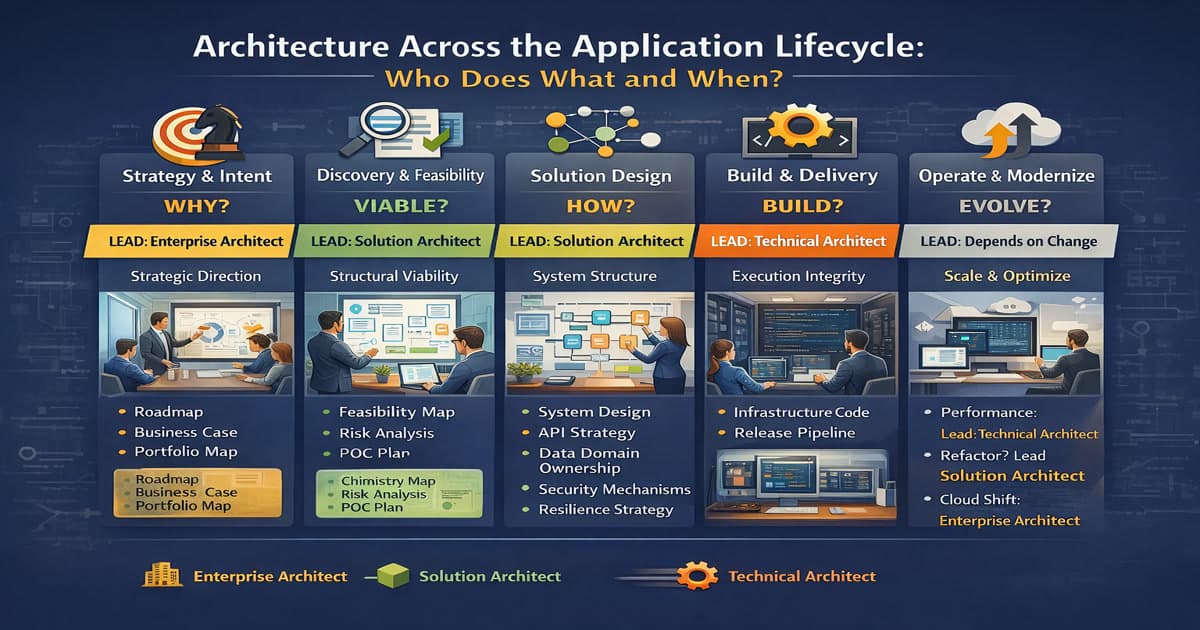
A practical guide explaining which type of architect is required at each stage of the application lifecycle to prevent governance friction and structural instability.
...viable? Typical Decisions New capability or extension? Integration complexity Regulatory implications Data sensitivity Non-functional risk estimation Primary Architectural Owners Enterprise Architect...
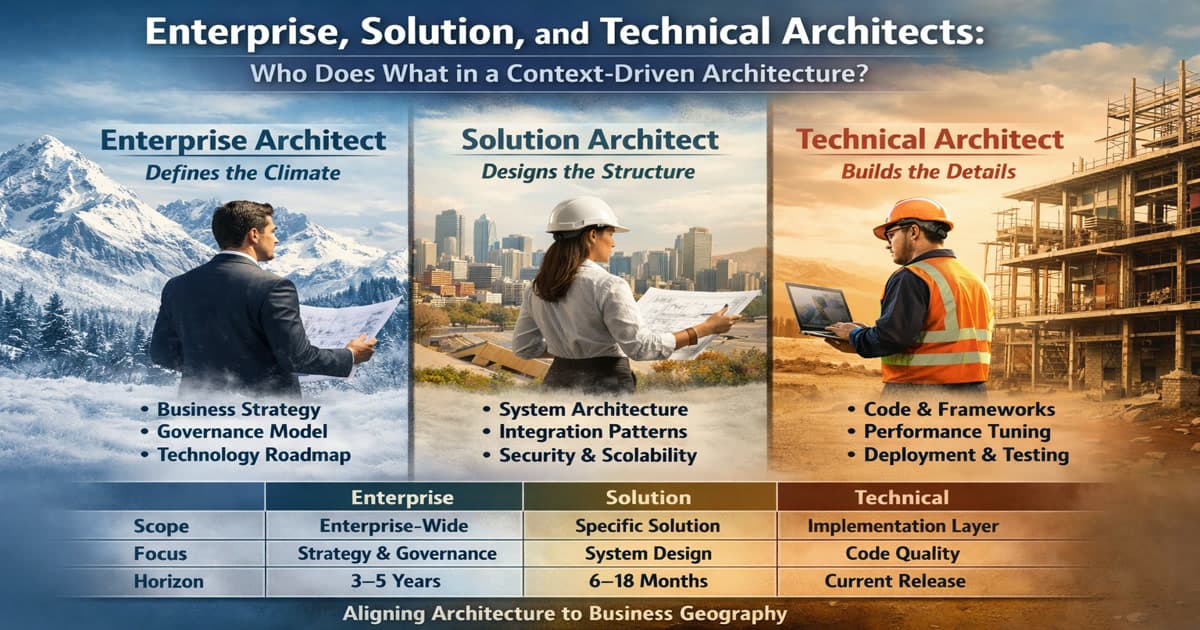
A structured executive guide explaining the difference between Enterprise, Solution, and Technical Architects using Context-Driven Architecture to clarify responsibilities and reduce structural misalignment.
...guardrails. They design specific systems and initiatives. They define: Service boundaries Integration patterns Data flows Security patterns Resilience mechanisms Technology selection within policy They answer: “How...
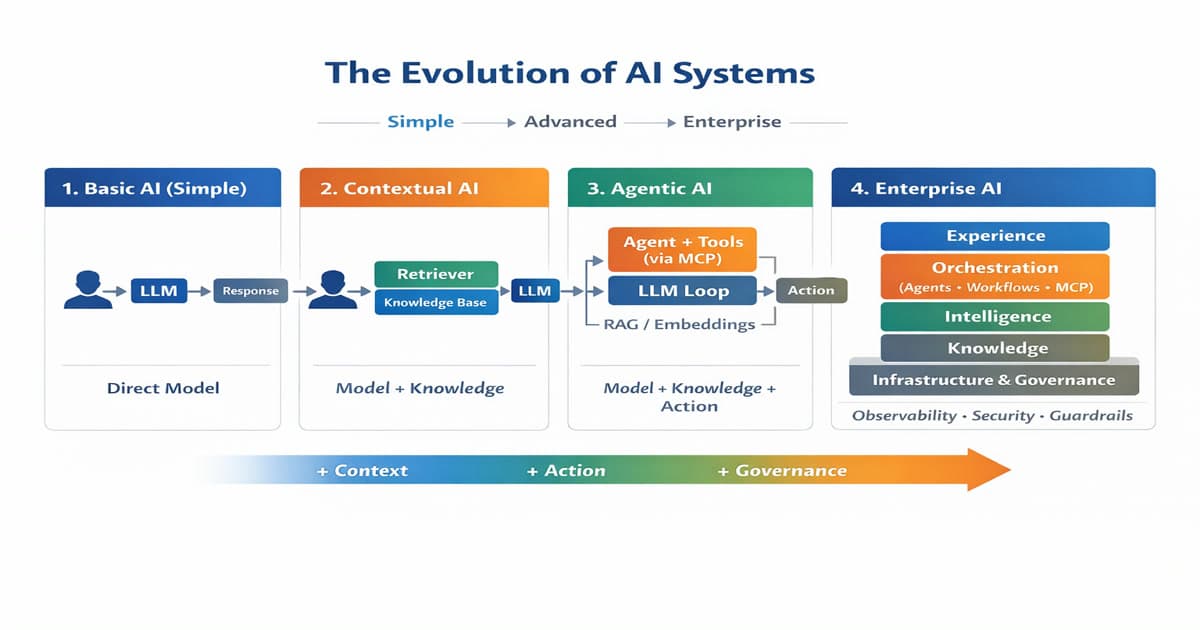
A structured guide explaining how AI systems evolve from simple model usage to governed platforms, and how to scale complexity without losing architectural control.
...memory - No system integration - No action capability Risk Level: Low Governance Need: Usage policy, data input restrictions It is a model. Not a system. Contextual AI (Model + Knowledge) Structure: User...
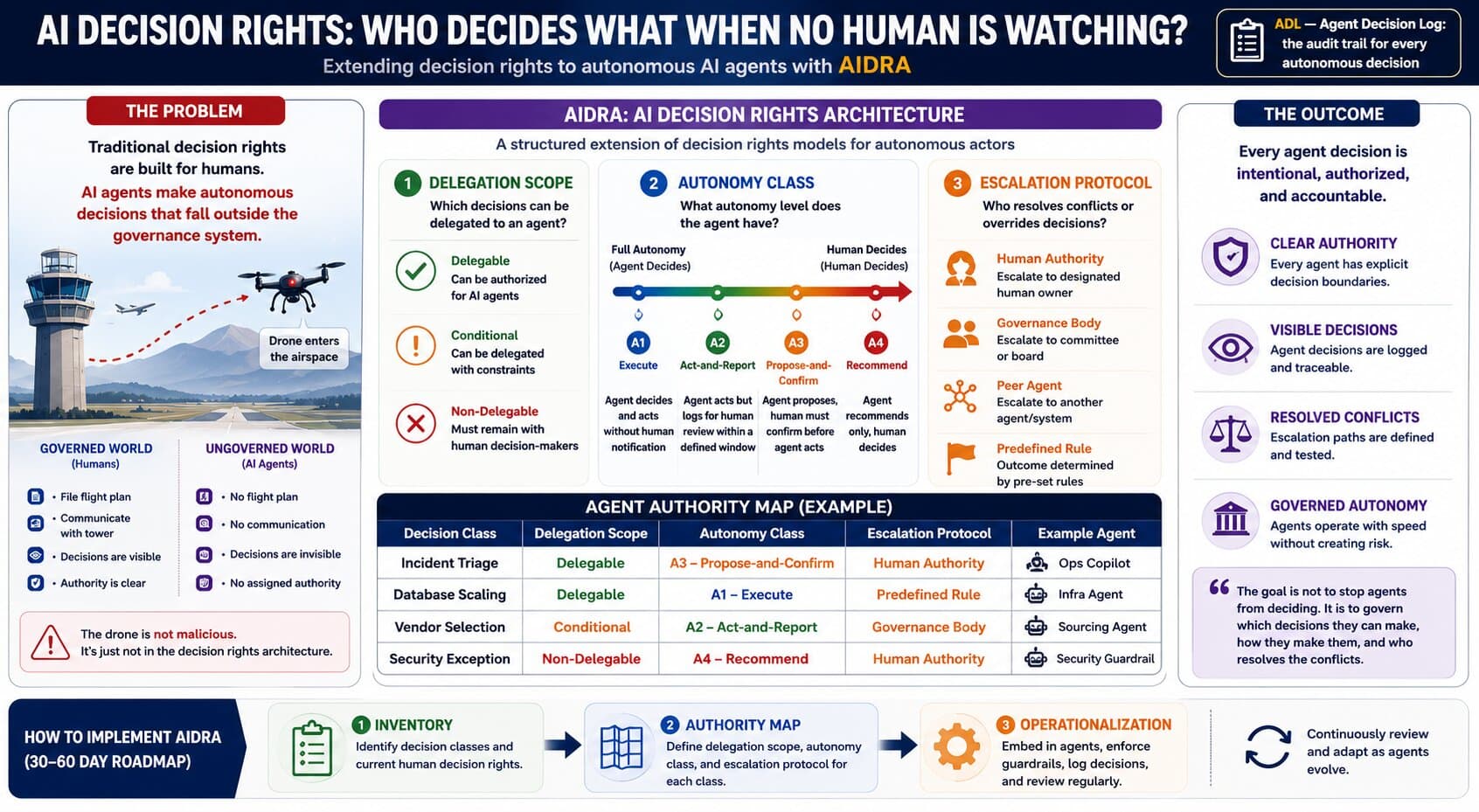
Decision rights models assume human decision-makers. AI agents breach that assumption silently. Here is how to extend decision rights to cover autonomous actors before the first ungoverned decision becomes a production incident.
...mechanisms: Priority rule: One agent's decision domain has authority by design. In a conflict between a security agent and a deployment agent, the security agent's decision prevails — because the domain was...
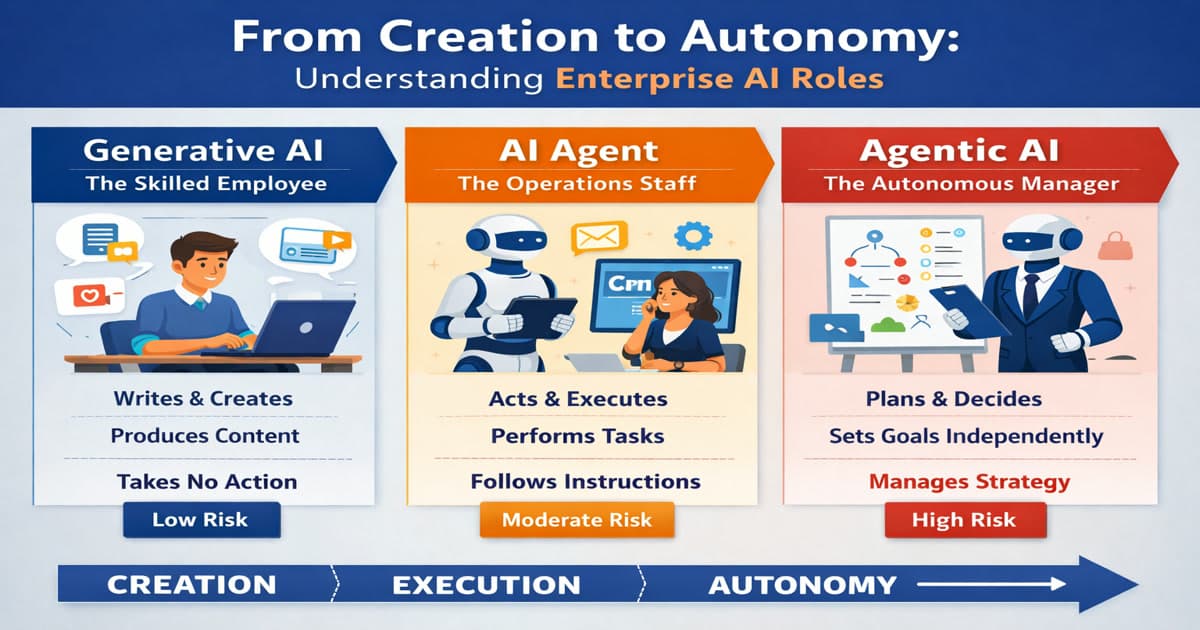
A clear executive guide explaining Generative AI, AI Agents, and Agentic AI using a corporate office analogy to prevent autonomy risks in enterprise AI.
...not update the CRM. It waits for instruction. Risk Level: Low Governance Need: Content review and data control Generative AI produces output. It does not execute decisions. AI Agent = The Operations...
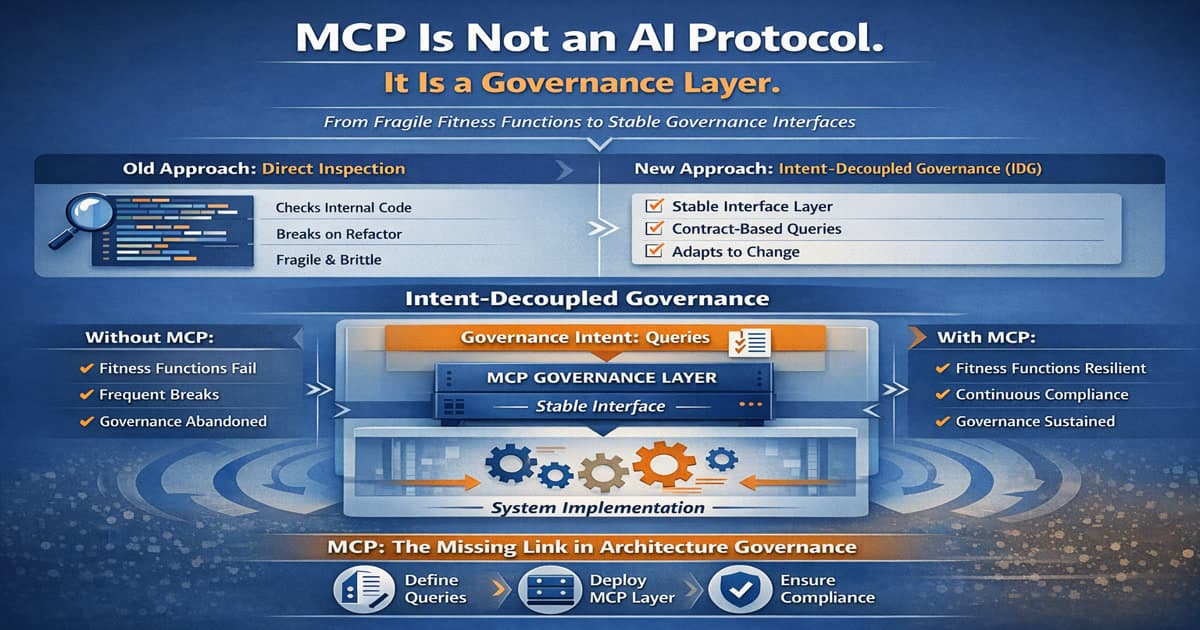
MCP is classified as an AI integration protocol. It is actually a governance primitive — the stable interface layer that architecture fitness functions have been missing for years.
...a provider that holds the answers. The consumer does not need to know how the provider stores its data. The consumer does not need to know how the provider's internal structure is organised. The consumer...