Search

Find insights, training programs, and workshops

Data & AI Direction
Intermediate to Advanced (SA, EA, TS)5-6 hoursData and AI direction framework + AI readiness assessment + governance overlay

How data strategy and AI direction connect to architecture — covering data quality, governance, data architecture for AI, AI enablement, responsible AI, data products, data mesh, and building a data and AI roadmap.

...is unreliable AI, wasted investment, and loss of trust. You can't bolt AI onto bad data. Data & AI direction is the discipline of treating data as a governed asset and designing the architecture that...

1.5 DaysIntensive
CurrentSA · EA · TS
Technology Strategy & Architecture Strategy
Advanced (EA, TS)5-6 hoursTechnology strategy vs architecture strategy distinction map + strategy brief template

How to distinguish technology strategy from architecture strategy, connect both to business strategy, and define a coherent direction for the organisation's technology investments.

...elegant systems that don't serve business outcomes — or worse, architecture decisions contradict business direction. The bridge between business strategy and architecture strategy is business capabilities —...

1.5 DaysIntensive
StrategicEA · TS
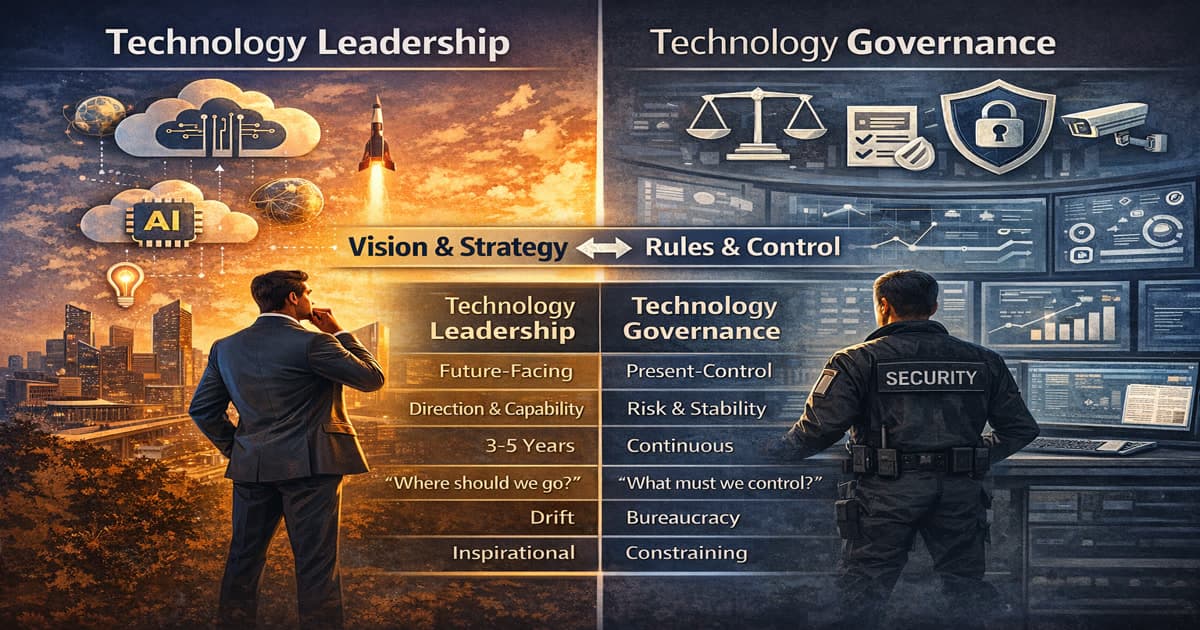
Technology Leadership vs Technology Governance: Why Confusing the Two Creates Structural Instability

A structured executive guide explaining the difference between Technology Leadership and Technology Governance, and why confusing the two creates instability in enterprise execution.

...inspiration-driven leadership and control-driven governance Key outcome: Clear structural separation between direction-setting and constraint-enforcing mechanisms Time to implement clarity: 30–60 days Business...

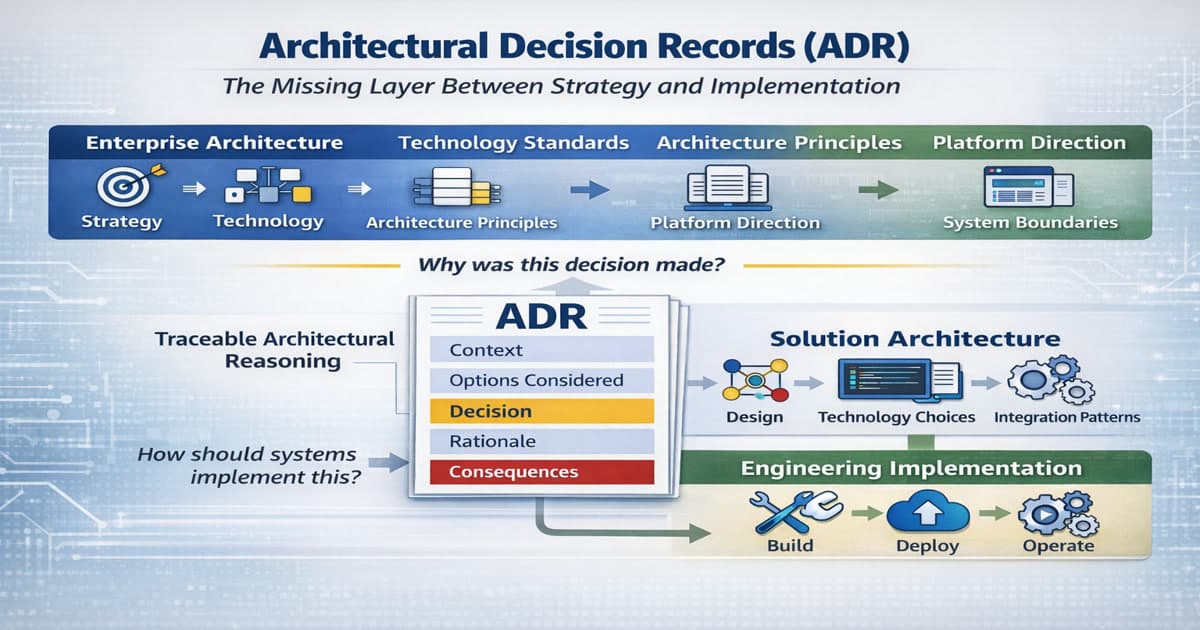
Architectural Decision Records (ADR): The Missing Layer Between Strategy and Implementation

A practical guide explaining why Architectural Decision Records (ADR) are the missing link between enterprise architecture strategy and engineering implementation.

...Technology organizations typically operate across three levels. Enterprise Architecture Defines strategic direction: Technology standards Platform strategy Integration principles Capability models This answers:...

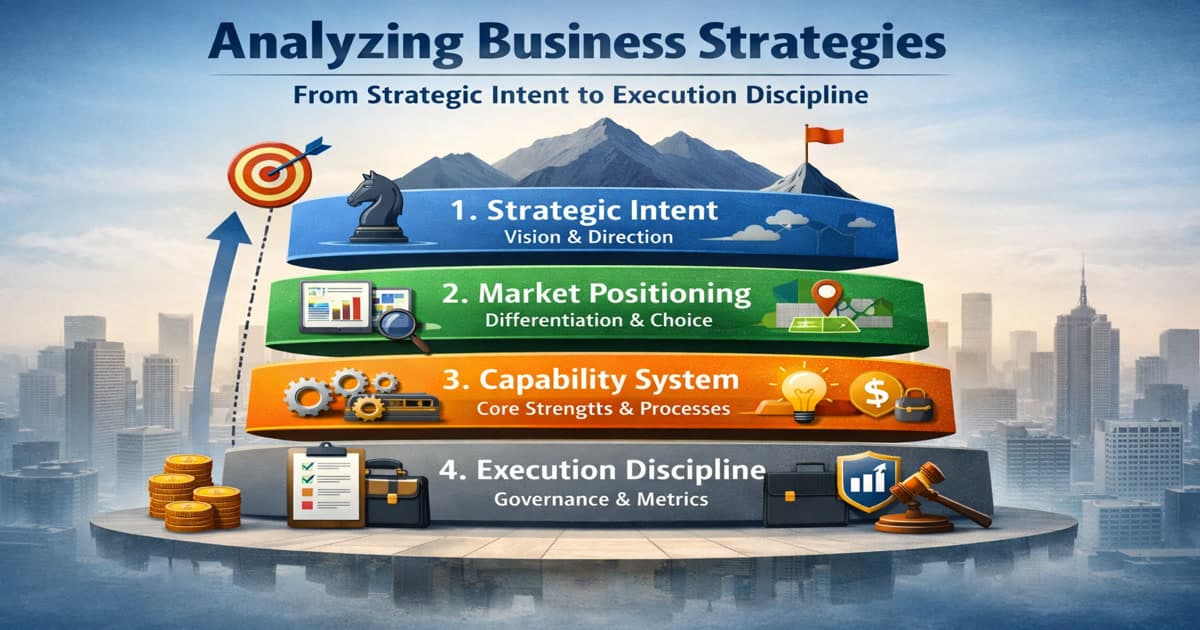
Analyzing Business Strategies: From Strategic Intent to Execution Discipline

A structured executive guide to analyzing business strategies using a four-layer framework that connects intent, positioning, capability, and execution discipline.

...Governance Discipline If one layer is weak, the strategy eventually collapses. Strategic Intent: The Direction This answers: Where are we choosing to play? What long-term outcome defines success? What economic...

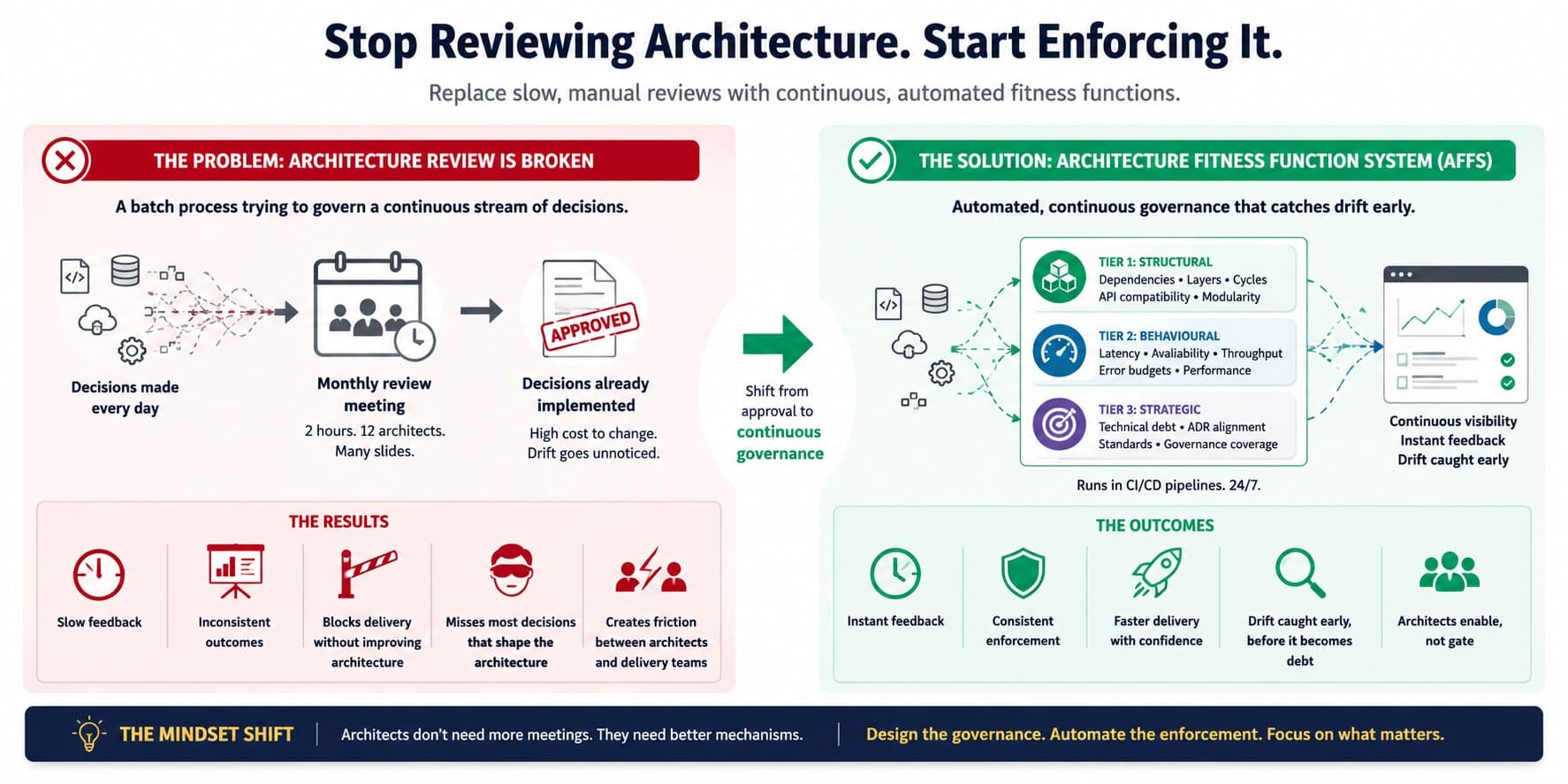
The Architecture Review Is Broken. Replace It with Fitness Functions.

The architecture fitness function literature solved code-level governance. It never made the claim that the board itself becomes optional. Here is the missing argument — and the economics that prove the board is the slower and more expensive option.

...through ungoverned. And because the board reviews decisions after implementation, the cost of changing direction is high. The board becomes a rubber stamp for decisions already committed — or a blocker that...

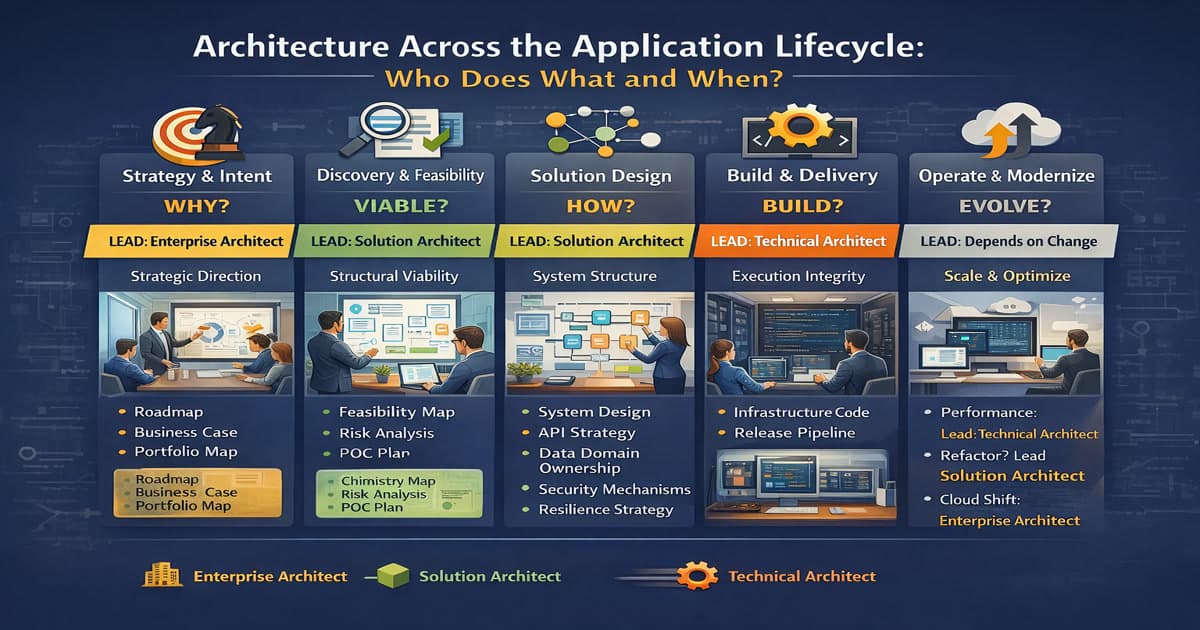
Architecture Across the Application Lifecycle: Which Architect Is Needed When?

A practical guide explaining which type of architect is required at each stage of the application lifecycle to prevent governance friction and structural instability.

...Risk appetite Primary Architectural Owner Enterprise Architect Why? This stage determines structural direction. Mistakes here create strategic misalignment and redundant investment. Who Should Not Lead...

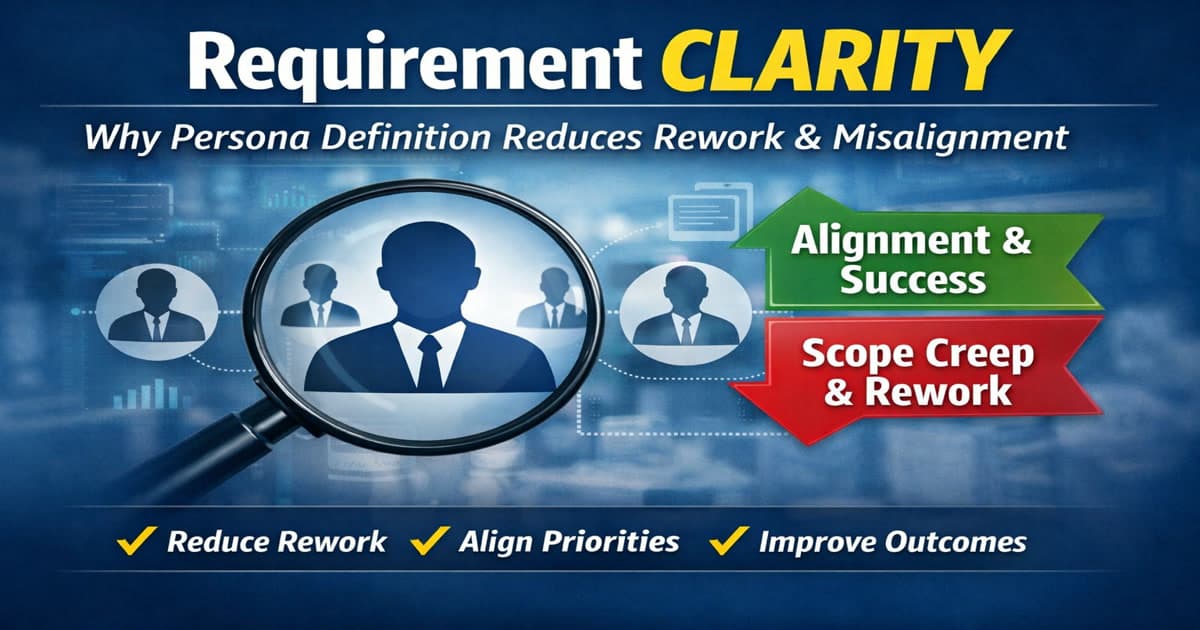
Requirement Clarity: How Structured Persona Definition Reduces Rework and Misalignment

A structured framework for defining personas that eliminates scope creep, reduces rework, and aligns engineering delivery with actual user needs — before development begins.

...same. Identify which category applies: User Persona (system interaction) Decision Persona (approves direction) Buyer Persona (controls budget) Influencer Persona (shapes adoption) Operational Persona (impacted...

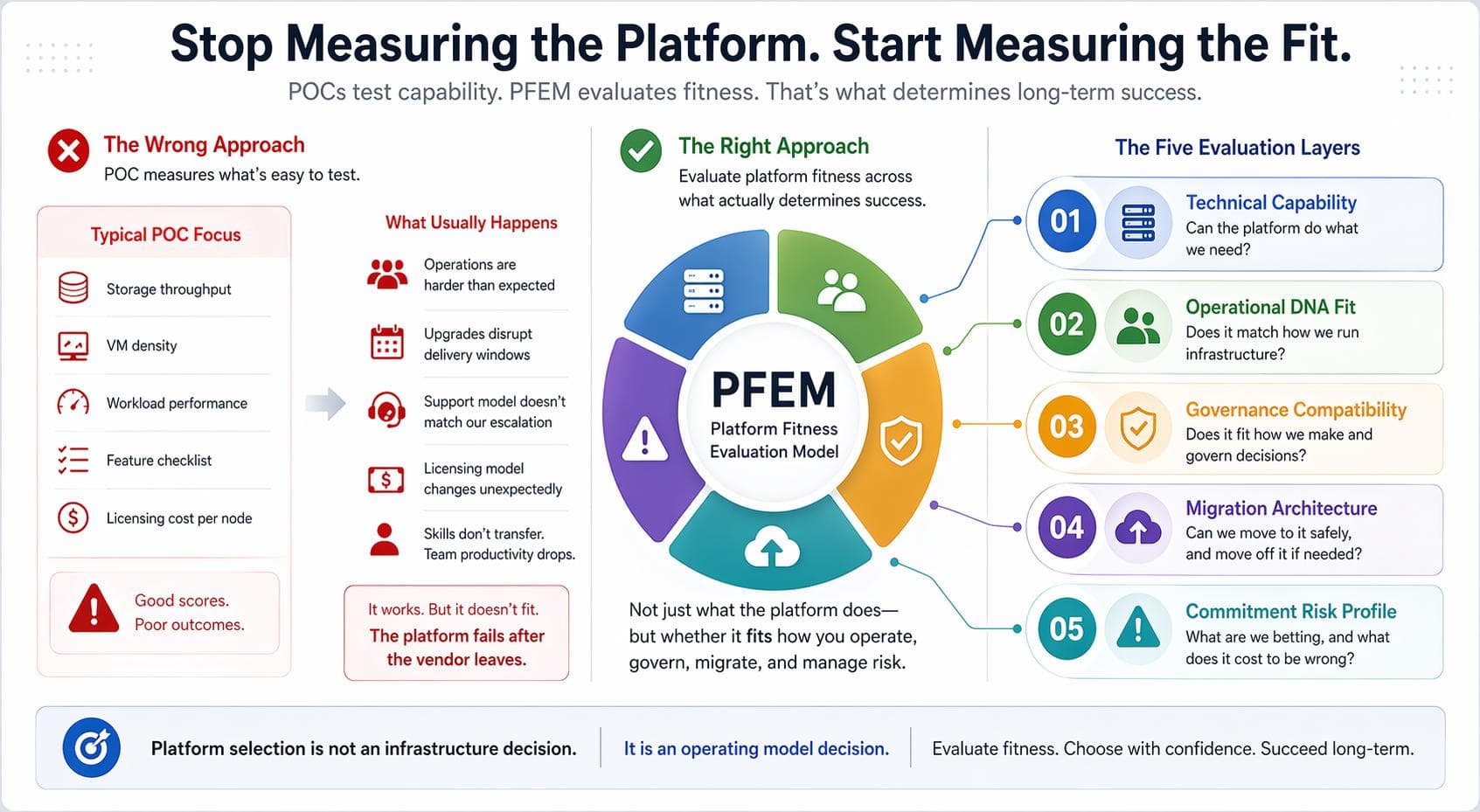
Your HCI Proof of Concept Measures the Wrong Thing.

Most organizations evaluate private cloud and HCI platforms by running a technical POC. The POC passes. The platform fails. The reason is structural — and fixable. The Platform Fitness Evaluation Model (PFEM) tells you what to measure instead.

...tooling Upgrade path clarity across major versions Vendor roadmap alignment with your architecture direction The trap here: Technical capability comparisons are always close. Mature HCI platforms — Nutanix,...

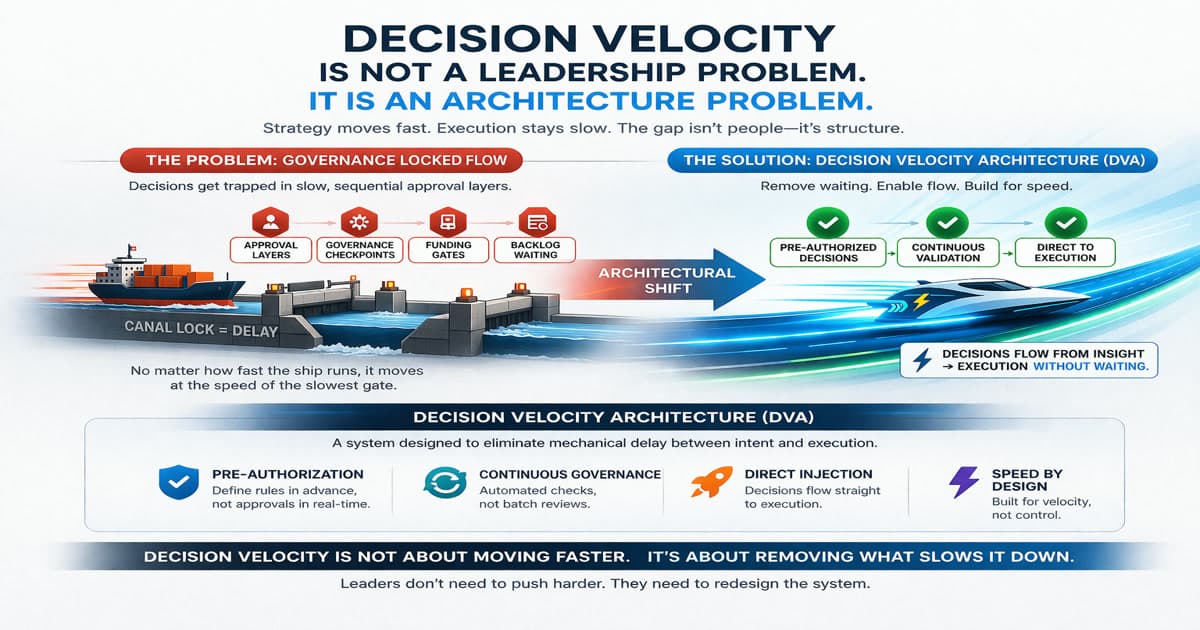
Decision Velocity Is Not a Leadership Problem. It Is an Architecture Problem.

Decision velocity is not constrained by leadership intent but by architectural design. Governance systems built for slower eras create mechanical delay between insight and execution.

...bypassing process to stay fast Leadership spends less time chasing approvals and more time shaping direction The organization becomes faster without becoming chaotic. That is the point. Implementation...