Search

Find insights, training programs, and workshops

Portfolio & Dependency Thinking
All levels — SA, EA, TS4-5 hoursPortfolio map template + dependency radar + investment alignment grid

How to see all systems, initiatives, and investments as a connected whole — understanding dependencies, shared capabilities, and how decisions in one place ripple across others.

...thinking How does this system work? How do all systems connect? What are the components? What are the dependencies? How do we build this? What order do we build things in? What is the best design? What is...

1 dayIntensive
StrategicPortfolio-level
Roadmaps & Transformation Sequencing
Intermediate to Advanced (SA, EA, TS)5-7 hoursRoadmap template + transition state design guide + sequencing logic + dependency overlay

How to build multi-year transformation roadmaps that sequence architectural change realistically — accounting for dependencies, capacity, risk, and the fact that the organisation must continue operating while it transforms.

...with no path to get there. And I've seen roadmaps that were thirty projects with target dates and no dependencies mapped. Neither survived contact with reality. Transition states are as important as the...

1.5 DaysIntensive
StrategicSA · EA · TS
Application & Technology Landscape
All levels — SA, EA, TS4-5 hoursApplication landscape register + technology heat map + dependency matrix

How to build, read, and use the full picture of what an organisation runs — every application, platform, integration, and technology — and how they depend on each other.

...investment decision. Without the landscape, decisions are made blind. With it, duplication becomes visible, dependencies become manageable, and investment becomes evidence-based. Keep it in mind. Why landscape...

1 dayIntensive
PracticalLandscape exercise
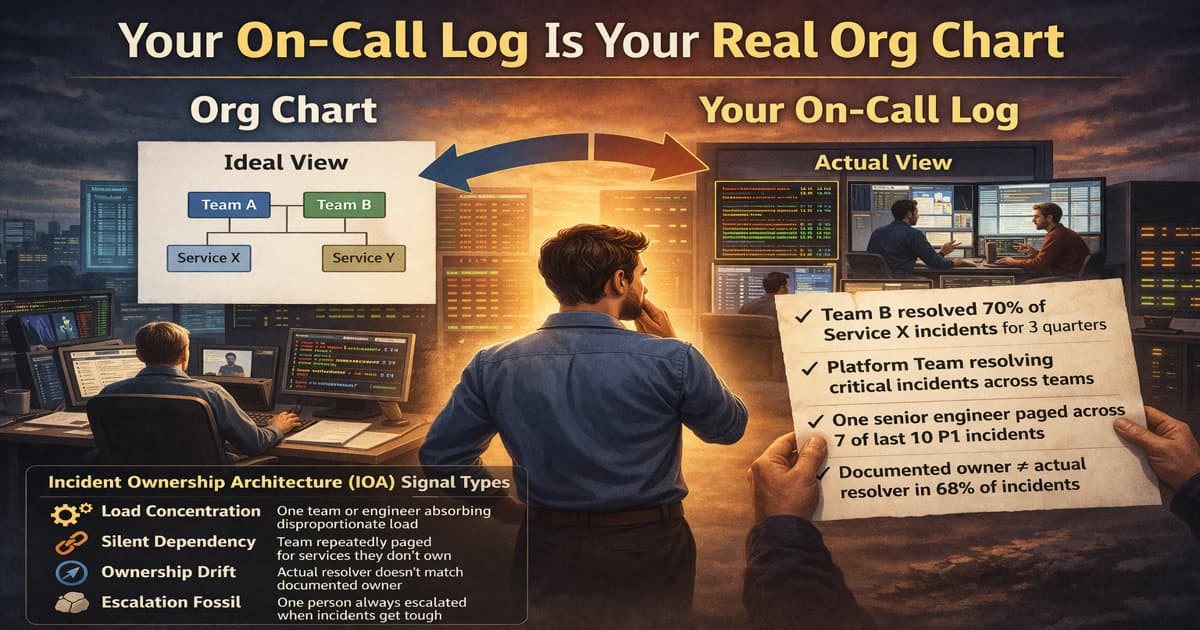
Your On-Call Log Is Your Real Org Chart.

Why on-call rotation data is the most accurate org chart your engineering organisation has — and almost nobody uses it to make structural decisions.

...failure modes were unknown. Six months later, the systems have grown. Teams have shifted. Informal dependencies have calcified into operational necessity. And the hypothesis — never tested, never updated...

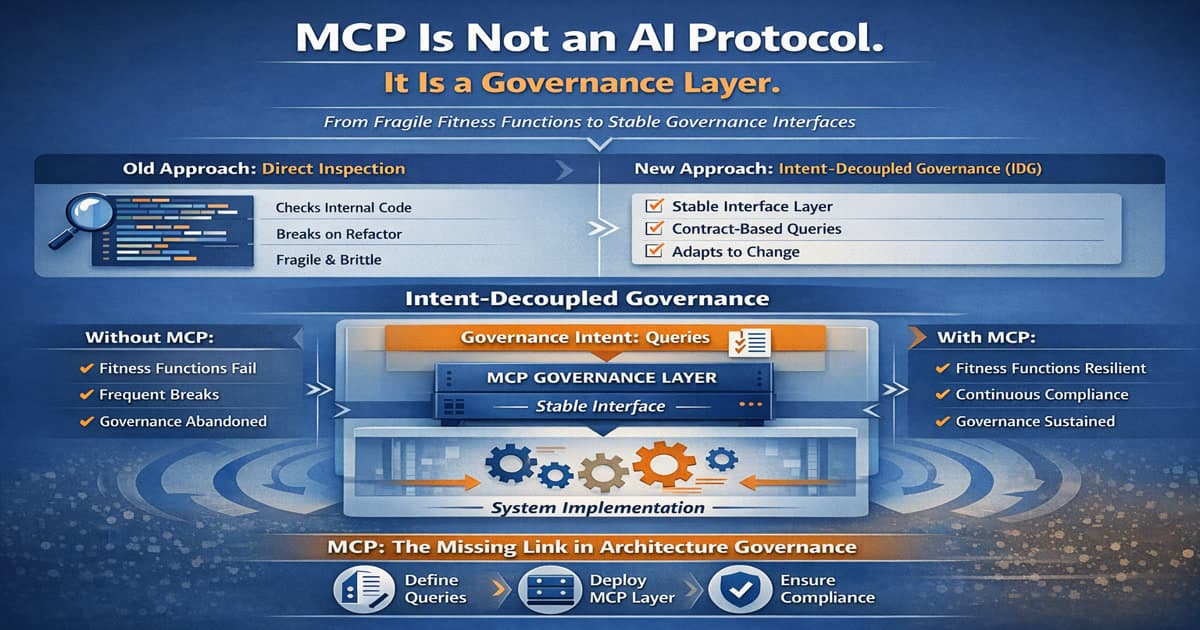
MCP Is Not an AI Protocol. It Is a Governance Layer.

MCP is classified as an AI integration protocol. It is actually a governance primitive — the stable interface layer that architecture fitness functions have been missing for years.

...function. It does not care whether the question is "what documents do you have?" or "how many upstream dependencies does this service hold?" The mechanism is identical. The governance application has simply...

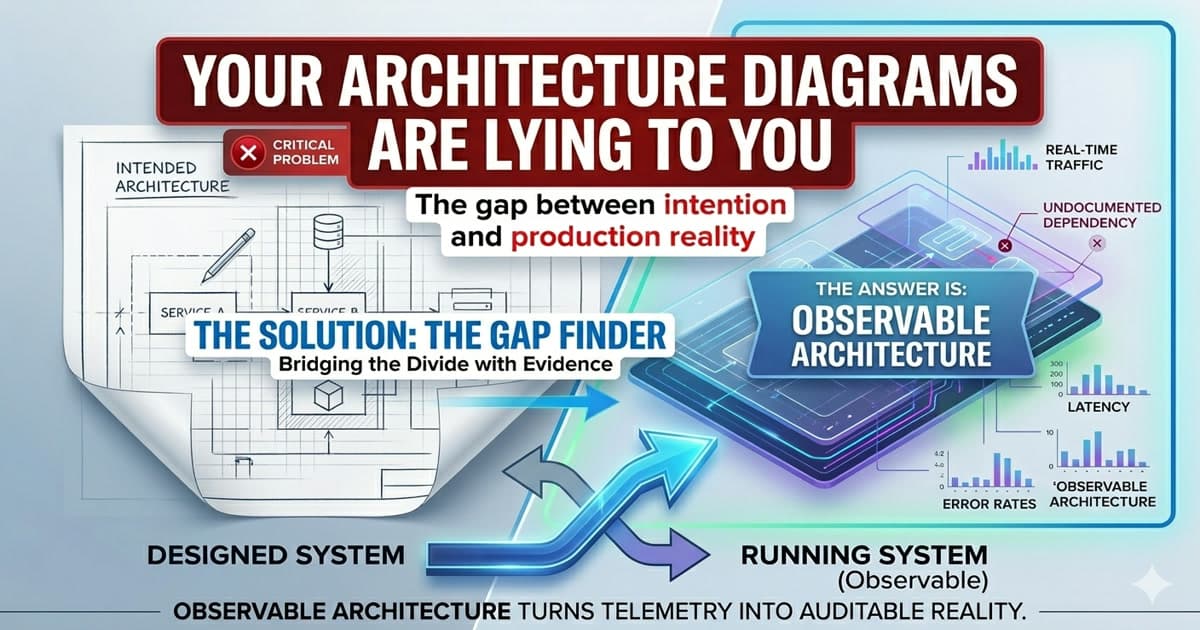
Your Architecture Diagrams Are Lying to You

Why architecture diagrams describe a system that no longer exists, and how Observable Architecture uses production telemetry to reveal what is actually running.

...exist. Capacity planning models flows that were replaced eighteen months ago. Impact assessments miss dependencies that never appeared in the design. The architecture is being governed. Just not the architecture...

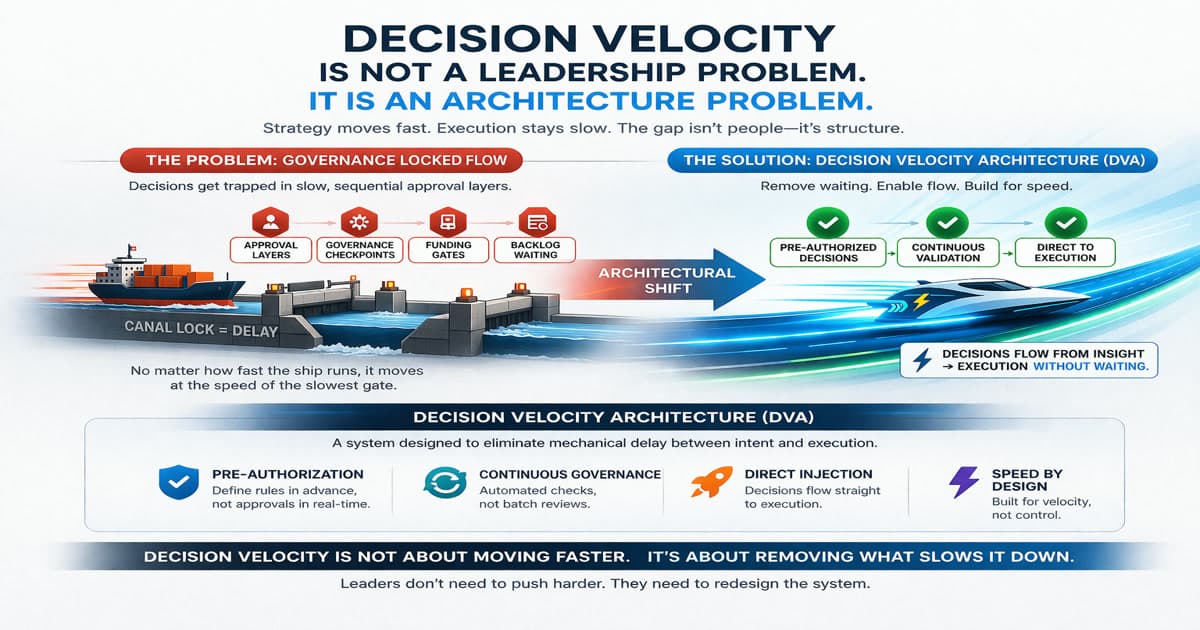
Decision Velocity Is Not a Leadership Problem. It Is an Architecture Problem.

Decision velocity is not constrained by leadership intent but by architectural design. Governance systems built for slower eras create mechanical delay between insight and execution.

...moving around it. They create untracked shortcuts. They use unapproved tools. They introduce hidden dependencies. The business appears faster. The architecture becomes less governable. Governance Becomes...

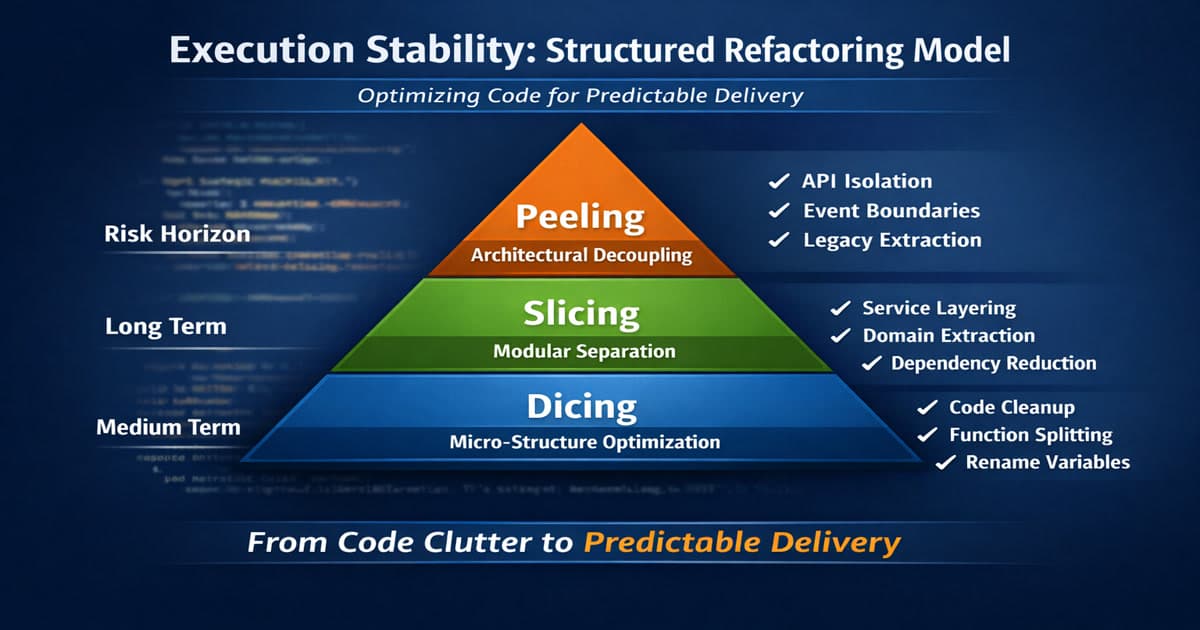
Execution Stability: How Structured Refactoring Improves Delivery Predictability

A practical framework for reducing delivery slowdown caused by unmanaged structural code complexity — improving cycle time, reducing regression risk, and clarifying ownership boundaries.

...Extracting legacy core behind stable APIs Introducing asynchronous boundaries Removing shared database dependencies Isolating high-risk legacy subsystems Peeling changes topology. It must be governed carefully....

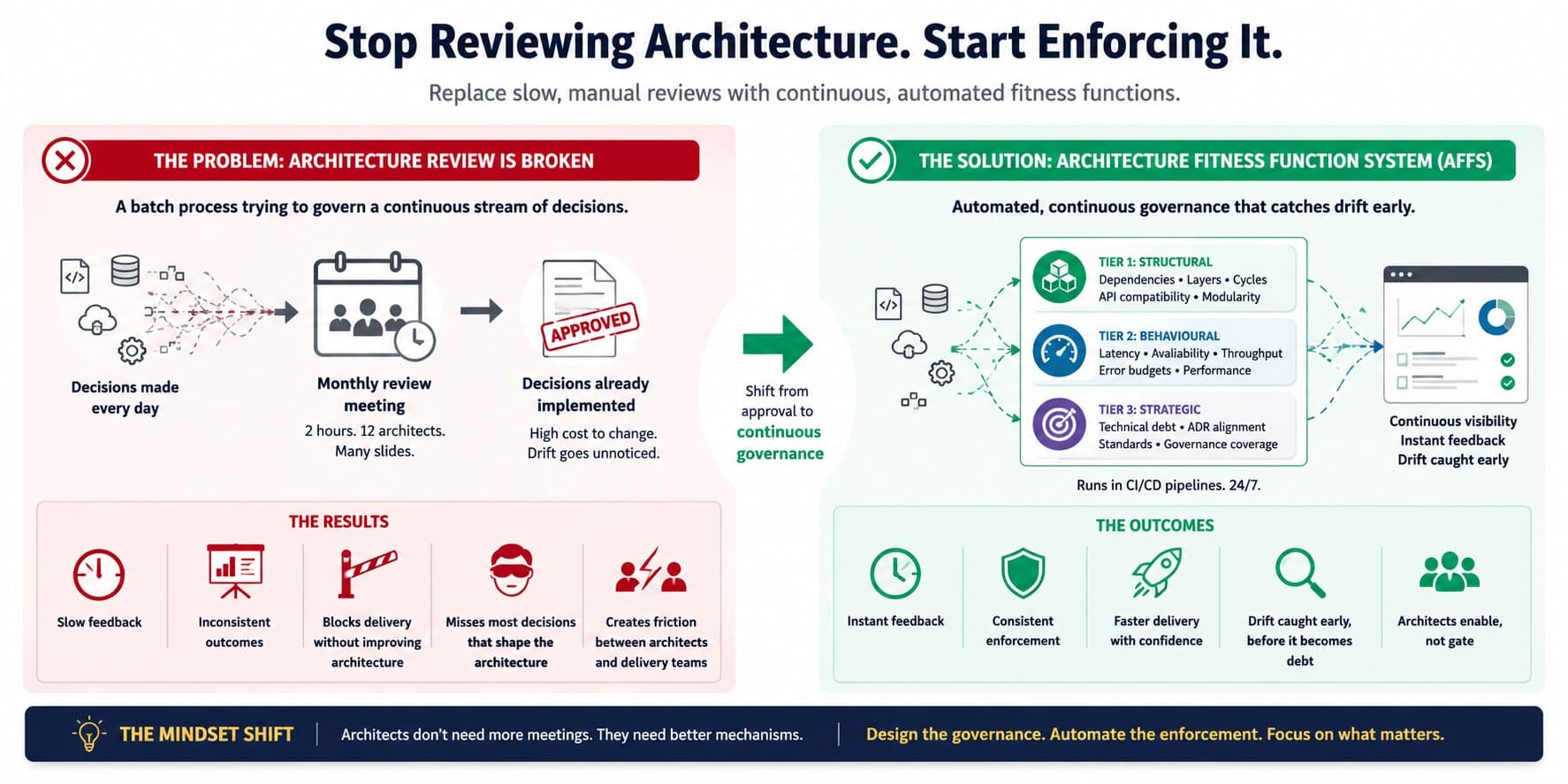
The Architecture Review Is Broken. Replace It with Fitness Functions.

The architecture fitness function literature solved code-level governance. It never made the claim that the board itself becomes optional. Here is the missing argument — and the economics that prove the board is the slower and more expensive option.

...reverse The public API surface must never introduce a breaking change without an ADR The number of circular dependencies must never exceed a defined threshold The p95 response time under defined load must never...

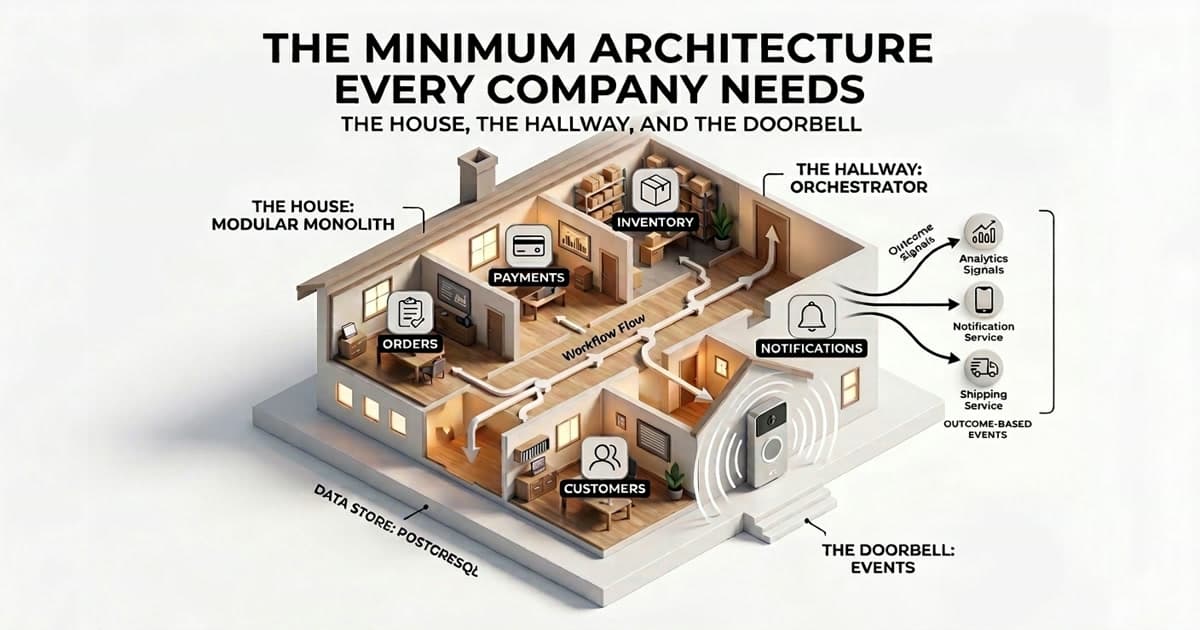
The Minimum Architecture Every Company Needs: The House, the Hallway, and the Doorbell

A practical architectural model explaining why most companies only need a modular monolith, a workflow orchestrator, and outcome-based events.

...controls complexity in three important ways. Structural Clarity Modules create clear system boundaries. Dependencies remain controlled. Workflow Visibility The orchestrator makes business processes explicit....