Search

Find insights, training programs, and workshops

Technology, Infrastructure, Cloud & Security Design
Intermediate to Advanced (SA, EA)6-8 hoursInfrastructure decision framework + cloud pattern reference + security controls map

Where abstract architecture meets physical reality — choosing the platforms, compute, networking, and security controls that make the solution work at scale.

Quick Navigation Start here — Technology selection Cloud fundamentals Infrastructure design Cloud patterns Security design Identity and access management Cost...

2 DaysIntensive
PracticalSA · EA
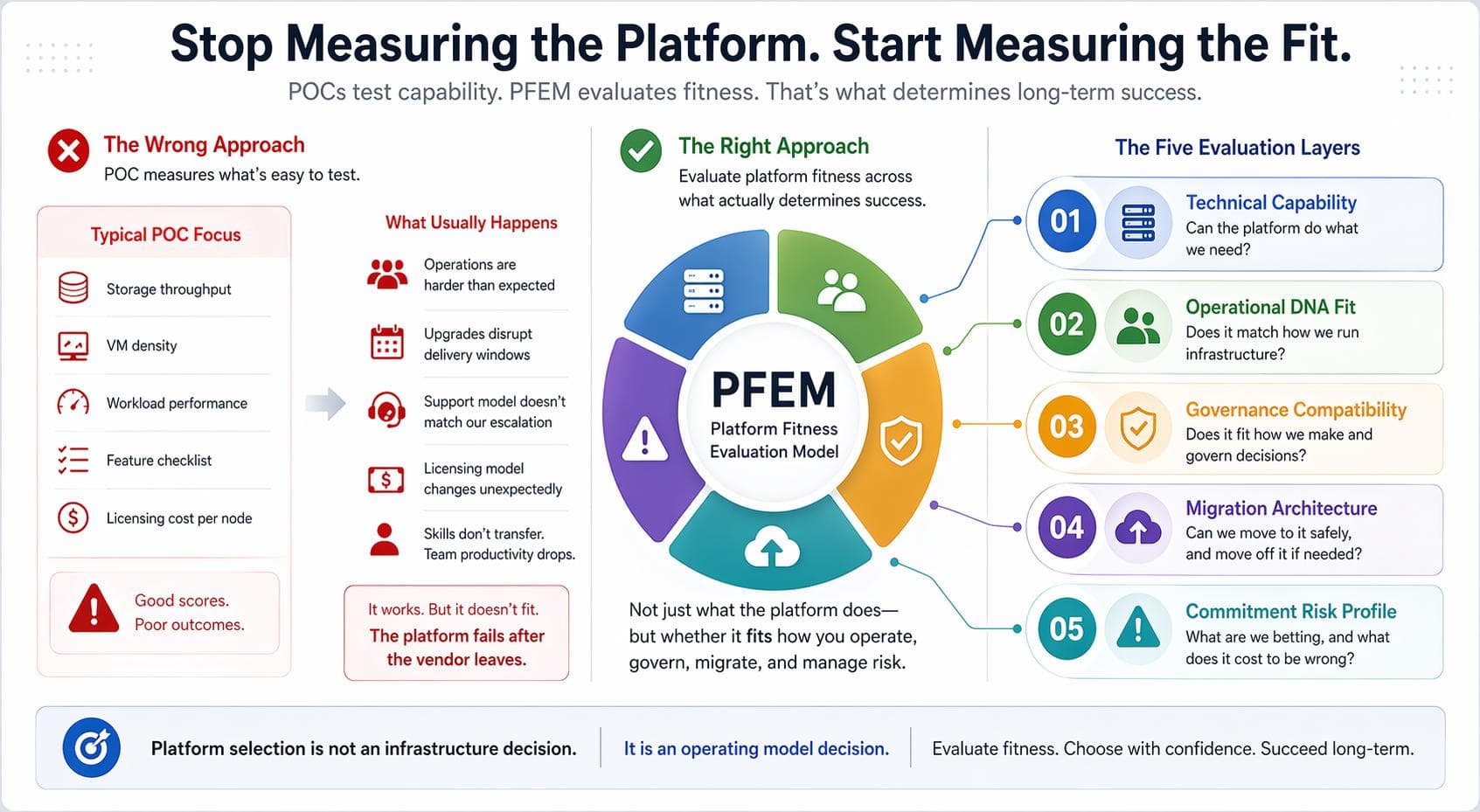
Your HCI Proof of Concept Measures the Wrong Thing.

Most organizations evaluate private cloud and HCI platforms by running a technical POC. The POC passes. The platform fails. The reason is structural — and fixable. The Platform Fitness Evaluation Model (PFEM) tells you what to measure instead.

...Architects, Infrastructure Leaders, IT Decision Makers Problem it solves: Organizations select private cloud and HCI platforms using technical benchmarks that do not predict long-term success Key insight:...

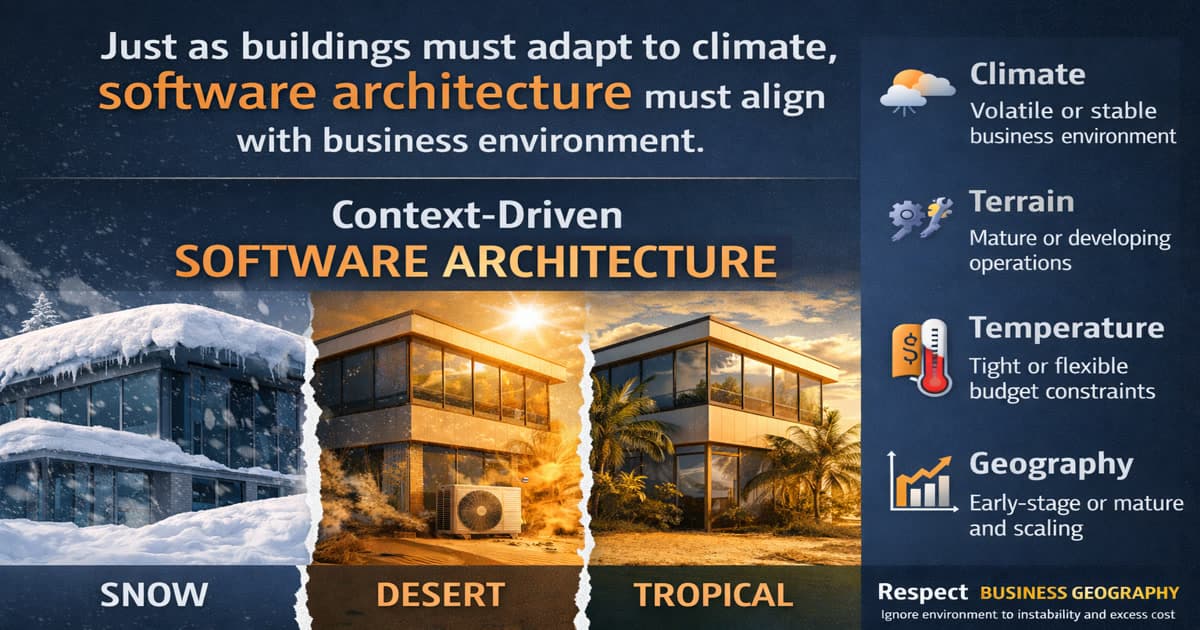
Context-Driven Architecture: Why Software Design Must Adapt to Business Geography

Just as buildings must adapt to snow, desert, or tropical climates, software architecture must align with business geography to improve predictability and reduce complexity.

...considering business environment Key outcome: Reduced complexity, improved system resilience, controlled cloud costs, stronger delivery predictability Time to implement: 60–90 days for environmental assessment...

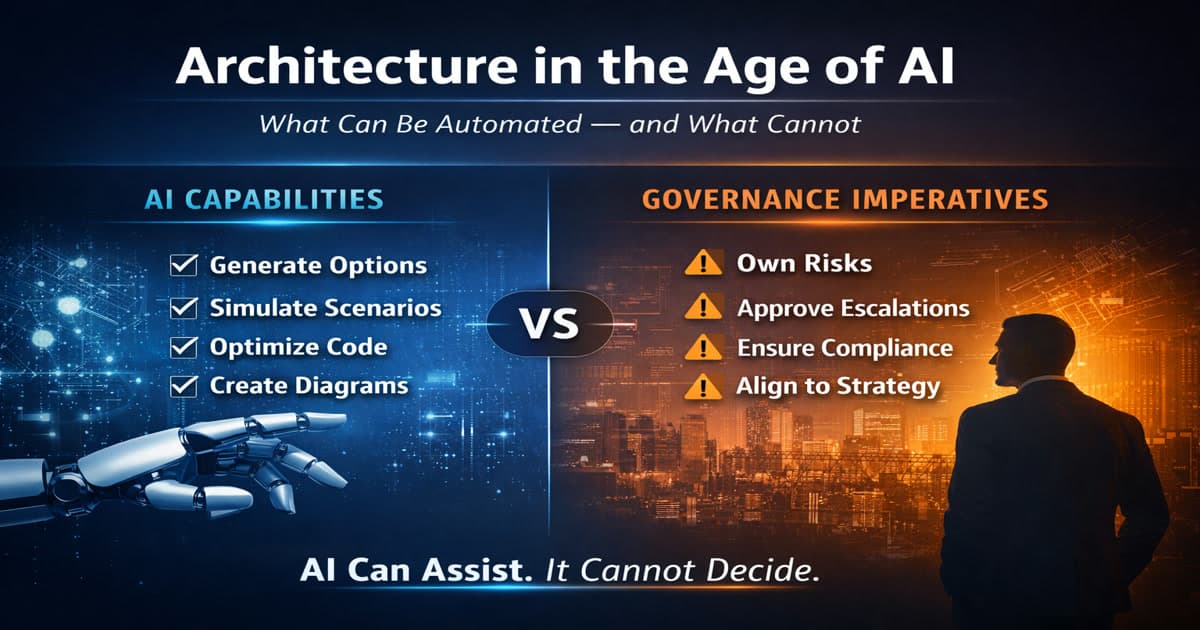
Architecture in the Age of AI: What Can Be Automated — and What Cannot

A governance-driven perspective explaining why software architecture cannot be automated because decision accountability and consequence ownership cannot be delegated to AI.

...environment The Question Everyone Is Quietly Asking If AI can generate code, design microservices, suggest cloud patterns, and simulate load scenarios — Do we still need architects? The wrong way to answer this...

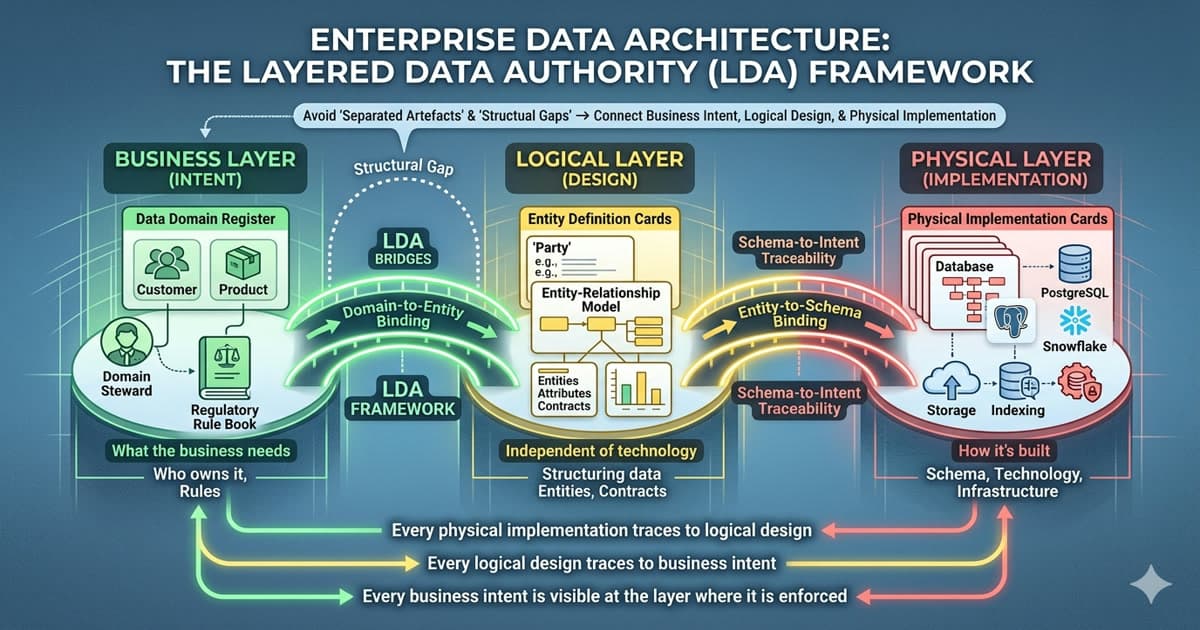
Complete Enterprise Data Architecture Framework: Business, Logical, Physical Layers with Real Templates

Most enterprises build data architectures one layer at a time. Business, logical, and physical layers exist as separate artefacts owned by separate teams. That separation is the structural gap that makes data estates ungovernable.

...room. She wants to know which database, which partitioning strategy, which index design, and which cloud region. Three legitimate questions. Three completely different answers. All describing the same...

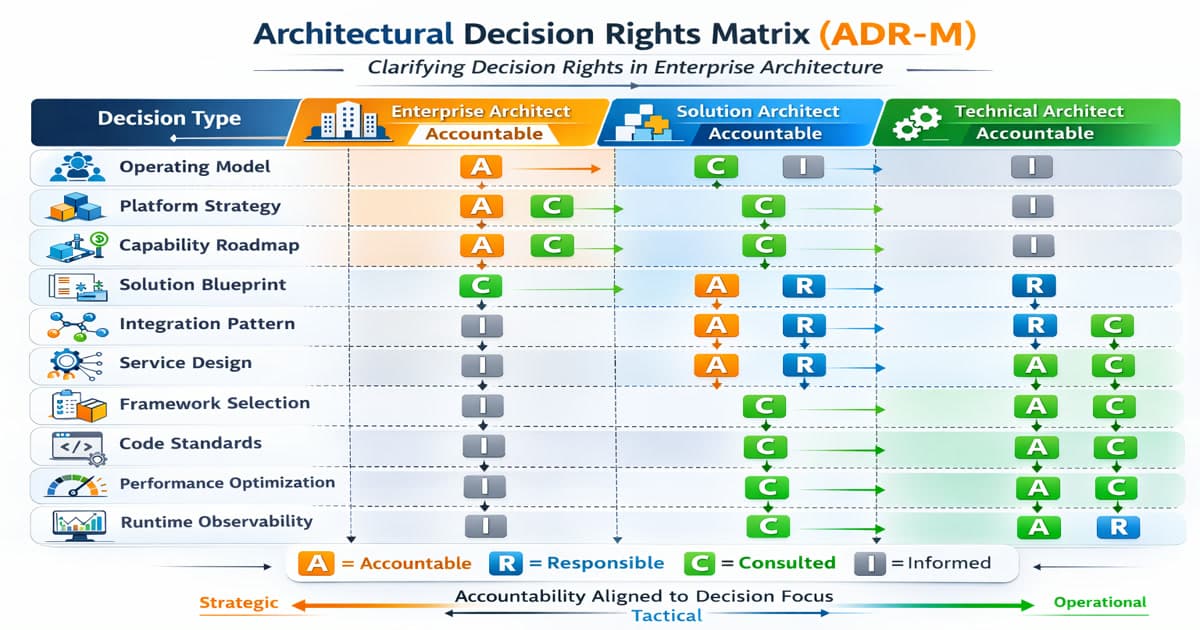
Architectural Decision Rights Matrix: Governing Enterprise, Solution, and Technical Architecture

A governance framework introducing the Architectural Decision Rights Matrix (ADR-M) to clarify accountability between Enterprise, Solution, and Technical Architects in Context-Driven Architecture.

...Solution Architect Technical Architect Operating Model A C I Capability Map A C I Platform Strategy A C I Cloud & AI Posture A C I Governance Principles A C I Strategic decisions shape the environment. They...

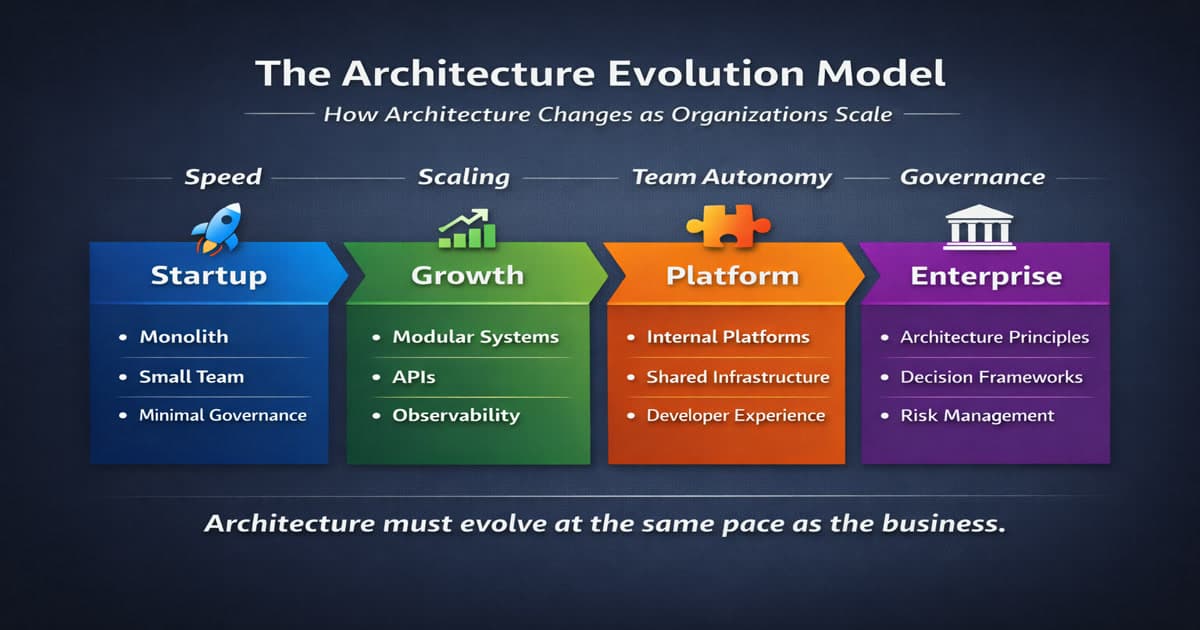
The Architecture Evolution Model: How Architecture Changes from Startup to Enterprise

A practical framework explaining how software architecture evolves from startup experimentation to enterprise-scale governance, and what architectural practices are needed at each stage.

...Example A startup building a SaaS platform might begin with: Single backend service Single database Cloud deployment Simple CI/CD pipeline This is entirely appropriate. Overengineering at this stage slows...

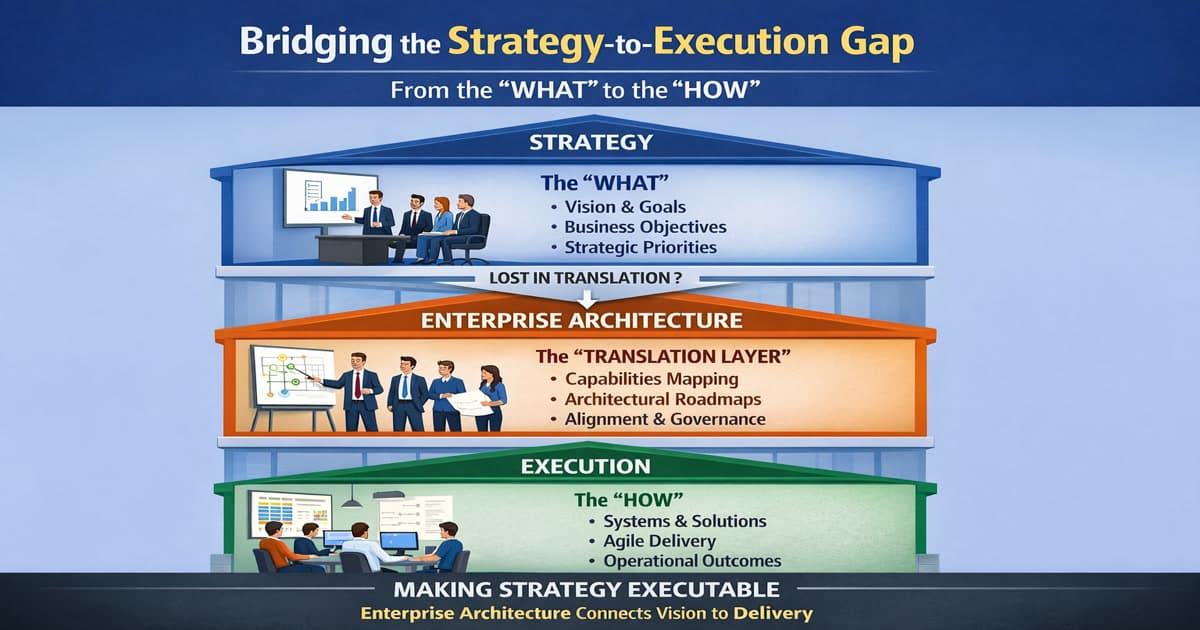
The Strategy-to-Execution Gap: How Enterprise Architecture Bridges the 'What' and the 'How'

Why strategic intent evaporates before it reaches engineering teams — and how Enterprise Architecture creates the translation layer that makes organizational strategy executable.

...strategy. Become the most customer-centric platform in our category. Shift forty percent of workloads to cloud within eighteen months. Enter three new markets by end of Q4. The strategy is documented. Presented....

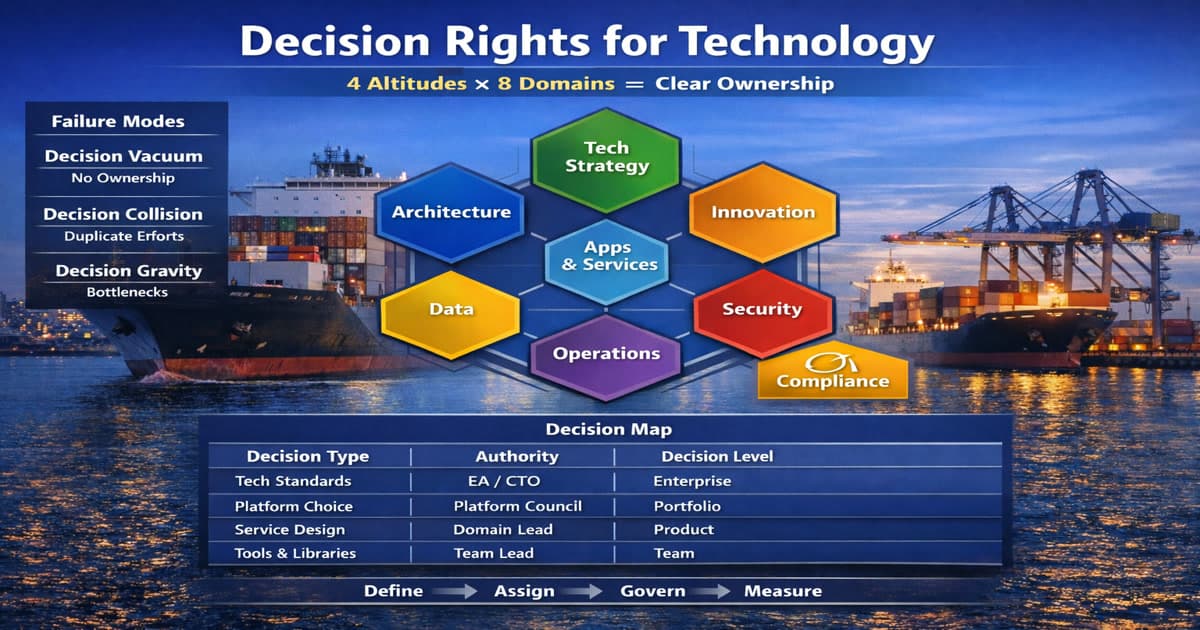
Decision Rights for Technology — Who Decides What in a Modern Enterprise

Why most enterprises confuse escalation ladders with decision rights — and how Technology Decision Domain Architecture maps exactly who decides what, at which altitude, before the conflict arrives.

...3: Decision Gravity All decisions pull upward. Regardless of their actual altitude. Library choice. Cloud provider. Platform build versus buy. API naming conventions. All of them travel up the same chain....

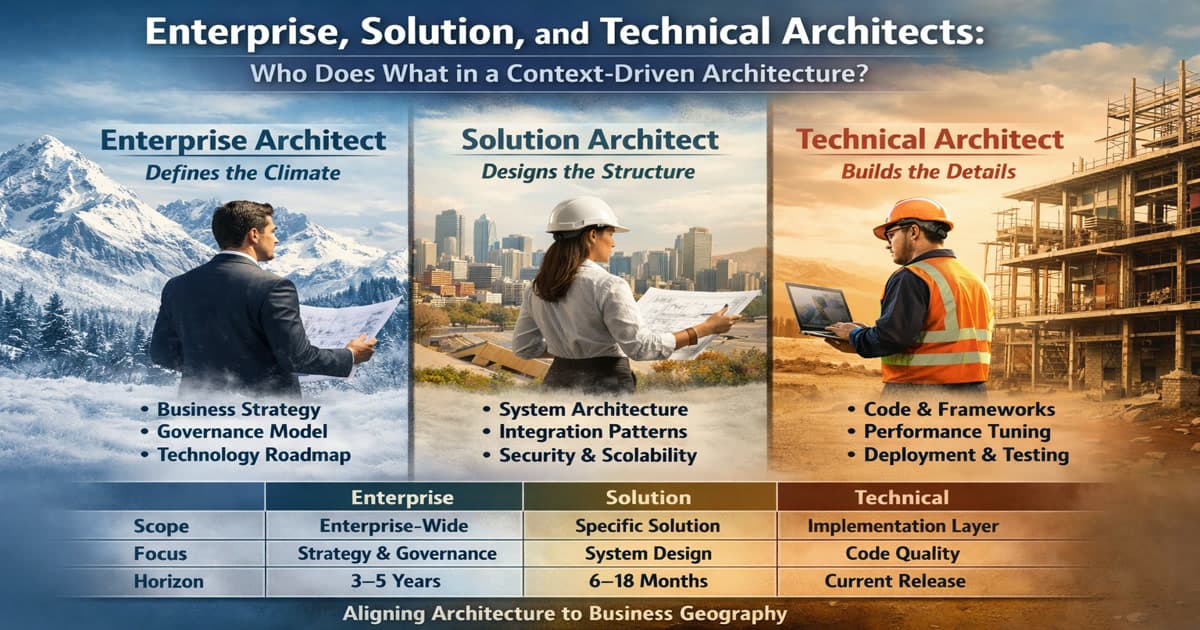
Enterprise, Solution, and Technical Architects: Who Does What in a Context-Driven Architecture?

A structured executive guide explaining the difference between Enterprise, Solution, and Technical Architects using Context-Driven Architecture to clarify responsibilities and reduce structural misalignment.

...model Capability map Technology principles Platform strategy Governance structure Buy vs build posture Cloud and AI positioning They answer: “Given our business geography, what structural patterns should...