Search

Find insights, training programs, and workshops

Technology, Infrastructure, Cloud & Security Design
Intermediate to Advanced (SA, EA)6-8 hoursInfrastructure decision framework + cloud pattern reference + security controls map

Where abstract architecture meets physical reality — choosing the platforms, compute, networking, and security controls that make the solution work at scale.

Quick Navigation Start here — Technology selection Cloud fundamentals Infrastructure design Cloud patterns Security design Identity and access management Cost and lock-in FinOps Putting...

2 DaysIntensive
PracticalSA · EA
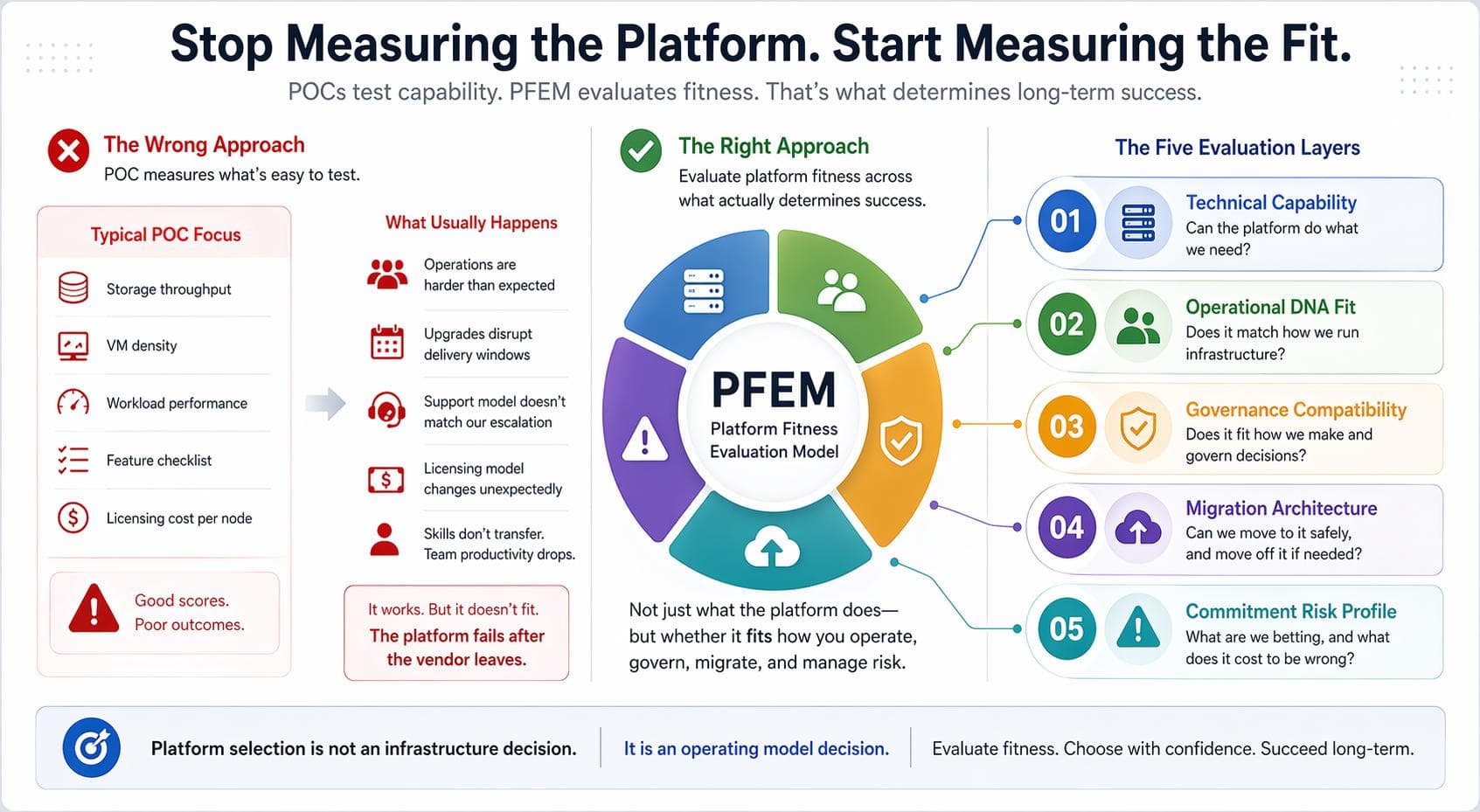
Your HCI Proof of Concept Measures the Wrong Thing.

Most organizations evaluate private cloud and HCI platforms by running a technical POC. The POC passes. The platform fails. The reason is structural — and fixable. The Platform Fitness Evaluation Model (PFEM) tells you what to measure instead.

Executive Summary Who this is for: CTOs, CIOs, Enterprise Architects, Infrastructure Leaders, IT Decision Makers Problem it solves: Organizations select private cloud and...

AI Implementation & Technical Architecture
Intermediate to Advanced5-7 hoursAI architecture blueprint + MLOps framework + deployment playbook

Turning AI prototypes into reliable, scalable production systems. MLOps, model serving, RAG architecture, monitoring, and the engineering discipline that most AI projects are missing.

...operational backbone Model serving — making models accessible RAG architecture — grounding AI in your data Infrastructure design Monitoring — watching for silent degradation Scaling The production pipeline in...

2 DaysIntensive
ArchitectureBlueprint
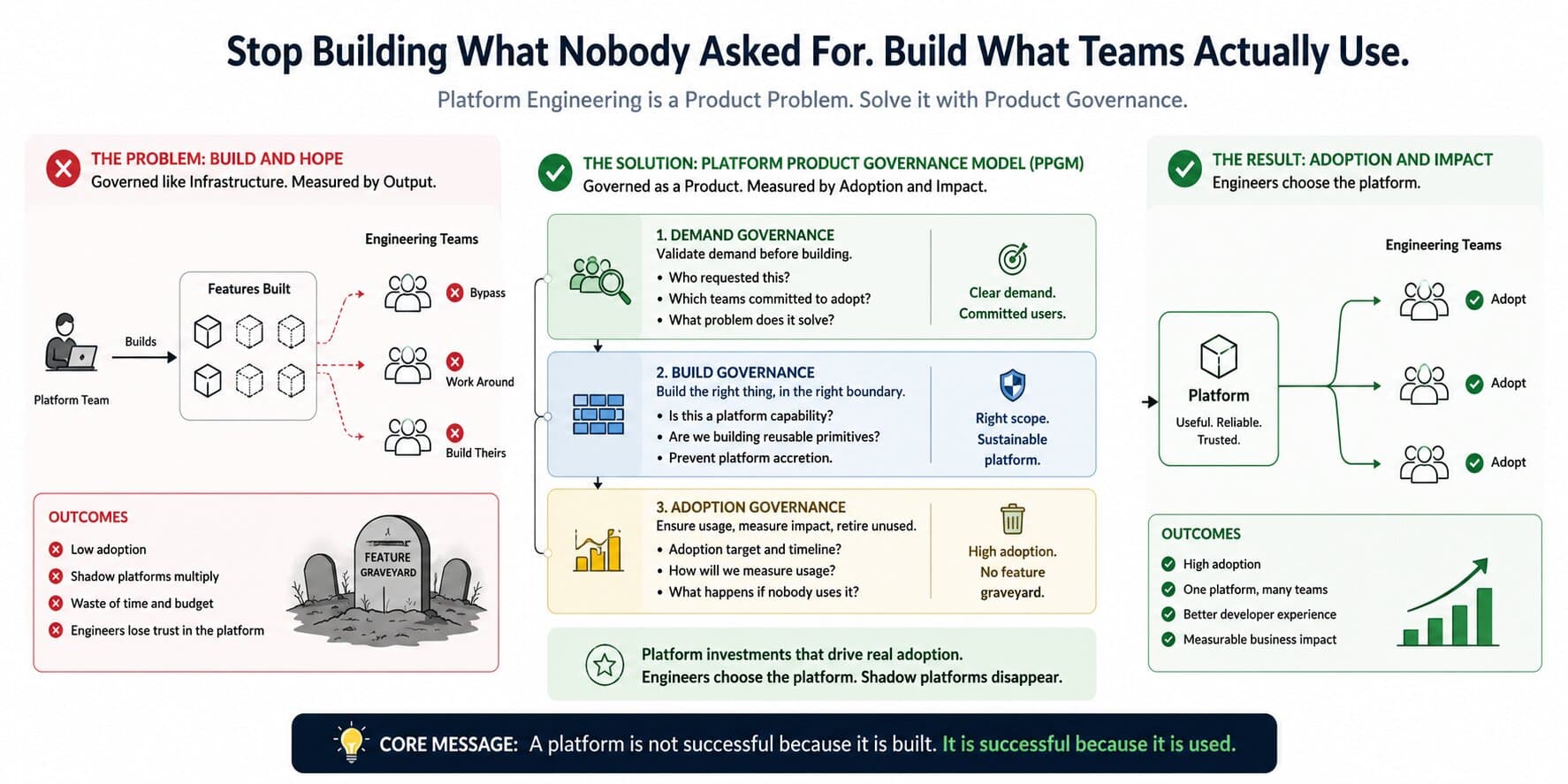
Your Platform Team Is Building a Product Nobody Asked For.

Most platform teams build internal products their engineering teams never chose. Platform adoption is not a marketing problem. It is a product governance problem. Here is the model that fixes it.

...because the platform was designed without product governance Key insight: Platform engineering is not an infrastructure initiative. It is a product initiative. And products fail when nobody owns the user. Core...

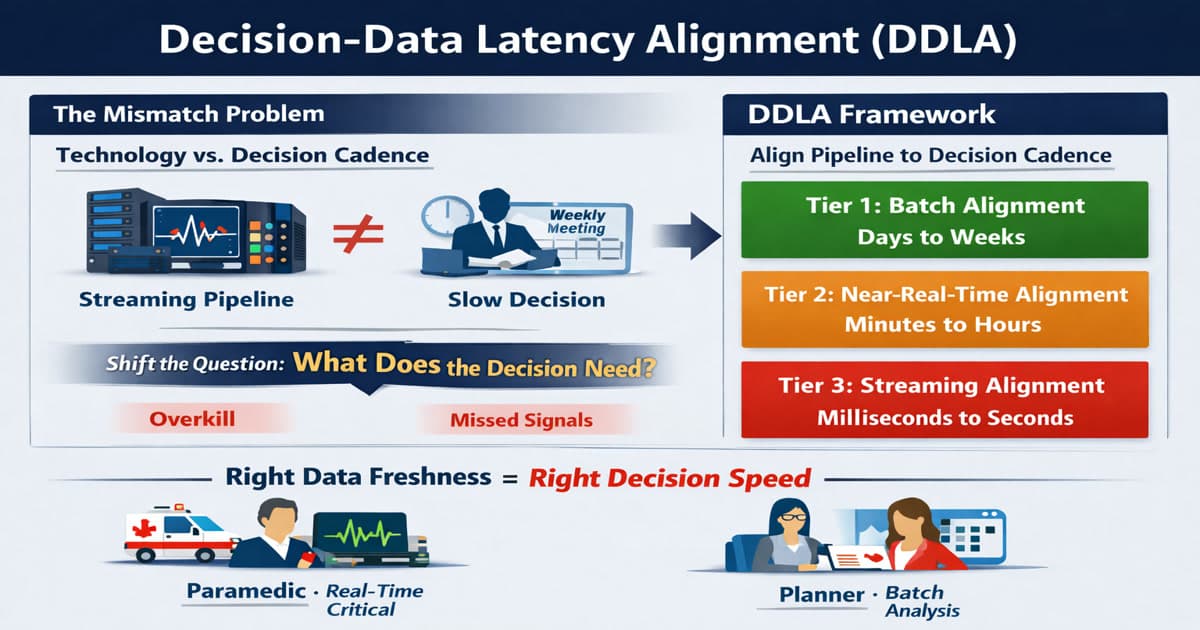
Batch vs Real-Time Is the Wrong Debate.

Organisations debate batch versus real-time as if it is a technical preference. It is not. It is a structural mismatch between data freshness and decision cadence — and the mismatch is where the cost lives.

...freshness to the cadence of the decisions it serves Time to implement: 30–60 days Business impact: Reduced infrastructure waste, eliminated structural failure in latency-sensitive systems, architectures that...

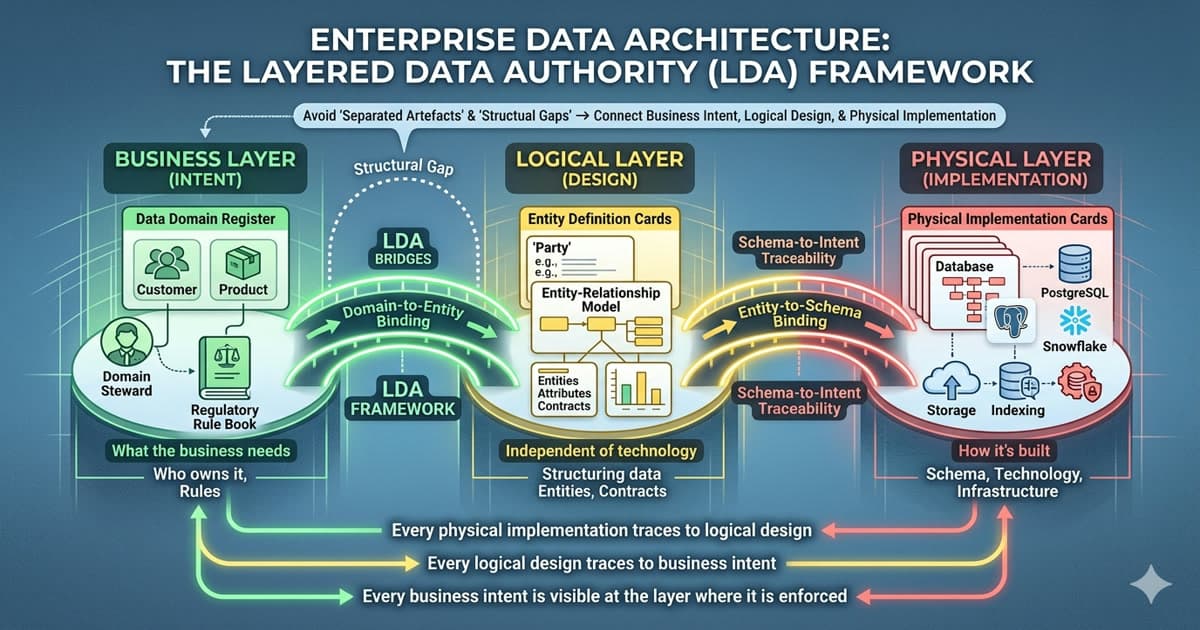
Complete Enterprise Data Architecture Framework: Business, Logical, Physical Layers with Real Templates

Most enterprises build data architectures one layer at a time. Business, logical, and physical layers exist as separate artefacts owned by separate teams. That separation is the structural gap that makes data estates ungovernable.

...model. The architect's entity diagram does not trace to the engineer's physical schema. The engineer's infrastructure spec does not map back to the business rule it was built to enforce. Three layers. Three...

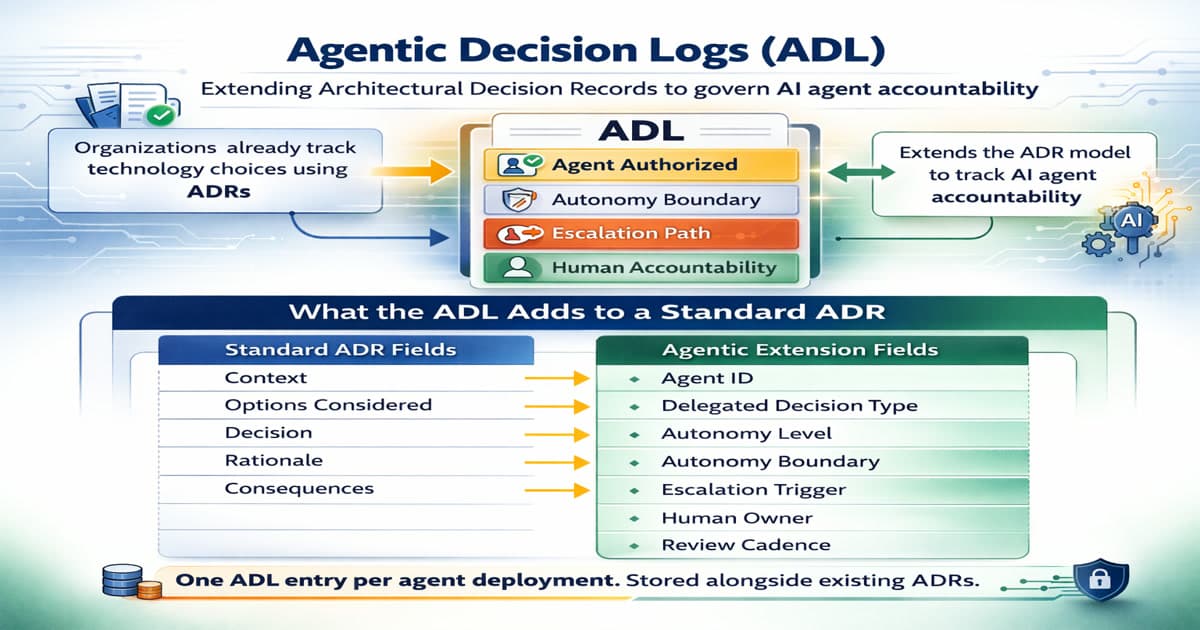
Nobody Uses ADRs as an Agentic Decision Log. They Should.

Why Architectural Decision Records are the only structure most organizations already have that can govern AI agent accountability — and how to extend them into an Agentic Decision Log before the EU AI Act deadline.

...Records into an Agentic Decision Log — creating agent accountability without building new governance infrastructure Time to implement: 30–60 days to introduce the Agentic Decision Log as a governance practice Business...

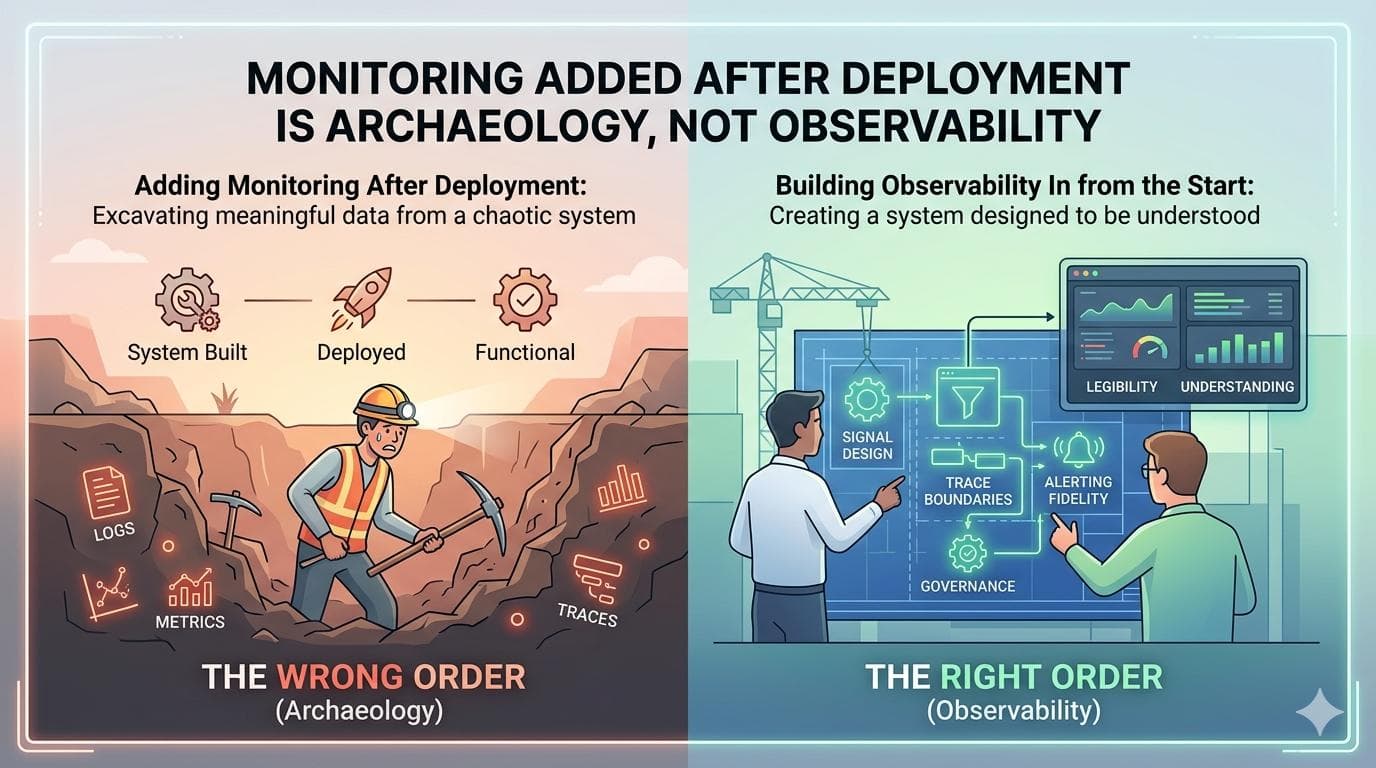
Monitoring Added After Deployment Is Not Observability. It Is Archaeology.

Observability is not a monitoring add-on. It is an architectural constraint. Systems built without observability baked in cannot be understood, cannot be governed, and cannot be improved. The OSAF model tells you exactly where your architecture is blind.

...observability failures are not monitoring failures. They are architecture failures. Observability Is Treated as Infrastructure, Not Design A team adds Prometheus. Another team adds Datadog. A third team adds custom...

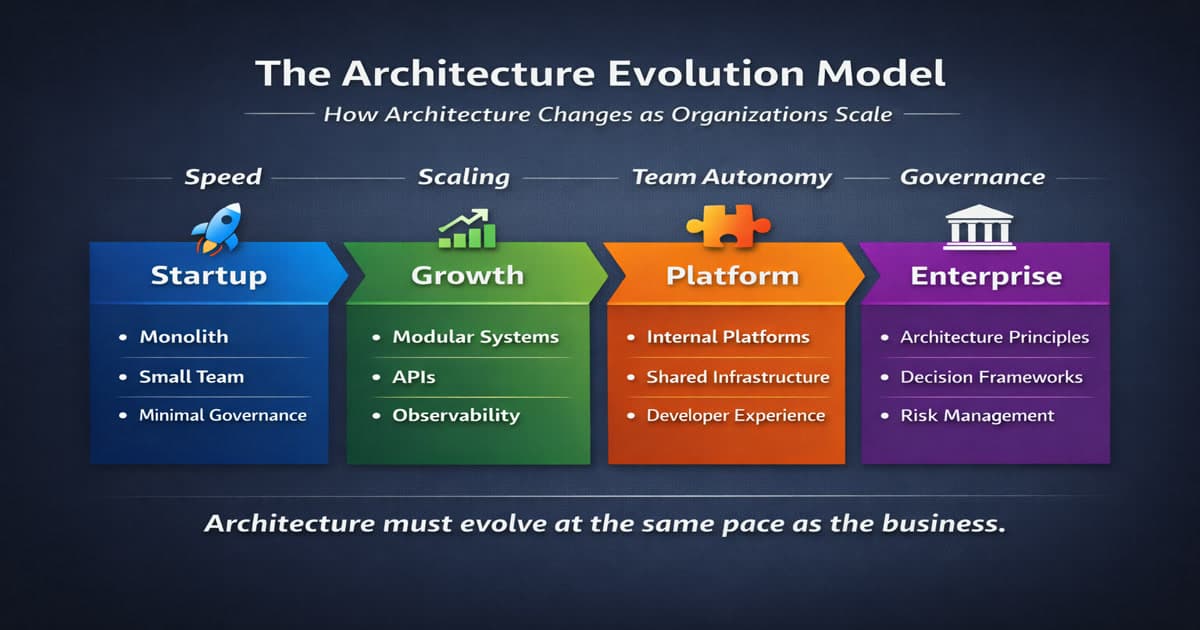
The Architecture Evolution Model: How Architecture Changes from Startup to Enterprise

A practical framework explaining how software architecture evolves from startup experimentation to enterprise-scale governance, and what architectural practices are needed at each stage.

...Startup architecture focuses on speed and learning. Typical traits: Monolithic applications Simple infrastructure Minimal governance Rapid experimentation Few architectural constraints Small engineering...

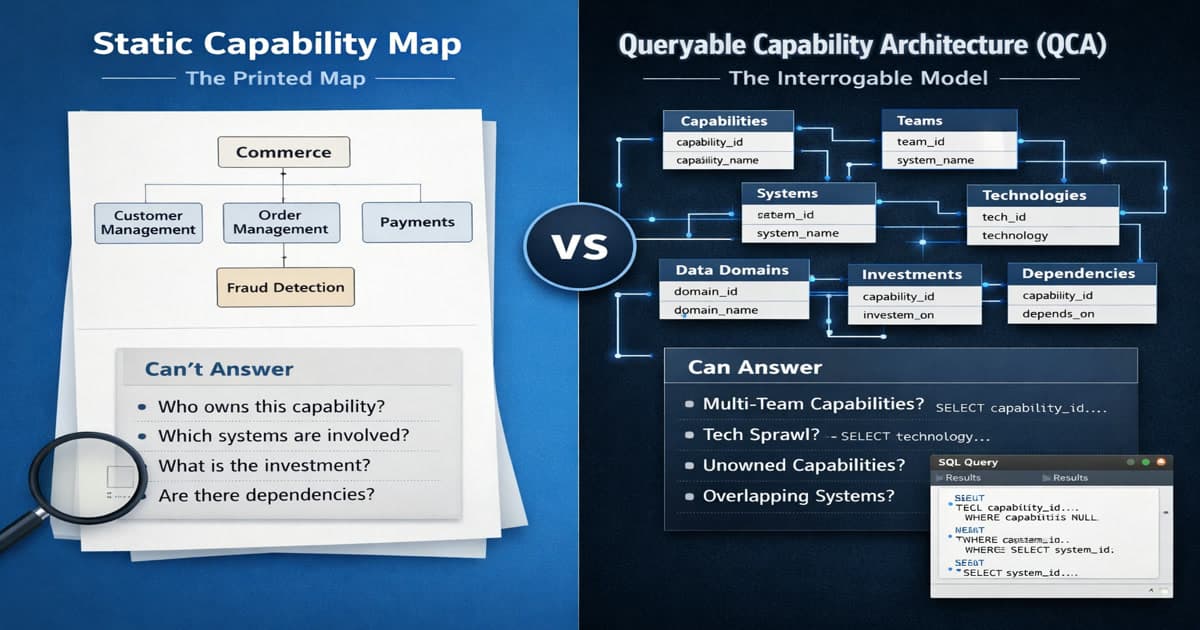
The Capability Map That Cannot Answer a Question Is Not a Capability Map

Why traditional capability maps fail to support governance decisions and how Queryable Capability Architecture turns static maps into interrogable decision systems.

...It is functioning as a picture. The City Planning Analogy Imagine two city planners. Same city. Same infrastructure. Different tools. The First Planner: A Printed Map A large printed map shows: roads water...