Search

Find insights, training programs, and workshops

Investment & Prioritisation
Advanced (EA, TS)5-6 hoursInvestment prioritisation model + business case guide (including TCO and unit economics) + sequencing criteria

How to decide which technology initiatives get funded, in what order, and why — connecting architecture to financial decisions and business outcomes.

Quick Navigation Start here — Why prioritisation is an architecture concern Building a business case Value and risk Portfolio prioritisation frameworks Sequencing Architecture's role in investment Common...

1 DayIntensive
StrategicEA · TS
AI Use Case Discovery & Prioritization
Beginner to Intermediate4-5 hoursAI use case portfolio + prioritisation matrix + pilot shortlist

The hardest AI question is often not how to build, but what to build first. Learn how to find real use cases, assess fit, sequence experiments, and avoid expensive distractions.

...Navigation Before we start — why good AI ideas are rare Why most idea lists fail What makes a strong AI use case The task-fit test The prioritisation matrix Quick wins vs strategic bets Portfolio balance From...

1 DayWorkshop
Portfolio DesignPractical
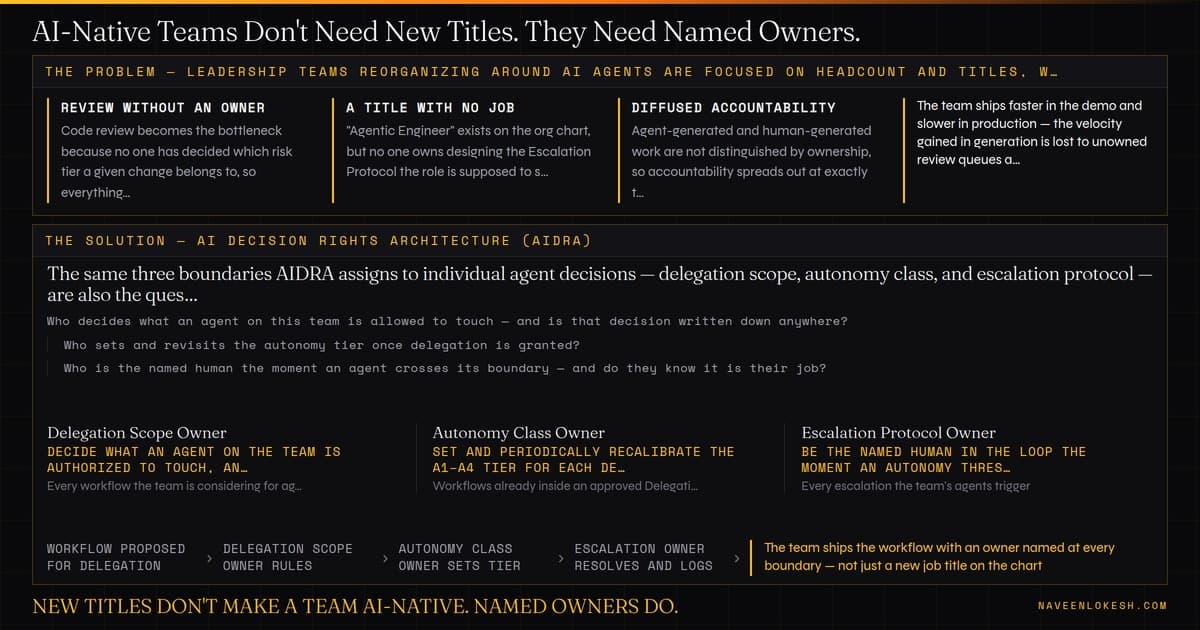
AI & Agentic Systems Strategy Workshop
CIO, CTO, Chief AI Officer, VP EngineeringAI operating model, governance policy, compliance roadmap, 90-day action plan

Develop a clear, governed AI and agentic systems strategy that delivers business value while managing risk, cost, and compliance.

...boardrooms where the CEO wants AI everywhere, the CTO wants it nowhere until it's governed, and the business leads are already running pilots in secret. The result isn't innovation — it's chaos. An AI...

2 DaysStrategic
Operating ModelGovernance Framework
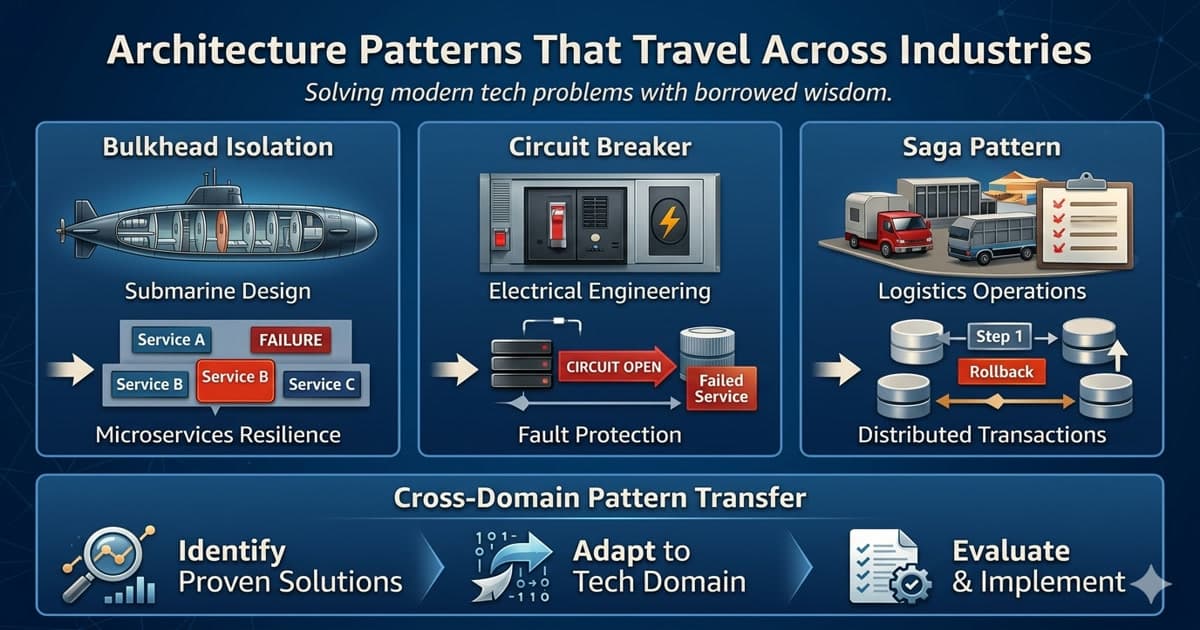
Architecture Patterns That Travel Across Industries

The patterns that solve your hardest distributed systems problems were already solved — in a submarine, a postal sorting office, and an electrical panel. Most architects never look.

...implement: 30–60 days to build a Cross-Domain Pattern Library and embed it into architecture review Business impact: Faster pattern selection, reduced design risk, more resilient systems, and architecture...

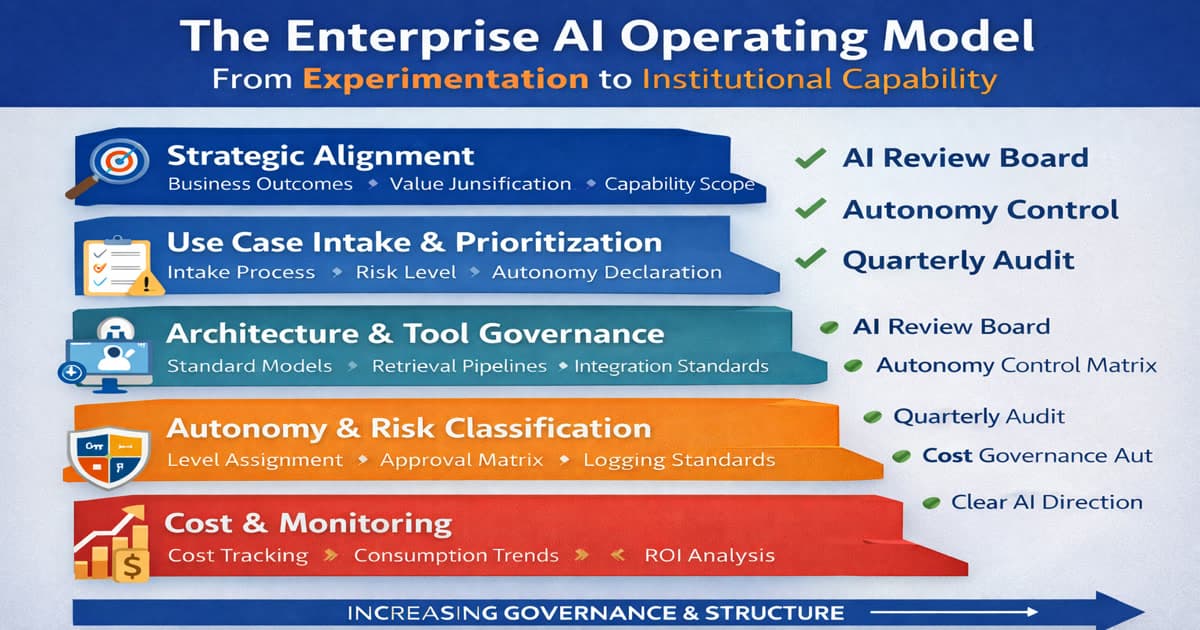
The Enterprise AI Operating Model: From Experimentation to Institutional Capability

A structured executive guide explaining how to move from AI experimentation to an Enterprise AI Operating Model with governance, autonomy control, and cost discipline.

...institutionalize AI across strategy, architecture, autonomy, and cost control Time to implement: 60–90 days Business impact: Reduced AI chaos, controlled autonomy, predictable cost growth, improved executive confidence...

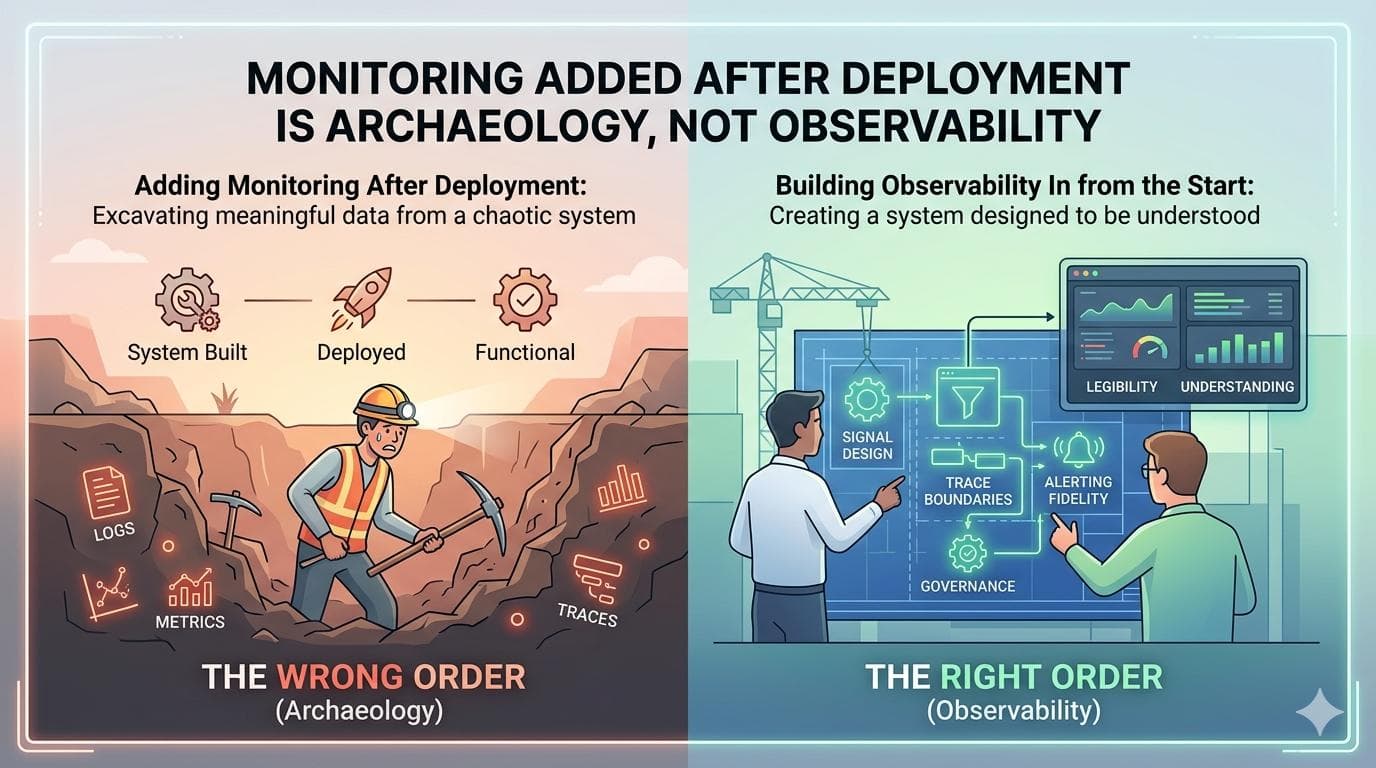
Monitoring Added After Deployment Is Not Observability. It Is Archaeology.

Observability is not a monitoring add-on. It is an architectural constraint. Systems built without observability baked in cannot be understood, cannot be governed, and cannot be improved. The OSAF model tells you exactly where your architecture is blind.

...you exactly where your architecture is blind before failure exposes it Time to implement: 30–60 days Business impact: Systems that are observable from design time are cheaper to operate, faster to debug,...

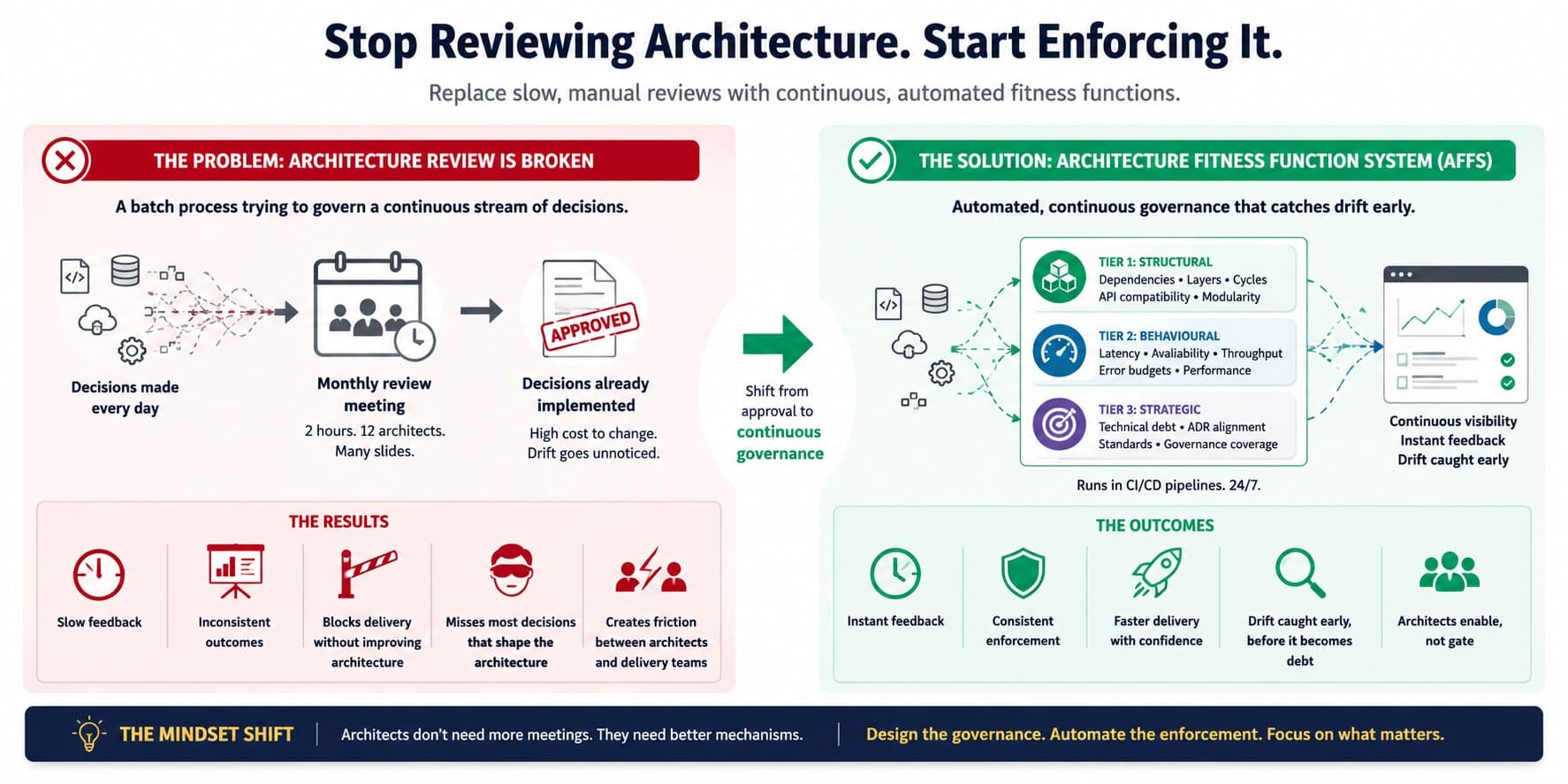
The Architecture Review Is Broken. Replace It with Fitness Functions.

The architecture fitness function literature solved code-level governance. It never made the claim that the board itself becomes optional. Here is the missing argument — and the economics that prove the board is the slower and more expensive option.

...debt Time to implement: 60–90 days to replace the first review gate with automated fitness functions Business impact: Architecture governance that runs continuously, zero delivery gates that add calendar...

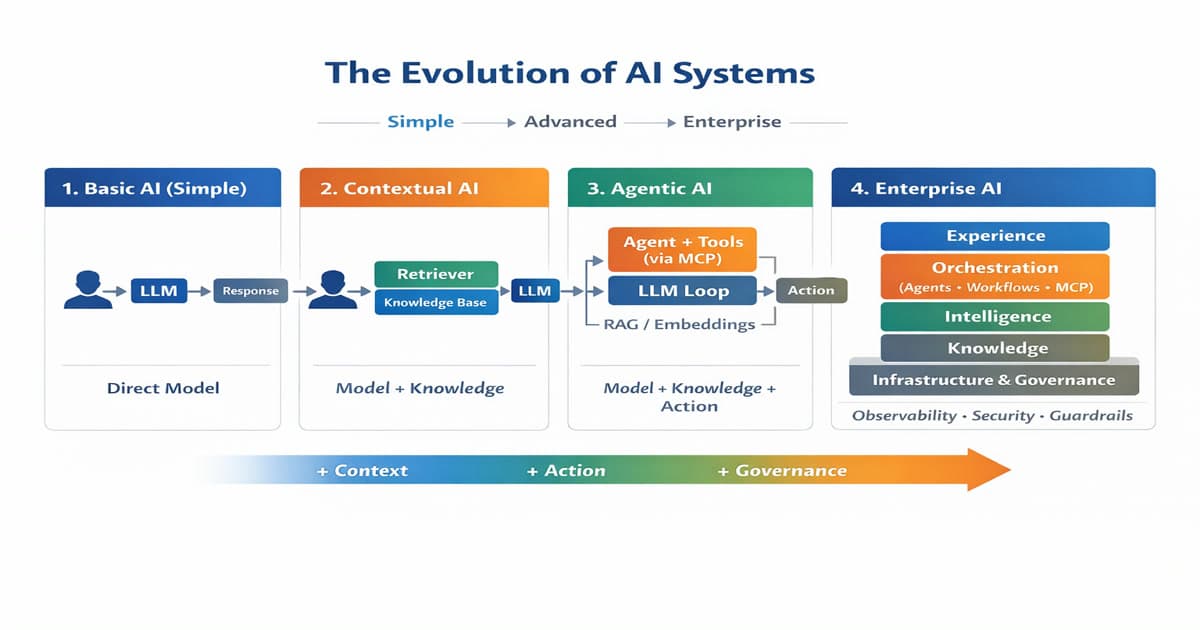
The AI Evolution Stack: How AI Systems Mature from Simple Models to Governed Platforms

A structured guide explaining how AI systems evolve from simple model usage to governed platforms, and how to scale complexity without losing architectural control.

...evolution model --- Simple → Contextual → Agentic → Enterprise Time to implement clarity: 60--90 days Business impact: Reduced instability, predictable cost growth, controlled autonomy expansion The Evolution...

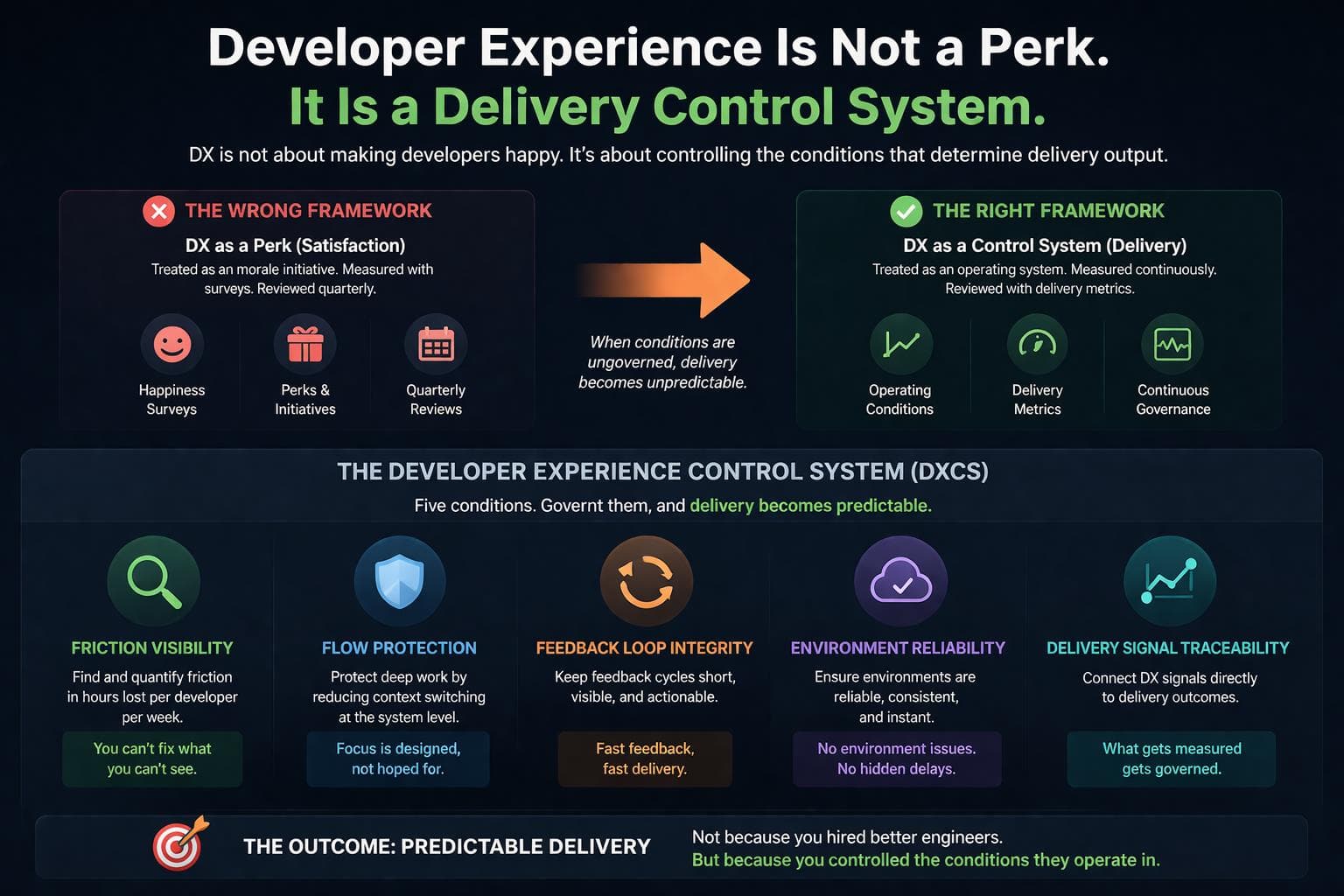
Developer Experience Is Not a Perk. It Is a Delivery Control System.

Developer experience is not about making developers happy. It is about controlling the conditions that determine delivery output. Organizations that treat DX as a perk have removed the control system from their delivery engine without knowing it.

...your delivery engine depends on — and gives you a way to govern them Time to implement: 30–60 days Business impact: Delivery becomes predictable. Not because you hired better engineers. Because you controlled...

ADR Templates: 5 Variations for Different Contexts + Governance Automation

One ADR template does not fit every architectural context. Five purpose-built variations — for standard decisions, agentic AI, cross-domain impact, fast delivery, and high-risk reversals — plus governance automation to make the system run without manual follow-up.

...plus automation that removes the manual burden of governance follow-up Time to implement: 30–60 days Business impact: Complete decision history, zero drift between recorded and live architecture, governance...