Skip to content

Search

Find insights, training programs, and workshops

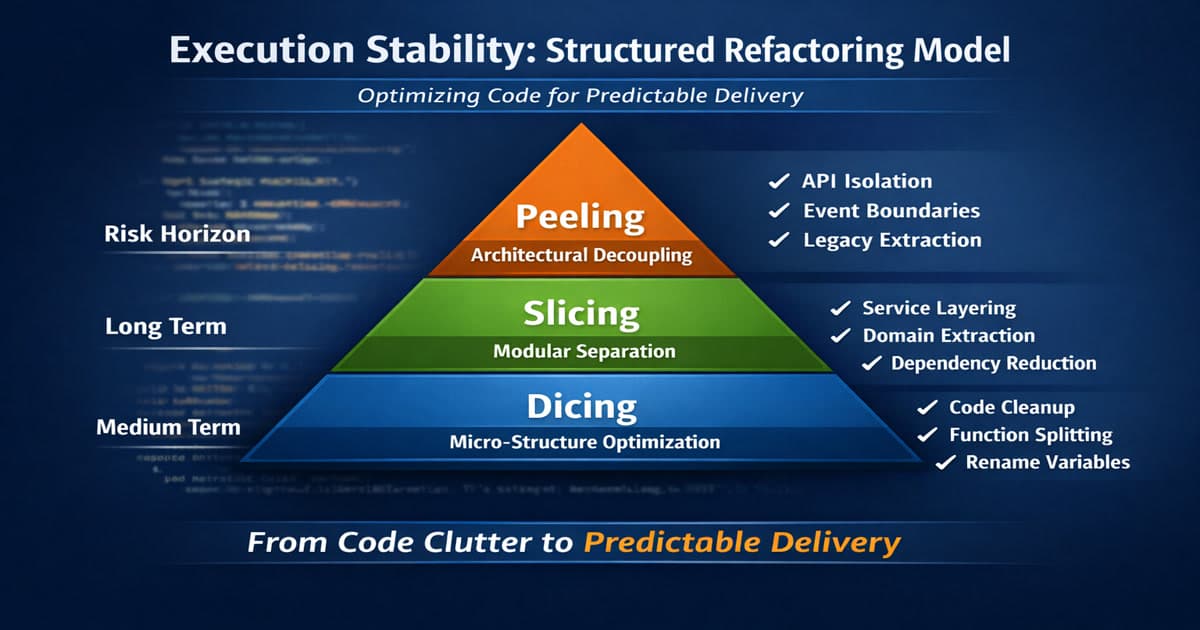
Execution Stability: How Structured Refactoring Improves Delivery Predictability

A practical framework for reducing delivery slowdown caused by unmanaged structural code complexity — improving cycle time, reducing regression risk, and clarifying ownership boundaries.

...be governed carefully. When to Use Peeling Scaling limitations Regulatory isolation requirements Platform modernization initiatives Acquisition integrations Business Impact Reduced blast radius...

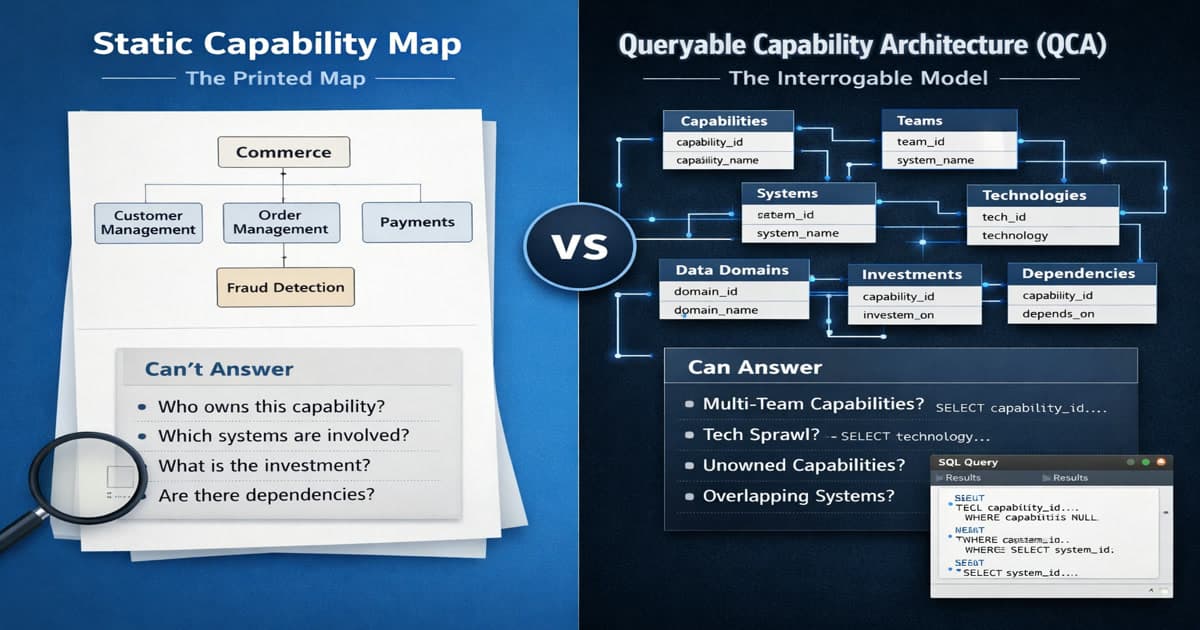
The Capability Map That Cannot Answer a Question Is Not a Capability Map

Why traditional capability maps fail to support governance decisions and how Queryable Capability Architecture turns static maps into interrogable decision systems.

...capabilities receive the largest technology investment? Which capabilities depend on fragile legacy platforms? If the map cannot answer these questions, it is not functioning as a governance tool. It...

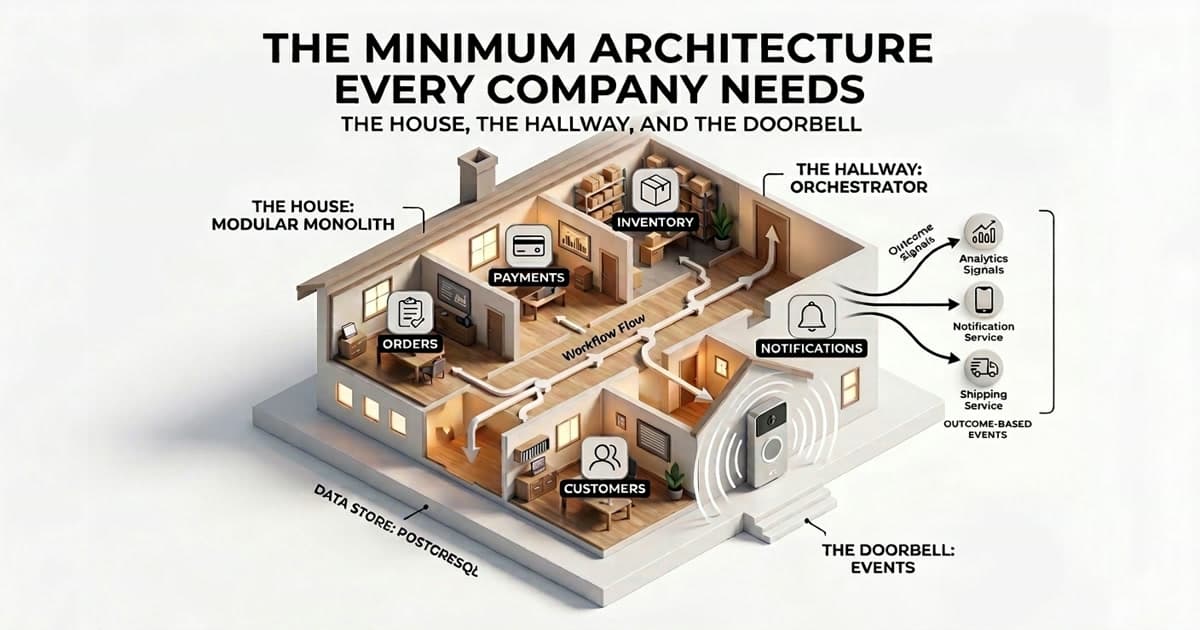
The Minimum Architecture Every Company Needs: The House, the Hallway, and the Doorbell

A practical architectural model explaining why most companies only need a modular monolith, a workflow orchestrator, and outcome-based events.

...systems can react to them. Example: OrderCompleted → Notification System OrderCompleted → Analytics Platform OrderCompleted → Shipping Service Events should signal important outcomes, not internal workflow...

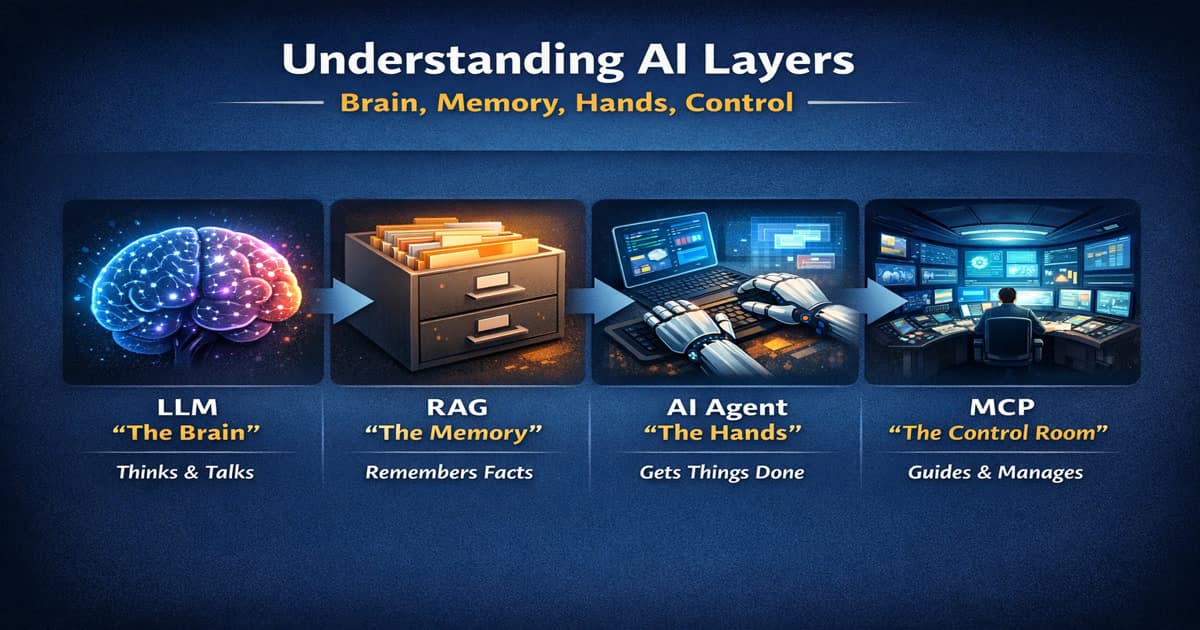
AI Architecture Clarity: Understanding LLM, RAG, Agents, and MCP Through the Brain Model

A clear executive guide explaining LLM, RAG, AI Agents, and MCP using the Brain model to prevent enterprise AI instability.

...workflow Align AI with enterprise architecture governance Success Metric: AI governed like any core platform Resource Estimate: Enterprise Architect AI Engineer Security & Compliance representation Evidence...

Current State & Target State Architecture
All levels — SA, EA, TS4-5 hoursAs-is / to-be architecture canvas + transition state design + maturity scale + AI readiness assessment

How to document what exists today, define what must exist tomorrow, and design the transition states that get you there — the discipline of architecture that connects present reality to future goals.

...technically elegant and practically unreachable. The danger signs: "We'll just migrate to the new platform" — without understanding what's on the old one. "The target state is microservices" — without...

1 dayIntensive
PracticalCanvas exercise
Quality Attributes / -ilities
SA, EA — Intermediate5-6 hoursQuality attribute reference card + -ility prioritisation matrix

The non-functional characteristics that determine whether a system is truly fit for purpose — scalability, reliability, availability, performance, security, maintainability, and more.

...A payment system that processes transactions correctly but has no redundancy is a business risk. A platform that works today but can't be modified without breaking things is on a path to legacy. The...

1 DayIntensive
SA · EARoles
Technology Strategy & Architecture Strategy
Advanced (EA, TS)5-6 hoursTechnology strategy vs architecture strategy distinction map + strategy brief template

How to distinguish technology strategy from architecture strategy, connect both to business strategy, and define a coherent direction for the organisation's technology investments.

...strategy. They have architecture diagrams but not architecture strategy. They invest in cloud, AI, and platforms because everyone else is — not because a deliberate analysis connected those investments to...

1.5 DaysIntensive
StrategicEA · TS
Investment & Prioritisation
Advanced (EA, TS)5-6 hoursInvestment prioritisation model + business case guide (including TCO and unit economics) + sequencing criteria

How to decide which technology initiatives get funded, in what order, and why — connecting architecture to financial decisions and business outcomes.

...ignores dependencies: teams are funded to build features on infrastructure that doesn't exist yet, or platforms are built for capabilities that no team is ready to use. Architecture reveals the dependency...

1 DayIntensive
StrategicEA · TS
Portfolio & Dependency Thinking
All levels — SA, EA, TS4-5 hoursPortfolio map template + dependency radar + investment alignment grid

How to see all systems, initiatives, and investments as a connected whole — understanding dependencies, shared capabilities, and how decisions in one place ripple across others.

...don't exist in isolation. They're part of a portfolio — a connected collection of systems, programmes, platforms, and investments. Decisions made about one system ripple across others. An investment in one...

1 dayIntensive
StrategicPortfolio-level
What Architecture Is
All levels — SA, EA, TS3-4 hoursArchitecture definition canvas + what it is / what it isn't reference card

What software and enterprise architecture actually is — its structure, relationships, and decisions — and what it is not. No diagrams. No jargon. Just clarity.

...decisions. Try it yourself — Spot the architecture Think of a system you work with — an application, a platform, a service. Now answer these three questions: Question Your answer What are the main components?...

Half-dayIntensive
FoundationFor all roles
1···456···9