Search
Find insights, training programs, and workshops

Why Architectural Decision Records are the only structure most organizations already have that can govern AI agent accountability — and how to extend them into an Agentic Decision Log before the EU AI Act deadline.
Executive Summary Who this is for: Enterprise Architects, CTOs, Solution Architects, Architecture Governance Teams Problem it solves: Organizations deploying AI agents have no structural record of who...

A clear executive guide explaining LLM, RAG, AI Agents, and MCP using the Brain model to prevent enterprise AI instability.
...leading to unstable AI initiatives Key outcome: Clear architectural layering, reduced AI sprawl, improved governance control Time to implement: 60–90 days for structured AI capability alignment Business impact:...

Why most enterprises confuse escalation ladders with decision rights — and how Technology Decision Domain Architecture maps exactly who decides what, at which altitude, before the conflict arrives.
...impact: Faster delivery decisions, fewer escalation bottlenecks, reduced architecture conflict, and governance that works before something breaks The Shipmaster and the Harbourmaster A container ship arrives...

A practical framework for reducing delivery slowdown caused by unmanaged structural code complexity — improving cycle time, reducing regression risk, and clarifying ownership boundaries.
...Large-scale “modernization” initiatives All three are reactive. They lack classification. They lack governance. They lack structural metrics. The result: Teams argue about how much to refactor Delivery...

A clear executive guide explaining Generative AI, AI Agents, and Agentic AI using a corporate office analogy to prevent autonomy risks in enterprise AI.
...proposal. It does not negotiate. It does not update the CRM. It waits for instruction. Risk Level: Low Governance Need: Content review and data control Generative AI produces output. It does not execute decisions....

A structured guide explaining how AI systems evolve from simple model usage to governed platforms, and how to scale complexity without losing architectural control.
...AI beyond experimentation Problem it solves: AI systems growing in complexity without proportional governance Key outcome: A clear evolution model --- Simple → Contextual → Agentic → Enterprise Time to...

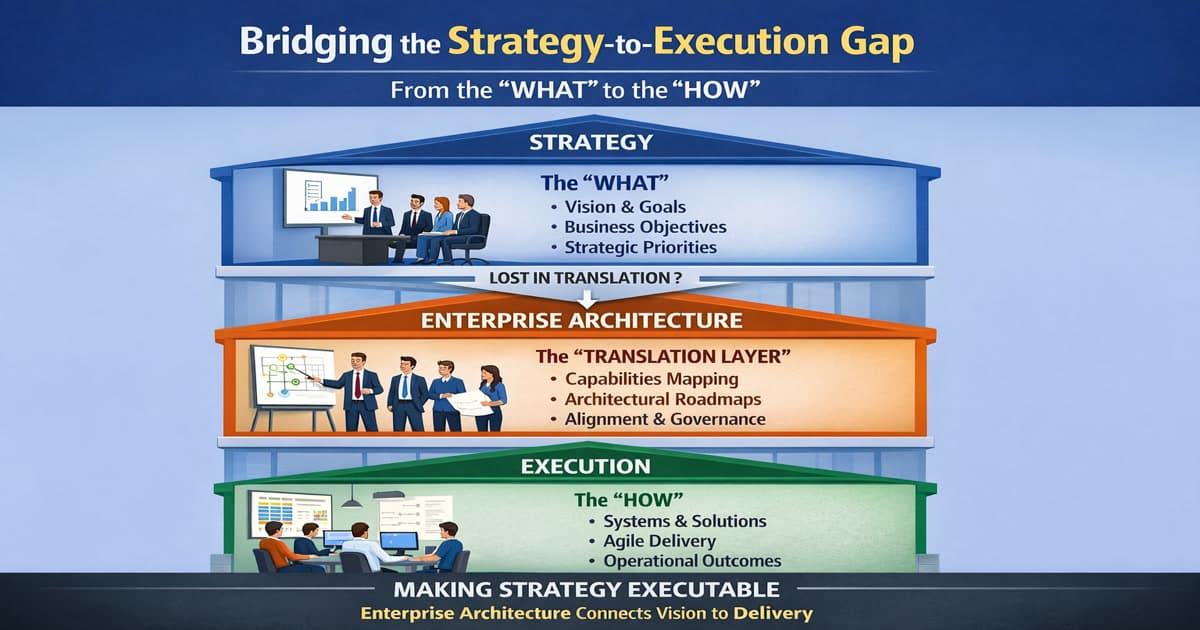
Why strategic intent evaporates before it reaches engineering teams — and how Enterprise Architecture creates the translation layer that makes organizational strategy executable.
...priority Business impact: Delivery teams that build the right things, investment aligned to strategic intent, and governance that closes the gap between declared strategy and operational reality The Expedition That...

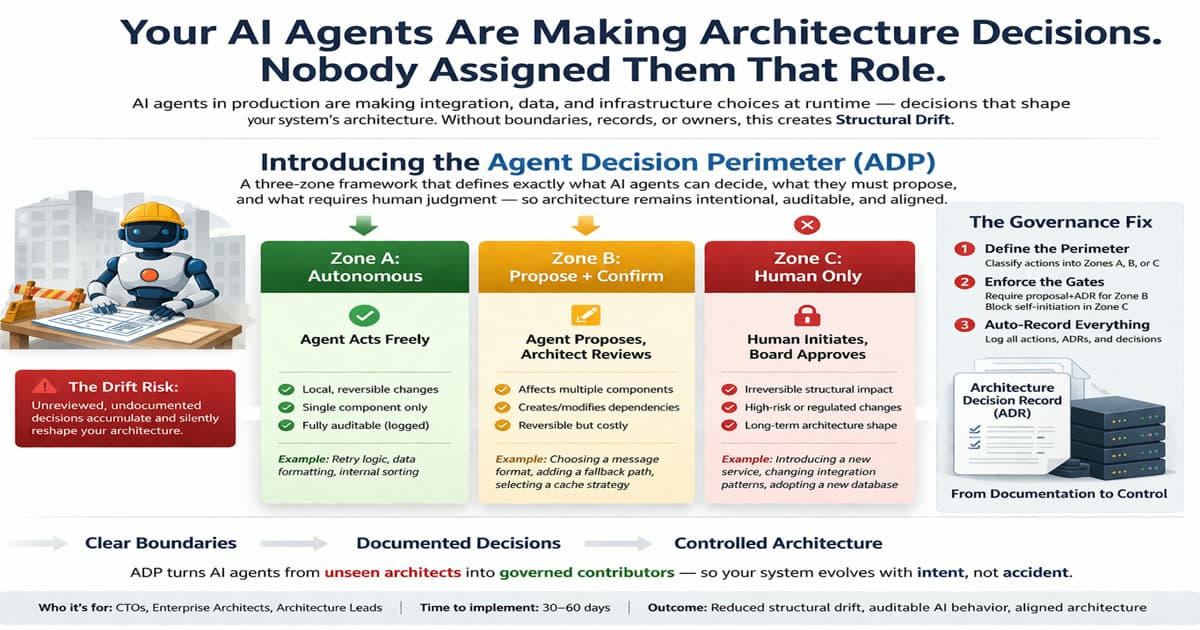
AI agents are making micro-architecture decisions in production. No ADR recorded them. No review board approved them. No architect ever saw them. Here is the structural fix.
...by AI agents making undocumented, unreviewed architecture decisions at runtime Key outcome: A clear governance model that defines exactly where agents act freely, where they propose, and where humans decide Time...

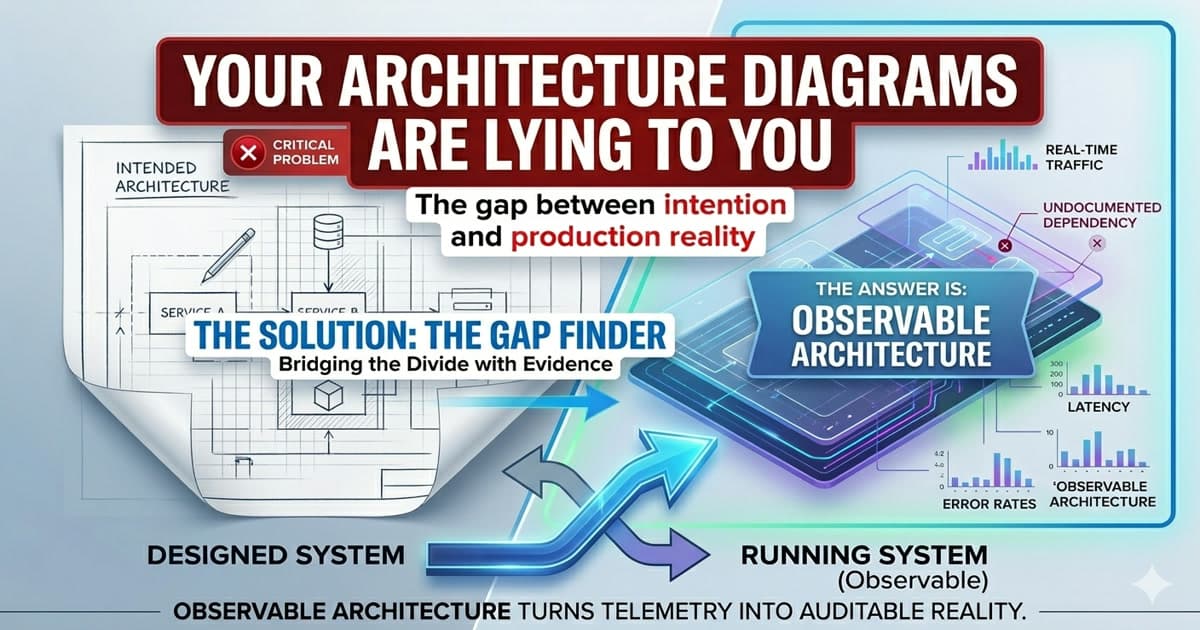
Why architecture diagrams describe a system that no longer exists, and how Observable Architecture uses production telemetry to reveal what is actually running.
...revealing what is actually running Time to implement: 30–60 days to introduce Observable Architecture as a governance practice Business impact: Earlier risk detection, accurate security reviews, reduced production...

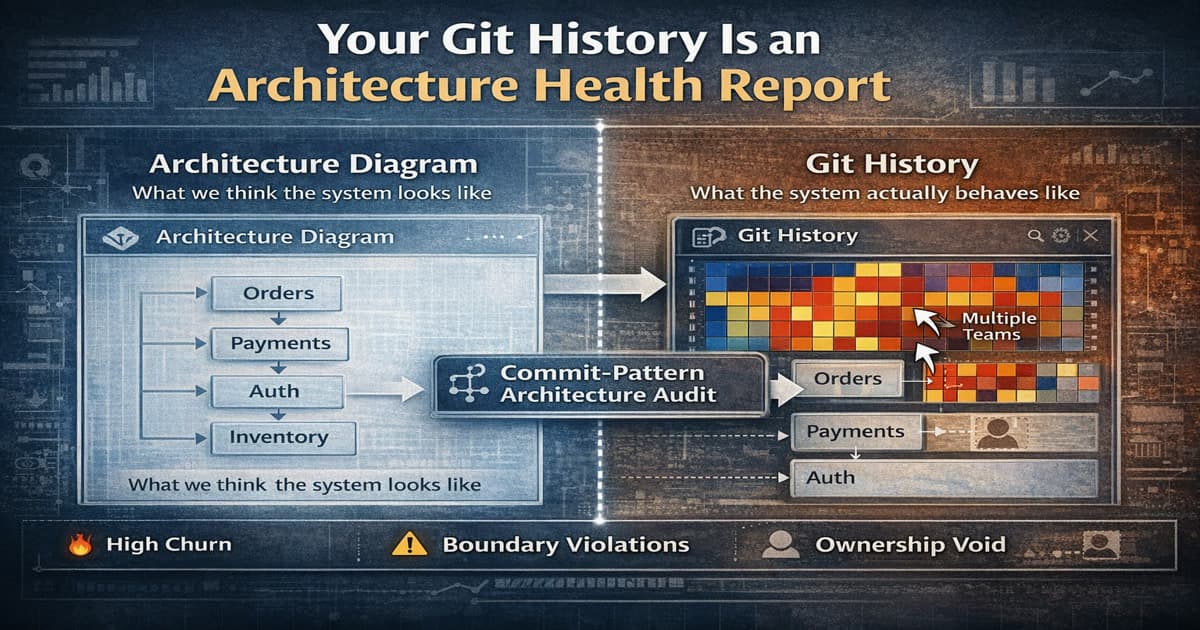
A practical architecture technique showing how Git commit patterns reveal structural instability, boundary violations, and ownership gaps in software systems.
...Technical Architects, Engineering Leads Problem it solves: Architecture reviews rely on diagrams and governance documents that often fail to reflect the real system structure Key outcome: A practical method...