Search

Find insights, training programs, and workshops

Complete Enterprise Data Architecture Framework: Business, Logical, Physical Layers with Real Templates

Most enterprises build data architectures one layer at a time. Business, logical, and physical layers exist as separate artefacts owned by separate teams. That separation is the structural gap that makes data estates ungovernable.

...which entities relate to which, how the schemas connect, and where the domain boundaries are drawn. The platform engineer walks into the same room. She wants to know which database, which partitioning strategy,...

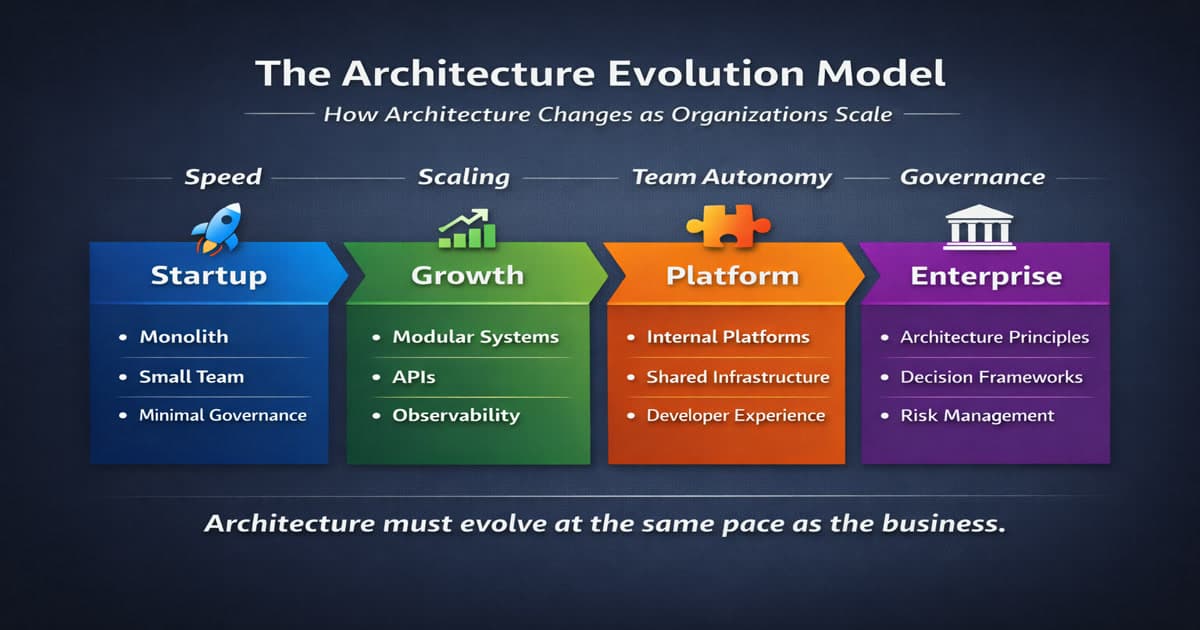
The Architecture Evolution Model: How Architecture Changes from Startup to Enterprise

A practical framework explaining how software architecture evolves from startup experimentation to enterprise-scale governance, and what architectural practices are needed at each stage.

...Architecture maturity typically progresses through four stages: Startup Architecture Growth Architecture Platform Architecture Enterprise Architecture Each stage introduces: greater scale greater system complexity greater...

Architecture Across the Application Lifecycle: Which Architect Is Needed When?

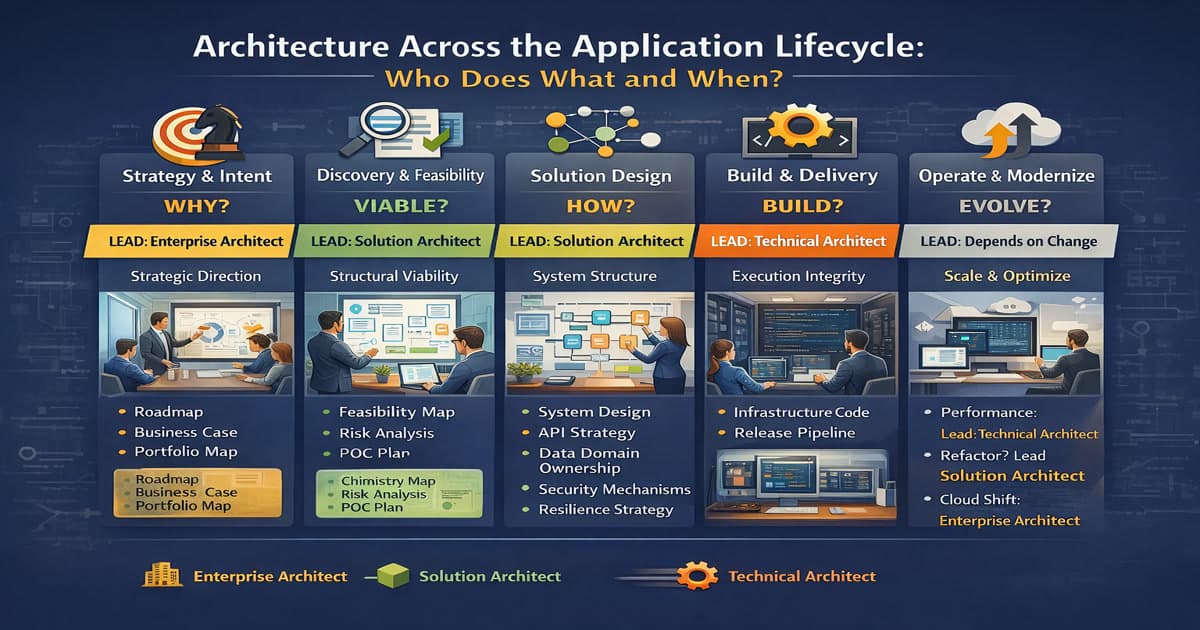
A practical guide explaining which type of architect is required at each stage of the application lifecycle to prevent governance friction and structural instability.

...Lifecycle Stages Every application — whether startup or enterprise — passes through five functional stages: Strategy & Intent Discovery & Feasibility Solution Design Build & Delivery Operate, Scale & Modernize...

Enterprise, Solution, and Technical Architects: Who Does What in a Context-Driven Architecture?

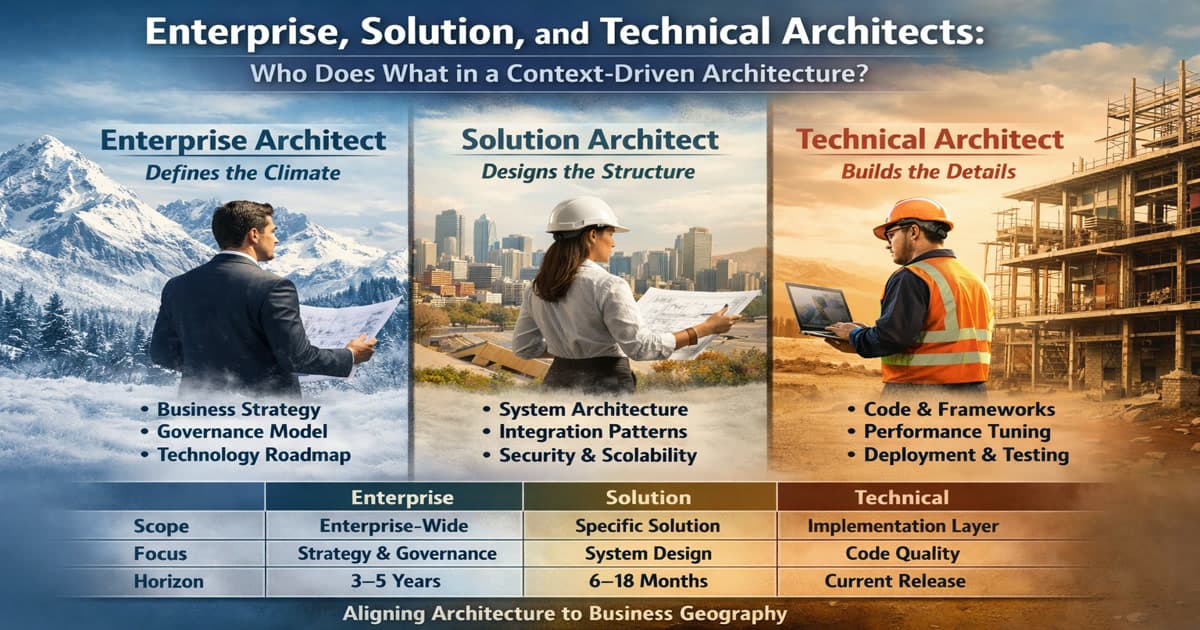
A structured executive guide explaining the difference between Enterprise, Solution, and Technical Architects using Context-Driven Architecture to clarify responsibilities and reduce structural misalignment.

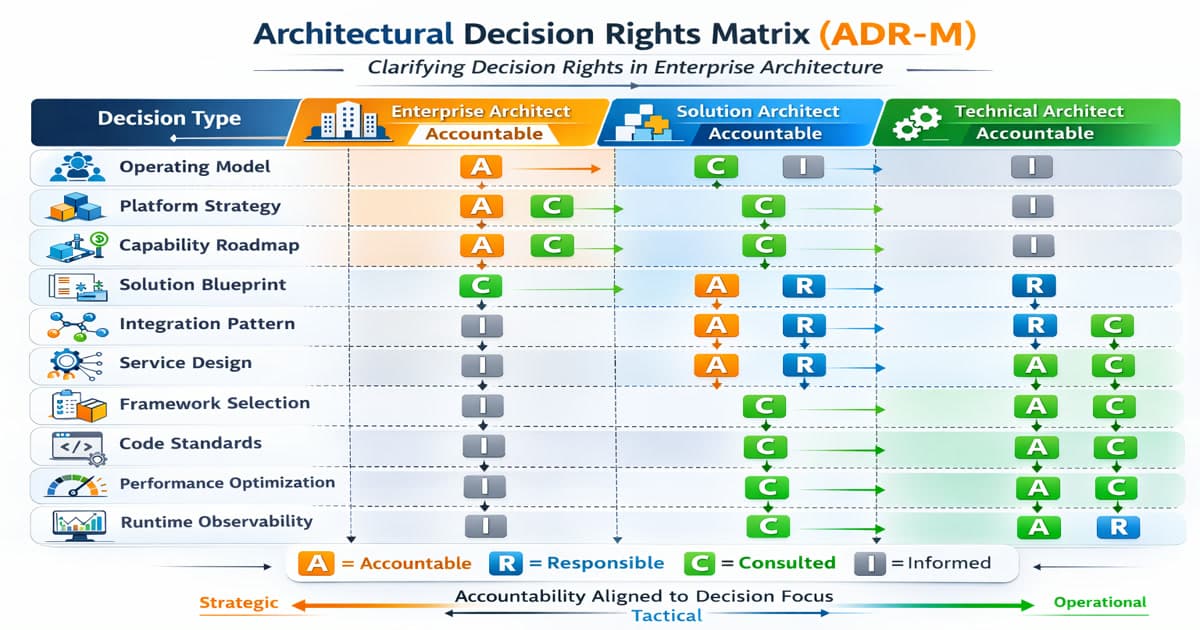
...at the environmental level. They define: Target operating model Capability map Technology principles Platform strategy Governance structure Buy vs build posture Cloud and AI positioning They answer: “Given...

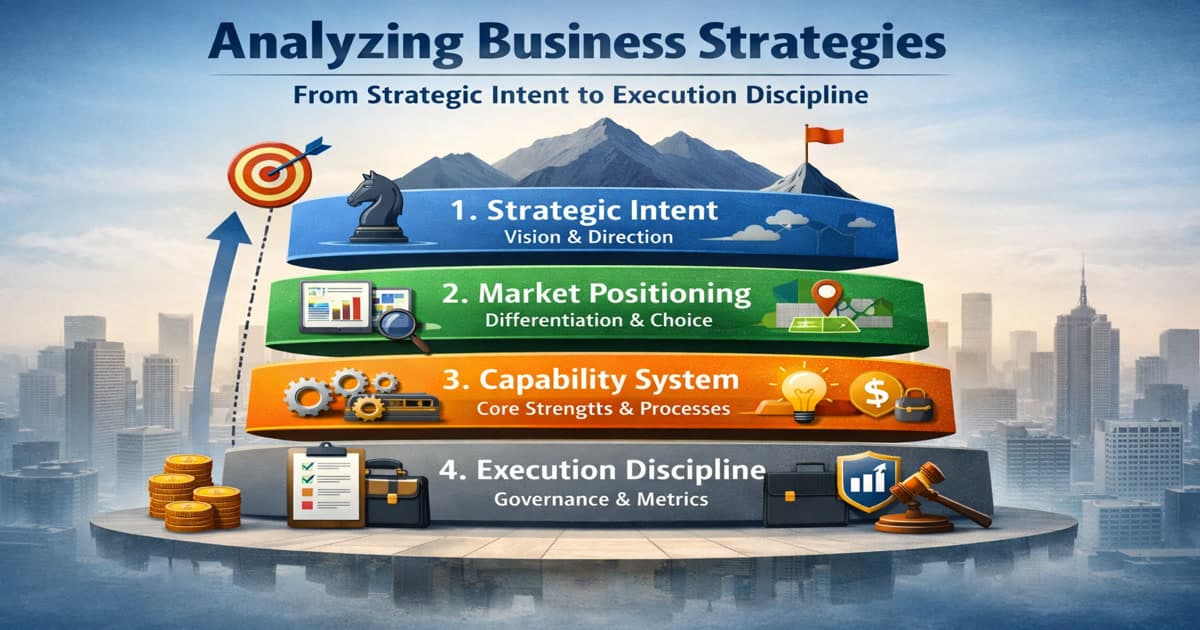
Analyzing Business Strategies: From Strategic Intent to Execution Discipline

A structured executive guide to analyzing business strategies using a four-layer framework that connects intent, positioning, capability, and execution discipline.

Executive Summary Who this is for: Founders, CEOs, Strategy Leaders, Enterprise Architects Problem it solves: Organizations confuse strategic statements...

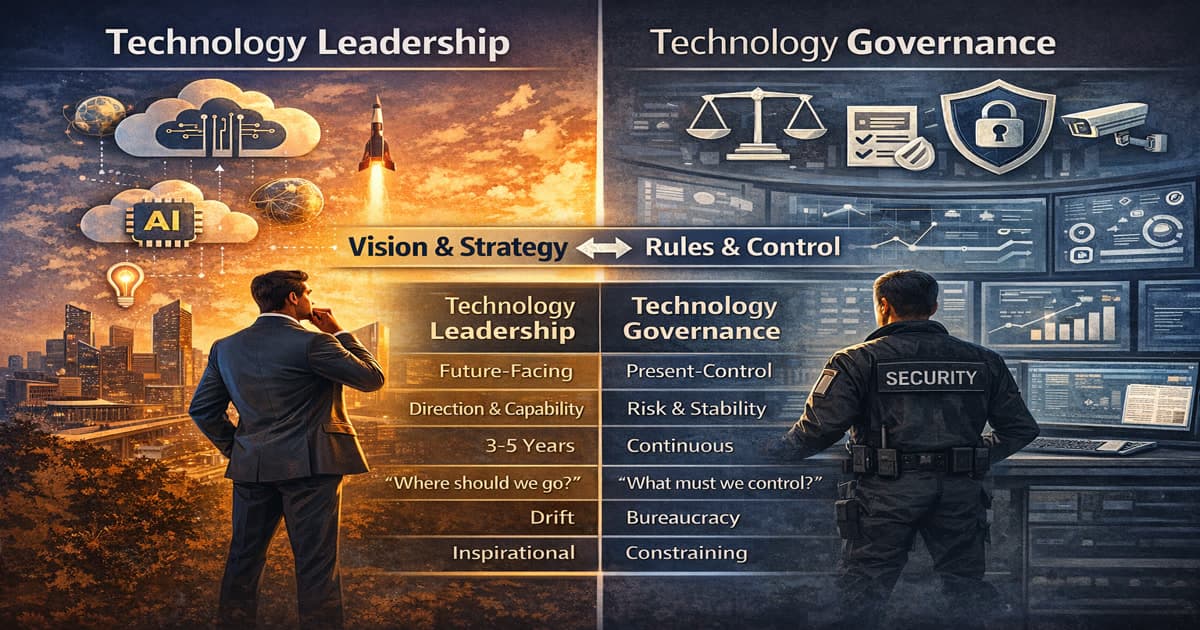
Technology Leadership vs Technology Governance: Why Confusing the Two Creates Structural Instability

A structured executive guide explaining the difference between Technology Leadership and Technology Governance, and why confusing the two creates instability in enterprise execution.

...architecture evolve over 3–5 years? Leadership defines ambition. It aligns technology with business strategy. It creates movement. Characteristics of Technology Leadership Vision articulation Strategic...

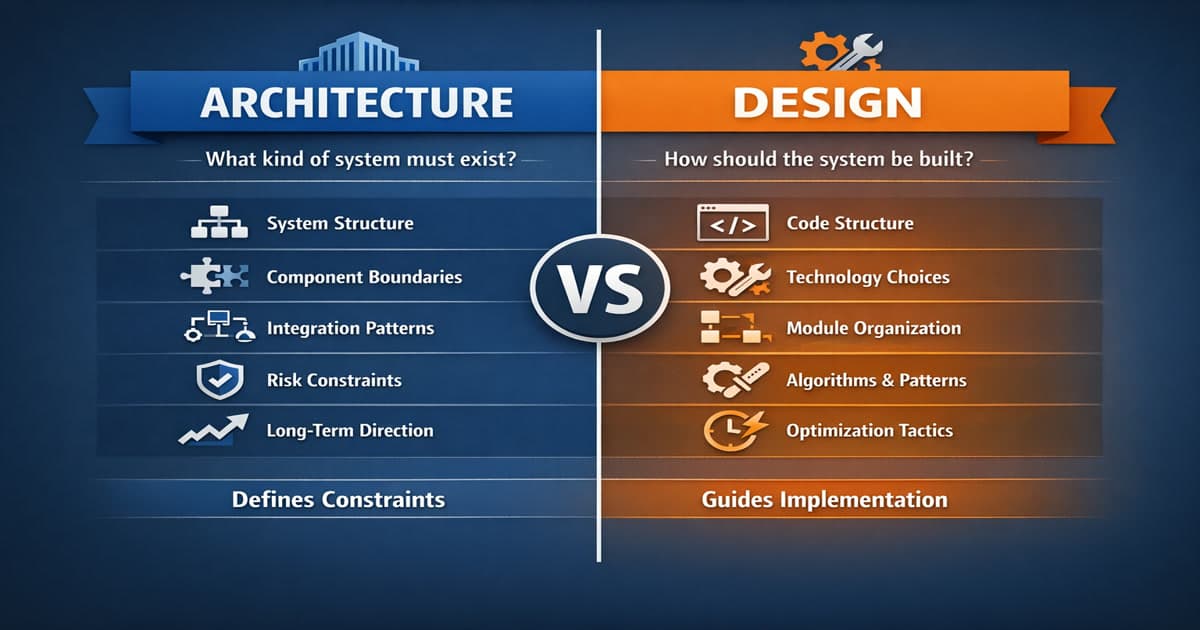
Architecture vs Design: Why Most Organizations Confuse Them

A clear explanation of the difference between architecture and design, why organizations confuse them, and how this confusion creates structural instability in technology systems.

...Characteristics of Architecture Long-term structural decisions Cross-system impact Alignment with enterprise strategy Risk and scalability considerations Technology posture definition Architecture decisions are...

Context-Driven Architecture: Why Software Design Must Adapt to Business Geography

Just as buildings must adapt to snow, desert, or tropical climates, software architecture must align with business geography to improve predictability and reduce complexity.

...fluctuating? Are seasonal spikes extreme? Is regulatory change frequent? Is experimentation central to strategy High volatility demands elasticity and decoupling. Stable climates reward simplicity and cost...

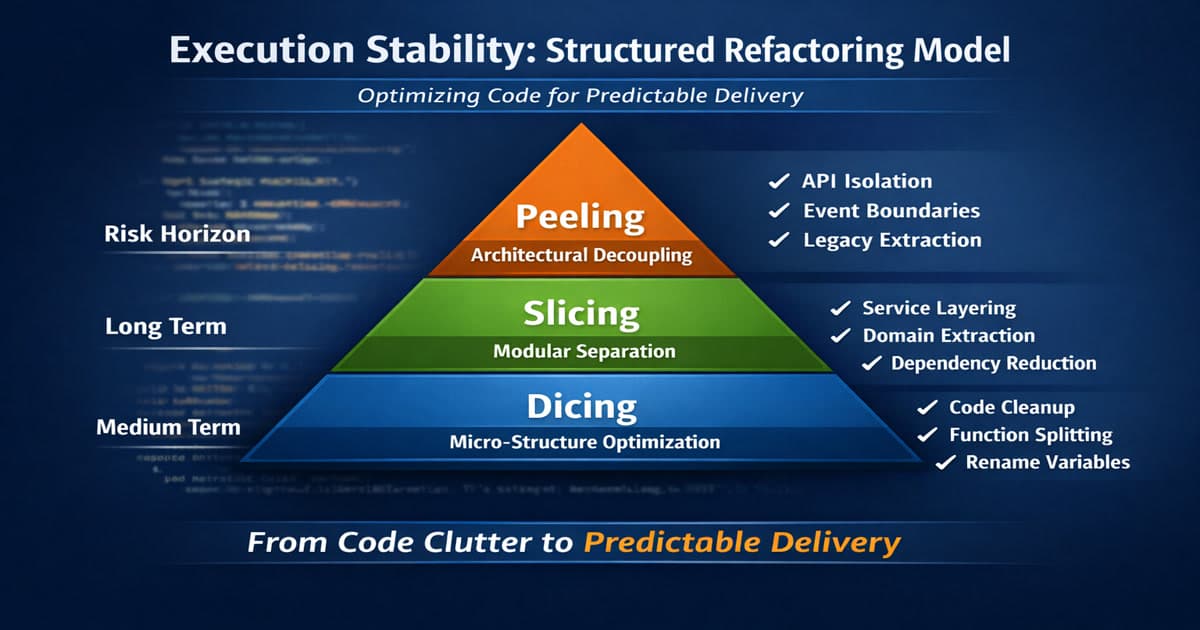
Execution Stability: How Structured Refactoring Improves Delivery Predictability

A practical framework for reducing delivery slowdown caused by unmanaged structural code complexity — improving cycle time, reducing regression risk, and clarifying ownership boundaries.

...must be governed carefully. When to Use Peeling Scaling limitations Regulatory isolation requirements Platform modernization initiatives Acquisition integrations Business Impact Reduced blast radius Independent...

The Capability Map That Cannot Answer a Question Is Not a Capability Map

Why traditional capability maps fail to support governance decisions and how Queryable Capability Architecture turns static maps into interrogable decision systems.

...are widely used in: enterprise architecture documentation digital transformation programs technology strategy discussions portfolio prioritization At first glance they appear extremely useful. But there...