Search
Find insights, training programs, and workshops
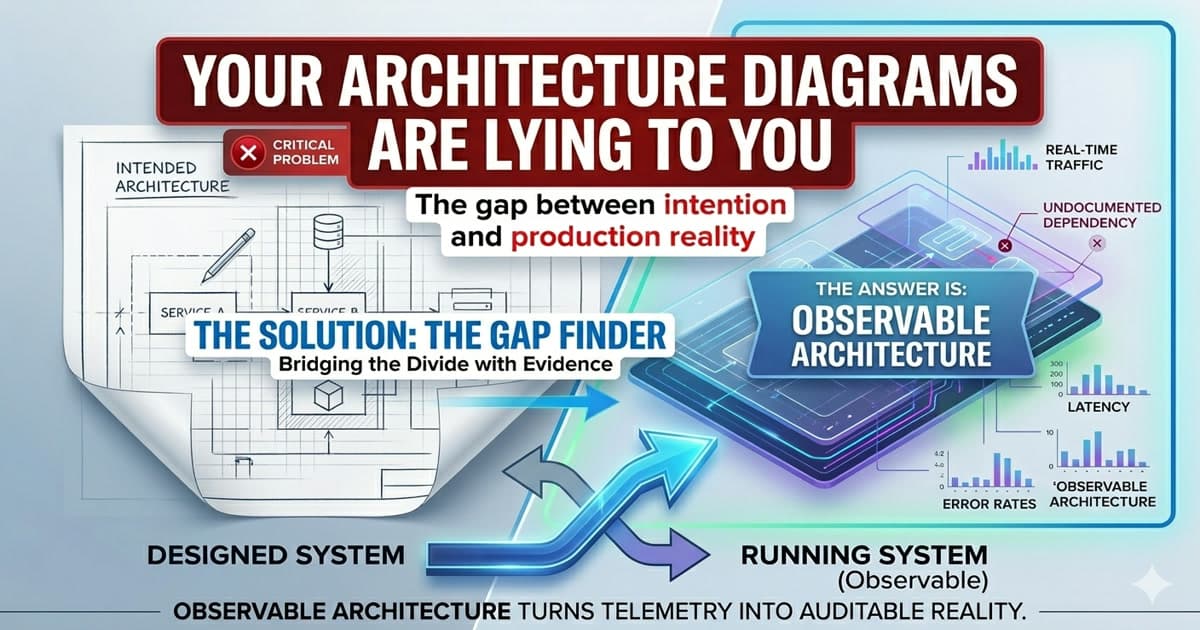
Why architecture diagrams describe a system that no longer exists, and how Observable Architecture uses production telemetry to reveal what is actually running.
...layer that nobody drew. None of these changes are malicious. Most are pragmatic decisions made at delivery speed. But the diagram does not record them. Over time, the official diagram and the running...
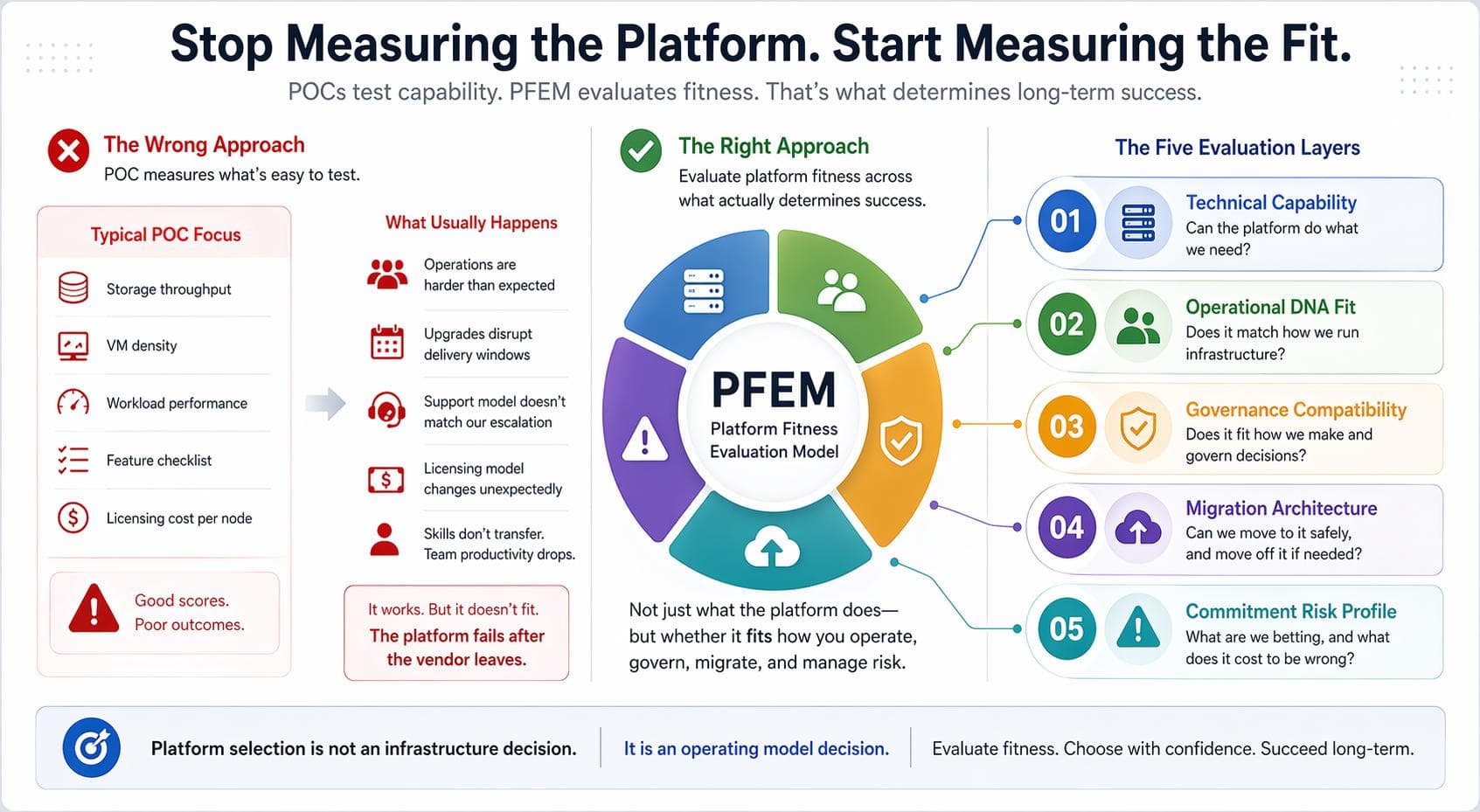
Most organizations evaluate private cloud and HCI platforms by running a technical POC. The POC passes. The platform fails. The reason is structural — and fixable. The Platform Fitness Evaluation Model (PFEM) tells you what to measure instead.
...organizations say: The platform works. But operations are harder than expected. Upgrade cycles are disrupting delivery windows. The support model does not match how our teams escalate incidents. The licensing...
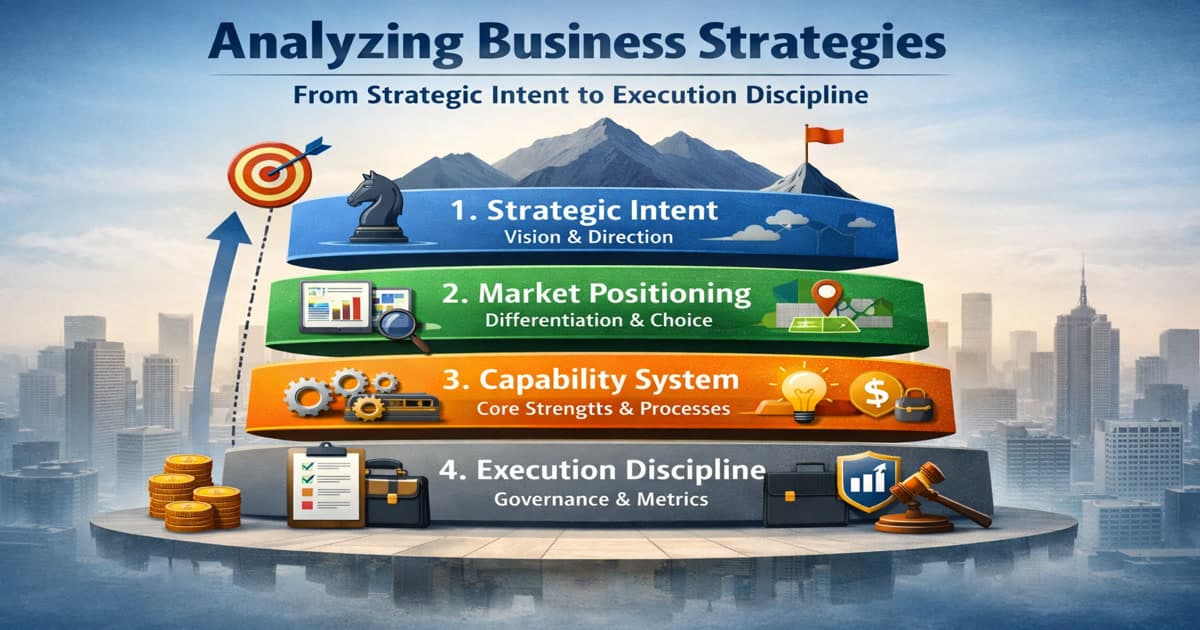
A structured executive guide to analyzing business strategies using a four-layer framework that connects intent, positioning, capability, and execution discipline.
...Platform ecosystem vs product excellence If a company claims: High quality Lowest price Fastest delivery Most innovative Simultaneously… It likely has no positioning discipline. Strategic Insight If...
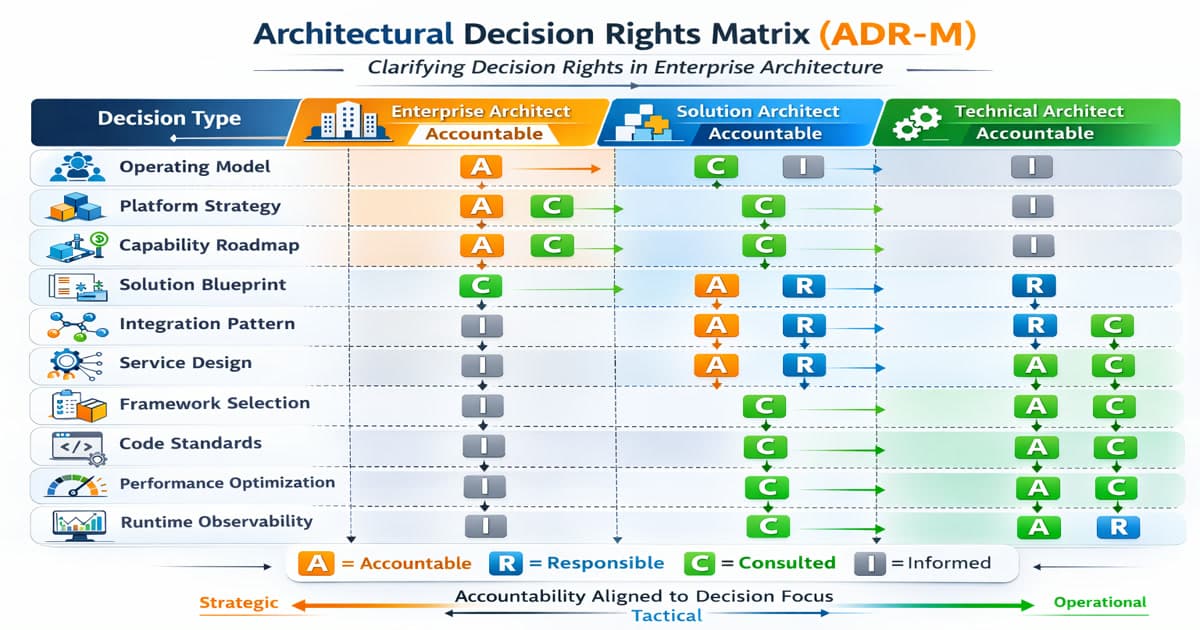
A governance framework introducing the Architectural Decision Rights Matrix (ADR-M) to clarify accountability between Enterprise, Solution, and Technical Architects in Context-Driven Architecture.
...Matters When accountability is unclear: Duplicate platforms emerge Architectural reviews become political Delivery slows Governance weakens Technical debt accelerates When altitude is respected: Decisions...
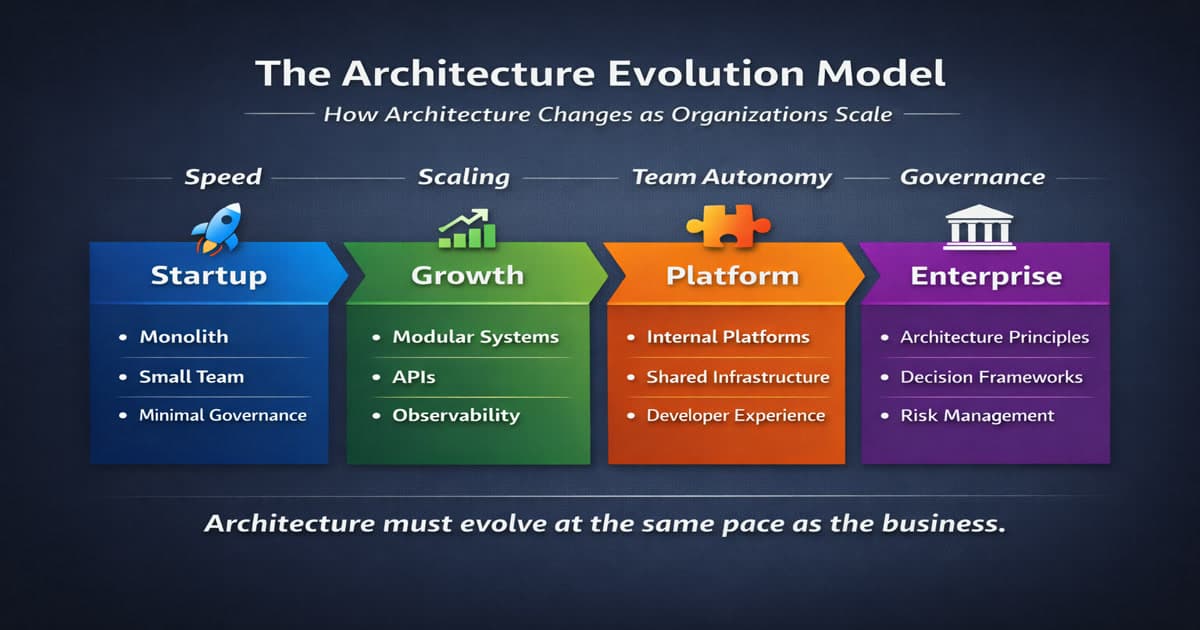
A practical framework explaining how software architecture evolves from startup experimentation to enterprise-scale governance, and what architectural practices are needed at each stage.
...appropriate. Overengineering at this stage slows innovation. Risk of Failure If architecture becomes too complex too early: delivery slows teams overdesign resources are wasted Startups fail more often from lack of speed than...
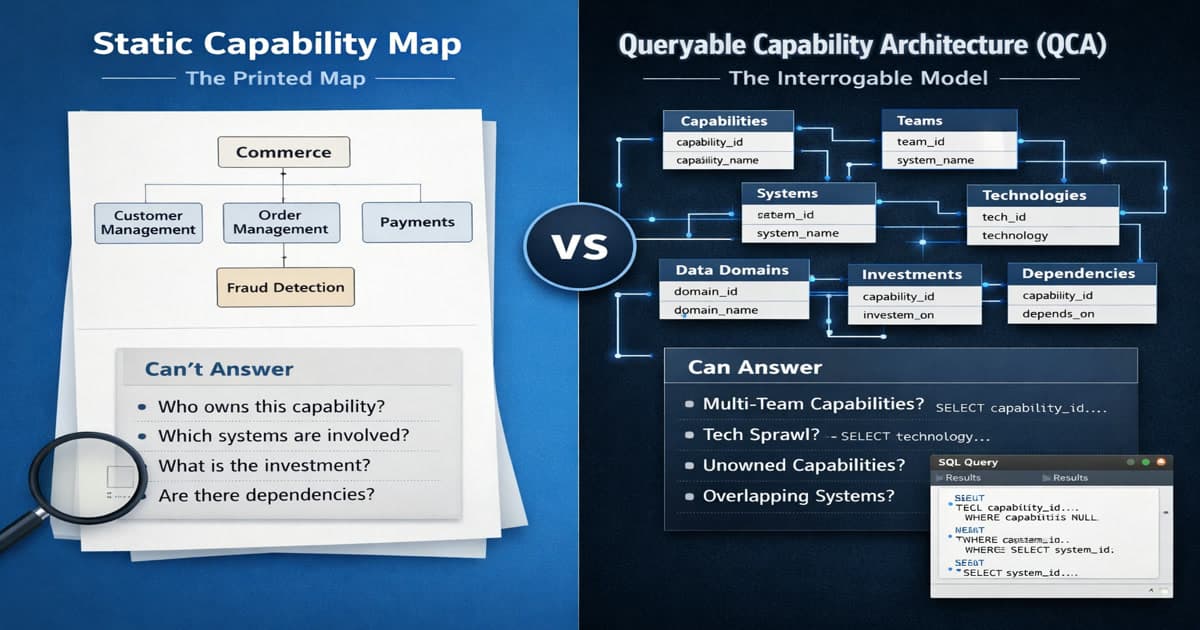
Why traditional capability maps fail to support governance decisions and how Queryable Capability Architecture turns static maps into interrogable decision systems.
...Gaps Some capabilities appear on strategy maps but lack: a supporting system a responsible team a delivery roadmap These capabilities exist only in presentation slides, not in operational reality. Investment...
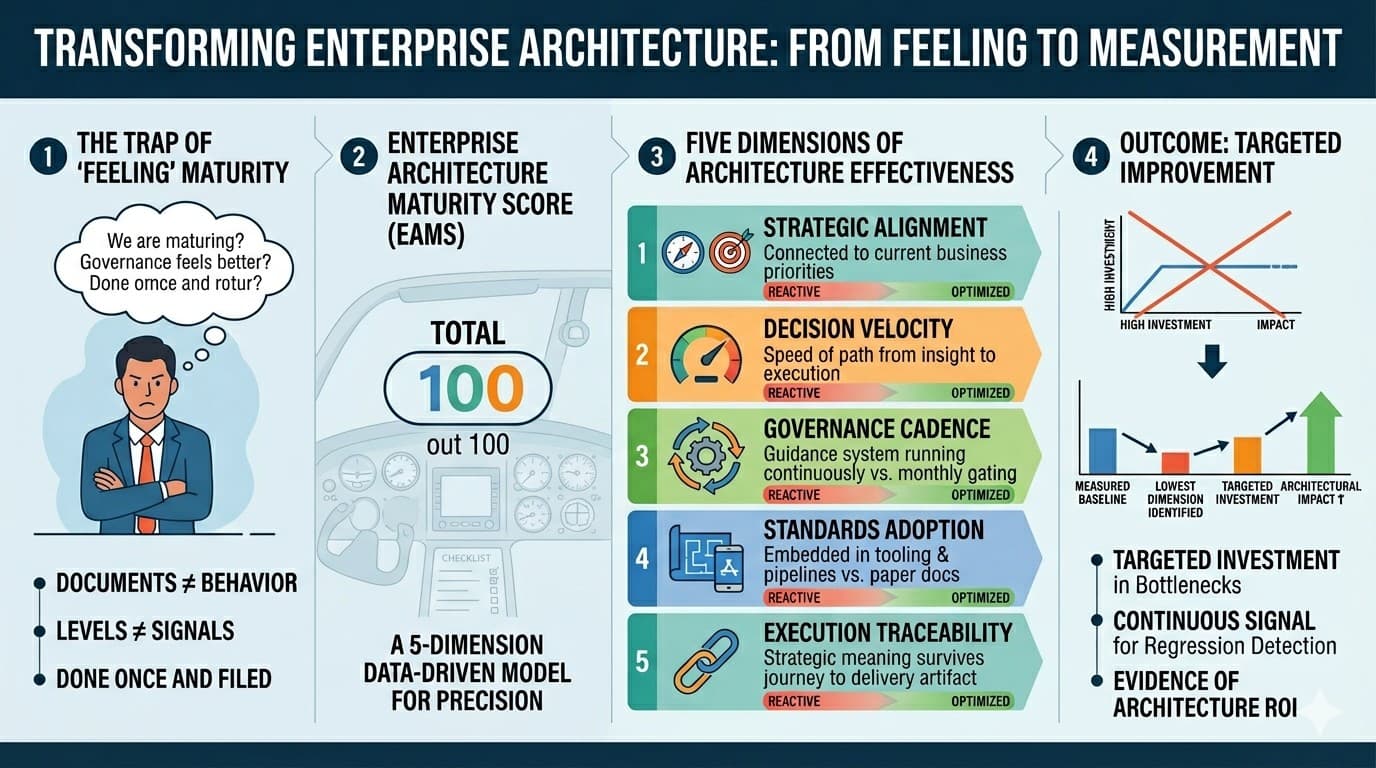
Enterprise architecture maturity is not a feeling. It is a score. Organizations that cannot measure their architecture maturity cannot improve it. The EAMS model gives you the score.
...tells you nothing about 2026. Architecture maturity is not static. It drifts. It degrades under delivery pressure. It needs to be scored regularly. Enterprise Architecture Maturity Score (EAMS) Enterprise...
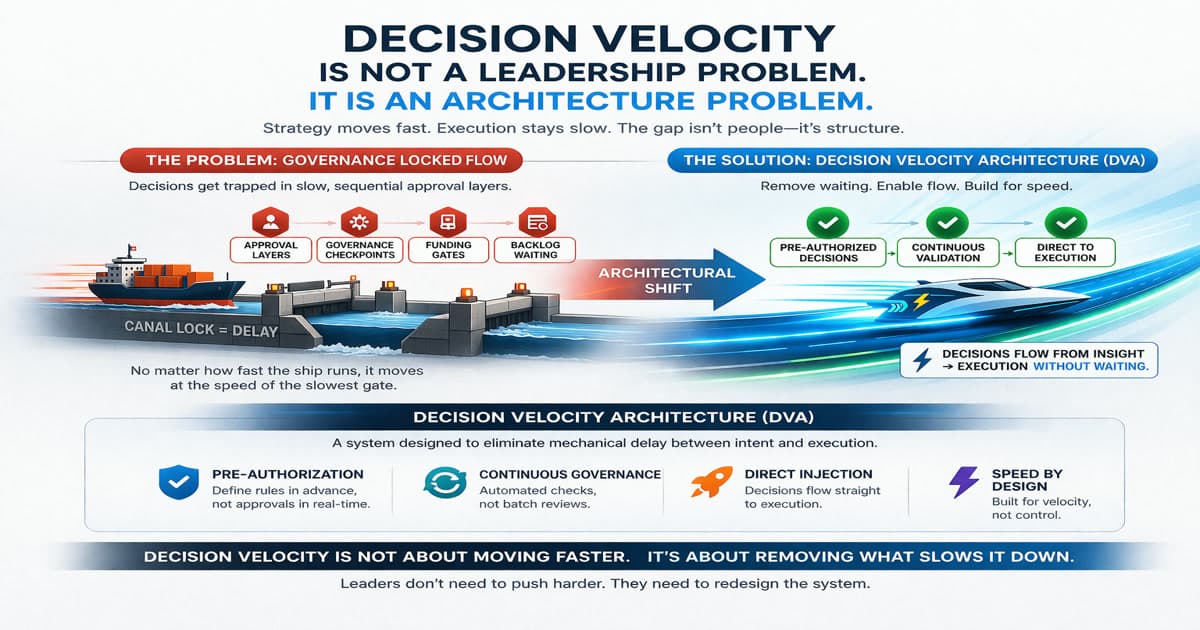
Decision velocity is not constrained by leadership intent but by architectural design. Governance systems built for slower eras create mechanical delay between insight and execution.
...Layers to Direct Flow Strategy should not be rewritten three times before execution. It should enter delivery with minimal distortion. The fewer translations, the fewer delays. The Structural Shift Traditional...
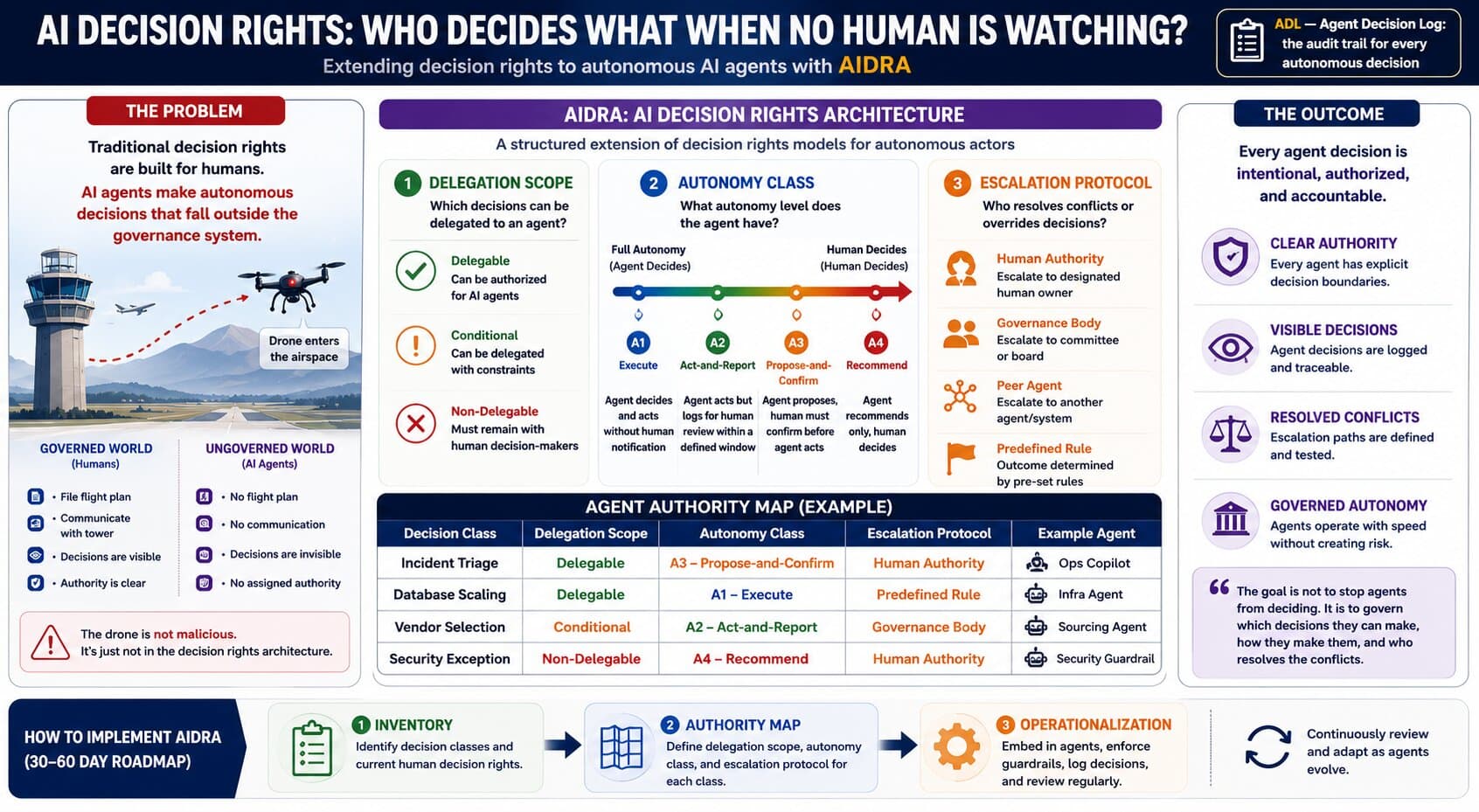
Decision rights models assume human decision-makers. AI agents breach that assumption silently. Here is how to extend decision rights to cover autonomous actors before the first ungoverned decision becomes a production incident.
...your Agent Authority Map for the highest-risk agent decision domains No agent restrictions that slow delivery. No governance frameworks that exist only in documents. Just a decision rights architecture...
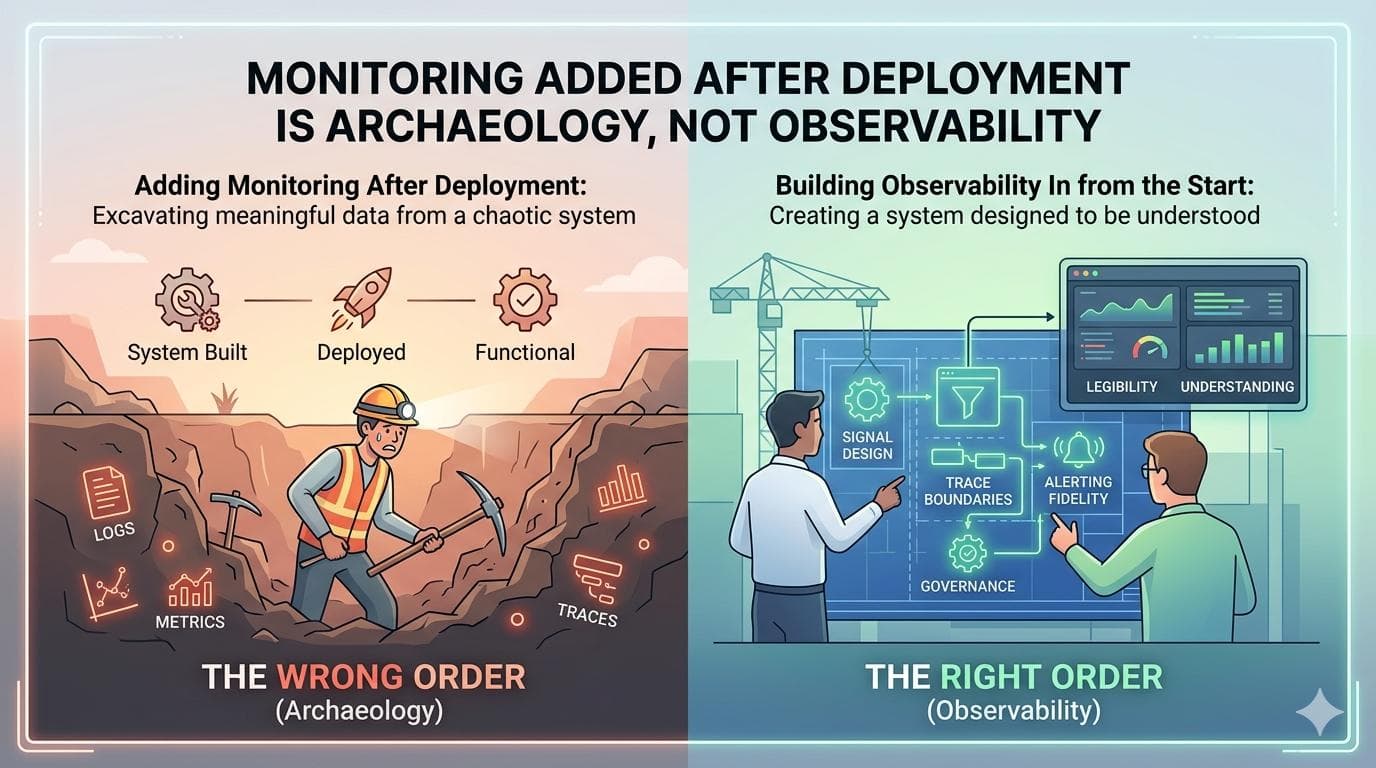
Observability is not a monitoring add-on. It is an architectural constraint. Systems built without observability baked in cannot be understood, cannot be governed, and cannot be improved. The OSAF model tells you exactly where your architecture is blind.
...an architectural health metric Report incident diagnosis time as a design quality metric alongside delivery velocity Final Thought The operating room was not an accident. Every monitor was placed with...