Search
Find insights, training programs, and workshops
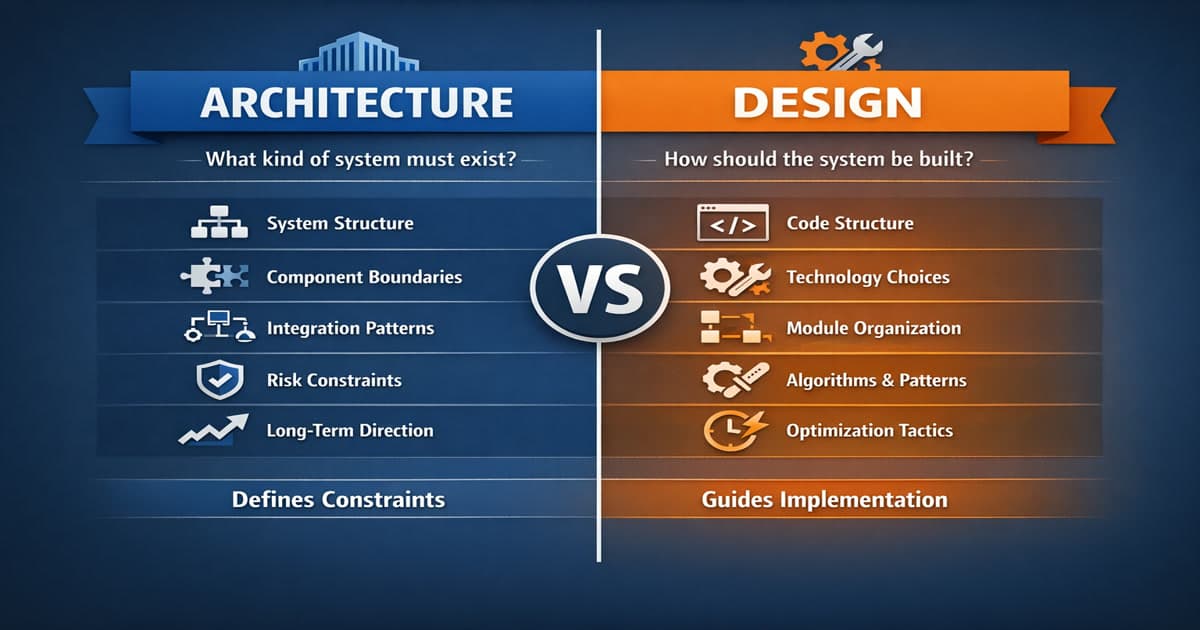
A clear explanation of the difference between architecture and design, why organizations confuse them, and how this confusion creates structural instability in technology systems.
...and design in software and technology organizations Key outcome: Clear structural separation between decision-making architecture and implementation design Time to implement clarity: 30 days Business...
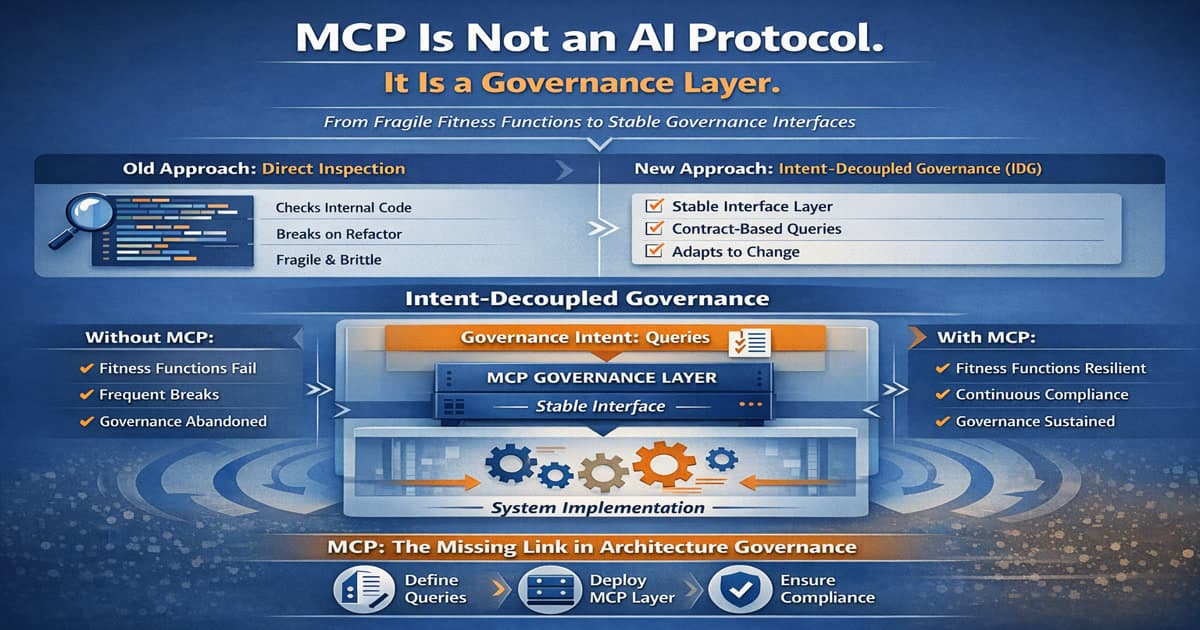
MCP is classified as an AI integration protocol. It is actually a governance primitive — the stable interface layer that architecture fitness functions have been missing for years.
...solves: Architecture fitness functions that break the moment a team changes an internal implementation — making governance brittle, ignored, and eventually abandoned Key outcome: A structured model that uses...
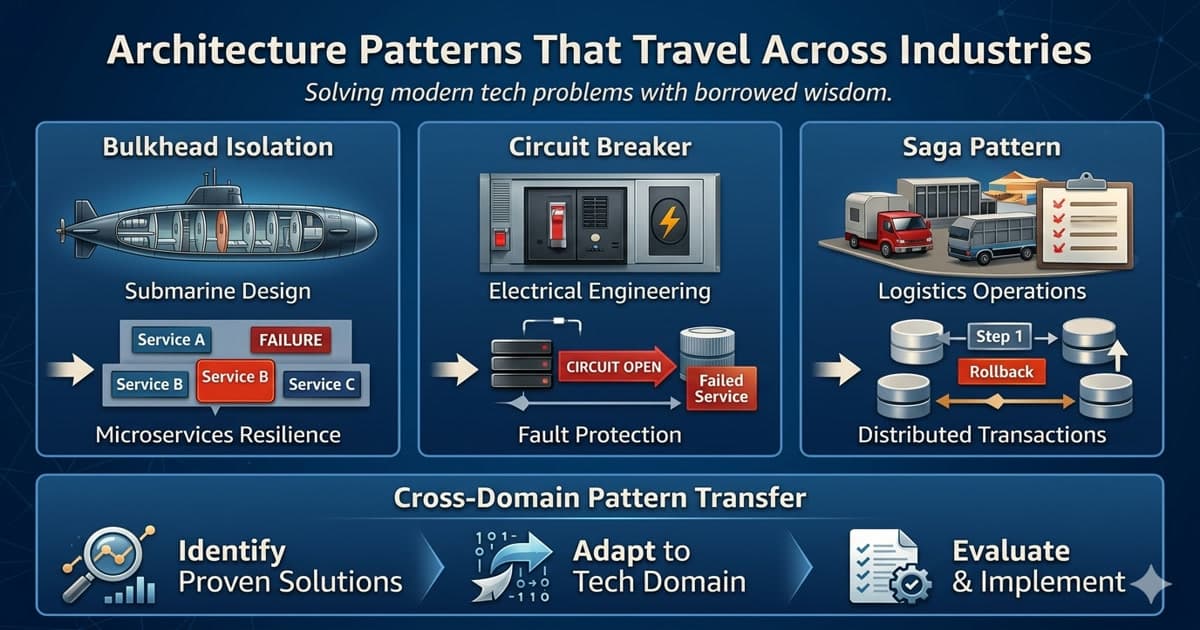
The patterns that solve your hardest distributed systems problems were already solved — in a submarine, a postal sorting office, and an electrical panel. Most architects never look.
...review Business impact: Faster pattern selection, reduced design risk, more resilient systems, and architecture decisions grounded in decades of proven practice — not first principles The Submarine Engineer and the...
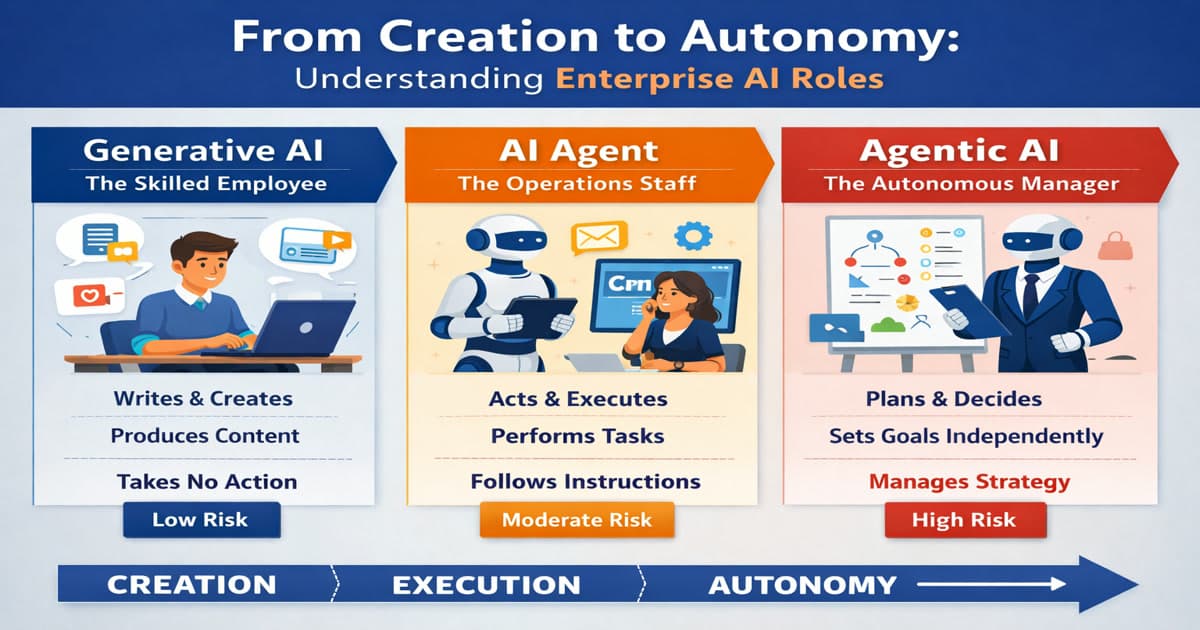
A clear executive guide explaining Generative AI, AI Agents, and Agentic AI using a corporate office analogy to prevent autonomy risks in enterprise AI.
...Governance Need: Content review and data control Generative AI produces output. It does not execute decisions. AI Agent = The Operations Staff Member Now imagine giving that employee system access. The...
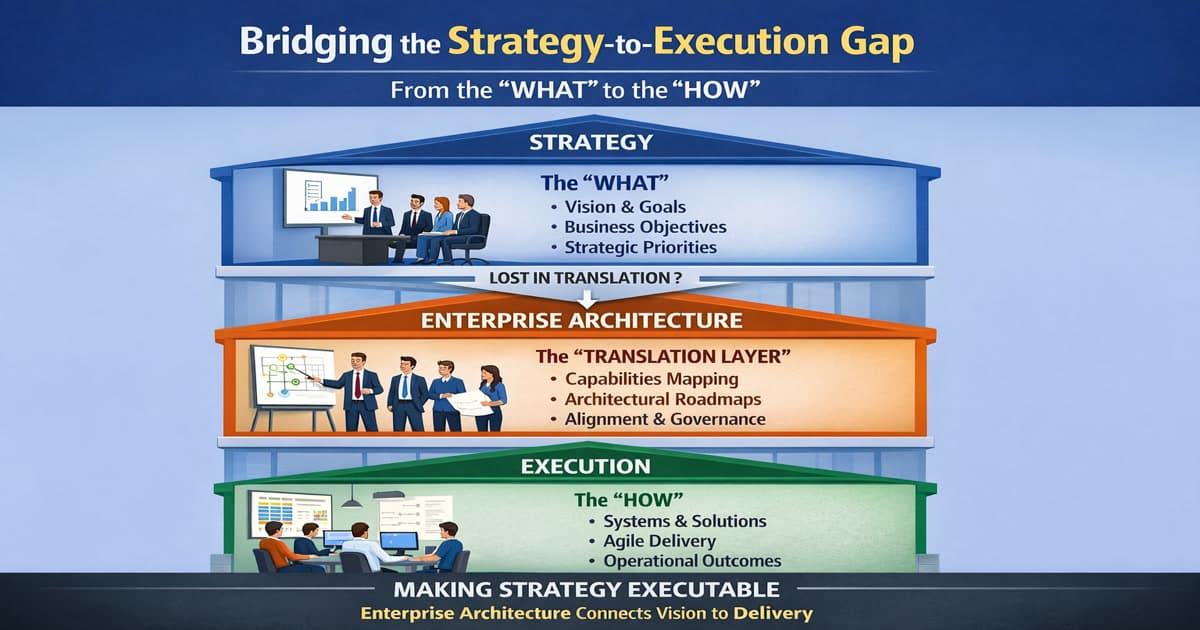
Why strategic intent evaporates before it reaches engineering teams — and how Enterprise Architecture creates the translation layer that makes organizational strategy executable.
...holds the executive team. They are working on strategy. Priorities. Outcomes. Competitive intent. Decisions about where the organization must go. The ground floor holds the delivery teams. Engineers,...
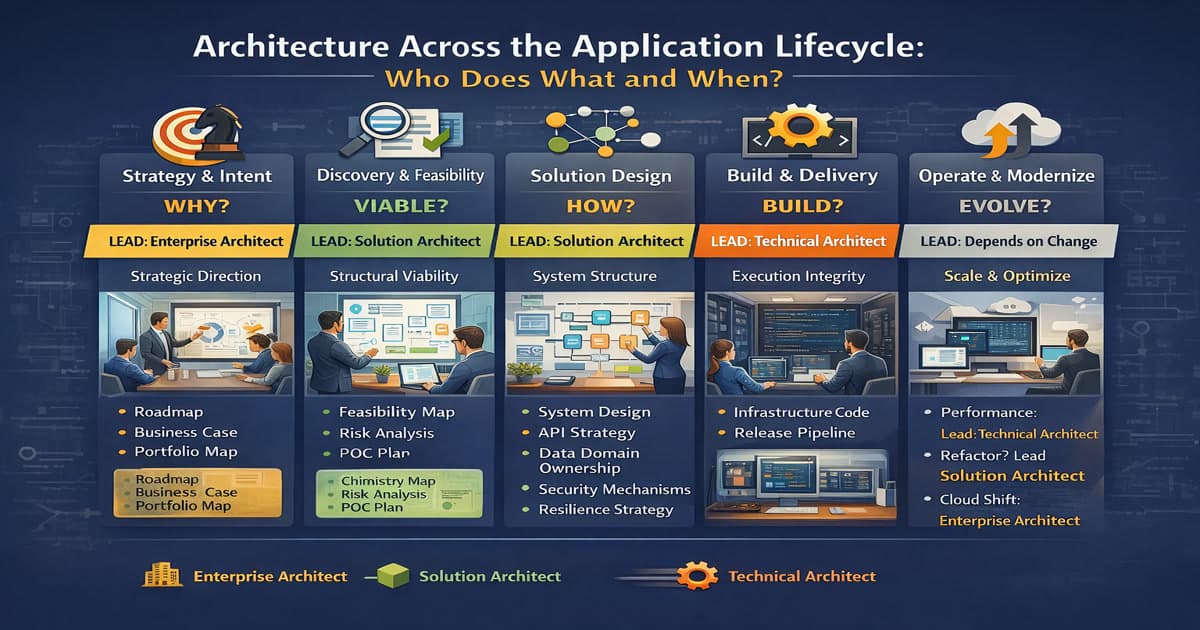
A practical guide explaining which type of architect is required at each stage of the application lifecycle to prevent governance friction and structural instability.
...across lifecycle stages Time to implement clarity: 30 days Business impact: Reduced friction, faster decision cycles, lower architectural rework The Real Problem Is Not Role Confusion — It’s Timing Confusion Most...
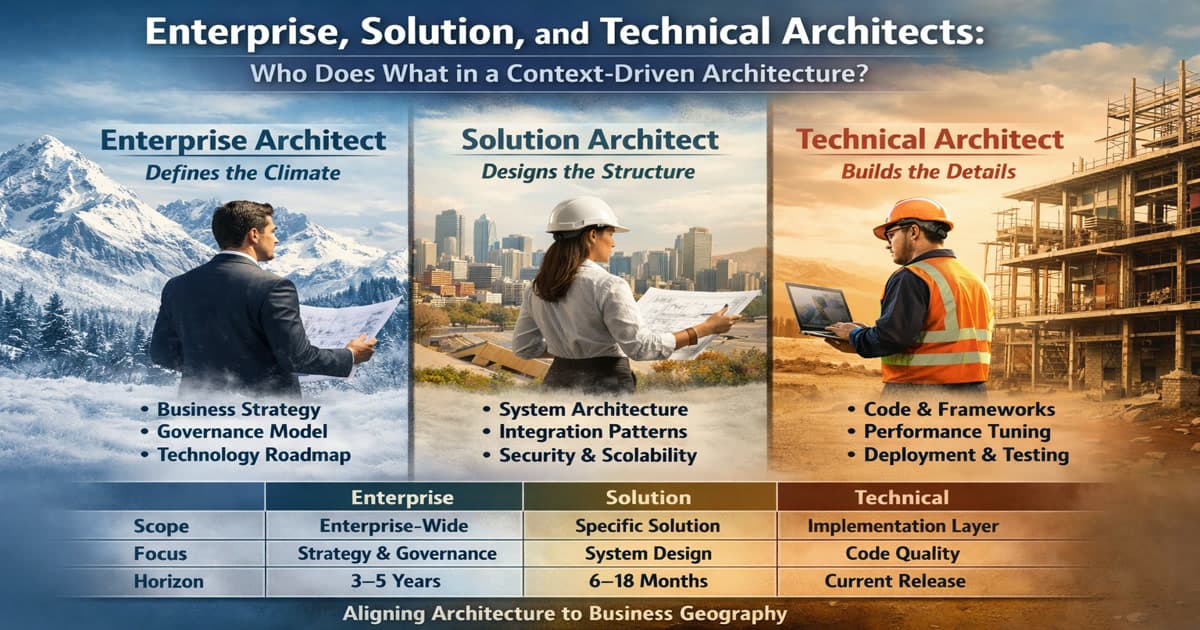
A structured executive guide explaining the difference between Enterprise, Solution, and Technical Architects using Context-Driven Architecture to clarify responsibilities and reduce structural misalignment.
...(30 Days) Phase 1: Role Clarification (Weeks 1–2) Document architectural role definitions Define decision boundaries Align reporting lines Clarify escalation pathways Success Metric: No architectural...
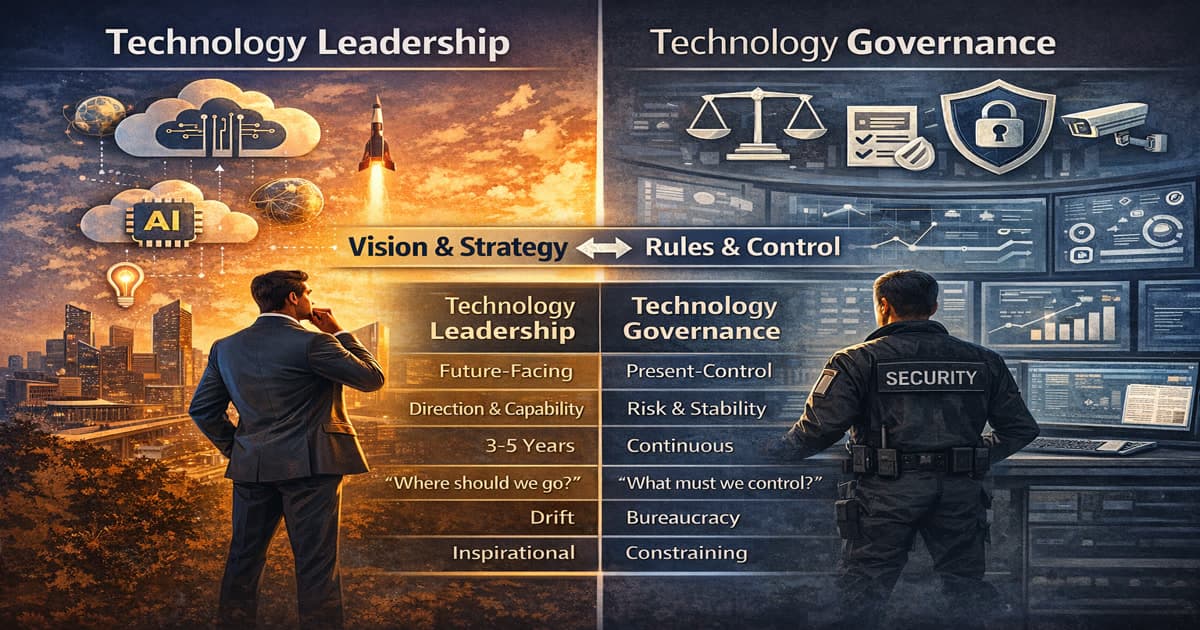
A structured executive guide explaining the difference between Technology Leadership and Technology Governance, and why confusing the two creates instability in enterprise execution.
...mechanisms Time to implement clarity: 30–60 days Business impact: Reduced political friction, faster decision cycles, stronger execution stability The Quiet Tension Inside Technology Organizations Many...
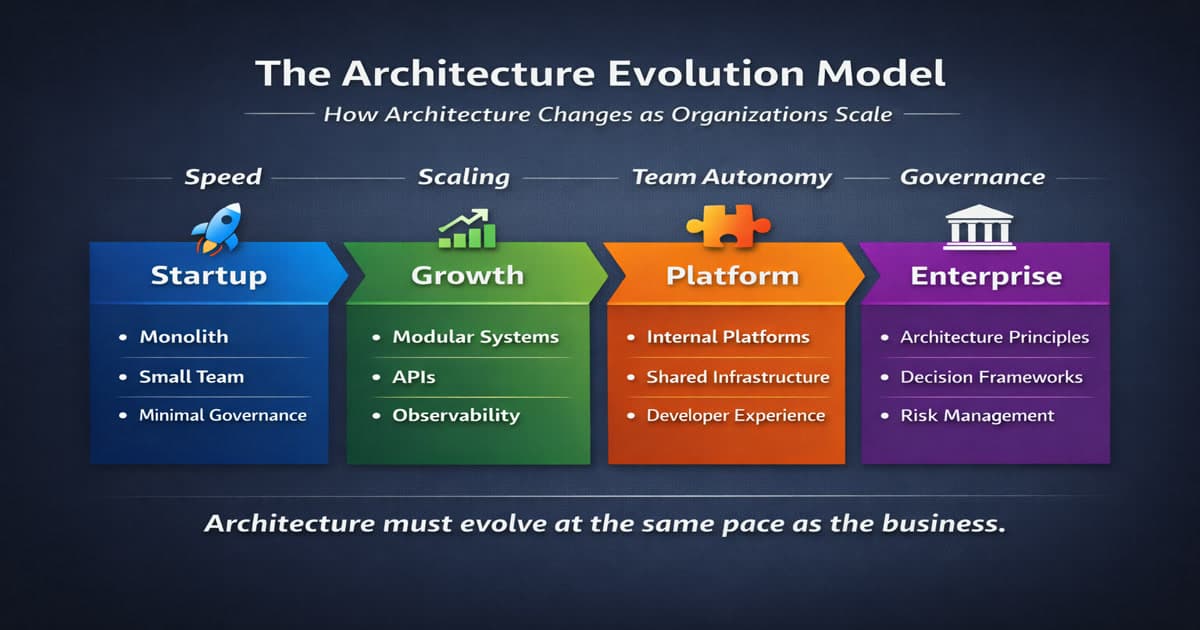
A practical framework explaining how software architecture evolves from startup experimentation to enterprise-scale governance, and what architectural practices are needed at each stage.
...infrastructure Minimal governance Rapid experimentation Few architectural constraints Small engineering teams Decisions prioritize time-to-market over structural perfection. The goal is not architectural elegance. The...
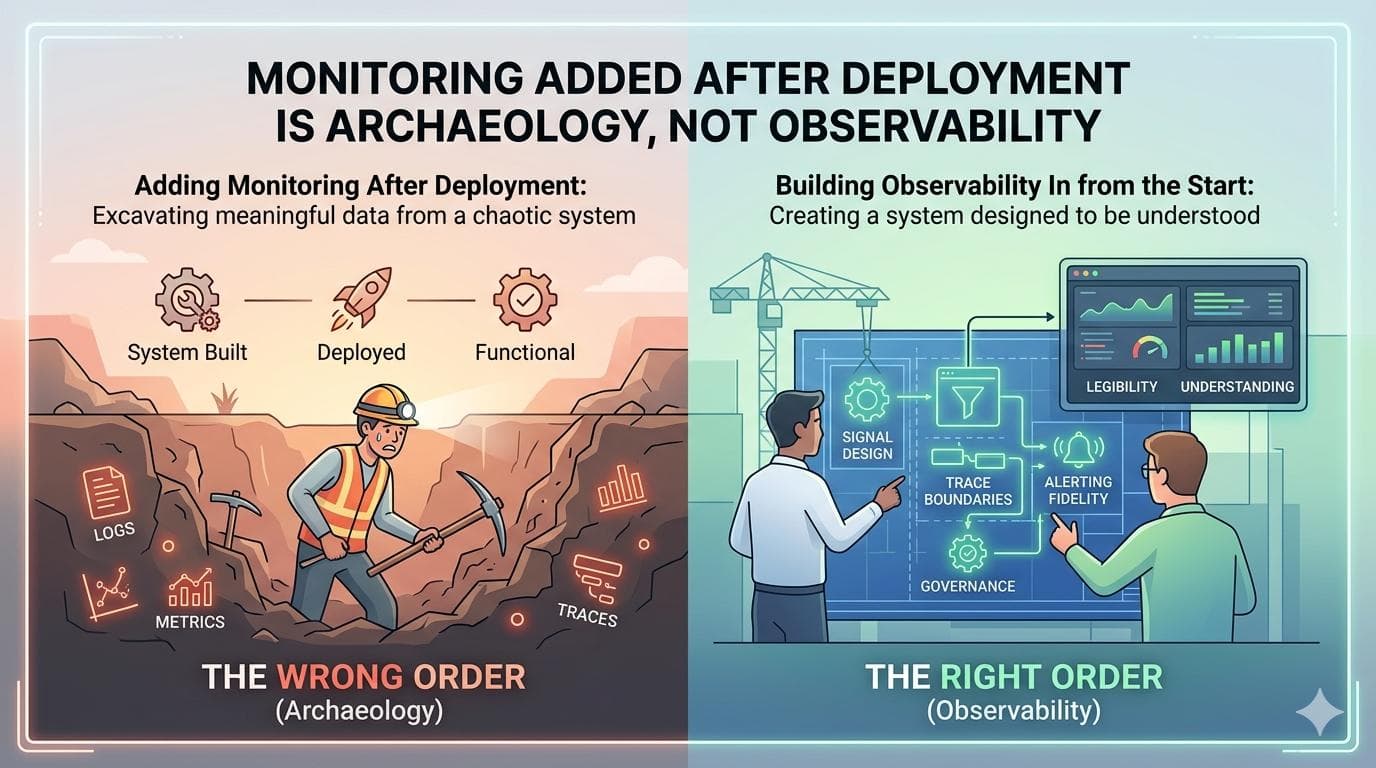
Observability is not a monitoring add-on. It is an architectural constraint. Systems built without observability baked in cannot be understood, cannot be governed, and cannot be improved. The OSAF model tells you exactly where your architecture is blind.
...Architecture Framework (OSAF) is a five-pillar model for embedding observability into architectural decisions — not as an afterthought, but as a first-class design constraint. Its purpose is direct: Make...