Search
Find insights, training programs, and workshops
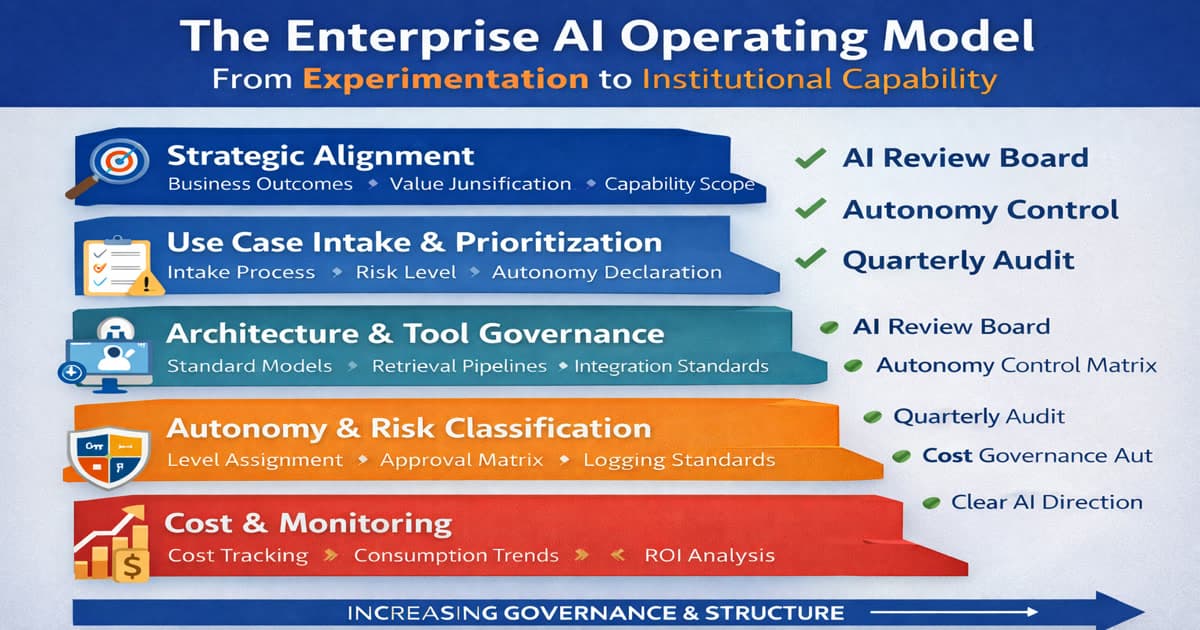
A structured executive guide explaining how to move from AI experimentation to an Enterprise AI Operating Model with governance, autonomy control, and cost discipline.
...governance or structural clarity Key outcome: A practical framework to institutionalize AI across strategy, architecture, autonomy, and cost control Time to implement: 60–90 days Business impact: Reduced...
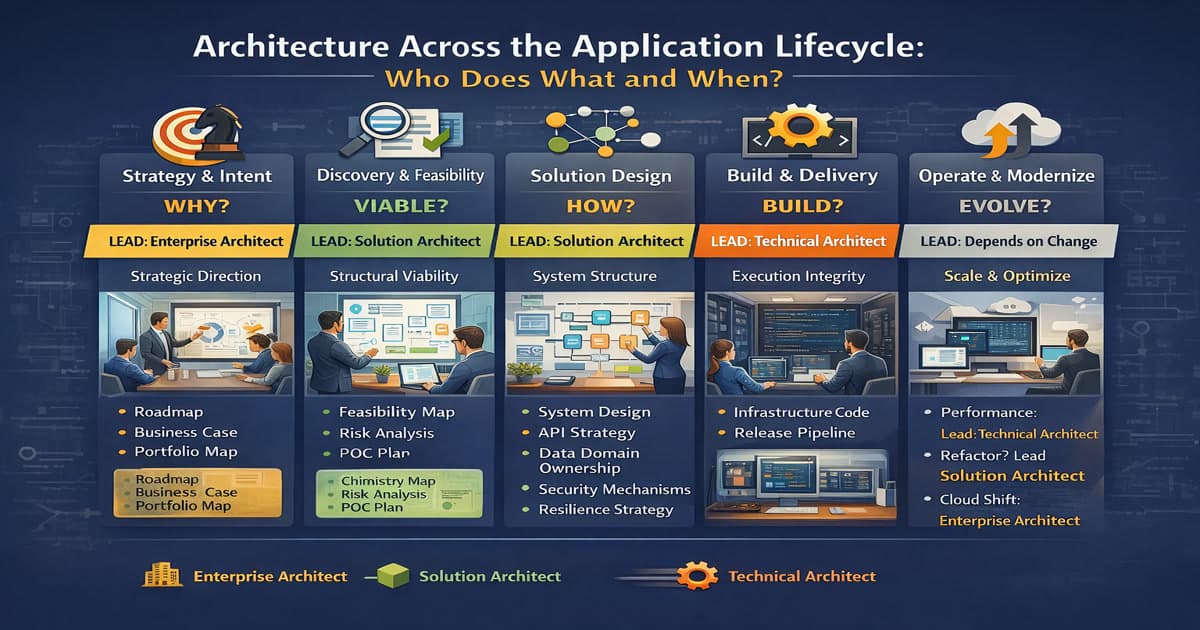
A practical guide explaining which type of architect is required at each stage of the application lifecycle to prevent governance friction and structural instability.
...outcome: Clear architectural engagement model across lifecycle stages Time to implement clarity: 30 days Business impact: Reduced friction, faster decision cycles, lower architectural rework The Real Problem...

A structured executive guide explaining the difference between Enterprise, Solution, and Technical Architects using Context-Driven Architecture to clarify responsibilities and reduce structural misalignment.
...accountability and architectural instability Key outcome: Clear responsibility boundaries aligned to business geography Time to implement clarity: 30 days with structured role alignment Business impact:...
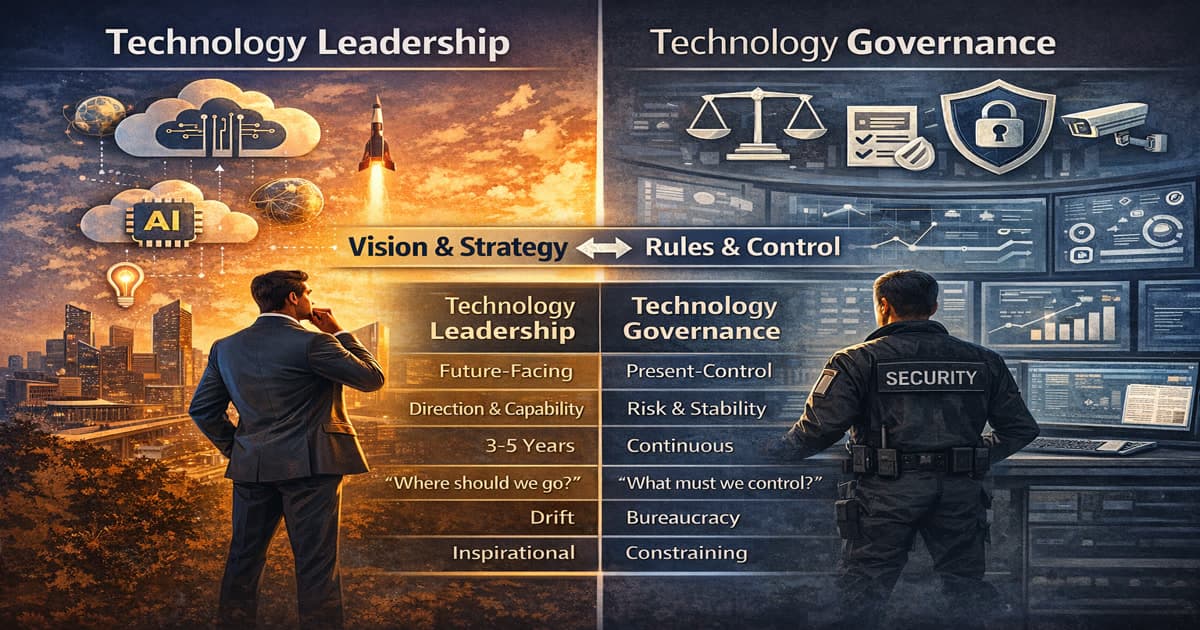
A structured executive guide explaining the difference between Technology Leadership and Technology Governance, and why confusing the two creates instability in enterprise execution.
...between direction-setting and constraint-enforcing mechanisms Time to implement clarity: 30–60 days Business impact: Reduced political friction, faster decision cycles, stronger execution stability The...
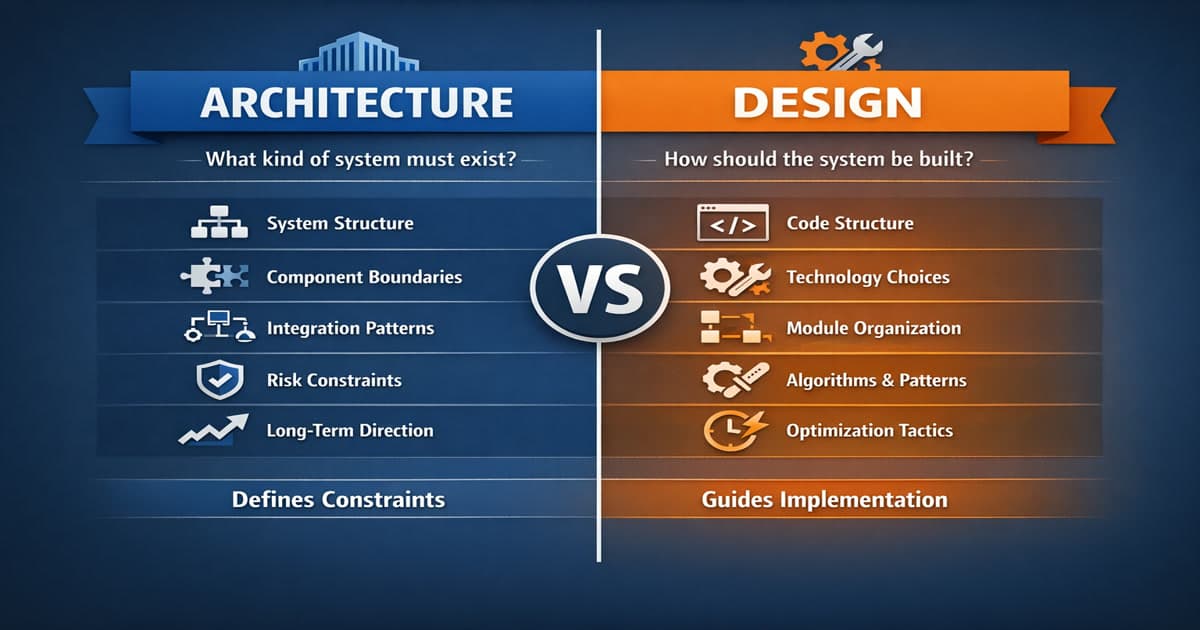
A clear explanation of the difference between architecture and design, why organizations confuse them, and how this confusion creates structural instability in technology systems.
...between decision-making architecture and implementation design Time to implement clarity: 30 days Business impact: Faster decision cycles, reduced architectural debates, stronger system stability The...
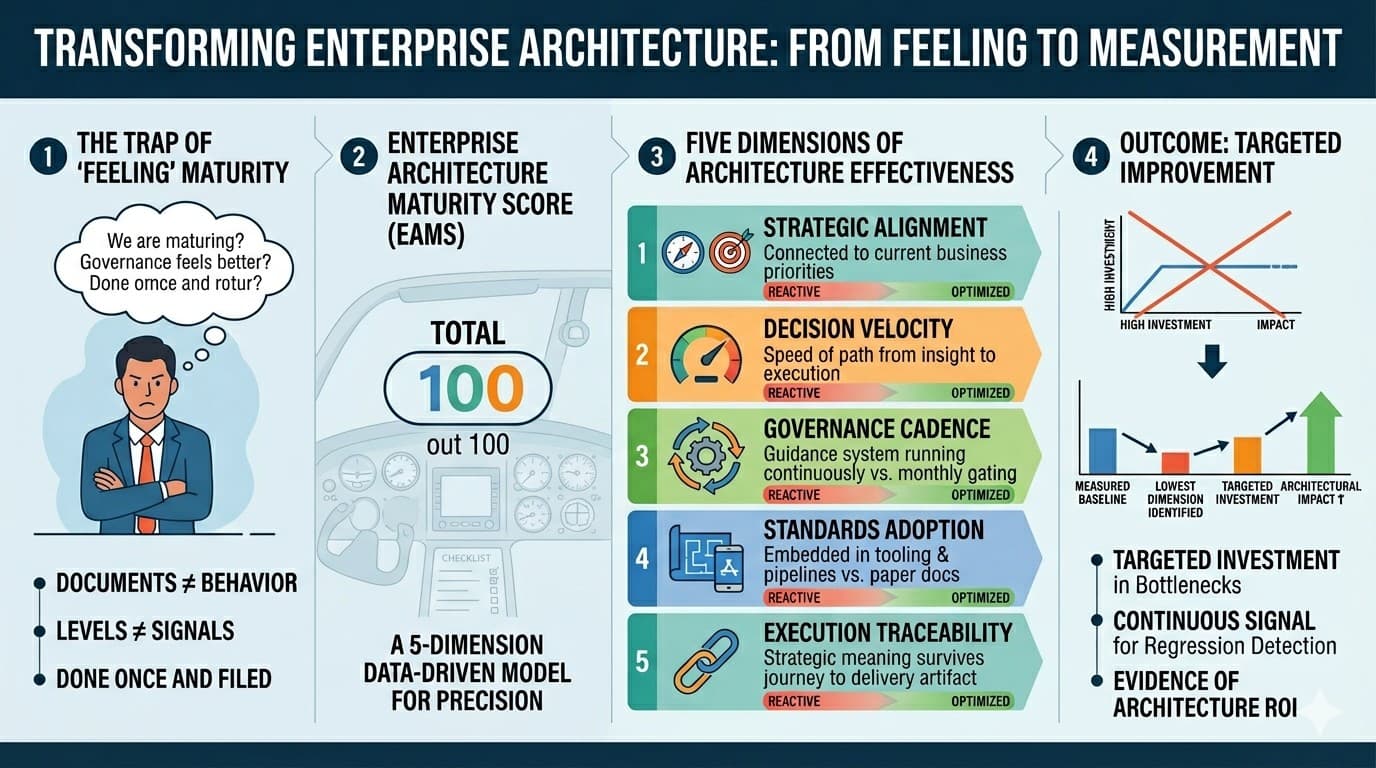
Enterprise architecture maturity is not a feeling. It is a score. Organizations that cannot measure their architecture maturity cannot improve it. The EAMS model gives you the score.
...(EAMS) that tells you exactly where you are before you decide where to go Time to implement: 30–60 days Business impact: Architecture investment targets the right layer at the right time The Pilot Does Not...
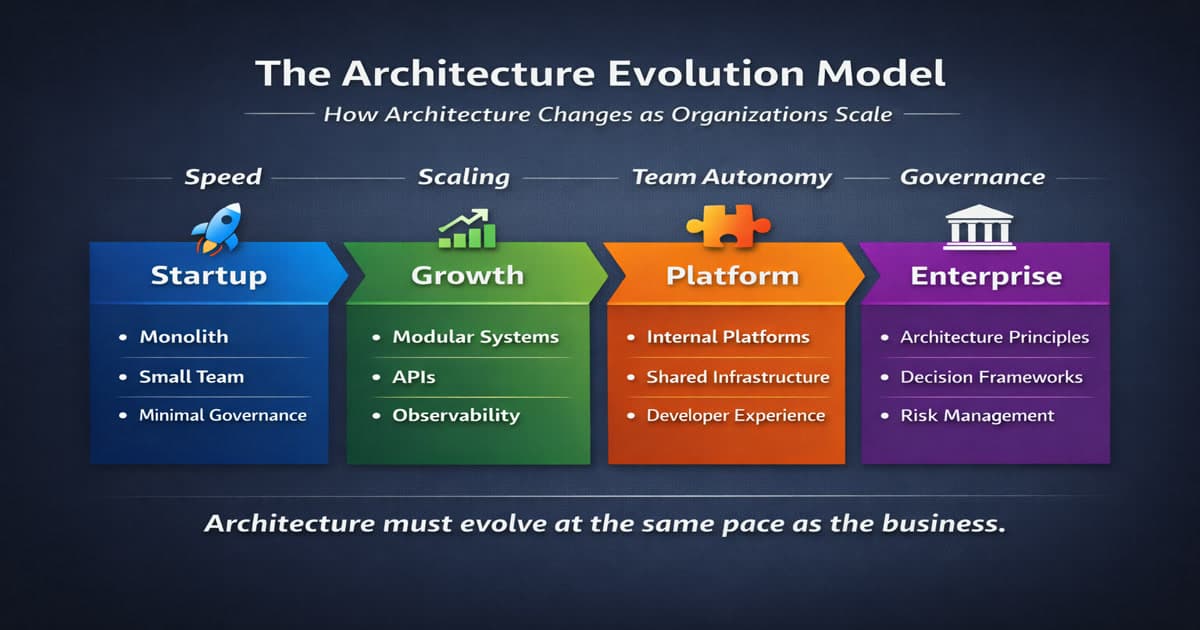
A practical framework explaining how software architecture evolves from startup experimentation to enterprise-scale governance, and what architectural practices are needed at each stage.
...evolution model for architecture maturity from startup to enterprise Time to implement clarity: 30–60 days Business impact: Reduced architectural overengineering, faster scaling, controlled governance The Hidden...
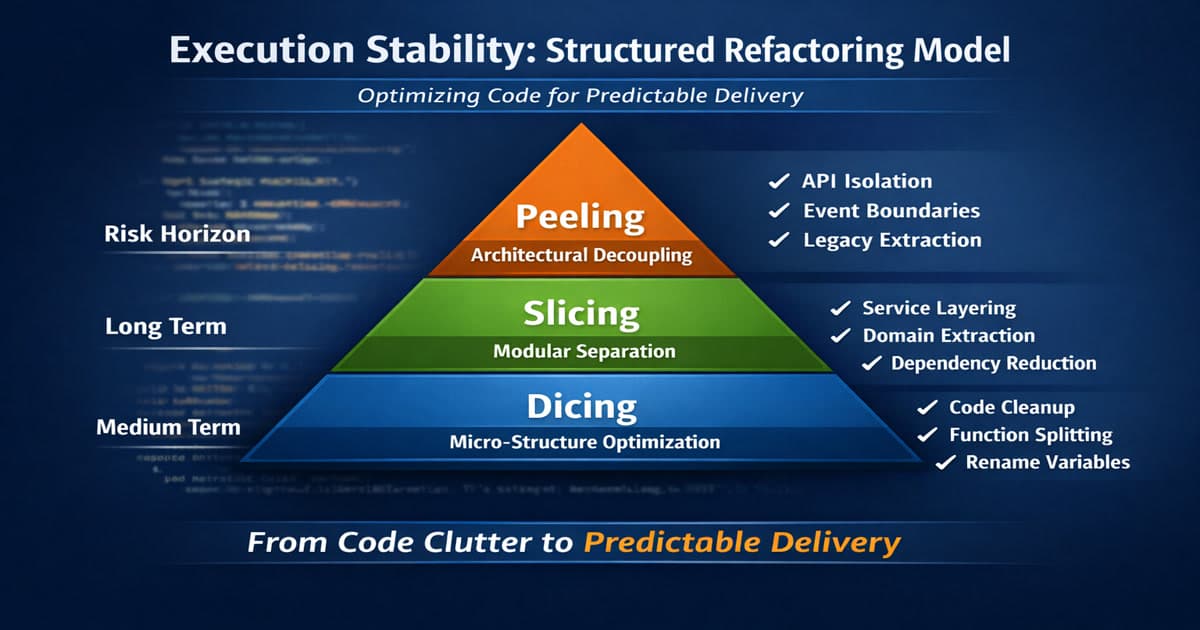
A practical framework for reducing delivery slowdown caused by unmanaged structural code complexity — improving cycle time, reducing regression risk, and clarifying ownership boundaries.
...improved cycle time, clearer ownership boundaries Time to implement: 60–90 days for structured rollout Business impact: Higher engineering throughput without increasing headcount The Silent Slowdown in Growing...
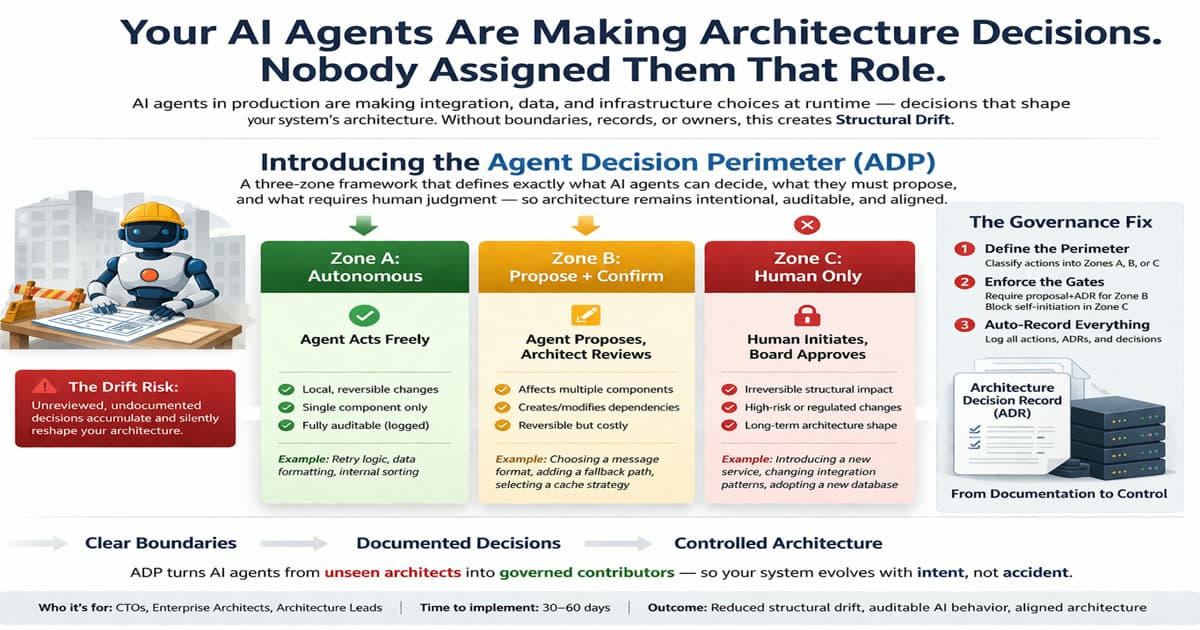
AI agents are making micro-architecture decisions in production. No ADR recorded them. No review board approved them. No architect ever saw them. Here is the structural fix.
...where agents act freely, where they propose, and where humans decide Time to implement: 30–60 days Business impact: Reduced structural drift, auditable AI behaviour, architecture that stays aligned with...
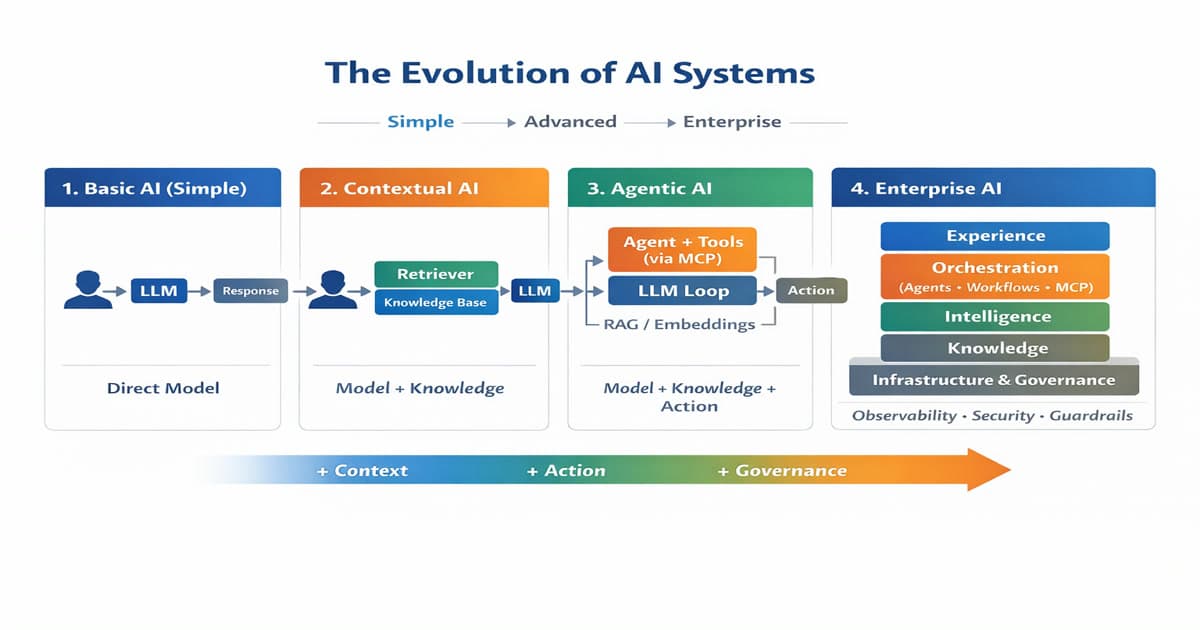
A structured guide explaining how AI systems evolve from simple model usage to governed platforms, and how to scale complexity without losing architectural control.
...evolution model --- Simple → Contextual → Agentic → Enterprise Time to implement clarity: 60--90 days Business impact: Reduced instability, predictable cost growth, controlled autonomy expansion The Evolution...