Search
Find insights, training programs, and workshops
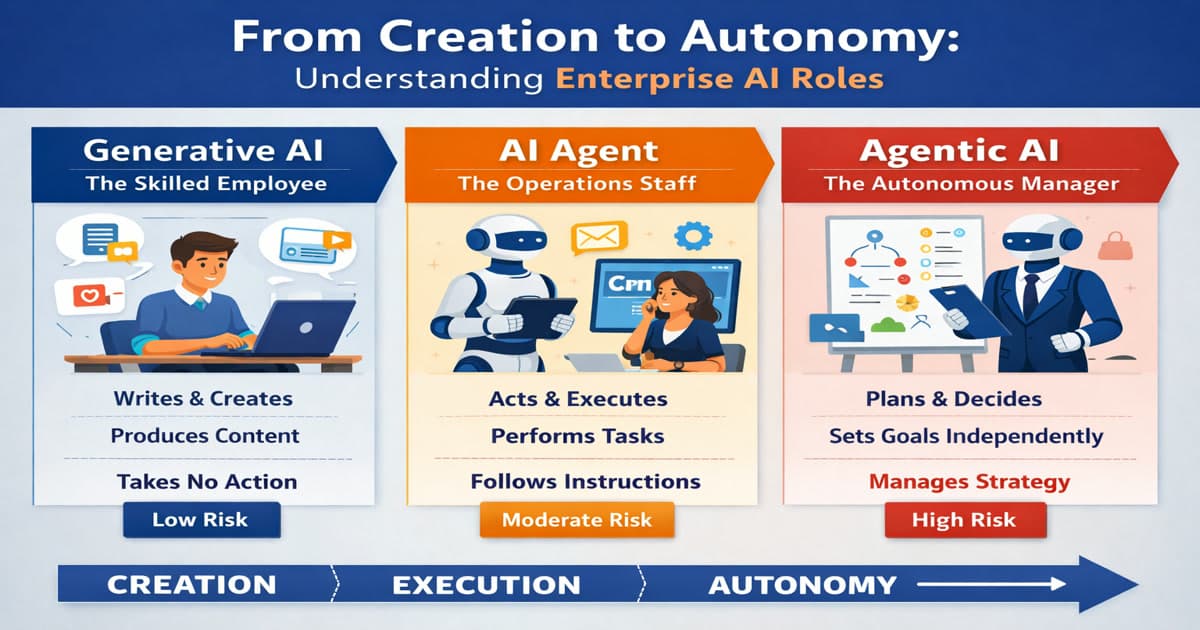
A clear executive guide explaining Generative AI, AI Agents, and Agentic AI using a corporate office analogy to prevent autonomy risks in enterprise AI.
...of autonomy levels in enterprise AI Time to implement clarity: 30–60 days with structured review Business impact: Reduced risk, realistic adoption roadmap, controlled AI scaling The Enterprise AI...
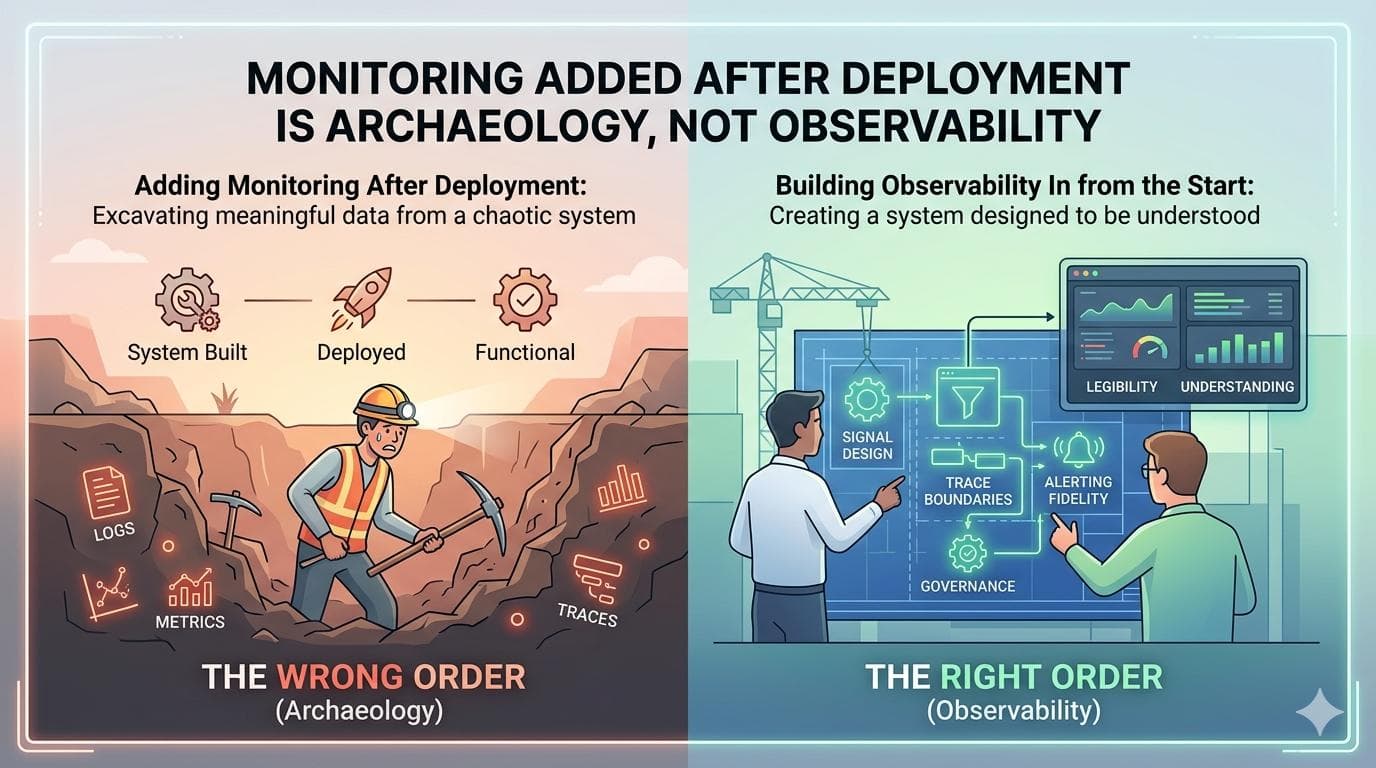
Observability is not a monitoring add-on. It is an architectural constraint. Systems built without observability baked in cannot be understood, cannot be governed, and cannot be improved. The OSAF model tells you exactly where your architecture is blind.
...you exactly where your architecture is blind before failure exposes it Time to implement: 30–60 days Business impact: Systems that are observable from design time are cheaper to operate, faster to debug,...
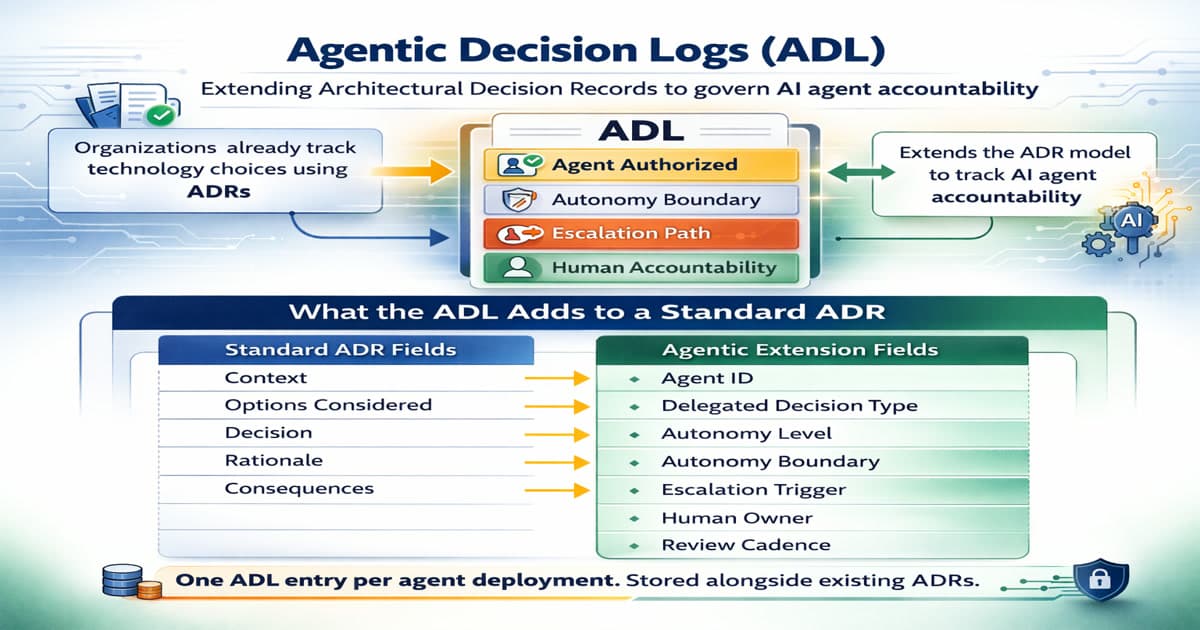
Why Architectural Decision Records are the only structure most organizations already have that can govern AI agent accountability — and how to extend them into an Agentic Decision Log before the EU AI Act deadline.
...infrastructure Time to implement: 30–60 days to introduce the Agentic Decision Log as a governance practice Business impact: Clear agent accountability, reduced regulatory exposure under the EU AI Act, and architecture...
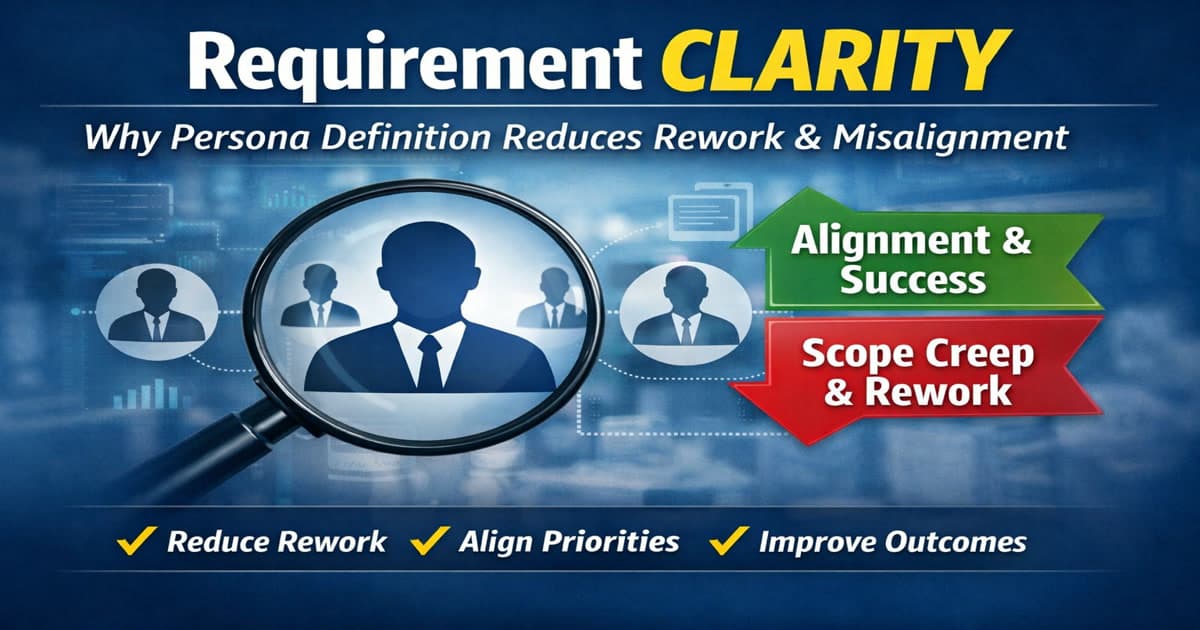
A structured framework for defining personas that eliminates scope creep, reduces rework, and aligns engineering delivery with actual user needs — before development begins.
...measurable alignment, reduced decision friction Time to implement: 30–60 days for structured rollout Business impact: Reduced rework, faster approvals, improved delivery predictability The Hidden Cost...
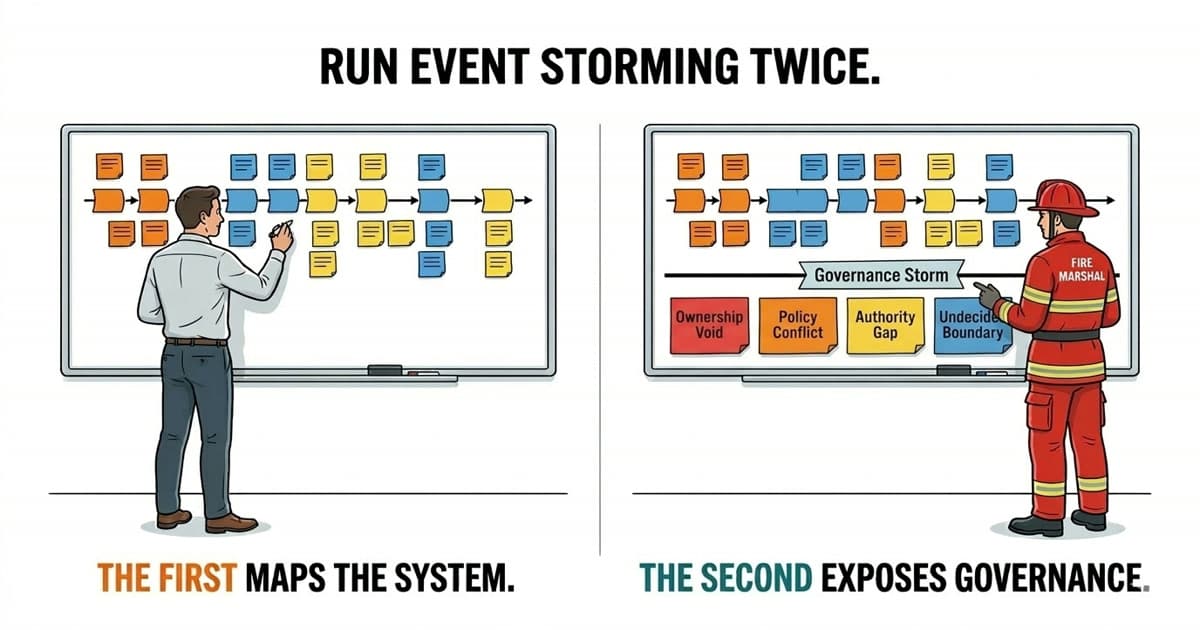
Why the second run of an Event Storming workshop — the one most teams never attempt — is the fastest way to surface governance gaps that architecture diagrams will never show.
...into a governance gap register Time to implement: 30–60 days to run both passes and act on findings Business impact: Earlier visibility of ownership conflicts, reduced production surprises, and governance...
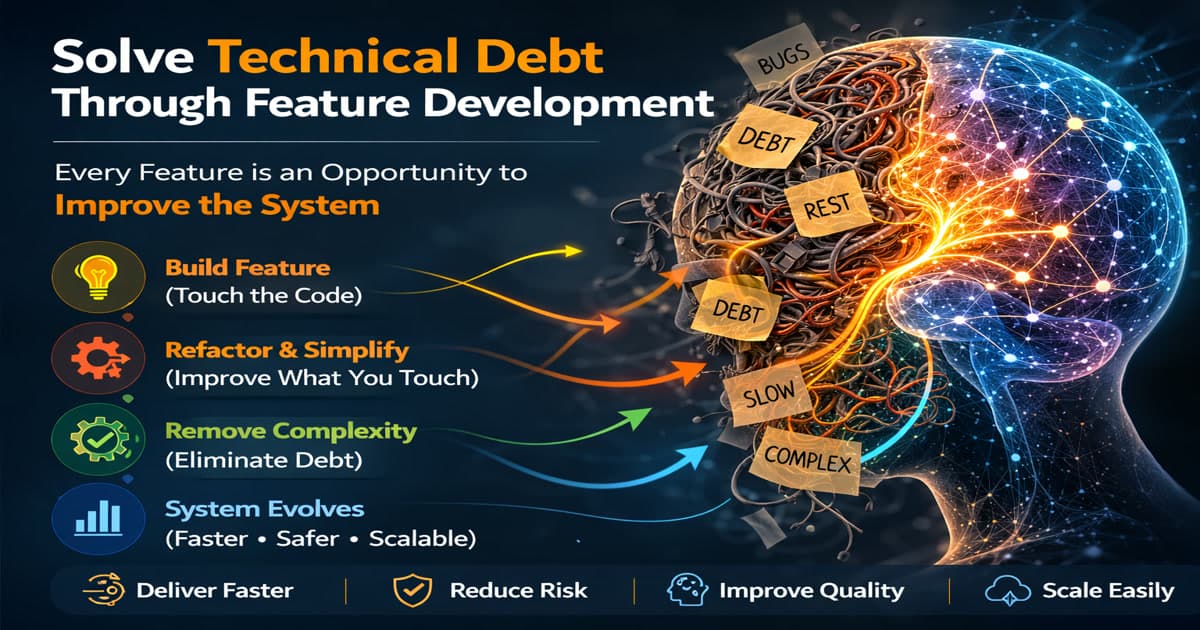
A practical framework explaining how organizations can systematically reduce technical debt while delivering new features, instead of running disruptive modernization programs.
...incrementally during feature delivery Time to implement: 30–60 days to institutionalize the practice Business impact: Continuous architecture improvement without halting product delivery The Technical...
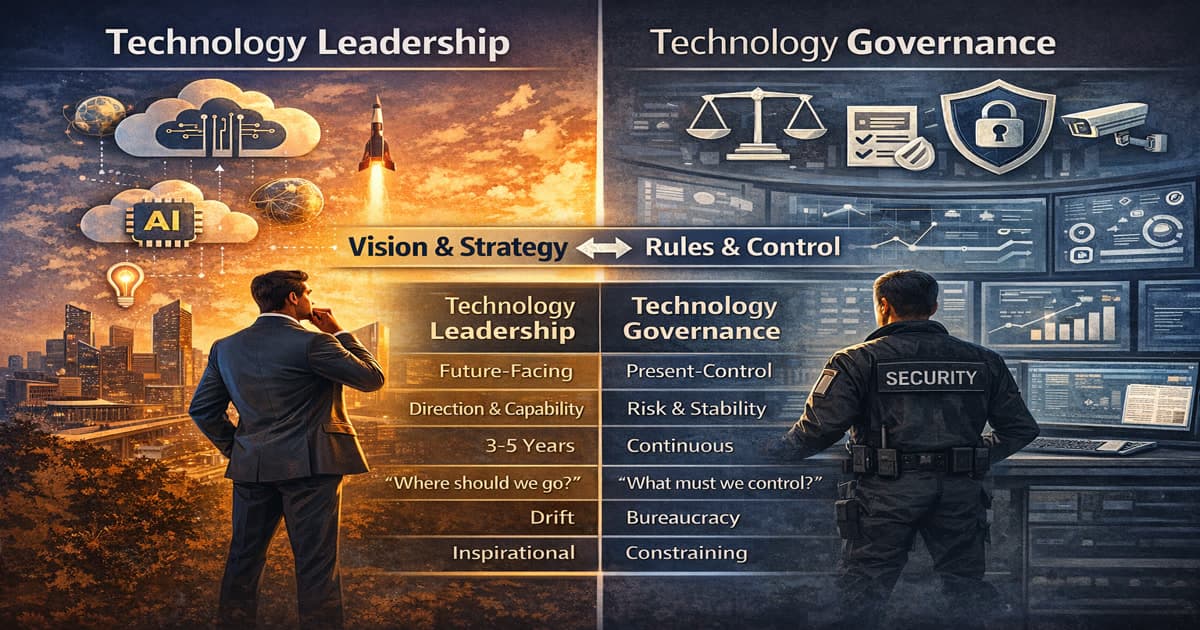
A structured executive guide explaining the difference between Technology Leadership and Technology Governance, and why confusing the two creates instability in enterprise execution.
...between direction-setting and constraint-enforcing mechanisms Time to implement clarity: 30–60 days Business impact: Reduced political friction, faster decision cycles, stronger execution stability The...
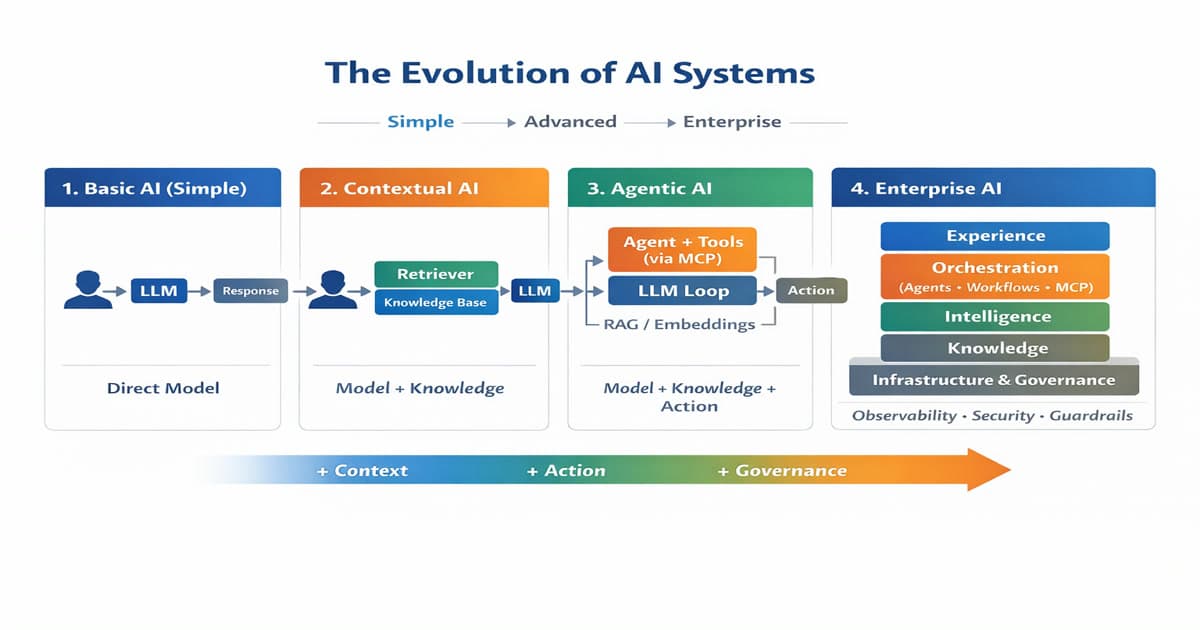
A structured guide explaining how AI systems evolve from simple model usage to governed platforms, and how to scale complexity without losing architectural control.
...evolution model --- Simple → Contextual → Agentic → Enterprise Time to implement clarity: 60--90 days Business impact: Reduced instability, predictable cost growth, controlled autonomy expansion The Evolution...
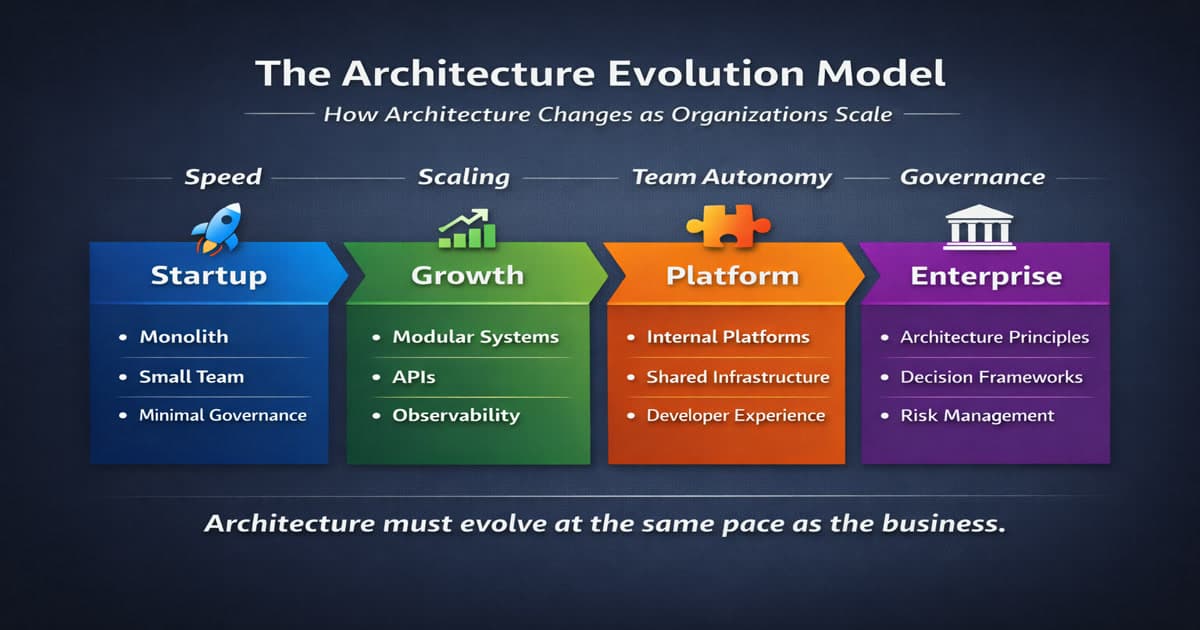
A practical framework explaining how software architecture evolves from startup experimentation to enterprise-scale governance, and what architectural practices are needed at each stage.
...evolution model for architecture maturity from startup to enterprise Time to implement clarity: 30–60 days Business impact: Reduced architectural overengineering, faster scaling, controlled governance The Hidden...
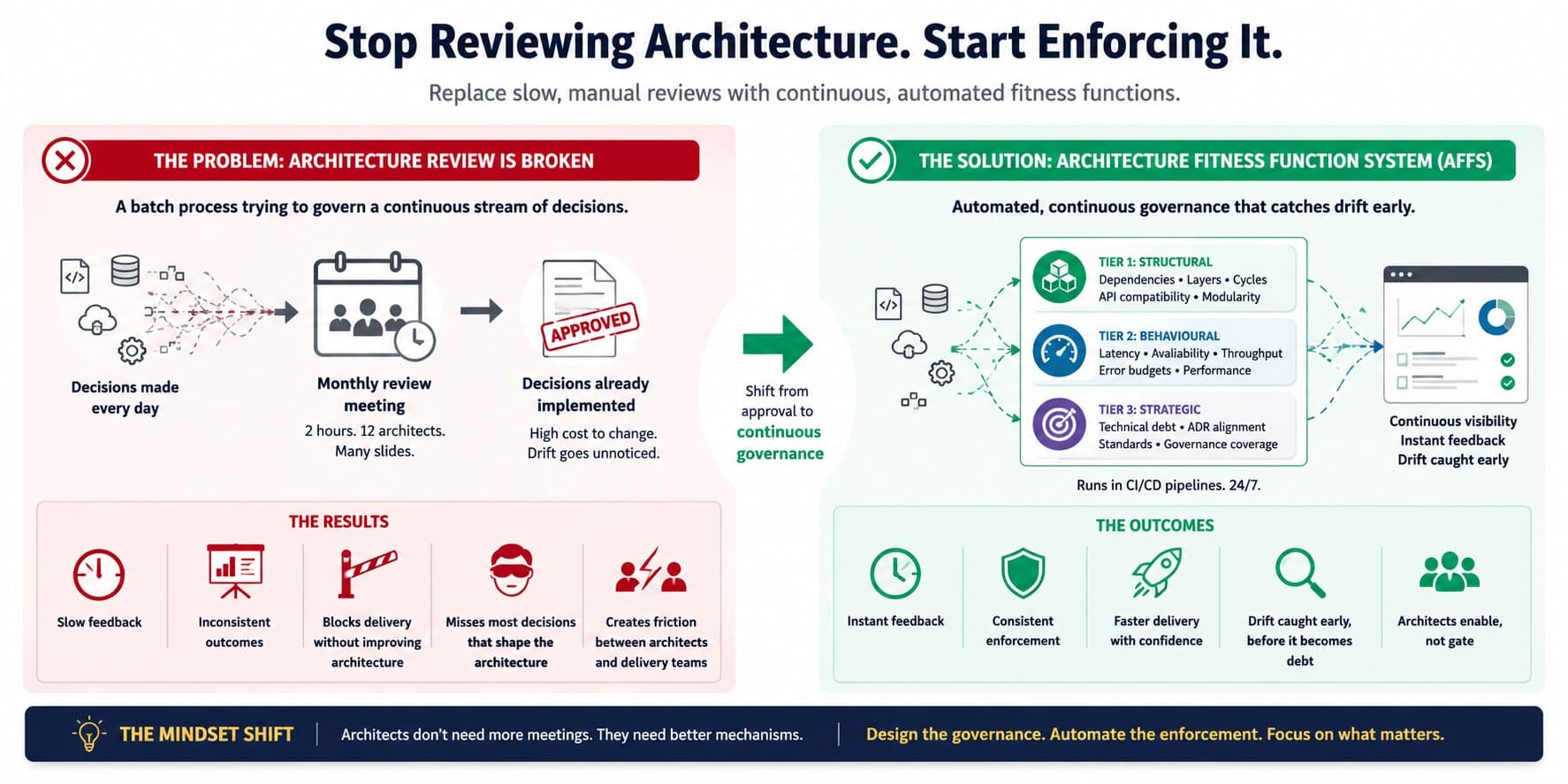
The architecture fitness function literature solved code-level governance. It never made the claim that the board itself becomes optional. Here is the missing argument — and the economics that prove the board is the slower and more expensive option.
...debt Time to implement: 60–90 days to replace the first review gate with automated fitness functions Business impact: Architecture governance that runs continuously, zero delivery gates that add calendar...