Search
Find insights, training programs, and workshops
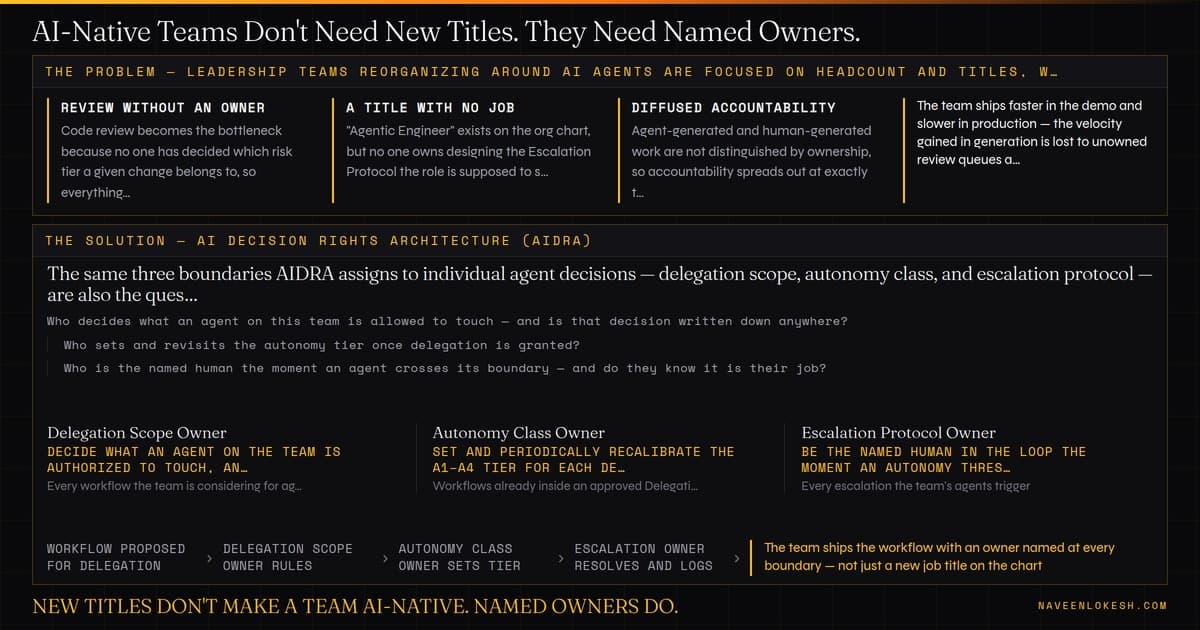
AI-native team redesigns keep adding new job titles and calling it done. The actual failure mode sits at the decision boundary. Here is what changes when you apply AIDRA to team design instead of headcount.
...team and run one workflow through the flow end to end Business impact: Fewer unowned escalations, a review process that scales with risk tier instead of scrutinizing everything equally, and an org chart...
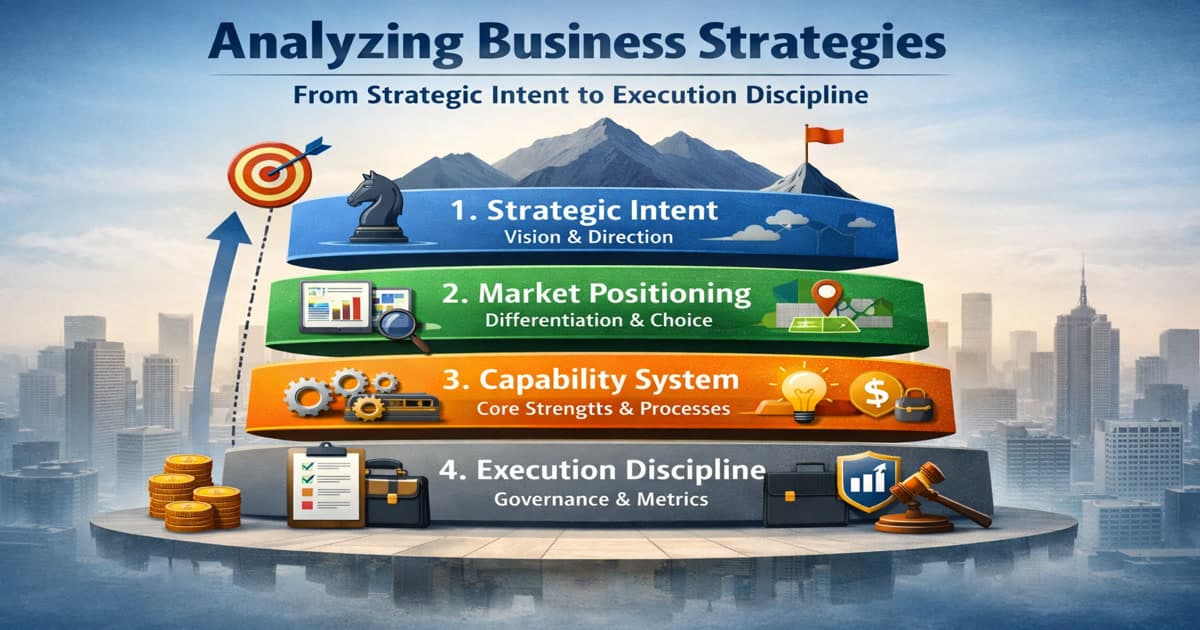
A structured executive guide to analyzing business strategies using a four-layer framework that connects intent, positioning, capability, and execution discipline.
...strategy is coherent, differentiated, and executable Time to apply: 2–4 weeks for structured strategic review Business impact: Reduced strategic drift, improved capital allocation, stronger execution alignment...
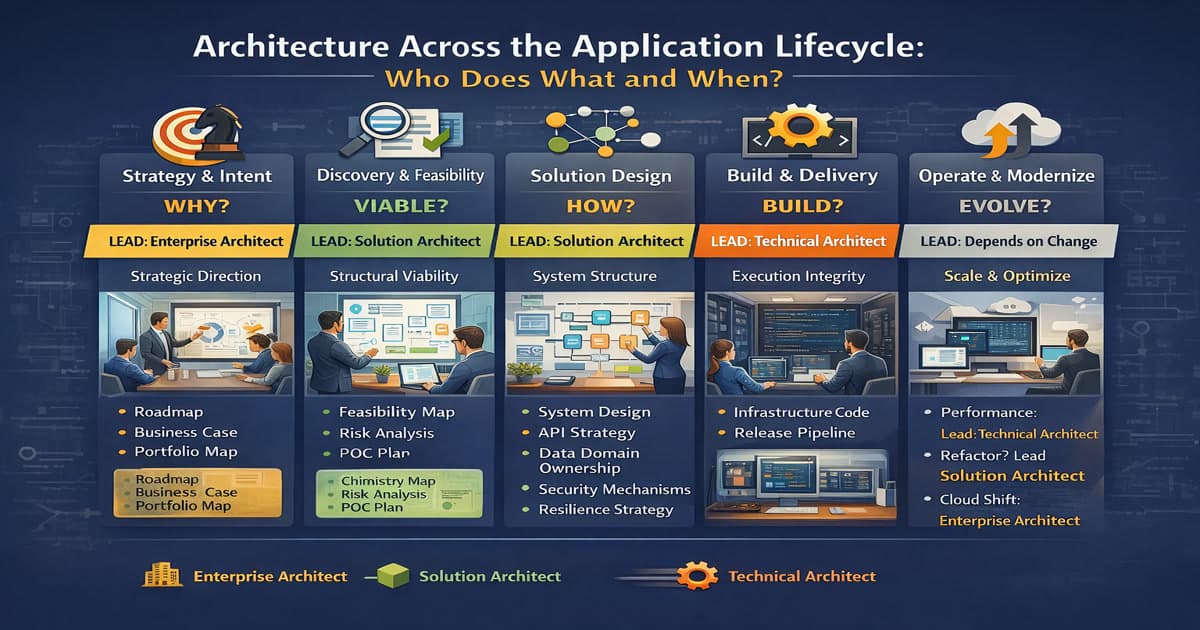
A practical guide explaining which type of architect is required at each stage of the application lifecycle to prevent governance friction and structural instability.
...define architectural roles. Few define when each role should lead. As a result: Enterprise Architects review API design. Solution Architects are absent during discovery. Technical Architects are brought...
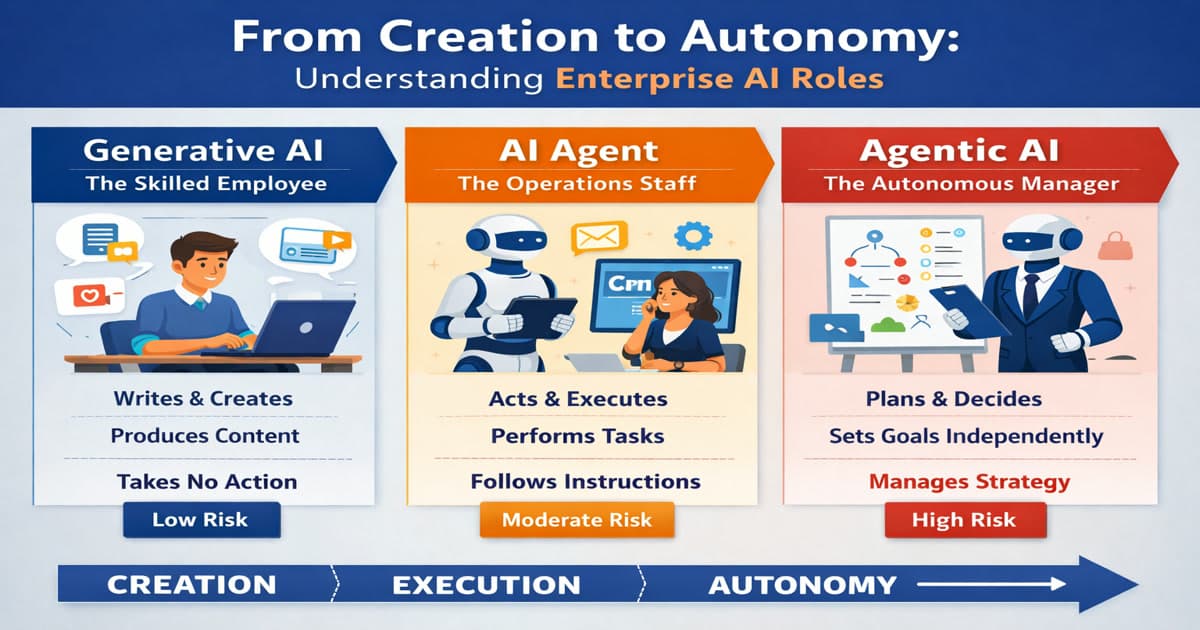
A clear executive guide explaining Generative AI, AI Agents, and Agentic AI using a corporate office analogy to prevent autonomy risks in enterprise AI.
...understanding of autonomy levels in enterprise AI Time to implement clarity: 30–60 days with structured review Business impact: Reduced risk, realistic adoption roadmap, controlled AI scaling The Enterprise...
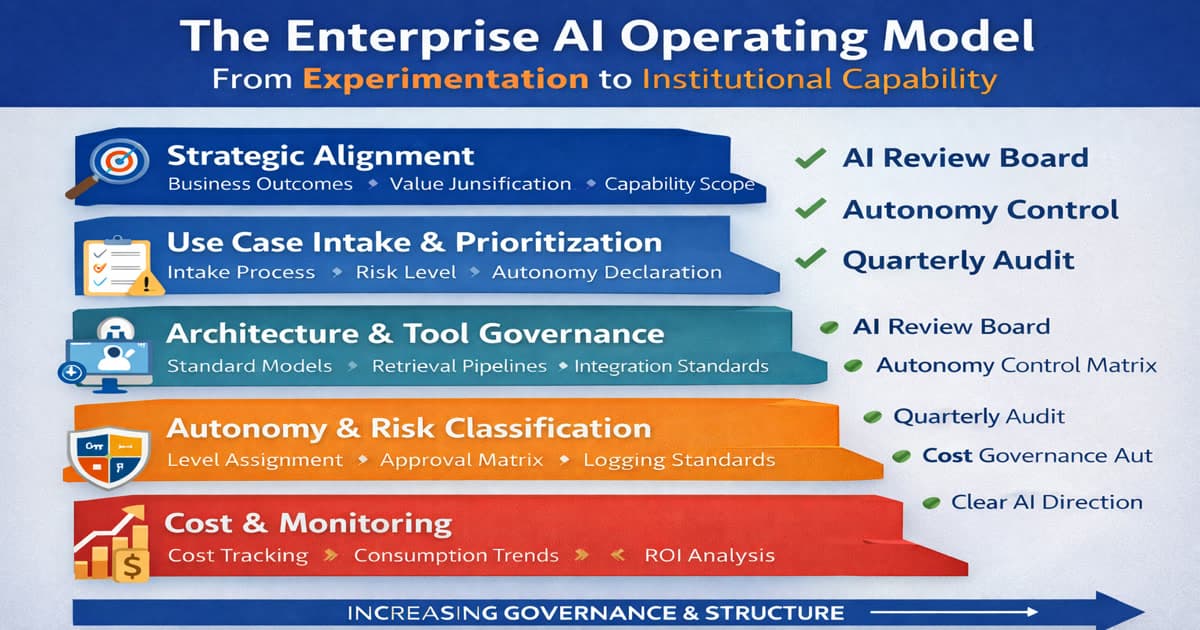
A structured executive guide explaining how to move from AI experimentation to an Enterprise AI Operating Model with governance, autonomy control, and cost discipline.
...teams: Use different models Build separate agents Integrate tools independently Run pilots without cross-review Six months later: Costs fluctuate unpredictably Security escalations slow progress Compliance...
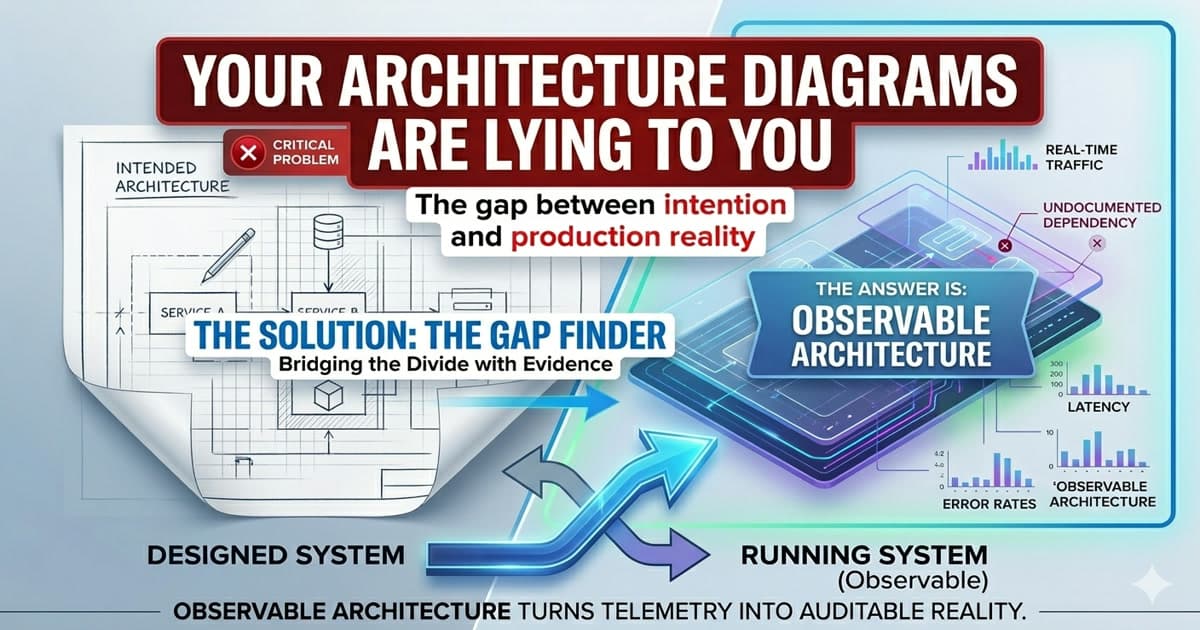
Why architecture diagrams describe a system that no longer exists, and how Observable Architecture uses production telemetry to reveal what is actually running.
...Observable Architecture as a governance practice Business impact: Earlier risk detection, accurate security reviews, reduced production surprises, and architecture governance grounded in operational reality The...
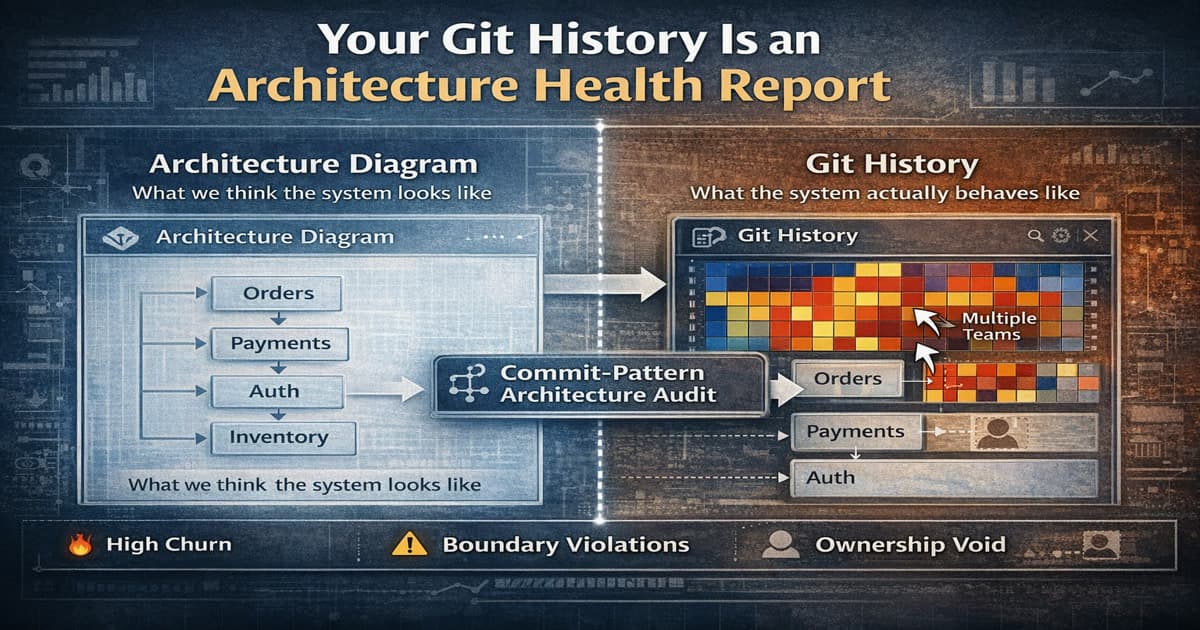
A practical architecture technique showing how Git commit patterns reveal structural instability, boundary violations, and ownership gaps in software systems.
...for: Solution Architects, Technical Architects, Engineering Leads Problem it solves: Architecture reviews rely on diagrams and governance documents that often fail to reflect the real system structure...
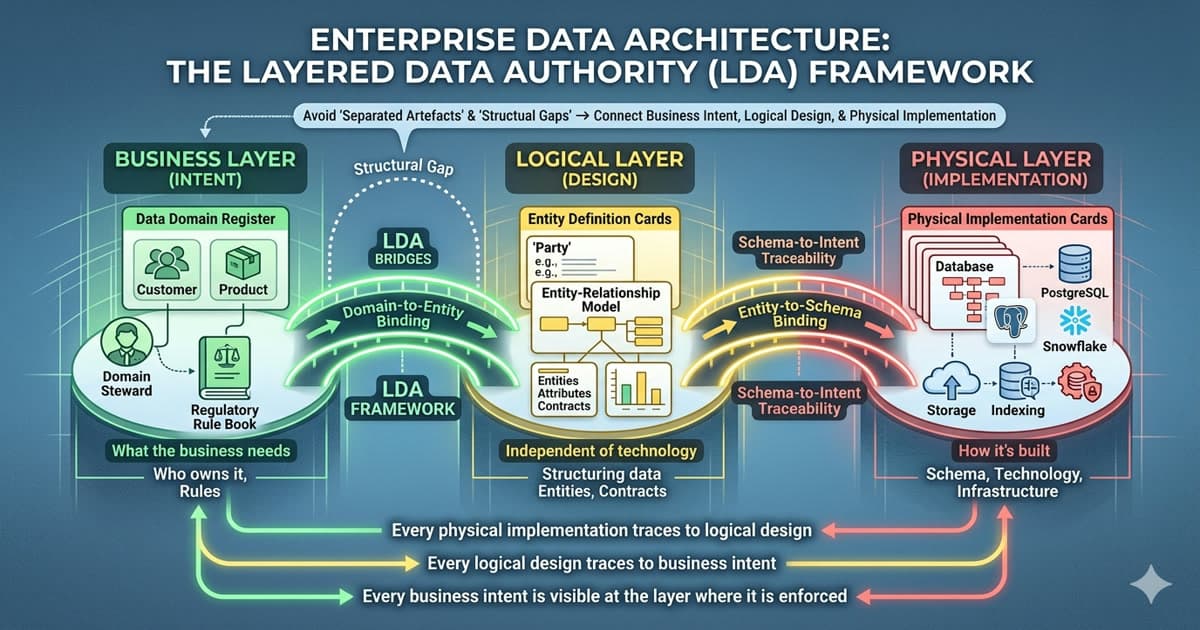
Most enterprises build data architectures one layer at a time. Business, logical, and physical layers exist as separate artefacts owned by separate teams. That separation is the structural gap that makes data estates ungovernable.
...data architects. The physical layer is owned by platform engineers. Three teams. Three tools. Three review cycles. Three governance rhythms. And when a business rule changes, nobody knows which logical...
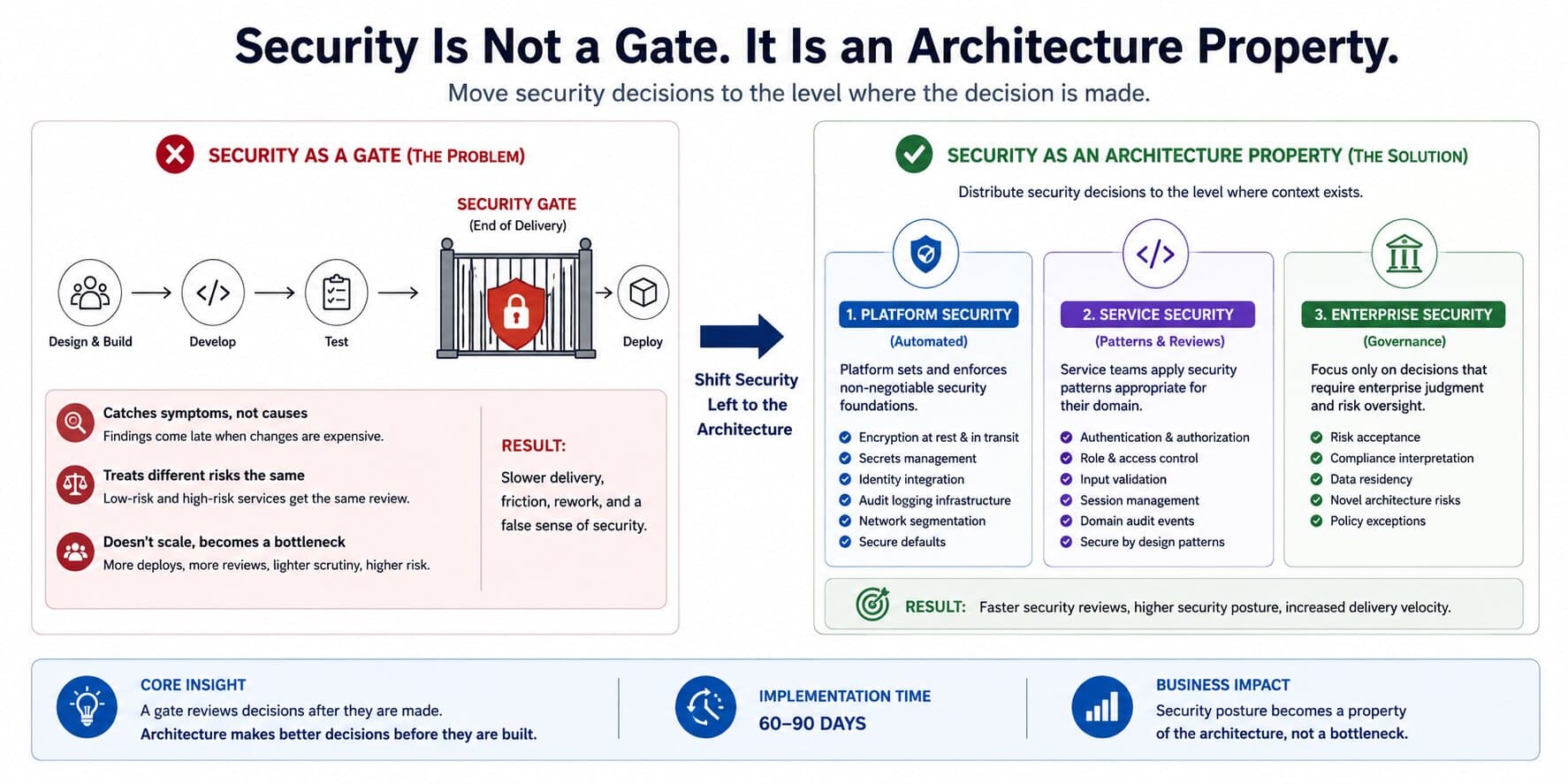
Security is treated as a gate at the end of delivery. It should be an architecture property designed into three distinct boundaries. Here is the model that fixes the friction between security and delivery.
...decisions belong at the architectural level where the decision is made, not at a central gate that reviews every decision uniformly. A gate cannot catch what the architecture never considered. Core outcome:...
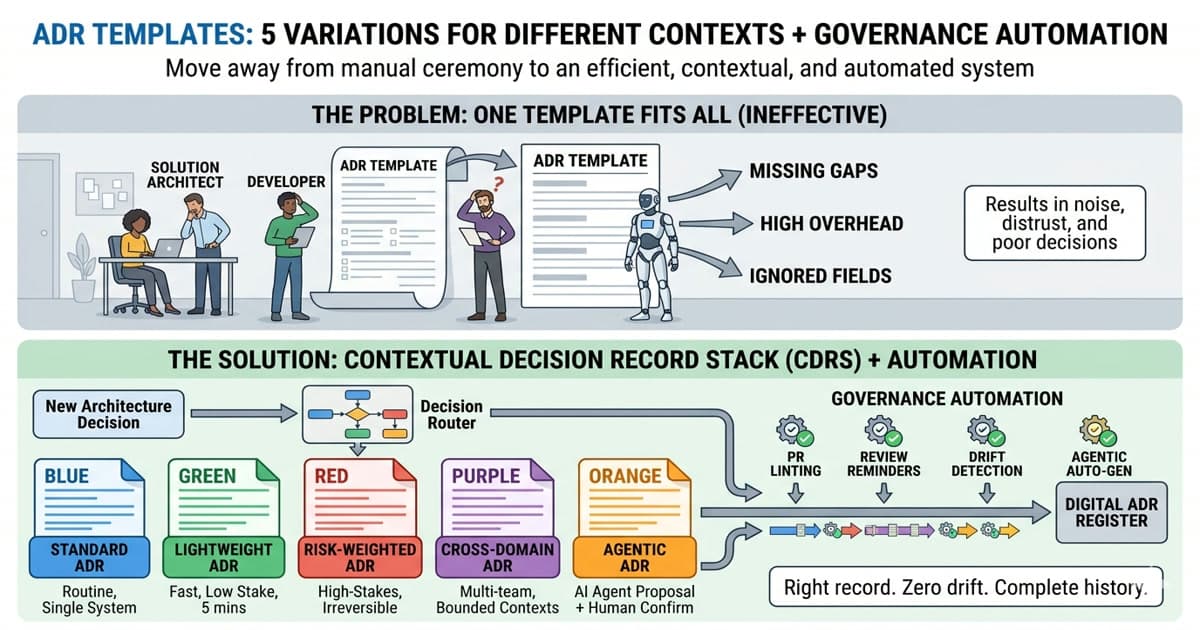
One ADR template does not fit every architectural context. Five purpose-built variations — for standard decisions, agentic AI, cross-domain impact, fast delivery, and high-risk reversals — plus governance automation to make the system run without manual follow-up.
...sprint. Made by one architect or team. Governance trigger: Auto-commit to ADR register on merge. Review cycle: Quarterly. Template 2 — Lightweight ADR Context: Fast-moving teams. Short sprint cycles....