Search

Find insights, training programs, and workshops

AI & Agentic Systems Strategy Workshop
CIO, CTO, Chief AI Officer, VP EngineeringAI operating model, governance policy, compliance roadmap, 90-day action plan

Develop a clear, governed AI and agentic systems strategy that delivers business value while managing risk, cost, and compliance.

...boardrooms where the CEO wants AI everywhere, the CTO wants it nowhere until it's governed, and the business leads are already running pilots in secret. The result isn't innovation — it's chaos. An AI...

2 DaysStrategic
Operating ModelGovernance Framework
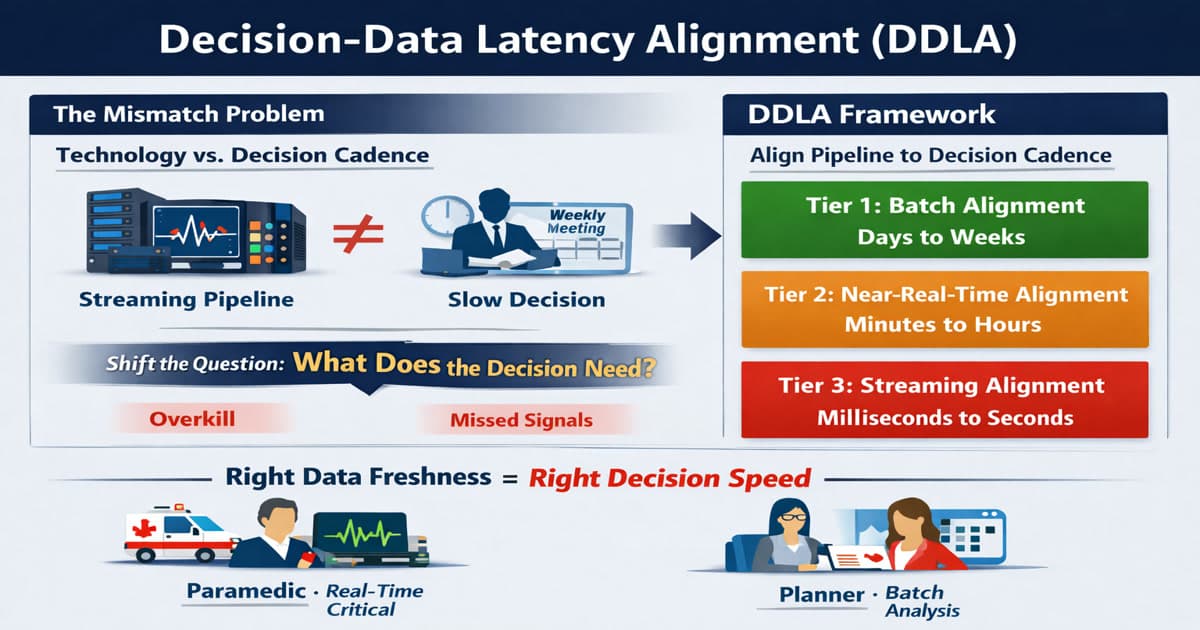
Batch vs Real-Time Is the Wrong Debate.

Organisations debate batch versus real-time as if it is a technical preference. It is not. It is a structural mismatch between data freshness and decision cadence — and the mismatch is where the cost lives.

...rather than decision cadence requirements Key outcome: A structural model called Decision-Data Latency Alignment (DDLA) that matches data freshness to the cadence of the decisions it serves Time to implement:...

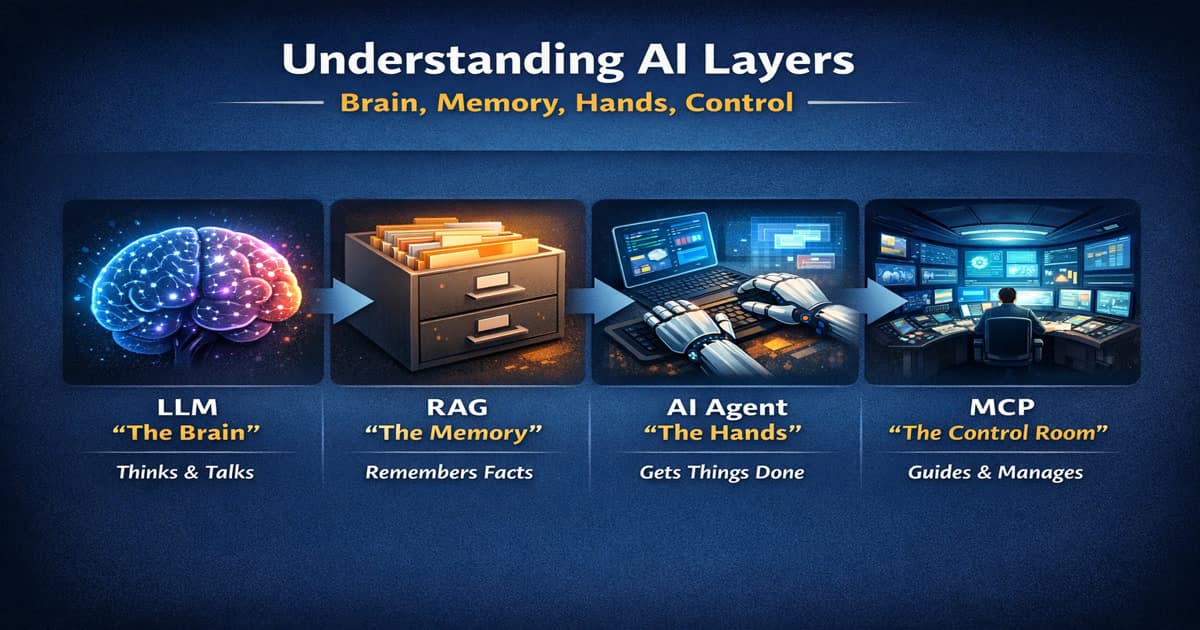
AI Architecture Clarity: Understanding LLM, RAG, Agents, and MCP Through the Brain Model

A clear executive guide explaining LLM, RAG, AI Agents, and MCP using the Brain model to prevent enterprise AI instability.

...reduced AI sprawl, improved governance control Time to implement: 60–90 days for structured AI capability alignment Business impact: Lower experimentation waste, controlled cost growth, safer AI scaling The...

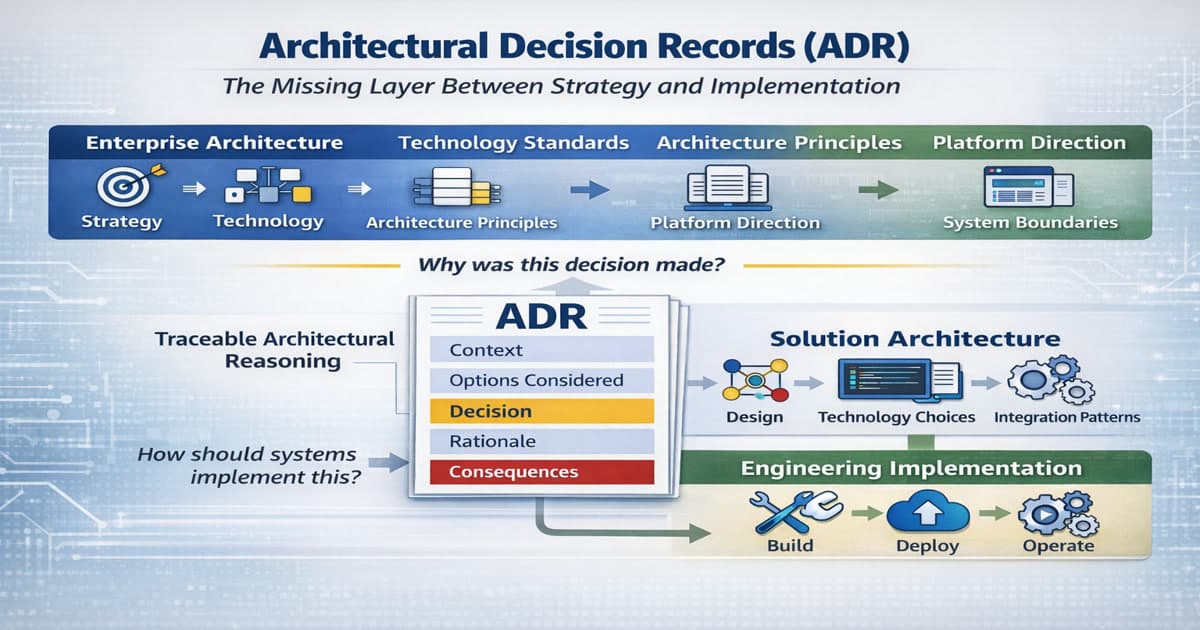
Architectural Decision Records (ADR): The Missing Layer Between Strategy and Implementation

A practical guide explaining why Architectural Decision Records (ADR) are the missing link between enterprise architecture strategy and engineering implementation.

...architectural decisions and connect strategy to implementation Time to implement clarity: 30–60 days Business impact: Faster decision alignment, reduced architectural drift, improved engineering autonomy...

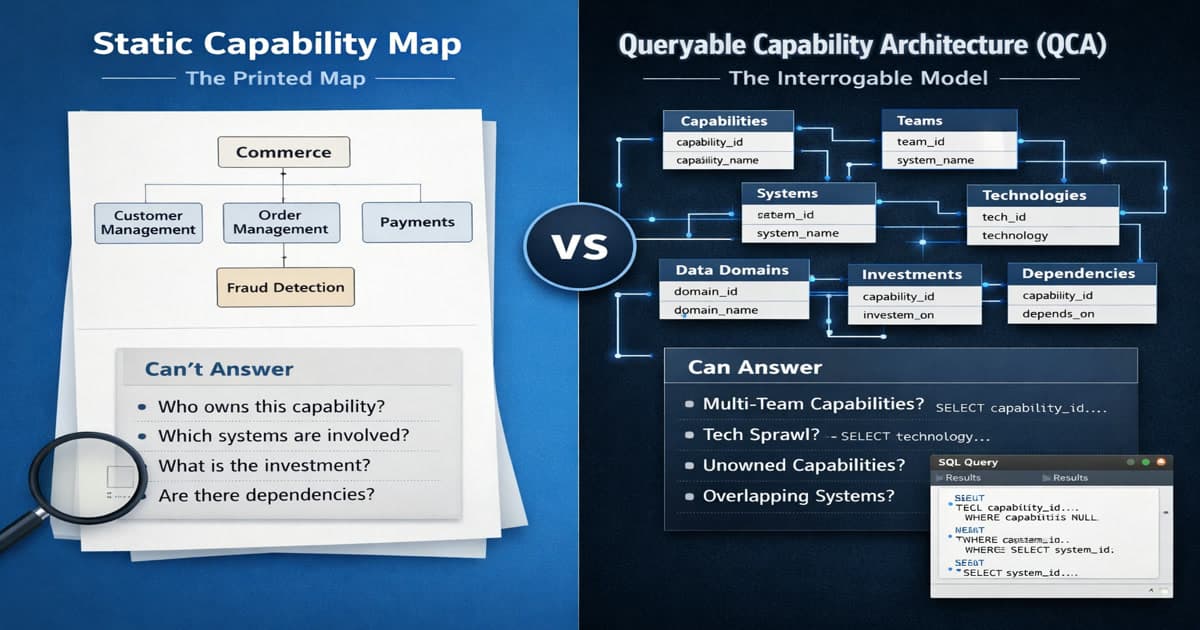
The Capability Map That Cannot Answer a Question Is Not a Capability Map

Why traditional capability maps fail to support governance decisions and how Queryable Capability Architecture turns static maps into interrogable decision systems.

...architecture intelligence Time to implement: 30–60 days to build a structured queryable capability model Business impact: Better governance decisions, clearer ownership visibility, reduced technology duplication,...

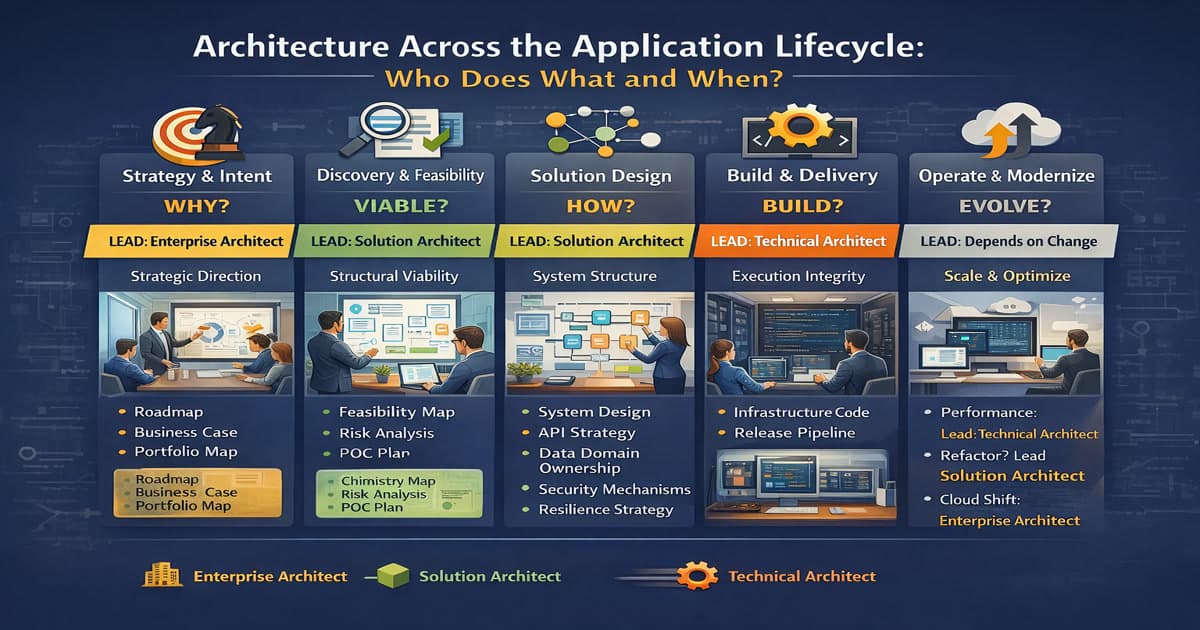
Architecture Across the Application Lifecycle: Which Architect Is Needed When?

A practical guide explaining which type of architect is required at each stage of the application lifecycle to prevent governance friction and structural instability.

...outcome: Clear architectural engagement model across lifecycle stages Time to implement clarity: 30 days Business impact: Reduced friction, faster decision cycles, lower architectural rework The Real Problem...

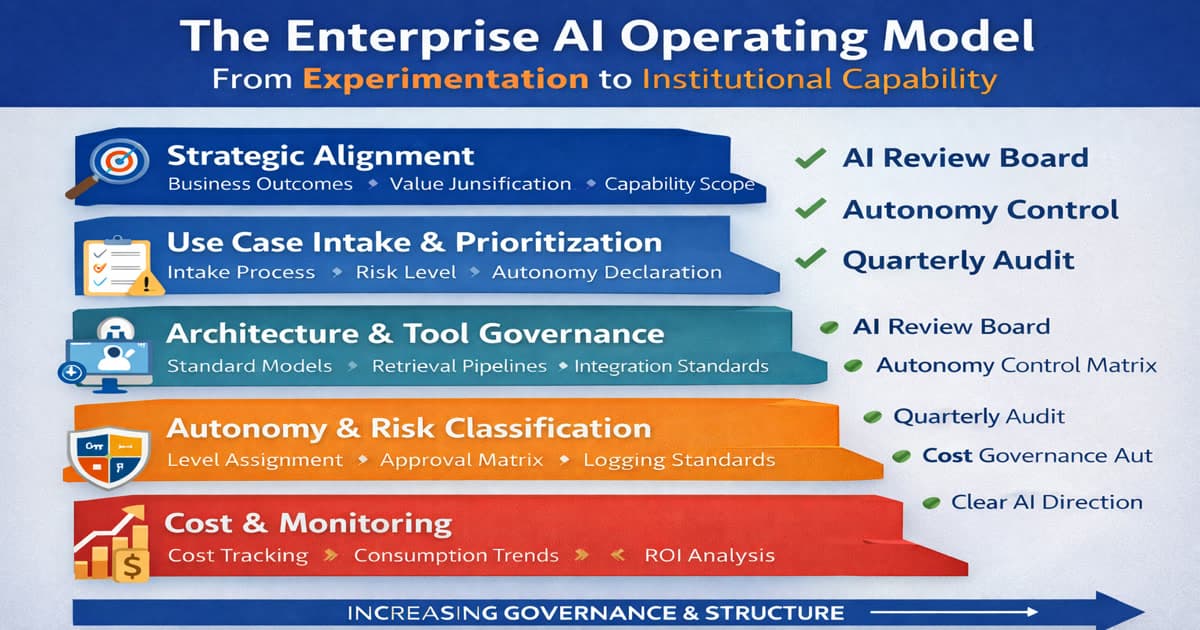
The Enterprise AI Operating Model: From Experimentation to Institutional Capability

A structured executive guide explaining how to move from AI experimentation to an Enterprise AI Operating Model with governance, autonomy control, and cost discipline.

...institutionalize AI across strategy, architecture, autonomy, and cost control Time to implement: 60–90 days Business impact: Reduced AI chaos, controlled autonomy, predictable cost growth, improved executive confidence...

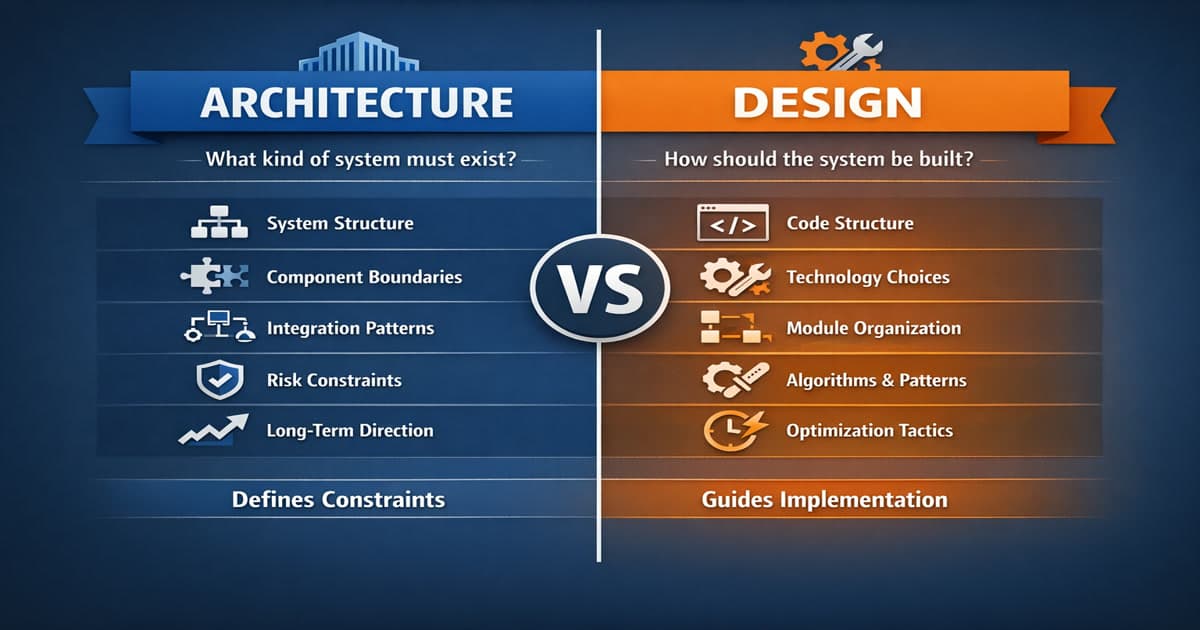
Architecture vs Design: Why Most Organizations Confuse Them

A clear explanation of the difference between architecture and design, why organizations confuse them, and how this confusion creates structural instability in technology systems.

...separation between decision-making architecture and implementation design Time to implement clarity: 30 days Business impact: Faster decision cycles, reduced architectural debates, stronger system stability The...

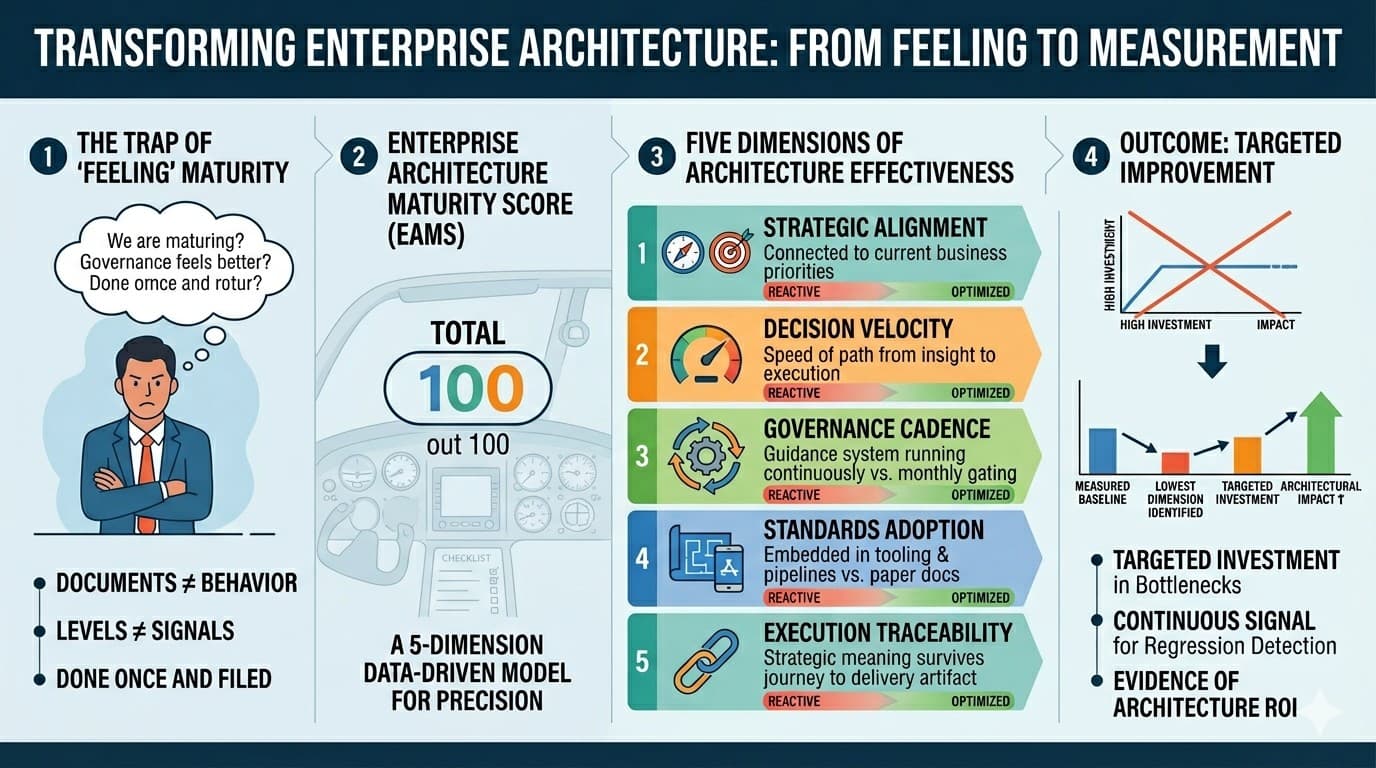
You Cannot Improve an Architecture You Have Not Measured.

Enterprise architecture maturity is not a feeling. It is a score. Organizations that cannot measure their architecture maturity cannot improve it. The EAMS model gives you the score.

...(EAMS) that tells you exactly where you are before you decide where to go Time to implement: 30–60 days Business impact: Architecture investment targets the right layer at the right time The Pilot Does Not...

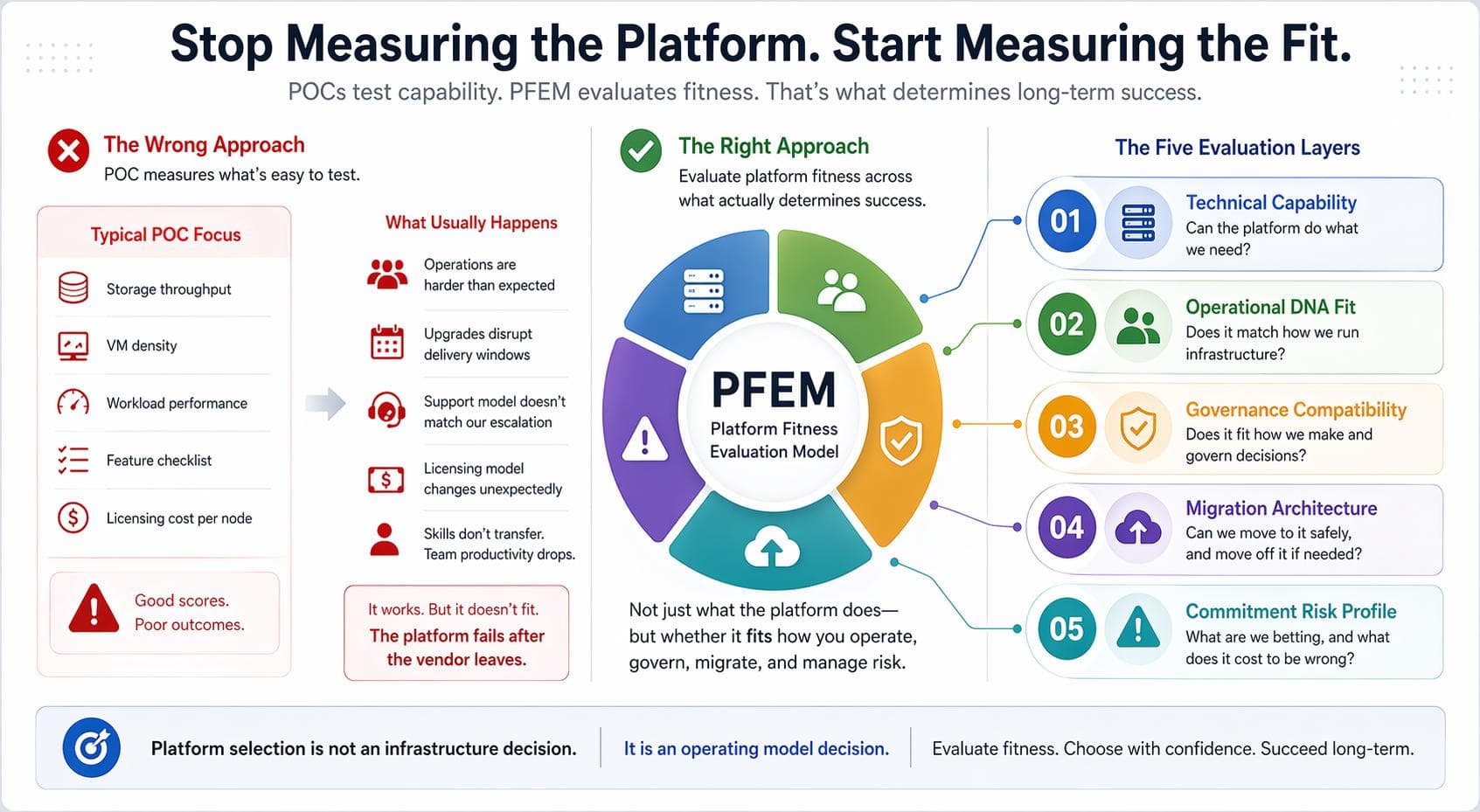
Your HCI Proof of Concept Measures the Wrong Thing.

Most organizations evaluate private cloud and HCI platforms by running a technical POC. The POC passes. The platform fails. The reason is structural — and fixable. The Platform Fitness Evaluation Model (PFEM) tells you what to measure instead.

...determine whether a platform succeeds Time to implement: 30–60 days before any platform commitment Business impact: Platform decisions that survive year two — not just the boardroom The Surgeon and the...