Search

Find insights, training programs, and workshops

Build / Buy / Partner / Participate — Ecosystem Strategy
Intermediate to Advanced (SA, EA, TS)5-6 hoursBuild/buy/partner/participate decision framework + vendor and ecosystem evaluation scorecard + exit and switching cost analysis template

How to decide what to build, what to buy, what to access through partners, and what to participate in through ecosystems — covering differentiation vs commodity analysis, vendor evaluation, total cost of ownership, interoperability velocity, exit strategy, and lock-in risk.

...Differentiation vs commodity When to build When to buy When to partner When to participate Evaluating vendors Total cost of ownership Interoperability velocity Exit strategy Lock-in risk Putting it all together Cheat...

1 DayIntensive
StrategicSA · EA · TS
Stakeholder Management & Politics
Intermediate to Advanced (SA, EA, TS)5-6 hoursStakeholder map template + conflict resolution framework + executive alignment guide

How to navigate organisational dynamics, manage conflicting priorities, resolve decision deadlocks, and build executive alignment — because the best architecture recommendation fails without stakeholder alignment.

...Sunk cost — "We already invested in this; we can't change." Rationalisation blocked by attachment. Vendor relationship — "Our account rep promised us this." Technology choices constrained by politics....

1 DayIntensive
StrategicSA · EA · TS
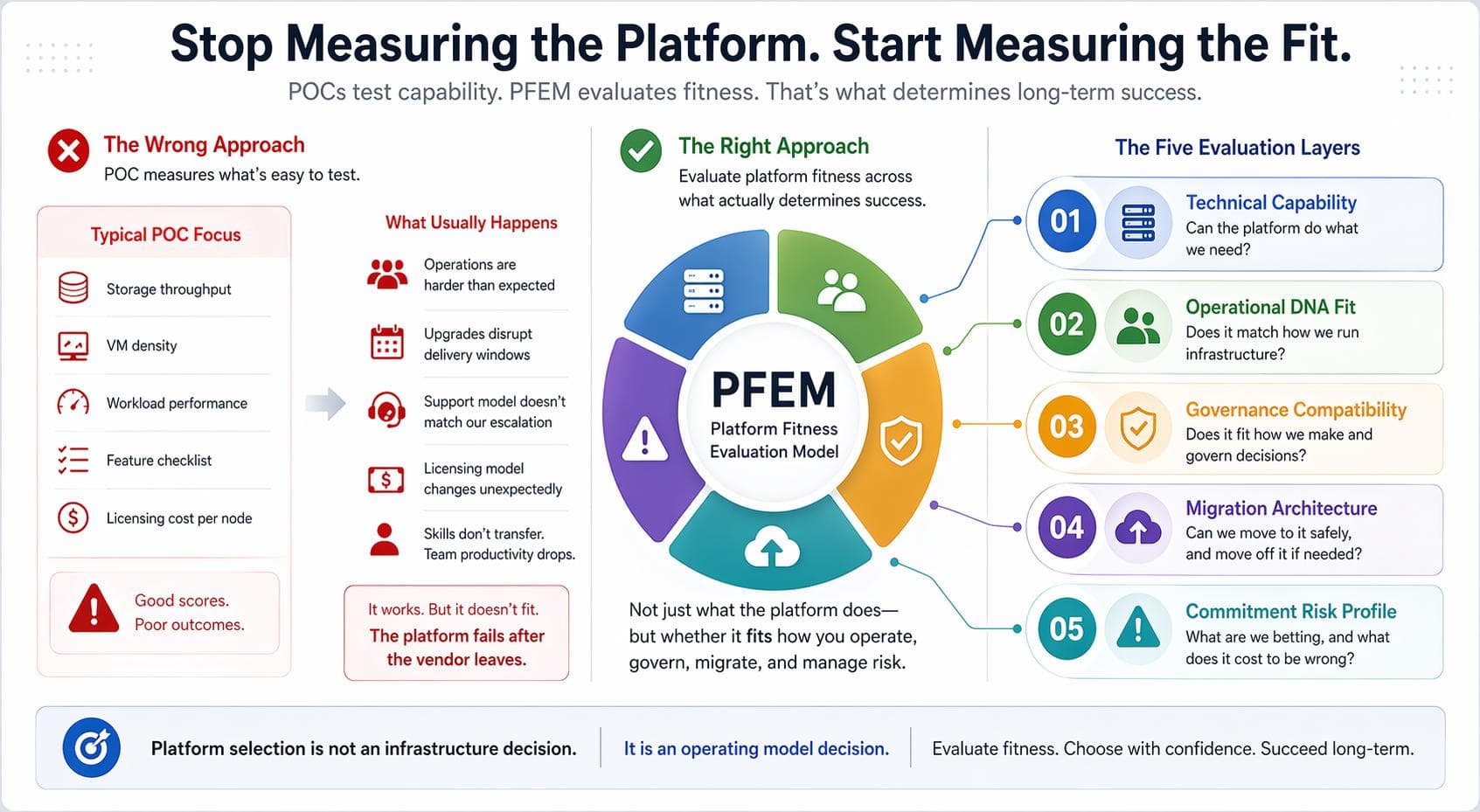
Your HCI Proof of Concept Measures the Wrong Thing.

Most organizations evaluate private cloud and HCI platforms by running a technical POC. The POC passes. The platform fails. The reason is structural — and fixable. The Platform Fitness Evaluation Model (PFEM) tells you what to measure instead.

...a private cloud or HCI platform, they usually start the same way. They issue an RFP. They shortlist vendors. They run a Proof of Concept. The POC measures: Storage throughput VM density Workload performance Feature...

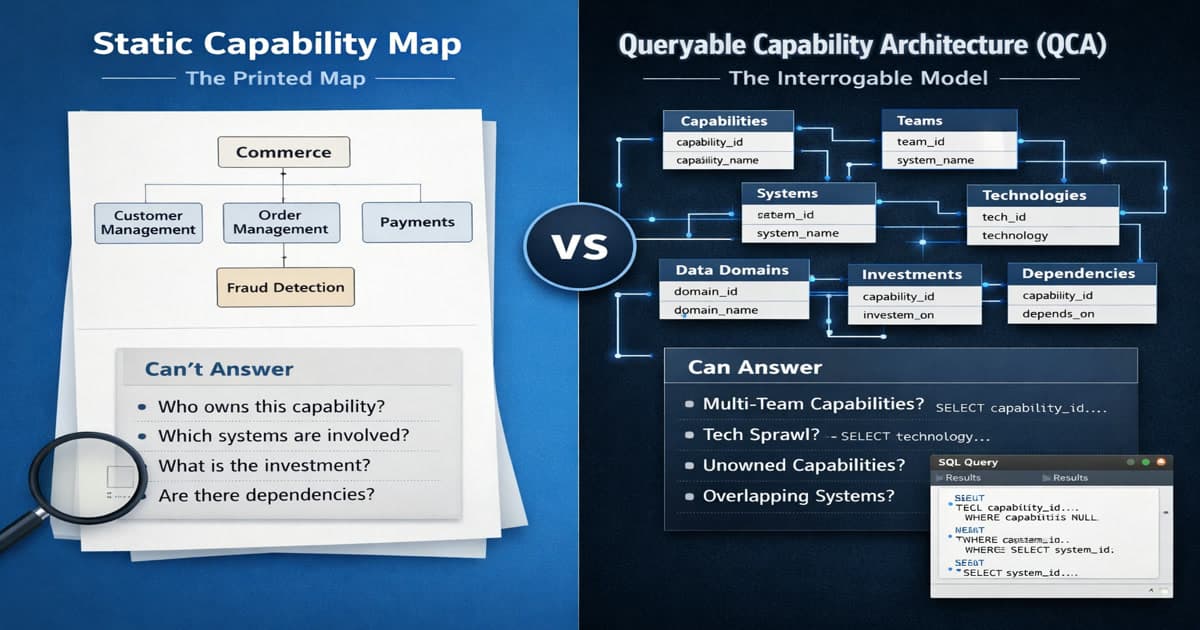
The Capability Map That Cannot Answer a Question Is Not a Capability Map

Why traditional capability maps fail to support governance decisions and how Queryable Capability Architecture turns static maps into interrogable decision systems.

...usually appears in architecture presentations as a structured diagram showing areas such as: Customer Management Order Processing Payments Logistics Analytics These maps are widely used in: enterprise architecture...

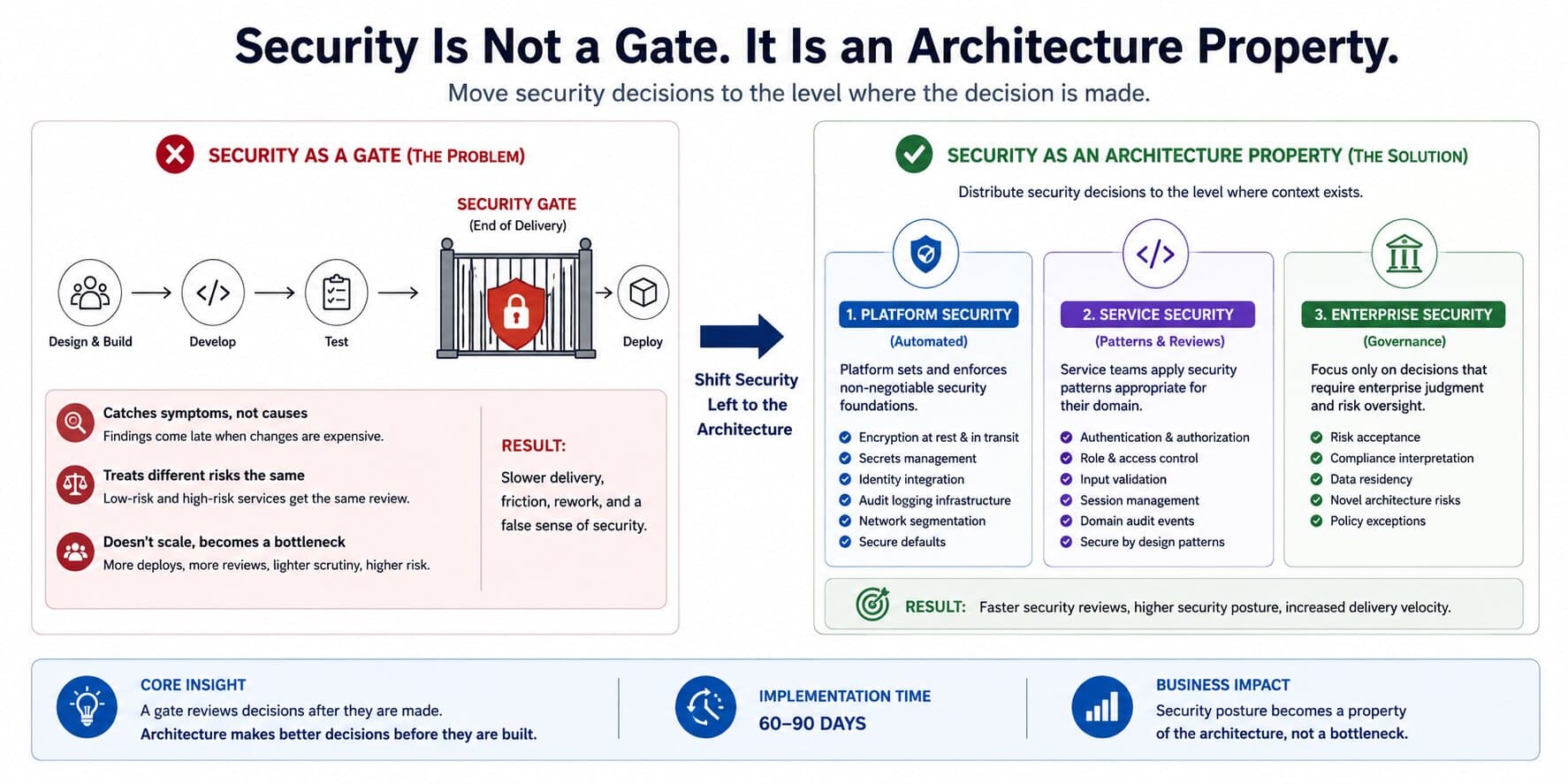
Security Is Not a Gate. It Is an Architecture Property.

Security is treated as a gate at the end of delivery. It should be an architecture property designed into three distinct boundaries. Here is the model that fixes the friction between security and delivery.

...segmentation and firewall rules Encryption at rest for storage layers TLS termination and certificate management Identity provider integration and authentication baseline Secrets management infrastructure Base...

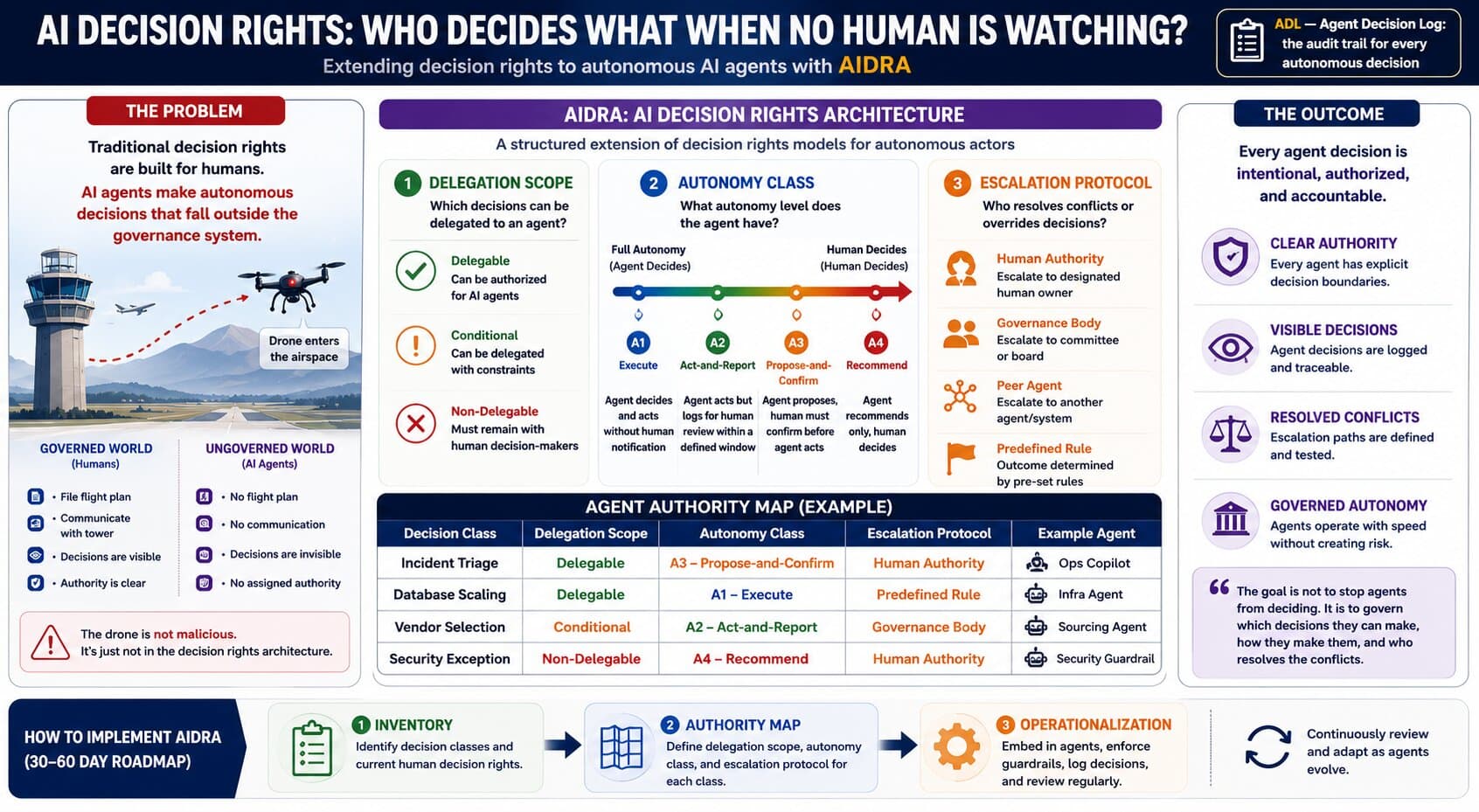
AI Decision Rights: Who Decides What When No Human Is Watching?

Decision rights models assume human decision-makers. AI agents breach that assumption silently. Here is how to extend decision rights to cover autonomous actors before the first ungoverned decision becomes a production incident.

...Non-Delegable The decision class must always be resolved by a human actor Architecture principle changes, vendor selection, regulatory attestation, budget allocation, team structure The Delegation Scope is not...

Technology, Infrastructure, Cloud & Security Design
Intermediate to Advanced (SA, EA)6-8 hoursInfrastructure decision framework + cloud pattern reference + security controls map

Where abstract architecture meets physical reality — choosing the platforms, compute, networking, and security controls that make the solution work at scale.

...selection Cloud fundamentals Infrastructure design Cloud patterns Security design Identity and access management Cost and lock-in FinOps Putting it all together Cheat sheet Before we start — the one thing...

2 DaysIntensive
PracticalSA · EA
Future Operating Model
Advanced (EA, TS)5-6 hoursFuture operating model scenarios + AI-native organisation design principles + transition pathway + Communication Structure Heatmap

How organisations will need to restructure their technology capabilities, teams, and governance as AI, automation, and platform thinking reshape what it means to run a technology function.

...world that no longer exists. Project-based funding, manual operations, centralised decision-making, and vendor management were designed for slower rates of change. Four forces are making these structures obsolete...

1 DayIntensive
StrategicEA · TS
Application & Technology Landscape
All levels — SA, EA, TS4-5 hoursApplication landscape register + technology heat map + dependency matrix

How to build, read, and use the full picture of what an organisation runs — every application, platform, integration, and technology — and how they depend on each other.

...dependency mapping as a root cause. Forrester reports that organisations with mature application portfolio management reduce technology spend by 15-25%. You cannot rationalise, modernise, or migrate what you...

1 dayIntensive
PracticalLandscape exercise
Technical Debt & Rationalisation
Intermediate to Advanced (SA, EA, TS)5-6 hoursTechnical debt taxonomy + rationalisation prioritisation framework + modernisation criteria

How to understand, measure, prioritise, and reduce technical debt — the accumulated cost of shortcuts, outdated decisions, and deferred maintenance.

...database. Treating all debt the same leads to wrong priorities. Four types of debt require different management approaches: The four types: Type What it is Example Management Deliberate Conscious shortcut...

1 DayIntensive
StrategicSA · EA · TS