If you cannot evaluate an AI system, you cannot trust it. Learn how to test prompts, retrieval, agents, workflows, and production behaviour before confidence turns into risk.
Search
Find insights, training programs, and workshops

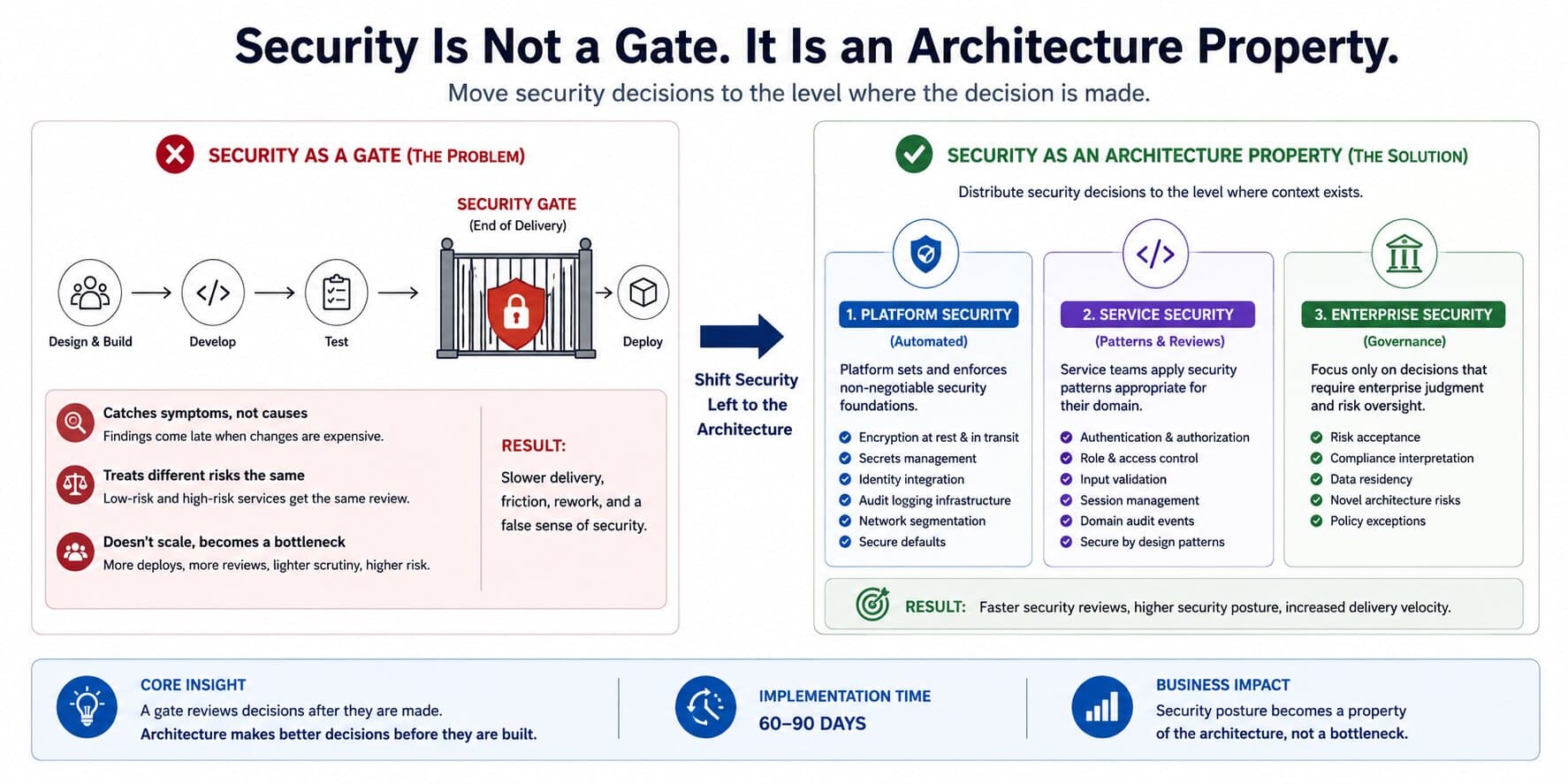
Security is treated as a gate at the end of delivery. It should be an architecture property designed into three distinct boundaries. Here is the model that fixes the friction between security and delivery.
...Both pass through the same gate. Both receive the same checklist. The payment API needs penetration testing, encryption standards, and audit logging. The log processor needs none of these. But both get...

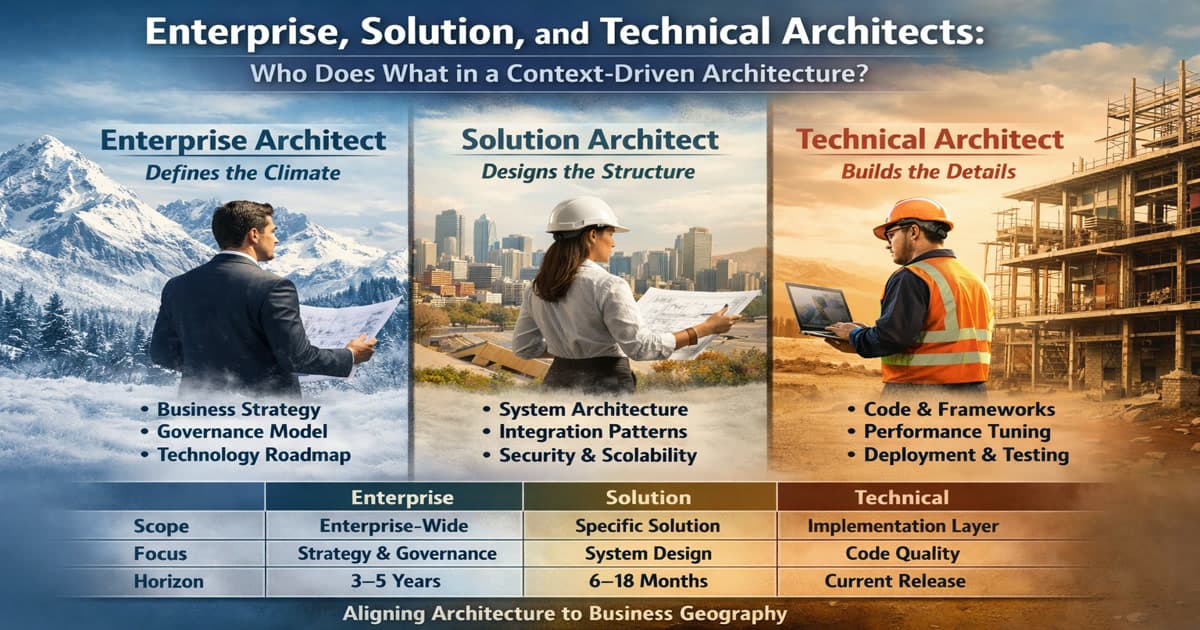
A structured executive guide explaining the difference between Enterprise, Solution, and Technical Architects using Context-Driven Architecture to clarify responsibilities and reduce structural misalignment.
...quality. In the Snow Example They decide: Steel grade Joint reinforcement Waterproof membrane Load-bearing testing Structural validation They ensure the roof does not fail. Risk of Failure If Technical Architecture...

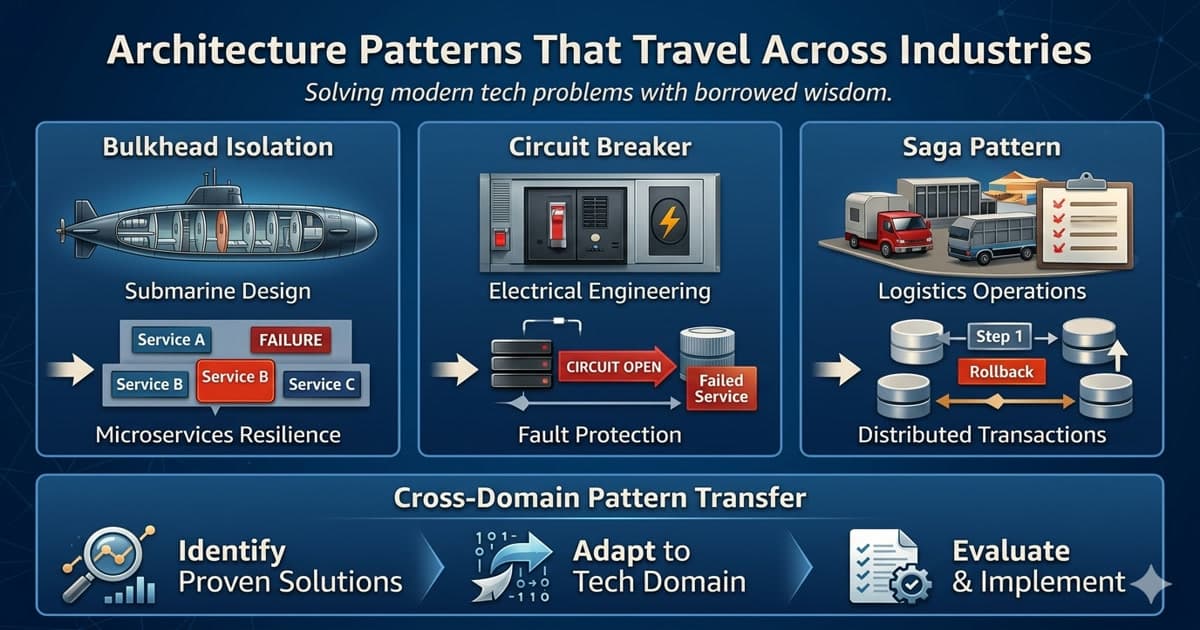
The patterns that solve your hardest distributed systems problems were already solved — in a submarine, a postal sorting office, and an electrical panel. Most architects never look.
...track record. A pattern imported from a domain where it survived disasters carries implicit stress-testing that no design review can replicate. The whiteboarded pattern fails in ways that nobody anticipated....

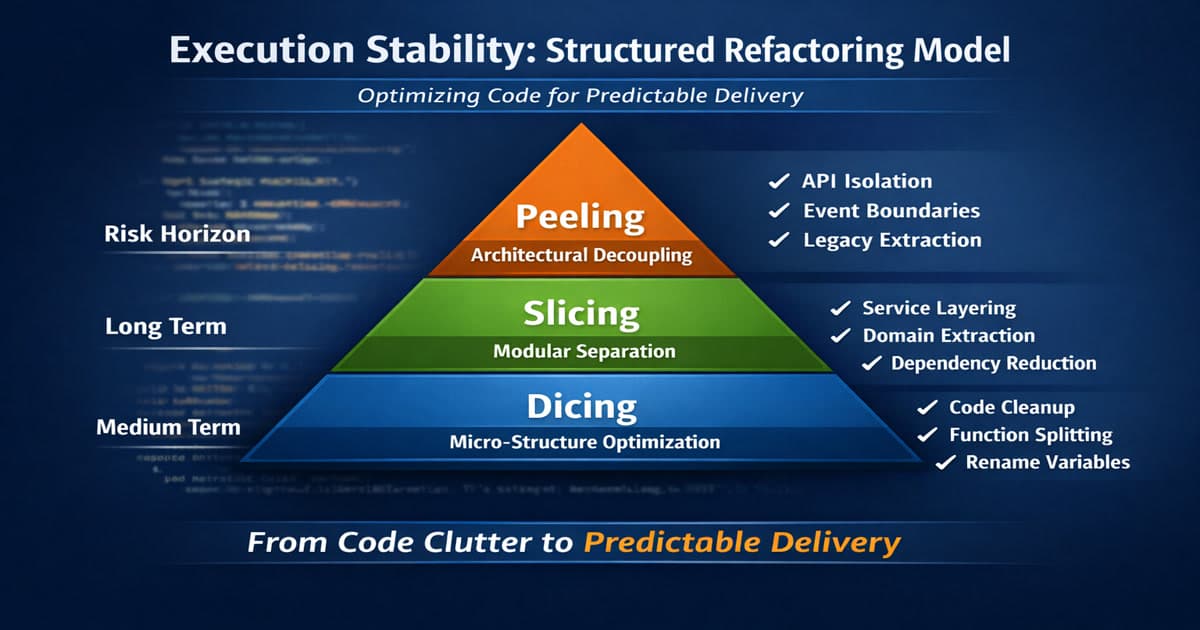
A practical framework for reducing delivery slowdown caused by unmanaged structural code complexity — improving cycle time, reducing regression risk, and clarifying ownership boundaries.
...that everyone was afraid to touch. The delivery team spent sixty percent of each sprint on regression testing. Refactoring was postponed sprint after sprint — there was always a feature that mattered more....

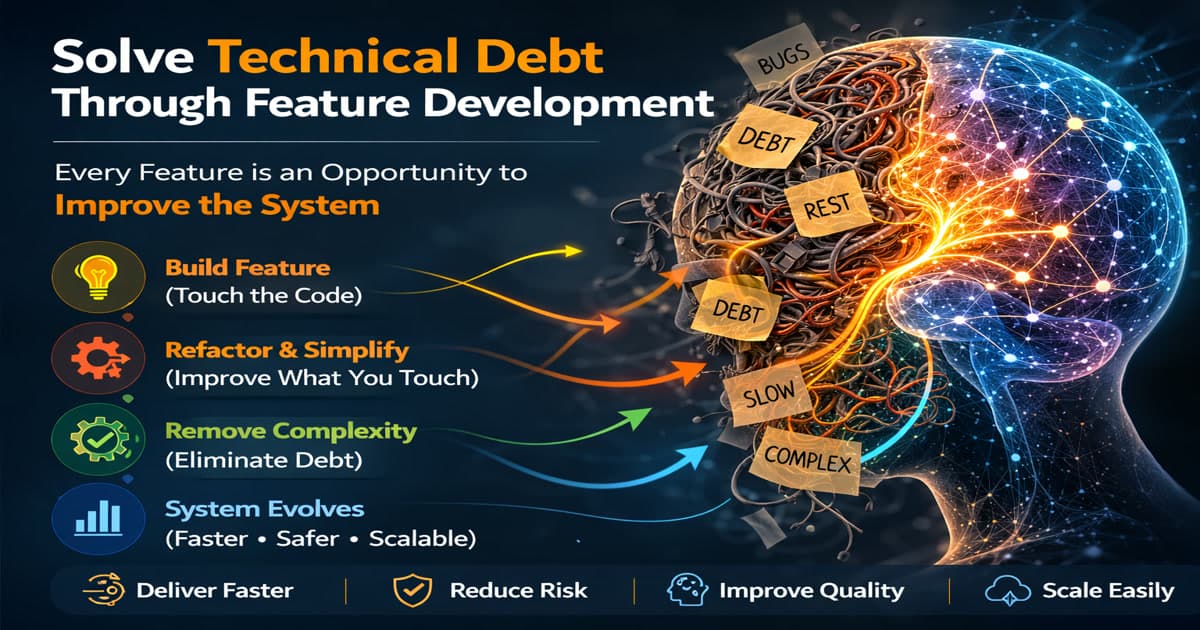
A practical framework explaining how organizations can systematically reduce technical debt while delivering new features, instead of running disruptive modernization programs.
...checkout system had gone from a monolith of intertwined logic to three clear bounded contexts. Regression testing dropped from a full day to two hours. Feature velocity increased by 30%. Action Plan This Week...

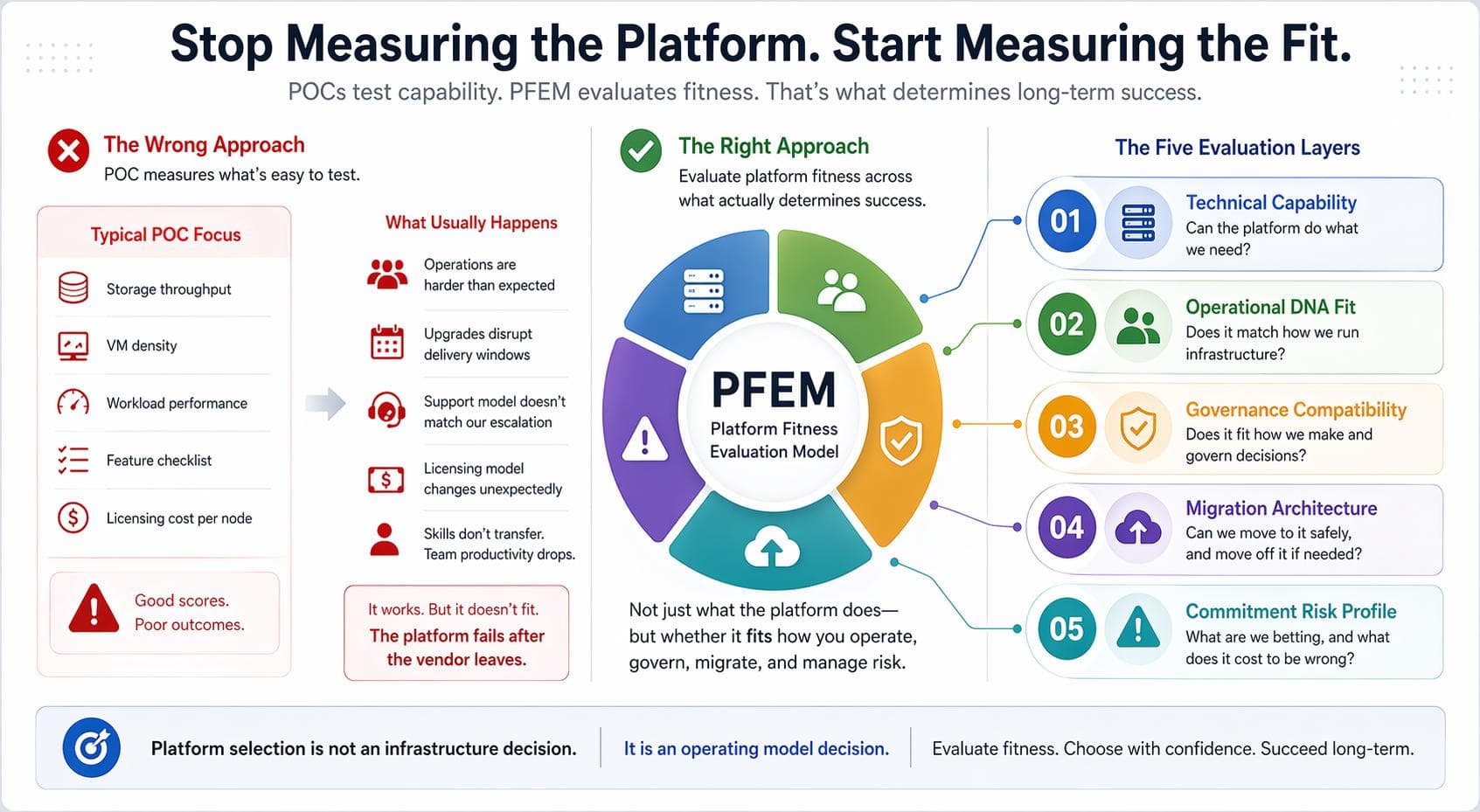
Most organizations evaluate private cloud and HCI platforms by running a technical POC. The POC passes. The platform fails. The reason is structural — and fixable. The Platform Fitness Evaluation Model (PFEM) tells you what to measure instead.
...Phase 2: Design the POC to Test All Five Layers (Weeks 3–4) A PFEM-informed POC is different. Layer 1 testing stays the same: performance, density, integration. Layer 2 testing adds: simulate a 3am incident....
How organisations will need to restructure their technology capabilities, teams, and governance as AI, automation, and platform thinking reshape what it means to run a technology function.
...about how technology organisations work. This isn't speculation. In 2026, AI handles routine coding, testing, and monitoring. Platform teams provide self-service infrastructure. Architects shift from designing...
The art of making the best possible architectural decision given what is required, what is constrained, and what must be sacrificed.
...non-functional treated equally. Non-functional requirements get missed in design. They're discovered late — in testing or production. Expensive to fix — architecture rework, delayed delivery. How to classify requirements:...
How to break large, complex systems into smaller, independently manageable parts — so different teams can build, own, and change them without stepping on each other.
...vanishes — teams cannot work independently Risk increases — a failure anywhere can cascade everywhere Testing becomes exhaustive — you cannot test a part in isolation Deployments become all-or-nothing —...