Search

Find insights, training programs, and workshops

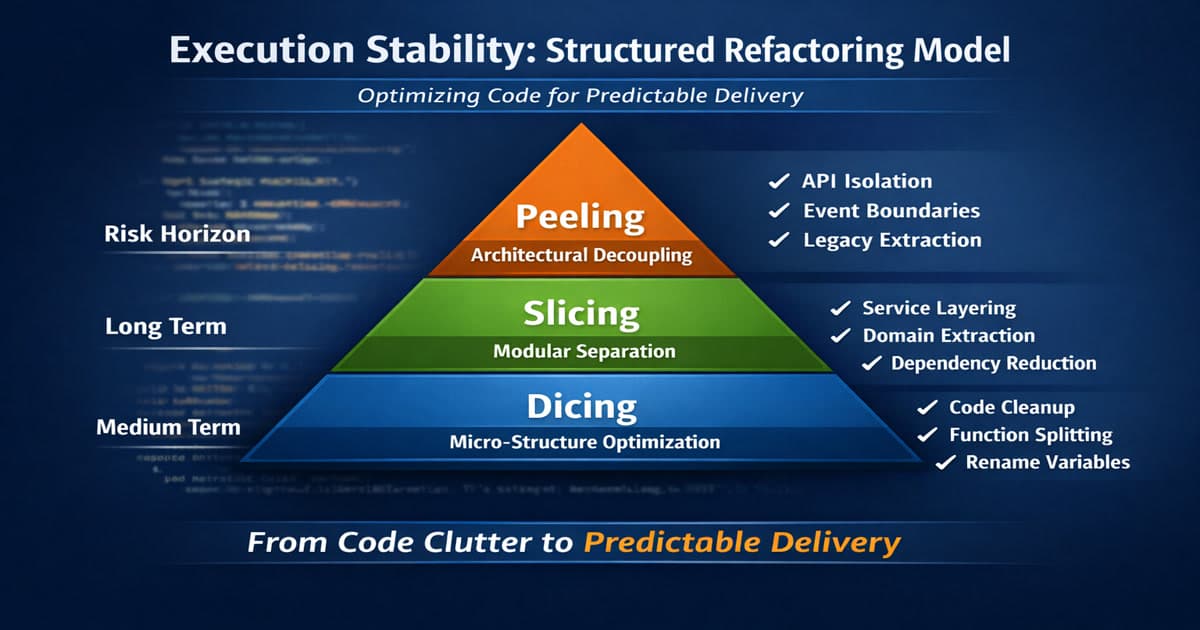
Execution Stability: How Structured Refactoring Improves Delivery Predictability

A practical framework for reducing delivery slowdown caused by unmanaged structural code complexity — improving cycle time, reducing regression risk, and clarifying ownership boundaries.

...structural code complexity Key outcome: Reduced regression risk, improved cycle time, clearer ownership boundaries Time to implement: 60–90 days for structured rollout Business impact: Higher engineering throughput...

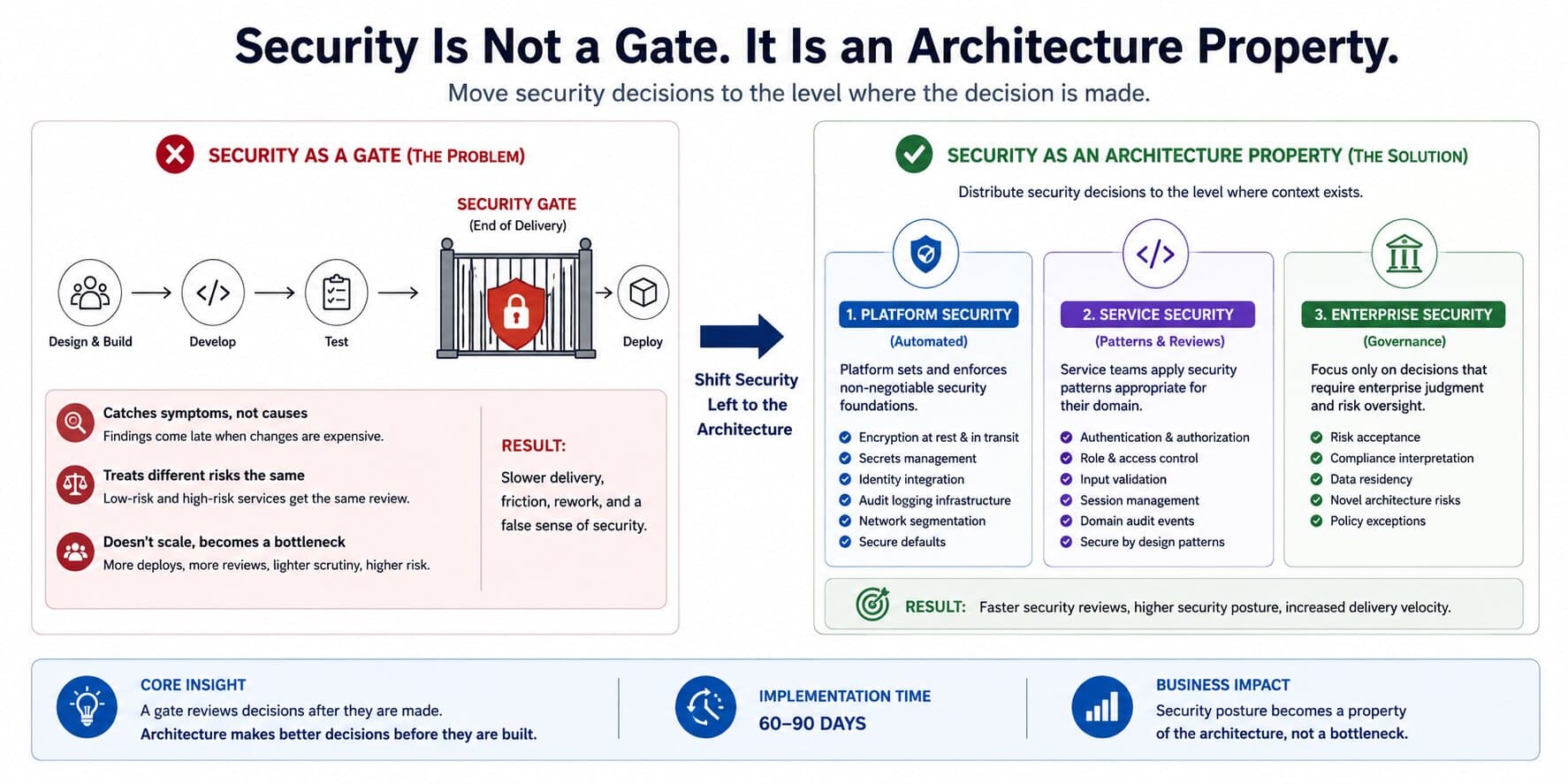
Security Is Not a Gate. It Is an Architecture Property.

Security is treated as a gate at the end of delivery. It should be an architecture property designed into three distinct boundaries. Here is the model that fixes the friction between security and delivery.

...considered. Core outcome: A structured model called the Security Architecture Boundary (SAB) — three boundaries that distribute security decisions to the level where they can be made accurately, quickly,...

Solution Decomposition
Intermediate (SA, EA)4-6 hoursDecomposition canvas + domain/service/component hierarchy guide

How to break large, complex systems into smaller, independently manageable parts — so different teams can build, own, and change them without stepping on each other.

Quick Navigation Start here — Why decomposition matters Strategies for decomposition Defining boundaries Coupling and cohesion Domain-Driven Design basics Common mistakes Putting it all together Cheat...

1.5 DaysIntensive
FoundationSA · EA
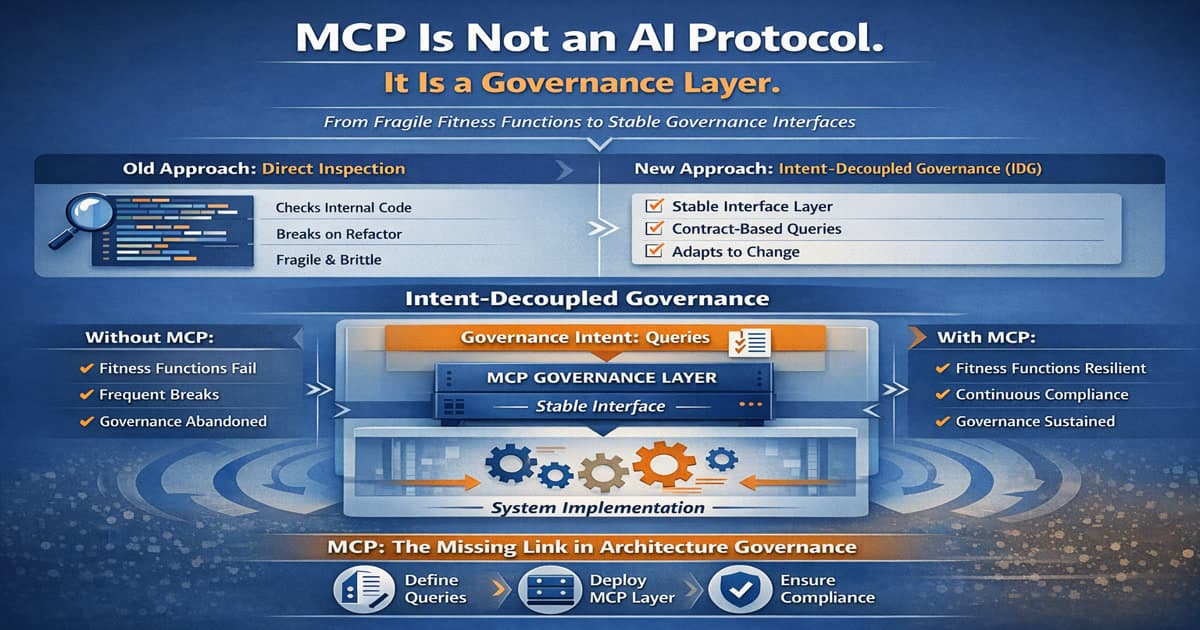
MCP Is Not an AI Protocol. It Is a Governance Layer.

MCP is classified as an AI integration protocol. It is actually a governance primitive — the stable interface layer that architecture fitness functions have been missing for years.

...evolution Time to implement: 30–60 days to introduce MCP-backed governance gates across your active architecture boundaries Business impact: Fitness functions that do not break when teams refactor, governance that...

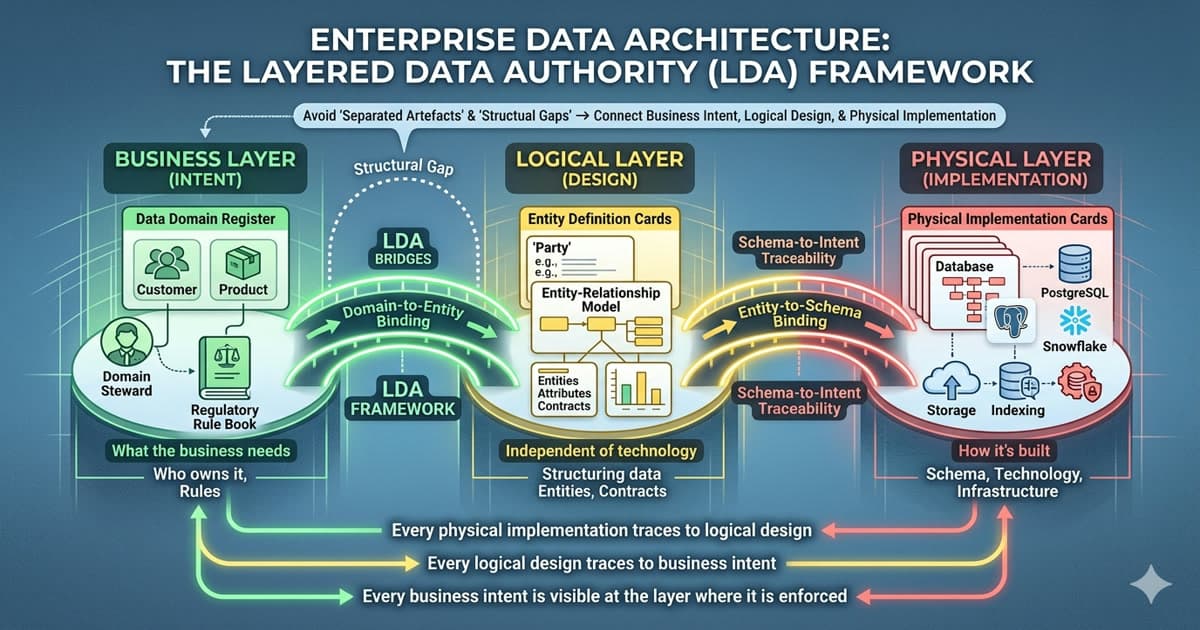
Complete Enterprise Data Architecture Framework: Business, Logical, Physical Layers with Real Templates

Most enterprises build data architectures one layer at a time. Business, logical, and physical layers exist as separate artefacts owned by separate teams. That separation is the structural gap that makes data estates ungovernable.

...room. He wants to know which entities relate to which, how the schemas connect, and where the domain boundaries are drawn. The platform engineer walks into the same room. She wants to know which database,...

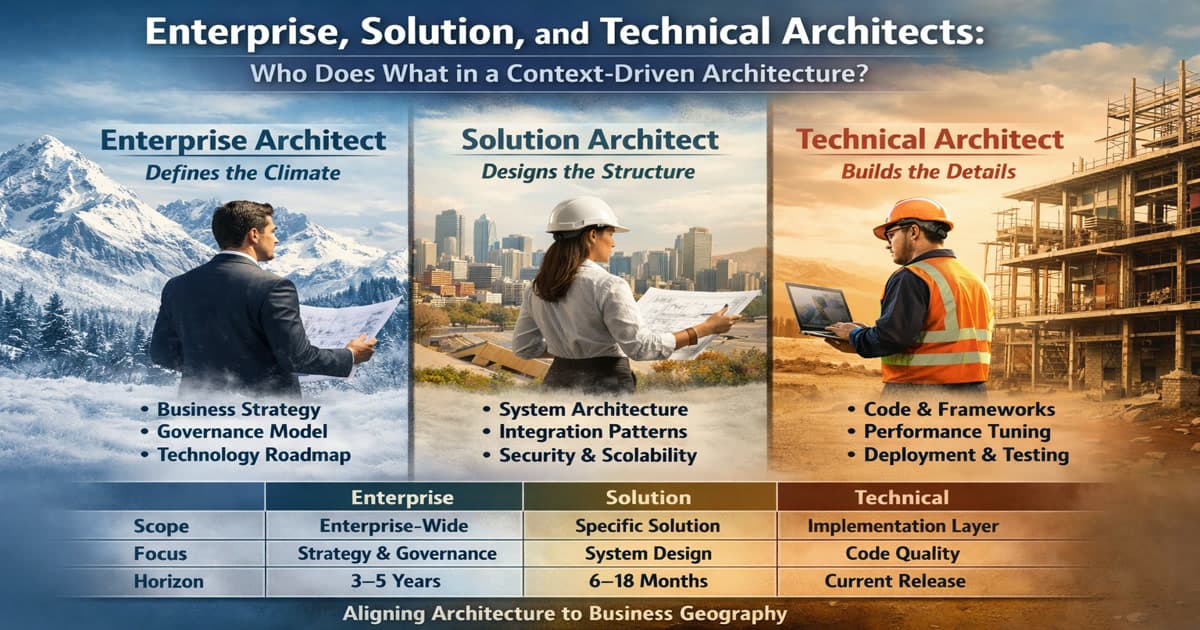
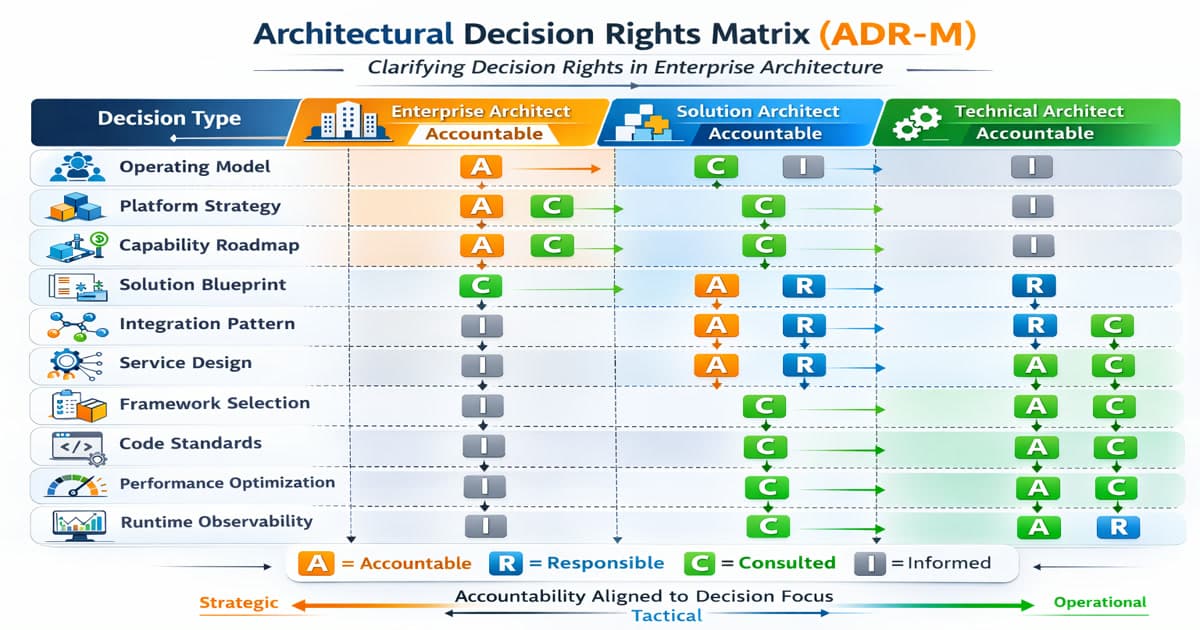
Enterprise, Solution, and Technical Architects: Who Does What in a Context-Driven Architecture?

A structured executive guide explaining the difference between Enterprise, Solution, and Technical Architects using Context-Driven Architecture to clarify responsibilities and reduce structural misalignment.

...roles leading to blurred accountability and architectural instability Key outcome: Clear responsibility boundaries aligned to business geography Time to implement clarity: 30 days with structured role alignment...

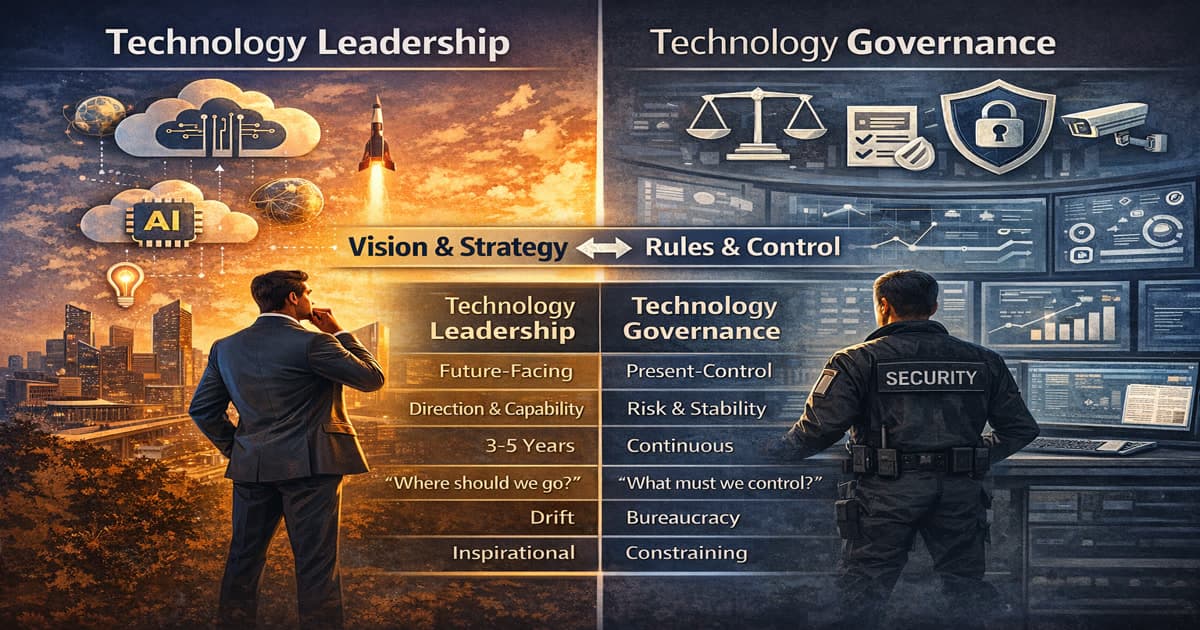
Technology Leadership vs Technology Governance: Why Confusing the Two Creates Structural Instability

A structured executive guide explaining the difference between Technology Leadership and Technology Governance, and why confusing the two creates instability in enterprise execution.

...Structural Difference Technology systems require two forces: Direction (Where are we going?) Control (What boundaries must not be crossed?) Leadership provides direction. Governance provides constraint. Both...

Your Git History Is an Architecture Health Report. Nobody Is Reading It.

A practical architecture technique showing how Git commit patterns reveal structural instability, boundary violations, and ownership gaps in software systems.

...changes that reveal: where complexity accumulates which modules are unstable which teams are crossing boundaries which parts of the system have been abandoned This signal already exists. Inside your Git...

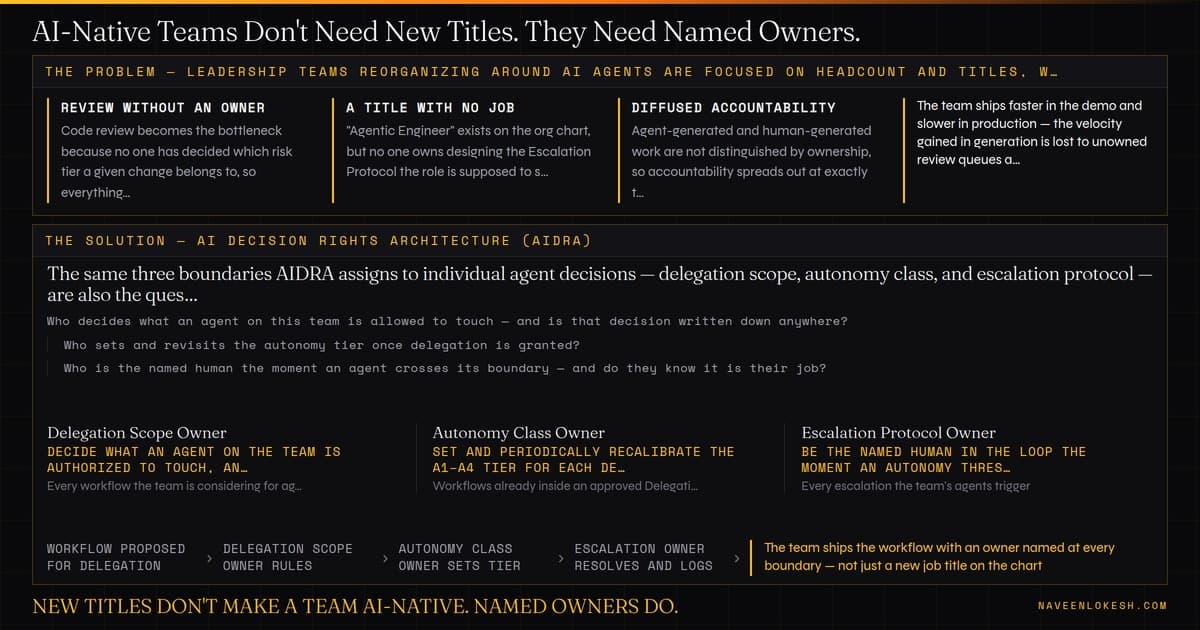
AI Decision Rights: Who Decides What When No Human Is Watching?

Decision rights models assume human decision-makers. AI agents breach that assumption silently. Here is how to extend decision rights to cover autonomous actors before the first ungoverned decision becomes a production incident.

...have made differently. A human will override an agent's recommendation. Two agents operating across boundaries will produce contradictory outcomes. The third question is: when conflict occurs, what protocol...

Architectural Decision Records (ADR): The Missing Layer Between Strategy and Implementation

A practical guide explaining why Architectural Decision Records (ADR) are the missing link between enterprise architecture strategy and engineering implementation.

...technology landscape look like? Solution Architecture Designs systems that follow those principles: System boundaries Integration patterns Technology choices Data flows This answers: How will this system work?...