Search
Find insights, training programs, and workshops
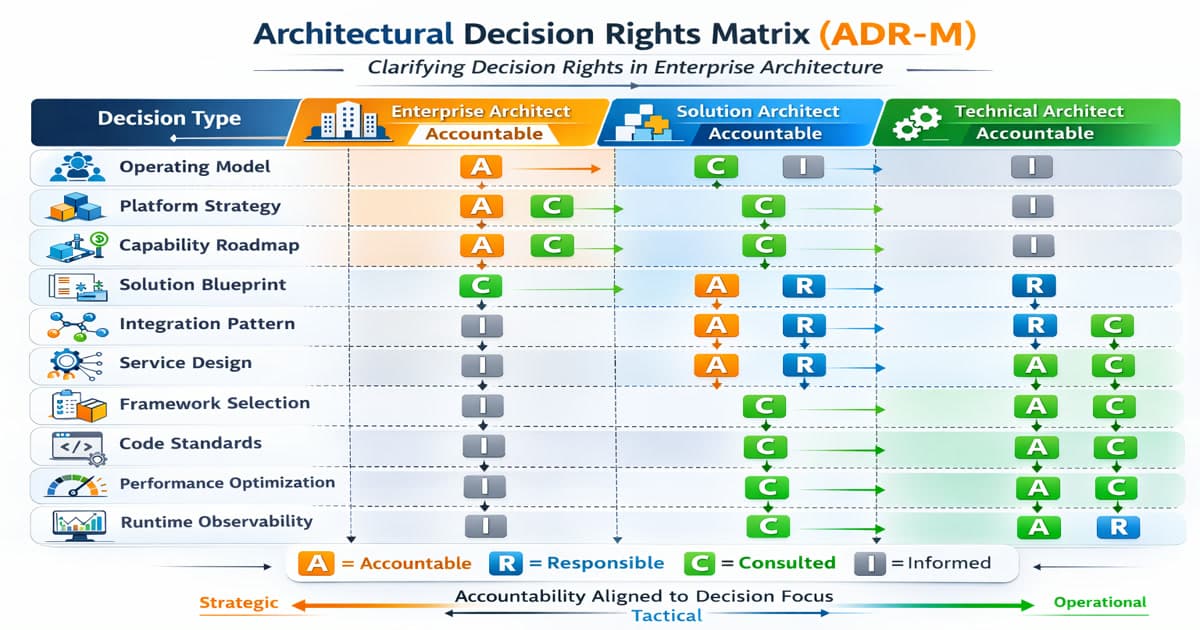
A governance framework introducing the Architectural Decision Rights Matrix (ADR-M) to clarify accountability between Enterprise, Solution, and Technical Architects in Context-Driven Architecture.
...redefine platform strategy. Technical Architects override structural principles. Roles exist. Authority boundaries do not. In Context-Driven Architecture, we defined altitude separation between Enterprise,...
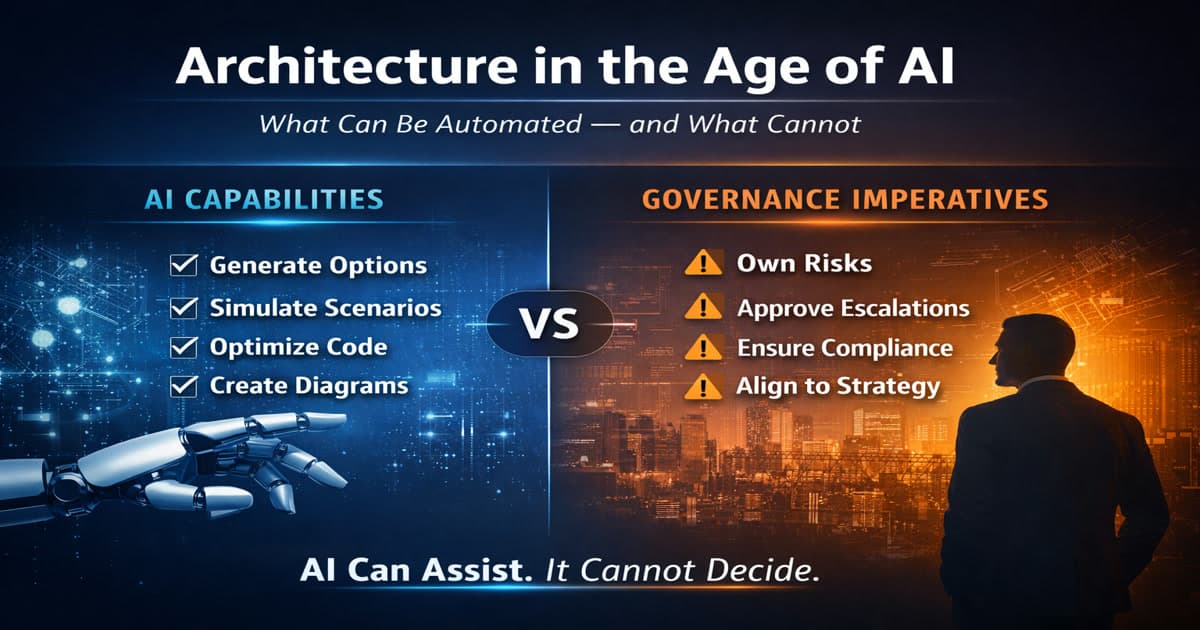
A governance-driven perspective explaining why software architecture cannot be automated because decision accountability and consequence ownership cannot be delegated to AI.
...organizations confuse generation with governance: Technical layers may redefine enterprise posture. Solution teams may bypass altitude constraints. Decision ownership becomes ambiguous. Audit trails weaken. Escalation...
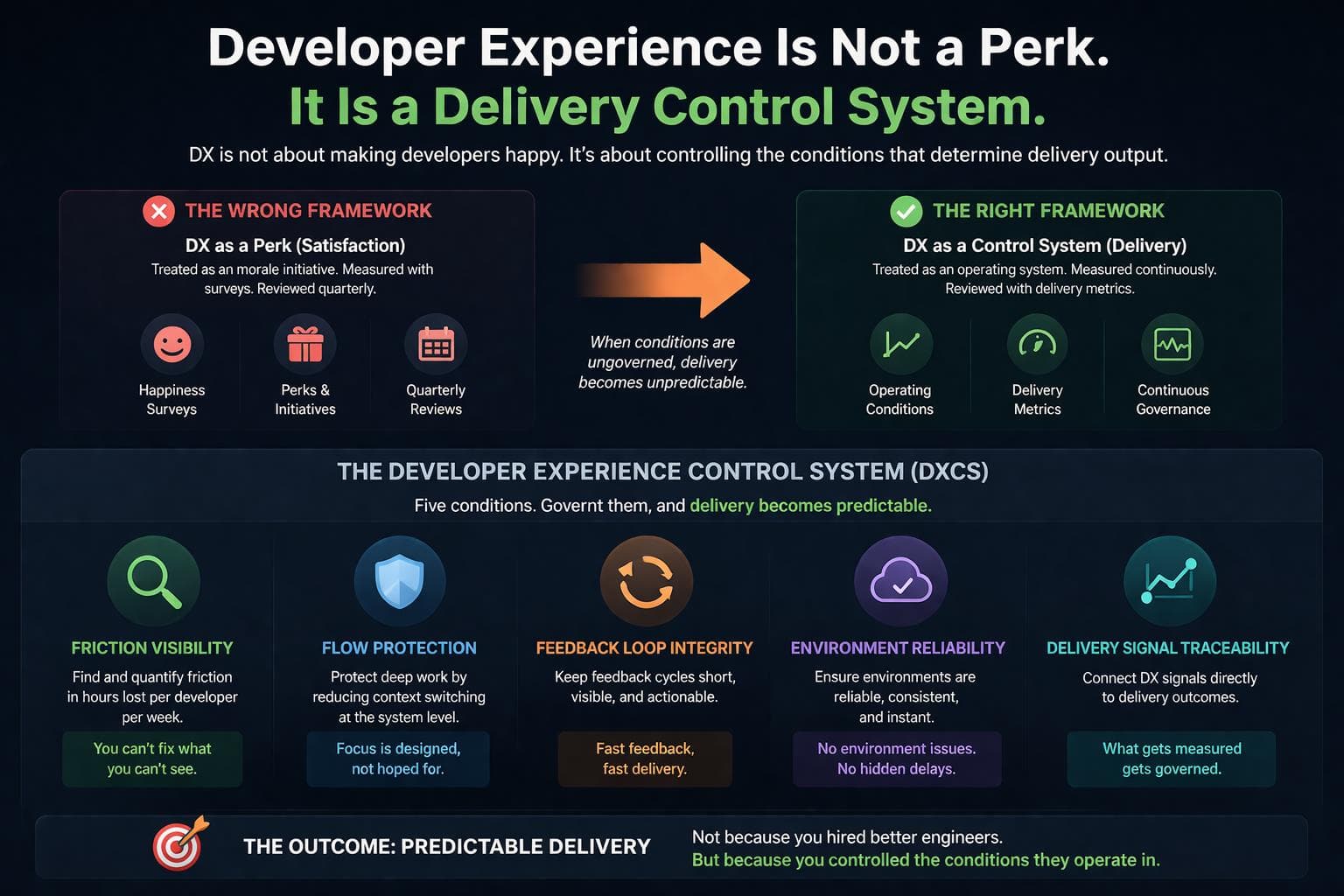
Developer experience is not about making developers happy. It is about controlling the conditions that determine delivery output. Organizations that treat DX as a perk have removed the control system from their delivery engine without knowing it.
Executive Summary Who this is for: CTOs, Engineering Leads, Platform Engineering Teams, Architecture Review Boards, Engineering Managers Problem it solves: Organizations invest in developer...
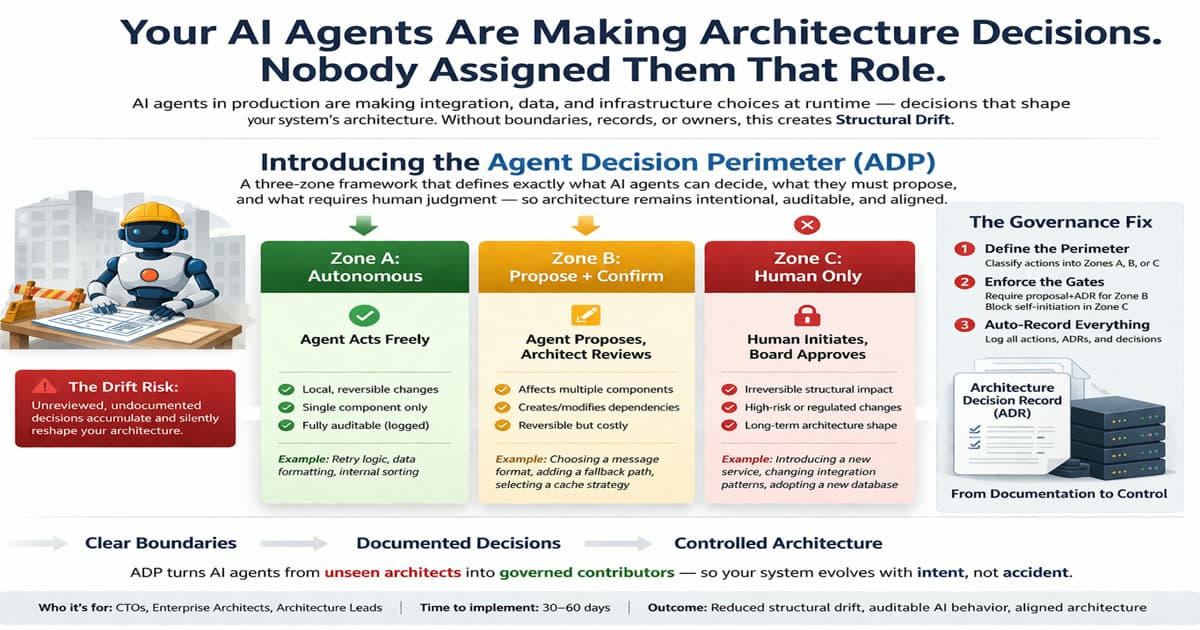
AI agents are making micro-architecture decisions in production. No ADR recorded them. No review board approved them. No architect ever saw them. Here is the structural fix.
...it at the wrong altitude. The boardroom asks: How much autonomy should agents have? The compliance team asks: What data can agents access? The security team asks: What actions can agents execute? All...
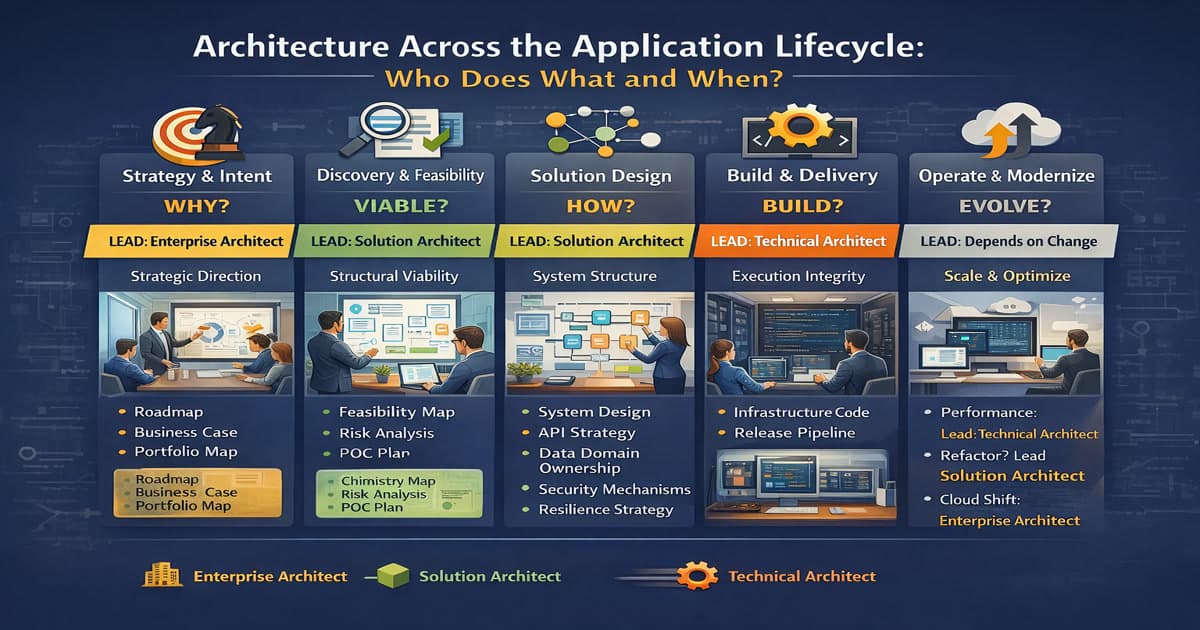
A practical guide explaining which type of architect is required at each stage of the application lifecycle to prevent governance friction and structural instability.
...downstream. Solution Design Stage Core Question How should this system be structured? Typical Decisions Service boundaries Domain partitioning Integration patterns Data ownership Resilience model Security architecture...
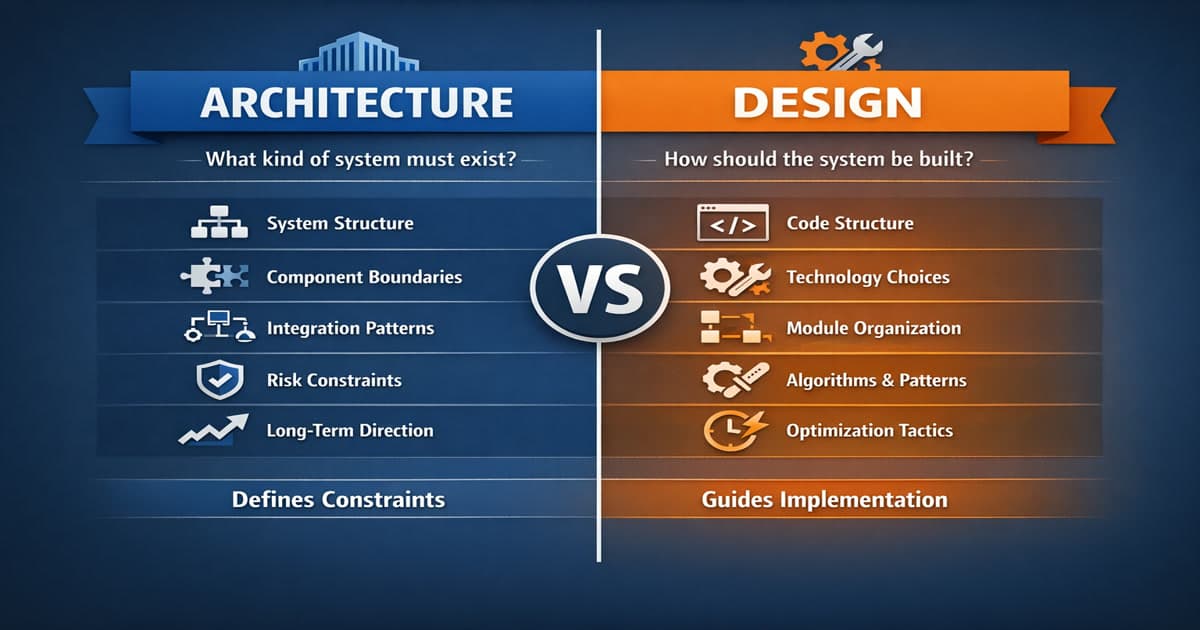
A clear explanation of the difference between architecture and design, why organizations confuse them, and how this confusion creates structural instability in technology systems.
...exist? How are major components separated? What integration patterns are allowed? Where are data ownership boundaries? What technology constraints exist? What risks must be controlled? Architecture creates the...
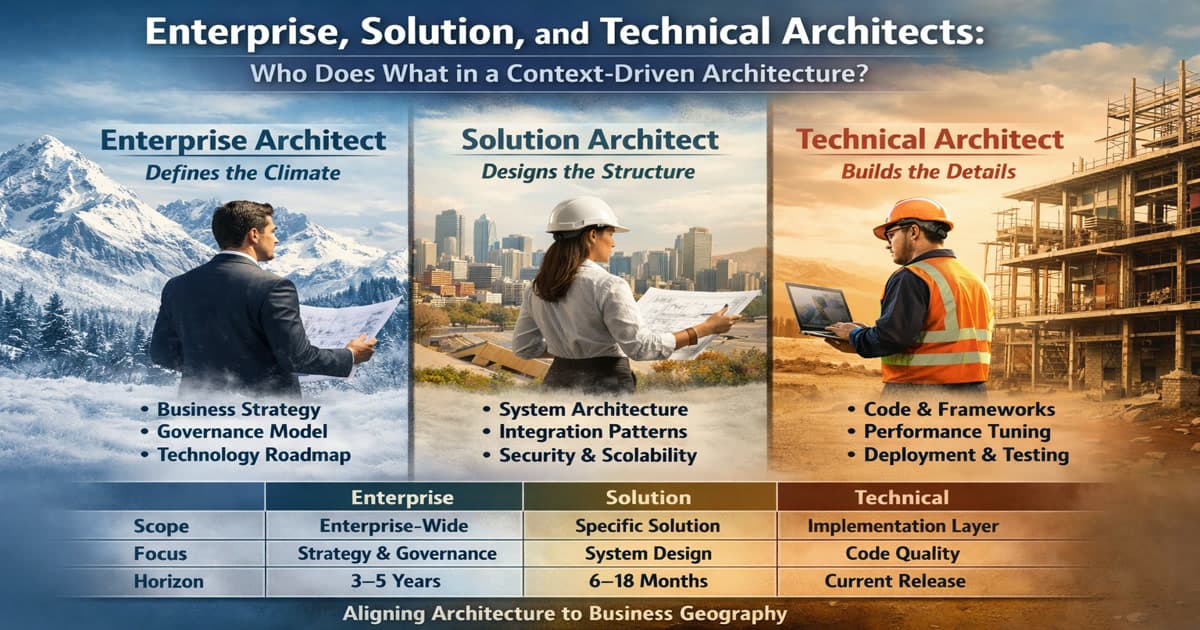
A structured executive guide explaining the difference between Enterprise, Solution, and Technical Architects using Context-Driven Architecture to clarify responsibilities and reduce structural misalignment.
...leading to blurred accountability and architectural instability Key outcome: Clear responsibility boundaries aligned to business geography Time to implement clarity: 30 days with structured role alignment...
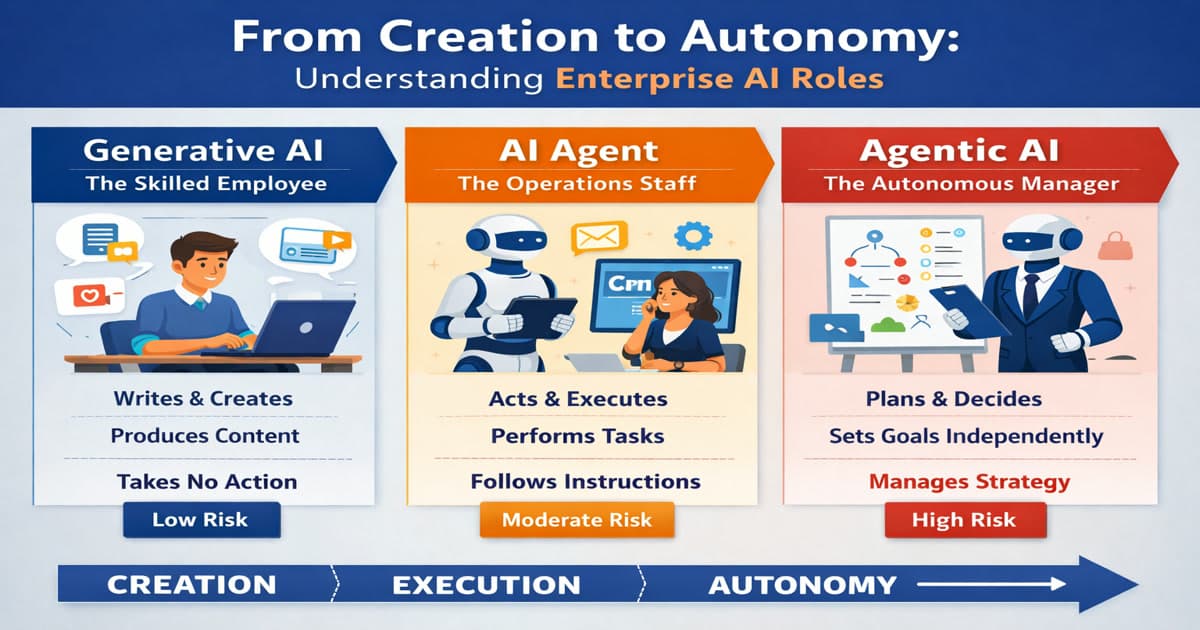
A clear executive guide explaining Generative AI, AI Agents, and Agentic AI using a corporate office analogy to prevent autonomy risks in enterprise AI.
...incorrectly Advice is safe. Action has consequences. Risk Level: Moderate to High Governance Need: Tool boundaries, approval checkpoints, logging An AI Agent operates within defined permissions. It still...
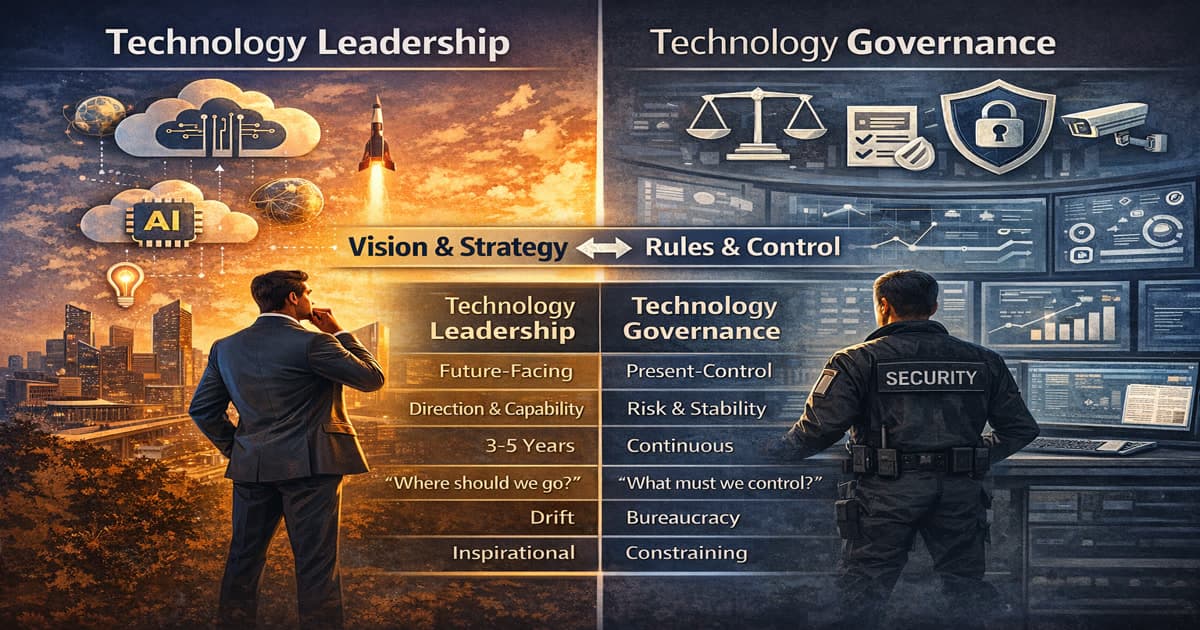
A structured executive guide explaining the difference between Technology Leadership and Technology Governance, and why confusing the two creates instability in enterprise execution.
...Difference Technology systems require two forces: Direction (Where are we going?) Control (What boundaries must not be crossed?) Leadership provides direction. Governance provides constraint. Both...
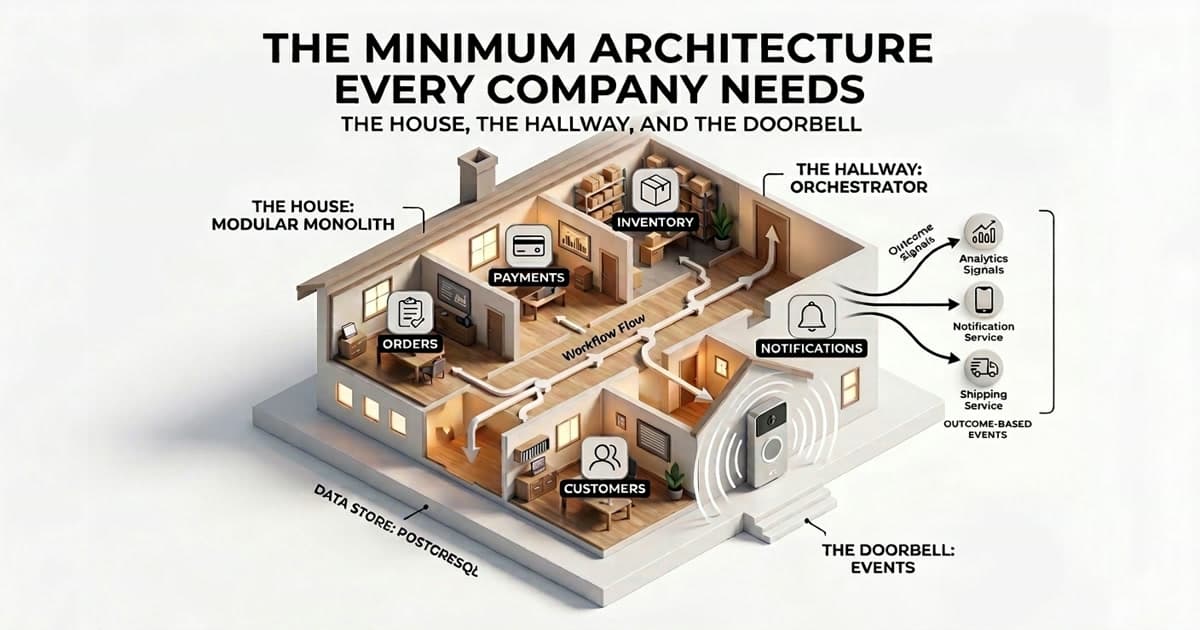
A practical architectural model explaining why most companies only need a modular monolith, a workflow orchestrator, and outcome-based events.
...before they actually need them Key outcome: A simple architectural model that scales further than most teams expect Time to implement clarity: 30–60 days Business impact: Faster development, lower operational...