Skip to content

Search

Find insights, training programs, and workshops

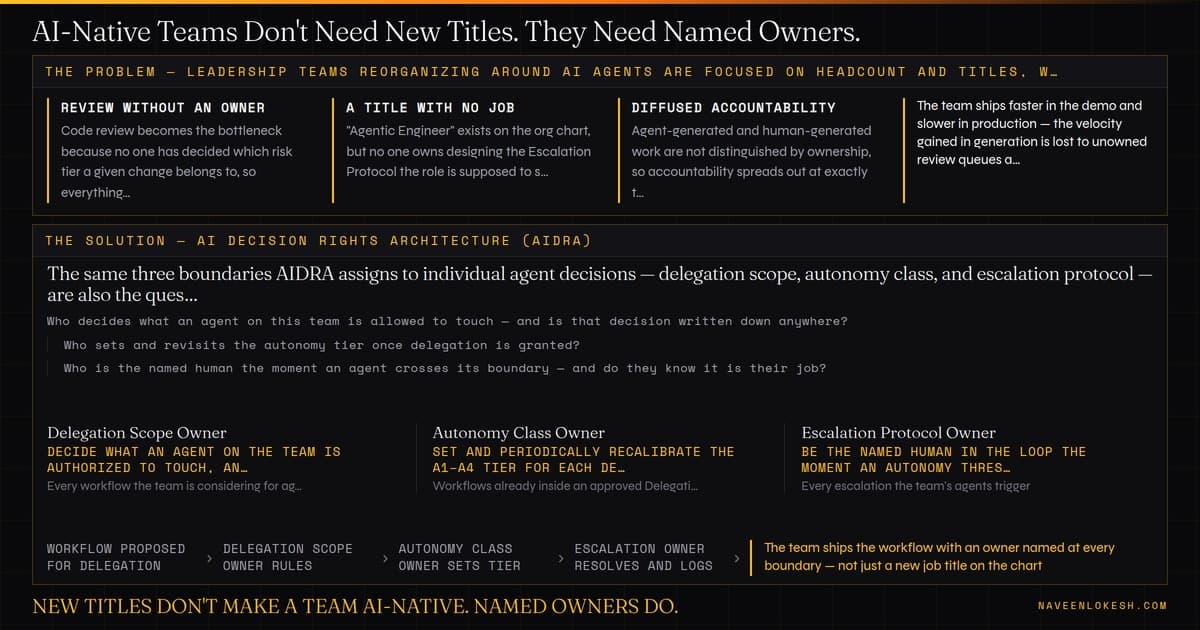
AI-Native Teams Don't Need New Titles. They Need Named Owners.

AI-native team redesigns keep adding new job titles and calling it done. The actual failure mode sits at the decision boundary. Here is what changes when you apply AIDRA to team design instead of headcount.

...through the flow end to end Business impact: Fewer unowned escalations, a review process that scales with risk tier instead of scrutinizing everything equally, and an org chart that survives the next jump in...

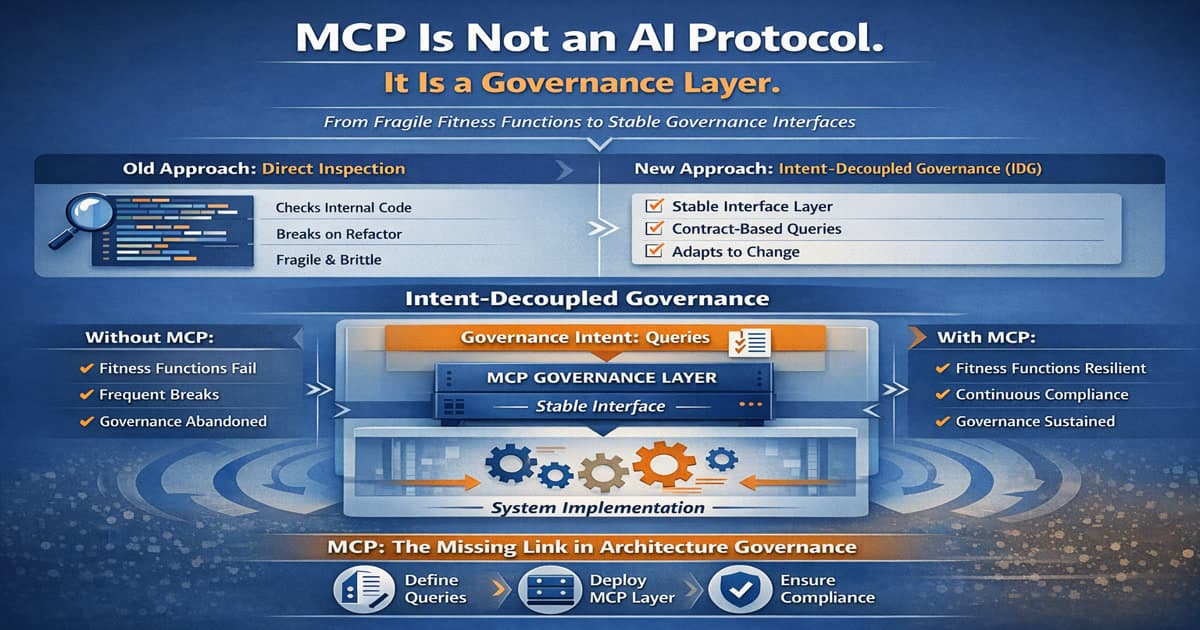
MCP Is Not an AI Protocol. It Is a Governance Layer.

MCP is classified as an AI integration protocol. It is actually a governance primitive — the stable interface layer that architecture fitness functions have been missing for years.

...The engineering team saw it as a protocol integration. The security team saw it as a data exposure risk. Neither was wrong — but neither was asking the structural question: what does MCP mean for our...

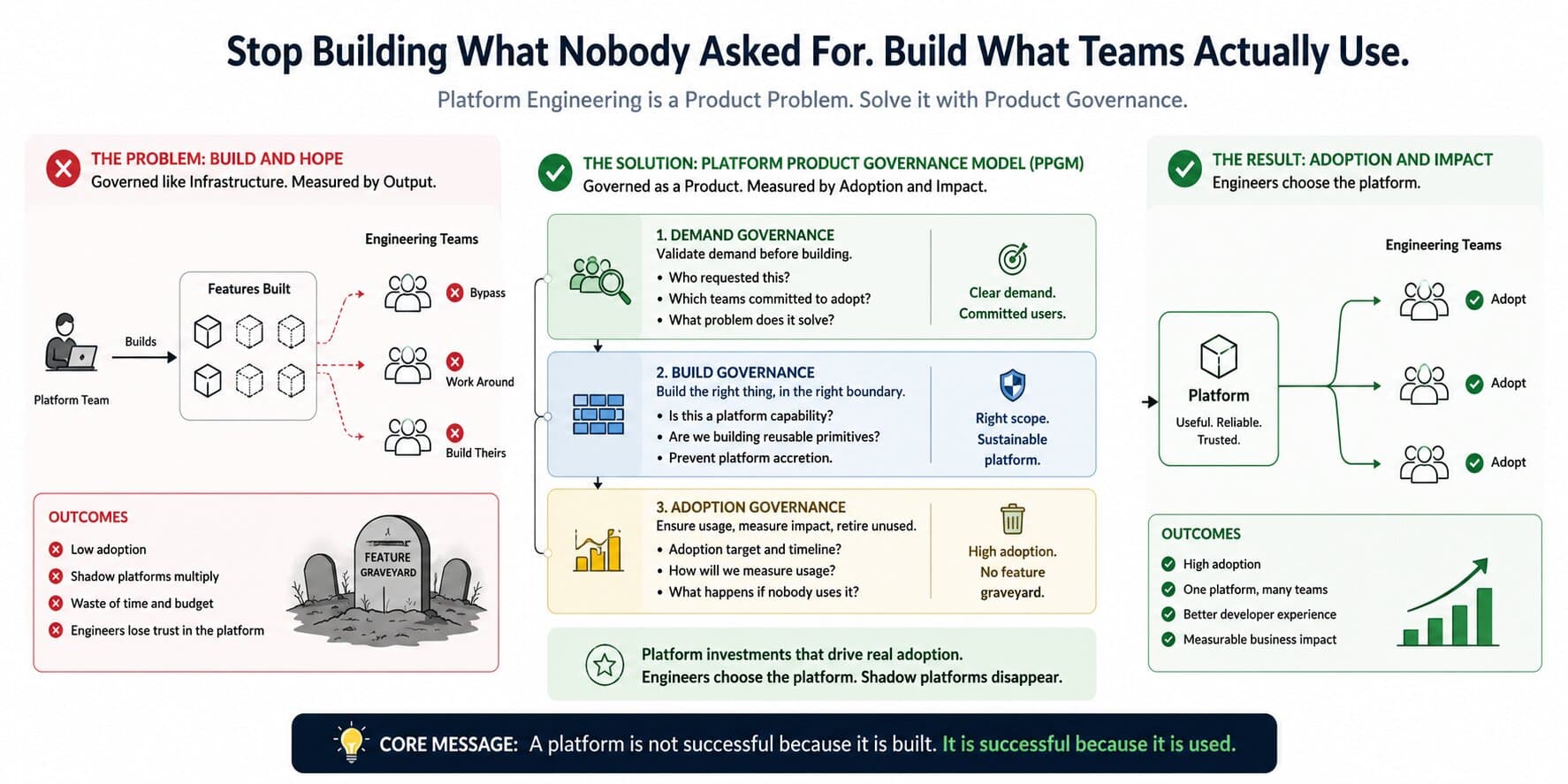
Your Platform Team Is Building a Product Nobody Asked For.

Most platform teams build internal products their engineering teams never chose. Platform adoption is not a marketing problem. It is a product governance problem. Here is the model that fixes it.

...without a mechanism to retire what nobody uses. Why Platform Investments Fail to Move Adoption Three structural failures produce the same outcome: a platform that is technically excellent and practically...

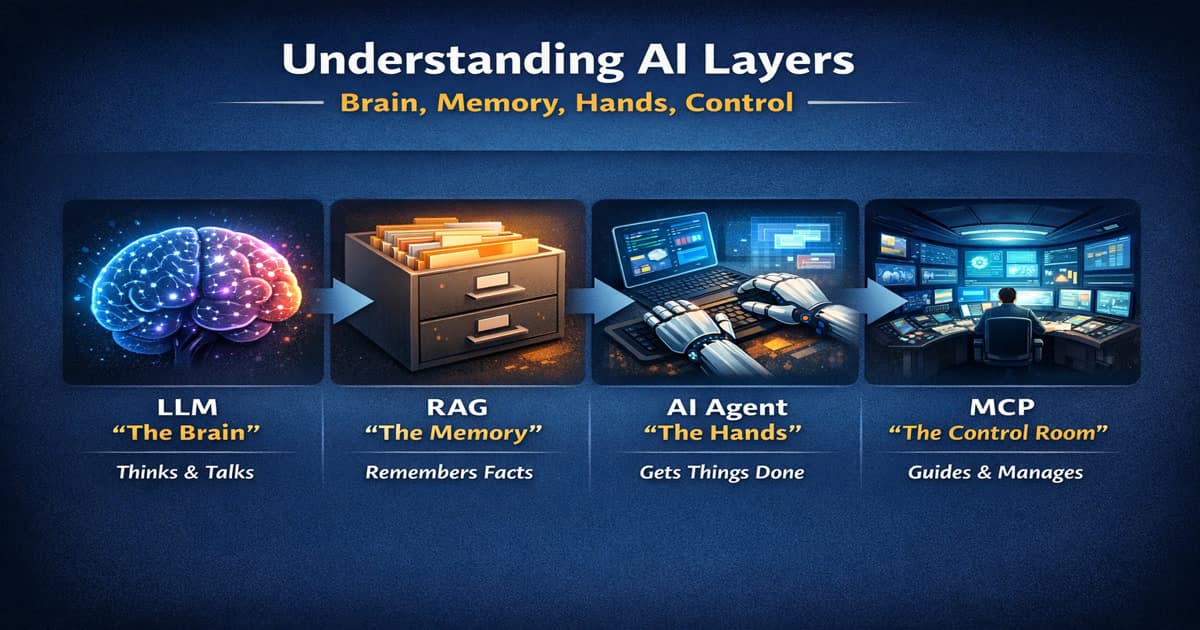
AI Architecture Clarity: Understanding LLM, RAG, Agents, and MCP Through the Brain Model

A clear executive guide explaining LLM, RAG, AI Agents, and MCP using the Brain model to prevent enterprise AI instability.

...systems Send emails It only thinks. Strategic insight: LLM capability alone introduces minimal operational risk but limited enterprise value without context. RAG = The Memory Now give the brain memory. RAG...

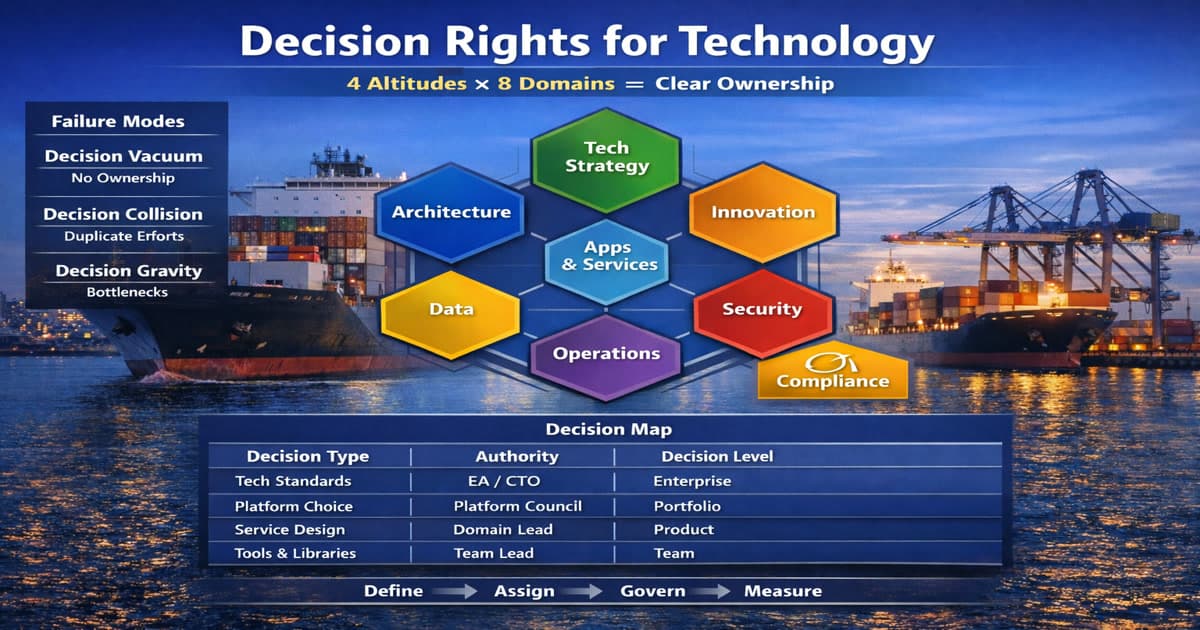
Decision Rights for Technology — Who Decides What in a Modern Enterprise

Why most enterprises confuse escalation ladders with decision rights — and how Technology Decision Domain Architecture maps exactly who decides what, at which altitude, before the conflict arrives.

...hidden. We mapped recurring decision types, assigned each to the appropriate altitude (strategic, structural, execution), and defined clear escalation paths. The three-level approval was replaced with...

Investment & Prioritisation
Advanced (EA, TS)5-6 hoursInvestment prioritisation model + business case guide (including TCO and unit economics) + sequencing criteria

How to decide which technology initiatives get funded, in what order, and why — connecting architecture to financial decisions and business outcomes.

...Navigation Start here — Why prioritisation is an architecture concern Building a business case Value and risk Portfolio prioritisation frameworks Sequencing Architecture's role in investment Common mistakes FinOps...

1 DayIntensive
StrategicEA · TS
Paying Down Debt Through Feature Work
CTOs, Engineering Leaders, Enterprise Architects, Product Leaders3-4 hoursA feature-driven debt reduction policy — the rule, the visibility mechanism, and the two questions review asks about every feature

Debt accumulates faster than refactoring projects can remove it. Fund architecture improvement through the product roadmap instead of competing with it.

...priority. Refactoring is postponed. Months later, systems are harder to change, velocity slows, incident risk rises, and engineers grow frustrated. Eventually leadership proposes a large modernisation initiative...

1 DayIntensive
ContinuousNot a project
Standards & Reference Architectures
Intermediate (SA, EA)4-5 hoursReference architecture library starter + standards register + architecture principles catalogue

How to create, govern, and operationalise architecture standards and reference architectures — the agreed patterns and structures that create consistency, reduce duplication, and accelerate delivery at scale.

...create consistency across an organisation — reducing duplication, accelerating delivery, and managing risk at scale. Standards settle common questions once, so teams don't have to re-debate them every sprint....

1 dayIntensive
PracticalStandards exercise
Operating Model Choices
Advanced (EA, TS)5-6 hoursOperating model design canvas + team topology guide + Conway's Law application worksheet + Communication Structure Heatmap

How the structure of technology teams shapes the structure of the systems they build — covering Conway's Law, centralised vs federated models, platform teams, product operating models, team topologies, and designing the organisation that produces the architecture you want.

...for small organisations but creates bottlenecks at scale. Federated works for large organisations but risks fragmentation. The operating model sits on a spectrum from fully centralised to fully federated: Model...

1 DayIntensive
StrategicEA · TS
Technical Debt & Rationalisation
Intermediate to Advanced (SA, EA, TS)5-6 hoursTechnical debt taxonomy + rationalisation prioritisation framework + modernisation criteria

How to understand, measure, prioritise, and reduce technical debt — the accumulated cost of shortcuts, outdated decisions, and deferred maintenance.

...is whether you're managing it or ignoring it. Ignored debt compounds — every change becomes slower, riskier, and more expensive until the system becomes legacy, where change isn't just slow but dangerous....

1 DayIntensive
StrategicSA · EA · TS