Search
Find insights, training programs, and workshops
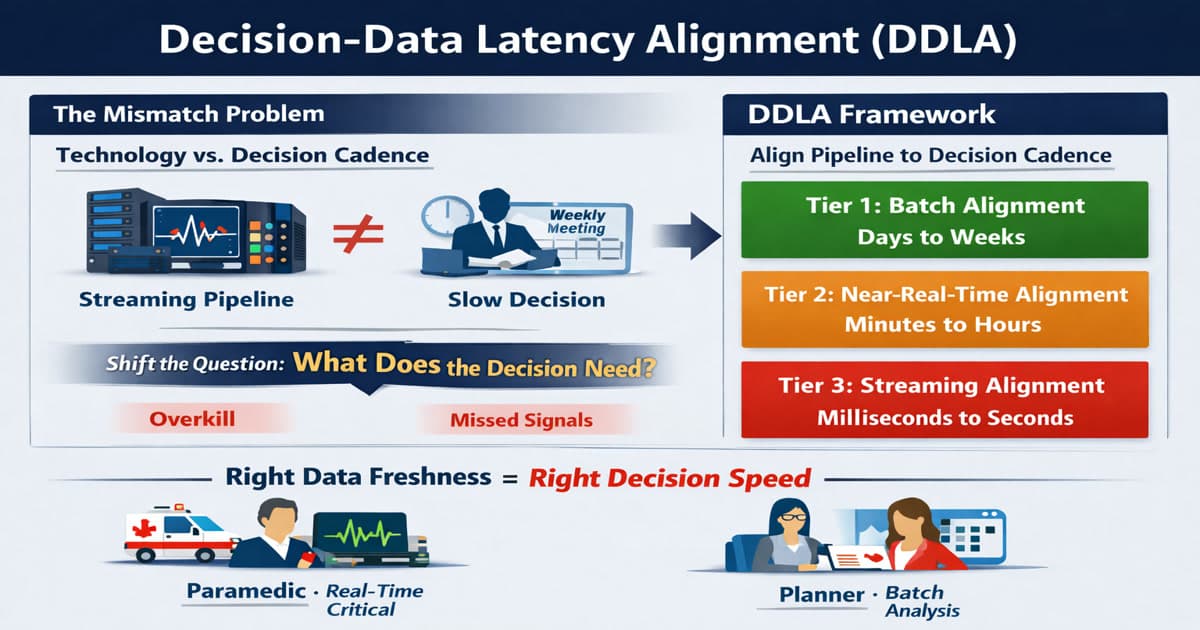
Organisations debate batch versus real-time as if it is a technical preference. It is not. It is a structural mismatch between data freshness and decision cadence — and the mismatch is where the cost lives.
...consuming. Batch pipeline. Real-time decision. A fraud detection model checks transactions. The model scores risk using features enriched by a nightly batch job. A fraudulent transaction happens at 11:17 AM. The...
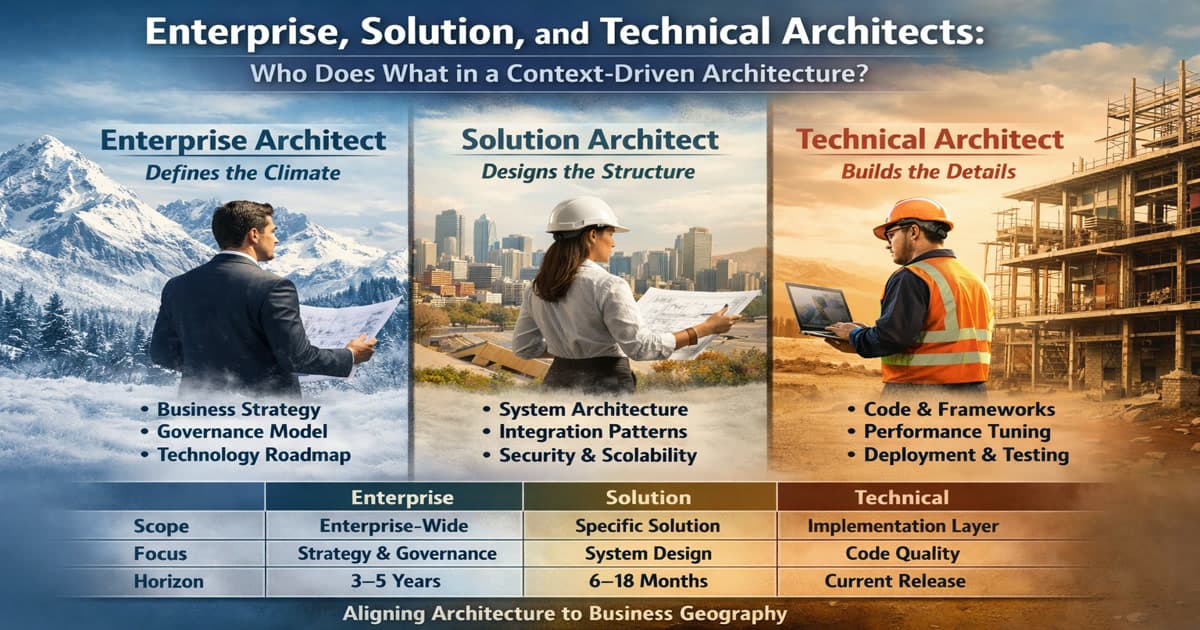
A structured executive guide explaining the difference between Enterprise, Solution, and Technical Architects using Context-Driven Architecture to clarify responsibilities and reduce structural misalignment.
...Insulation budget is justified They do not design the roof. They define the environmental rules. Risk of Failure If Enterprise Architecture misreads geography: Microservices are adopted in stable...
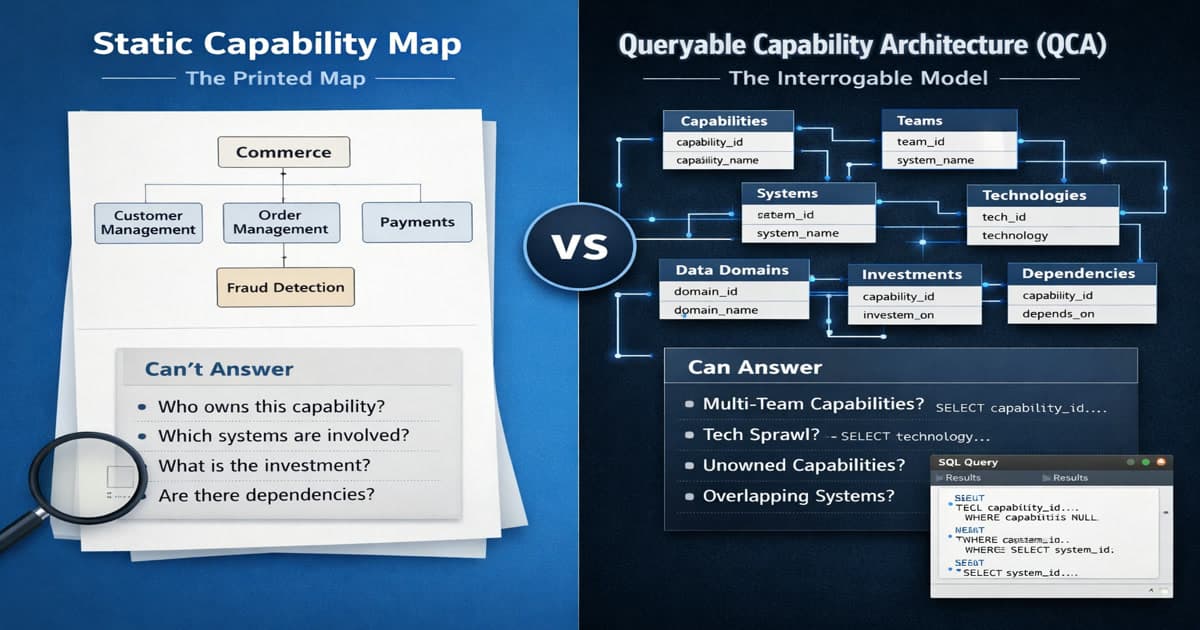
Why traditional capability maps fail to support governance decisions and how Queryable Capability Architecture turns static maps into interrogable decision systems.
...capability maps rarely show: investment per capability technology footprint per capability operational risk per capability Strategic decisions get made from incomplete information. Queryable Capability...
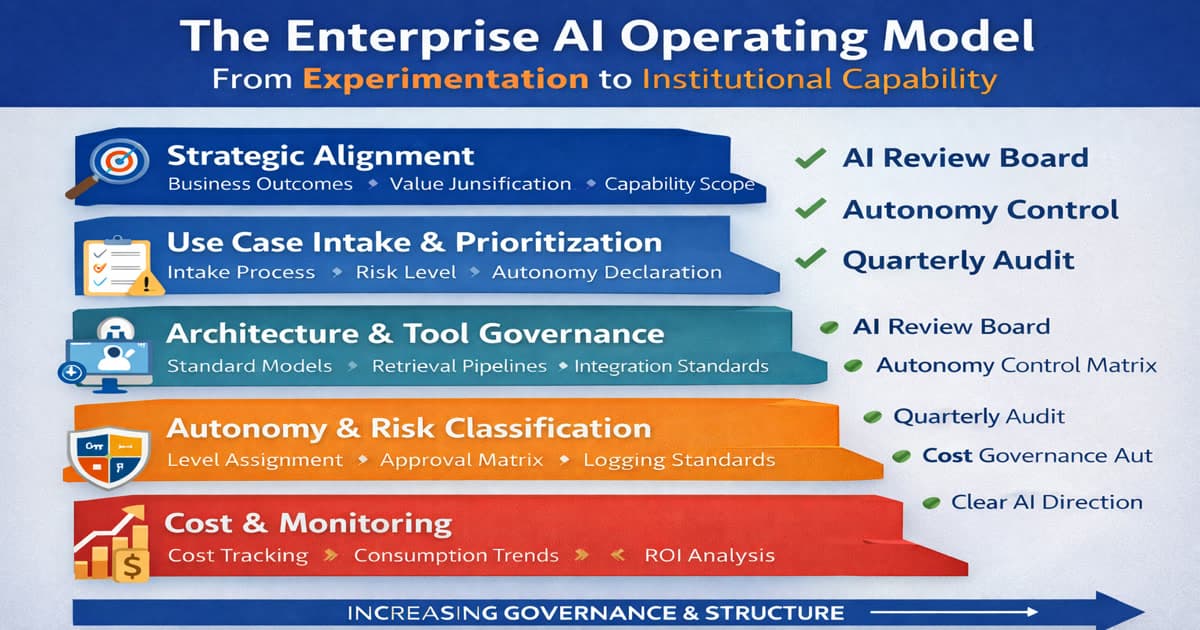
A structured executive guide explaining how to move from AI experimentation to an Enterprise AI Operating Model with governance, autonomy control, and cost discipline.
...hype. Use Case Intake & Prioritization Introduce a formal intake process: Business sponsor defined Risk classification assigned Autonomy level declared Data sensitivity identified ROI hypothesis documented...
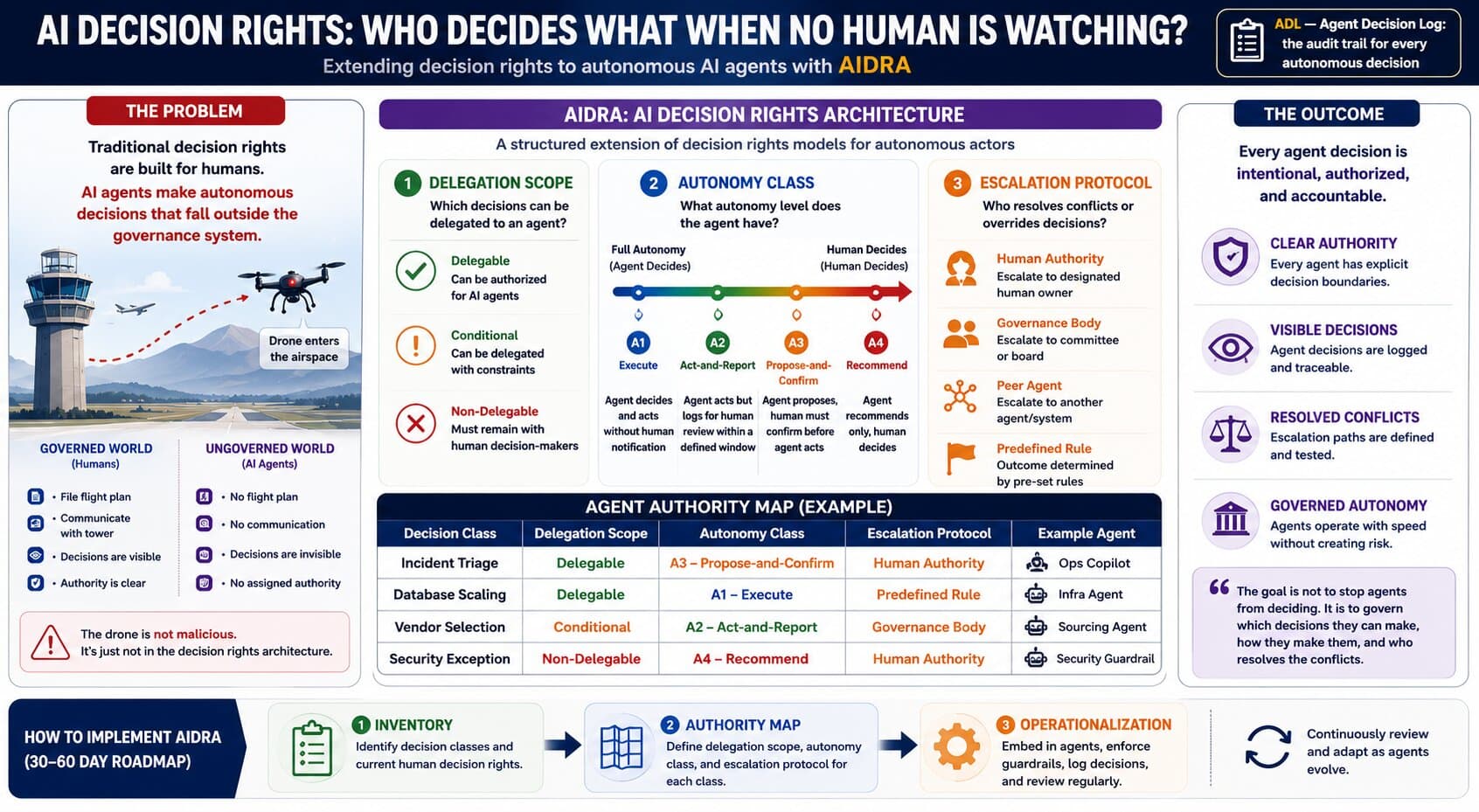
Decision rights models assume human decision-makers. AI agents breach that assumption silently. Here is how to extend decision rights to cover autonomous actors before the first ungoverned decision becomes a production incident.
...Conflict Resolution Two agents make decisions that produce incompatible outcomes. Agent A approves a low-risk deployment. Agent B blocks the same deployment based on a different risk model. Neither agent has...
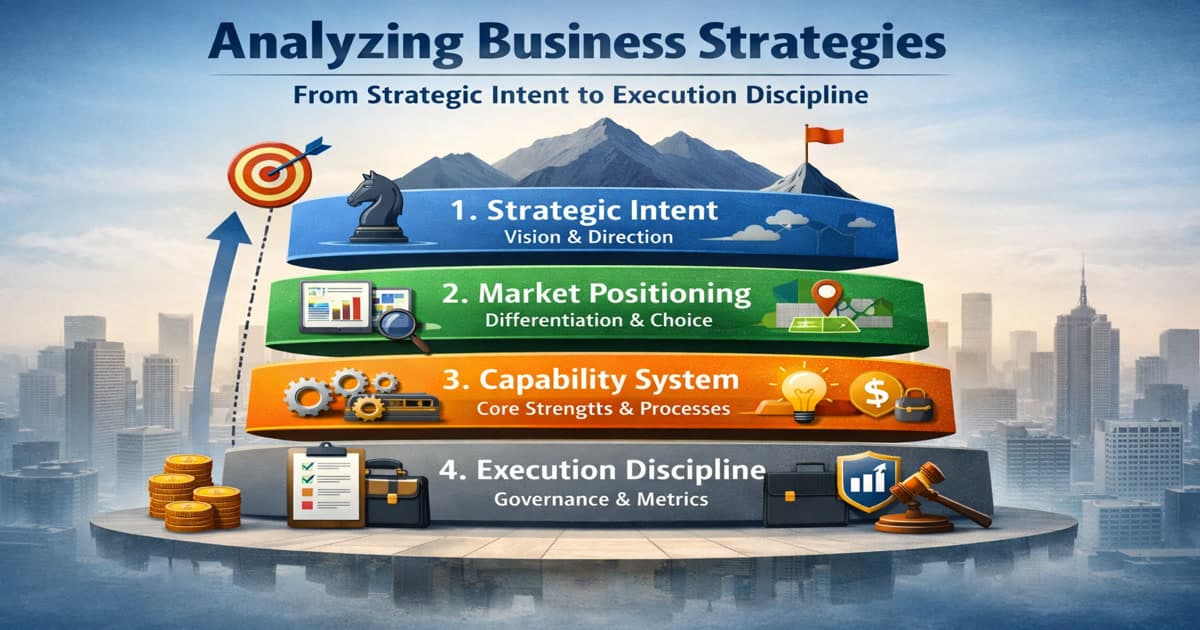
A structured executive guide to analyzing business strategies using a four-layer framework that connects intent, positioning, capability, and execution discipline.
...must define: Decision rights Capital allocation rules Performance metrics Incentive alignment Risk management thresholds Execution discipline determines whether strategy survives contact with reality. Many...
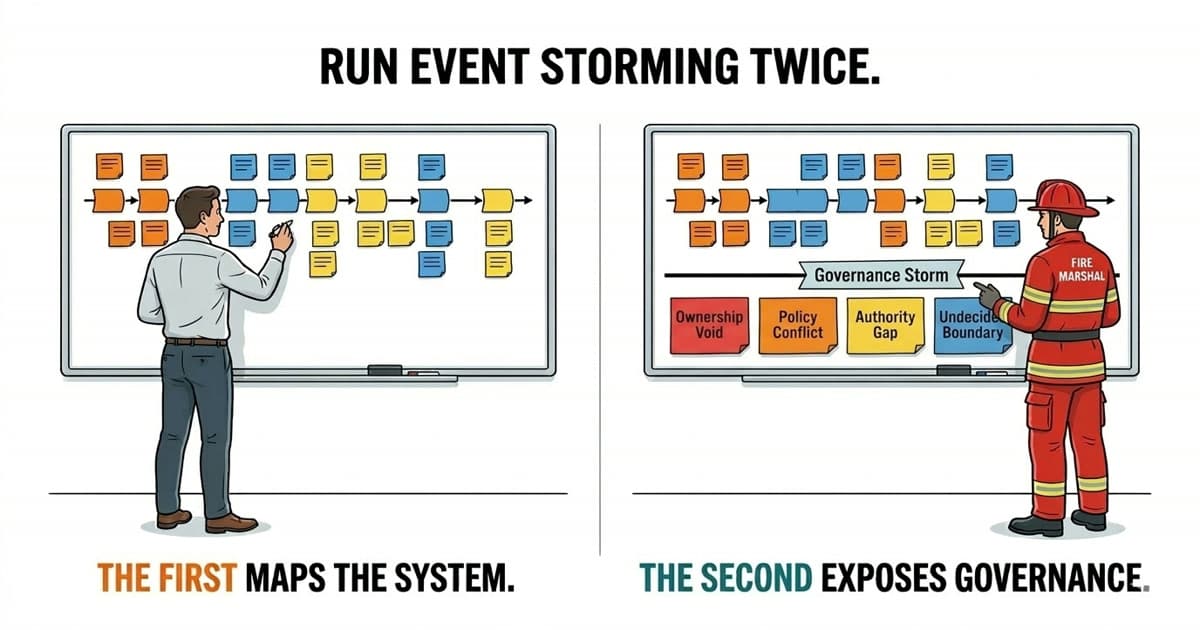
Why the second run of an Event Storming workshop — the one most teams never attempt — is the fastest way to surface governance gaps that architecture diagrams will never show.
...command Authority gap — three teams claim the right to trigger FraudDetected event Policy conflict — risk team and compliance team have different responses Customer boundary Undecided — shared between...
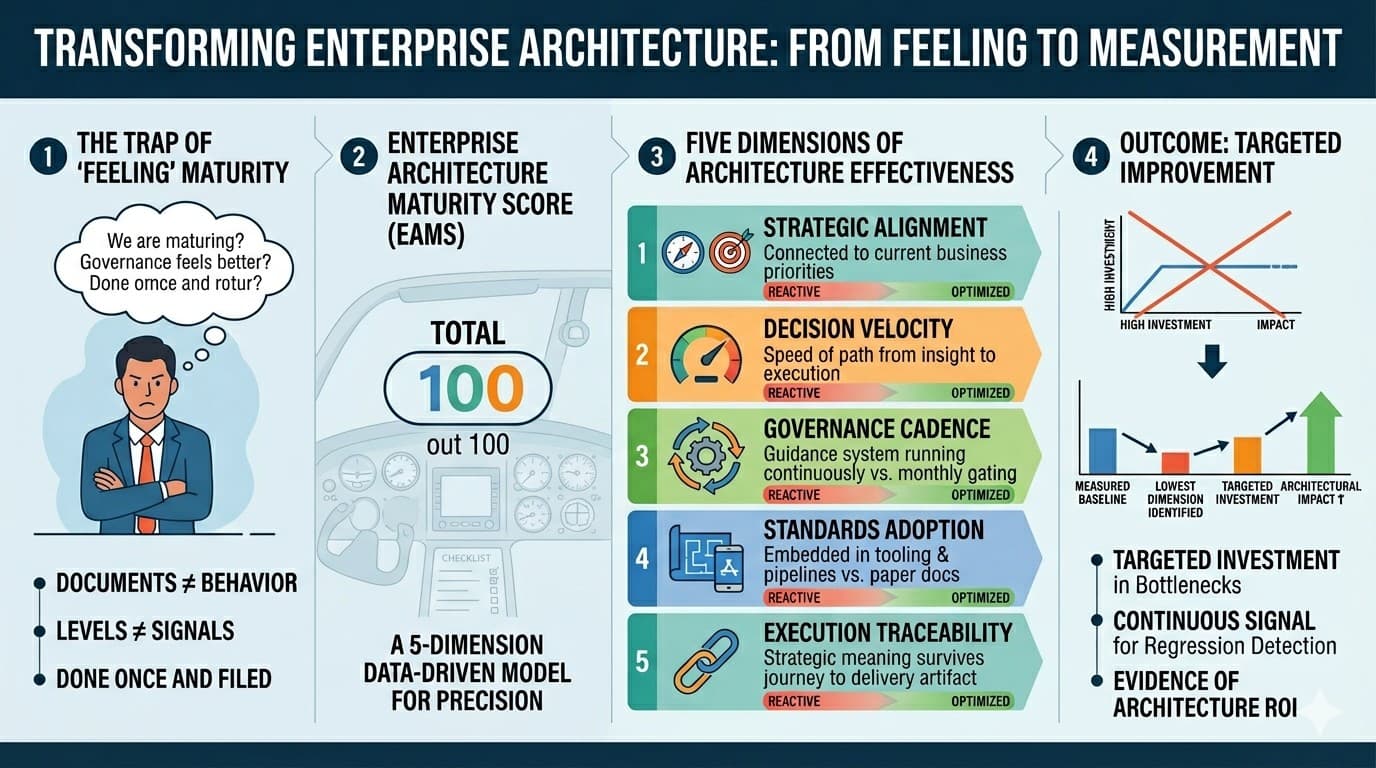
Enterprise architecture maturity is not a feeling. It is a score. Organizations that cannot measure their architecture maturity cannot improve it. The EAMS model gives you the score.
...approvals, and review cycles for weeks. High score: Routine decisions are pre-authorized. Only high-risk decisions require manual review. Dimension 3: Governance Cadence Is governance a gating mechanism...
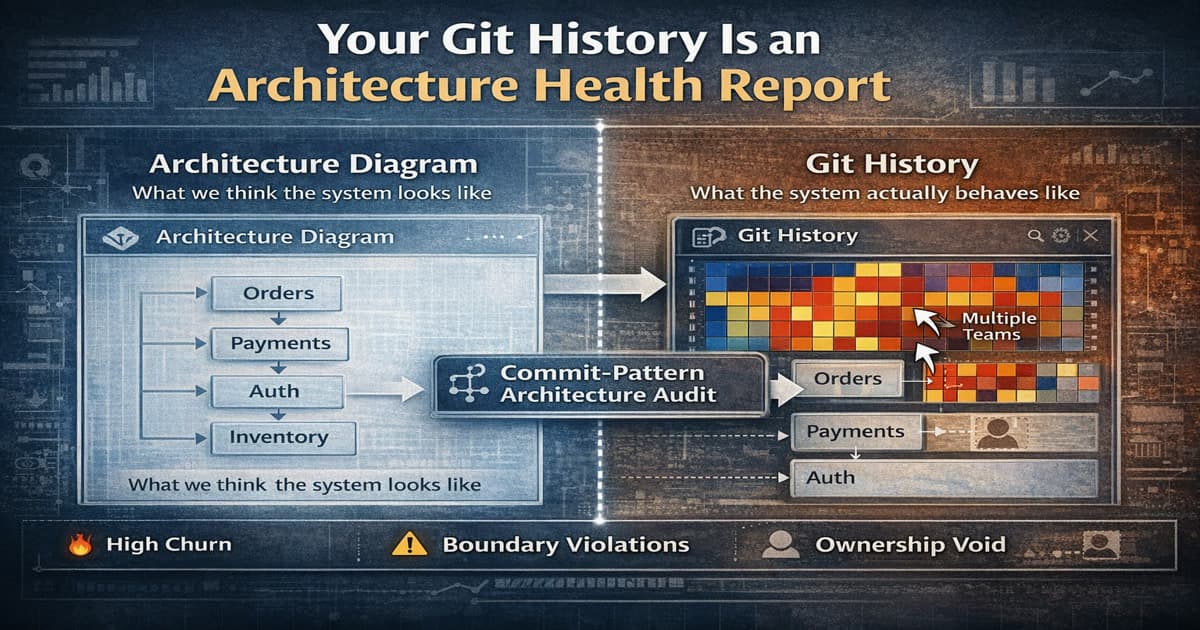
A practical architecture technique showing how Git commit patterns reveal structural instability, boundary violations, and ownership gaps in software systems.
...undocumented legacy components fragile systems teams avoid modifying These components often become risk hotspots. When changes are eventually required, they become expensive and dangerous. The Architecture...
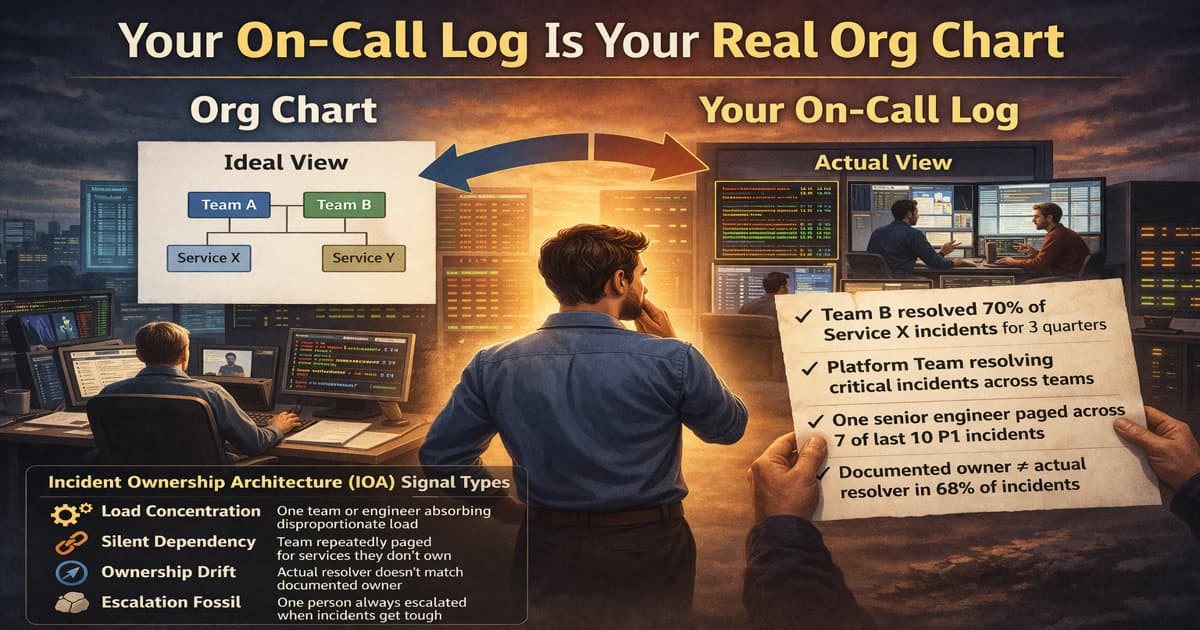
Why on-call rotation data is the most accurate org chart your engineering organisation has — and almost nobody uses it to make structural decisions.
...in postmortems — because two teams have different mental models of who is responsible. It generates risk at every team restructure — because the org chart does not show who actually holds the system. Signal...