Skip to content

Search

Find insights, training programs, and workshops

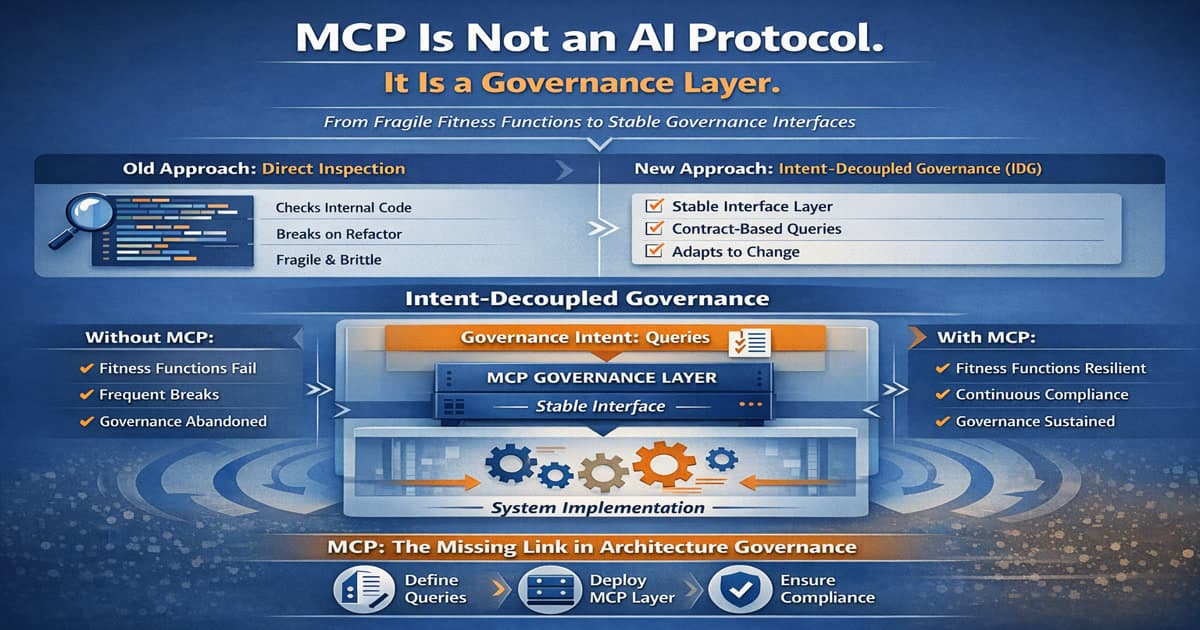
MCP Is Not an AI Protocol. It Is a Governance Layer.

MCP is classified as an AI integration protocol. It is actually a governance primitive — the stable interface layer that architecture fitness functions have been missing for years.

...evolves. Implementation Guide (30–60 Days) Introducing IDG requires a governance contract more than new technology. MCP server infrastructure is already available in most delivery environments. The missing...

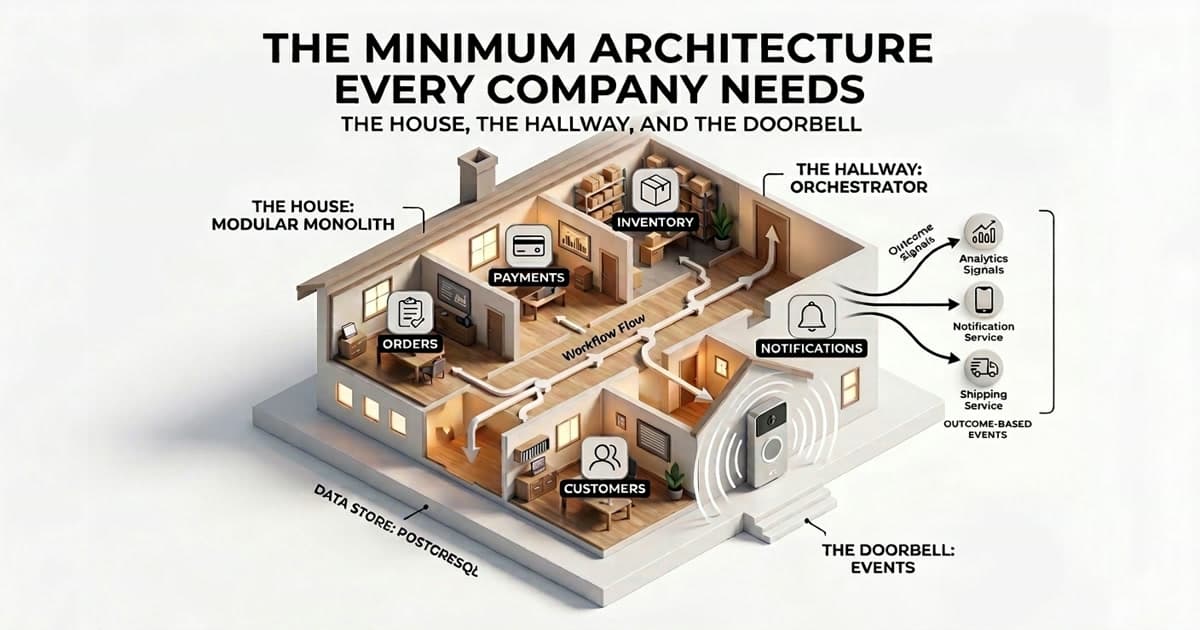
The Minimum Architecture Every Company Needs: The House, the Hallway, and the Doorbell

A practical architectural model explaining why most companies only need a modular monolith, a workflow orchestrator, and outcome-based events.

...suggest it. Implementation Guide (30–60 Days) Introducing this architecture requires clarity more than technology. Phase 1: Define Module Boundaries (Weeks 1–2) Identify core business modules. Examples: Orders Payments Inventory Customers Success...

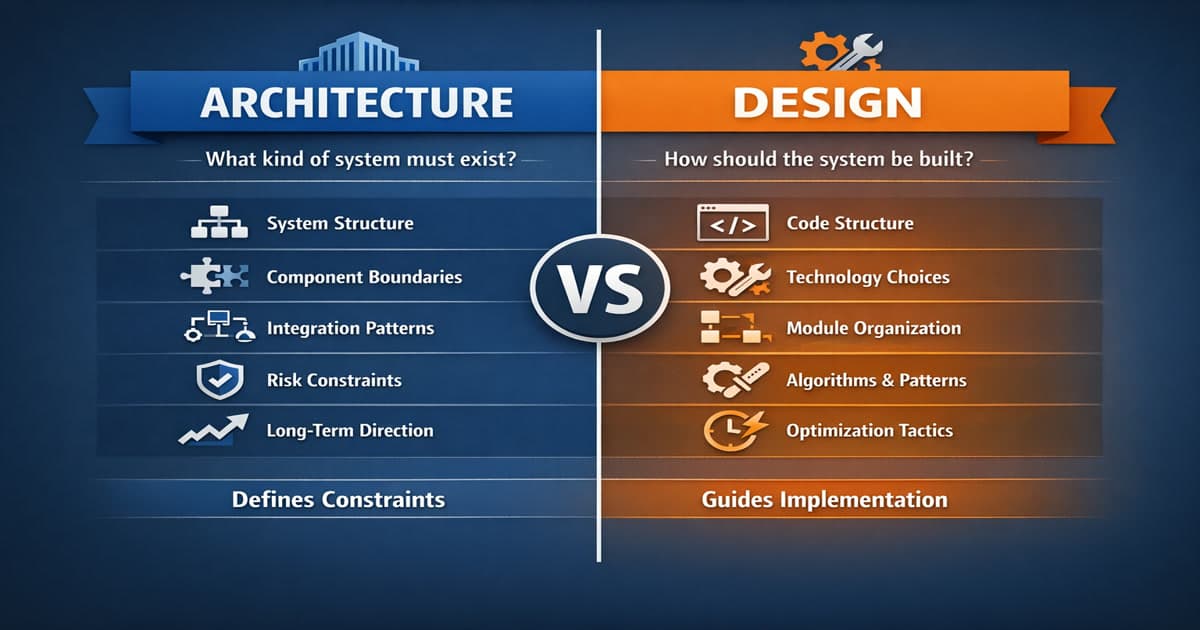
Architecture vs Design: Why Most Organizations Confuse Them

A clear explanation of the difference between architecture and design, why organizations confuse them, and how this confusion creates structural instability in technology systems.

...Engineering Leaders Problem it solves: Persistent confusion between architecture and design in software and technology organizations Key outcome: Clear structural separation between decision-making architecture...

Architecture Governance
Intermediate to Advanced (SA, EA, TS)5-6 hoursGovernance model canvas + architecture principles register + escalation path template

How to design, implement, and measure architecture governance — the mechanisms that ensure decisions are made consistently, applied correctly, and aligned with strategy.

...decisions are made consistently, applied correctly, and aligned with the organisation's principles and strategy. It's not bureaucracy — it's the system that makes architecture matter. Governance without...

1 DayIntensive
PracticalSA · EA · TS
Why Architecture Exists
All levels — SA, EA, TS3-4 hoursArchitecture purpose framework — complexity · alignment · risk · change · shared understanding

Why architecture exists — managing complexity, aligning technology with business, reducing risk, enabling change, and creating shared understanding across teams.

...Navigation Start here — Why does architecture exist? The problem architecture solves Reducing complexity Aligning technology with business Managing risk Enabling change Architecture as communication Putting it all together Cheat...

Half-dayIntensive
PurposeWhy it matters
Future of AI
Intermediate to Senior Leaders3-4 hoursAI horizon scan + strategic implications analysis + preparation roadmap

What's coming in AI — multimodal models, on-device AI, open-source momentum, protocols, regulation, and the shift to AI-native organisations. See around the corner without falling for hype.

...one diagram Cheat sheet Separating signal from noise Most AI predictions are wrong. Not because the technology doesn't advance — it does, rapidly — but because people predict specific capabilities rather...

Half DayIntensive
Horizon ScanDeliverable
AI Operating Model Workshop
CTO, CIO, VP Engineering, Enterprise Architects, AI LeadersAI ownership model, governance framework, capability map, 90-day activation plan

Stop running AI experiments in isolation. Build the ownership structure, governance model, and decision rights that turn scattered AI pilots into an organisation-wide capability.

...responsible for any of them. Each team was experimenting. Nobody was deciding. An AI operating model isn't a technology architecture. It's an answer to one question: who in this organisation owns AI decisions,...

1 DayIntensive
Clear OwnershipAI at Scale
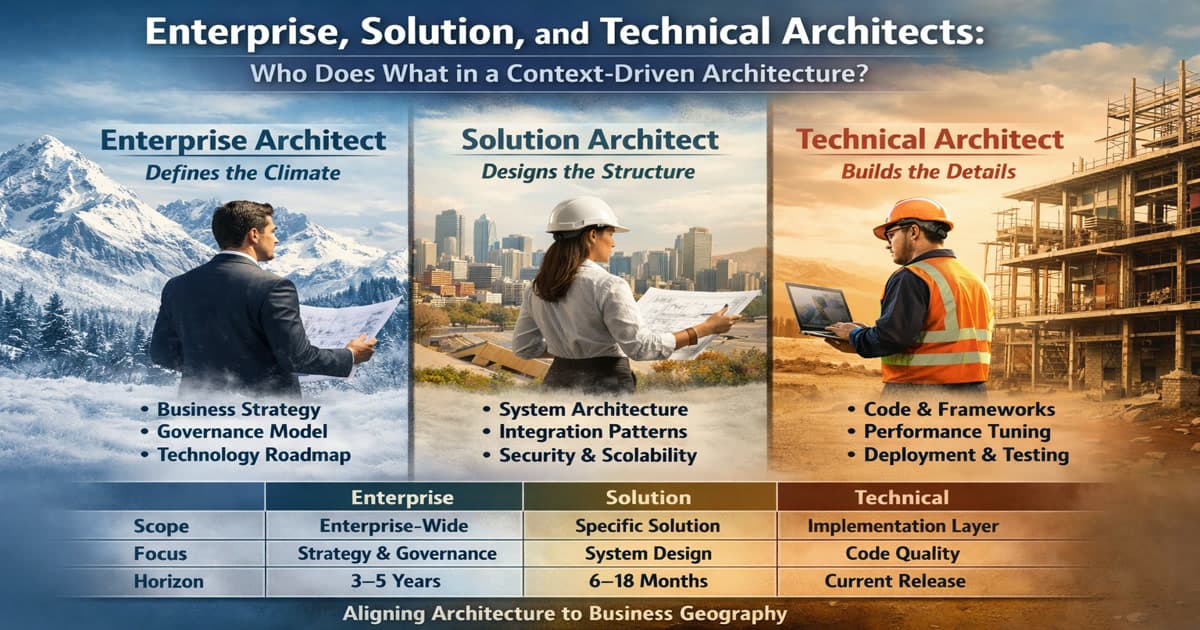
Enterprise, Solution, and Technical Architects: Who Does What in a Context-Driven Architecture?

A structured executive guide explaining the difference between Enterprise, Solution, and Technical Architects using Context-Driven Architecture to clarify responsibilities and reduce structural misalignment.

...Architects operate at the environmental level. They define: Target operating model Capability map Technology principles Platform strategy Governance structure Buy vs build posture Cloud and AI positioning...

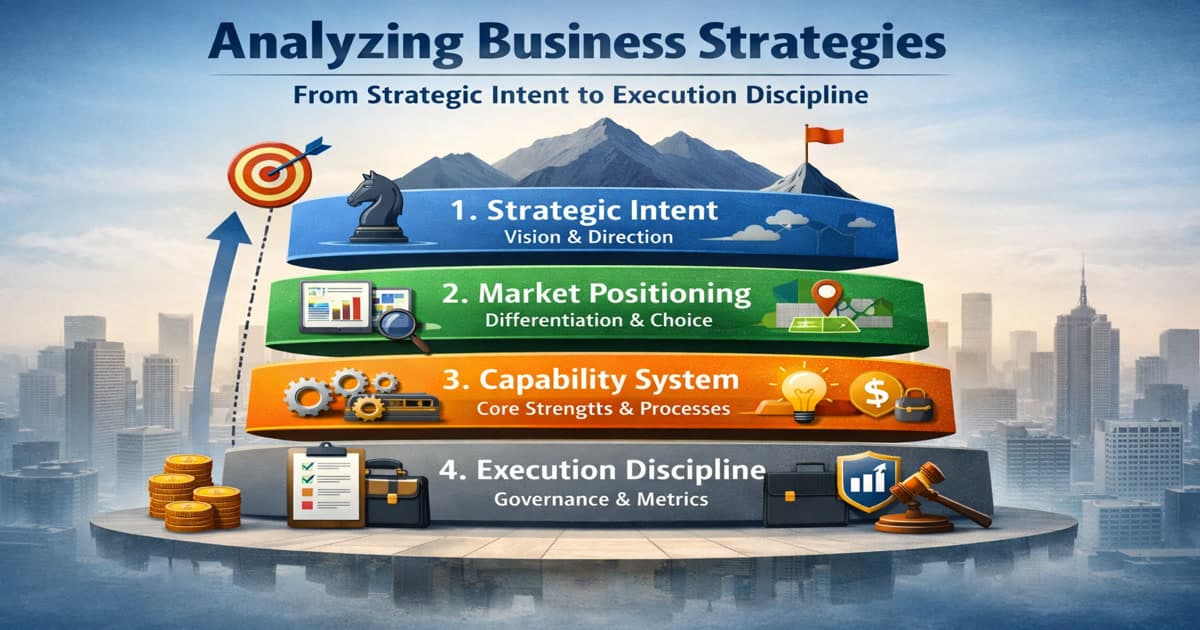
Analyzing Business Strategies: From Strategic Intent to Execution Discipline

A structured executive guide to analyzing business strategies using a four-layer framework that connects intent, positioning, capability, and execution discipline.

Executive Summary Who this is for: Founders, CEOs, Strategy Leaders, Enterprise Architects Problem it solves: Organizations confuse strategic statements...

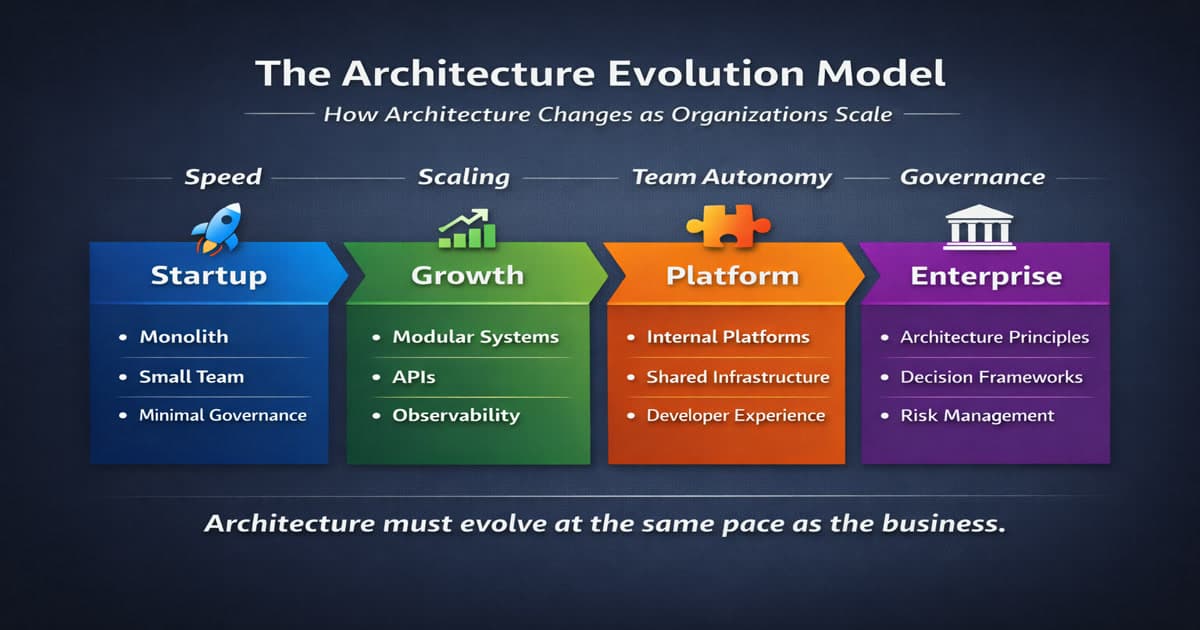
The Architecture Evolution Model: How Architecture Changes from Startup to Enterprise

A practical framework explaining how software architecture evolves from startup experimentation to enterprise-scale governance, and what architectural practices are needed at each stage.

Executive Summary Who this is for: CTOs, founders, Enterprise Architects, technology leaders scaling systems Problem it solves: Applying enterprise architecture too early or startup...