Search
Find insights, training programs, and workshops

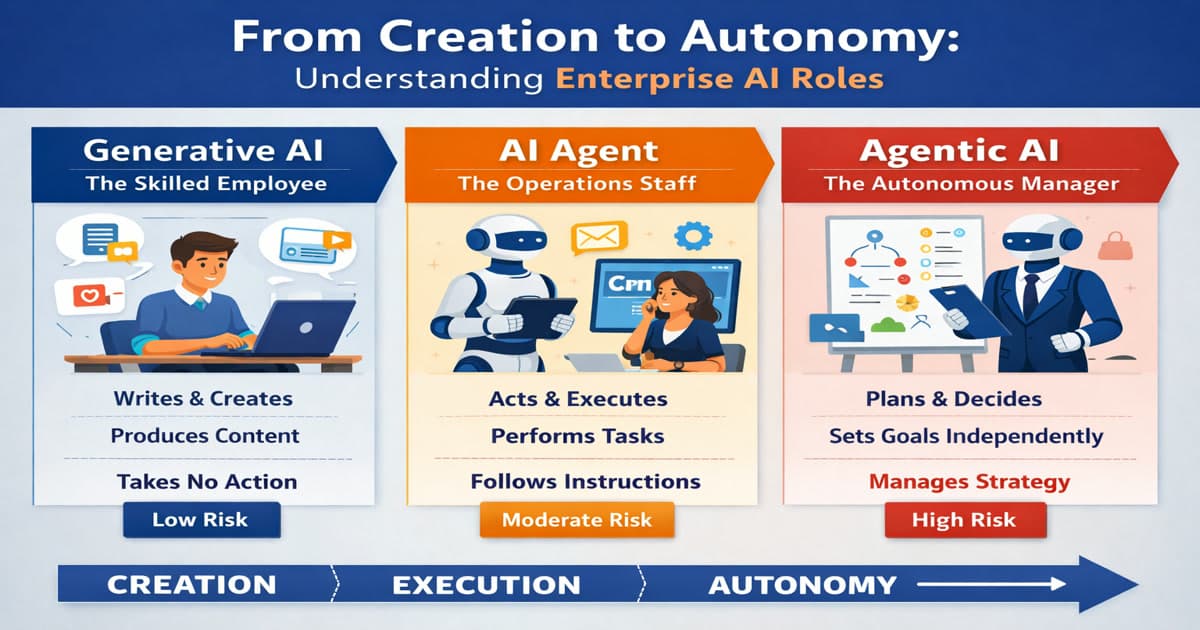
A clear executive guide explaining LLM, RAG, AI Agents, and MCP using the Brain model to prevent enterprise AI instability.

A governance-driven perspective explaining why software architecture cannot be automated because decision accountability and consequence ownership cannot be delegated to AI.

Security is treated as a gate at the end of delivery. It should be an architecture property designed into three distinct boundaries. Here is the model that fixes the friction between security and delivery.

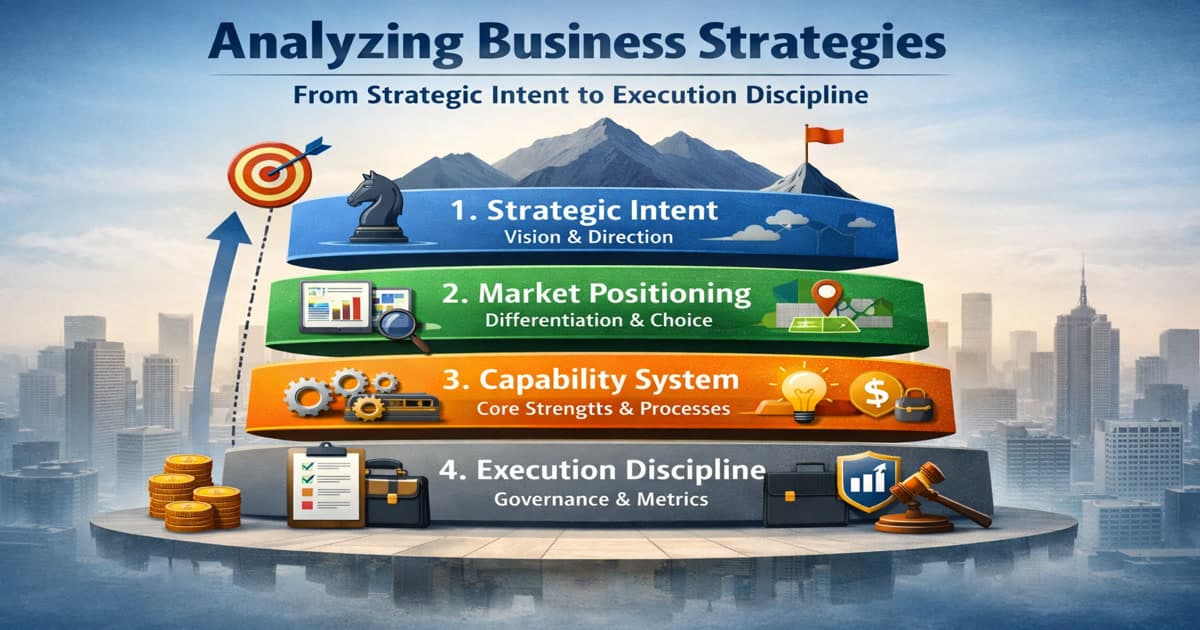
A structured executive guide to analyzing business strategies using a four-layer framework that connects intent, positioning, capability, and execution discipline.
Executive Summary Who this is for: Founders, CEOs, Strategy Leaders, Enterprise Architects Problem it solves: Organizations confuse strategic statements...

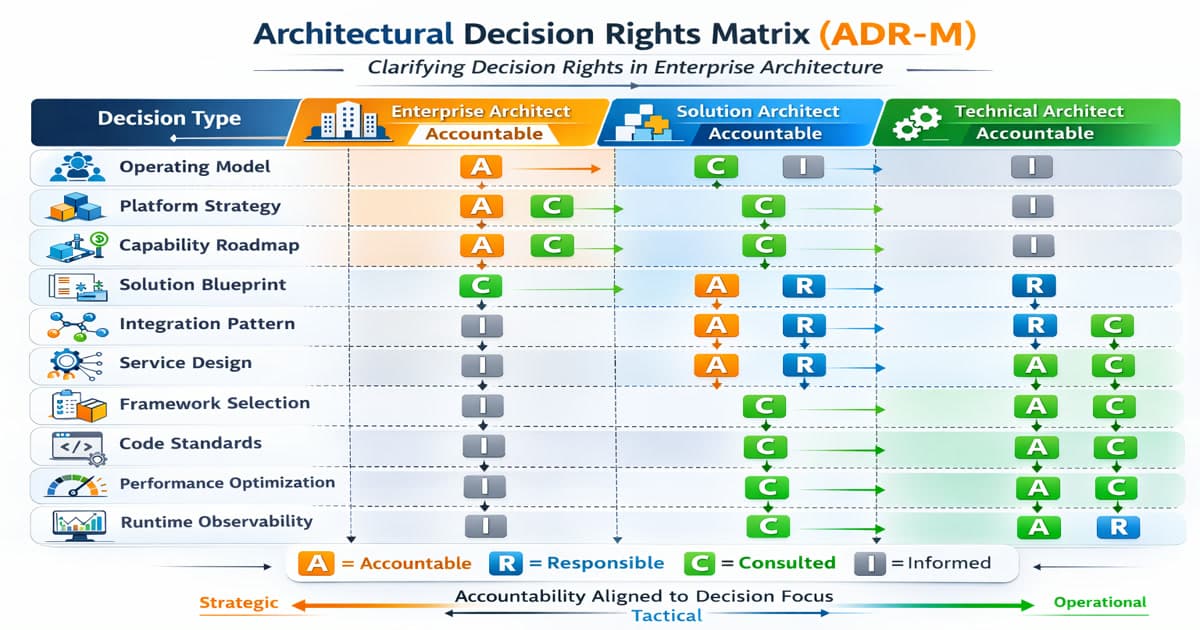
A governance framework introducing the Architectural Decision Rights Matrix (ADR-M) to clarify accountability between Enterprise, Solution, and Technical Architects in Context-Driven Architecture.
...decision altitude clarity. Enterprise Architects debate frameworks. Solution Architects redefine platform strategy. Technical Architects override structural principles. Roles exist. Authority boundaries do not....

A practical guide explaining which type of architect is required at each stage of the application lifecycle to prevent governance friction and structural instability.
...Lifecycle Stages Every application — whether startup or enterprise — passes through five functional stages: Strategy & Intent Discovery & Feasibility Solution Design Build & Delivery Operate, Scale & Modernize...

A clear explanation of the difference between architecture and design, why organizations confuse them, and how this confusion creates structural instability in technology systems.
...Characteristics of Architecture Long-term structural decisions Cross-system impact Alignment with enterprise strategy Risk and scalability considerations Technology posture definition Architecture decisions are...

Just as buildings must adapt to snow, desert, or tropical climates, software architecture must align with business geography to improve predictability and reduce complexity.
...fluctuating? Are seasonal spikes extreme? Is regulatory change frequent? Is experimentation central to strategy High volatility demands elasticity and decoupling. Stable climates reward simplicity and cost...

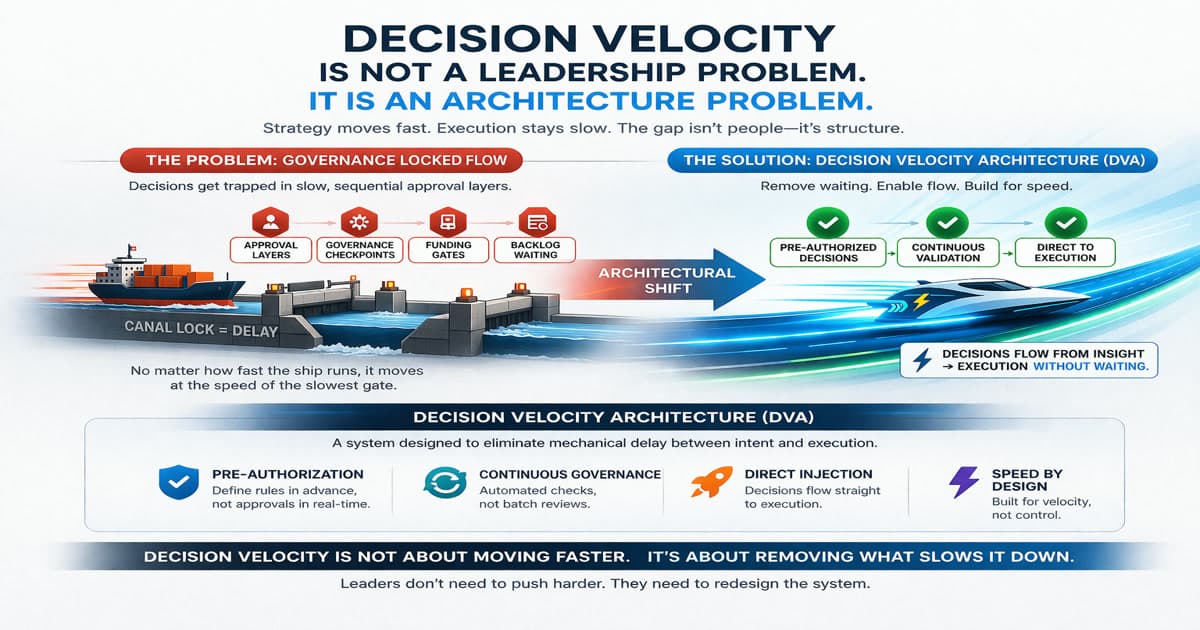
Decision velocity is not constrained by leadership intent but by architectural design. Governance systems built for slower eras create mechanical delay between insight and execution.
Executive Summary Who this is for: CTOs, CIOs, Enterprise Architects, Strategy Leaders, Operating Model Owners Problem it solves: Strategic decisions move faster than execution...

Most enterprises build data architectures one layer at a time. Business, logical, and physical layers exist as separate artefacts owned by separate teams. That separation is the structural gap that makes data estates ungovernable.
...The platform engineer walks into the same room. She wants to know which database, which partitioning strategy, which index design, and which cloud region. Three legitimate questions. Three completely different...