Search
Find insights, training programs, and workshops
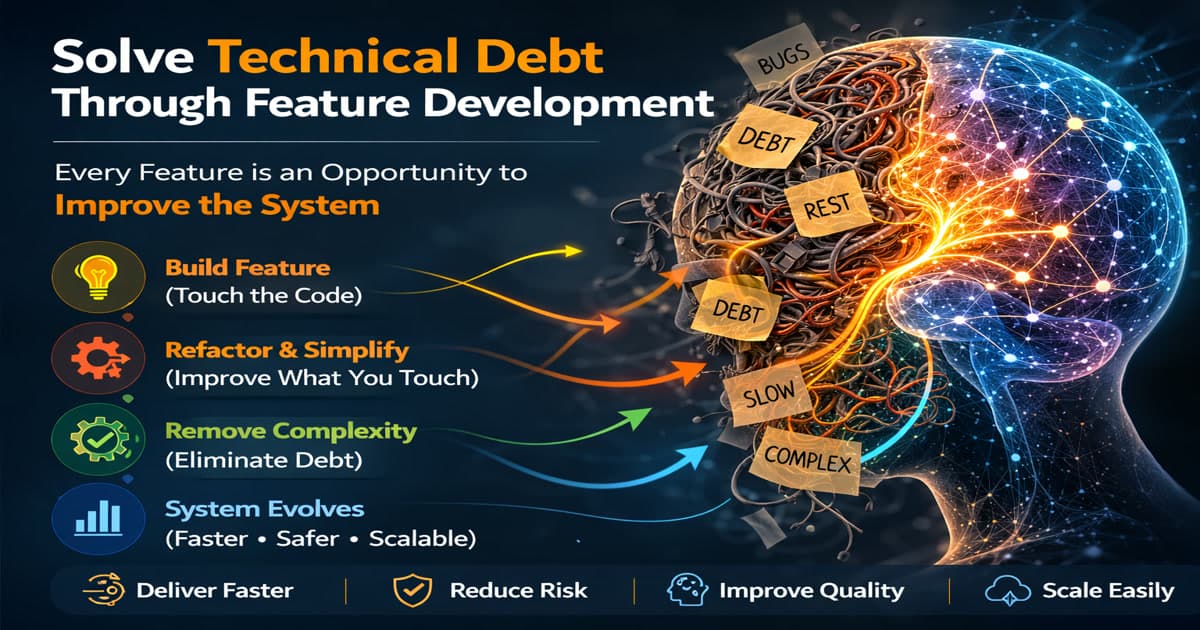
A practical framework explaining how organizations can systematically reduce technical debt while delivering new features, instead of running disruptive modernization programs.
...is postponed. Months later: Systems become harder to change Development velocity slows Incident risk increases Engineers grow frustrated Eventually leadership proposes a large modernization initiative. These...
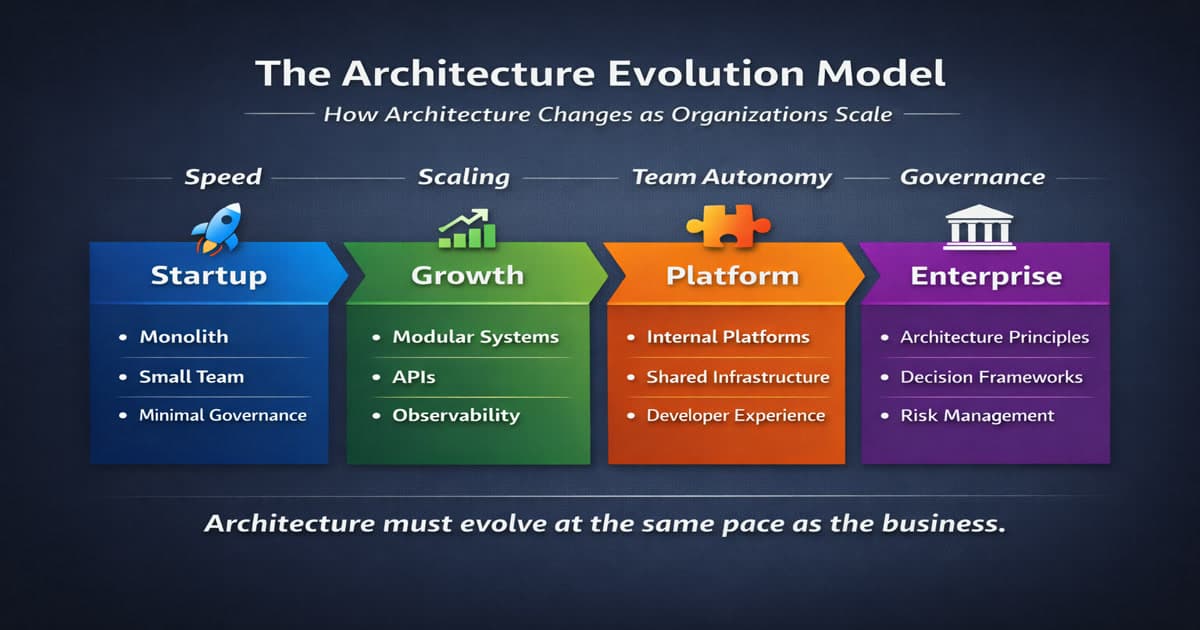
A practical framework explaining how software architecture evolves from startup experimentation to enterprise-scale governance, and what architectural practices are needed at each stage.
...evolves with the scale of the organization, the complexity of systems, and the level of operational risk. A startup does not need architecture governance boards. An enterprise cannot operate without...
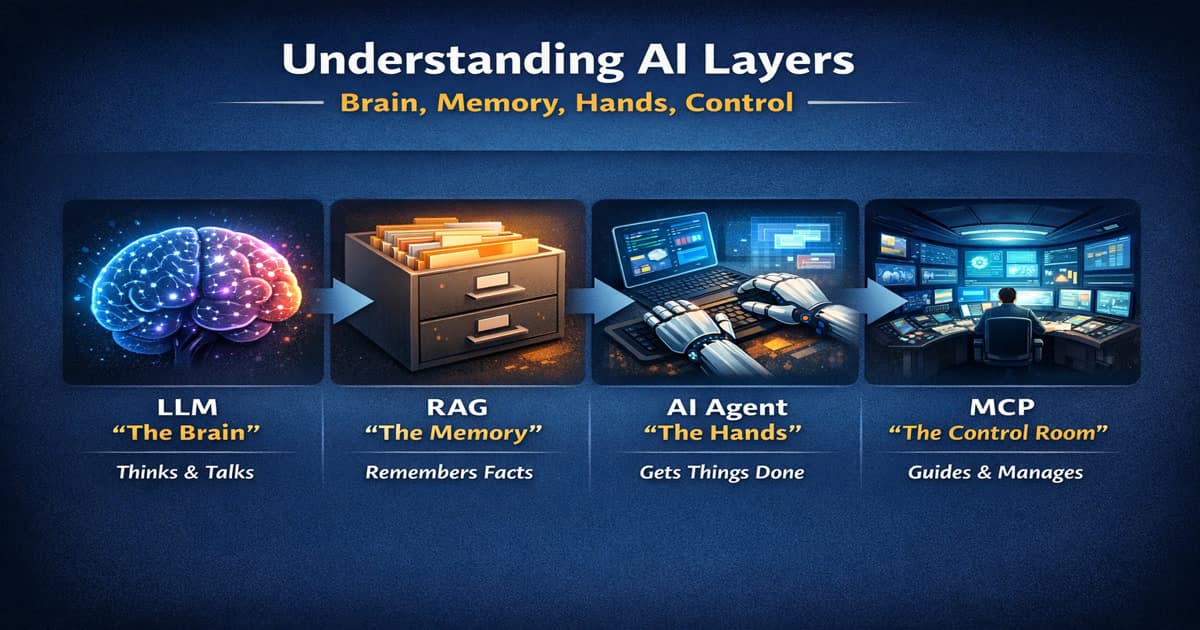
A clear executive guide explaining LLM, RAG, AI Agents, and MCP using the Brain model to prevent enterprise AI instability.
...systems Send emails It only thinks. Strategic insight: LLM capability alone introduces minimal operational risk but limited enterprise value without context. RAG = The Memory Now give the brain memory. RAG...
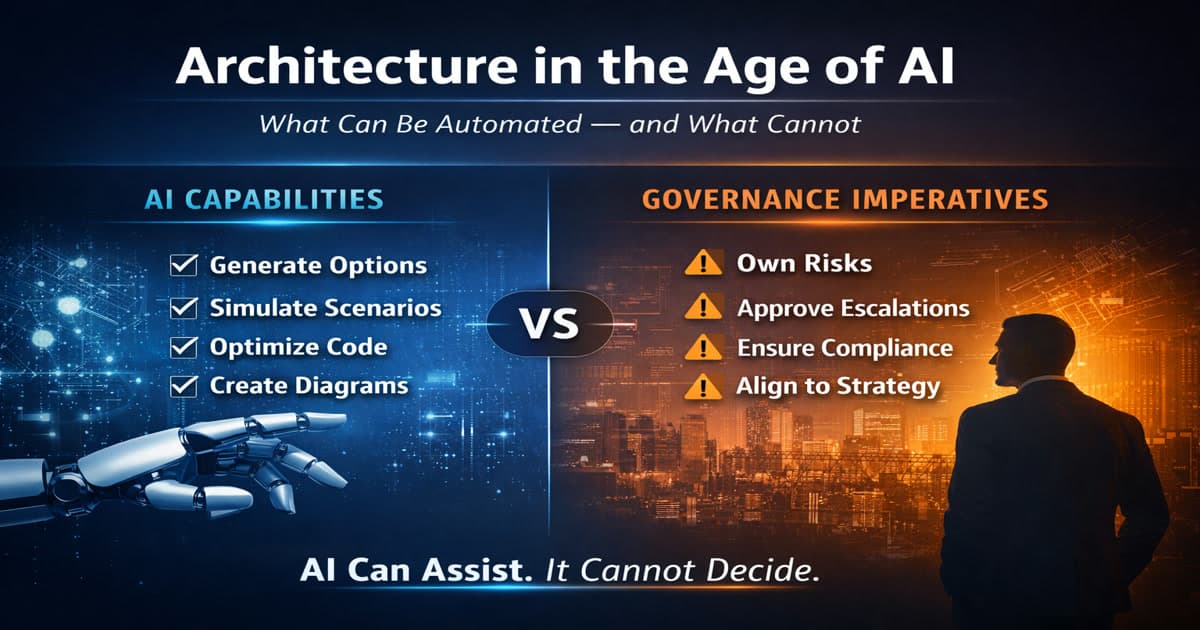
A governance-driven perspective explaining why software architecture cannot be automated because decision accountability and consequence ownership cannot be delegated to AI.
...distinct layers: Mechanical Design Layer Pattern selection Component modeling Technology comparison Risk enumeration Performance estimation AI excels here. This layer is optimizable. Accountability...
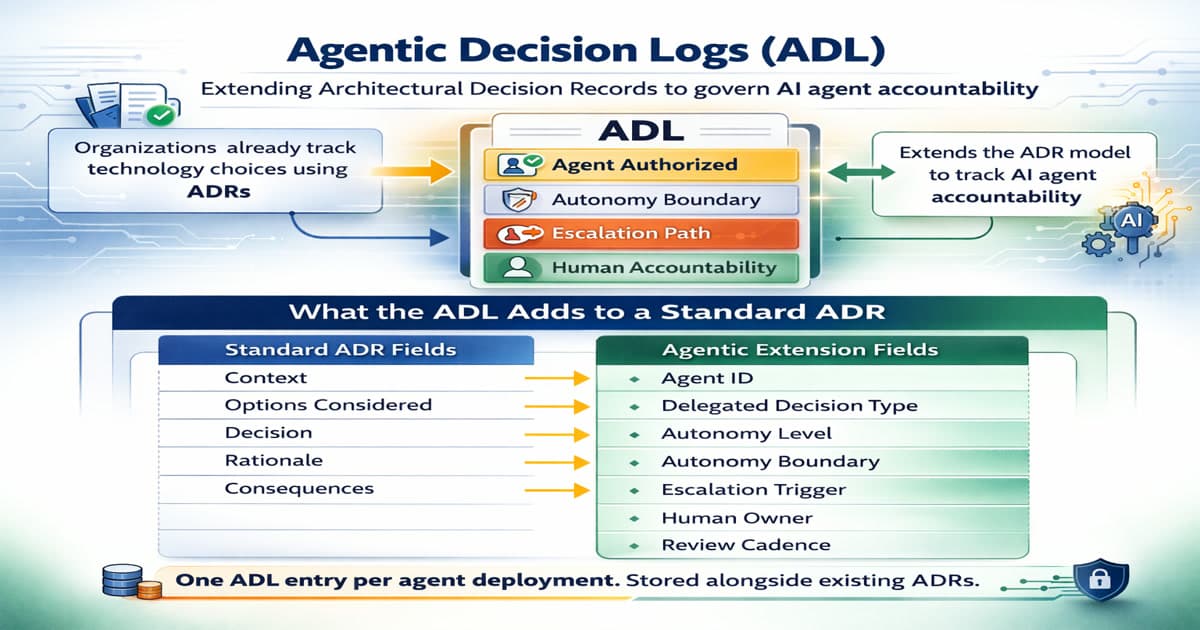
Why Architectural Decision Records are the only structure most organizations already have that can govern AI agent accountability — and how to extend them into an Agentic Decision Log before the EU AI Act deadline.
...somewhere. A copilot that drafts code. An agent that triages support tickets. A model that approves low-risk purchase orders. A workflow that classifies customer sentiment and routes it automatically. Each...
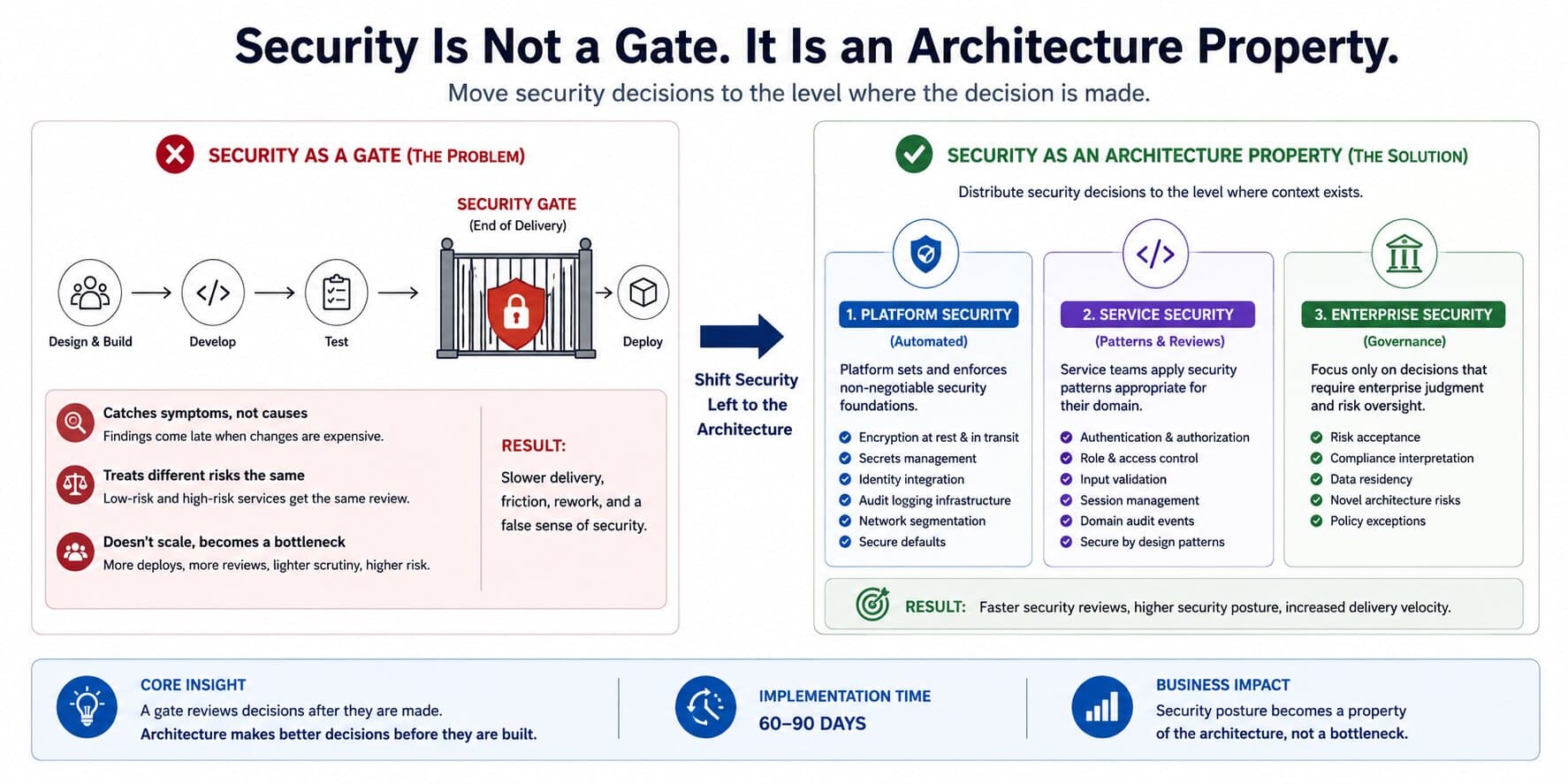
Security is treated as a gate at the end of delivery. It should be an architecture property designed into three distinct boundaries. Here is the model that fixes the friction between security and delivery.
...gate catches the same bugs sprint after sprint — and calls it security. Uniform Gates Treat Different Risks Identically A gate reviews everything that passes through it. A public API handling payment data...
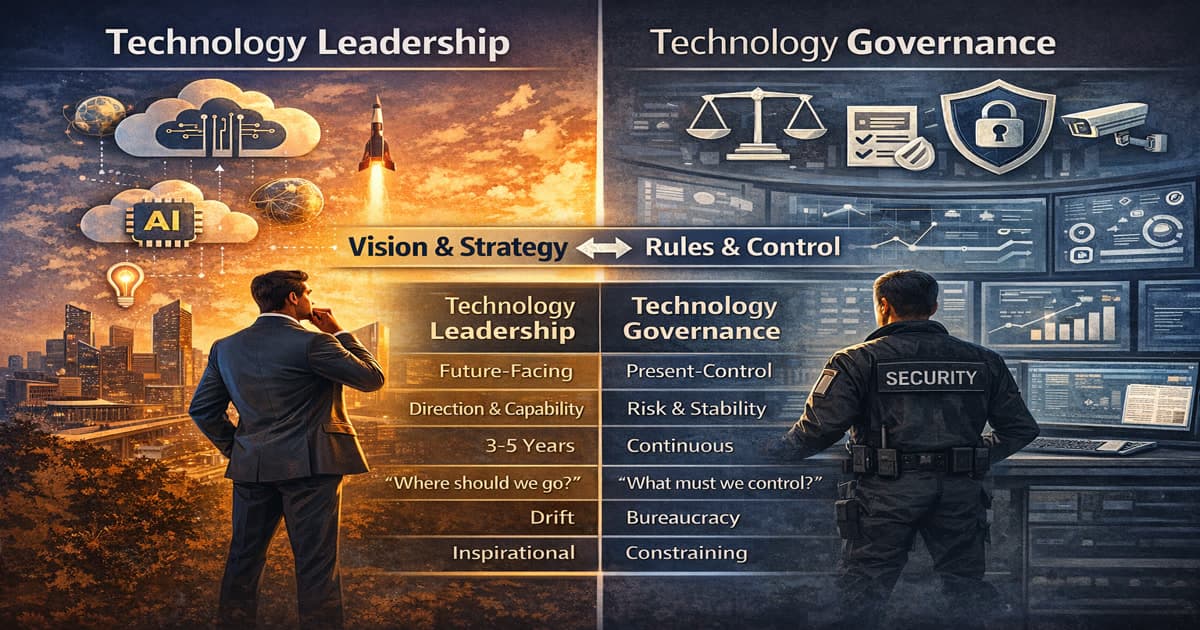
A structured executive guide explaining the difference between Technology Leadership and Technology Governance, and why confusing the two creates instability in enterprise execution.
...Leadership tolerates ambiguity. It operates under uncertainty. It makes directional commitments. Risk of Weak Technology Leadership Without leadership: Technology becomes reactive Investments fragment...
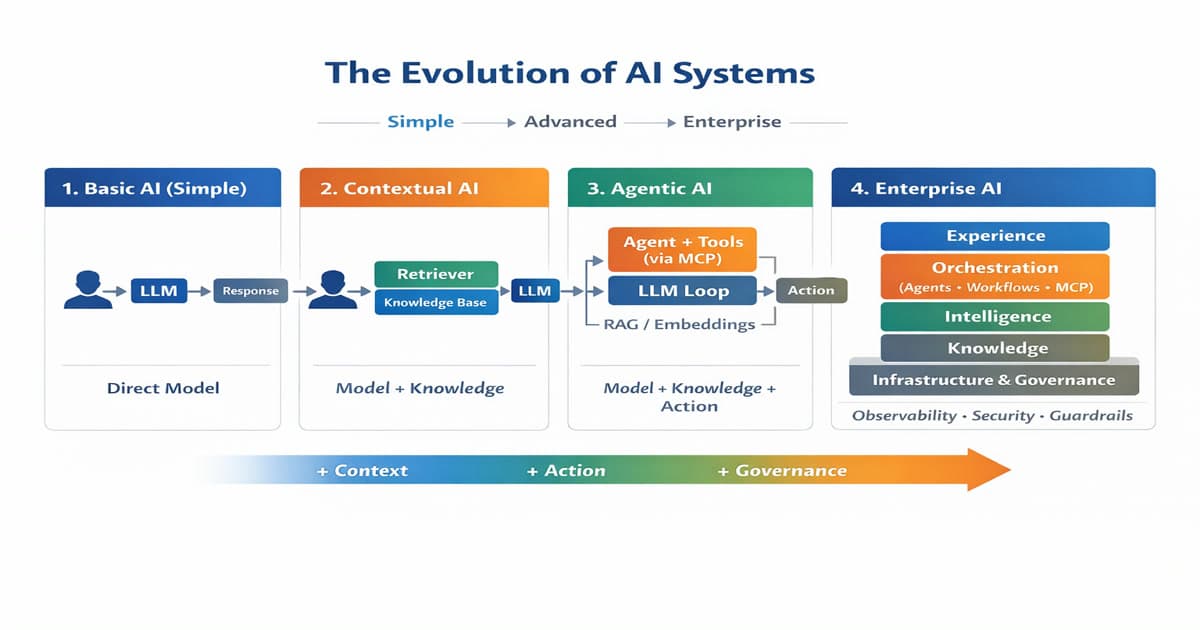
A structured guide explaining how AI systems evolve from simple model usage to governed platforms, and how to scale complexity without losing architectural control.
...Knowledge) Agentic AI (Model + Knowledge + Action) Enterprise AI (Governed Platform) Each stage adds capability and risk. Basic AI (Direct Model) Structure: User → LLM → Response Characteristics: - Prompt in - Response...
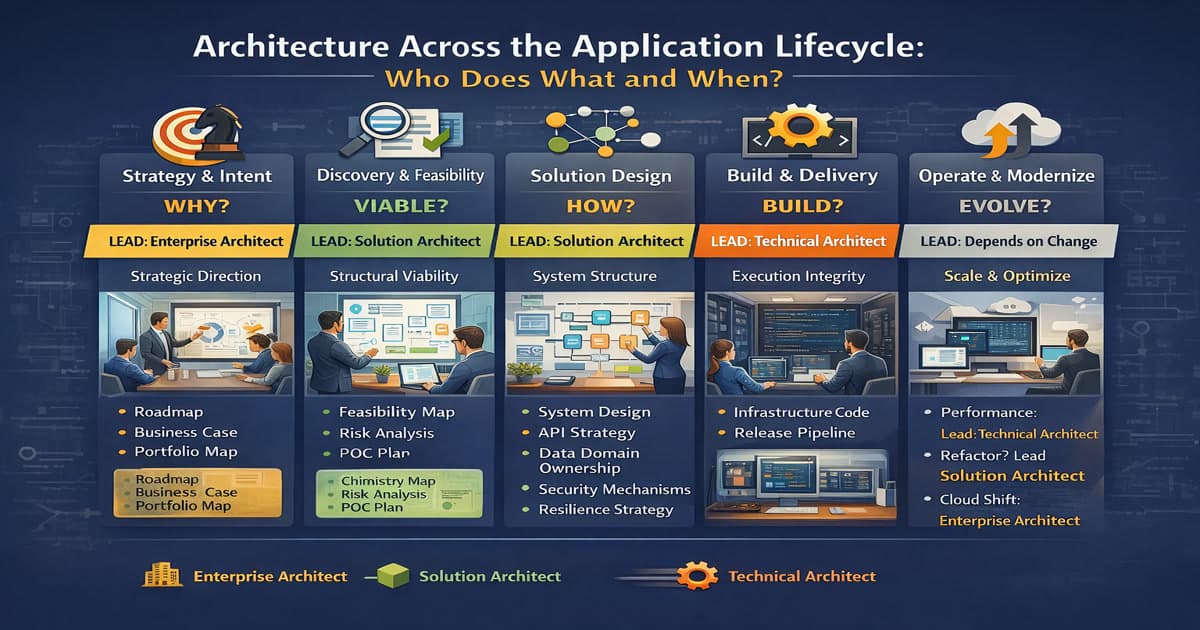
A practical guide explaining which type of architect is required at each stage of the application lifecycle to prevent governance friction and structural instability.
...Decisions Build vs Buy Capability alignment Platform reuse Portfolio positioning Funding allocation Risk appetite Primary Architectural Owner Enterprise Architect Why? This stage determines structural...
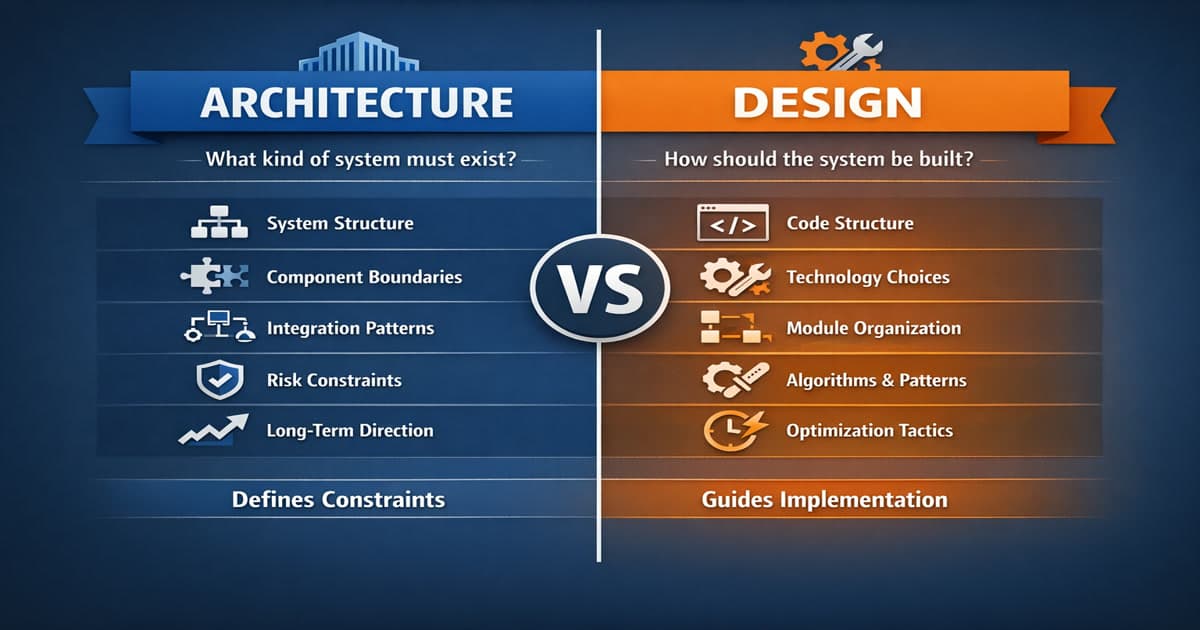
A clear explanation of the difference between architecture and design, why organizations confuse them, and how this confusion creates structural instability in technology systems.
...patterns are allowed? Where are data ownership boundaries? What technology constraints exist? What risks must be controlled? Architecture creates the environment in which design operates. It establishes...