Search
Find insights, training programs, and workshops
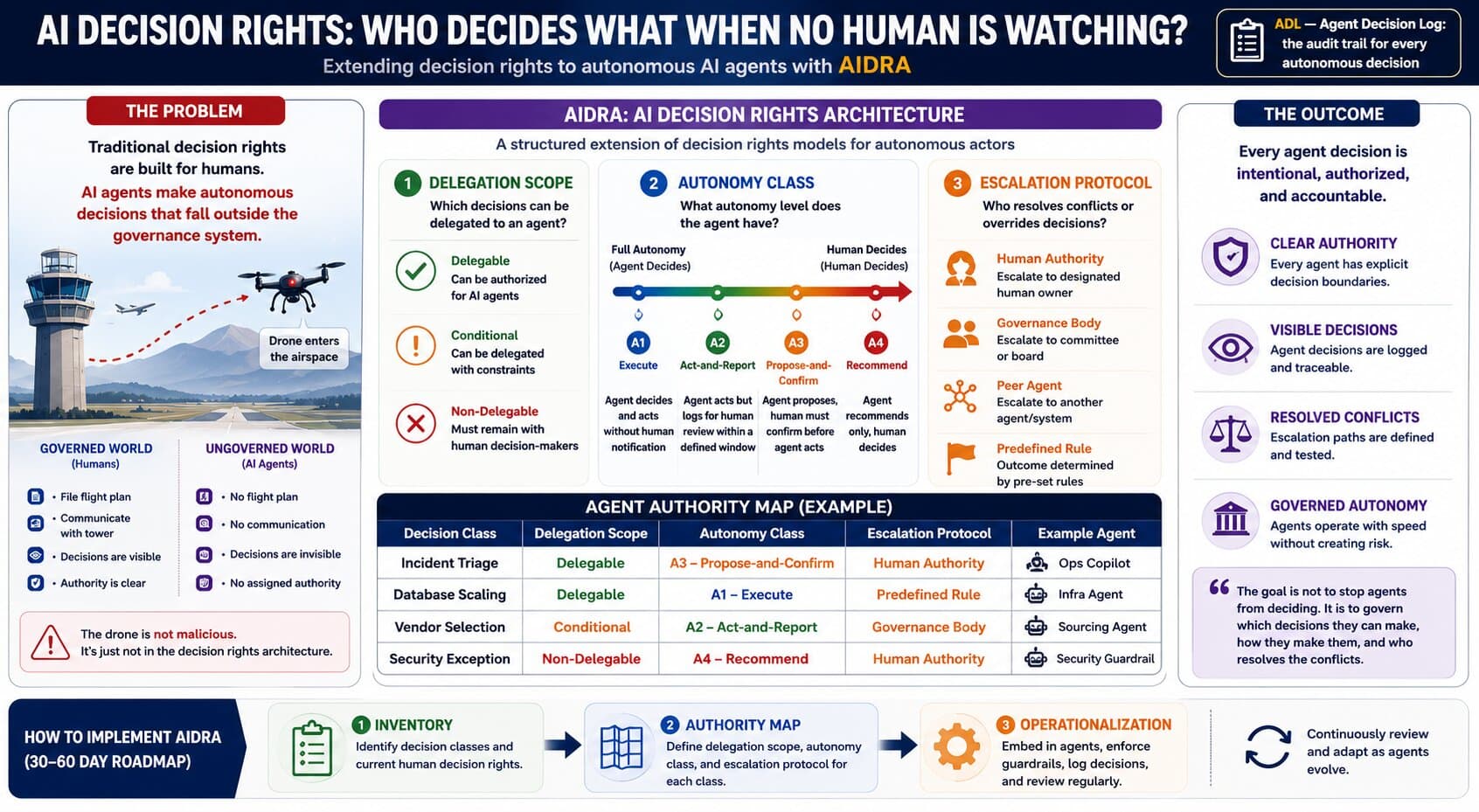
Decision rights models assume human decision-makers. AI agents breach that assumption silently. Here is how to extend decision rights to cover autonomous actors before the first ungoverned decision becomes a production incident.
...assume human decision-makers. AI agents are now making autonomous decisions at runtime that no human reviewed, approved, or even witnessed. Key insight: The question is not whether agents can decide. It...
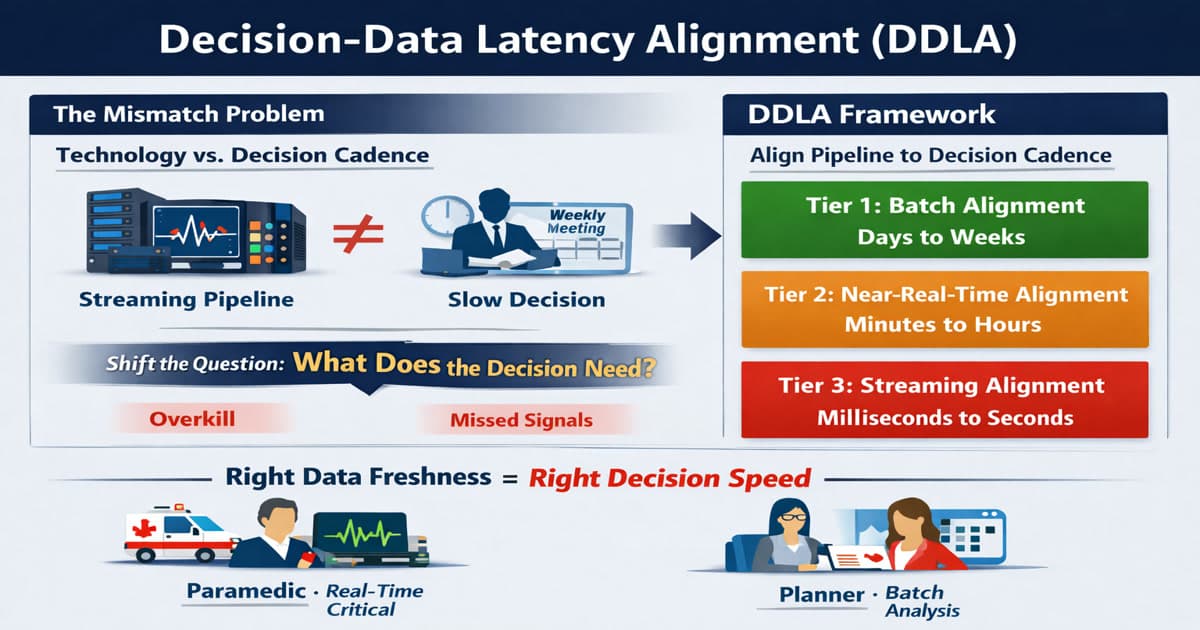
Organisations debate batch versus real-time as if it is a technical preference. It is not. It is a structural mismatch between data freshness and decision cadence — and the mismatch is where the cost lives.
...connects pipeline choice to decision requirements. The missing question in every data architecture review is this: What is the latency tolerance of the decision this pipeline serves? Not: What is technically...
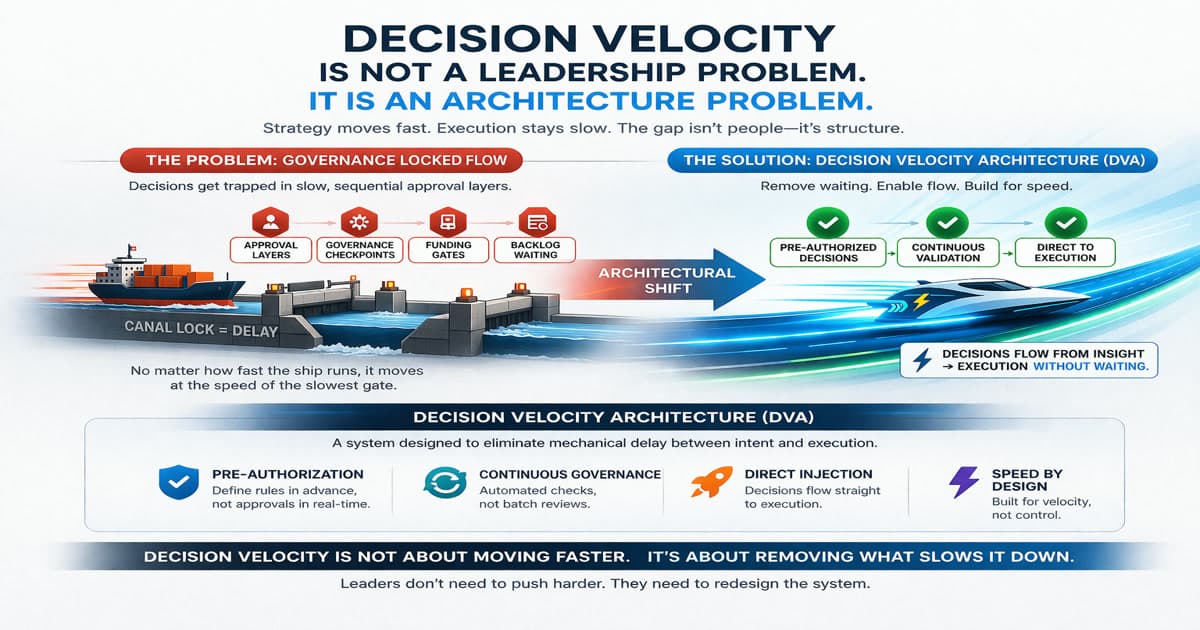
Decision velocity is not constrained by leadership intent but by architectural design. Governance systems built for slower eras create mechanical delay between insight and execution.
...cycles Continuous prioritization But the governance layer often still behaves like this: Annual budgets Fixed review boards Static approval cycles Manual sign-off chains The result is a widening gap. Strategy...
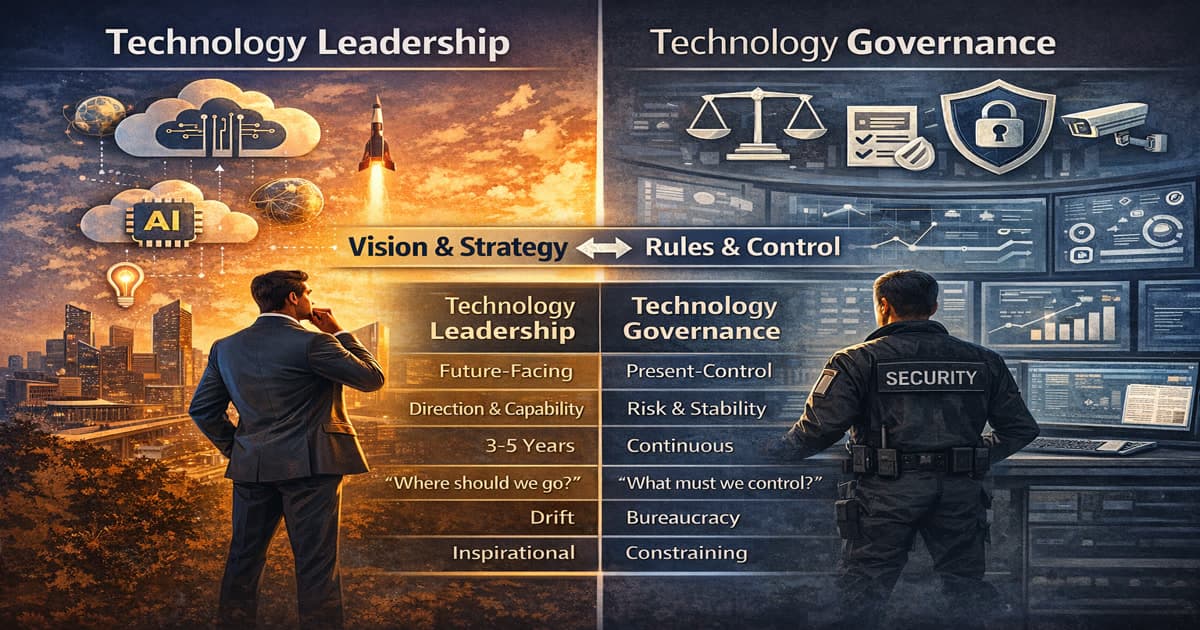
A structured executive guide explaining the difference between Technology Leadership and Technology Governance, and why confusing the two creates instability in enterprise execution.
...enterprise exposure. Characteristics of Technology Governance Decision rights clarity Architecture review boards Standards enforcement Risk classification Compliance integration Auditability Governance...
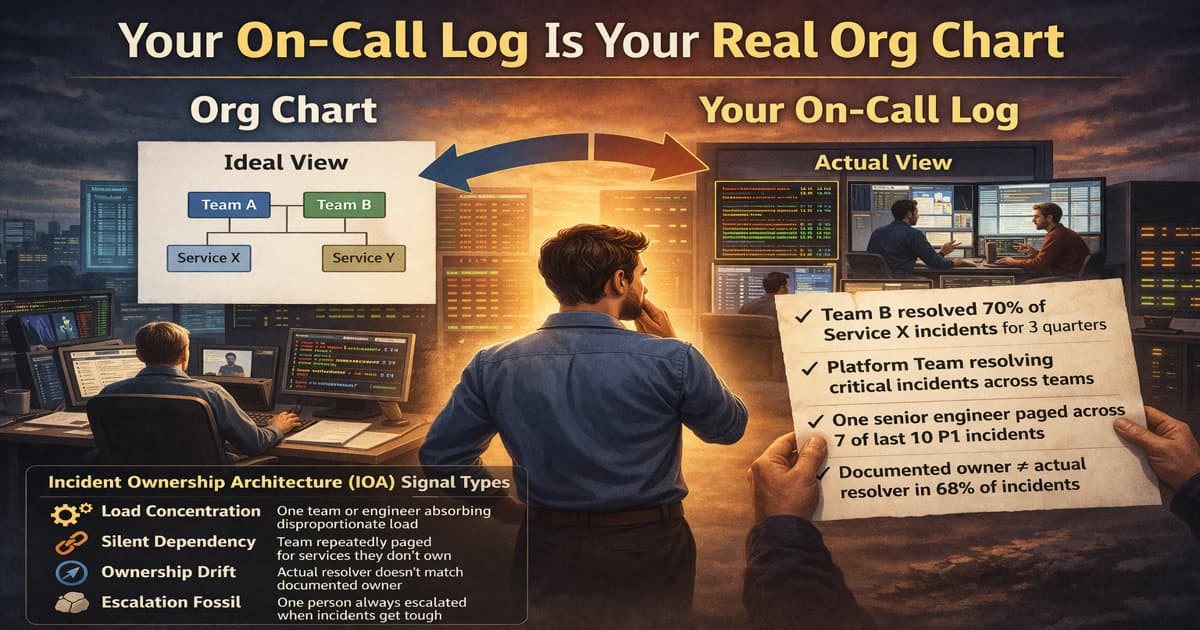
Why on-call rotation data is the most accurate org chart your engineering organisation has — and almost nobody uses it to make structural decisions.
...headcount spreadsheet. None of them appear in a team charter. None of them survive an annual performance review. But they are all in the on-call log. Waiting for someone to read them structurally. Incident...
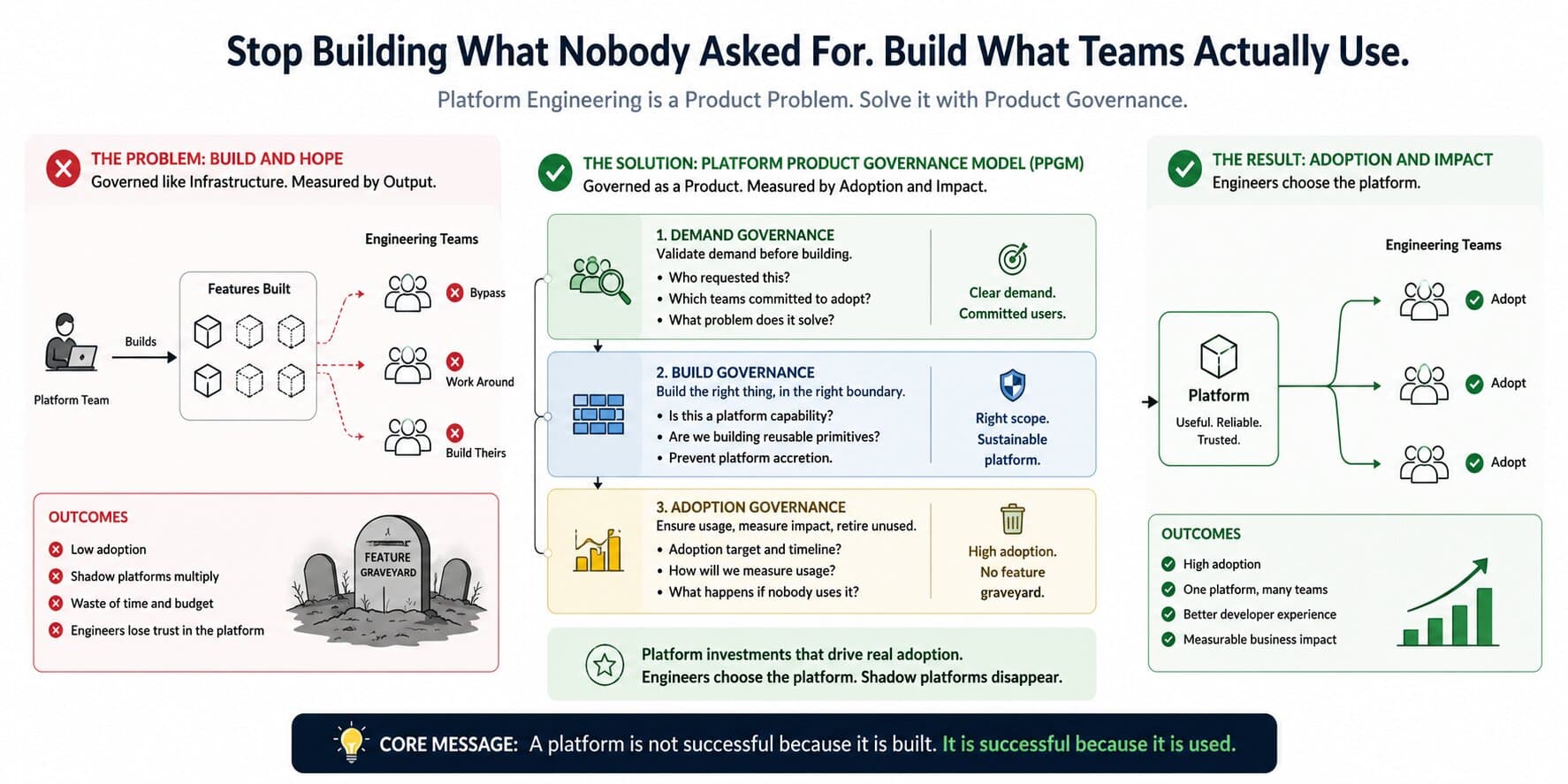
Most platform teams build internal products their engineering teams never chose. Platform adoption is not a marketing problem. It is a product governance problem. Here is the model that fixes it.
...as Infrastructure, Not as Product Platform decisions pass through infrastructure governance: Cost review Security review Compliance review Architecture review These gates ensure the platform is safe,...
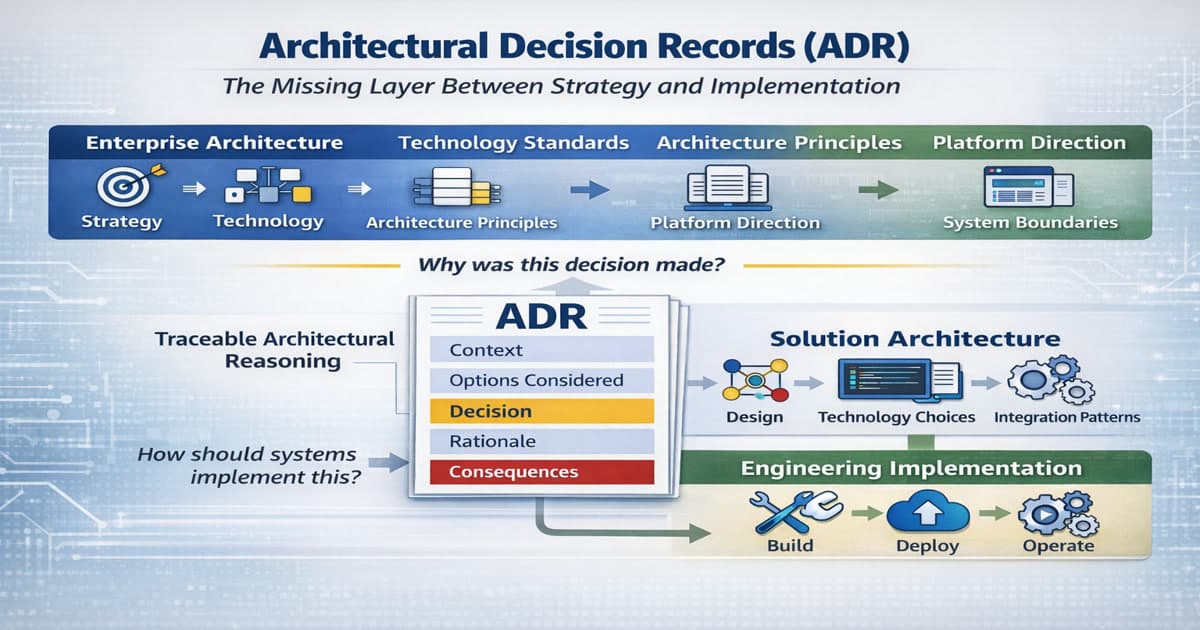
A practical guide explaining why Architectural Decision Records (ADR) are the missing link between enterprise architecture strategy and engineering implementation.
...faster when the architectural context is clear. Instead of asking architects every time, they can review existing ADRs and understand: the principles the trade-offs the design direction Architecture...
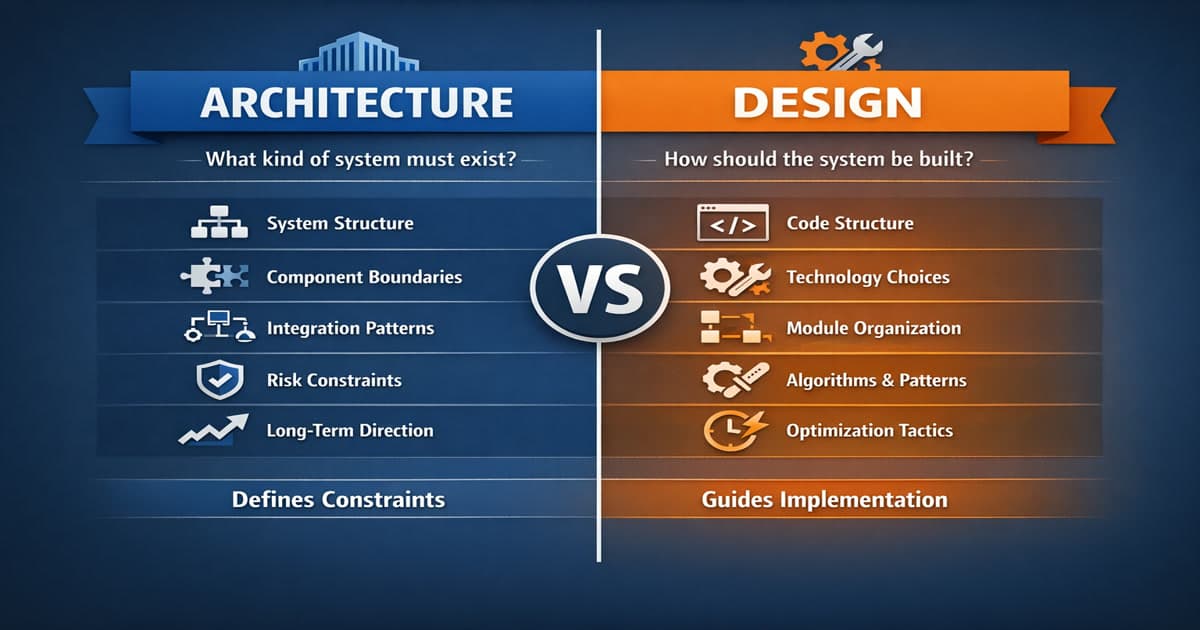
A clear explanation of the difference between architecture and design, why organizations confuse them, and how this confusion creates structural instability in technology systems.
...system stability The Conversation That Happens in Almost Every Organization In many architecture reviews, someone eventually says: "But isn’t that just design?" Or the opposite happens: Developers...
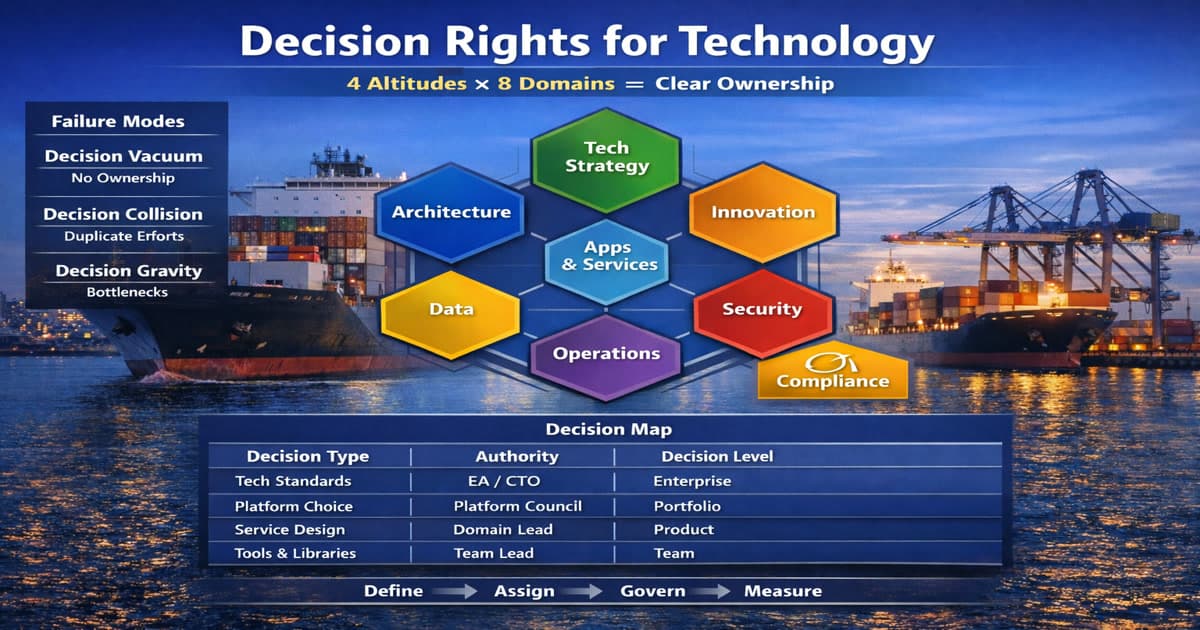
Why most enterprises confuse escalation ladders with decision rights — and how Technology Decision Domain Architecture maps exactly who decides what, at which altitude, before the conflict arrives.
...versus buy. API naming conventions. All of them travel up the same chain. The architecture board reviews things it should never see. The CTO is asked to decide things a team lead should own. Leadership...
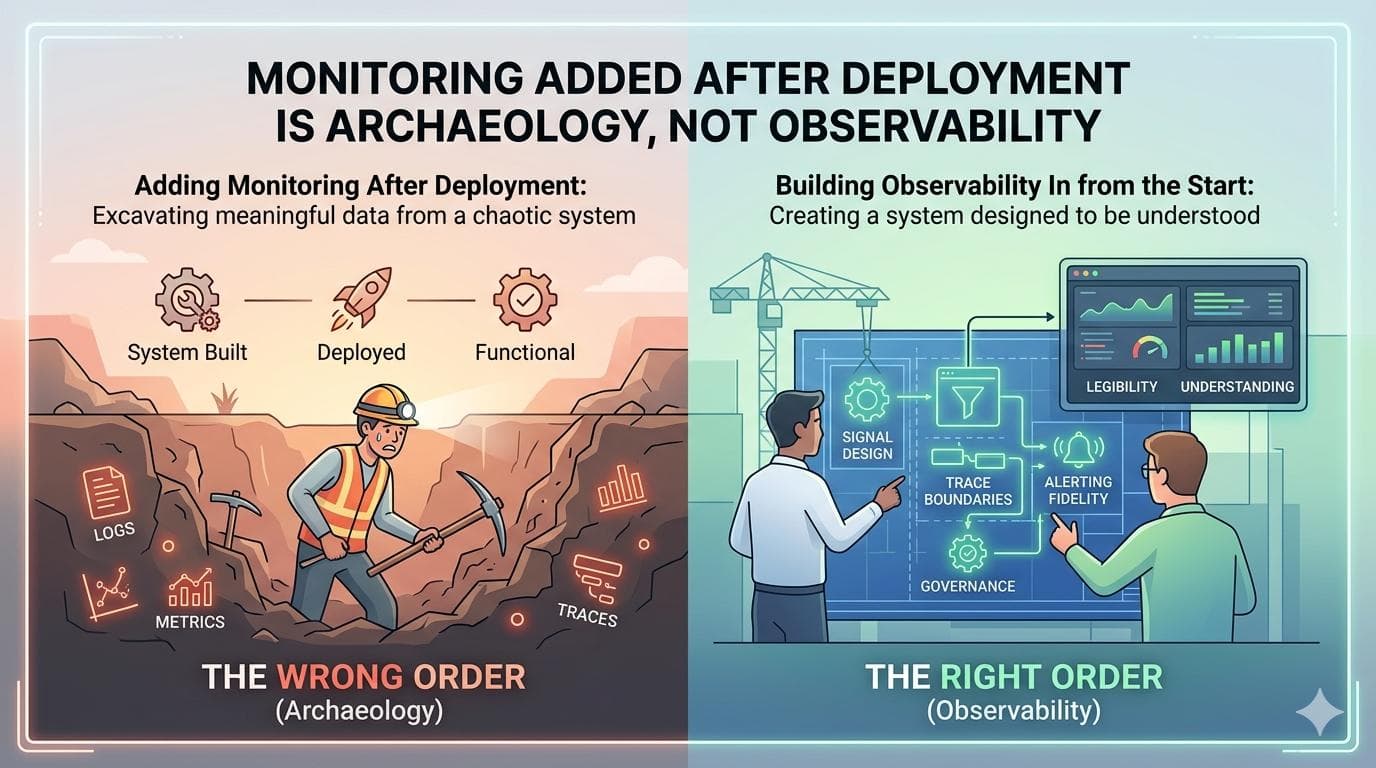
Observability is not a monitoring add-on. It is an architectural constraint. Systems built without observability baked in cannot be understood, cannot be governed, and cannot be improved. The OSAF model tells you exactly where your architecture is blind.
...contract and a custom logging format. Present: Observability requirements are part of the architecture review checklist. A service cannot graduate to production without a defined signal contract, a trace...