Search
Find insights, training programs, and workshops
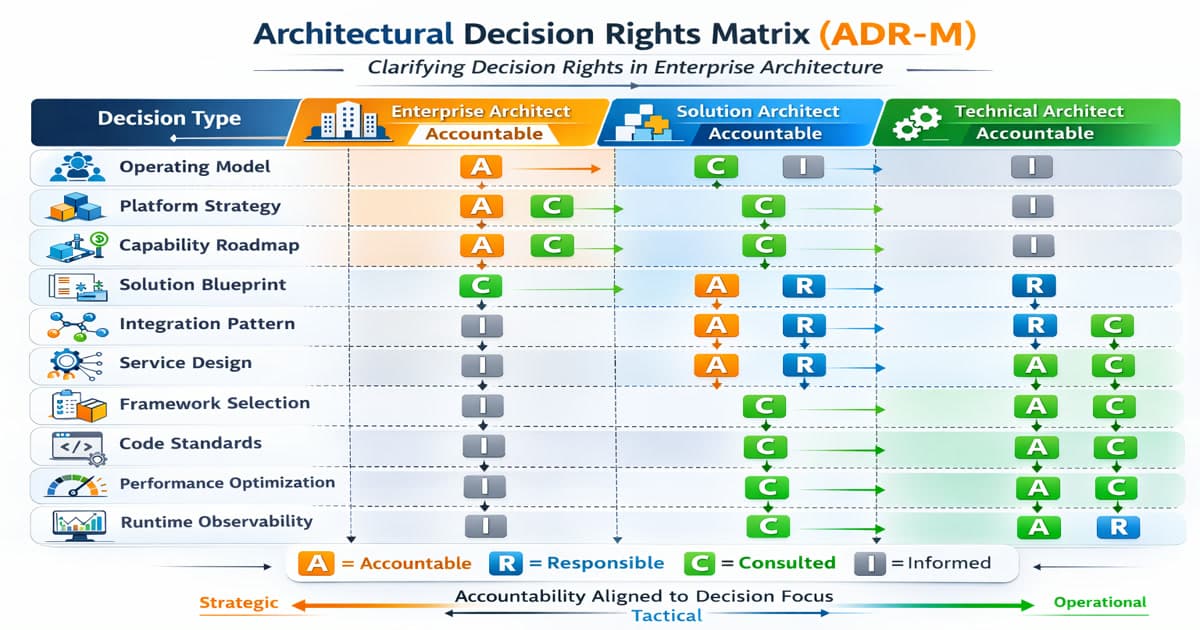
A governance framework introducing the Architectural Decision Rights Matrix (ADR-M) to clarify accountability between Enterprise, Solution, and Technical Architects in Context-Driven Architecture.
...decision altitude clarity. Enterprise Architects debate frameworks. Solution Architects redefine platform strategy. Technical Architects override structural principles. Roles exist. Authority boundaries...
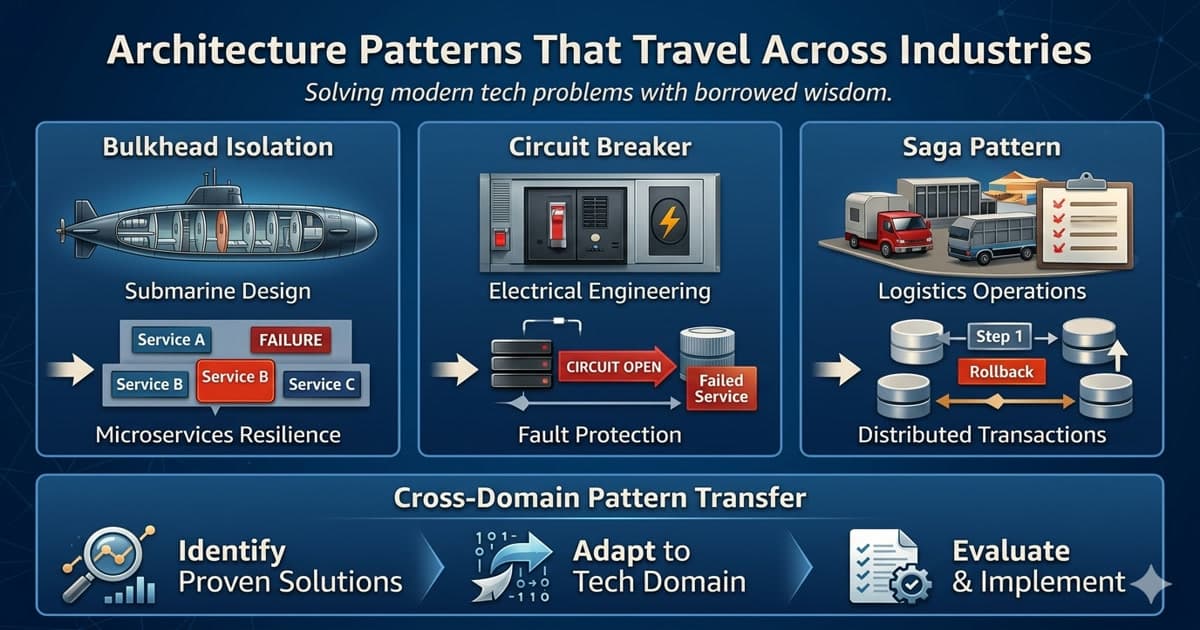
The patterns that solve your hardest distributed systems problems were already solved — in a submarine, a postal sorting office, and an electrical panel. Most architects never look.
...built since. Now consider the software architect, one hundred years later. Designing a microservices platform. One service is taking on too much load. Failures are cascading. One overwhelmed thread pool...
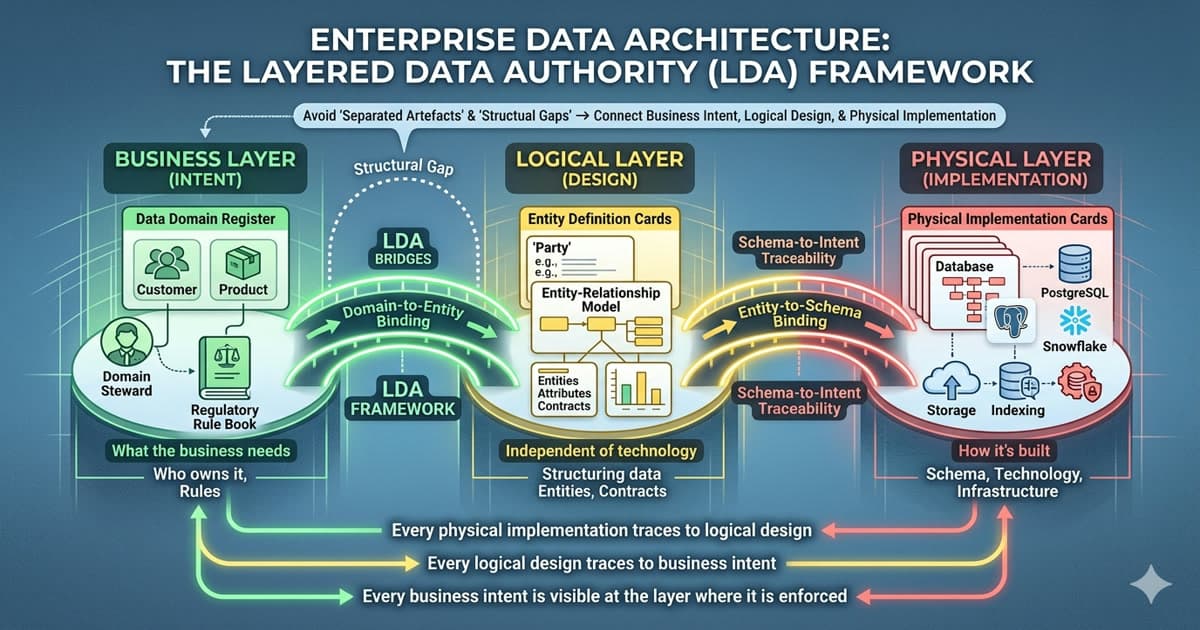
Most enterprises build data architectures one layer at a time. Business, logical, and physical layers exist as separate artefacts owned by separate teams. That separation is the structural gap that makes data estates ungovernable.
...entities relate to which, how the schemas connect, and where the domain boundaries are drawn. The platform engineer walks into the same room. She wants to know which database, which partitioning strategy,...
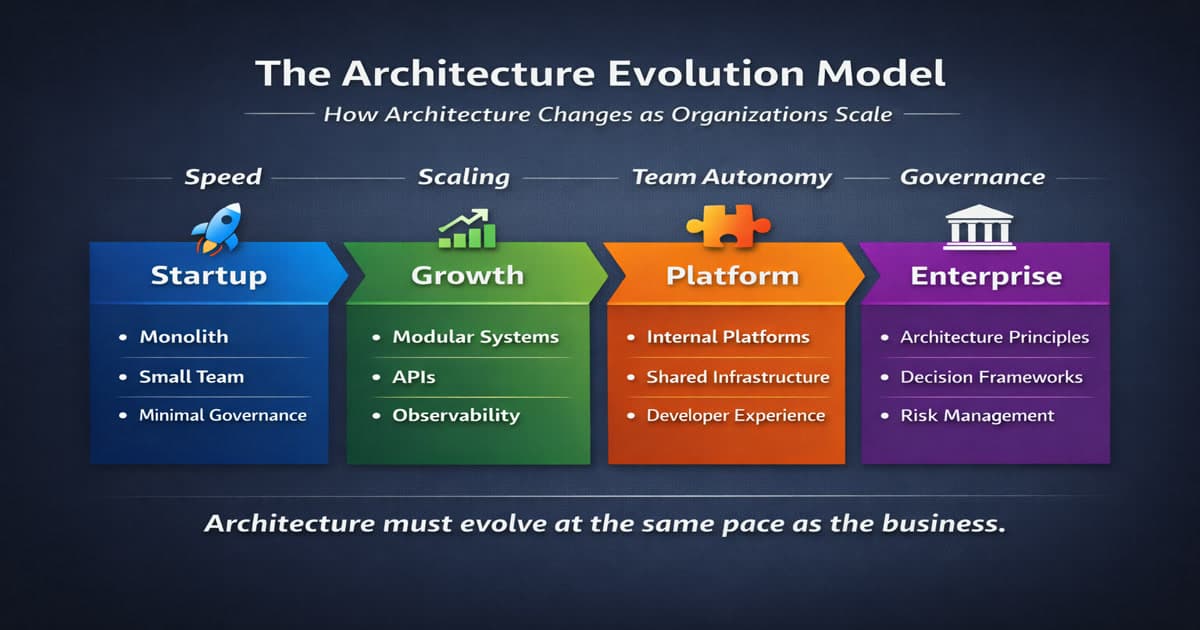
A practical framework explaining how software architecture evolves from startup experimentation to enterprise-scale governance, and what architectural practices are needed at each stage.
...Model Architecture maturity typically progresses through four stages: Startup Architecture Growth Architecture Platform Architecture Enterprise Architecture Each stage introduces: greater scale greater system...
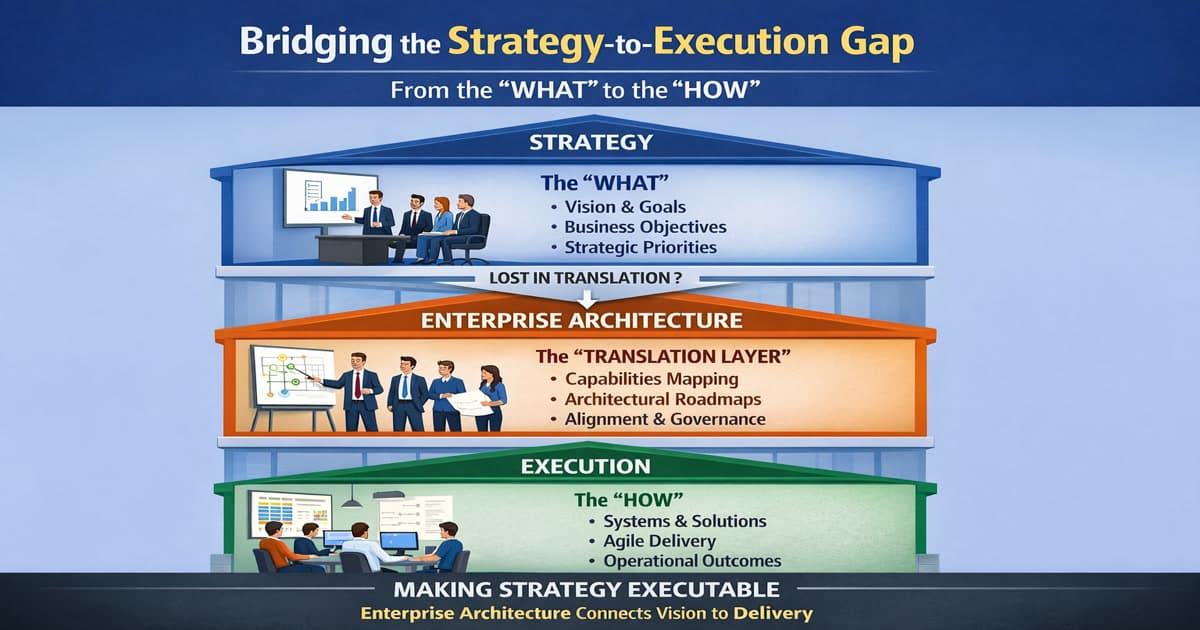
Why strategic intent evaporates before it reaches engineering teams — and how Enterprise Architecture creates the translation layer that makes organizational strategy executable.
...its own version of this problem. The board defines the strategy. Become the most customer-centric platform in our category. Shift forty percent of workloads to cloud within eighteen months. Enter three...
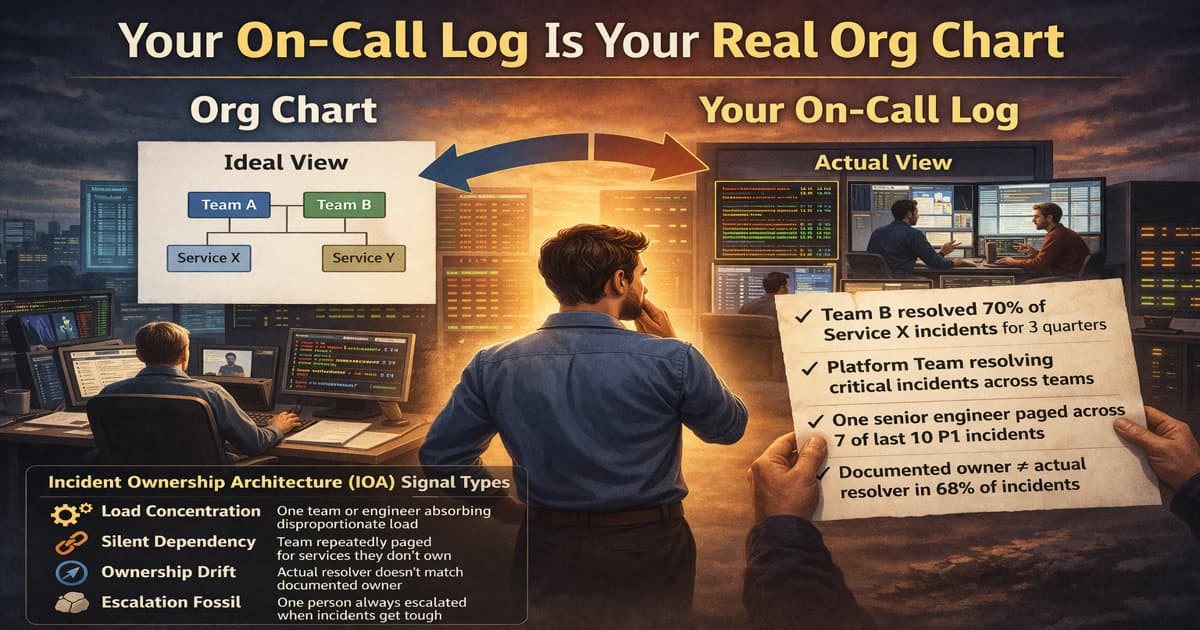
Why on-call rotation data is the most accurate org chart your engineering organisation has — and almost nobody uses it to make structural decisions.
...Planner and the Control Room Log A railway network publishes a timetable. The timetable is precise. Platform allocations. Crew assignments. Connection windows. Dwell times. Every train has an owner. Every...
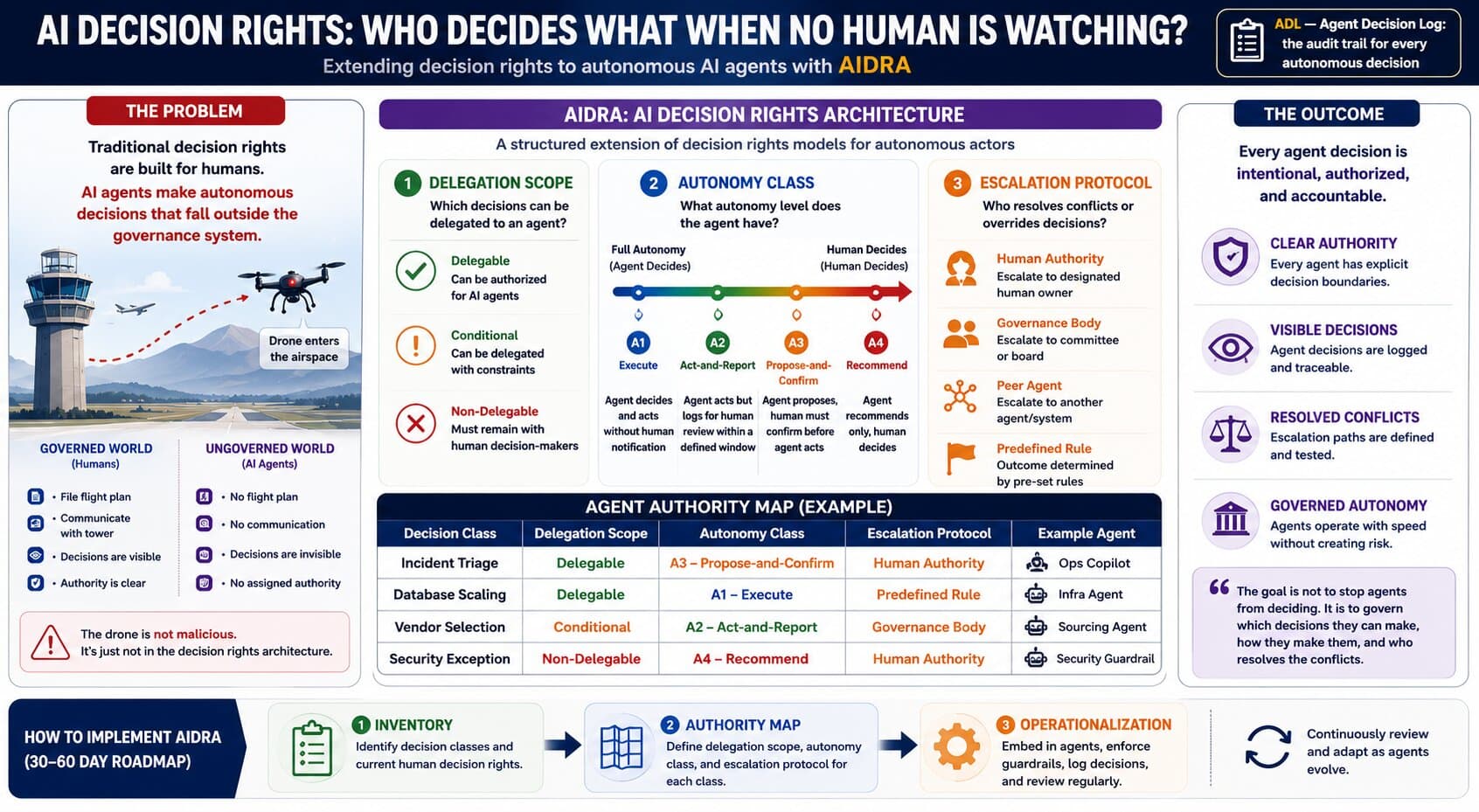
Decision rights models assume human decision-makers. AI agents breach that assumption silently. Here is how to extend decision rights to cover autonomous actors before the first ungoverned decision becomes a production incident.
...Assume Human Actors Decision rights models assign authority to people. Enterprise architects decide platform standards. Domain architects decide integration contracts. Engineering leads decide implementation...
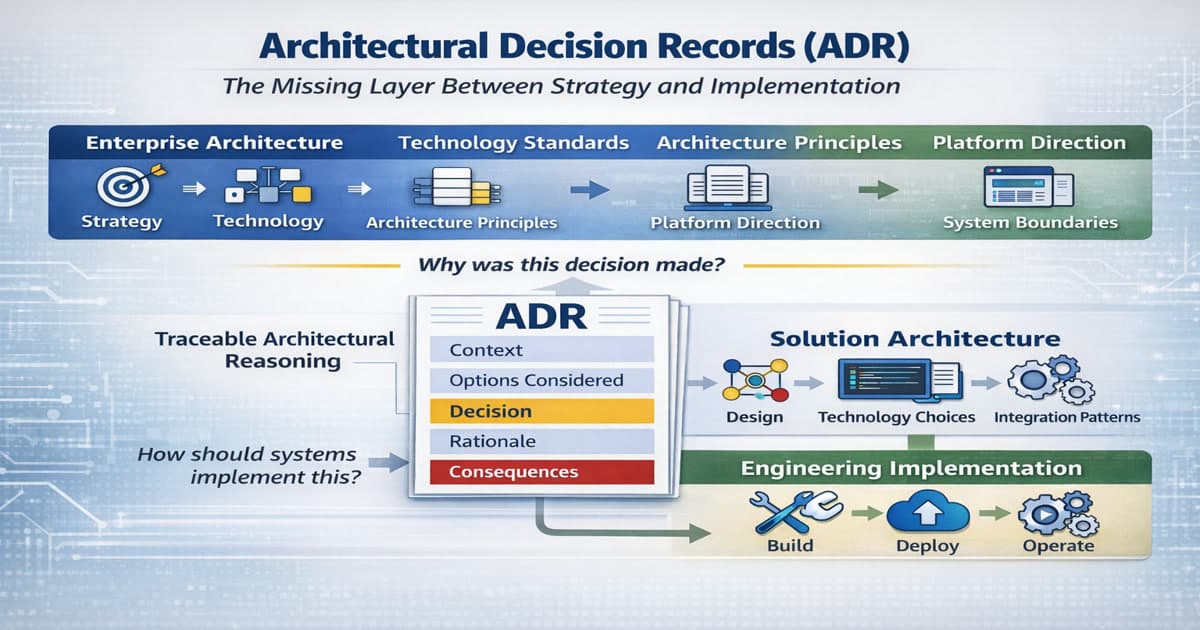
A practical guide explaining why Architectural Decision Records (ADR) are the missing link between enterprise architecture strategy and engineering implementation.
...operate across three levels. Enterprise Architecture Defines strategic direction: Technology standards Platform strategy Integration principles Capability models This answers: What should the technology...
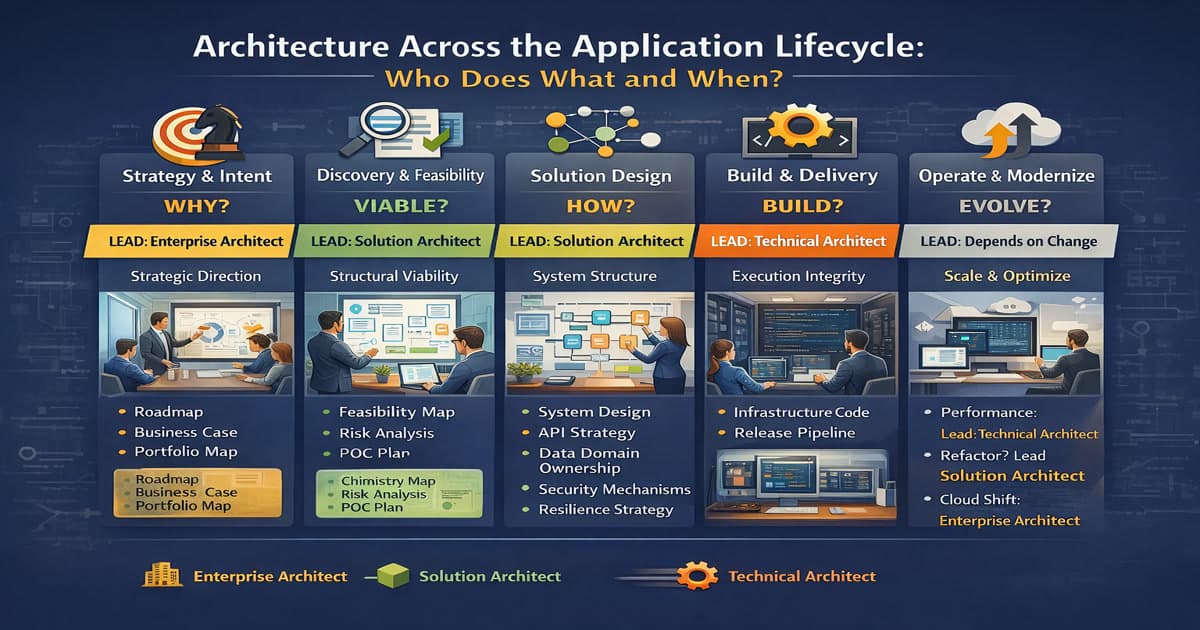
A practical guide explaining which type of architect is required at each stage of the application lifecycle to prevent governance friction and structural instability.
...Stage Core Question Why are we building this? Typical Decisions Build vs Buy Capability alignment Platform reuse Portfolio positioning Funding allocation Risk appetite Primary Architectural Owner Enterprise...
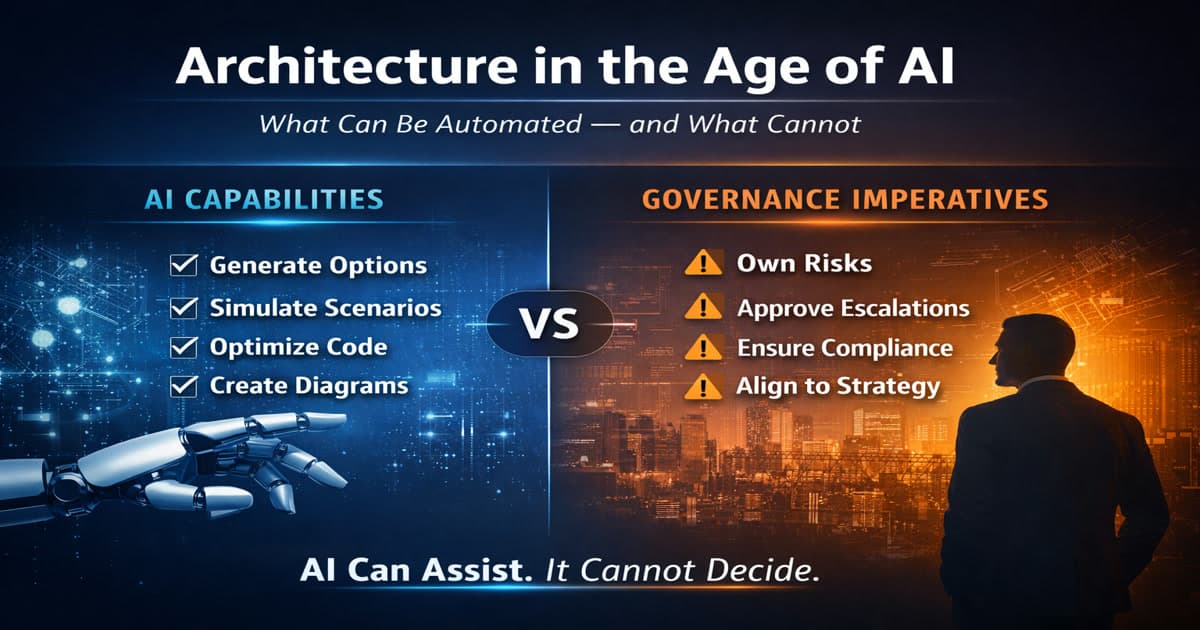
A governance-driven perspective explaining why software architecture cannot be automated because decision accountability and consequence ownership cannot be delegated to AI.
...estimation AI excels here. This layer is optimizable. Accountability & Governance Layer Who approves platform shifts? Who accepts resilience trade-offs? Who escalates cross-domain conflicts? Who absorbs...