Skip to content

Search

Find insights, training programs, and workshops

AI Decision-Making & Human Oversight
Beginner to Intermediate3-4 hoursHuman oversight framework + decision rights map + review checklist

AI can assist decisions, but accountability still belongs to people. Learn the operating rules for review, approval, escalation, confidence, and human authority in AI-supported work.

...mistake everyone makes The control principle Assistance is not authority Levels of human oversight Decision support vs decision delegation Confidence, escalation, and review When not to automate decisions Designing...

Half DayPractical
Control ModelDecision Ready
Responsible AI — Ethics, Risk & Governance
Beginner to Intermediate4-5 hoursAI risk map + personal responsibility checklist + governance starter framework

Using AI responsibly — covering ethics, bias, hallucination risk, data privacy, accountability, and organisational governance. The judgment to use AI fairly, safely, and in a way you can defend.

...the lines you must not cross Transparency — can you defend it? Accountability — who owns the output? Governance — making responsibility consistent at scale The responsibility framework in one diagram Cheat...

1 DayIntensive
Beginner FriendlyNo legal background required
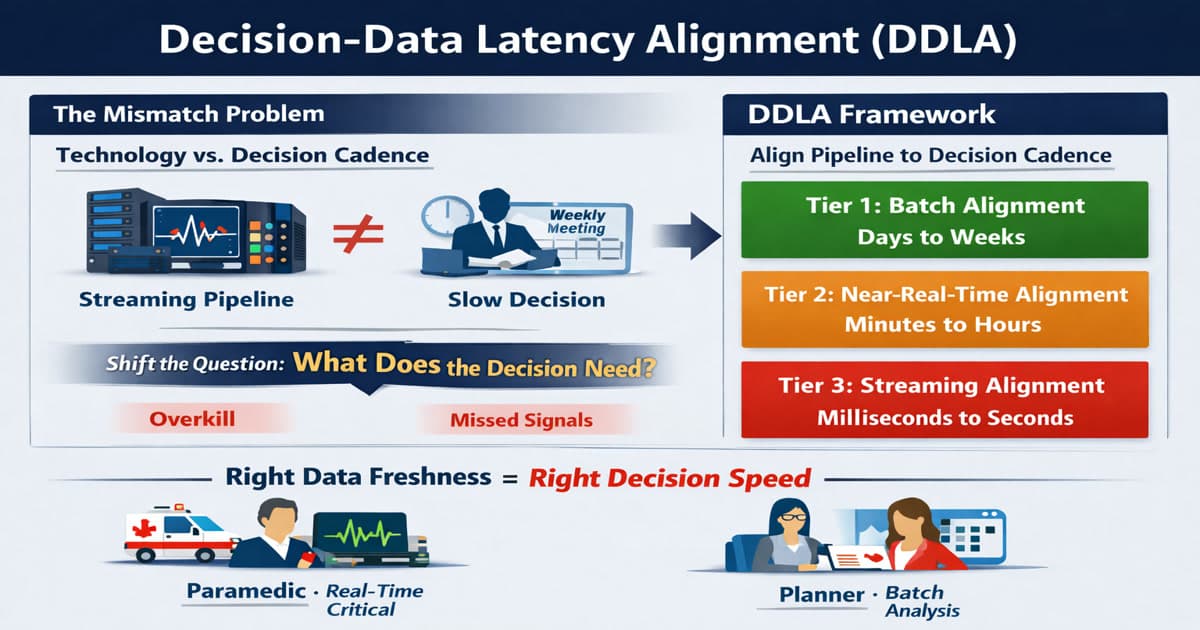
Batch vs Real-Time Is the Wrong Debate.

Organisations debate batch versus real-time as if it is a technical preference. It is not. It is a structural mismatch between data freshness and decision cadence — and the mismatch is where the cost lives.

...it solves: Organisations choosing data pipeline patterns based on technical preference rather than decision cadence requirements Key outcome: A structural model called Decision-Data Latency Alignment...

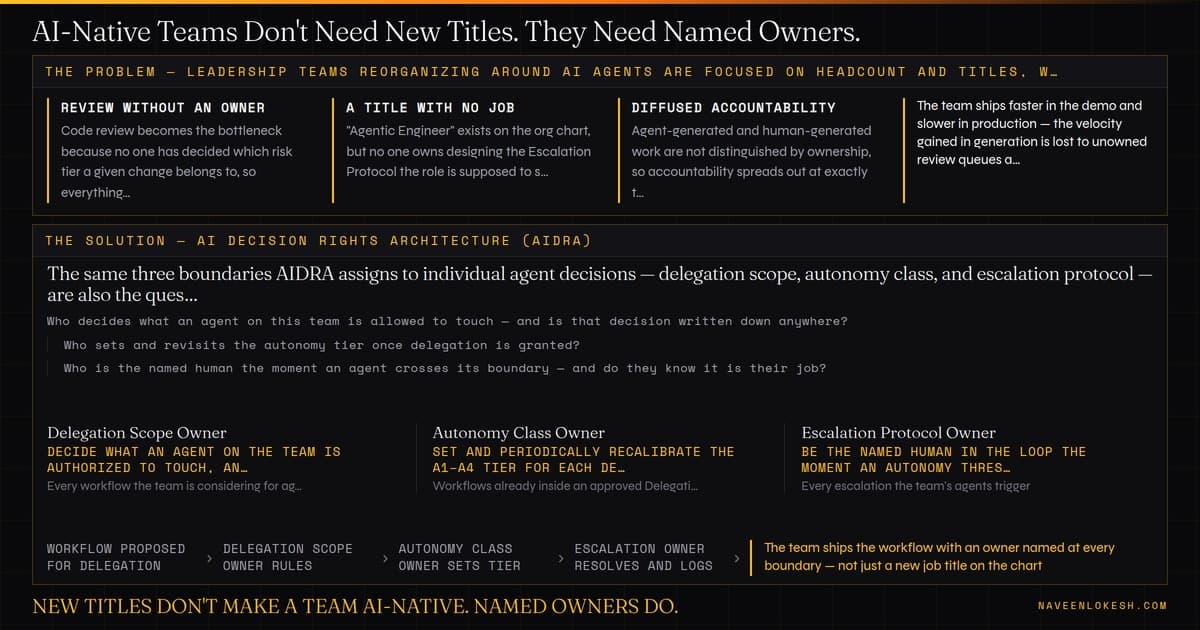
AI-Native Teams Don't Need New Titles. They Need Named Owners.

AI-native team redesigns keep adding new job titles and calling it done. The actual failure mode sits at the decision boundary. Here is what changes when you apply AIDRA to team design instead of headcount.

...redesigns focus on new job titles and shrinking headcount, while the actual failure mode — an unowned AI decision boundary — goes unaddressed and shows up later as an unowned production incident Key insight:...

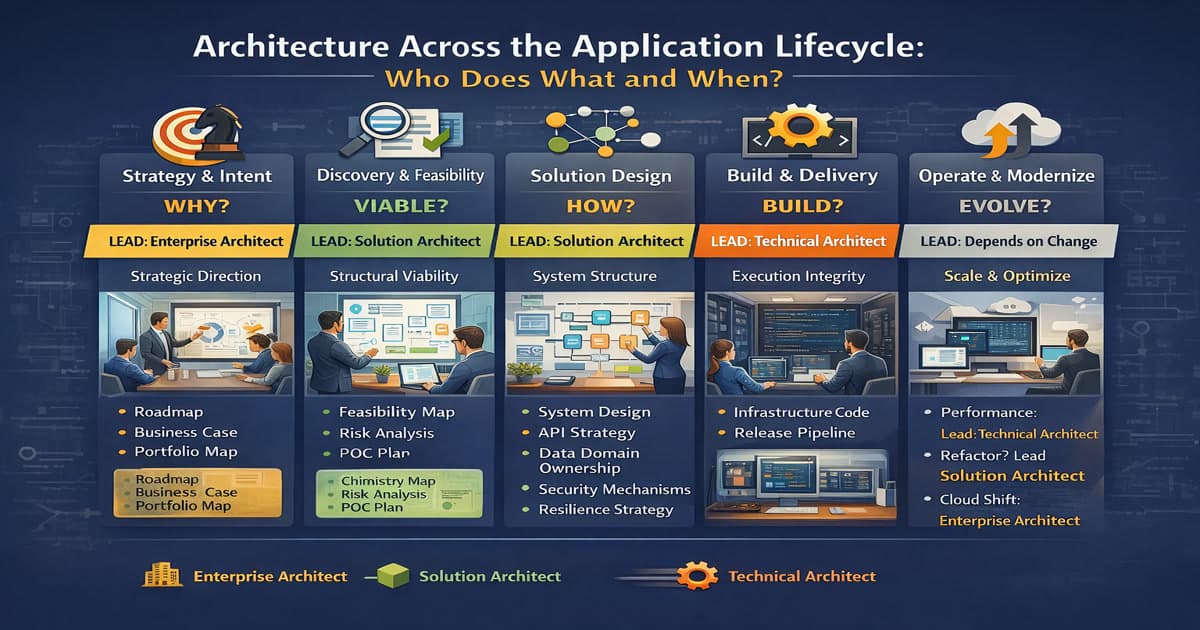
Architecture Across the Application Lifecycle: Which Architect Is Needed When?

A practical guide explaining which type of architect is required at each stage of the application lifecycle to prevent governance friction and structural instability.

...across lifecycle stages Time to implement clarity: 30 days Business impact: Reduced friction, faster decision cycles, lower architectural rework The Real Problem Is Not Role Confusion — It’s Timing Confusion Most...

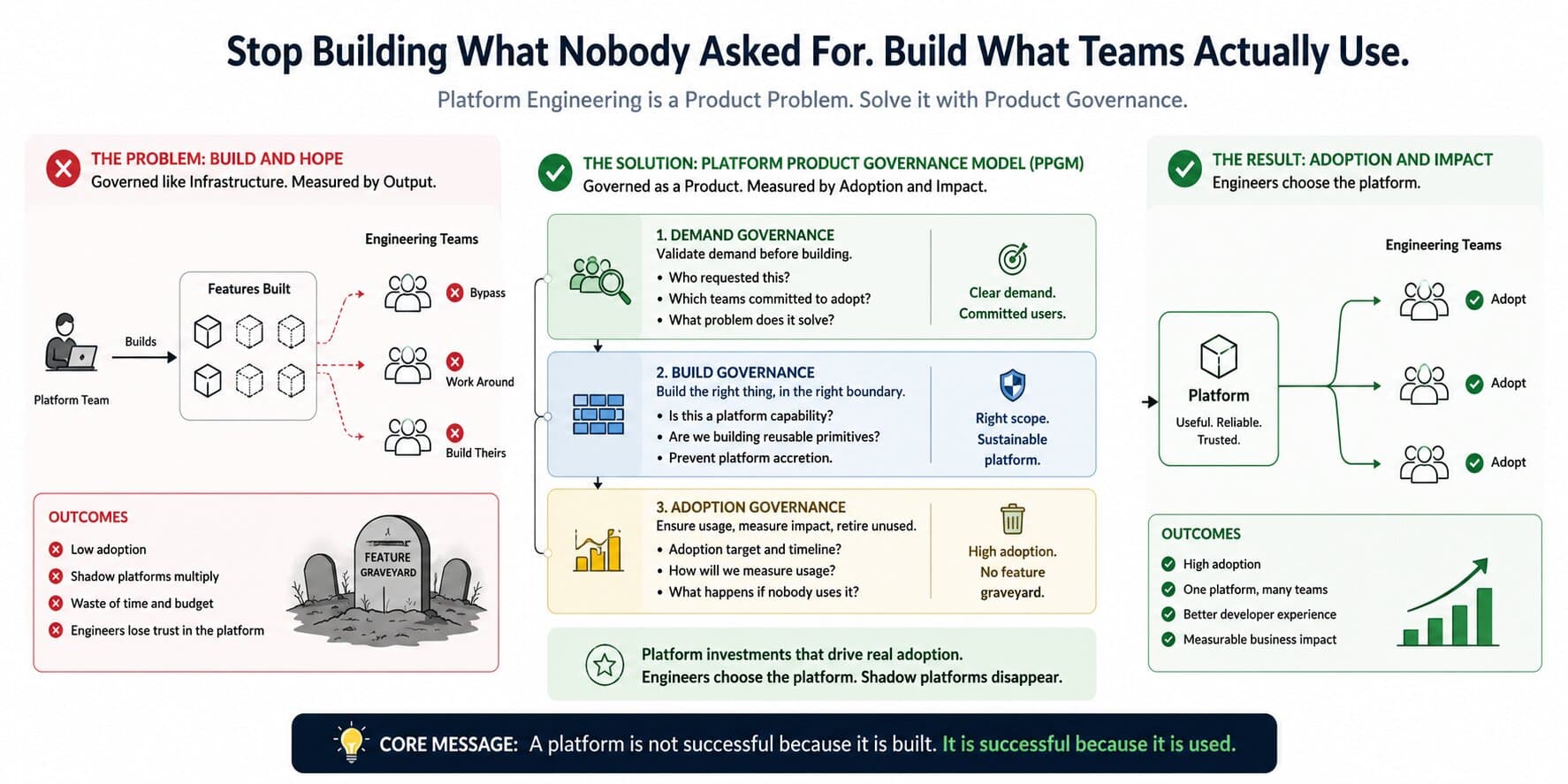
Your Platform Team Is Building a Product Nobody Asked For.

Most platform teams build internal products their engineering teams never chose. Platform adoption is not a marketing problem. It is a product governance problem. Here is the model that fixes it.

...engineering teams work around, bypass, or ignore — because the platform was designed without product governance Key insight: Platform engineering is not an infrastructure initiative. It is a product initiative....

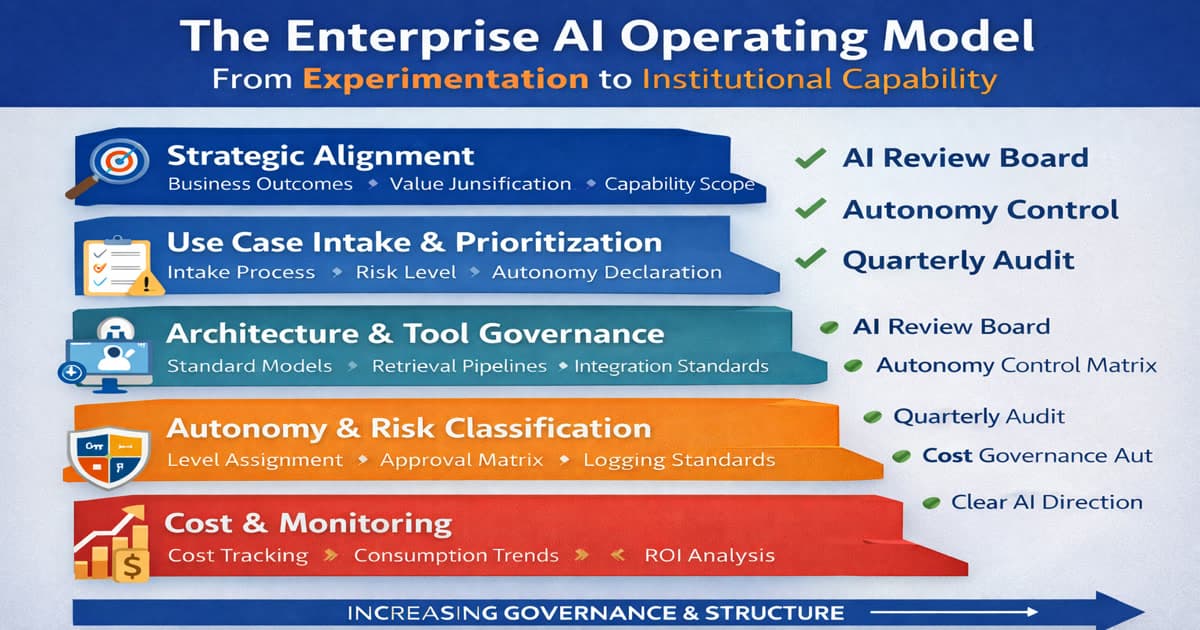
The Enterprise AI Operating Model: From Experimentation to Institutional Capability

A structured executive guide explaining how to move from AI experimentation to an Enterprise AI Operating Model with governance, autonomy control, and cost discipline.

...AI Transformation Leaders Problem it solves: AI initiatives running as disconnected pilots without governance or structural clarity Key outcome: A practical framework to institutionalize AI across strategy,...

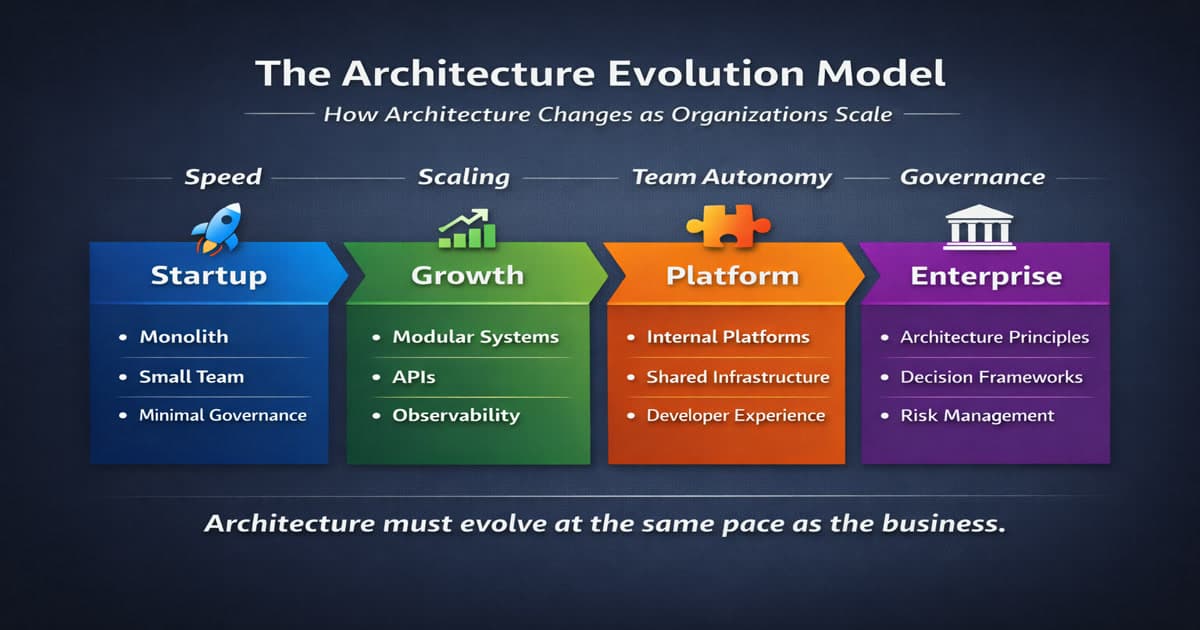
The Architecture Evolution Model: How Architecture Changes from Startup to Enterprise

A practical framework explaining how software architecture evolves from startup experimentation to enterprise-scale governance, and what architectural practices are needed at each stage.

...clarity: 30–60 days Business impact: Reduced architectural overengineering, faster scaling, controlled governance The Hidden Problem in Architecture Conversations Most architecture discussions ignore organizational...

1234···9