Search

Find insights, training programs, and workshops

Architecture Governance
Intermediate to Advanced (SA, EA, TS)5-6 hoursGovernance model canvas + architecture principles register + escalation path template

How to design, implement, and measure architecture governance — the mechanisms that ensure decisions are made consistently, applied correctly, and aligned with strategy.

...decisions are made consistently, applied correctly, and aligned with the organisation's principles and strategy. It's not bureaucracy — it's the system that makes architecture matter. Governance without teeth...

1 DayIntensive
PracticalSA · EA · TS
Security Is Not a Gate. It Is an Architecture Property.

Security is treated as a gate at the end of delivery. It should be an architecture property designed into three distinct boundaries. Here is the model that fixes the friction between security and delivery.

...how most organisations govern security. A team builds a service. They design the API. They define the data model. They choose the integration pattern. They run the tests. At the end, security reviews it....

AI Architecture Clarity: Understanding LLM, RAG, Agents, and MCP Through the Brain Model

A clear executive guide explaining LLM, RAG, AI Agents, and MCP using the Brain model to prevent enterprise AI instability.

...LLM is a brain. It can: Think Write Explain Summarize Reason It cannot: Access your private company data (by default) Press buttons Update systems Send emails It only thinks. Strategic insight: LLM capability...

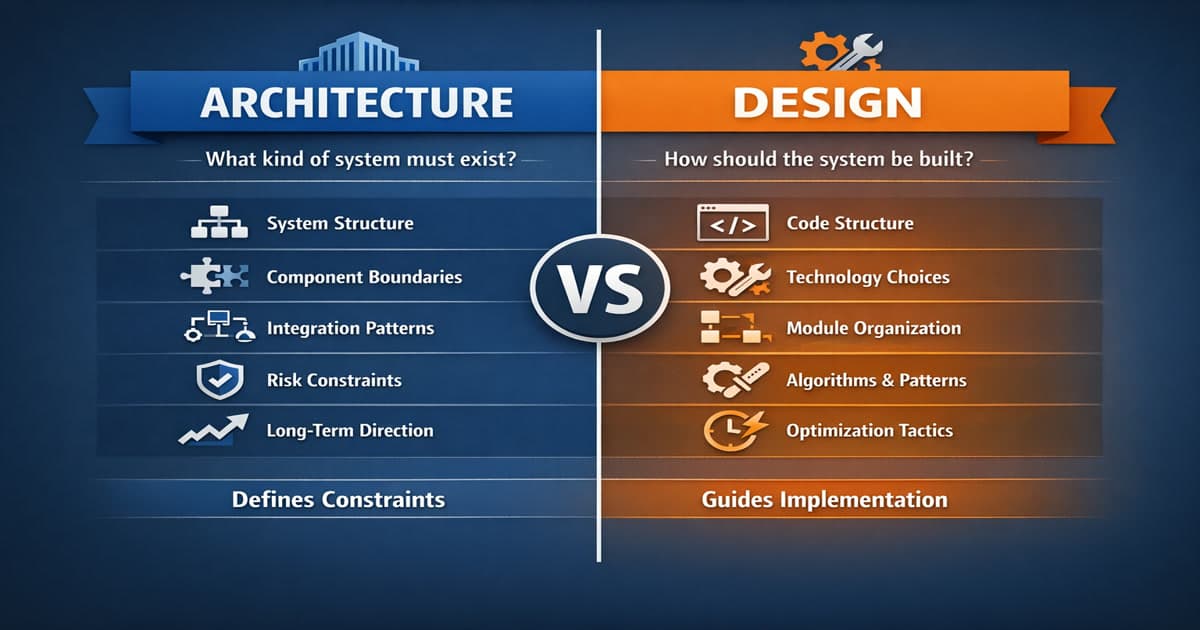
Architecture vs Design: Why Most Organizations Confuse Them

A clear explanation of the difference between architecture and design, why organizations confuse them, and how this confusion creates structural instability in technology systems.

...capabilities must exist? How are major components separated? What integration patterns are allowed? Where are data ownership boundaries? What technology constraints exist? What risks must be controlled? Architecture...

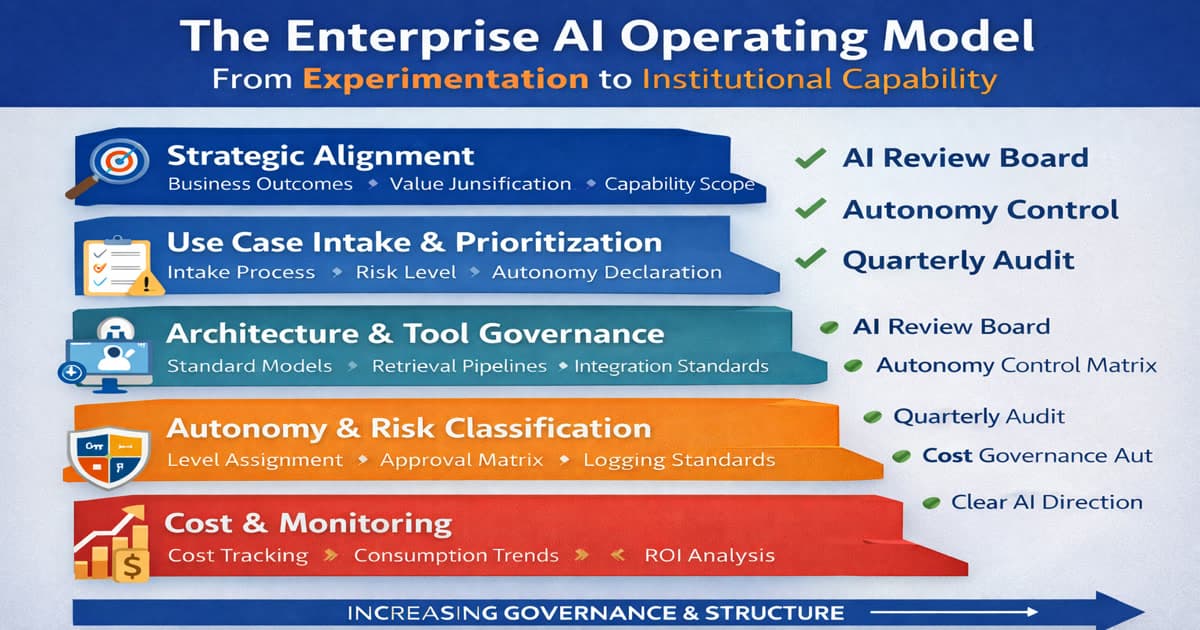
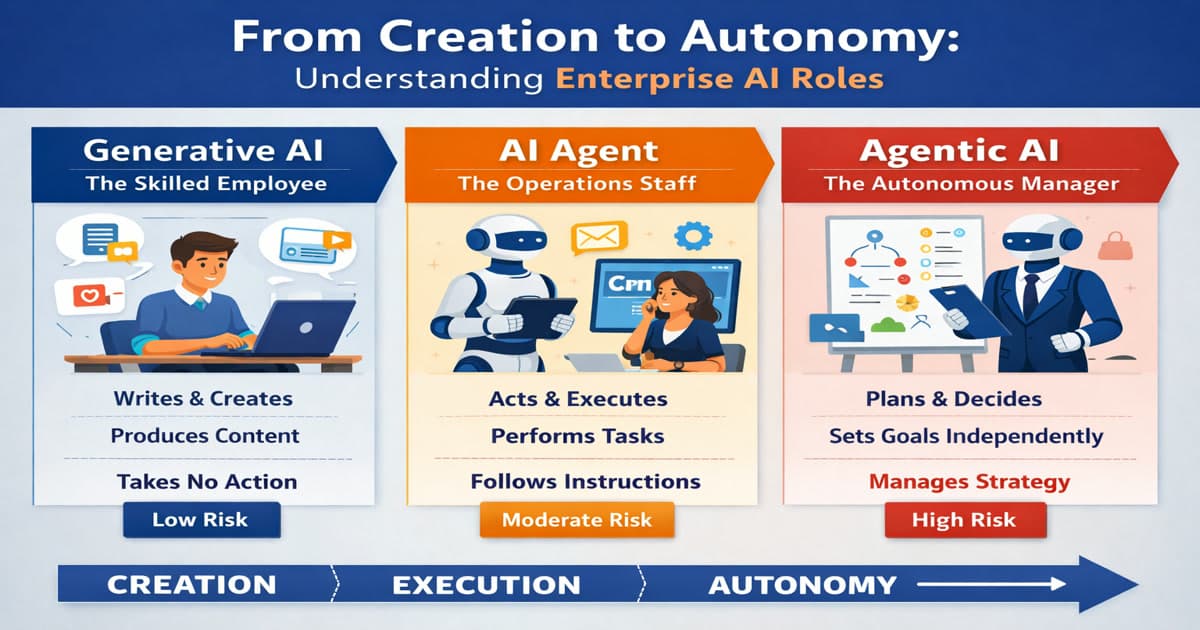
Your AI Agents Are Making Architecture Decisions. Nobody Assigned Them That Role.

AI agents are making micro-architecture decisions in production. No ADR recorded them. No review board approved them. No architect ever saw them. Here is the structural fix.

...altitude. The boardroom asks: How much autonomy should agents have? The compliance team asks: What data can agents access? The security team asks: What actions can agents execute? All important questions....

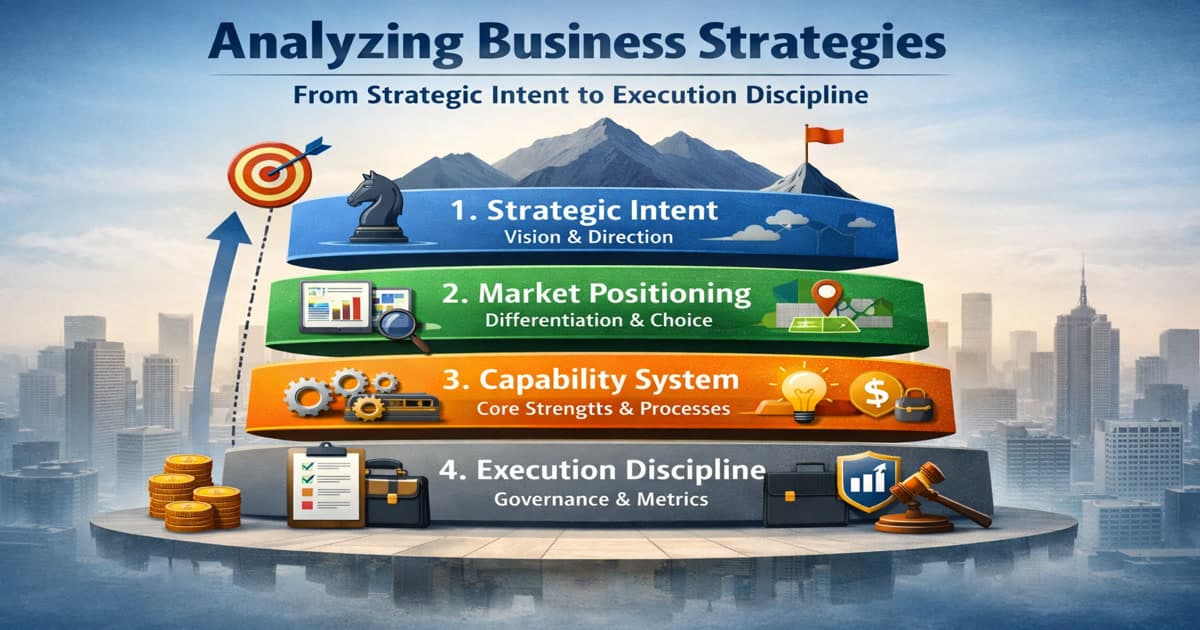
Analyzing Business Strategies: From Strategic Intent to Execution Discipline

A structured executive guide to analyzing business strategies using a four-layer framework that connects intent, positioning, capability, and execution discipline.

Executive Summary Who this is for: Founders, CEOs, Strategy Leaders, Enterprise Architects Problem it solves: Organizations confuse strategic statements...

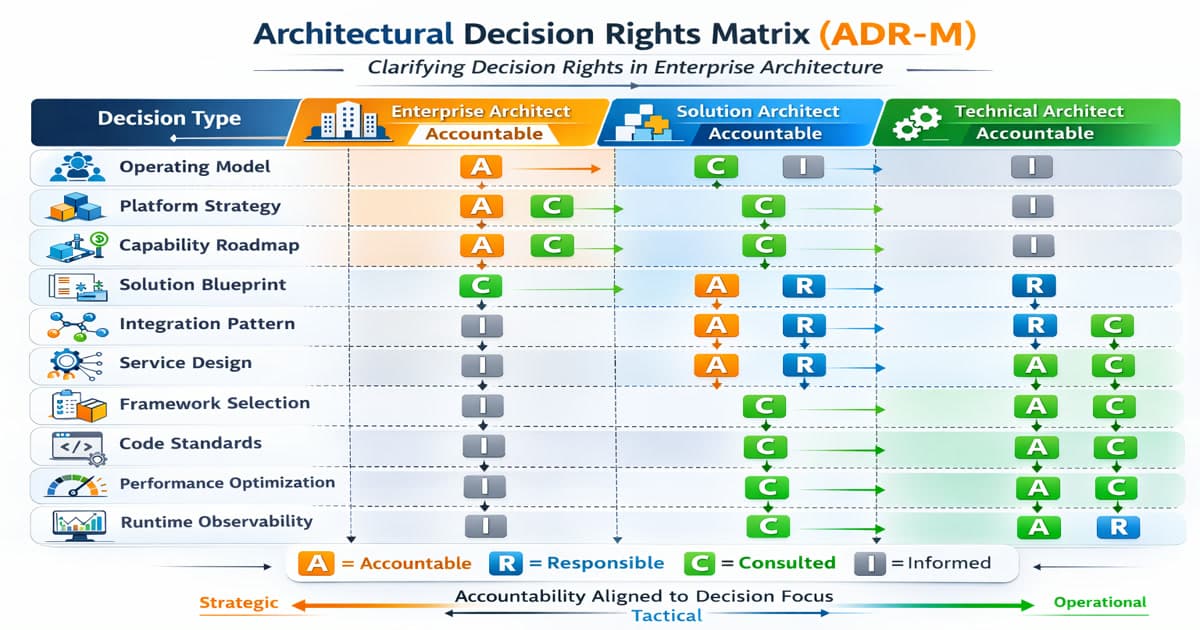
Architectural Decision Rights Matrix: Governing Enterprise, Solution, and Technical Architecture

A governance framework introducing the Architectural Decision Rights Matrix (ADR-M) to clarify accountability between Enterprise, Solution, and Technical Architects in Context-Driven Architecture.

...decision altitude clarity. Enterprise Architects debate frameworks. Solution Architects redefine platform strategy. Technical Architects override structural principles. Roles exist. Authority boundaries do not....

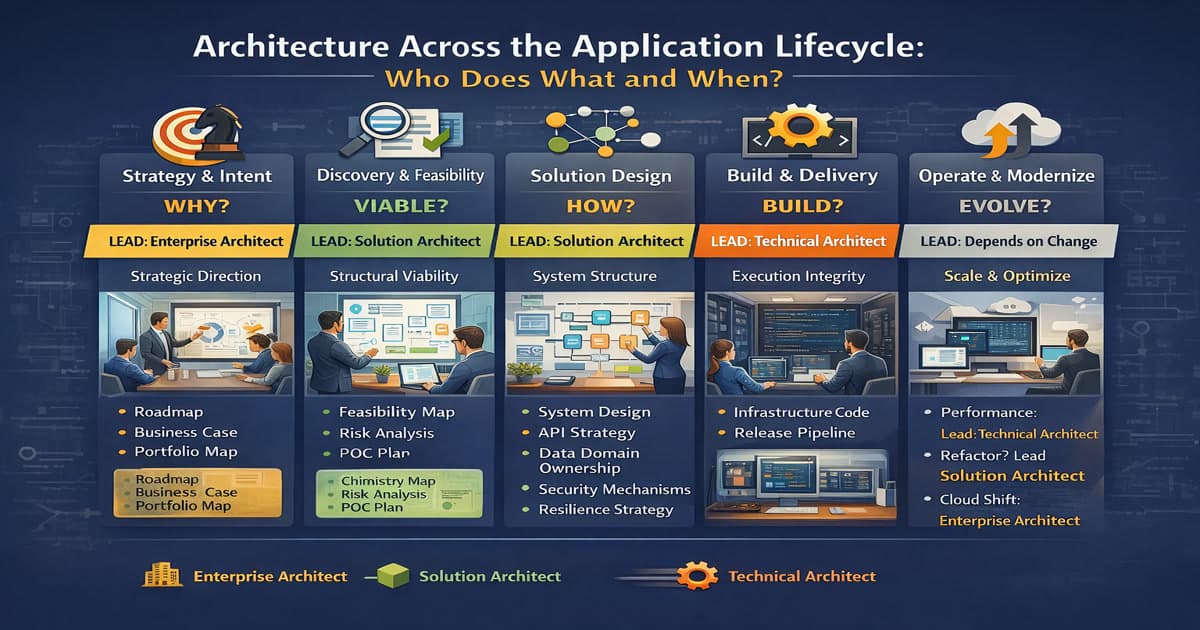
Architecture Across the Application Lifecycle: Which Architect Is Needed When?

A practical guide explaining which type of architect is required at each stage of the application lifecycle to prevent governance friction and structural instability.

...Lifecycle Stages Every application — whether startup or enterprise — passes through five functional stages: Strategy & Intent Discovery & Feasibility Solution Design Build & Delivery Operate, Scale & Modernize...

The Capability Map That Cannot Answer a Question Is Not a Capability Map

Why traditional capability maps fail to support governance decisions and how Queryable Capability Architecture turns static maps into interrogable decision systems.

...are widely used in: enterprise architecture documentation digital transformation programs technology strategy discussions portfolio prioritization At first glance they appear extremely useful. But there...

Enterprise, Solution, and Technical Architects: Who Does What in a Context-Driven Architecture?

A structured executive guide explaining the difference between Enterprise, Solution, and Technical Architects using Context-Driven Architecture to clarify responsibilities and reduce structural misalignment.

...environmental level. They define: Target operating model Capability map Technology principles Platform strategy Governance structure Buy vs build posture Cloud and AI positioning They answer: “Given our business...