Search
Find insights, training programs, and workshops
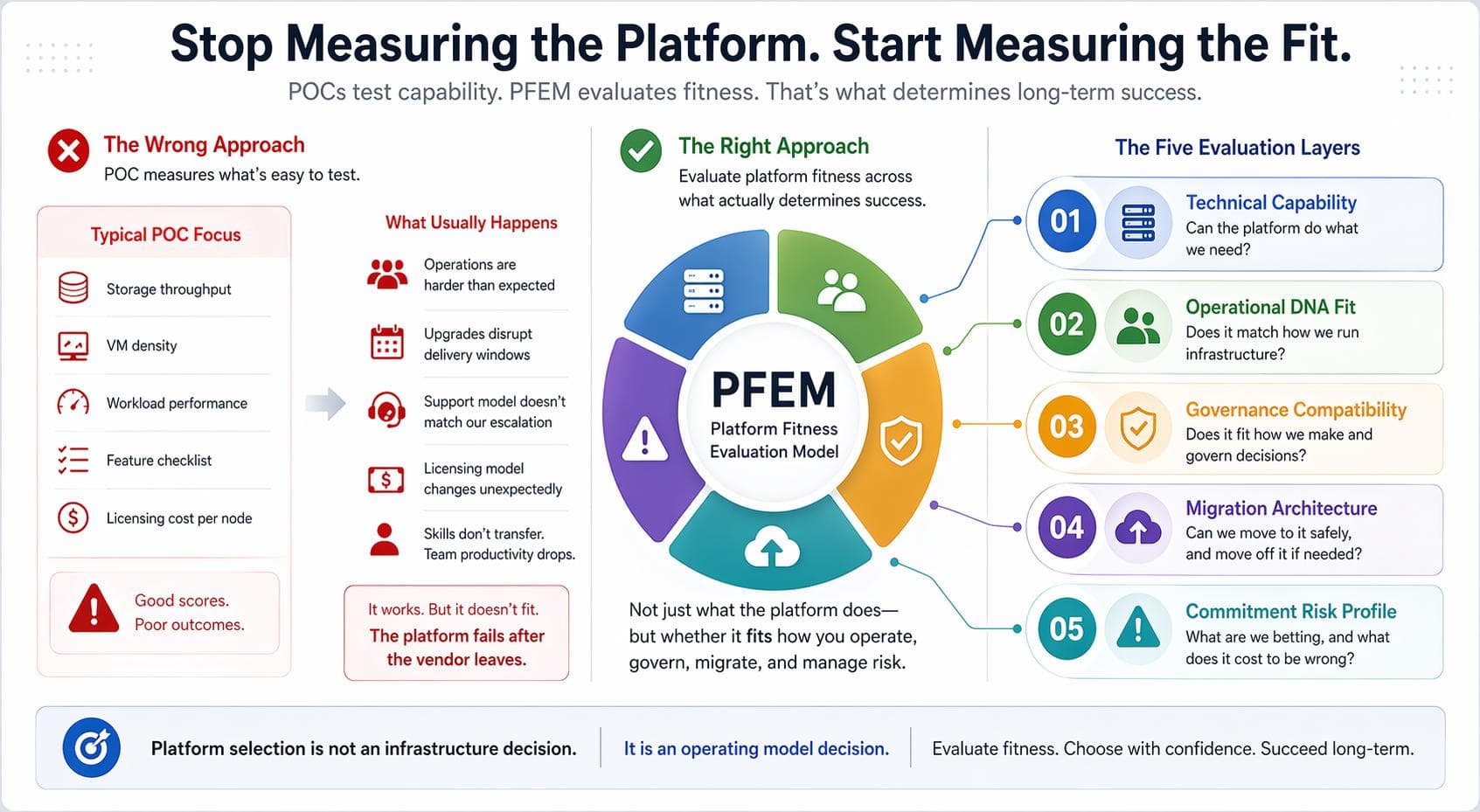
Most organizations evaluate private cloud and HCI platforms by running a technical POC. The POC passes. The platform fails. The reason is structural — and fixable. The Platform Fitness Evaluation Model (PFEM) tells you what to measure instead.
...determine whether a platform succeeds Time to implement: 30–60 days before any platform commitment Business impact: Platform decisions that survive year two — not just the boardroom The Surgeon and the...
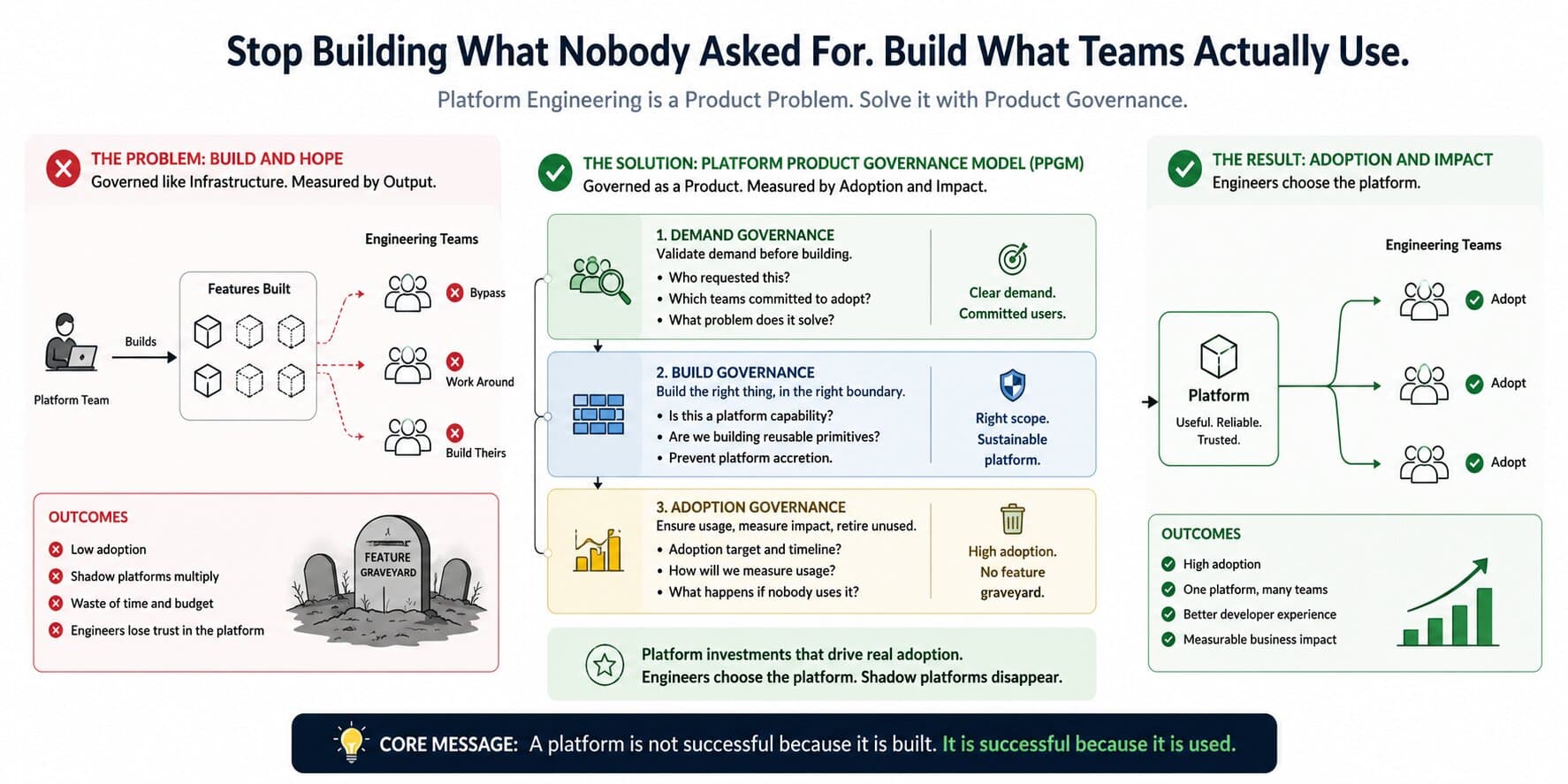
Most platform teams build internal products their engineering teams never chose. Platform adoption is not a marketing problem. It is a product governance problem. Here is the model that fixes it.
...delivery from a build-and-hope approach into a governed product lifecycle Time to implement: 45–90 days Business impact: Platform adoption increases, shadow platforms disappear, and the platform team stops...
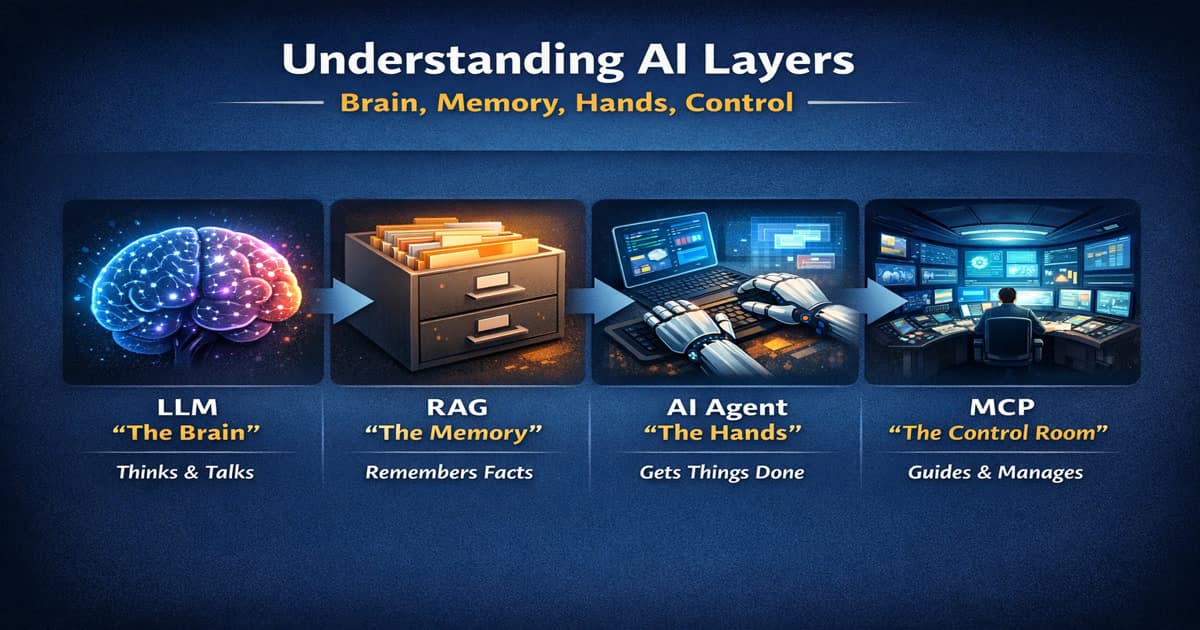
A clear executive guide explaining LLM, RAG, AI Agents, and MCP using the Brain model to prevent enterprise AI instability.
...sprawl, improved governance control Time to implement: 60–90 days for structured AI capability alignment Business impact: Lower experimentation waste, controlled cost growth, safer AI scaling The Enterprise...
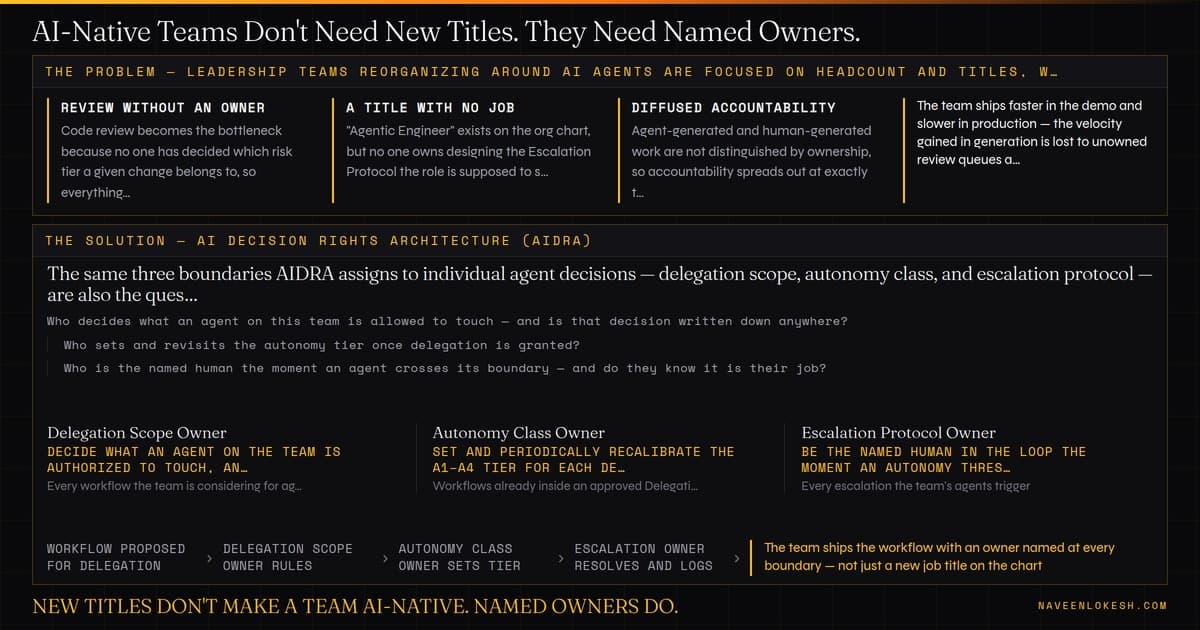
AI-native team redesigns keep adding new job titles and calling it done. The actual failure mode sits at the decision boundary. Here is what changes when you apply AIDRA to team design instead of headcount.
...30–60 days to name the three owners on a single team and run one workflow through the flow end to end Business impact: Fewer unowned escalations, a review process that scales with risk tier instead of scrutinizing...
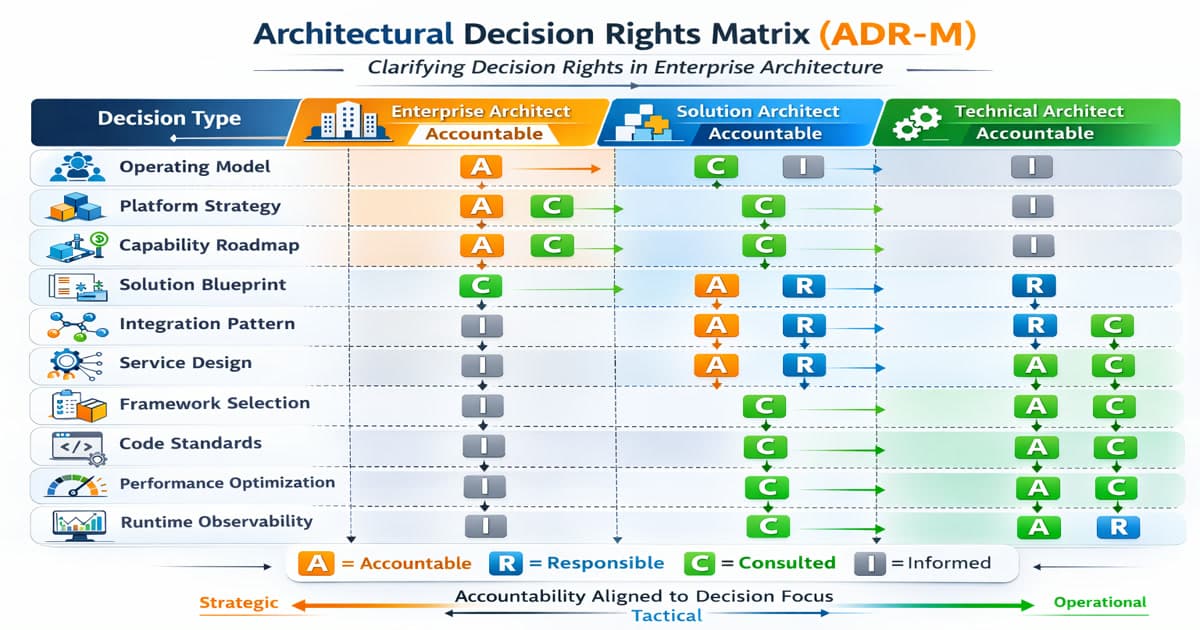
A governance framework introducing the Architectural Decision Rights Matrix (ADR-M) to clarify accountability between Enterprise, Solution, and Technical Architects in Context-Driven Architecture.
...Architectural Decision Rights Matrix (ADR-M) aligned to altitude and risk Time to implement: 30 days Business impact: Reduced architectural conflict, faster decision cycles, improved structural integrity...
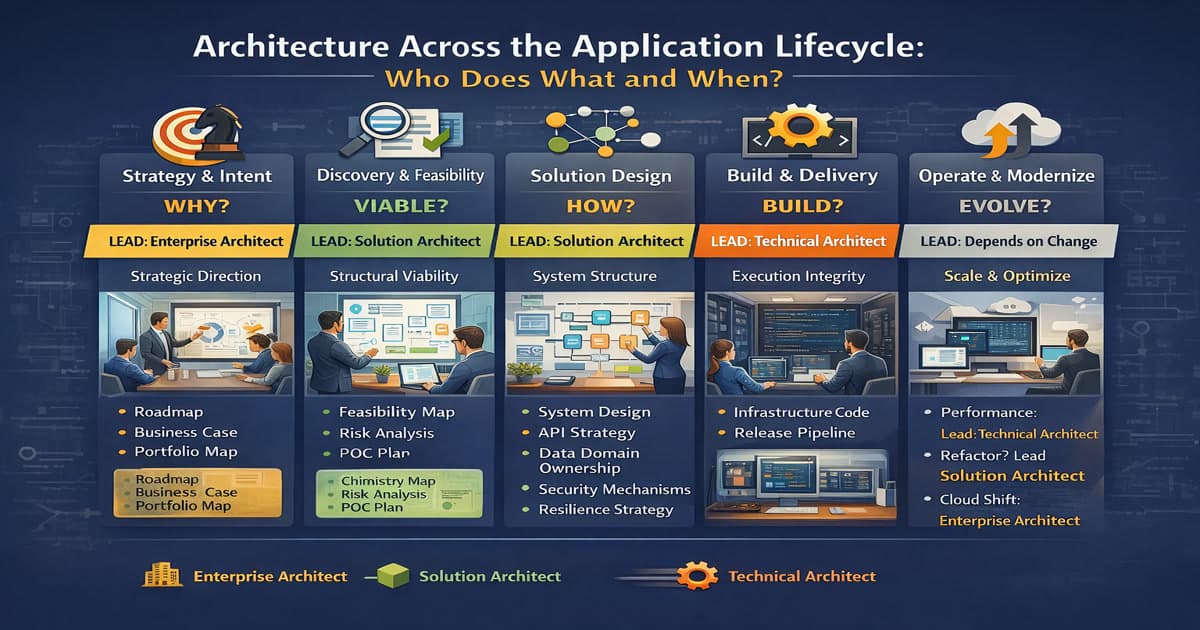
A practical guide explaining which type of architect is required at each stage of the application lifecycle to prevent governance friction and structural instability.
...outcome: Clear architectural engagement model across lifecycle stages Time to implement clarity: 30 days Business impact: Reduced friction, faster decision cycles, lower architectural rework The Real Problem...
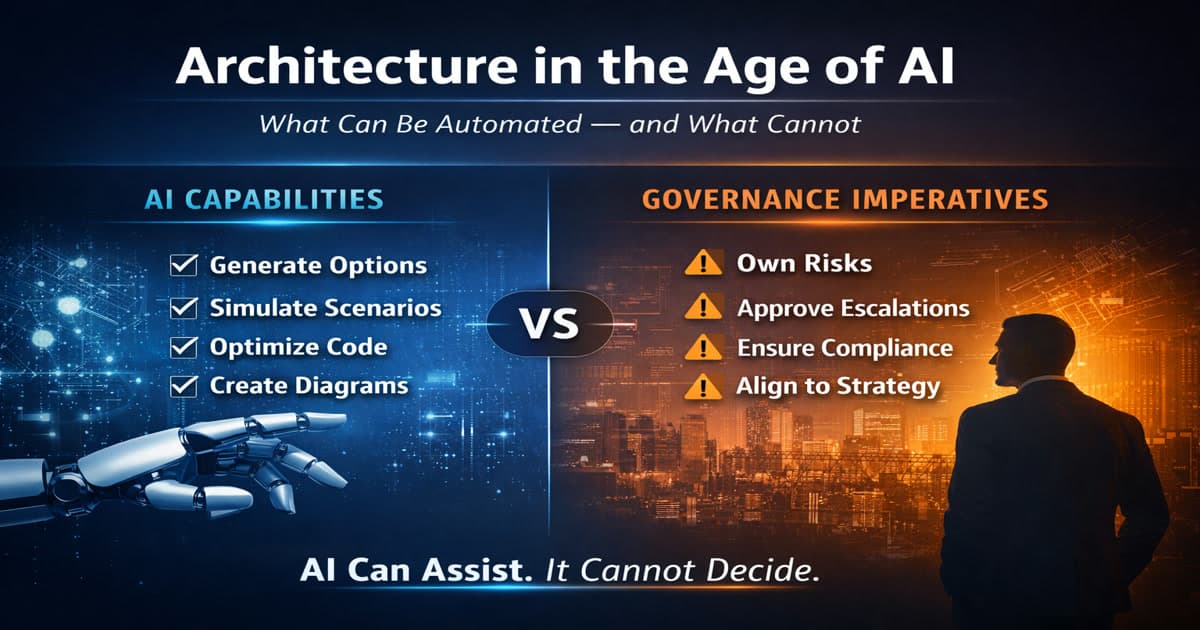
A governance-driven perspective explaining why software architecture cannot be automated because decision accountability and consequence ownership cannot be delegated to AI.
...Clear distinction between mechanical design and decision governance Time to implement: 30–60 days Business impact: Protects structural stability in an AI-accelerated environment The Question Everyone...
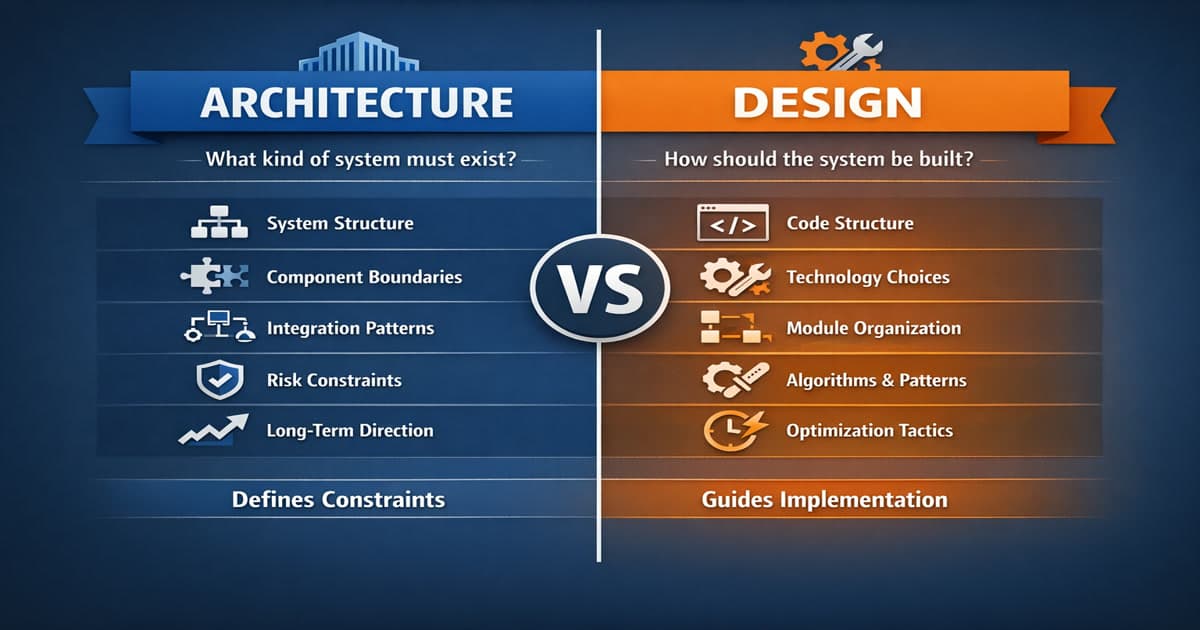
A clear explanation of the difference between architecture and design, why organizations confuse them, and how this confusion creates structural instability in technology systems.
...between decision-making architecture and implementation design Time to implement clarity: 30 days Business impact: Faster decision cycles, reduced architectural debates, stronger system stability The...
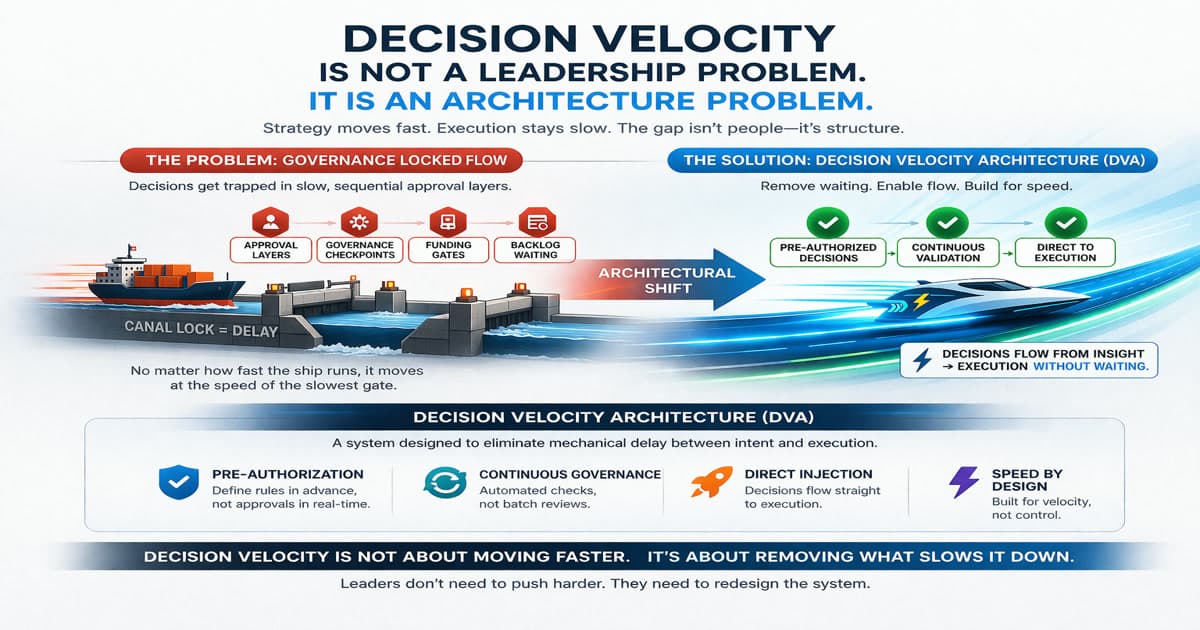
Decision velocity is not constrained by leadership intent but by architectural design. Governance systems built for slower eras create mechanical delay between insight and execution.
...Architecture (DVA) that removes mechanical delay between insight and action Time to implement: 45–90 days Business impact: Strategy, governance, and execution move on the same clock The Canal Lock Does Not...

A structured executive guide explaining the difference between Enterprise, Solution, and Technical Architects using Context-Driven Architecture to clarify responsibilities and reduce structural misalignment.
...accountability and architectural instability Key outcome: Clear responsibility boundaries aligned to business geography Time to implement clarity: 30 days with structured role alignment Business impact:...