Skip to content

Search

Find insights, training programs, and workshops

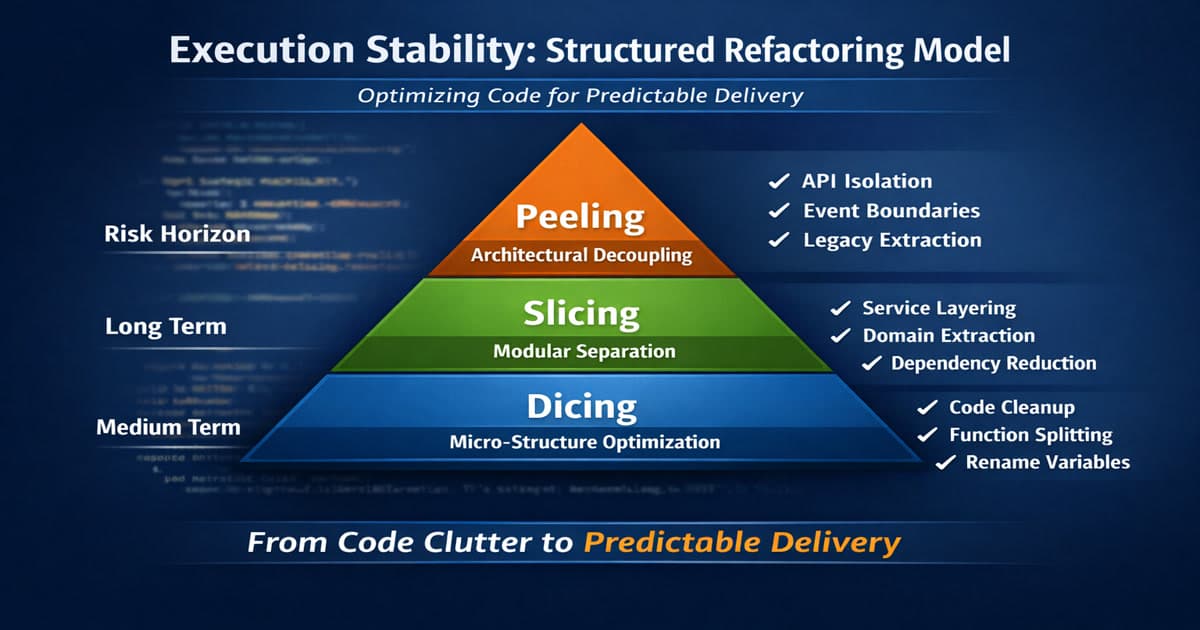
Execution Stability: How Structured Refactoring Improves Delivery Predictability

A practical framework for reducing delivery slowdown caused by unmanaged structural code complexity — improving cycle time, reducing regression risk, and clarifying ownership boundaries.

...Engineering Directors, Principal Engineers Problem it solves: Growing delivery slowdown caused by unmanaged structural code complexity Key outcome: Reduced regression risk, improved cycle time, clearer ownership...

Execution Stability & Structured Refactoring
CTOs, Engineering Directors, Principal Engineers, Engineering Managers3-4 hoursA classified structural risk map — your top friction modules sorted into dicing, slicing and peeling with a governance rule attached

Delivery slows because structural entropy accumulates unmeasured. Classify refactoring into dicing, slicing and peeling to restore predictability.

...release." Nothing is broken. Yet everything feels heavier. That is not a capability problem. It is structural entropy — and it is the most commonly misdiagnosed cause of delivery slowdown, because there...

1 DayIntensive
LayersNot cleanup
Risk, Compliance & Control Points
Intermediate to Advanced (SA, EA, TS)5-6 hoursRisk and control register template + compliance mapping guide + architecture risk heat map

How architecture manages technical risk and meets regulatory obligations — covering architectural risk analysis, compliance by design, privacy by design, security controls as decisions, operational risk, control points, and demonstrating compliance through architecture.

Quick Navigation Start here — What architectural risk is Regulatory landscape Privacy by design Security controls as decisions Operational risk Control...

1 DayIntensive
CriticalSA · EA · TS
Responsible AI — Ethics, Risk & Governance
Beginner to Intermediate4-5 hoursAI risk map + personal responsibility checklist + governance starter framework

Using AI responsibly — covering ethics, bias, hallucination risk, data privacy, accountability, and organisational governance. The judgment to use AI fairly, safely, and in a way you can defend.

...of getting it wrong AI ethics — five questions to ask every time Bias — where fairness breaks down Risk — a framework for proportionate response Privacy and data — the lines you must not cross Transparency...

1 DayIntensive
Beginner FriendlyNo legal background required
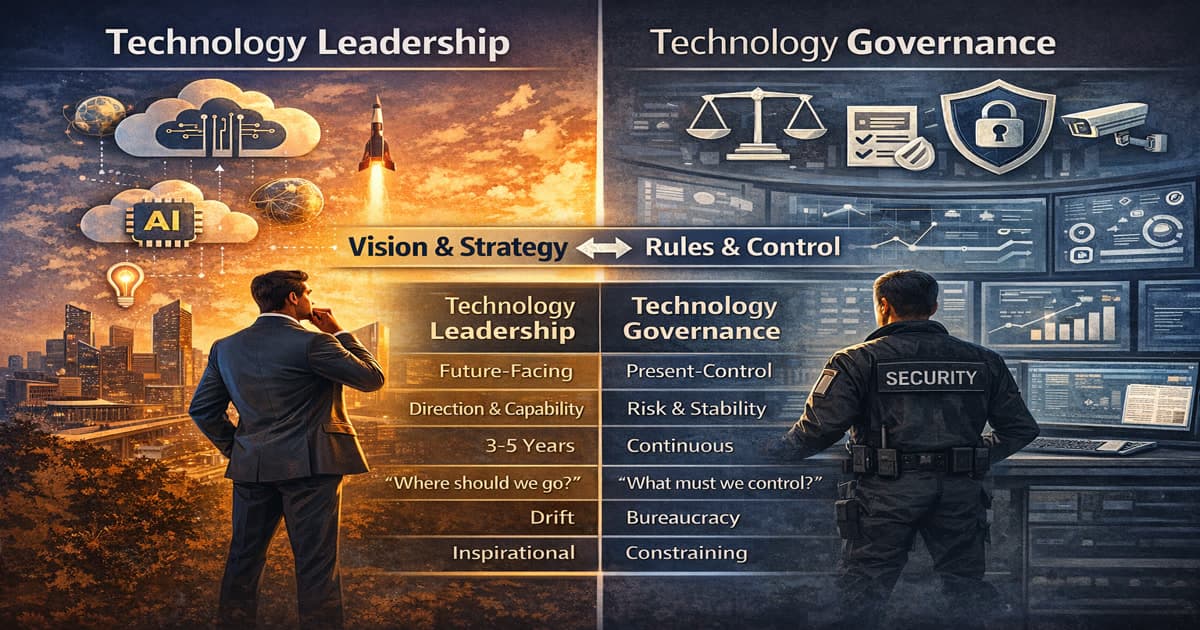
Technology Leadership vs Technology Governance: Why Confusing the Two Creates Structural Instability

A structured executive guide explaining the difference between Technology Leadership and Technology Governance, and why confusing the two creates instability in enterprise execution.

...solves: Confusion between inspiration-driven leadership and control-driven governance Key outcome: Clear structural separation between direction-setting and constraint-enforcing mechanisms Time to implement...

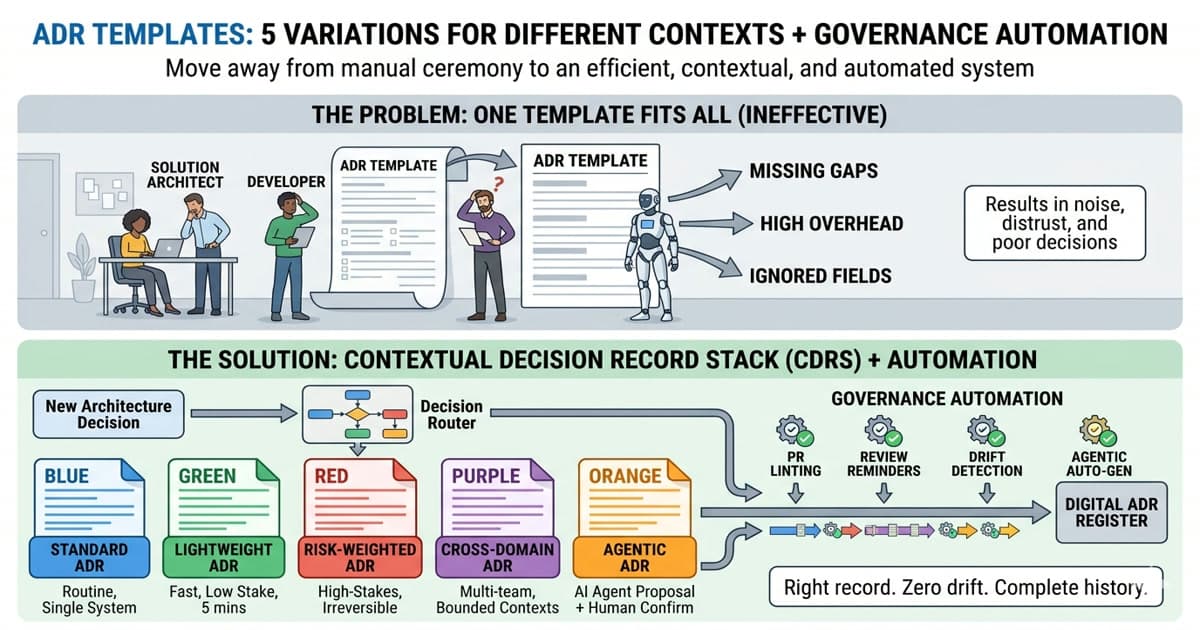
ADR Templates: 5 Variations for Different Contexts + Governance Automation

One ADR template does not fit every architectural context. Five purpose-built variations — for standard decisions, agentic AI, cross-domain impact, fast delivery, and high-risk reversals — plus governance automation to make the system run without manual follow-up.

...Human Single system Medium Lightweight ADR Fast-delivery, low-stakes Human Single component High Risk-Weighted ADR High-stakes, irreversible Human Organisation-wide Very Low Cross-Domain ADR Decisions...

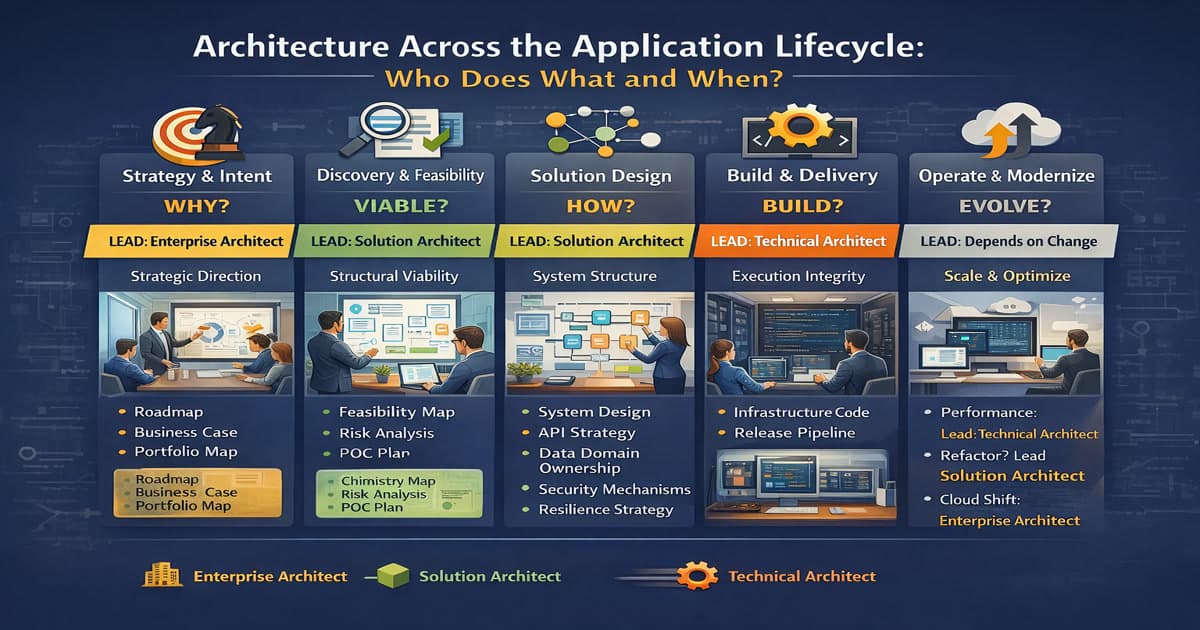
Architecture Across the Application Lifecycle: Which Architect Is Needed When?

A practical guide explaining which type of architect is required at each stage of the application lifecycle to prevent governance friction and structural instability.

...design. Solution Architects are absent during discovery. Technical Architects are brought in after structural decisions are frozen. Modernization efforts escalate without altitude clarity. Architecture...

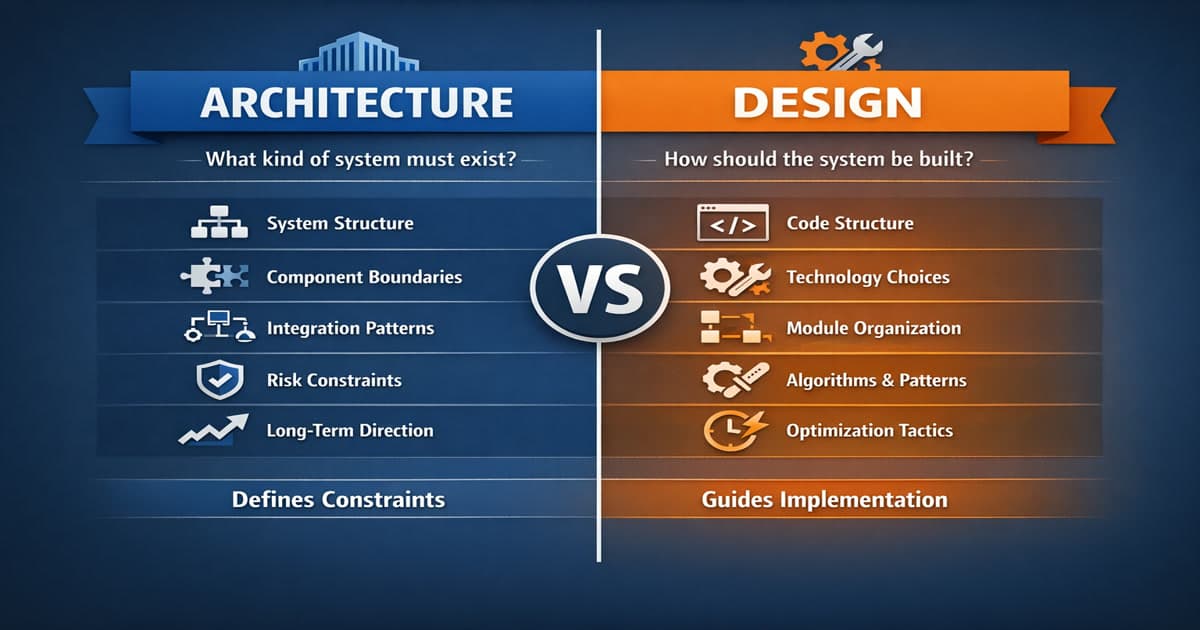
Architecture vs Design: Why Most Organizations Confuse Them

A clear explanation of the difference between architecture and design, why organizations confuse them, and how this confusion creates structural instability in technology systems.

...confusion between architecture and design in software and technology organizations Key outcome: Clear structural separation between decision-making architecture and implementation design Time to implement...

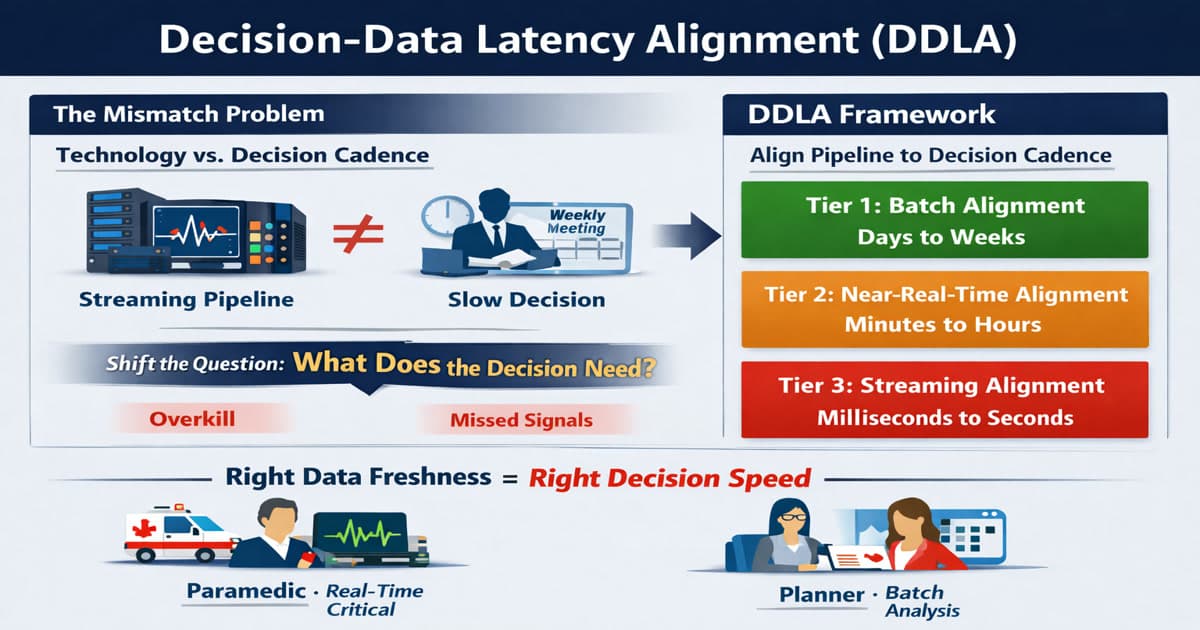
Batch vs Real-Time Is the Wrong Debate.

Organisations debate batch versus real-time as if it is a technical preference. It is not. It is a structural mismatch between data freshness and decision cadence — and the mismatch is where the cost lives.

...pipeline patterns based on technical preference rather than decision cadence requirements Key outcome: A structural model called Decision-Data Latency Alignment (DDLA) that matches data freshness to the cadence...

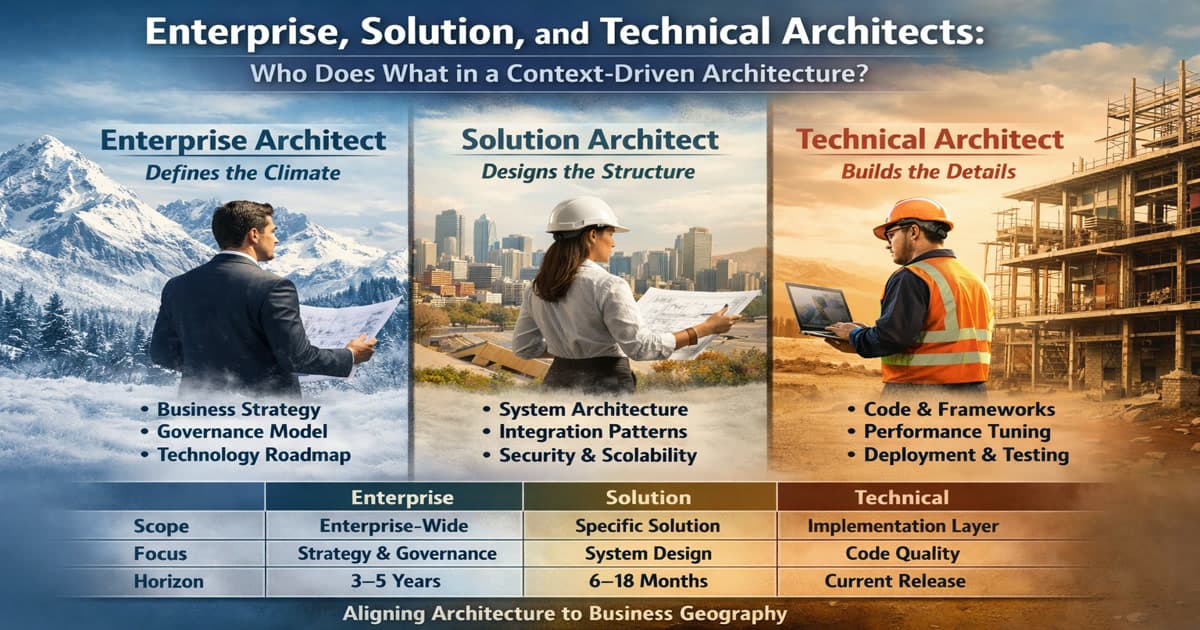
Enterprise, Solution, and Technical Architects: Who Does What in a Context-Driven Architecture?

A structured executive guide explaining the difference between Enterprise, Solution, and Technical Architects using Context-Driven Architecture to clarify responsibilities and reduce structural misalignment.

...architectural role responds to geography at a different altitude. Understanding this separation prevents structural confusion. Enterprise Architect — The Environmental Strategist What They Actually Do Enterprise...