Skip to content

Search

Find insights, training programs, and workshops

Execution Stability & Structured Refactoring
CTOs, Engineering Directors, Principal Engineers, Engineering Managers3-4 hoursA classified structural risk map — your top friction modules sorted into dicing, slicing and peeling with a governance rule attached

Delivery slows because structural entropy accumulates unmeasured. Classify refactoring into dicing, slicing and peeling to restore predictability.

Quick Navigation Start here — the silent slowdown Why ad-hoc refactoring fails Dicing — micro-structure correction Slicing — logical boundary extraction Peeling —...

1 DayIntensive
LayersNot cleanup
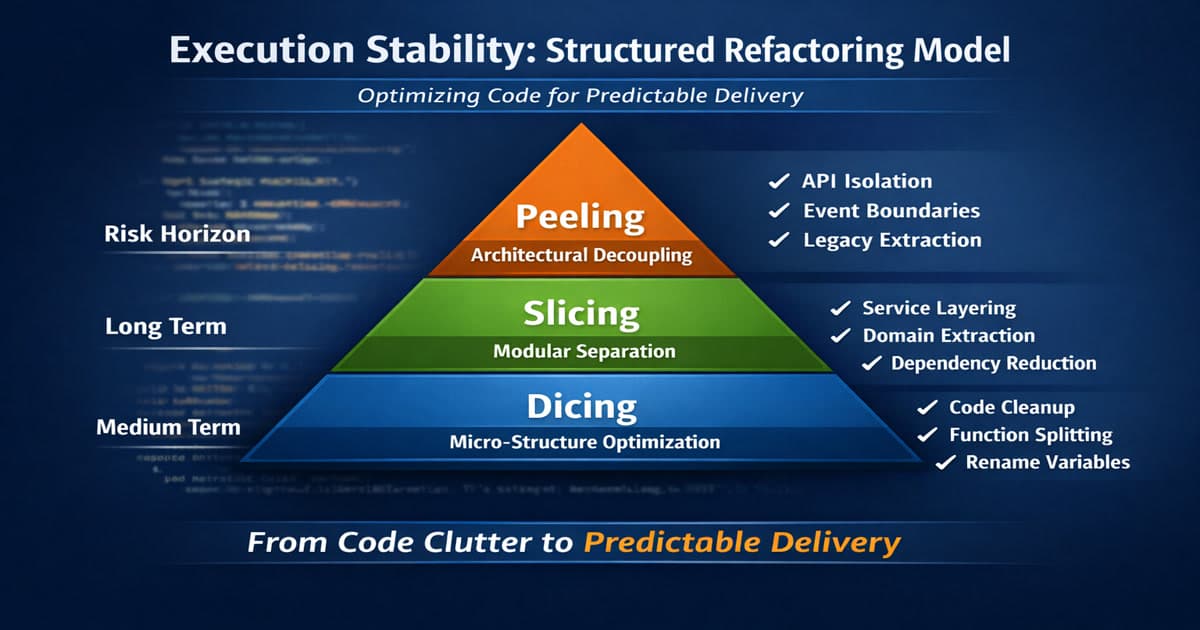
Execution Stability: How Structured Refactoring Improves Delivery Predictability

A practical framework for reducing delivery slowdown caused by unmanaged structural code complexity — improving cycle time, reducing regression risk, and clarifying ownership boundaries.

...correction, and complexity overhead. As codebases grow, unmanaged coupling compounds delivery friction. Refactoring is often treated as cleanup. In reality, it is structural engineering for long-term execution...

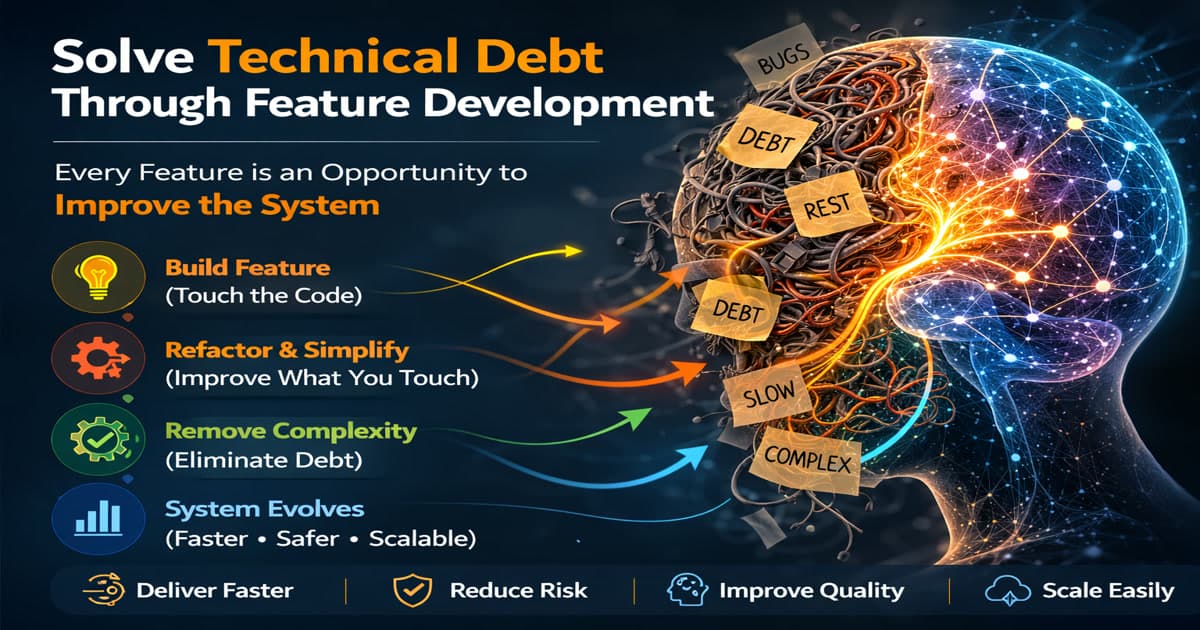
Paying Down Debt Through Feature Work
CTOs, Engineering Leaders, Enterprise Architects, Product Leaders3-4 hoursA feature-driven debt reduction policy — the rule, the visibility mechanism, and the two questions review asks about every feature

Debt accumulates faster than refactoring projects can remove it. Fund architecture improvement through the product roadmap instead of competing with it.

...Navigation Start here — the technical debt trap The wrong model: debt separated from delivery The feature refactoring principle Practice 1 — Refactor the area you touch Practice 2 — Expand the change boundary...

1 DayIntensive
ContinuousNot a project
Solving Technical Debt Through Feature Development: Turning Product Delivery into Architecture Improvement

A practical framework explaining how organizations can systematically reduce technical debt while delivering new features, instead of running disruptive modernization programs.

...Leaders Problem it solves: Technical debt accumulates faster than organizations can schedule dedicated refactoring projects Key outcome: A structured model to reduce technical debt incrementally during feature...

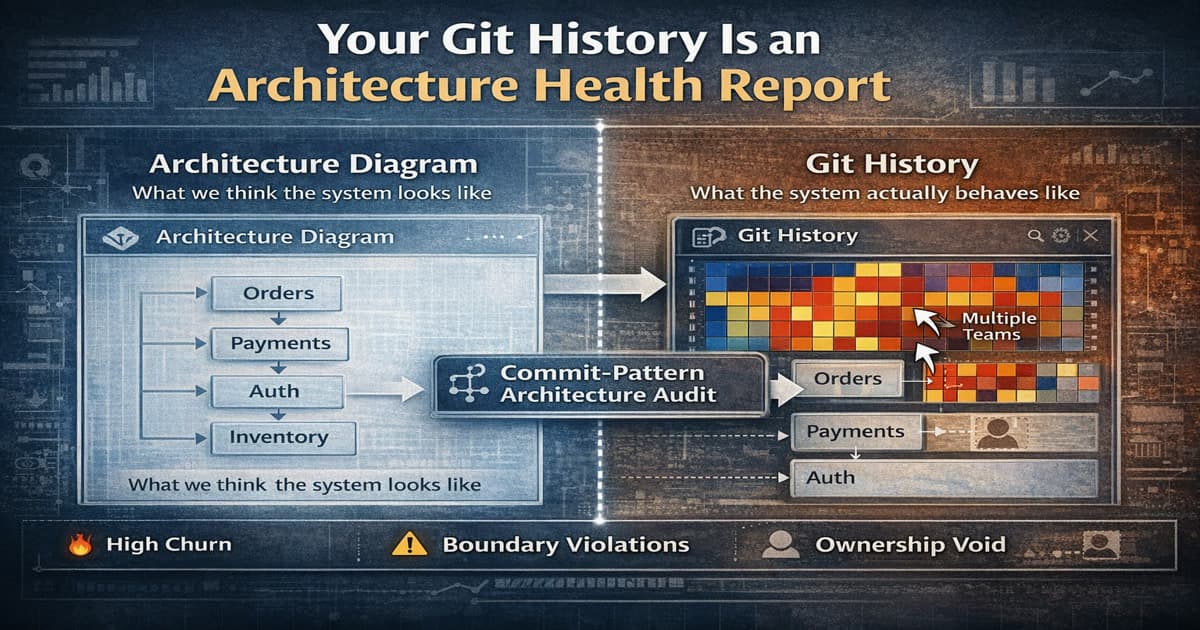
Your Git History Is an Architecture Health Report. Nobody Is Reading It.

A practical architecture technique showing how Git commit patterns reveal structural instability, boundary violations, and ownership gaps in software systems.

...files or modules change. High churn often indicates: unstable design unclear boundaries frequent refactoring evolving requirements Example indicators: modules modified in nearly every release components...

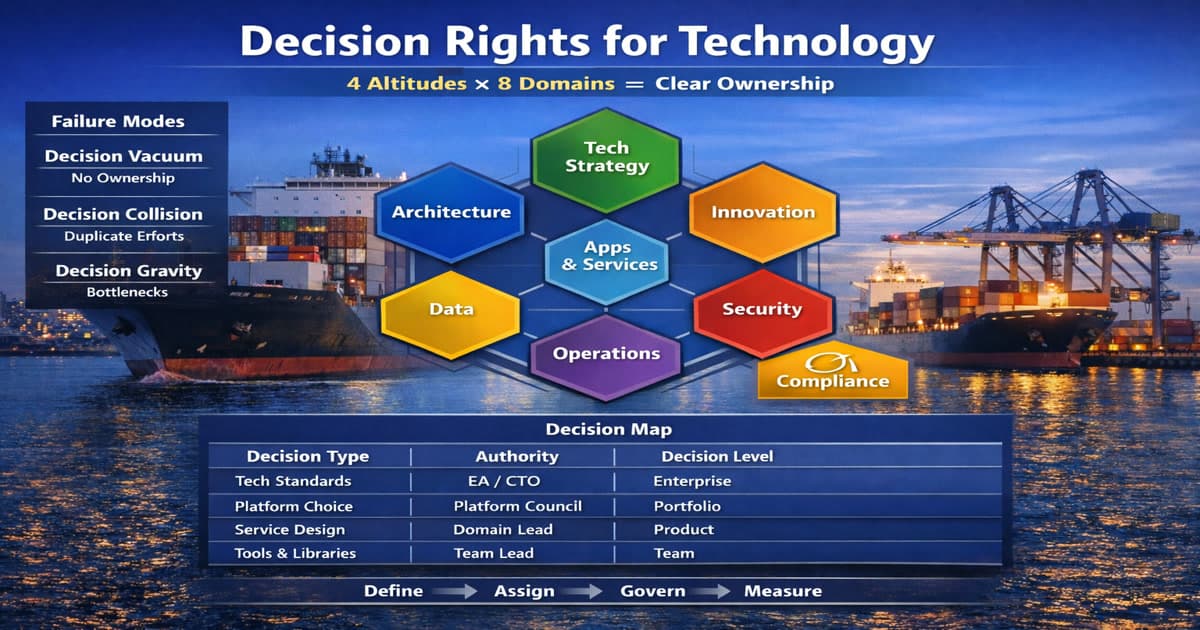
Decision Rights for Technology — Who Decides What in a Modern Enterprise

Why most enterprises confuse escalation ladders with decision rights — and how Technology Decision Domain Architecture maps exactly who decides what, at which altitude, before the conflict arrives.

...structure Individual Decisions a practitioner makes in the act of delivery Variable naming, local refactoring, in-sprint implementation approach The altitude tells you how wide the consequence of this...

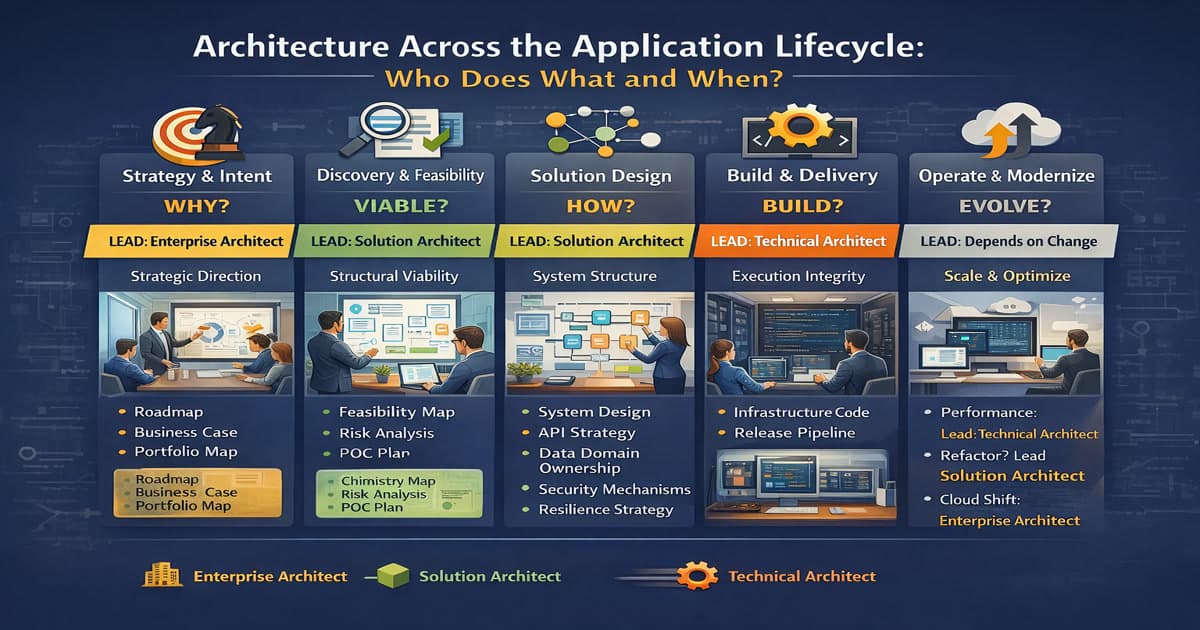
Architecture Across the Application Lifecycle: Which Architect Is Needed When?

A practical guide explaining which type of architect is required at each stage of the application lifecycle to prevent governance friction and structural instability.

...on the altitude of change. If Performance Optimization: → Technical Architect leads. If Structural Refactoring: → Solution Architect leads. If Platform Shift / Cloud Migration: → Enterprise Architect...

Investment & Prioritisation
Advanced (EA, TS)5-6 hoursInvestment prioritisation model + business case guide (including TCO and unit economics) + sequencing criteria

How to decide which technology initiatives get funded, in what order, and why — connecting architecture to financial decisions and business outcomes.

...justifications — "we need to refactor the monolith" or "we need to adopt Kafka." Leadership doesn't fund refactoring. They fund outcomes. The business case must translate architecture investment into business...

1 DayIntensive
StrategicEA · TS
Decision Rights & Delegation
Engineering Managers, Tech Leads, Directors, CTO, VP Engineering3-4 hoursDecision rights map by altitude and domain, with every gap, overlap and delay node named

Decisions made at the wrong altitude are the commonest source of both bottleneck and drift — which makes delegation a design problem, not a trust problem.

...structure Individual Decisions a practitioner makes in the act of delivery Variable naming, local refactoring, in-sprint implementation approach Altitude tells you how wide the consequence of a decision...

1 DayIntensive
AltitudeWho decides what
Domain-Driven Design & Strategic Design Workshop
Enterprise & Solution Architects, Principal Engineers, Tech LeadsDomain map, bounded context canvas, ubiquitous language glossary, context map

Stop designing systems around databases and frameworks. Start designing around your business domains — and watch your architecture conversations change overnight.

...integrate and where seams exist Identification of your most costly domain boundary violations A prioritised refactoring or migration conversation to fix them These aren't diagrams you'll store in Confluence and...

1-2 DaysFacilitated
Domain MapStrategic Clarity