Skip to content

Search

Find insights, training programs, and workshops

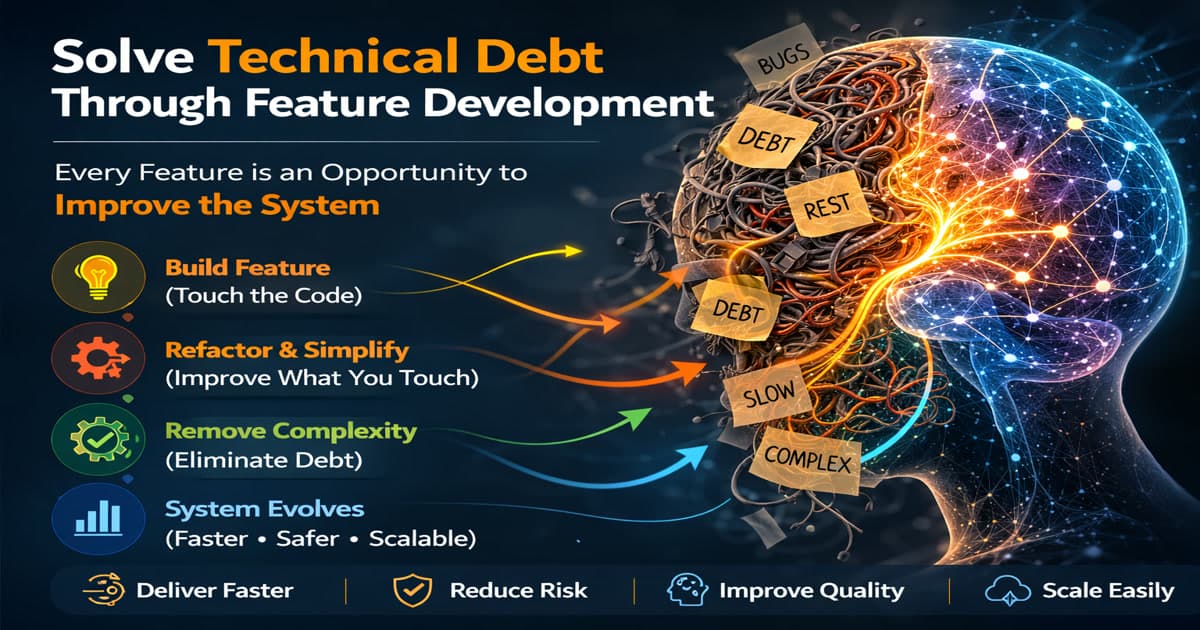
Solving Technical Debt Through Feature Development: Turning Product Delivery into Architecture Improvement

A practical framework explaining how organizations can systematically reduce technical debt while delivering new features, instead of running disruptive modernization programs.

Executive Summary Who this is for: CTOs, Engineering Leaders, Enterprise Architects, Product Leaders Problem it solves: Technical debt accumulates faster than organizations can schedule...

Paying Down Debt Through Feature Work
CTOs, Engineering Leaders, Enterprise Architects, Product Leaders3-4 hoursA feature-driven debt reduction policy — the rule, the visibility mechanism, and the two questions review asks about every feature

Debt accumulates faster than refactoring projects can remove it. Fund architecture improvement through the product roadmap instead of competing with it.

Quick Navigation Start here — the technical debt trap The wrong model: debt separated from delivery The feature refactoring principle Practice 1 — Refactor the area you touch Practice 2 — Expand...

1 DayIntensive
ContinuousNot a project
Delivery, Implementation & Architecture Runway
Intermediate (SA, EA, TS)4-5 hoursArchitecture runway template + delivery dependency map + agile architecture checklist

How architecture supports delivery instead of blocking it — covering architecture runway, phased implementation, dependency management, keeping teams unblocked, and recovering when architecture goes wrong during delivery.

Quick Navigation Start here — Architecture and delivery What architecture runway is Phased implementation Managing dependencies Keeping teams unblocked Spikes...

1 DayIntensive
PracticalSA · EA · TS
Platform as a Product
CTOs, Heads of Platform Engineering, VP Engineering, Enterprise Architects, Platform Product Managers3-4 hoursA three-gate platform governance plan — validated backlog, a written scope boundary, and adoption targets per capability

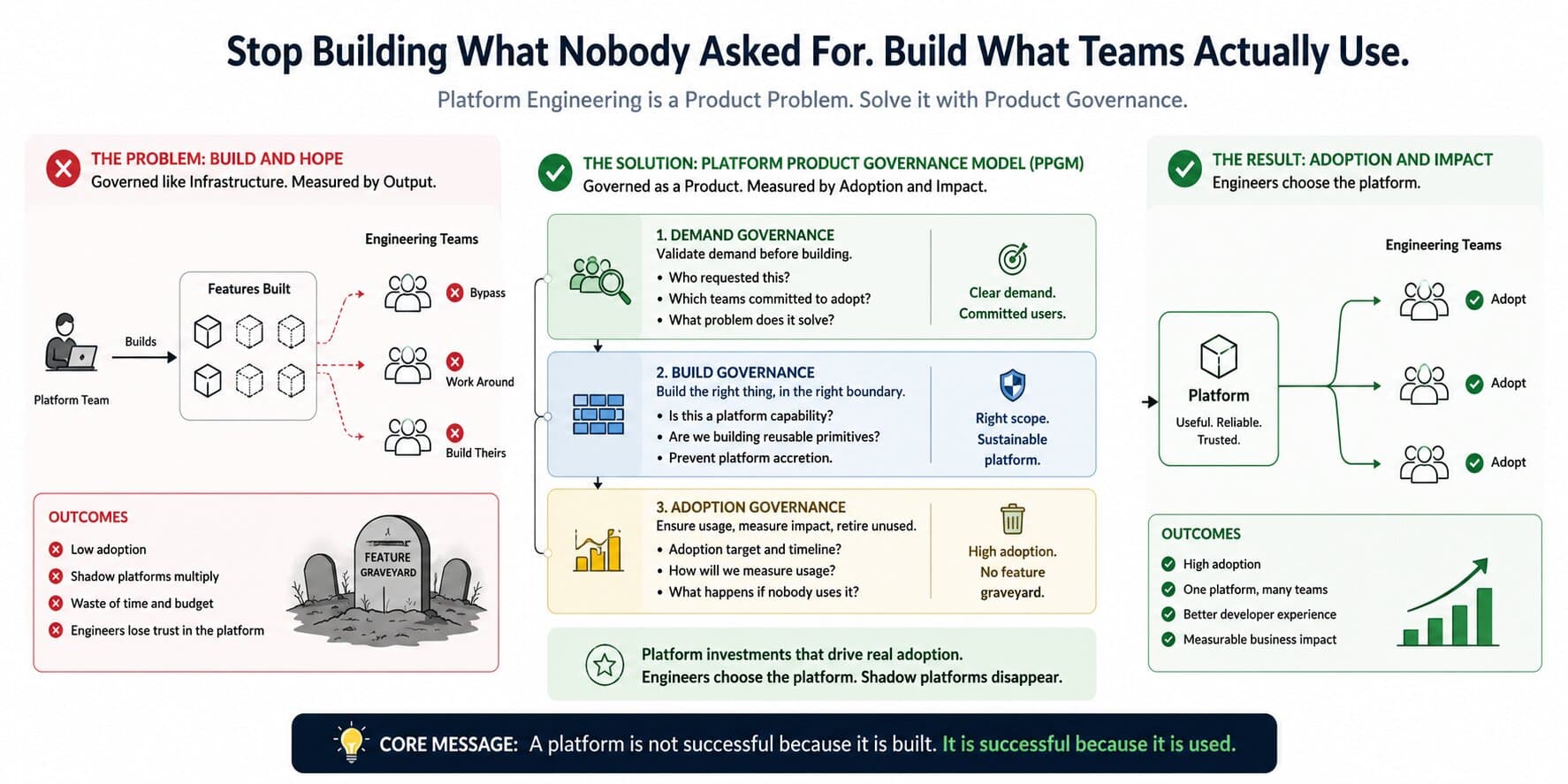
An internal platform with no product owner builds what nobody asked for and skips what everybody needs — adoption, not completeness, is the only measure that counts.

...numbers can rise while the platform's actual usefulness falls. A platform is not technology. It is a product, and your developers are the customers. If they do not choose to use it, you do not have a platform...

1 DayIntensive
AdoptionNot feature count
Your Platform Team Is Building a Product Nobody Asked For.

Most platform teams build internal products their engineering teams never chose. Platform adoption is not a marketing problem. It is a product governance problem. Here is the model that fixes it.

...this is for: CTOs, Heads of Platform Engineering, Enterprise Architects, VPs of Engineering, Platform Product Managers Problem it solves: Platform teams invest months building capabilities that engineering...

Developer Experience as a Control System
CTOs, Engineering Leads, Platform Engineering Teams, Engineering Managers3-4 hoursA delivery friction map across four sprints, one named constraint pillar, and a traced DX-to-delivery signal

DevEx is not a perk — it is the set of operating conditions that governs how fast and how safely change moves through your delivery system.

...the greenhouse does not grow crops by accident The wrong category Why DevEx investment fails to move delivery Five conditions that govern delivery output What breaks when the conditions are ungoverned Tracing...

1 DayIntensive
ConditionsNot satisfaction
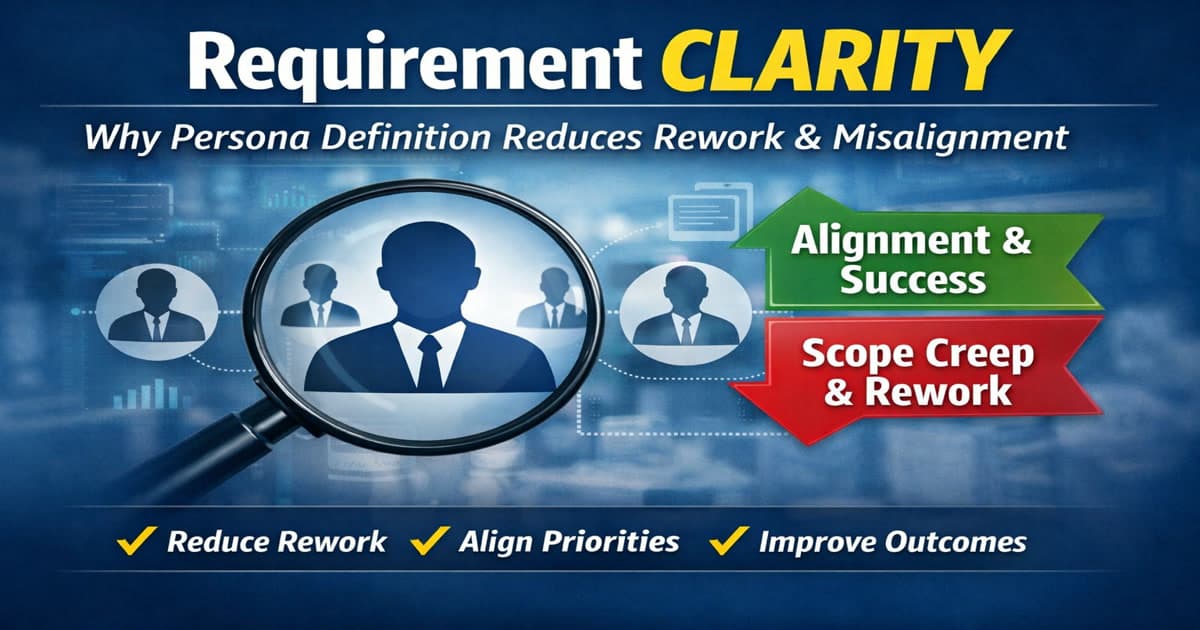
Requirement Clarity: How Structured Persona Definition Reduces Rework and Misalignment

A structured framework for defining personas that eliminates scope creep, reduces rework, and aligns engineering delivery with actual user needs — before development begins.

Executive Summary Who this is for: CIOs, CTOs, Product Leaders, Engineering Heads Problem it solves: Ambiguous requirements leading to scope creep and...

Operating Model Choices
Advanced (EA, TS)5-6 hoursOperating model design canvas + team topology guide + Conway's Law application worksheet + Communication Structure Heatmap

How the structure of technology teams shapes the structure of the systems they build — covering Conway's Law, centralised vs federated models, platform teams, product operating models, team topologies, and designing the organisation that produces the architecture you want.

Quick Navigation Start here — Conway's Law Centralised vs federated Platform teams Product operating models Team topologies Governance in federated models Choosing an operating model Inverting...

1 DayIntensive
StrategicEA · TS
Standards & Reference Architectures
Intermediate (SA, EA)4-5 hoursReference architecture library starter + standards register + architecture principles catalogue

How to create, govern, and operationalise architecture standards and reference architectures — the agreed patterns and structures that create consistency, reduce duplication, and accelerate delivery at scale.

...and structures that create consistency across an organisation — reducing duplication, accelerating delivery, and managing risk at scale. Standards settle common questions once, so teams don't have to...

1 dayIntensive
PracticalStandards exercise
Platform Engineering & DevEx Strategy Workshop
VP Engineering, Platform Leads, Engineering ManagersPlatform engineering strategy, golden path specifications, DevEx baseline

Design internal developer platforms and golden paths that accelerate delivery, improve developer experience, and create standardised pathways.

...need fewer obstacles. I've sat in rooms with platform teams who built beautiful internal tools — and product teams who didn't use them because the golden path was harder than the dirt road. A platform...

2 DaysStrategic Design
DevEx ImprovementTeam Velocity