Skip to content

Search

Find insights, training programs, and workshops

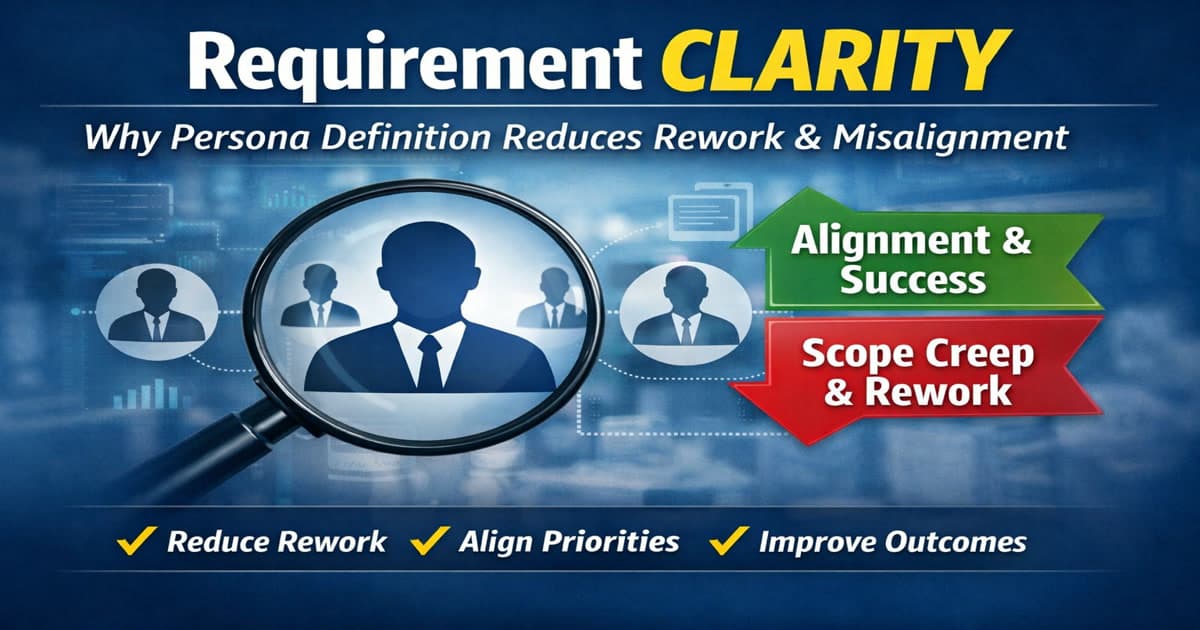
Requirement Clarity: How Structured Persona Definition Reduces Rework and Misalignment

A structured framework for defining personas that eliminates scope creep, reduces rework, and aligns engineering delivery with actual user needs — before development begins.

...adoption is low. Stakeholders question priorities. Scope shifts mid-sprint. Requirements get rewritten. Architecture decisions are challenged weeks after approval. This is not a capability problem. It is...

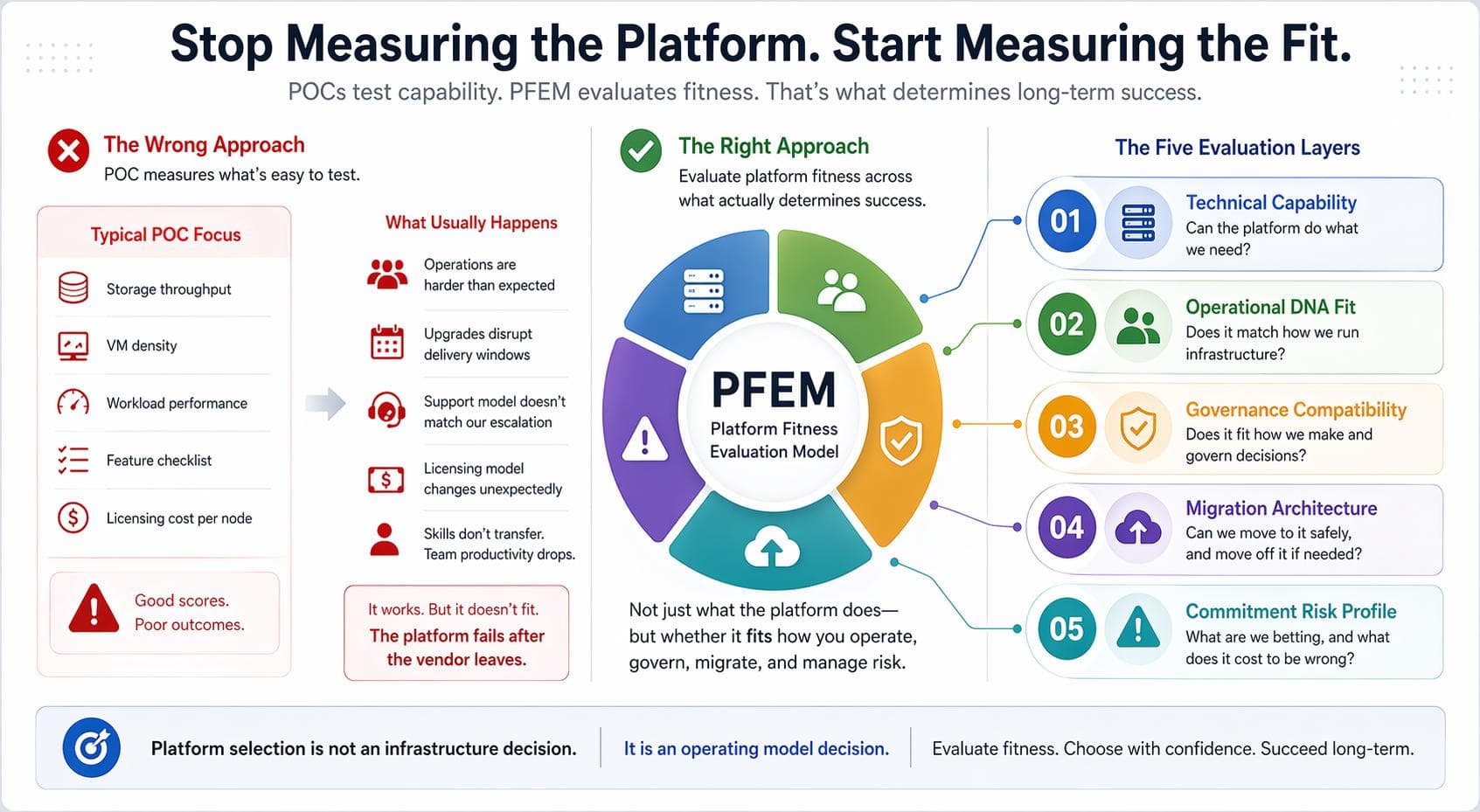
Your HCI Proof of Concept Measures the Wrong Thing.

Most organizations evaluate private cloud and HCI platforms by running a technical POC. The POC passes. The platform fails. The reason is structural — and fixable. The Platform Fitness Evaluation Model (PFEM) tells you what to measure instead.

...POC is usually infrastructure or operations. They evaluate technical capability. Nobody asks the architecture question: Does this platform fit our operating model? That question is not in the RFP. It...

Application, Integration, API, Interface, Data & Process Design
Intermediate to Advanced (SA, EA)6-8 hoursIntegration design playbook + API design standards + data movement pattern guide

How the components of a solution are structured internally, how they communicate with each other, and how they connect to the data and processes they depend on.

...consistency Interfaces are what people and systems actually see and use. A system with great internal architecture but poor interfaces fails in practice. Interface design covers two domains: User interfaces...

2 DaysIntensive
ComprehensiveSA · EA
Application & Technology Landscape
All levels — SA, EA, TS4-5 hoursApplication landscape register + technology heat map + dependency matrix

How to build, read, and use the full picture of what an organisation runs — every application, platform, integration, and technology — and how they depend on each other.

...decisions — rationalisation, consolidation, investment, migration. A register that influences nothing is architecture theatre. The landscape is the factual foundation of enterprise architecture. Build it. Read...

1 dayIntensive
PracticalLandscape exercise
Emerging Technology Scanning
All levels — SA, EA, TS3-4 hoursTechnology radar template + horizon scanning process + hype vs signal evaluation criteria

How to monitor what is coming, filter signal from noise, and make deliberate decisions about when and how to adopt new technologies — before being forced to react.

...Migrate away if possible Quadrants (technology categories): Quadrant What it covers Techniques Architecture patterns, practices, methodologies Platforms Infrastructure, cloud, runtime platforms...

Half-dayIntensive
PracticalSA · EA · TS
Future Operating Model
Advanced (EA, TS)5-6 hoursFuture operating model scenarios + AI-native organisation design principles + transition pathway + Communication Structure Heatmap

How organisations will need to restructure their technology capabilities, teams, and governance as AI, automation, and platform thinking reshape what it means to run a technology function.

...changing The AI-augmented technology function Platform-based operating models The evolving role of architecture Skills and capabilities Governance in a future operating model Designing the transition AI...

1 DayIntensive
StrategicEA · TS
Portfolio & Dependency Thinking
All levels — SA, EA, TS4-5 hoursPortfolio map template + dependency radar + investment alignment grid

How to see all systems, initiatives, and investments as a connected whole — understanding dependencies, shared capabilities, and how decisions in one place ripple across others.

...the system of systems. This shift from single-system to portfolio thinking is what separates solution architecture from enterprise architecture. Keep it in mind. From systems thinking to portfolio thinking...

1 dayIntensive
StrategicPortfolio-level
Quality Attributes / -ilities
SA, EA — Intermediate5-6 hoursQuality attribute reference card + -ility prioritisation matrix

The non-functional characteristics that determine whether a system is truly fit for purpose — scalability, reliability, availability, performance, security, maintainability, and more.

...is truly fit for purpose — not just whether it works, but how well it works under real conditions. Architecture is driven by quality attributes more than by functional requirements. Features can be added...

1 DayIntensive
SA · EARoles
Requirements, Constraints, Trade-offs & Compromise
All levels — SA, EA, TS5-6 hoursTrade-off framework + constraint register template + requirements classification guide

The art of making the best possible architectural decision given what is required, what is constrained, and what must be sacrificed.

Quick Navigation Start here — What architecture really is Functional vs non-functional requirements Constraints Competing priorities Trade-off...

1 DayIntensive
PracticeReal decisions
Roadmaps & Transformation Sequencing
Intermediate to Advanced (SA, EA, TS)5-7 hoursRoadmap template + transition state design guide + sequencing logic + dependency overlay

How to build multi-year transformation roadmaps that sequence architectural change realistically — accounting for dependencies, capacity, risk, and the fact that the organisation must continue operating while it transforms.

...dates. It's a sequenced set of decisions and transitions that move the organisation from its current architecture to its target architecture — accounting for the fact that the organisation must continue...

1.5 DaysIntensive
StrategicSA · EA · TS
1···678···11