Skip to content

Search

Find insights, training programs, and workshops

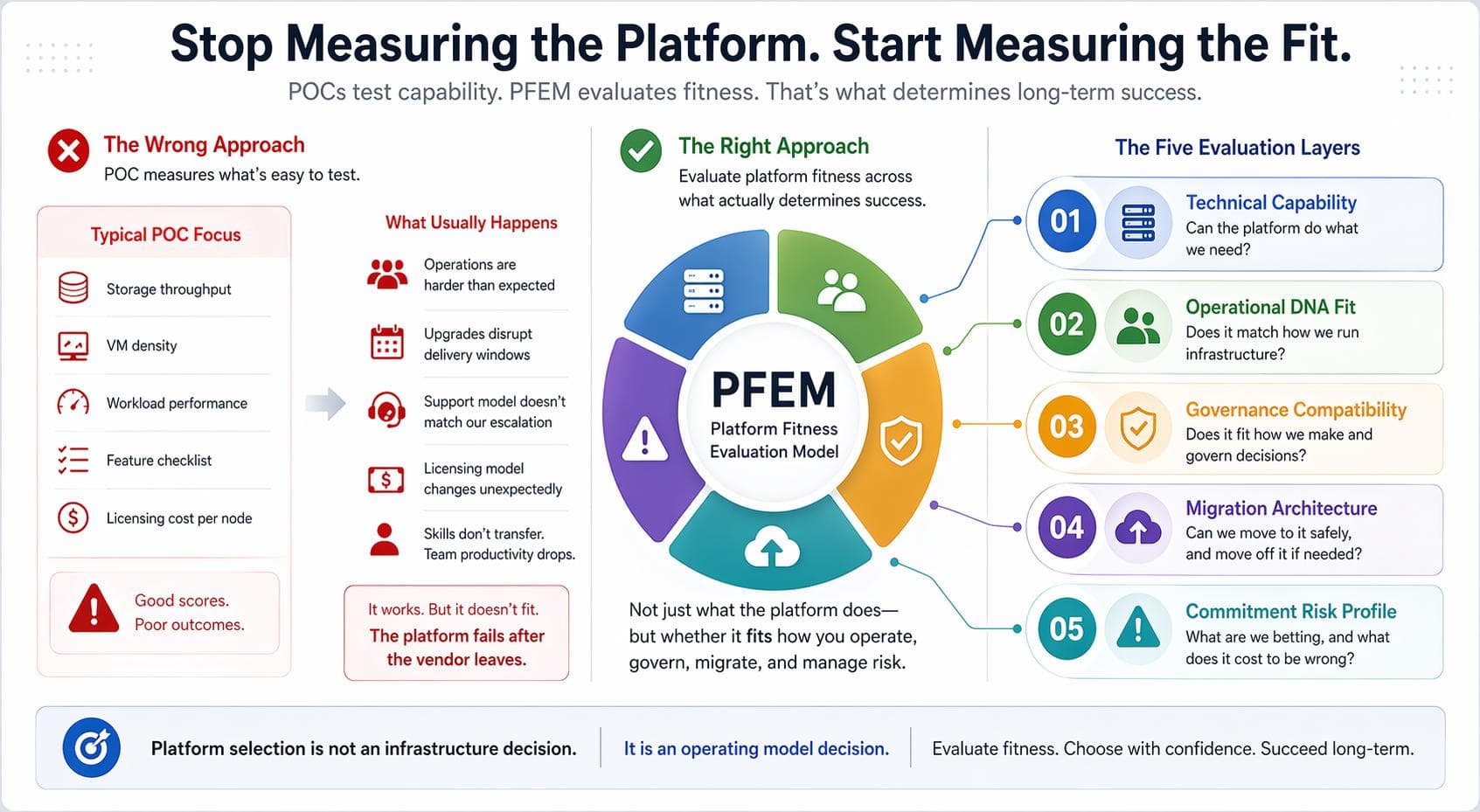
Your HCI Proof of Concept Measures the Wrong Thing.

Most organizations evaluate private cloud and HCI platforms by running a technical POC. The POC passes. The platform fails. The reason is structural — and fixable. The Platform Fitness Evaluation Model (PFEM) tells you what to measure instead.

...cost question in 2019 discovered the answer in 2024. The Broadcom acquisition did not create their risk. The absence of a Layer 4 evaluation created it. Layer 5: Commitment Risk Profile This is the...

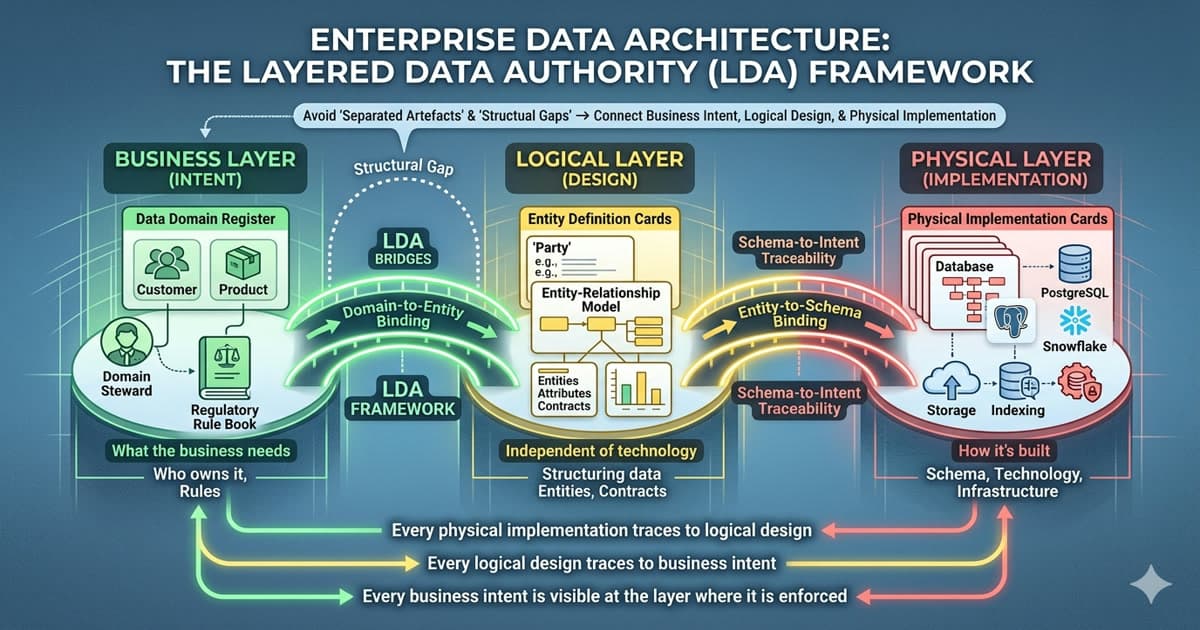
Complete Enterprise Data Architecture Framework: Business, Logical, Physical Layers with Real Templates

Most enterprises build data architectures one layer at a time. Business, logical, and physical layers exist as separate artefacts owned by separate teams. That separation is the structural gap that makes data estates ungovernable.

...(Weeks 3–4) Objective: Build the connections for the pilot domain. Activities: Select the highest-risk or most-regulated data domain as the pilot Complete the Business Layer Template for that domain Produce...

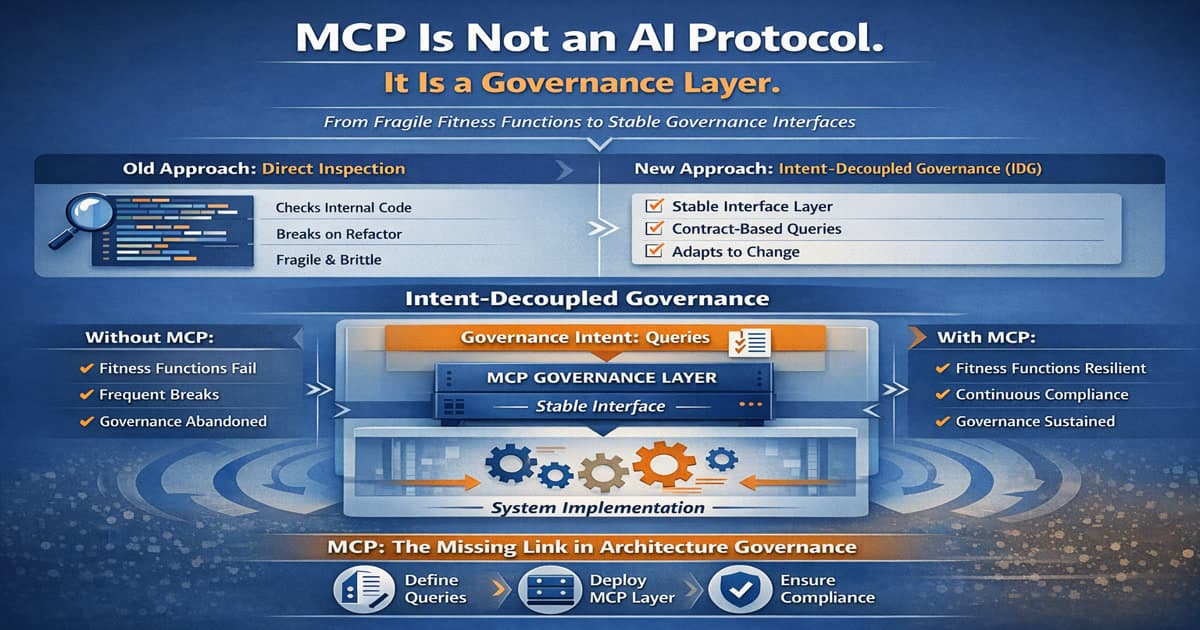
MCP Is Not an AI Protocol. It Is a Governance Layer.

MCP is classified as an AI integration protocol. It is actually a governance primitive — the stable interface layer that architecture fitness functions have been missing for years.

...The engineering team saw it as a protocol integration. The security team saw it as a data exposure risk. Neither was wrong — but neither was asking the structural question: what does MCP mean for our...

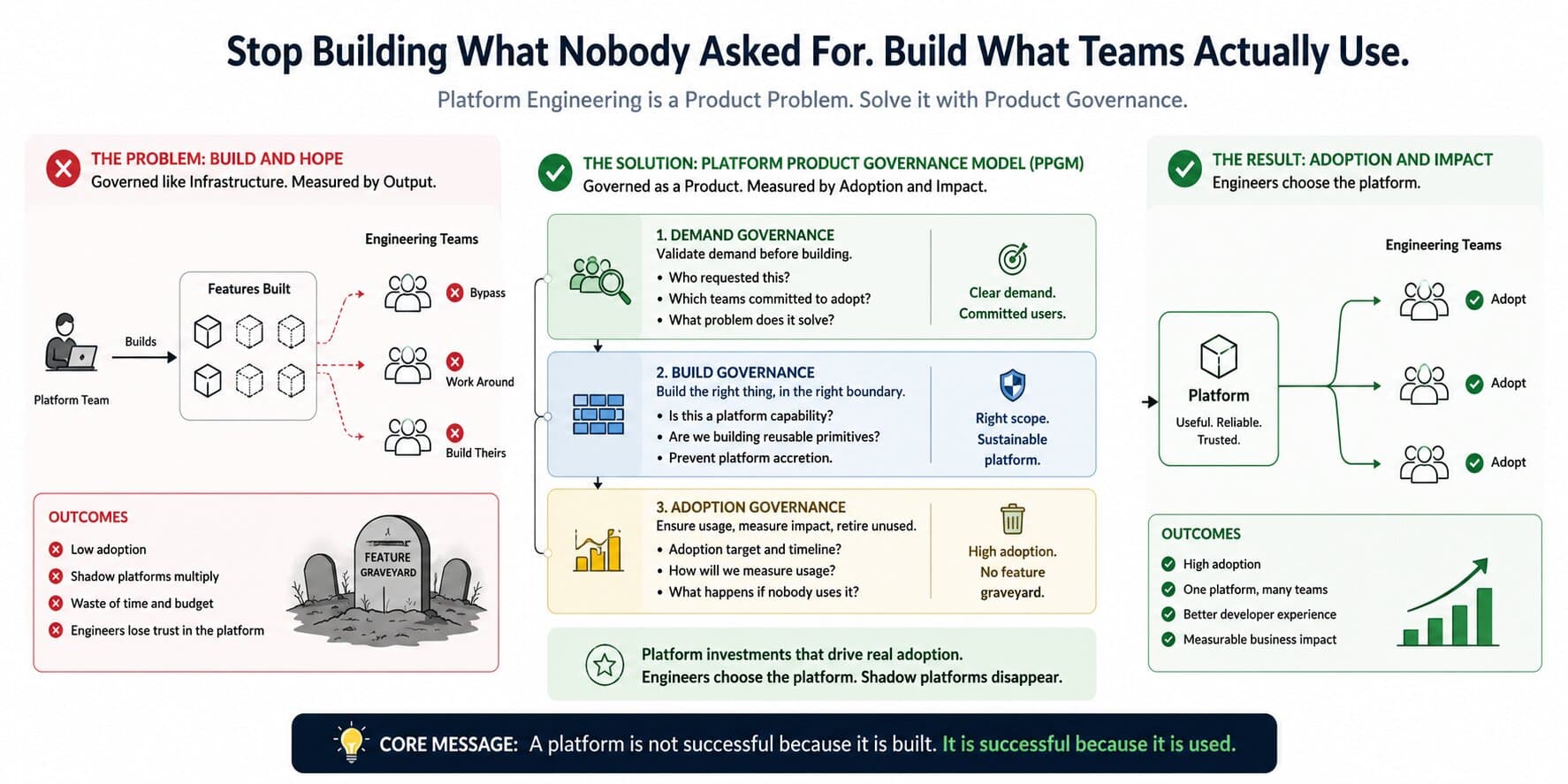
Your Platform Team Is Building a Product Nobody Asked For.

Most platform teams build internal products their engineering teams never chose. Platform adoption is not a marketing problem. It is a product governance problem. Here is the model that fixes it.

...discovers this during an audit. The reaction is predictable: shadow IT. Ungoverned spend. Security risk. The reaction should be different: we built a platform that did not fit, and our teams responded...

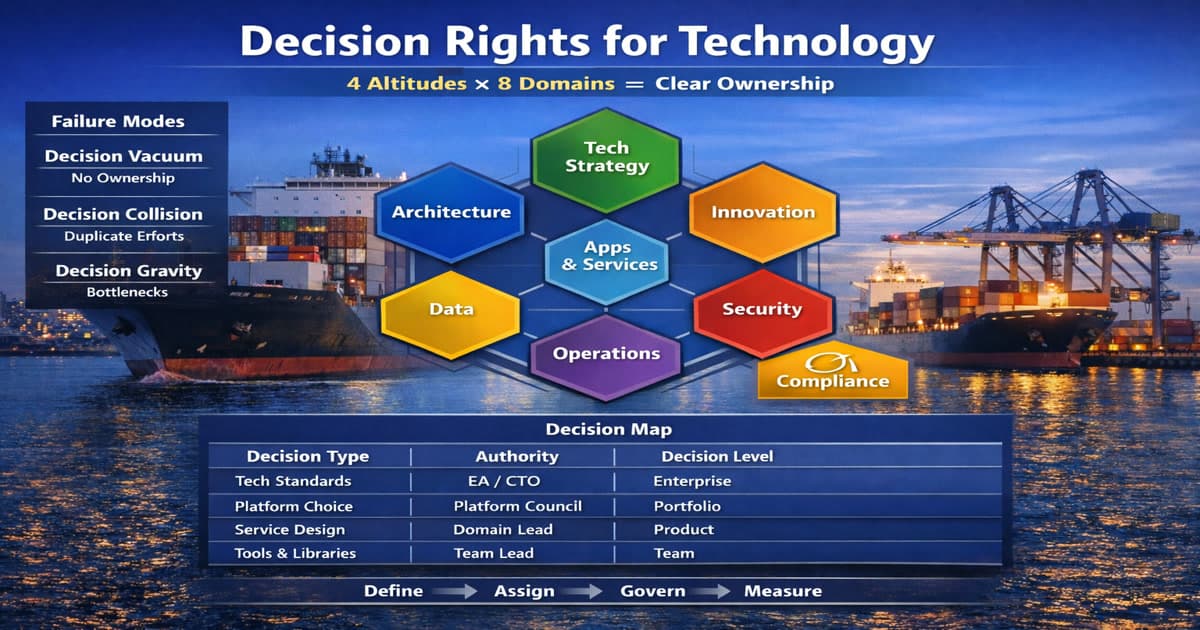
Decision Rights for Technology — Who Decides What in a Modern Enterprise

Why most enterprises confuse escalation ladders with decision rights — and how Technology Decision Domain Architecture maps exactly who decides what, at which altitude, before the conflict arrives.

...paths. The three-level approval was replaced with a decision rights matrix that matched review depth to risk. The architecture board's agenda shrunk by 60%. Teams stopped hiding workarounds because they had...

Investment & Prioritisation
Advanced (EA, TS)5-6 hoursInvestment prioritisation model + business case guide (including TCO and unit economics) + sequencing criteria

How to decide which technology initiatives get funded, in what order, and why — connecting architecture to financial decisions and business outcomes.

...Navigation Start here — Why prioritisation is an architecture concern Building a business case Value and risk Portfolio prioritisation frameworks Sequencing Architecture's role in investment Common mistakes FinOps...

1 DayIntensive
StrategicEA · TS
AI Policy, Security & Organisational Controls
Beginner to Intermediate4-5 hoursAI policy checklist + security controls map + incident response starter template

Building and enforcing AI policy — the practical mechanisms that turn ethical principles into enforceable organisational rules. Data security, access controls, audit trails, and incident response.

...Navigation The enforcement gap Anatomy of an AI policy Data security Prompt injection and adversarial risk Access controls Audit trails and logging Incident response Compliance mapping The control environment...

1 DayIntensive
Beginner FriendlyNo legal background required
Application & Technology Landscape
All levels — SA, EA, TS4-5 hoursApplication landscape register + technology heat map + dependency matrix

How to build, read, and use the full picture of what an organisation runs — every application, platform, integration, and technology — and how they depend on each other.

...depend on it. Technology debt — systems running on unsupported versions because nobody tracked the risk. Wasted investment — buying a new platform that overlaps with an existing one. Failed migrations...

1 dayIntensive
PracticalLandscape exercise
Capability Mapping & Business Outcomes
All levels — SA, EA, TS4-5 hoursBusiness capability map template + capability-to-outcome linkage model

How to build business capability maps, connect them to technology, and link capabilities to strategic outcomes — the bridge between business strategy and technical architecture.

...Not a system Customer Onboarding "The 7-step onboarding workflow" "The KYC team" "Salesforce" Risk Assessment "The quarterly risk review" "The risk department" "The risk engine" Order Fulfilment...

1.5 daysIntensive
PracticalMap-building exercise
Emerging Technology Scanning
All levels — SA, EA, TS3-4 hoursTechnology radar template + horizon scanning process + hype vs signal evaluation criteria

How to monitor what is coming, filter signal from noise, and make deliberate decisions about when and how to adopt new technologies — before being forced to react.

...Filter — apply relevance criteria. Shortlist of technologies. Evaluate — assess against strategy and risk. Technology assessments. Decide — adopt, trial, assess, or hold. Radar placements. Act — fund pilots,...

Half-dayIntensive
PracticalSA · EA · TS
1···456···10