Skip to content

Search

Find insights, training programs, and workshops

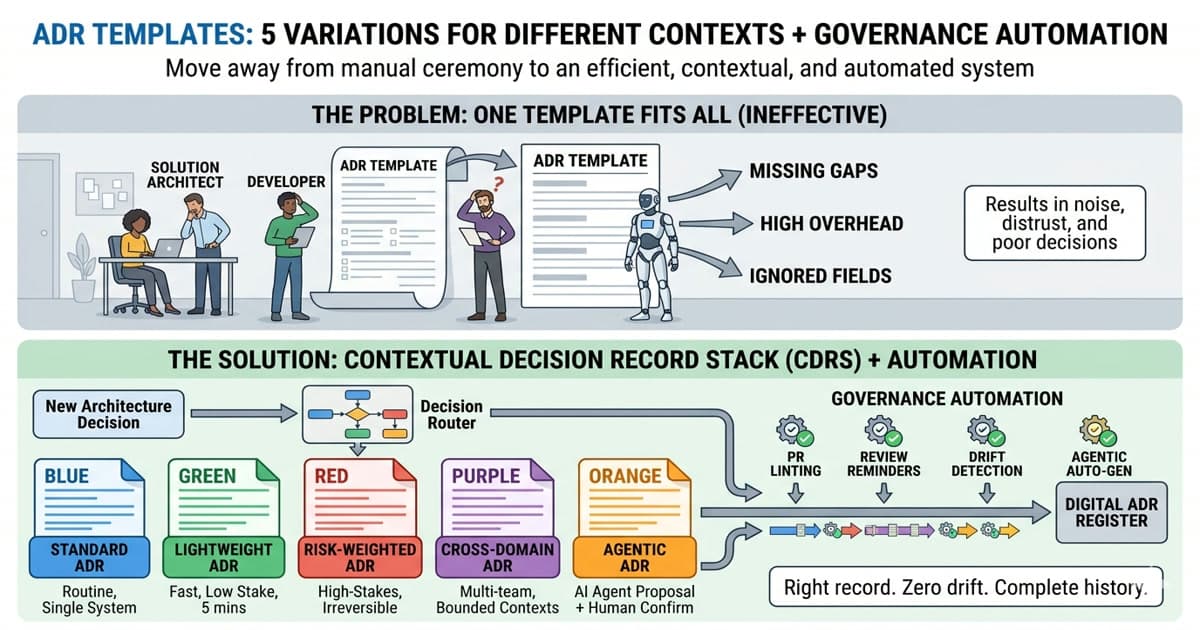
ADR Templates: 5 Variations for Different Contexts + Governance Automation

One ADR template does not fit every architectural context. Five purpose-built variations — for standard decisions, agentic AI, cross-domain impact, fast delivery, and high-risk reversals — plus governance automation to make the system run without manual follow-up.

Executive Summary Who this is for: Enterprise Architects, Solution Architects, Architecture Leads, Engineering Managers Problem it solves:...

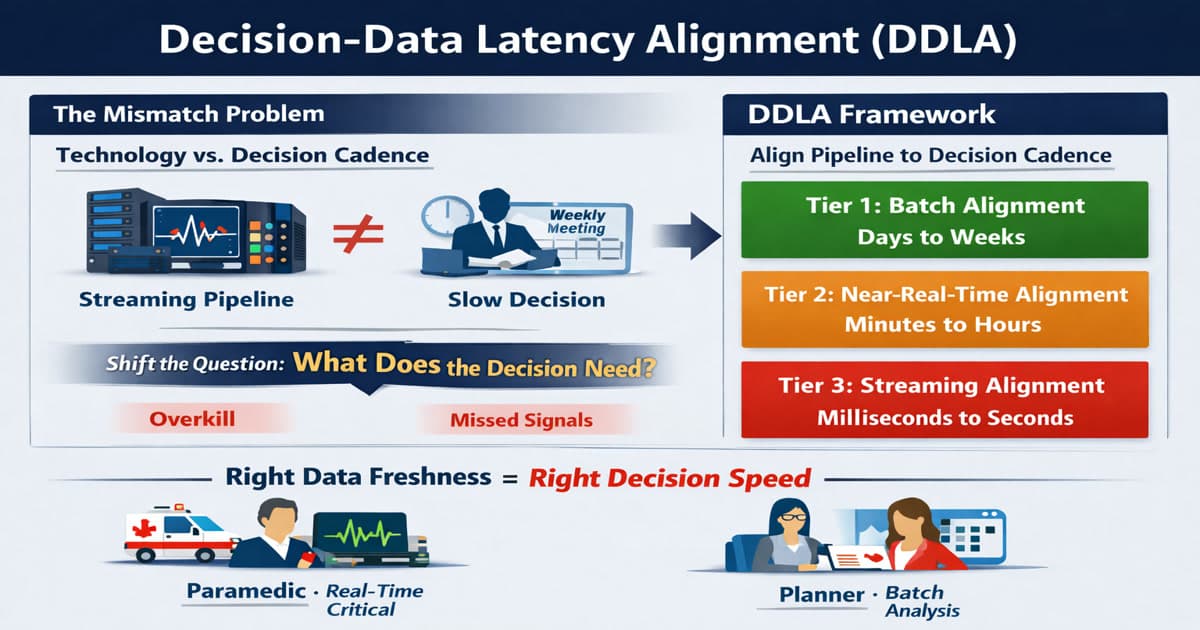
Batch vs Real-Time Is the Wrong Debate.

Organisations debate batch versus real-time as if it is a technical preference. It is not. It is a structural mismatch between data freshness and decision cadence — and the mismatch is where the cost lives.

Executive Summary Who this is for: CTOs, Data Architects, Enterprise Architects, Platform Engineering Leads Problem it solves: Organisations choosing data pipeline...

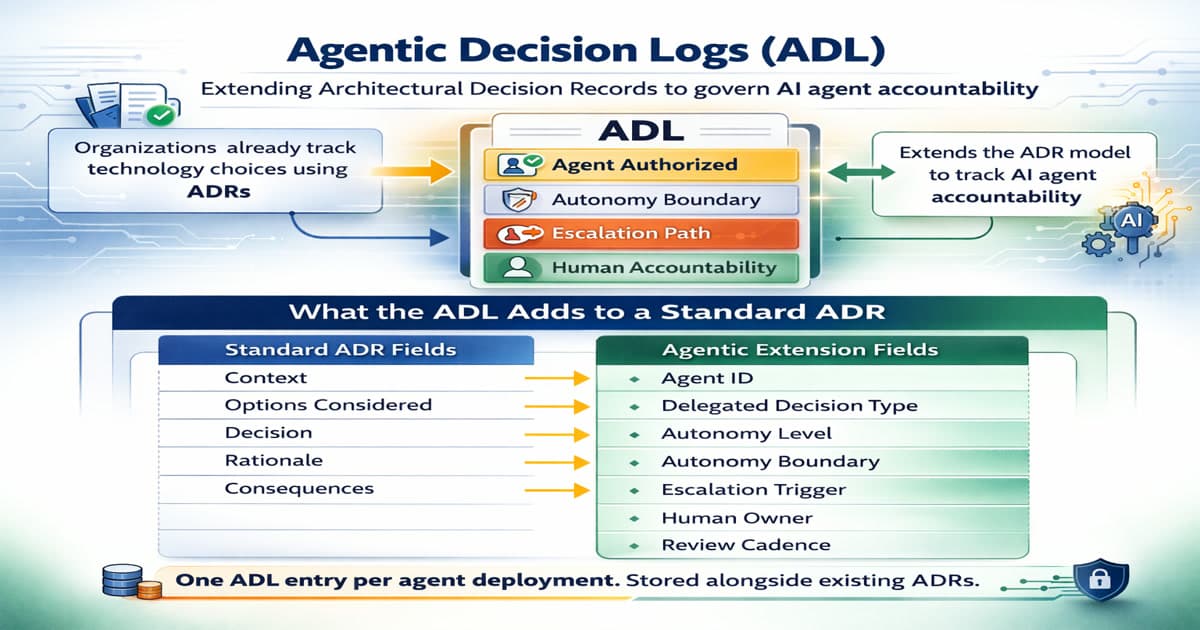
Nobody Uses ADRs as an Agentic Decision Log. They Should.

Why Architectural Decision Records are the only structure most organizations already have that can govern AI agent accountability — and how to extend them into an Agentic Decision Log before the EU AI Act deadline.

Executive Summary Who this is for: Enterprise Architects, CTOs, Solution Architects, Architecture Governance Teams Problem it solves: Organizations...

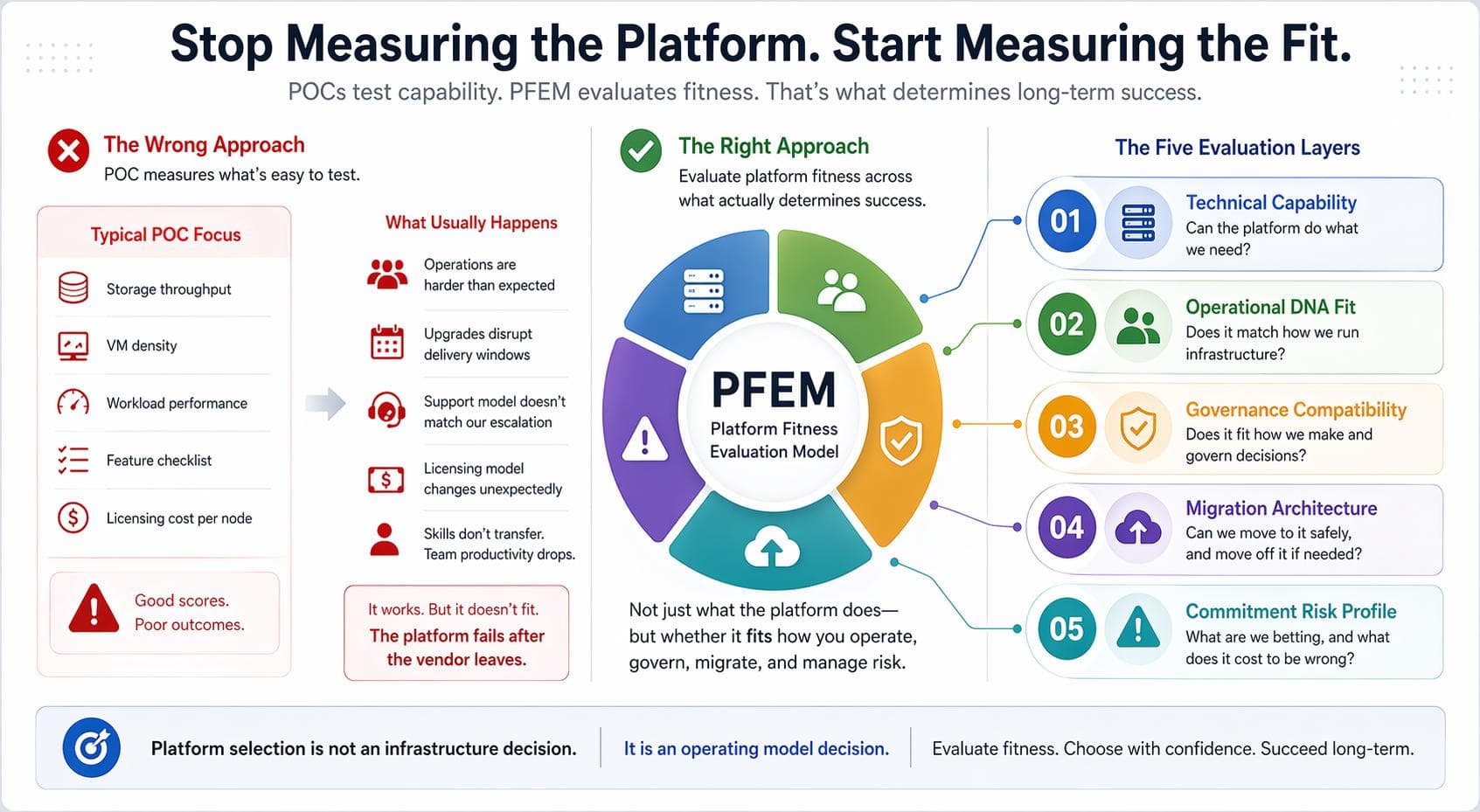
Your HCI Proof of Concept Measures the Wrong Thing.

Most organizations evaluate private cloud and HCI platforms by running a technical POC. The POC passes. The platform fails. The reason is structural — and fixable. The Platform Fitness Evaluation Model (PFEM) tells you what to measure instead.

Executive Summary Who this is for: CTOs, CIOs, Enterprise Architects, Infrastructure Leaders, IT Decision Makers Problem it solves: Organizations select...

Data and AI
Intermediate4-6 hoursData readiness assessment + governance framework + pipeline blueprint

The data foundations that make AI work. Data quality, governance, architecture, pipelines, and the GenAI shift from training to retrieval. Most AI failures are data failures — learn the patterns and prevent them.

...problem AI exposes Data quality — the six dimensions Data governance — who owns and protects it Data architecture for AI Feature engineering Data pipelines Data for Generative AI — what's different Common...

1.5 DaysIntensive
Data ReadinessAssessment
Paying Down Debt Through Feature Work
CTOs, Engineering Leaders, Enterprise Architects, Product Leaders3-4 hoursA feature-driven debt reduction policy — the rule, the visibility mechanism, and the two questions review asks about every feature

Debt accumulates faster than refactoring projects can remove it. Fund architecture improvement through the product roadmap instead of competing with it.

...technical debt. Teams say: we should refactor this, this module needs redesign, we need to clean up the architecture. Then deadlines arrive. Product features take priority. Refactoring is postponed. Months...

1 DayIntensive
ContinuousNot a project
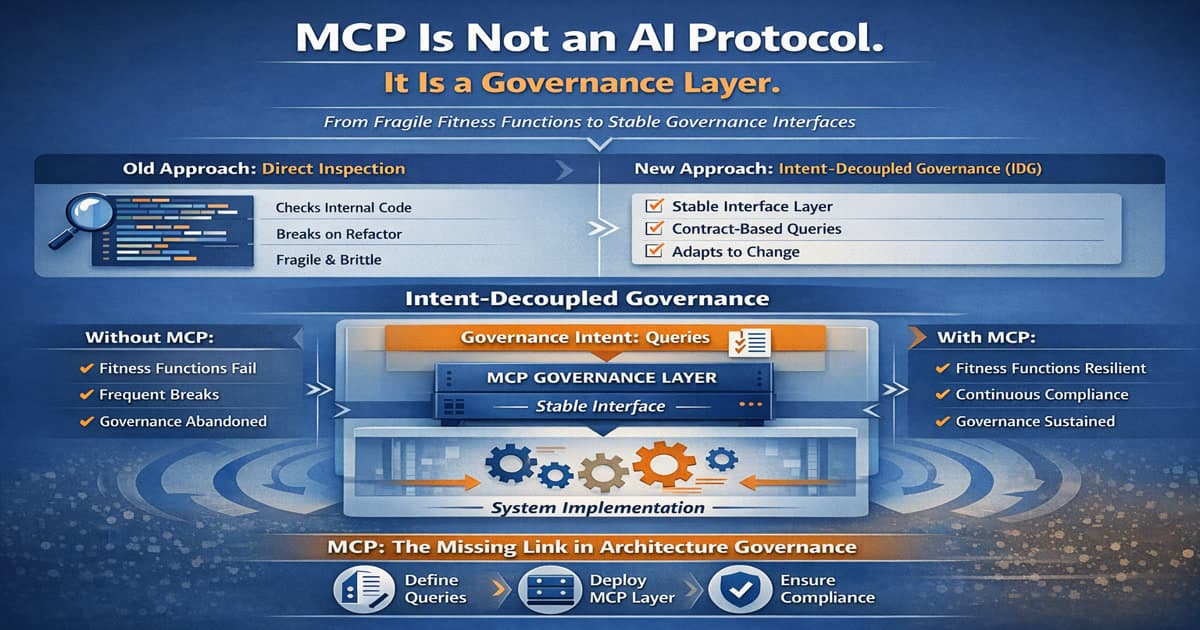
MCP Is Not an AI Protocol. It Is a Governance Layer.

MCP is classified as an AI integration protocol. It is actually a governance primitive — the stable interface layer that architecture fitness functions have been missing for years.

Executive Summary Who this is for: Enterprise Architects, Solution Architects, CTOs, Architecture Leads Problem it solves: Architecture...

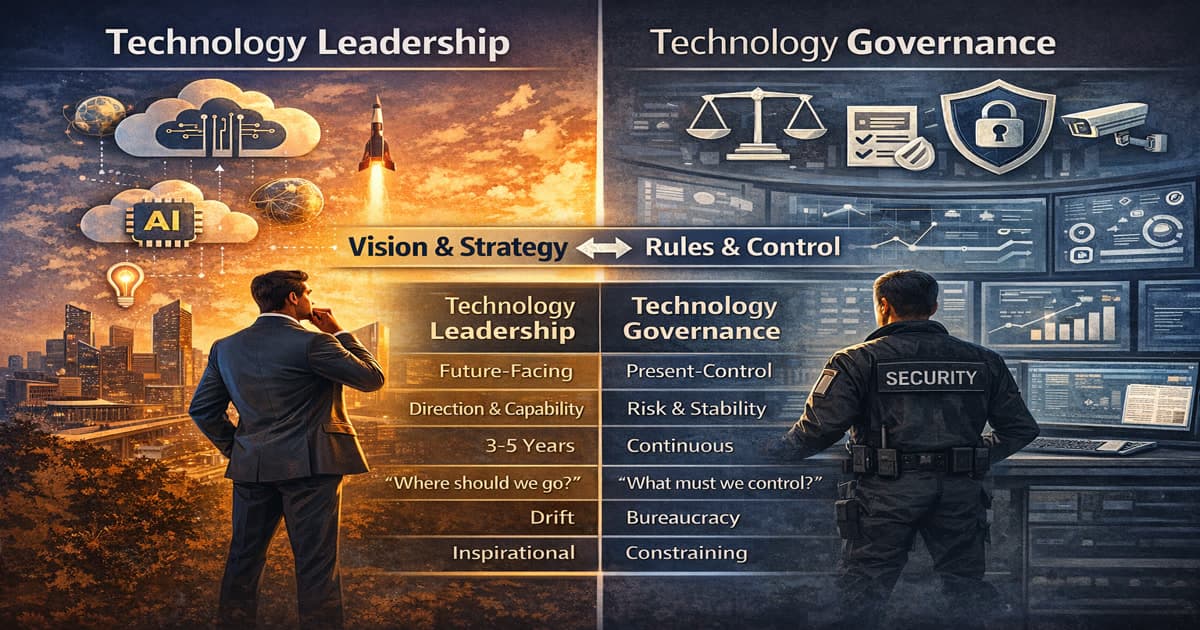
Technology Leadership vs Technology Governance: Why Confusing the Two Creates Structural Instability

A structured executive guide explaining the difference between Technology Leadership and Technology Governance, and why confusing the two creates instability in enterprise execution.

Executive Summary Who this is for: CIOs, CTOs, Enterprise Architects, Technology Leaders Problem it solves: Confusion between inspiration-driven leadership...

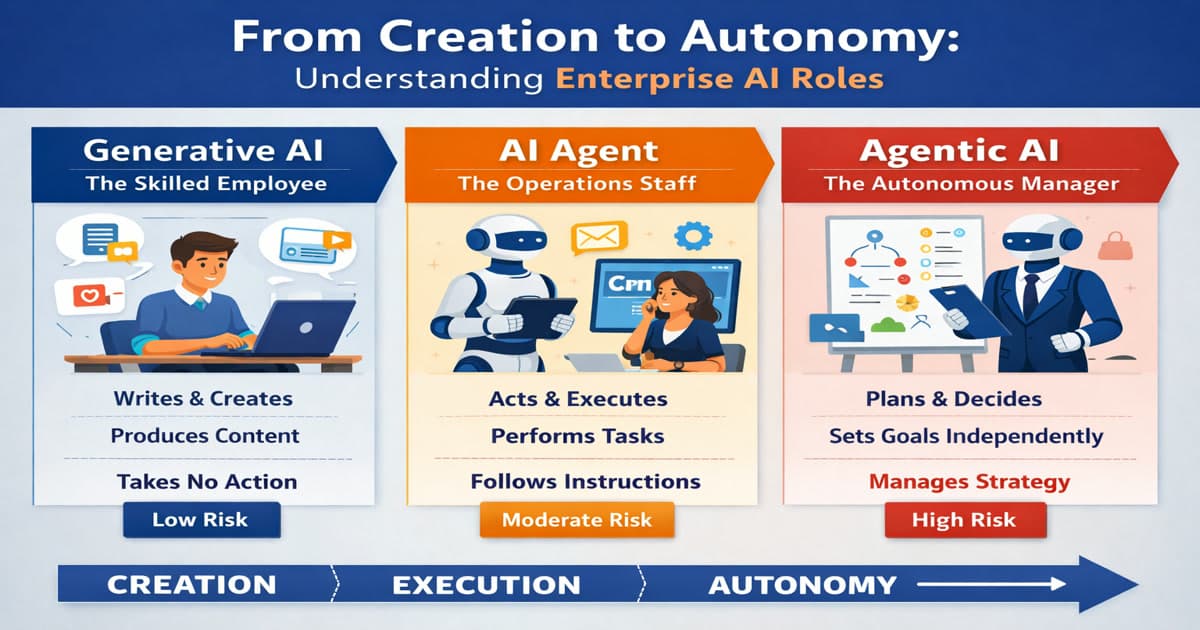
From Creation to Autonomy: Understanding Generative AI, AI Agents, and Agentic AI Through a Workplace Analogy

A clear executive guide explaining Generative AI, AI Agents, and Agentic AI using a corporate office analogy to prevent autonomy risks in enterprise AI.

Executive Summary Who this is for: CIOs, CTOs, Enterprise Architects, AI Strategy Leaders Problem it solves: Confusion between Generative AI, AI Agents,...

Delivery Metrics That Mean Something
Engineering Managers, Tech Leads, VP Engineering, CTOs3-4 hoursA delivery scorecard — four DORA signals plus a five-dimension maturity baseline with one named bottleneck

How to replace delivery dashboards that measure activity with signals that tell you which dimension is actually holding delivery back — and what to fix first.

...whether the aircraft is ready to fly. Most organisations do not treat delivery this way. They say: our architecture is maturing, our governance is improving, we are becoming more agile. Those are feelings,...

1 DayIntensive
EvidenceNot feeling