Search
Find insights, training programs, and workshops
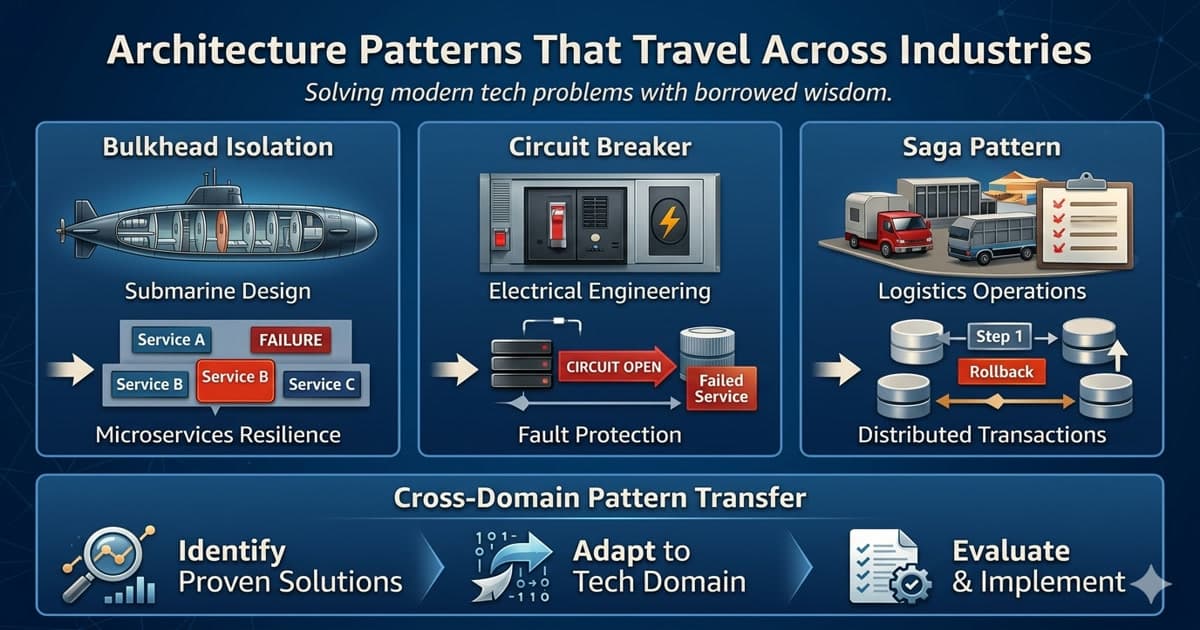
The patterns that solve your hardest distributed systems problems were already solved — in a submarine, a postal sorting office, and an electrical panel. Most architects never look.
...Compensating actions are not sequenced in a consistent reverse order Different teams implement the same integration differently No canonical contract governs how boundary-crossing communication occurs The...
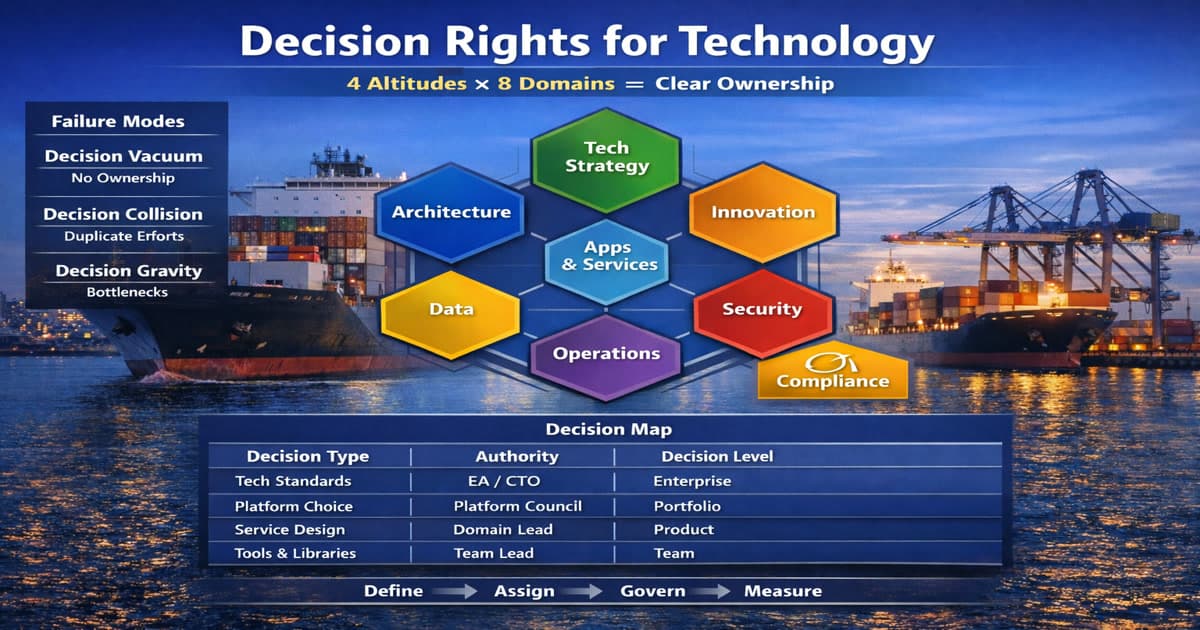
Why most enterprises confuse escalation ladders with decision rights — and how Technology Decision Domain Architecture maps exactly who decides what, at which altitude, before the conflict arrives.
...that govern a bounded business or technology domain Domain platform choices, data ownership rules, integration contracts Team Decisions within a team's implementation boundary Library selection within...
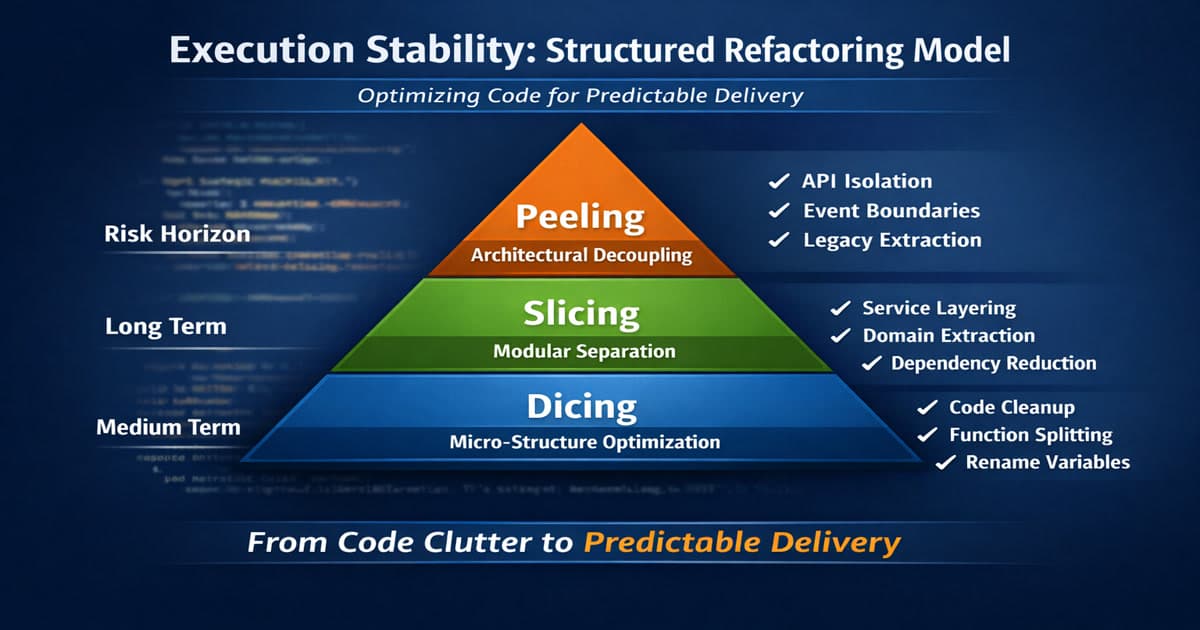
A practical framework for reducing delivery slowdown caused by unmanaged structural code complexity — improving cycle time, reducing regression risk, and clarifying ownership boundaries.
...Slicing Frequent merge conflicts Blurred domain ownership High change collision between teams Escalating integration complexity Business Impact Parallel development improves Coordination overhead reduces...
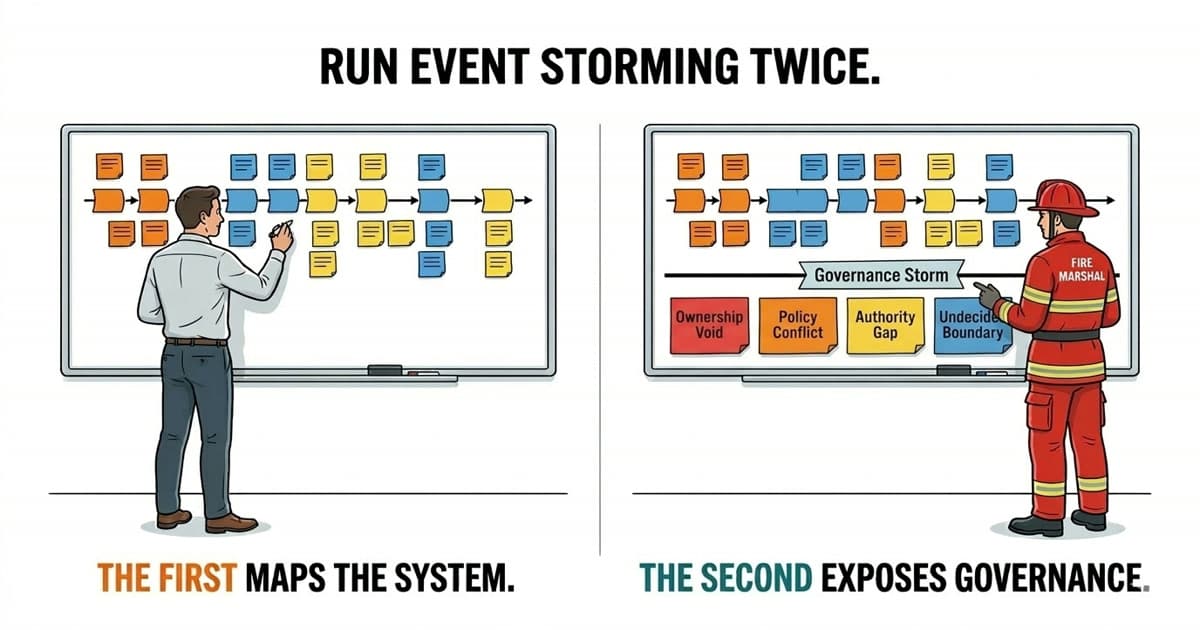
Why the second run of an Event Storming workshop — the one most teams never attempt — is the fastest way to surface governance gaps that architecture diagrams will never show.
...entirely. Neither team is willing to give it up. The boundary sits in the model, unresolved. Every integration across that boundary carries the cost of that unresolved decision. This is an Undecided...
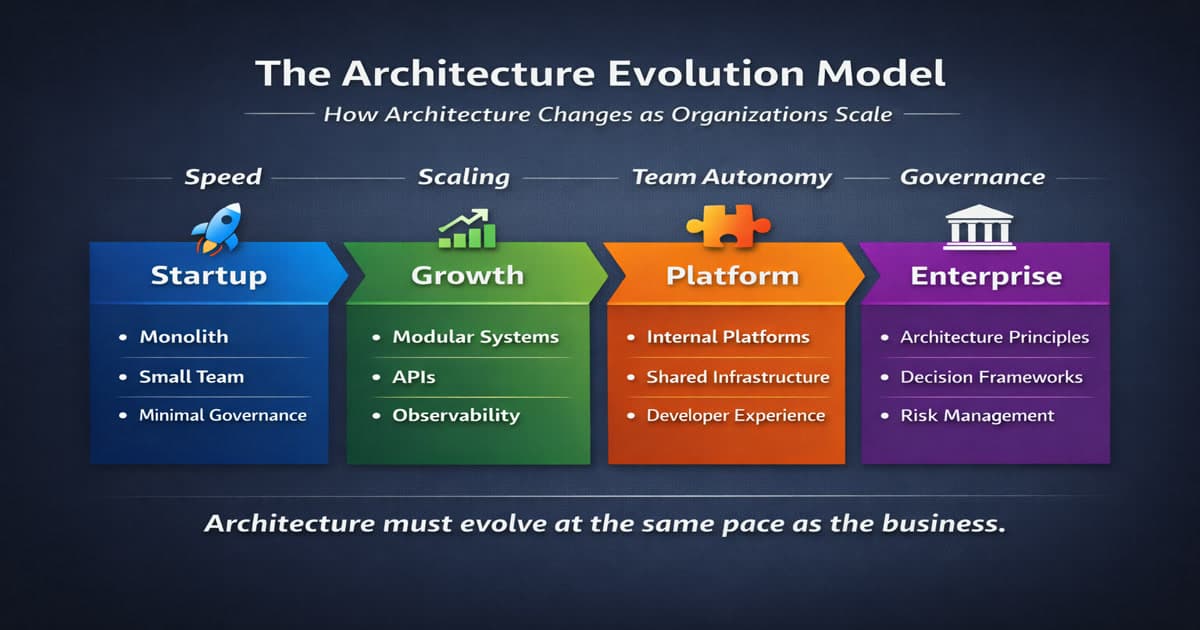
A practical framework explaining how software architecture evolves from startup experimentation to enterprise-scale governance, and what architectural practices are needed at each stage.
...Changes Growth introduces: larger engineering teams multiple product features increasing user load more integrations Architecture must begin introducing structure. Typical changes include: modularizing...
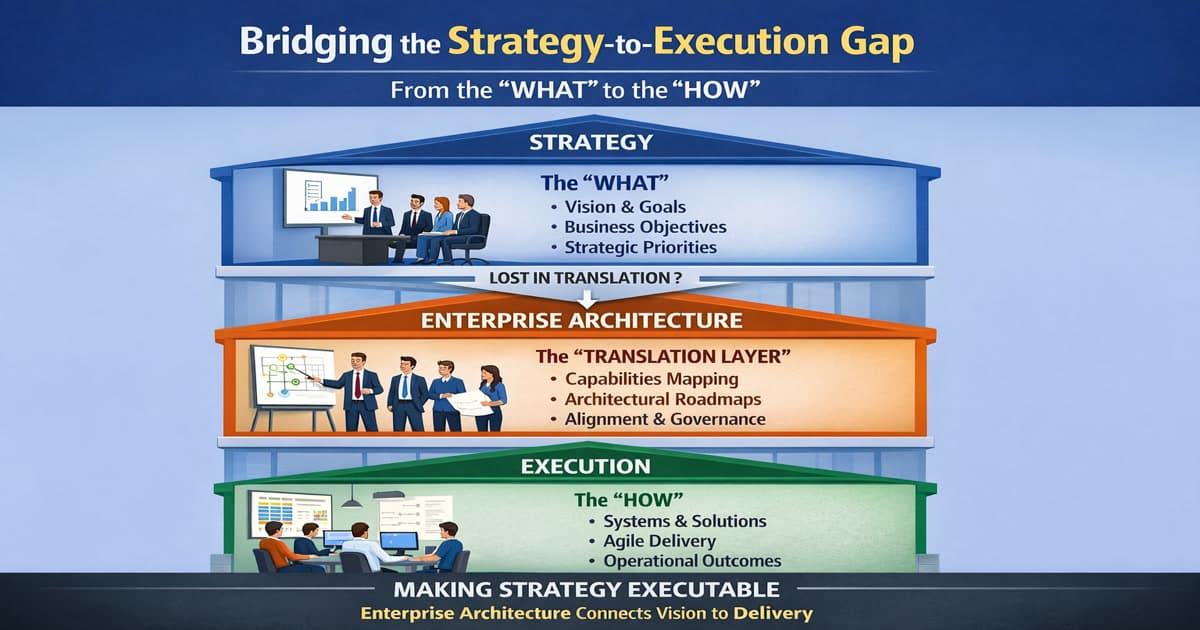
Why strategic intent evaporates before it reaches engineering teams — and how Enterprise Architecture creates the translation layer that makes organizational strategy executable.
...systems are designed, delivery teams make hundreds of architectural decisions. Which data model? Which integration pattern? Which technology platform? Which team owns the boundary? If those decisions are...
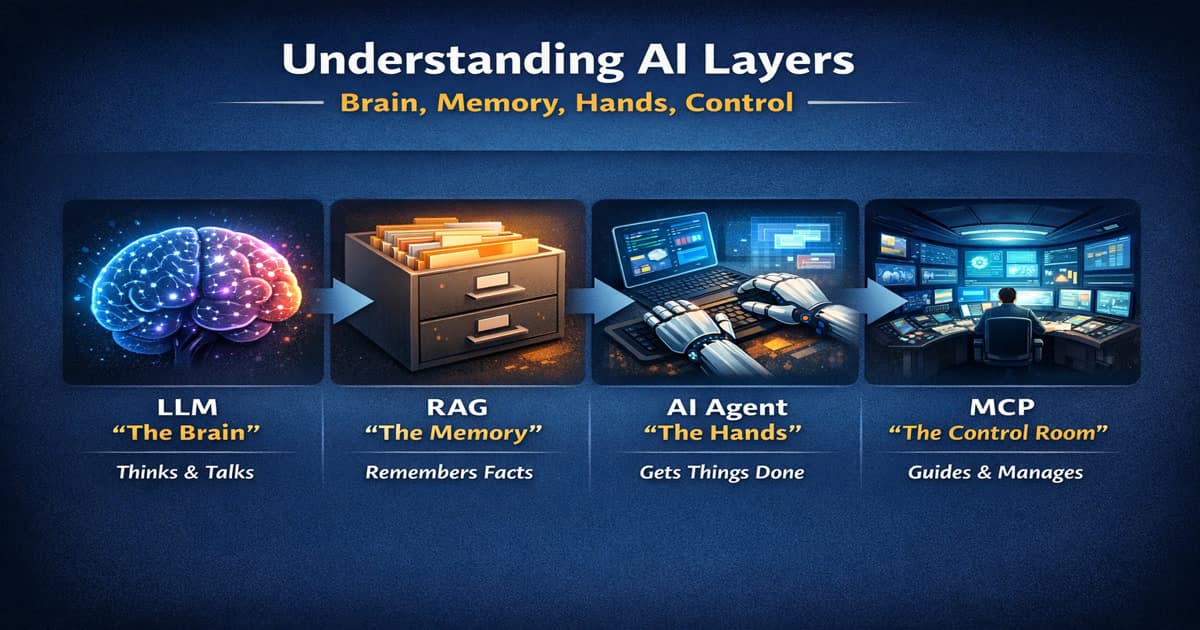
A clear executive guide explaining LLM, RAG, AI Agents, and MCP using the Brain model to prevent enterprise AI instability.
...approval checkpoints Success Metric: No autonomous agent without defined boundary Phase 3: Governance Integration (Weeks 7--12) Objective: Institutionalize AI architecture discipline Activities: Introduce...
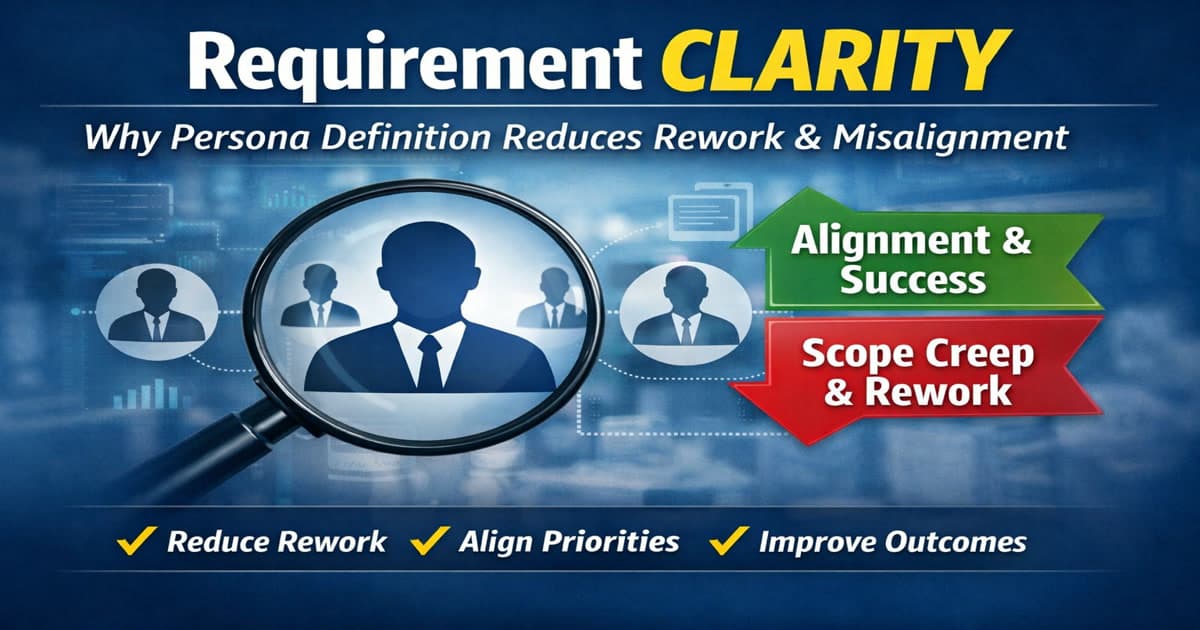
A structured framework for defining personas that eliminates scope creep, reduces rework, and aligns engineering delivery with actual user needs — before development begins.
...business objectives Success Metric: Each persona has measurable success criteria Phase 3: Governance Integration (Weeks 5–8) Objective: Embed into delivery lifecycle Activities: Update requirement templates Add...
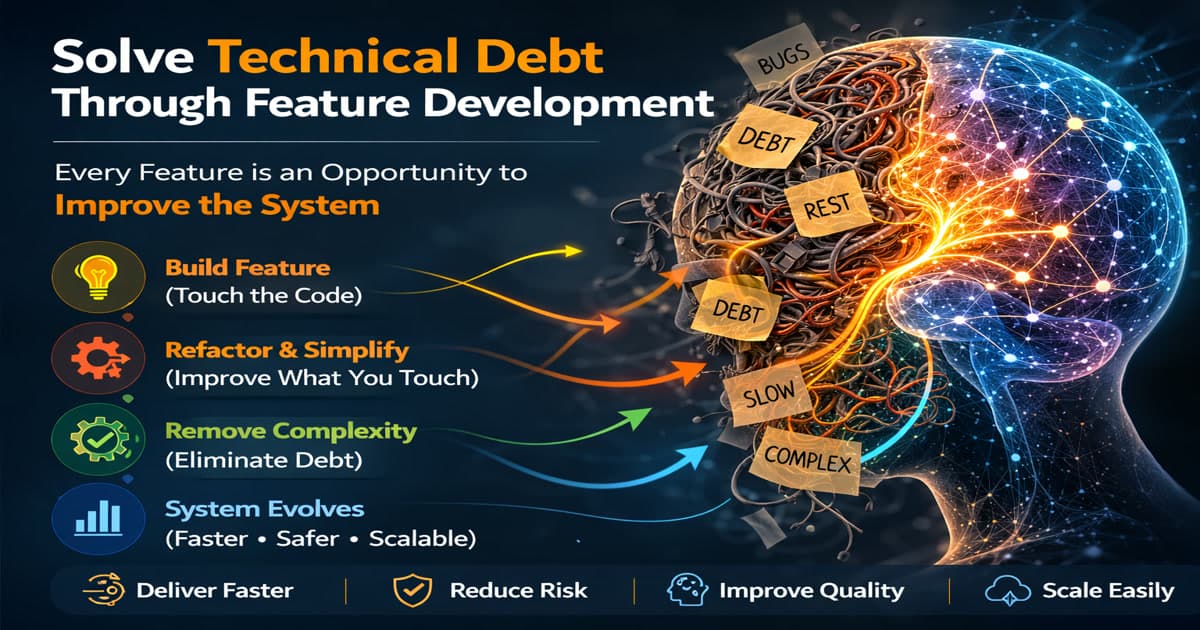
A practical framework explaining how organizations can systematically reduce technical debt while delivering new features, instead of running disruptive modernization programs.
...weaknesses. Examples: tightly coupled modules missing service boundaries duplicated logic fragile integrations Teams should be encouraged to extend the change slightly beyond the immediate feature to...
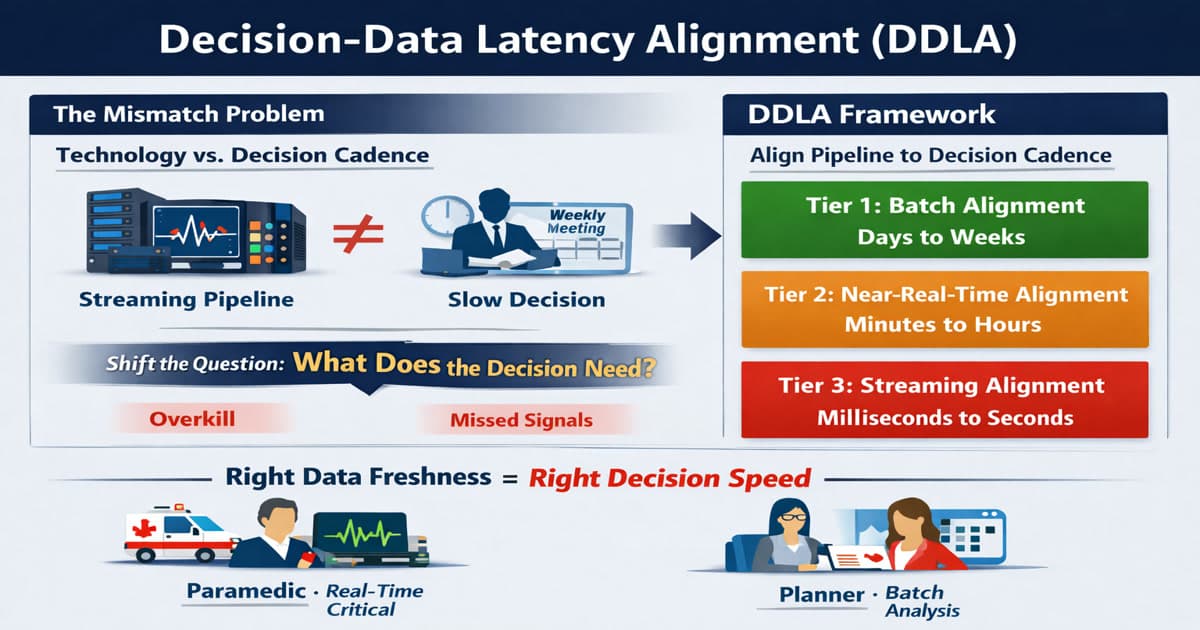
Organisations debate batch versus real-time as if it is a technical preference. It is not. It is a structural mismatch between data freshness and decision cadence — and the mismatch is where the cost lives.
...All Tier 3 decision mismatches identified and escalated to architecture review Phase 3: Governance Integration (Weeks 5–8) Objective: Embed DDLA into the architecture lifecycle. Activities: Add decision...