Skip to content

Search

Find insights, training programs, and workshops

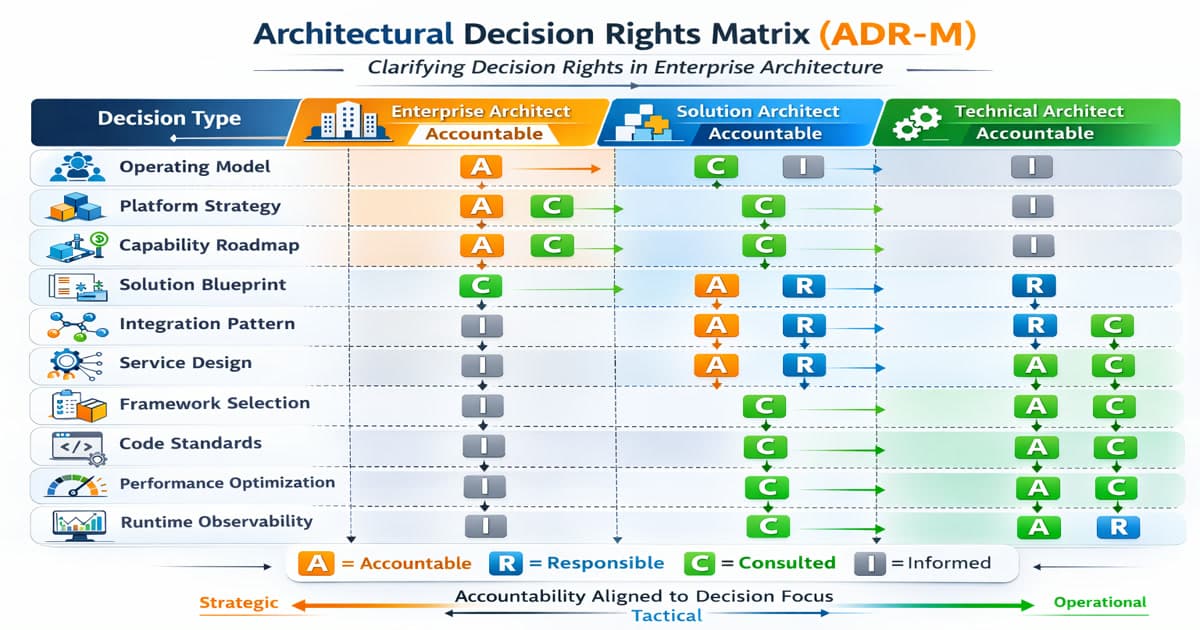
Architectural Decision Rights Matrix: Governing Enterprise, Solution, and Technical Architecture

A governance framework introducing the Architectural Decision Rights Matrix (ADR-M) to clarify accountability between Enterprise, Solution, and Technical Architects in Context-Driven Architecture.

...Architectural Decision Rights Matrix (ADR-M) aligned to altitude and risk Time to implement: 30 days Business impact: Reduced architectural conflict, faster decision cycles, improved structural integrity...

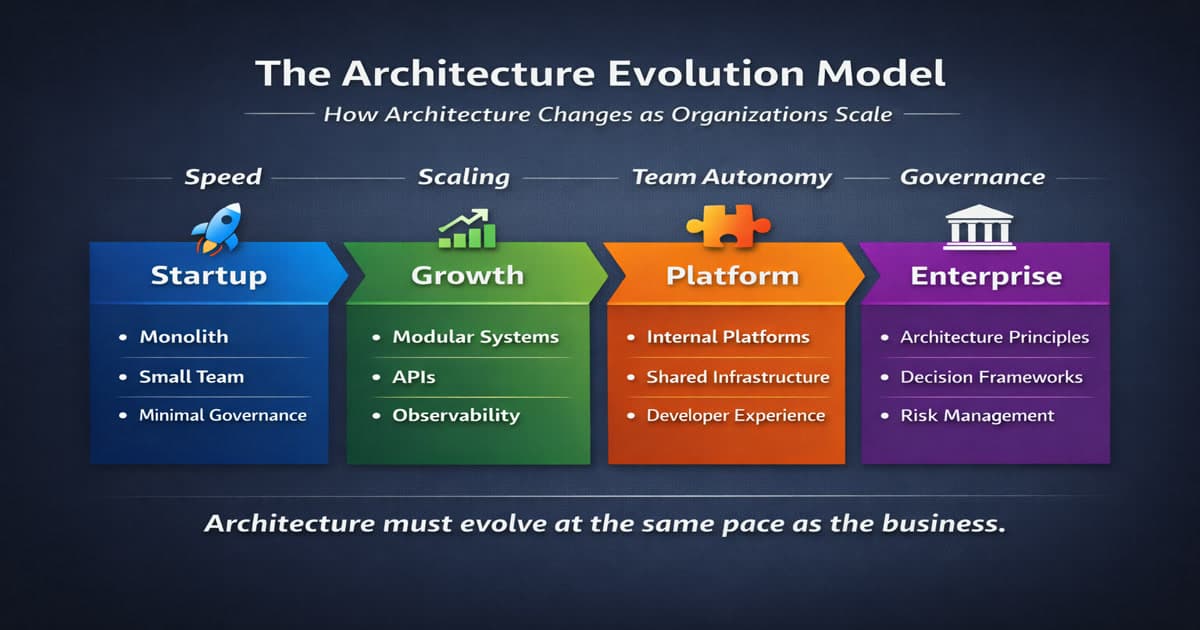
The Architecture Evolution Model: How Architecture Changes from Startup to Enterprise

A practical framework explaining how software architecture evolves from startup experimentation to enterprise-scale governance, and what architectural practices are needed at each stage.

...evolution model for architecture maturity from startup to enterprise Time to implement clarity: 30–60 days Business impact: Reduced architectural overengineering, faster scaling, controlled governance The Hidden...

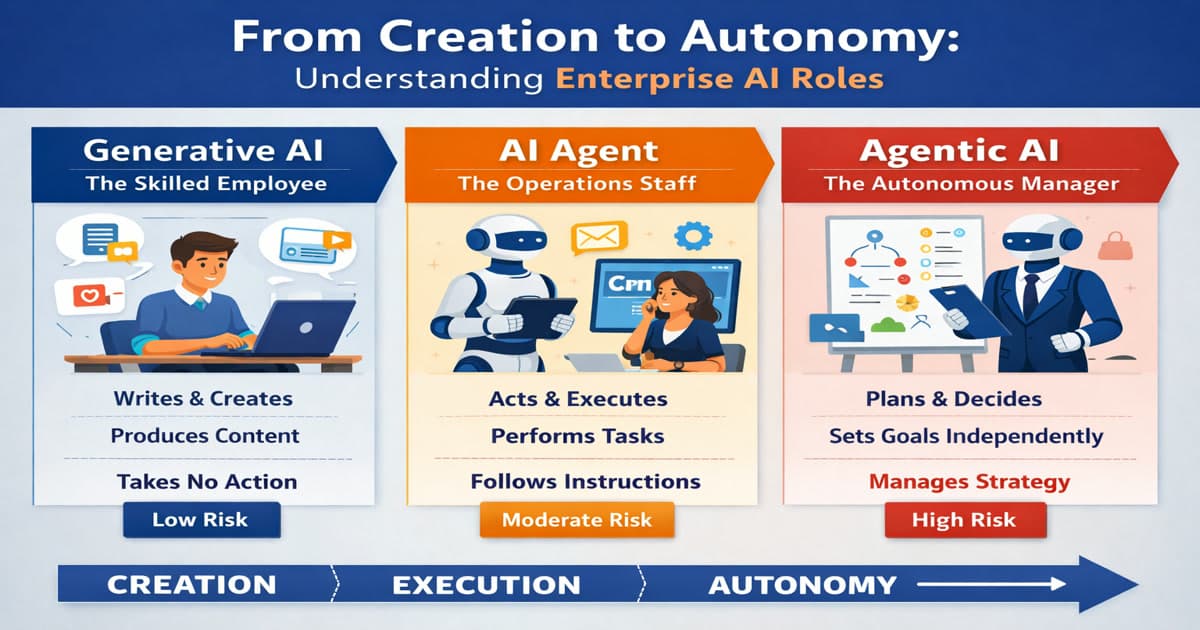
From Creation to Autonomy: Understanding Generative AI, AI Agents, and Agentic AI Through a Workplace Analogy

A clear executive guide explaining Generative AI, AI Agents, and Agentic AI using a corporate office analogy to prevent autonomy risks in enterprise AI.

...of autonomy levels in enterprise AI Time to implement clarity: 30–60 days with structured review Business impact: Reduced risk, realistic adoption roadmap, controlled AI scaling The Enterprise AI...

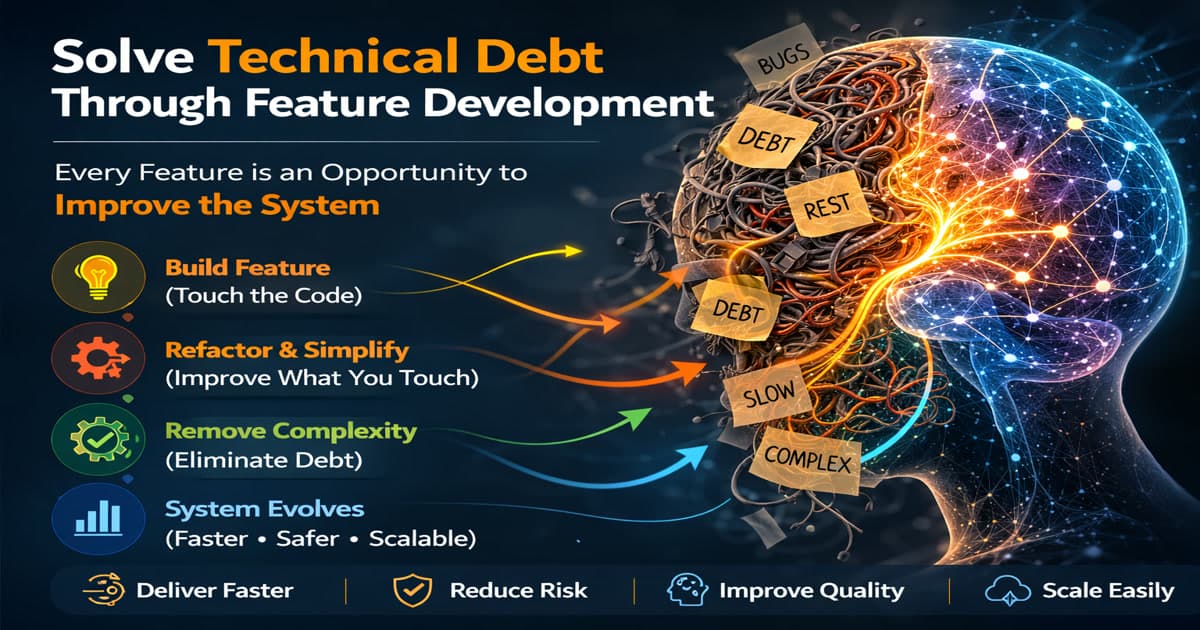
Solving Technical Debt Through Feature Development: Turning Product Delivery into Architecture Improvement

A practical framework explaining how organizations can systematically reduce technical debt while delivering new features, instead of running disruptive modernization programs.

...incrementally during feature delivery Time to implement: 30–60 days to institutionalize the practice Business impact: Continuous architecture improvement without halting product delivery The Technical...

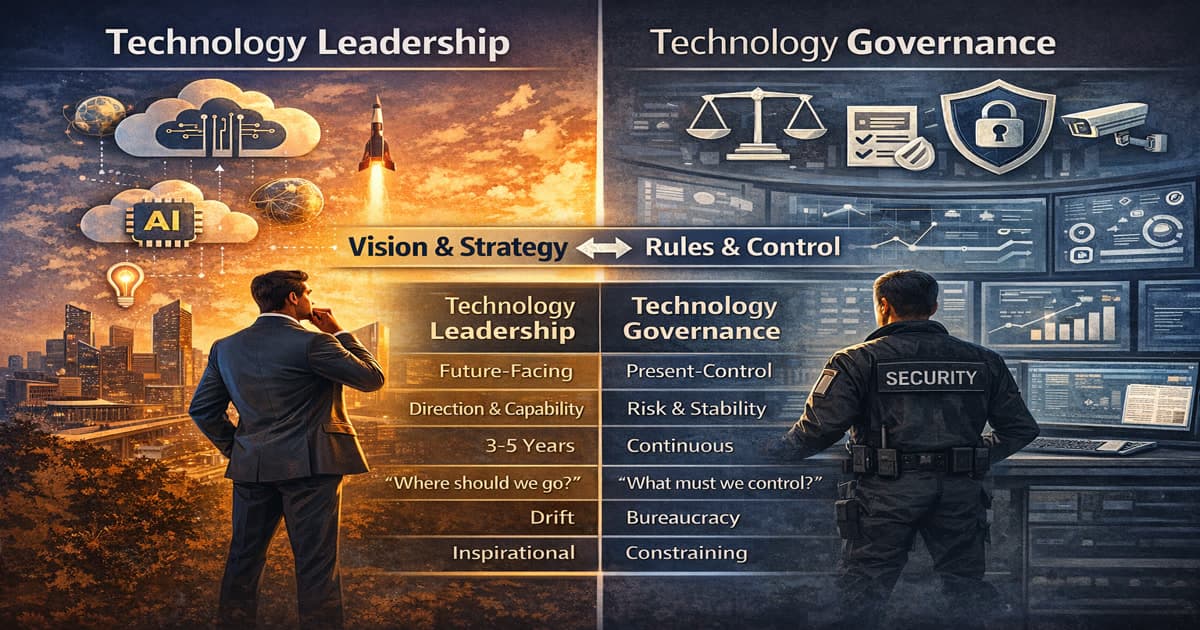
Technology Leadership vs Technology Governance: Why Confusing the Two Creates Structural Instability

A structured executive guide explaining the difference between Technology Leadership and Technology Governance, and why confusing the two creates instability in enterprise execution.

...between direction-setting and constraint-enforcing mechanisms Time to implement clarity: 30–60 days Business impact: Reduced political friction, faster decision cycles, stronger execution stability The...

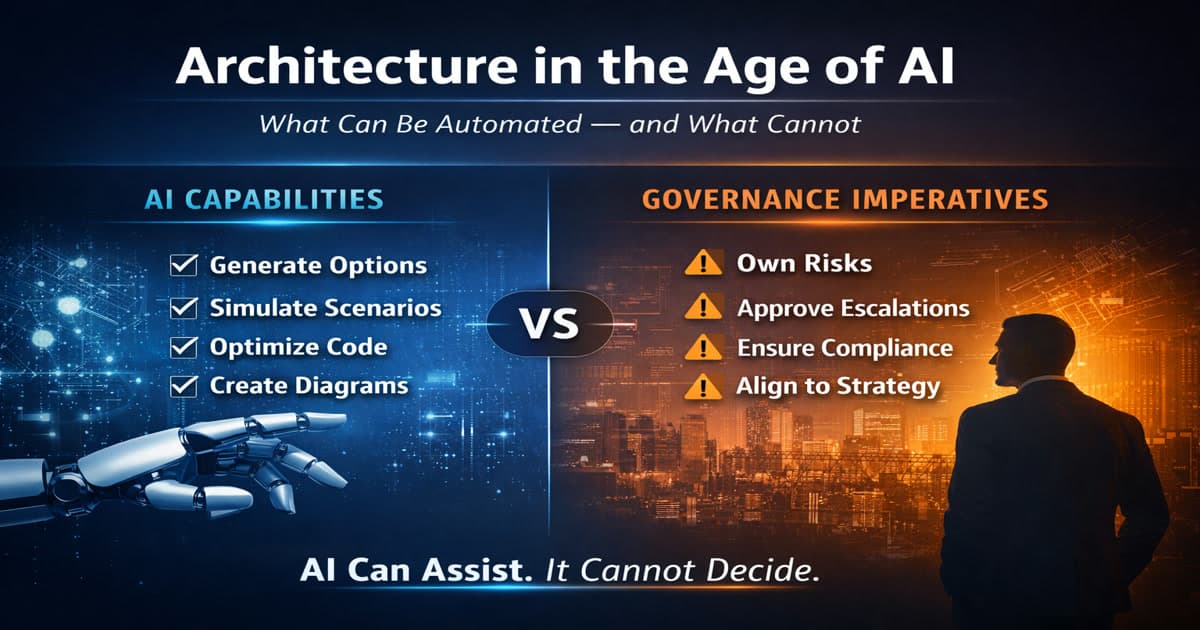
Architecture in the Age of AI: What Can Be Automated — and What Cannot

A governance-driven perspective explaining why software architecture cannot be automated because decision accountability and consequence ownership cannot be delegated to AI.

...Clear distinction between mechanical design and decision governance Time to implement: 30–60 days Business impact: Protects structural stability in an AI-accelerated environment The Question Everyone...

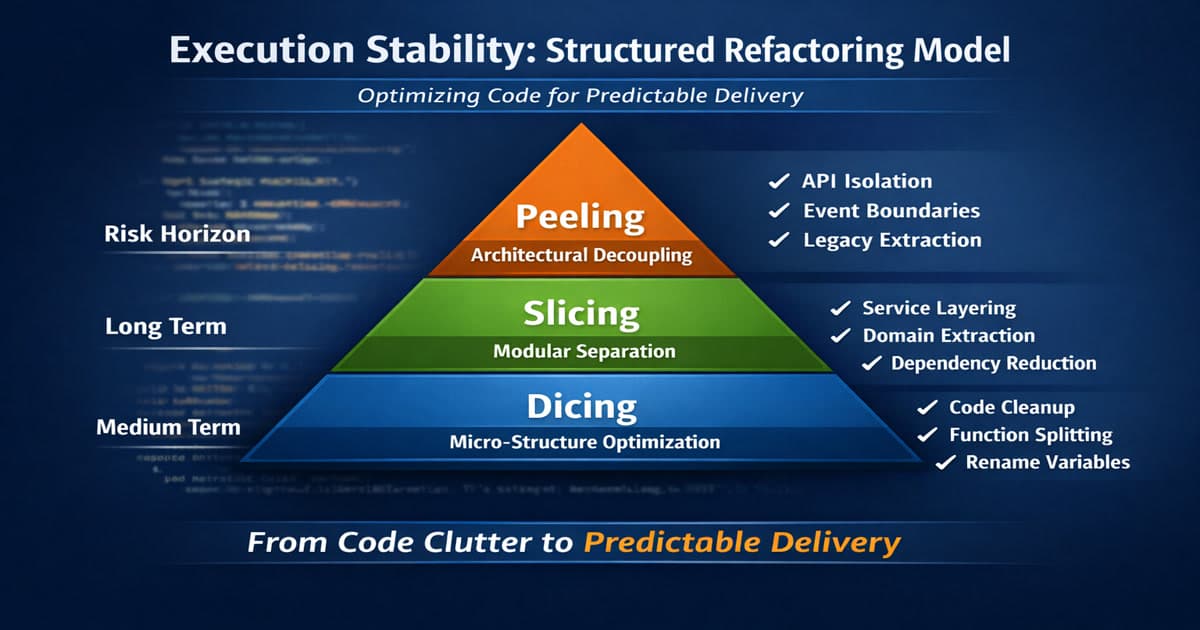
Execution Stability: How Structured Refactoring Improves Delivery Predictability

A practical framework for reducing delivery slowdown caused by unmanaged structural code complexity — improving cycle time, reducing regression risk, and clarifying ownership boundaries.

...improved cycle time, clearer ownership boundaries Time to implement: 60–90 days for structured rollout Business impact: Higher engineering throughput without increasing headcount The Silent Slowdown in Growing...

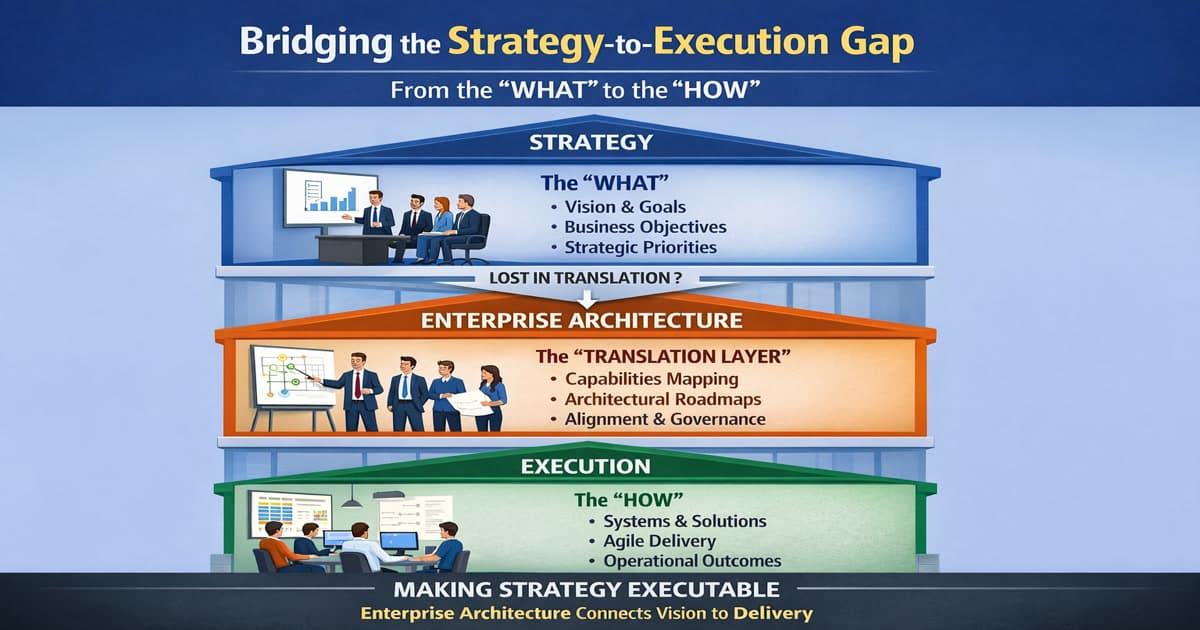
The Strategy-to-Execution Gap: How Enterprise Architecture Bridges the 'What' and the 'How'

Why strategic intent evaporates before it reaches engineering teams — and how Enterprise Architecture creates the translation layer that makes organizational strategy executable.

...delivery Time to implement: 30–60 days to establish the translation architecture for one strategic priority Business impact: Delivery teams that build the right things, investment aligned to strategic intent,...

Architecture Communication & Storytelling
Intermediate to Advanced (SA, EA, TS)5-6 hoursArchitecture communication playbook + executive presentation template + workshop facilitation guide

How to communicate architecture decisions so they are understood, adopted, and acted on — covering audience adaptation, executive communication, architecture papers, diagrams, workshop facilitation, and influence without authority.

...communication. What makes communication an architecture skill: Translating technical decisions into business impact requires understanding both. Presenting trade-offs requires knowing which trade-offs...

1 DayIntensive
CriticalSA · EA · TS
Build / Buy / Partner / Participate — Ecosystem Strategy
Intermediate to Advanced (SA, EA, TS)5-6 hoursBuild/buy/partner/participate decision framework + vendor and ecosystem evaluation scorecard + exit and switching cost analysis template

How to decide what to build, what to buy, what to access through partners, and what to participate in through ecosystems — covering differentiation vs commodity analysis, vendor evaluation, total cost of ownership, interoperability velocity, exit strategy, and lock-in risk.

...capability lose us customers? Differentiator Commodity Is this capability unique to our industry or business? Differentiator Commodity Do we need to evolve this faster than vendors? Build Buy The capability...

1 DayIntensive
StrategicSA · EA · TS