Search

Find insights, training programs, and workshops

The Capability Map That Cannot Answer a Question Is Not a Capability Map

Why traditional capability maps fail to support governance decisions and how Queryable Capability Architecture turns static maps into interrogable decision systems.

...show: investment per capability technology footprint per capability operational risk per capability Strategic decisions get made from incomplete information. Queryable Capability Architecture (QCA) To...

Technology Leadership & Organizational Excellence
Intermediate to AdvancedLeadership roadmap and team enablement plan

Learn to lead high-performance engineering organizations with clear decision rights, distributed leadership, and AI-augmented team management for the future of work.

...engineering organizations through AI transformation, distributed team management, and organizational design for high performance. It encompasses: Distributed leadership for remote/hybrid teams Decision...

2 DaysWorkshop
Coming Soon
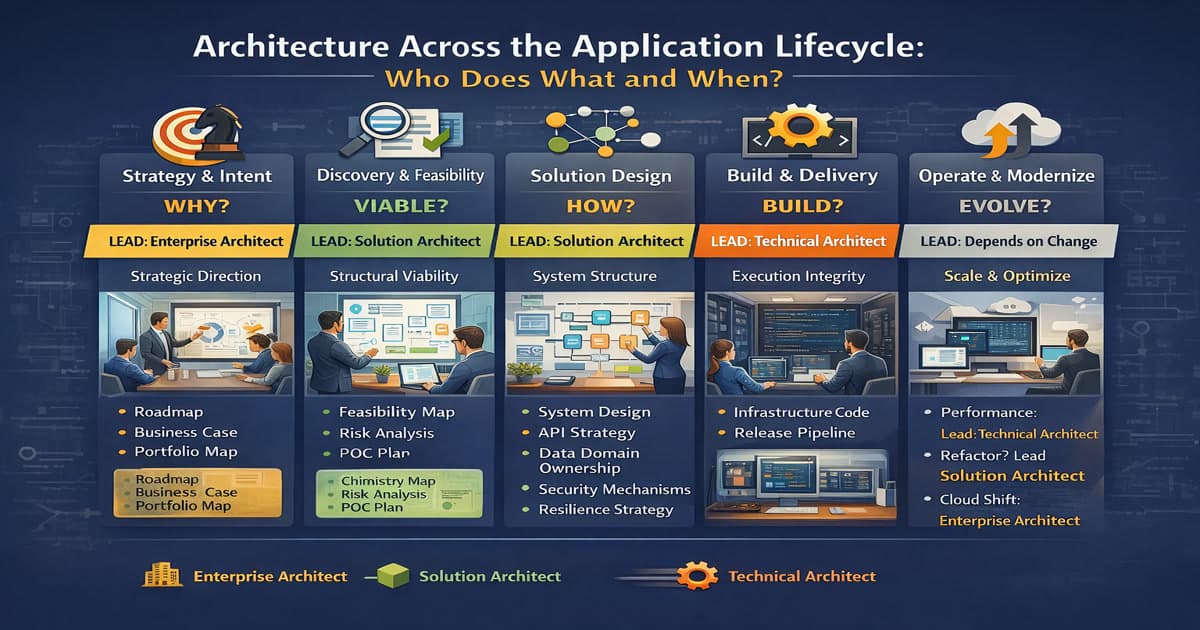
Architecture Across the Application Lifecycle: Which Architect Is Needed When?

A practical guide explaining which type of architect is required at each stage of the application lifecycle to prevent governance friction and structural instability.

...architectural roles. Few define when each role should lead. As a result: Enterprise Architects review API design. Solution Architects are absent during discovery. Technical Architects are brought in after structural...

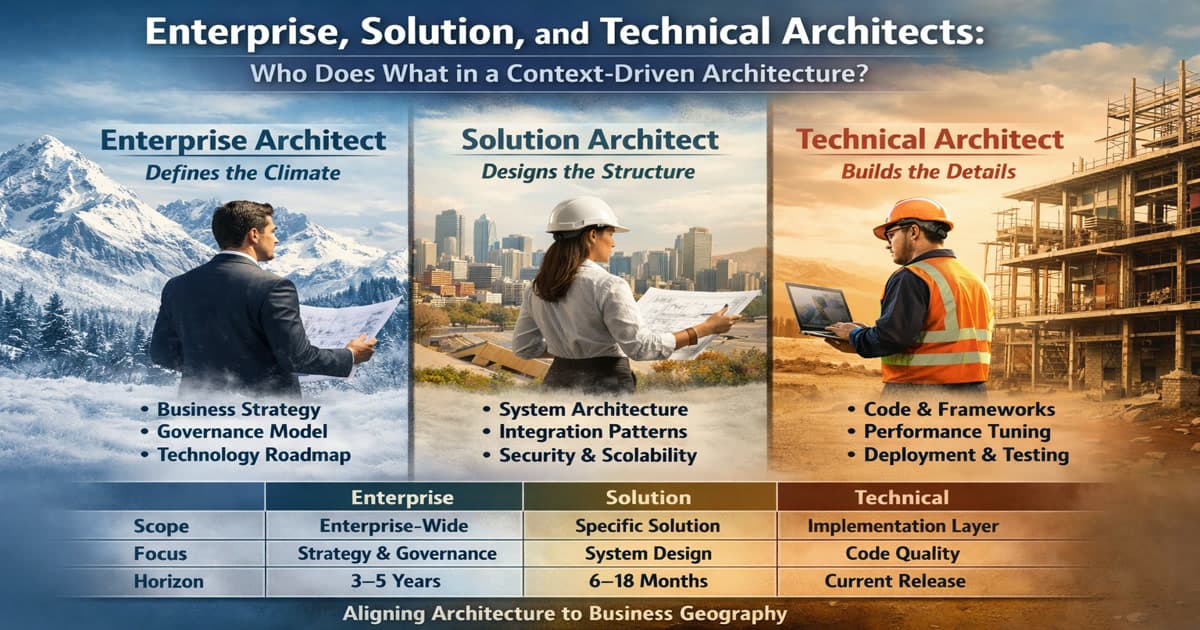
Enterprise, Solution, and Technical Architects: Who Does What in a Context-Driven Architecture?

A structured executive guide explaining the difference between Enterprise, Solution, and Technical Architects using Context-Driven Architecture to clarify responsibilities and reduce structural misalignment.

...stronger governance, improved execution predictability Snow, Sand, and Architectural Roles Imagine designing a building in a region where snow reaches three meters every winter. If the roof is flat, it...

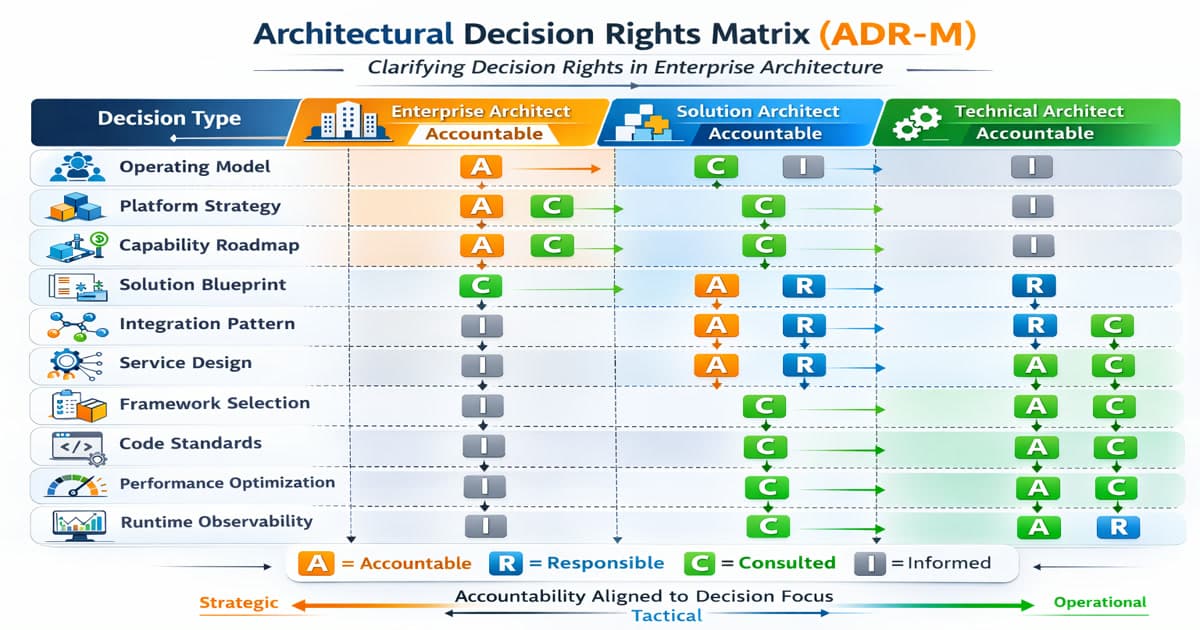
Architectural Decision Rights Matrix: Governing Enterprise, Solution, and Technical Architecture

A governance framework introducing the Architectural Decision Rights Matrix (ADR-M) to clarify accountability between Enterprise, Solution, and Technical Architects in Context-Driven Architecture.

...not task-driven. It is risk-driven. Accountability must sit at the altitude where risk materializes. Strategic risk → Enterprise Architect Structural risk → Solution Architect Execution risk → Technical...

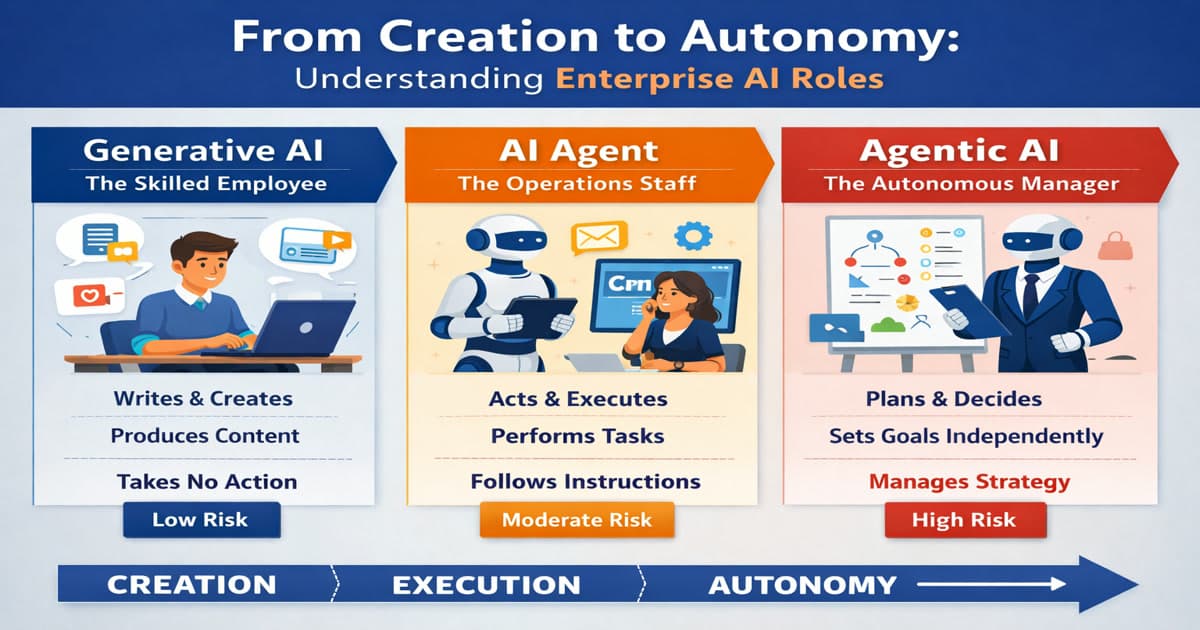
From Creation to Autonomy: Understanding Generative AI, AI Agents, and Agentic AI Through a Workplace Analogy

A clear executive guide explaining Generative AI, AI Agents, and Agentic AI using a corporate office analogy to prevent autonomy risks in enterprise AI.

...Generative AI is like a talented employee who can: Draft reports Write emails Create presentations Produce designs Generate code It creates. It does not act on its own. If you ask: “Draft a client proposal.”...

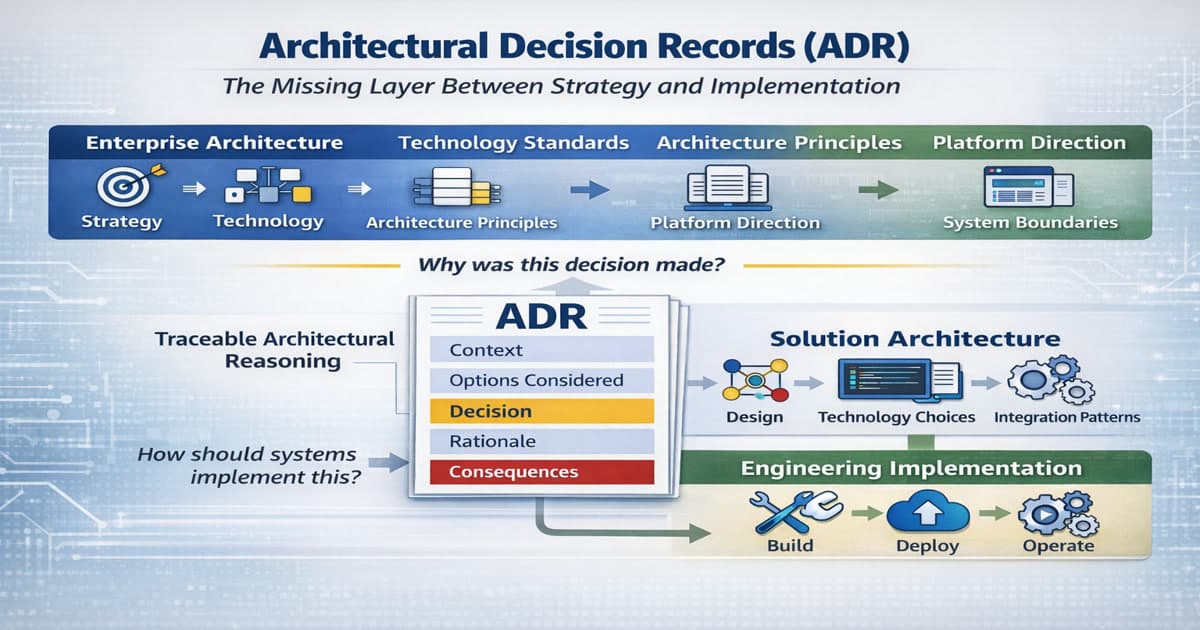
Architectural Decision Records (ADR): The Missing Layer Between Strategy and Implementation

A practical guide explaining why Architectural Decision Records (ADR) are the missing link between enterprise architecture strategy and engineering implementation.

...Disconnect Technology organizations typically operate across three levels. Enterprise Architecture Defines strategic direction: Technology standards Platform strategy Integration principles Capability models...

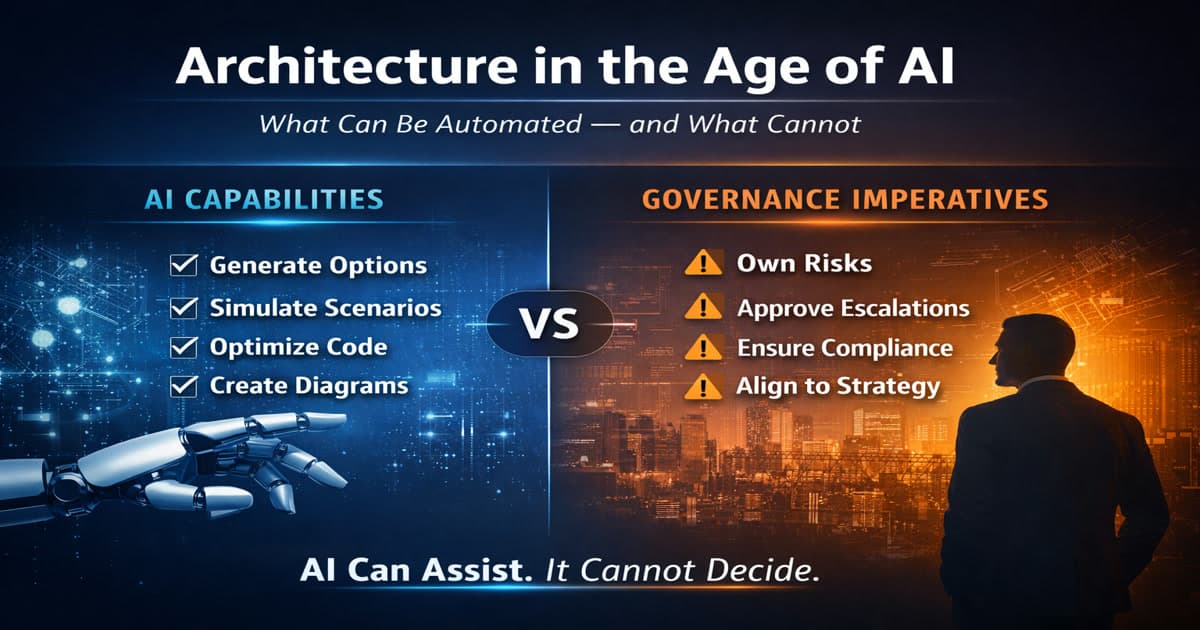
Architecture in the Age of AI: What Can Be Automated — and What Cannot

A governance-driven perspective explaining why software architecture cannot be automated because decision accountability and consequence ownership cannot be delegated to AI.

...CTOs, Enterprise Architects, Architecture Leaders Problem it solves: Growing belief that AI can fully design software architecture Key insight: AI can generate architectural options, but it cannot own architectural...

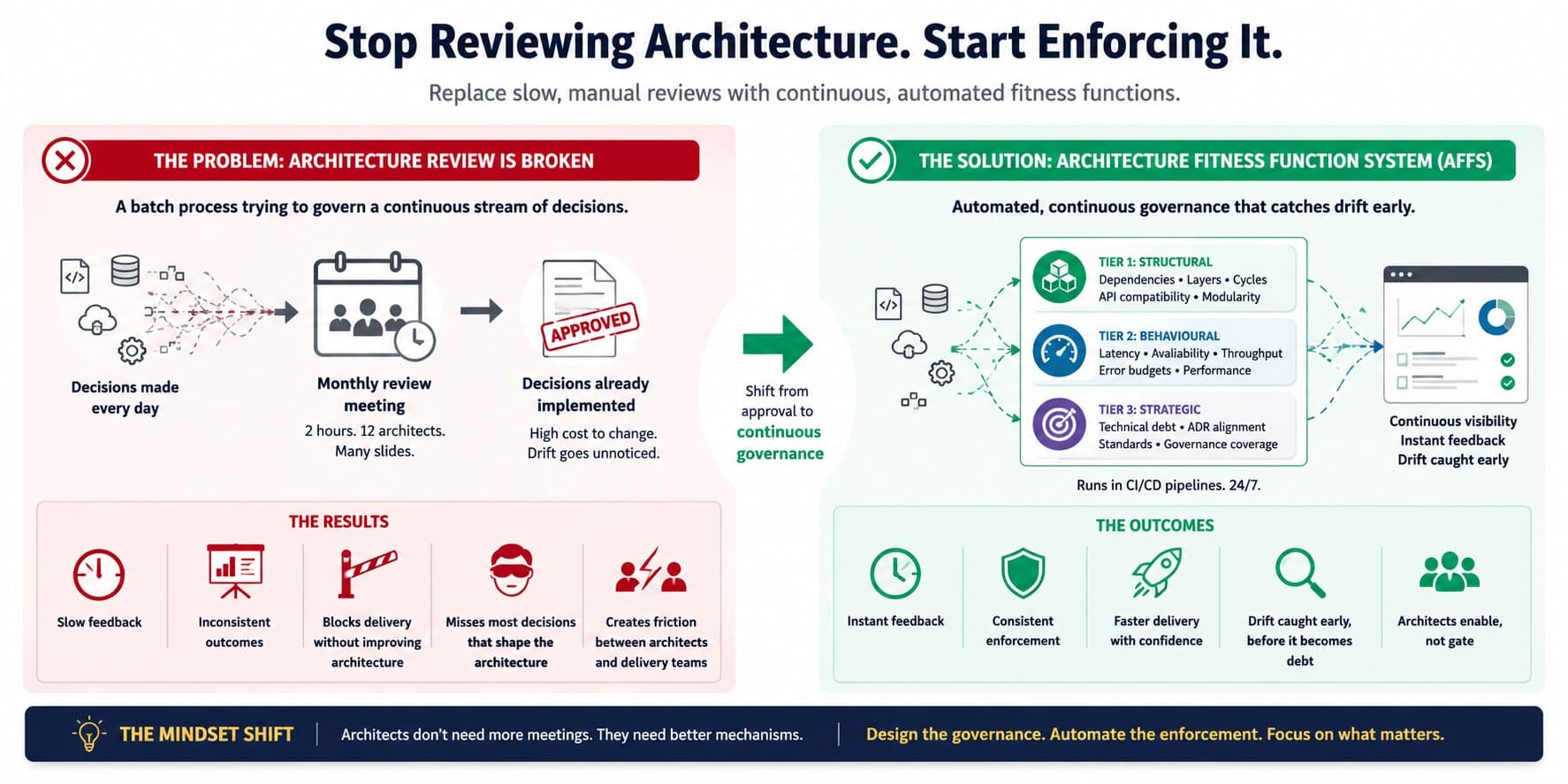
The Architecture Review Is Broken. Replace It with Fitness Functions.

The architecture fitness function literature solved code-level governance. It never made the claim that the board itself becomes optional. Here is the missing argument — and the economics that prove the board is the slower and more expensive option.

...individually would be escalated to a review board. Both decisions combined produce an architecture that nobody designed. Tier 1 catches each violation when it happens — not when the architecture is already entangled....

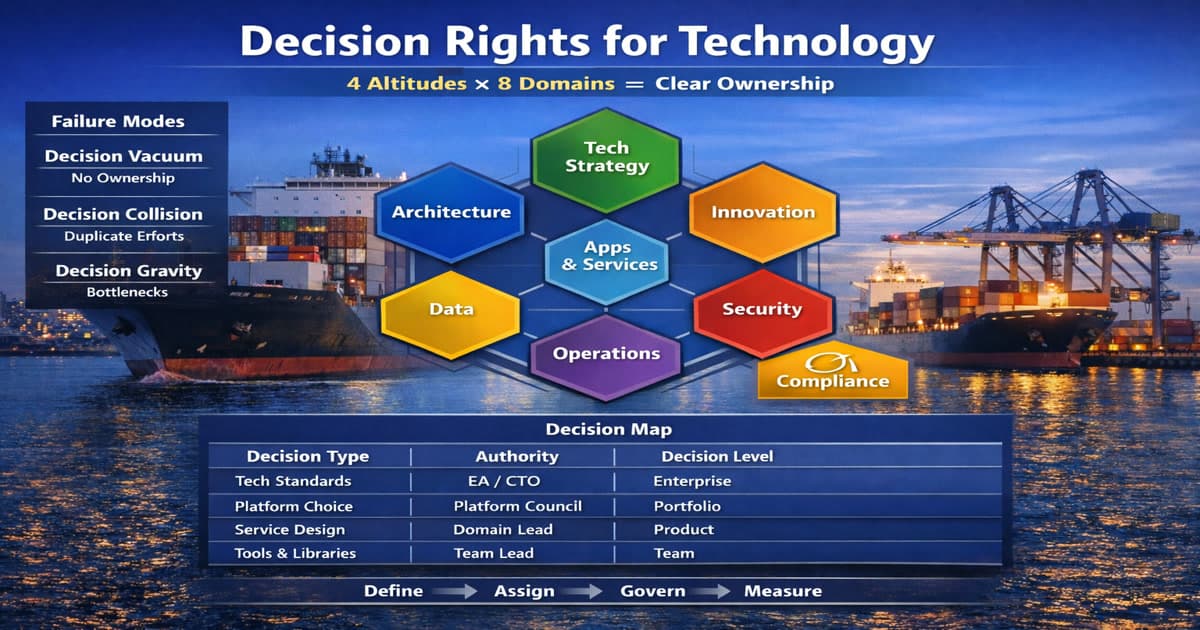
Decision Rights for Technology — Who Decides What in a Modern Enterprise

Why most enterprises confuse escalation ladders with decision rights — and how Technology Decision Domain Architecture maps exactly who decides what, at which altitude, before the conflict arrives.

...resolution? Who believes they hold authority to decide? How long does it typically take to resolve? Do not design anything yet. Document what actually happens. Deliverable: Current-state decision inventory —...