Search

Find insights, training programs, and workshops

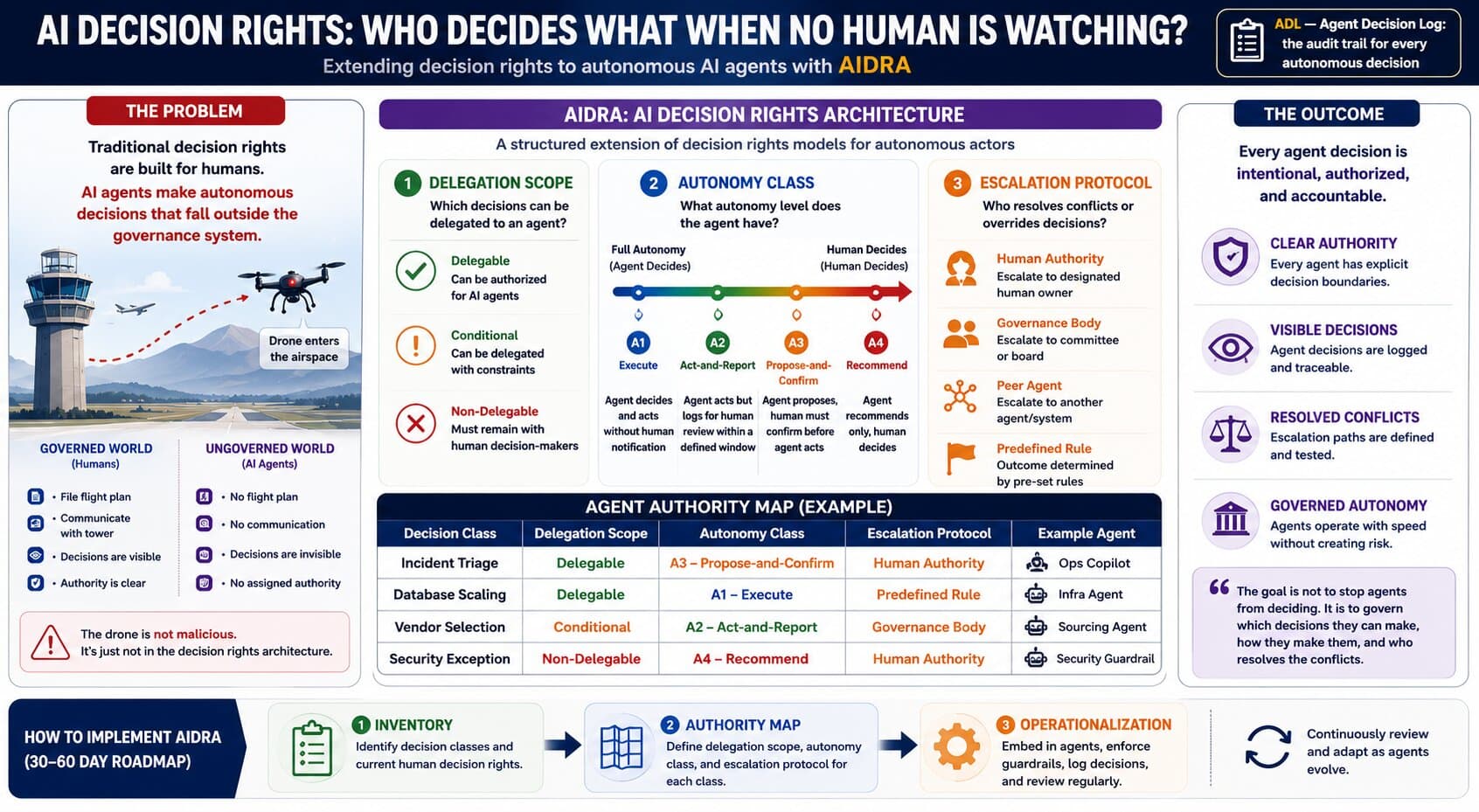
AI Decision Rights: Who Decides What When No Human Is Watching?

Decision rights models assume human decision-makers. AI agents breach that assumption silently. Here is how to extend decision rights to cover autonomous actors before the first ungoverned decision becomes a production incident.

...Governance Leads, Architecture Board Members, Heads of Engineering Problem it solves: Decision rights models exist in most enterprises — but they assume human decision-makers. AI agents are now making autonomous...

Effective Prompt Engineering
Beginner to Advanced6-8 hoursFull prompt design framework + personal prompt library

Every major prompt engineering technique — from basic clarity to advanced agentic reasoning. Not a list of tips. A mental model you can apply to any task, any tool, any context.

...— these apply to almost every prompt you write Clarity — say exactly what you want Role — give the model a persona Context — feed it what it needs Examples — show, don't just tell Format — shape the output Constraints...

2 DaysIntensive
19 TechniquesComplete Coverage
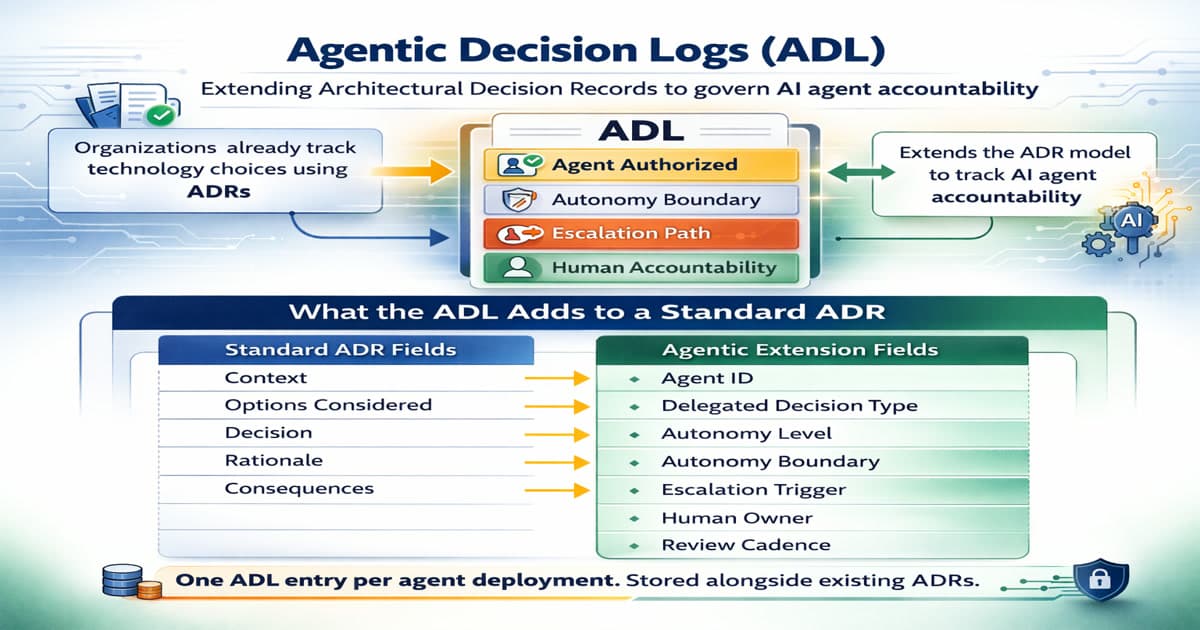
Nobody Uses ADRs as an Agentic Decision Log. They Should.

Why Architectural Decision Records are the only structure most organizations already have that can govern AI agent accountability — and how to extend them into an Agentic Decision Log before the EU AI Act deadline.

...deployed AI agents somewhere. A copilot that drafts code. An agent that triages support tickets. A model that approves low-risk purchase orders. A workflow that classifies customer sentiment and routes...

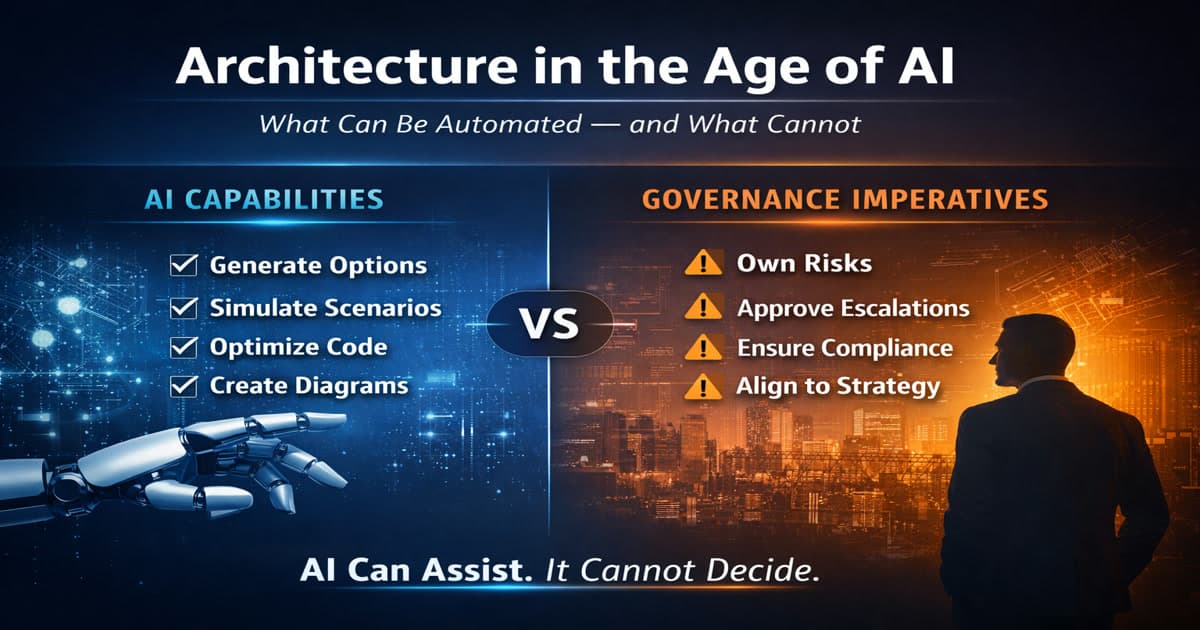
Architecture in the Age of AI: What Can Be Automated — and What Cannot

A governance-driven perspective explaining why software architecture cannot be automated because decision accountability and consequence ownership cannot be delegated to AI.

...What AI Can Absolutely Do AI is already capable of: Generating reference architectures Comparing cloud deployment models Suggesting integration patterns Identifying scalability bottlenecks Producing documentation...

Context-Driven Architecture: Why Software Design Must Adapt to Business Geography

Just as buildings must adapt to snow, desert, or tropical climates, software architecture must align with business geography to improve predictability and reduce complexity.

...technology firms. On paper, it looks modern. Distributed. Event-driven. Cloud-native. Six months later: Deployment coordination doubles Incident frequency rises Observability gaps increase Cloud costs climb...

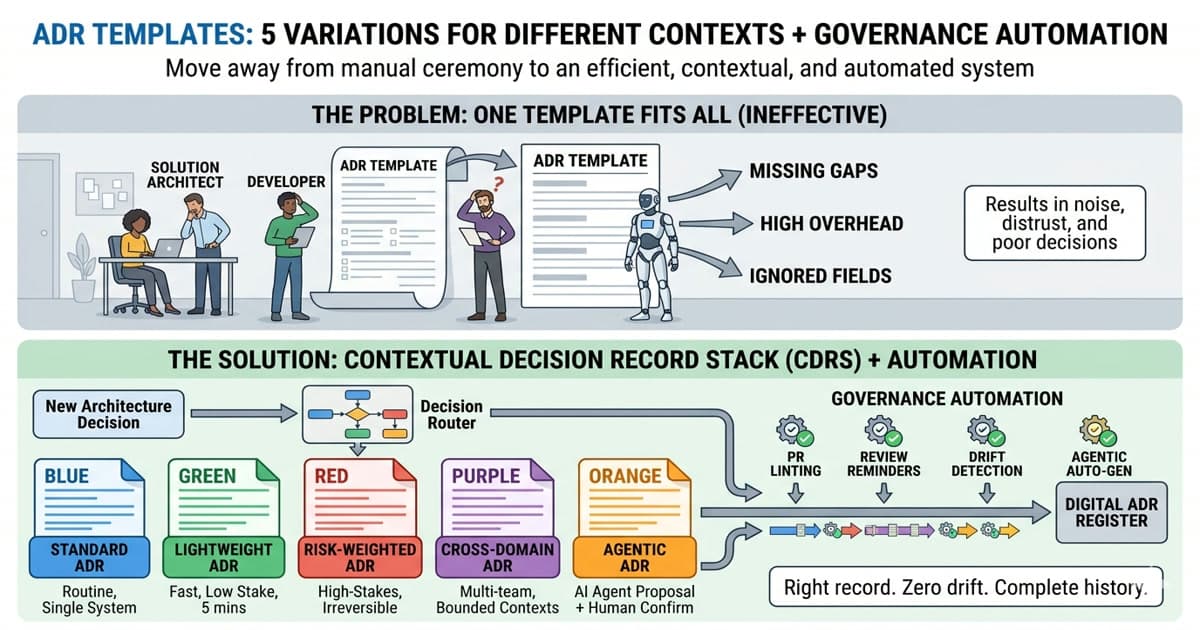
ADR Templates: 5 Variations for Different Contexts + Governance Automation

One ADR template does not fit every architectural context. Five purpose-built variations — for standard decisions, agentic AI, cross-domain impact, fast delivery, and high-risk reversals — plus governance automation to make the system run without manual follow-up.

...Contextual Decision Record Stack (CDRS) The Contextual Decision Record Stack (CDRS) is a five-template model where each template matches a specific decision context. The five templates are: Template Context...

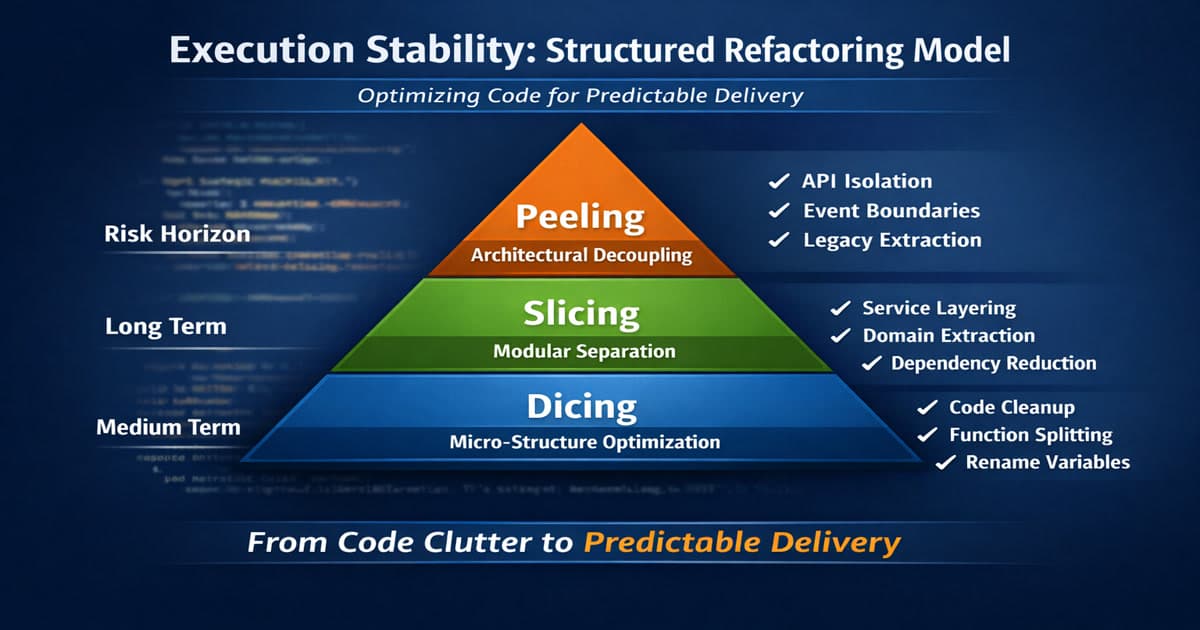
Execution Stability: How Structured Refactoring Improves Delivery Predictability

A practical framework for reducing delivery slowdown caused by unmanaged structural code complexity — improving cycle time, reducing regression risk, and clarifying ownership boundaries.

...debt becomes political Refactoring must move from instinct to discipline. The Structured Refactoring Model Not all refactoring is the same. Different structural problems require different levels of intervention....

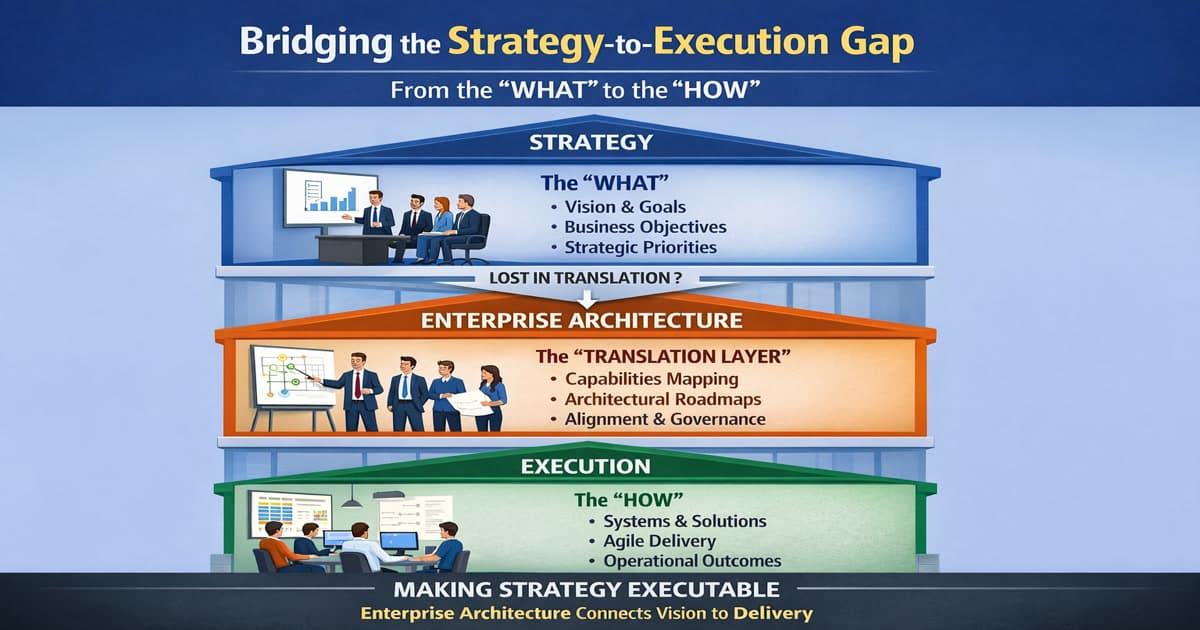
The Strategy-to-Execution Gap: How Enterprise Architecture Bridges the 'What' and the 'How'

Why strategic intent evaporates before it reaches engineering teams — and how Enterprise Architecture creates the translation layer that makes organizational strategy executable.

...backlog — with no structured layer to translate it Key outcome: A practical three-layer translation model that makes organizational strategy traceable all the way to delivery Time to implement: 30–60 days...

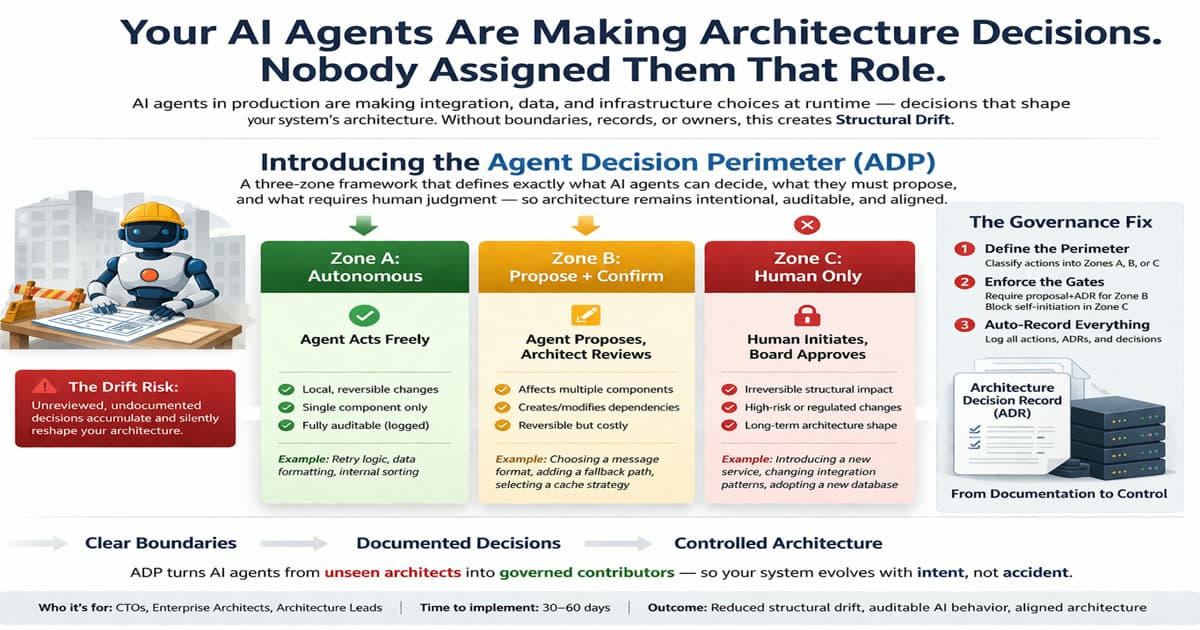
Your AI Agents Are Making Architecture Decisions. Nobody Assigned Them That Role.

AI agents are making micro-architecture decisions in production. No ADR recorded them. No review board approved them. No architect ever saw them. Here is the structural fix.

...agents making undocumented, unreviewed architecture decisions at runtime Key outcome: A clear governance model that defines exactly where agents act freely, where they propose, and where humans decide Time...

Complete Enterprise Data Architecture Framework: Business, Logical, Physical Layers with Real Templates

Most enterprises build data architectures one layer at a time. Business, logical, and physical layers exist as separate artefacts owned by separate teams. That separation is the structural gap that makes data estates ungovernable.

...architecture layers built in isolation — by different teams, in different tools, with no connecting model Key outcome: A coherent three-layer framework called Layered Data Authority (LDA) that connects...