Search

Find insights, training programs, and workshops

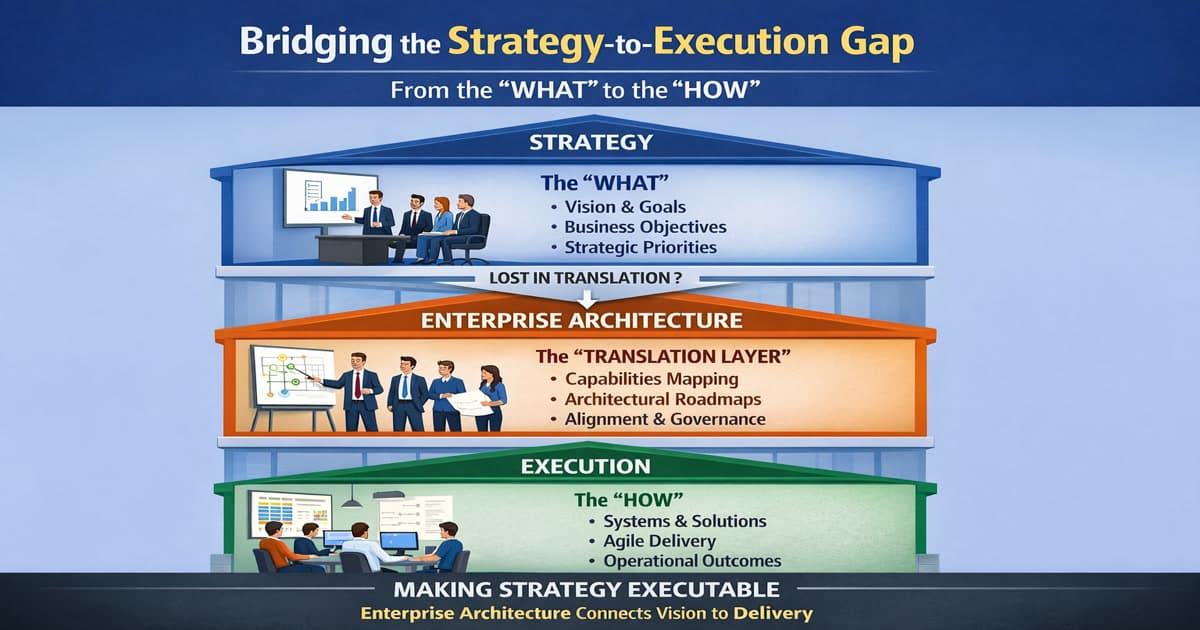
The Strategy-to-Execution Gap: How Enterprise Architecture Bridges the 'What' and the 'How'

Why strategic intent evaporates before it reaches engineering teams — and how Enterprise Architecture creates the translation layer that makes organizational strategy executable.

...Customer Profile No channel-specific data silos Cloud shift by 18 months Eliminate on-premise runtime dependencies Cloud-native deployment Zero new on-premise commitments Enter new markets Localizable, multi-tenant...

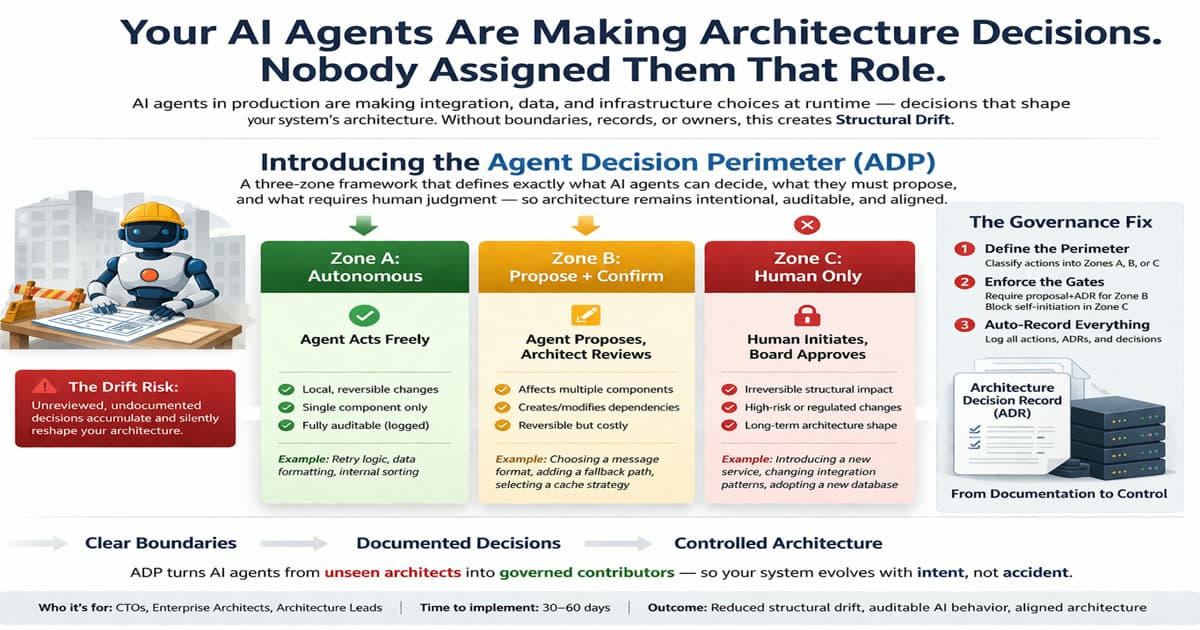
Your AI Agents Are Making Architecture Decisions. Nobody Assigned Them That Role.

AI agents are making micro-architecture decisions in production. No ADR recorded them. No review board approved them. No architect ever saw them. Here is the structural fix.

...irreversible without significant rework Affecting multiple systems, teams, or deployment units Creating dependencies that outlast the current feature cycle Requiring board or governance review Examples: Establishing...

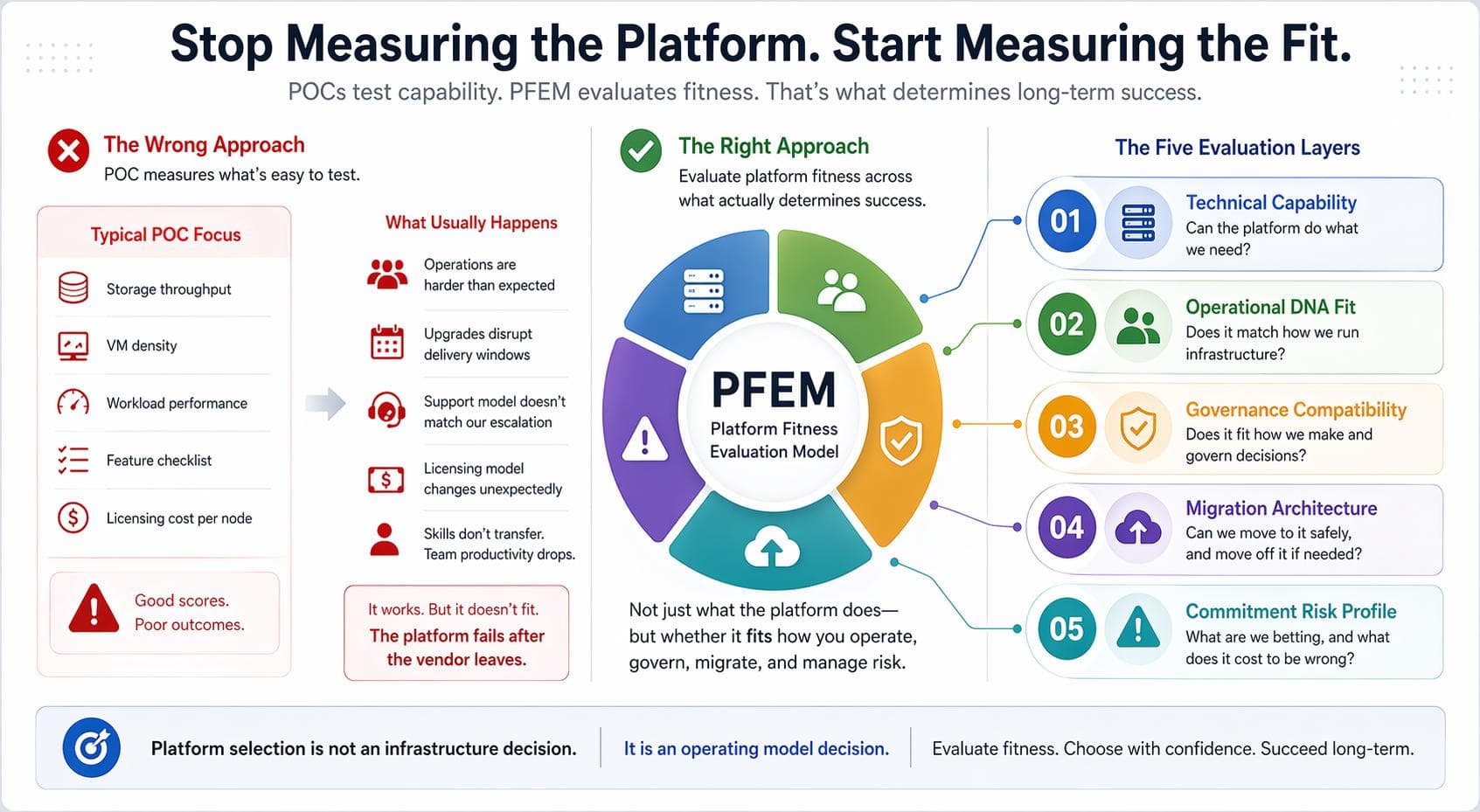
Your HCI Proof of Concept Measures the Wrong Thing.

Most organizations evaluate private cloud and HCI platforms by running a technical POC. The POC passes. The platform fails. The reason is structural — and fixable. The Platform Fitness Evaluation Model (PFEM) tells you what to measure instead.

...migration fails midway? What is realistic migration velocity at team capacity — not vendor-quoted? Which dependencies require remediation before cutover, not after? Migration off the platform: If this vendor...

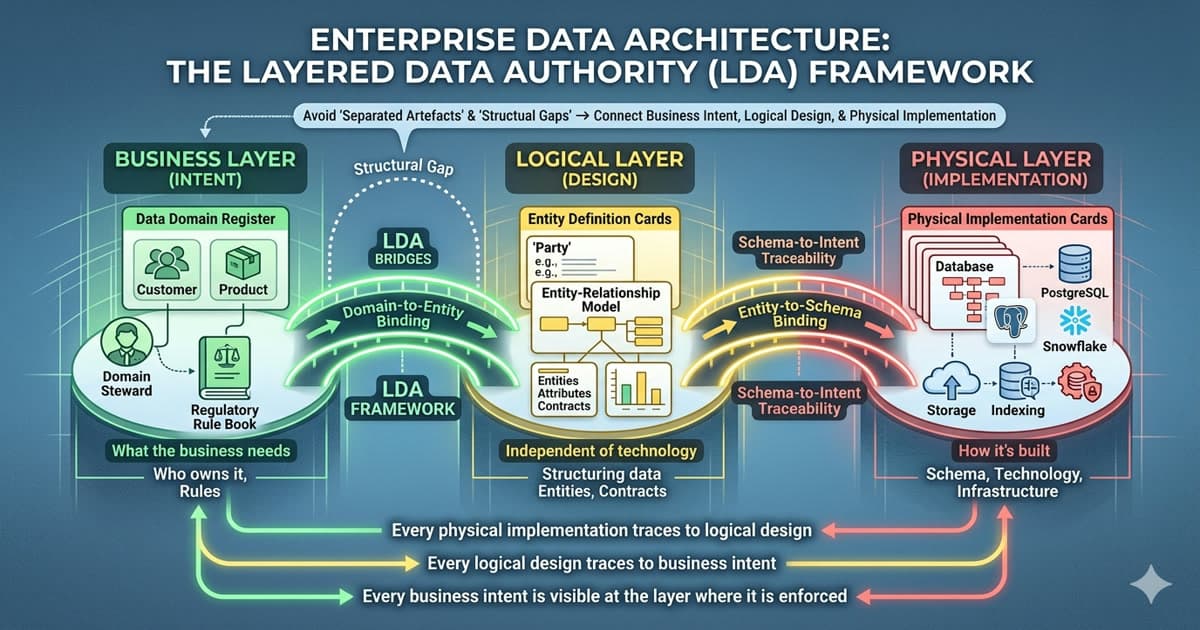
Complete Enterprise Data Architecture Framework: Business, Logical, Physical Layers with Real Templates

Most enterprises build data architectures one layer at a time. Business, logical, and physical layers exist as separate artefacts owned by separate teams. That separation is the structural gap that makes data estates ungovernable.

...Data Authority (LDA) model with binding contracts between layers. Each layer defined its outputs and dependencies — the business layer specified what "customer" means, the logical layer defined how customer...

Delivery, Implementation & Architecture Runway
Intermediate (SA, EA, TS)4-5 hoursArchitecture runway template + delivery dependency map + agile architecture checklist

How architecture supports delivery instead of blocking it — covering architecture runway, phased implementation, dependency management, keeping teams unblocked, and recovering when architecture goes wrong during delivery.

...Navigation Start here — Architecture and delivery What architecture runway is Phased implementation Managing dependencies Keeping teams unblocked Spikes and POCs When architecture goes wrong Putting it all together Cheat...

1 DayIntensive
PracticalSA · EA · TS
Common Architecture Patterns
Intermediate (SA, EA)5-7 hoursPattern selection guide + pattern comparison matrix + anti-pattern catalogue

Proven, reusable solutions to recurring structural problems — each with known trade-offs that make it suited to some contexts and unsuitable for others.

...why they matter Every system faces structural decisions — how to organise components, how to manage dependencies, how to handle change. Starting from scratch each time is slow and error-prone. Patterns...

1.5 DaysIntensive
PracticalSA · EA
Current State & Target State Architecture
All levels — SA, EA, TS4-5 hoursAs-is / to-be architecture canvas + transition state design + maturity scale + AI readiness assessment

How to document what exists today, define what must exist tomorrow, and design the transition states that get you there — the discipline of architecture that connects present reality to future goals.

...isn't documented, teams design solutions that ignore existing constraints — integration debt, legacy dependencies, data quality issues, regulatory requirements, and organisational capacity. The result is...

1 dayIntensive
PracticalCanvas exercise
Investment & Prioritisation
Advanced (EA, TS)5-6 hoursInvestment prioritisation model + business case guide (including TCO and unit economics) + sequencing criteria

How to decide which technology initiatives get funded, in what order, and why — connecting architecture to financial decisions and business outcomes.

...often done by finance or product — without architecture input. The result is sequencing that ignores dependencies: teams are funded to build features on infrastructure that doesn't exist yet, or platforms...

1 DayIntensive
StrategicEA · TS
Risk, Compliance & Control Points
Intermediate to Advanced (SA, EA, TS)5-6 hoursRisk and control register template + compliance mapping guide + architecture risk heat map

How architecture manages technical risk and meets regulatory obligations — covering architectural risk analysis, compliance by design, privacy by design, security controls as decisions, operational risk, control points, and demonstrating compliance through architecture.

...credentials Credential leak compromises everything Risk categories in architecture: Structural — coupling, dependencies, boundaries. Tightly coupled services — change in one breaks another. Data — ownership,...

1 DayIntensive
CriticalSA · EA · TS
Technical Debt & Rationalisation
Intermediate to Advanced (SA, EA, TS)5-6 hoursTechnical debt taxonomy + rationalisation prioritisation framework + modernisation criteria

How to understand, measure, prioritise, and reduce technical debt — the accumulated cost of shortcuts, outdated decisions, and deferred maintenance.

...testing. Detected by process audit. Medium cost — quality and speed impact. Knowledge debt — key-person dependencies, no cross-training. Detected by team assessment. High cost — risk when people leave. The...

1 DayIntensive
StrategicSA · EA · TS