Search
Find insights, training programs, and workshops
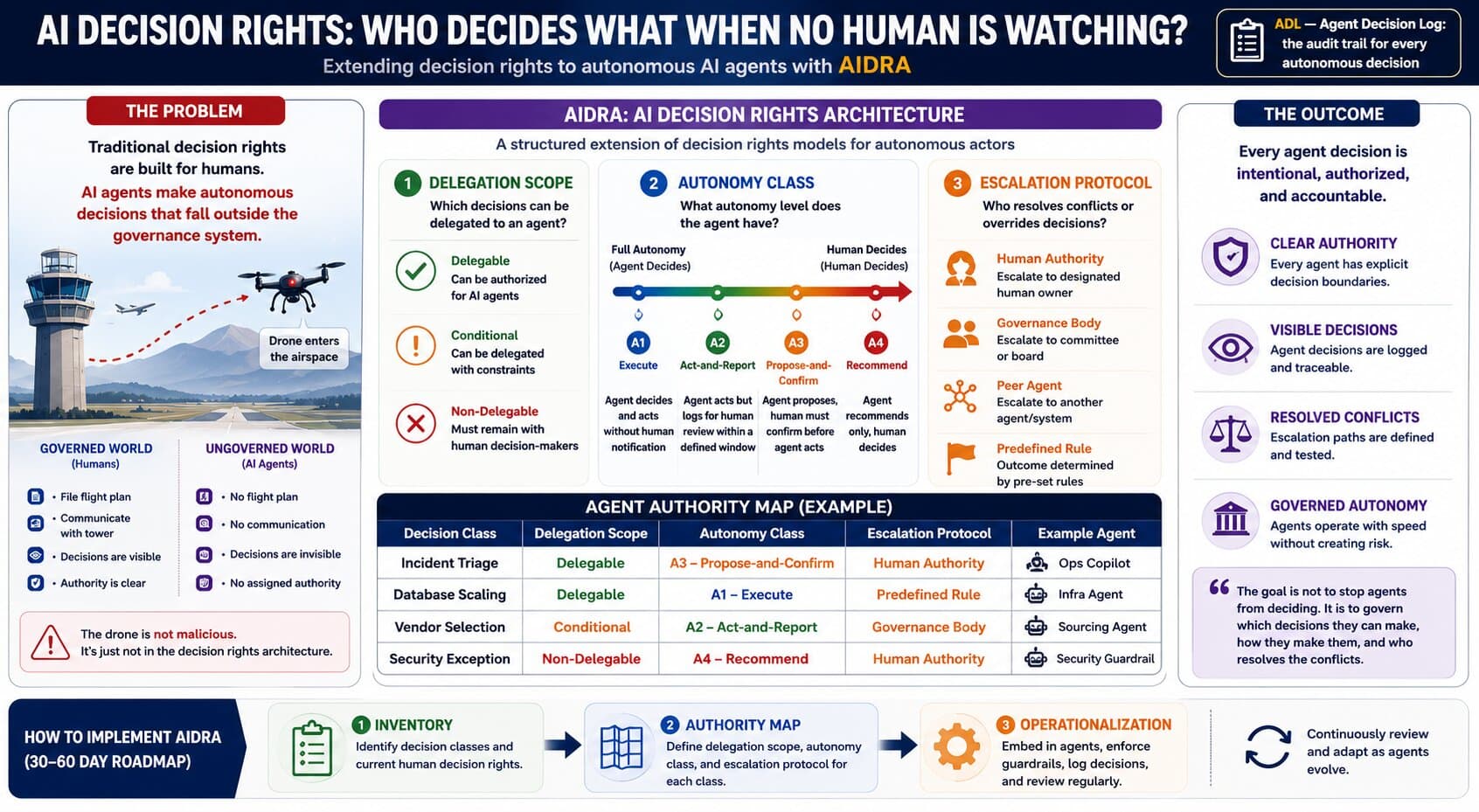
Decision rights models assume human decision-makers. AI agents breach that assumption silently. Here is how to extend decision rights to cover autonomous actors before the first ungoverned decision becomes a production incident.
...delegation scope, autonomy class, and escalation protocol. The Tower and the Drone An air traffic control tower manages every aircraft in its airspace. Each pilot communicates with the tower. Each flight...
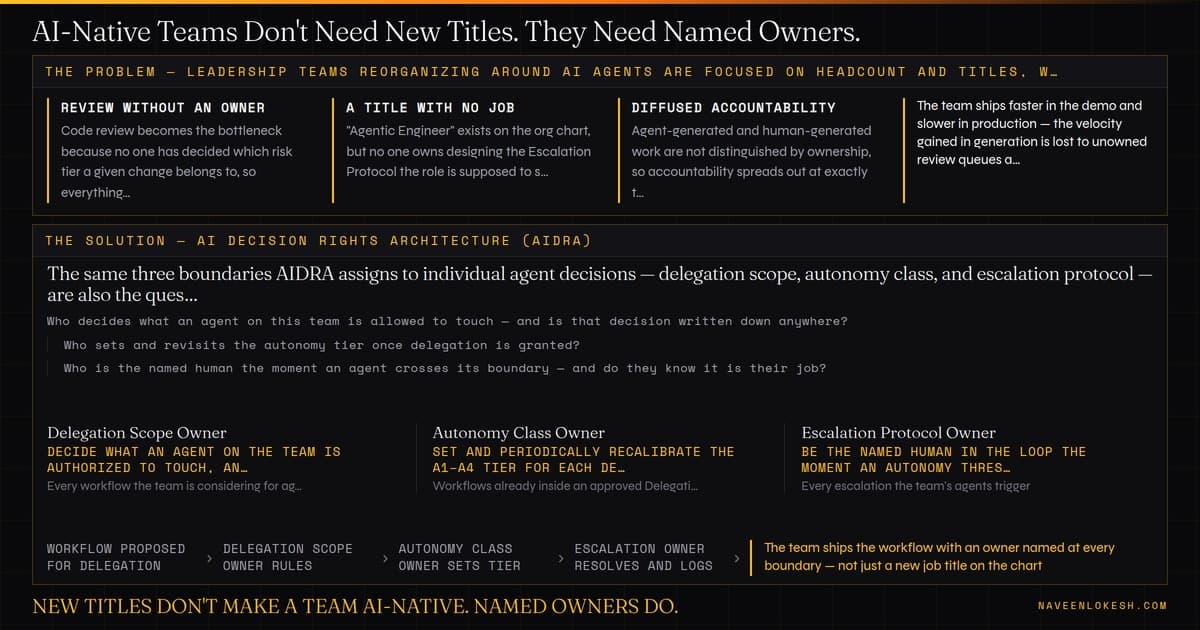
AI-native team redesigns keep adding new job titles and calling it done. The actual failure mode sits at the decision boundary. Here is what changes when you apply AIDRA to team design instead of headcount.
...next jump in agent capability without being redrawn The Tower and the Drone, Again An air traffic control tower manages every aircraft in its airspace. Each pilot communicates with the tower. Each flight...
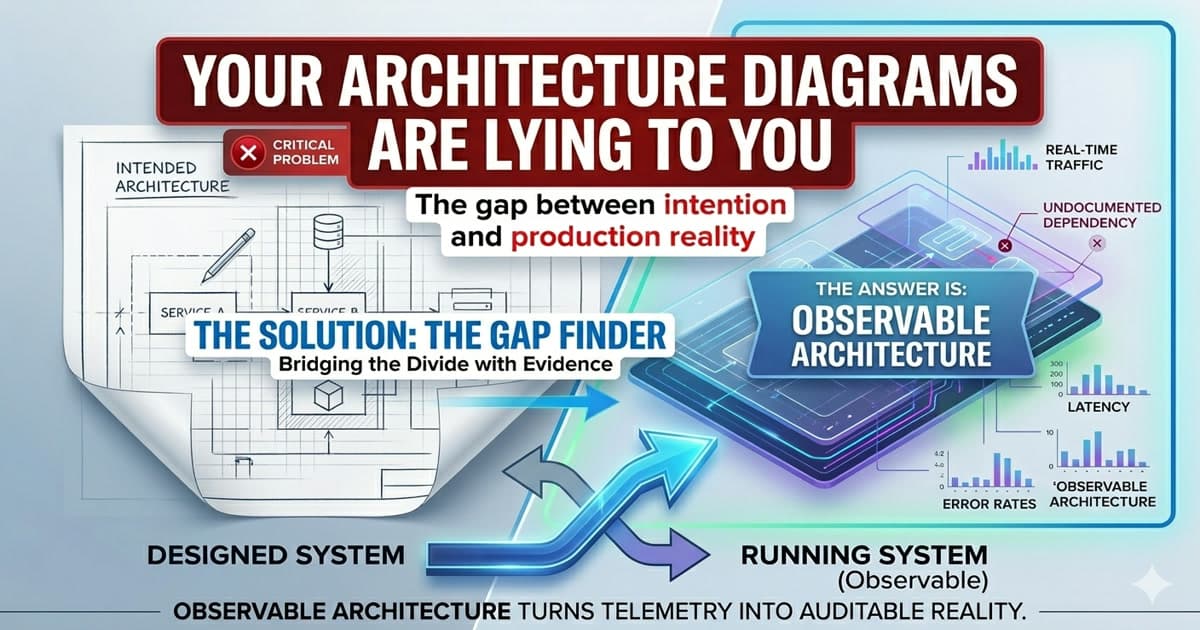
Why architecture diagrams describe a system that no longer exists, and how Observable Architecture uses production telemetry to reveal what is actually running.
...is reviewed. Approved. Logged. It describes exactly how the flight should proceed. But air traffic control does not manage aircraft from flight plans. They manage them from live radar. Because aircraft...
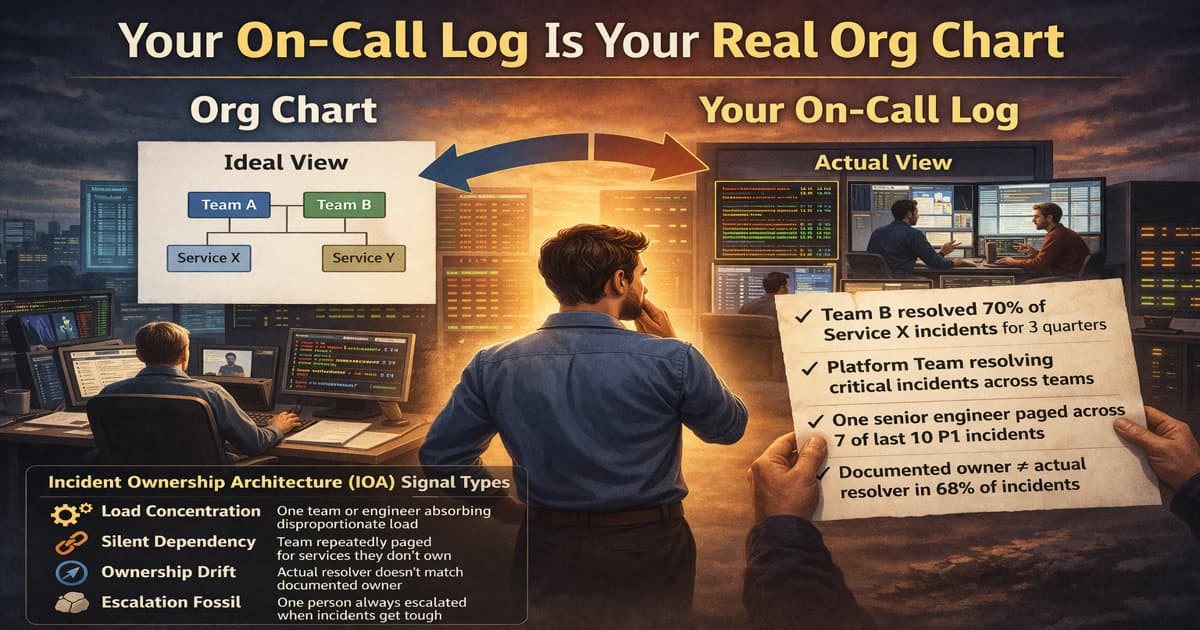
Why on-call rotation data is the most accurate org chart your engineering organisation has — and almost nobody uses it to make structural decisions.
...leadership decisions that cannot be undone by the first resignation The Timetable Planner and the Control Room Log A railway network publishes a timetable. The timetable is precise. Platform allocations....
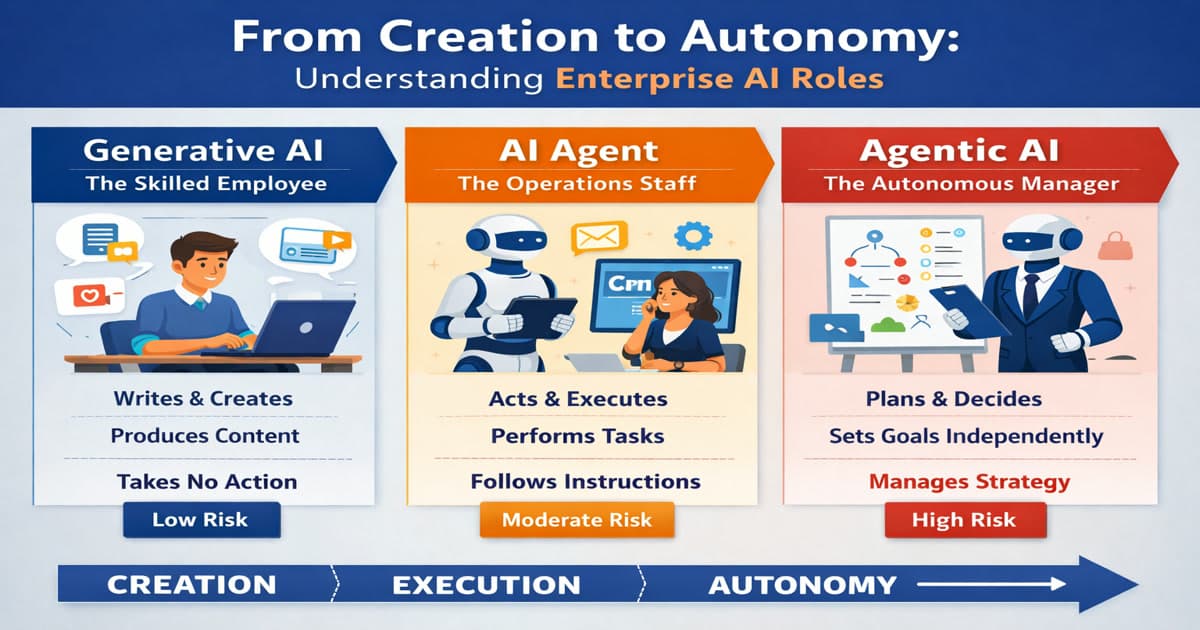
A clear executive guide explaining Generative AI, AI Agents, and Agentic AI using a corporate office analogy to prevent autonomy risks in enterprise AI.
...clarity: 30–60 days with structured review Business impact: Reduced risk, realistic adoption roadmap, controlled AI scaling The Enterprise AI Confusion Today, organizations say: “We need Generative AI.” “Let’s...
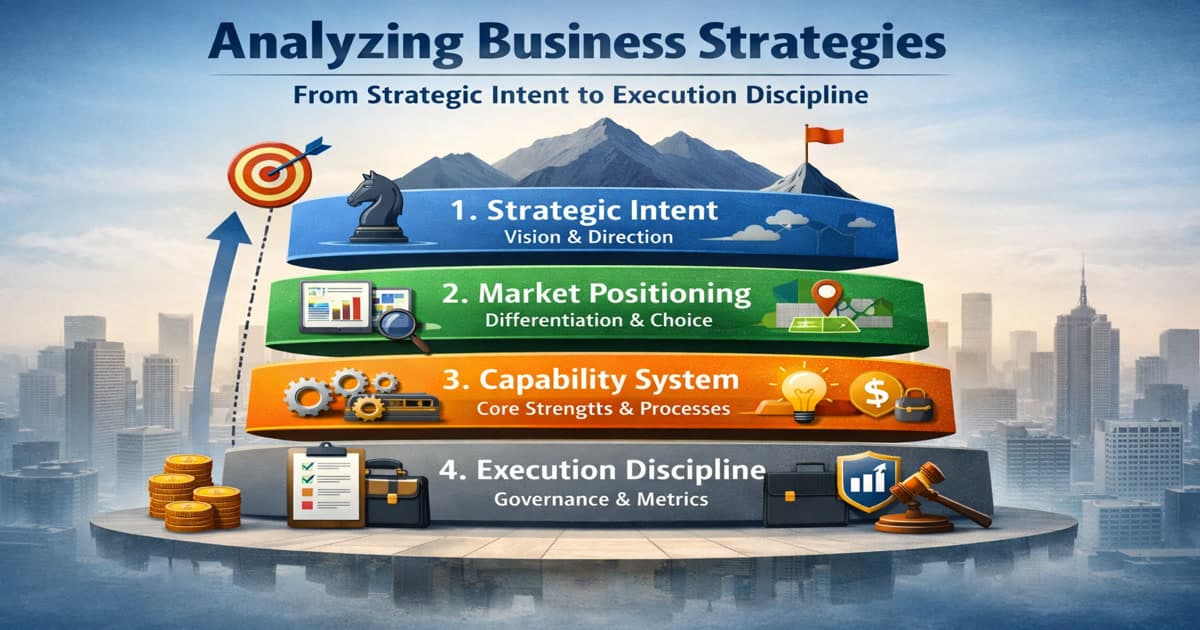
A structured executive guide to analyzing business strategies using a four-layer framework that connects intent, positioning, capability, and execution discipline.
...misalignment. Strategy without capability coherence creates internal friction. Execution & Governance Discipline: The Control Layer Even a well-designed strategy fails without execution governance. You must define: Decision...

Just as buildings must adapt to snow, desert, or tropical climates, software architecture must align with business geography to improve predictability and reduce complexity.
...without considering business environment Key outcome: Reduced complexity, improved system resilience, controlled cloud costs, stronger delivery predictability Time to implement: 60–90 days for environmental...
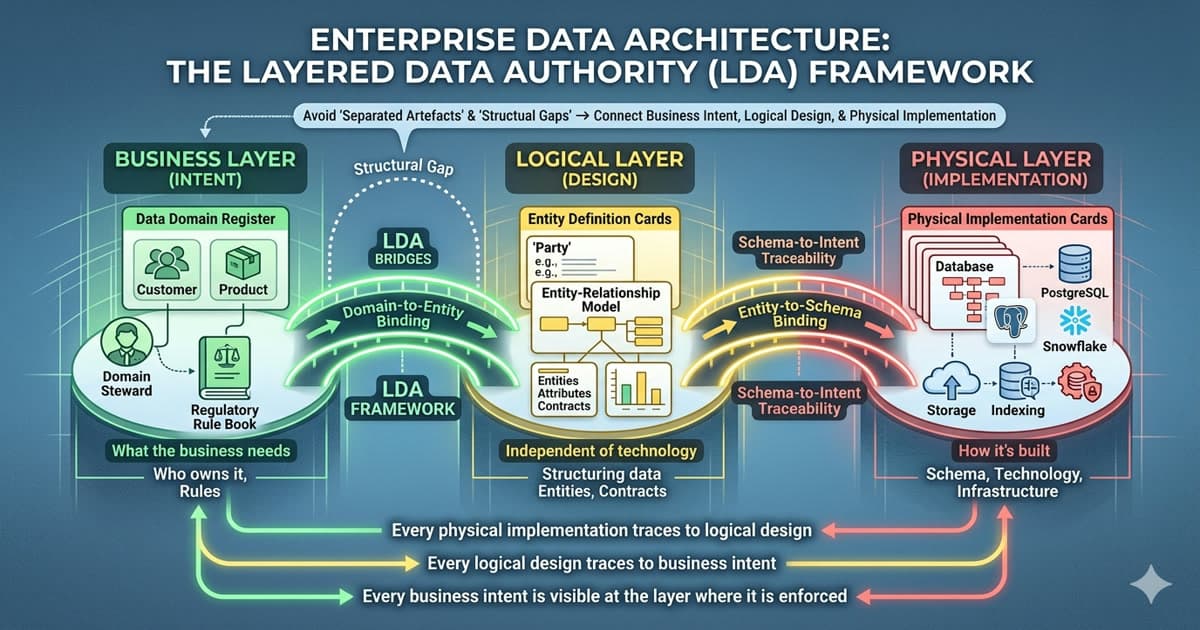
Most enterprises build data architectures one layer at a time. Business, logical, and physical layers exist as separate artefacts owned by separate teams. That separation is the structural gap that makes data estates ungovernable.
...schemas. It describes storage technology. It describes partitioning, indexing, encryption, and access control. This is the layer most engineers live in. This is the layer most architects delegate entirely. That...
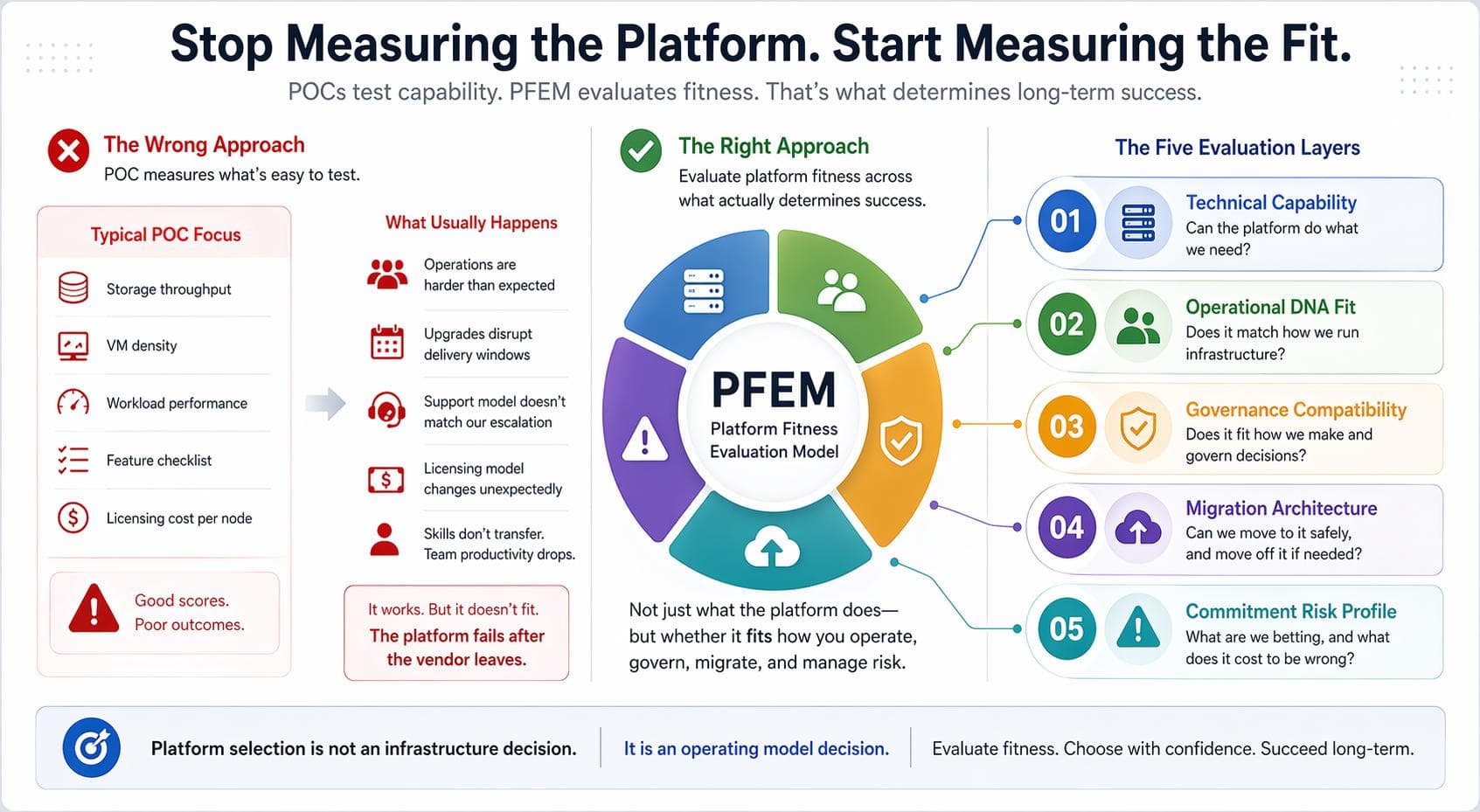
Most organizations evaluate private cloud and HCI platforms by running a technical POC. The POC passes. The platform fails. The reason is structural — and fixable. The Platform Fitness Evaluation Model (PFEM) tells you what to measure instead.
...align with your compliance requirements — data residency, encryption at rest, audit logging, access control? Multi-team governance: If multiple teams operate on this platform, does it support isolation,...
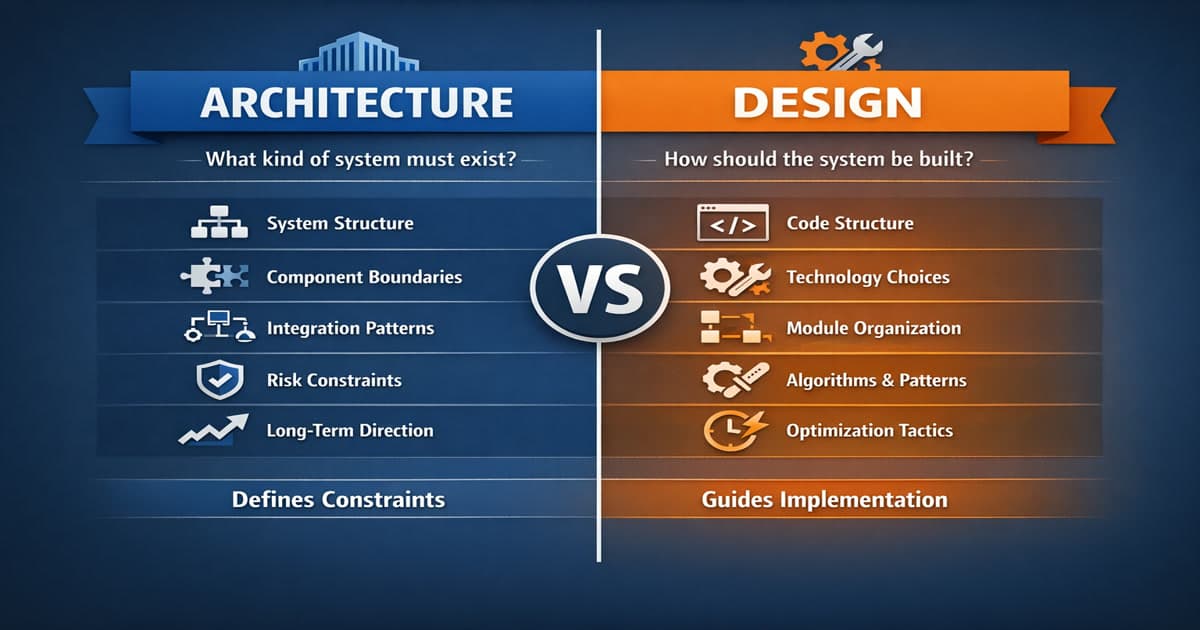
A clear explanation of the difference between architecture and design, why organizations confuse them, and how this confusion creates structural instability in technology systems.
...allowed? Where are data ownership boundaries? What technology constraints exist? What risks must be controlled? Architecture creates the environment in which design operates. It establishes constraints...