Search
Find insights, training programs, and workshops
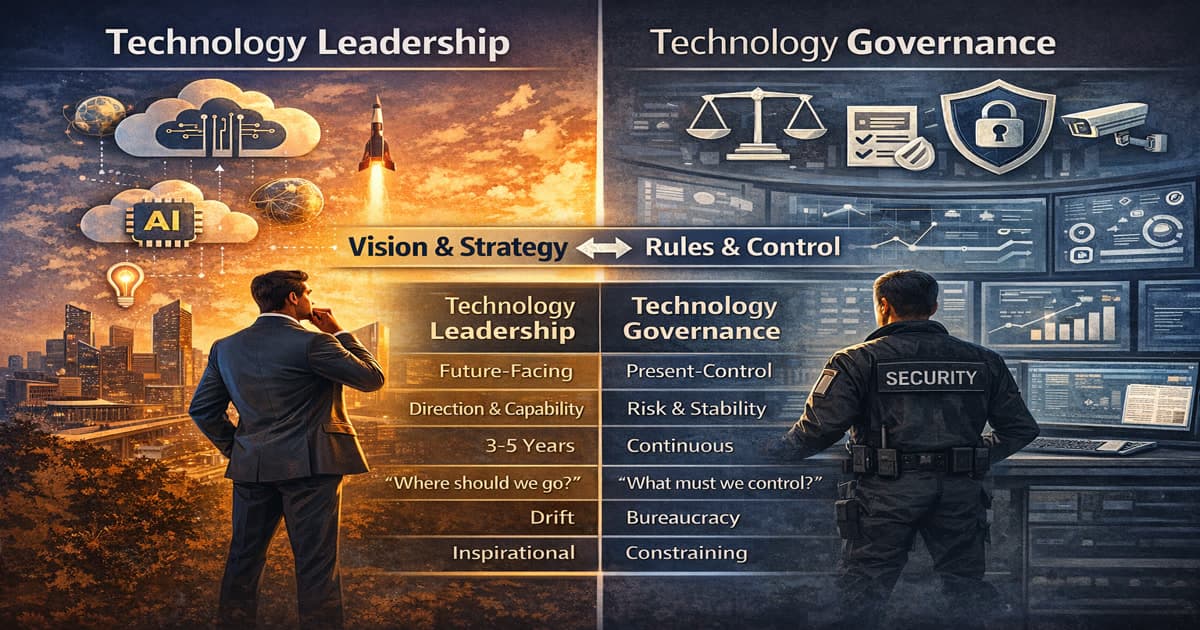
A structured executive guide explaining the difference between Technology Leadership and Technology Governance, and why confusing the two creates instability in enterprise execution.
...Governance Decision rights clarity Architecture review boards Standards enforcement Risk classification Compliance integration Auditability Governance reduces variance. It increases predictability. It...
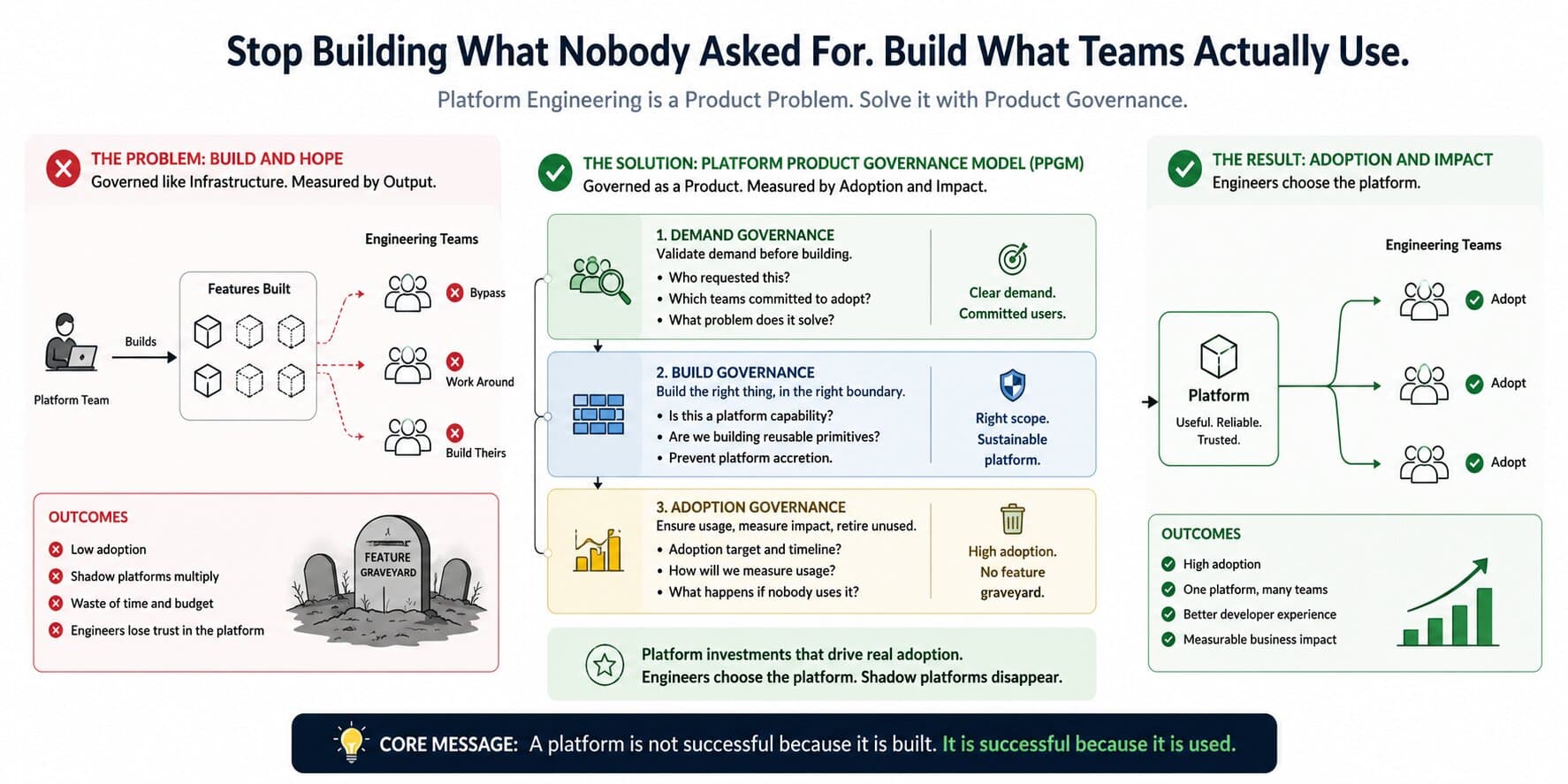
Most platform teams build internal products their engineering teams never chose. Platform adoption is not a marketing problem. It is a product governance problem. Here is the model that fixes it.
...as Product Platform decisions pass through infrastructure governance: Cost review Security review Compliance review Architecture review These gates ensure the platform is safe, compliant, and well-architected. They...
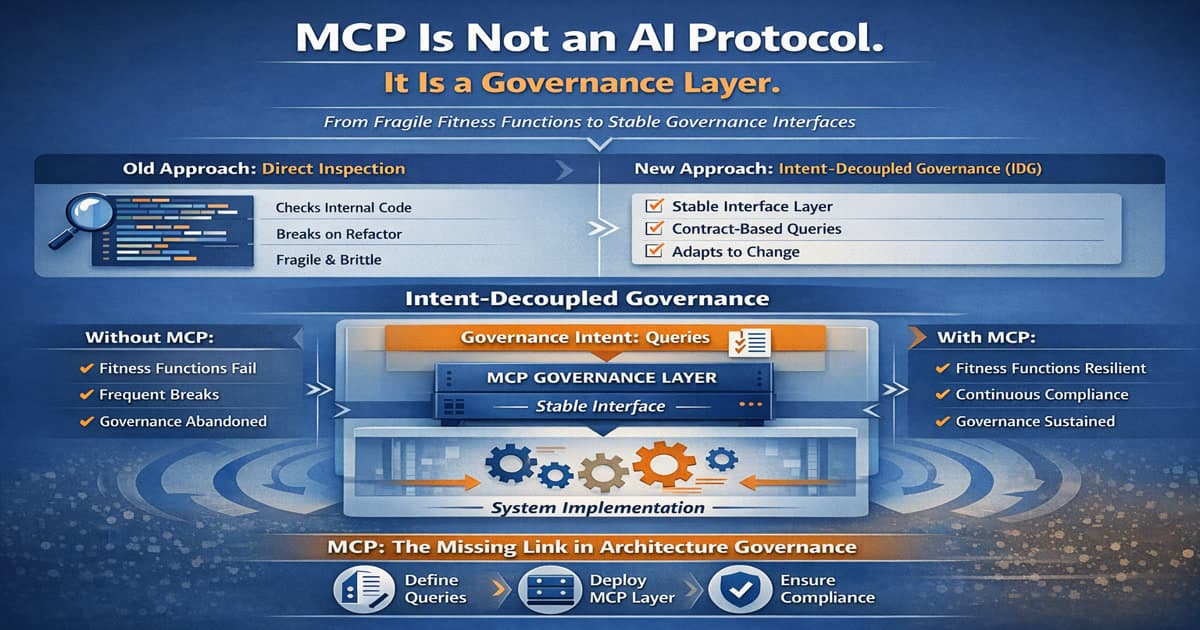
MCP is classified as an AI integration protocol. It is actually a governance primitive — the stable interface layer that architecture fitness functions have been missing for years.
...returns integer → returns boolean and violation list → returns list of offending modules → returns compliance state per storage layer The governance tool calls these endpoints. The delivery team implements...
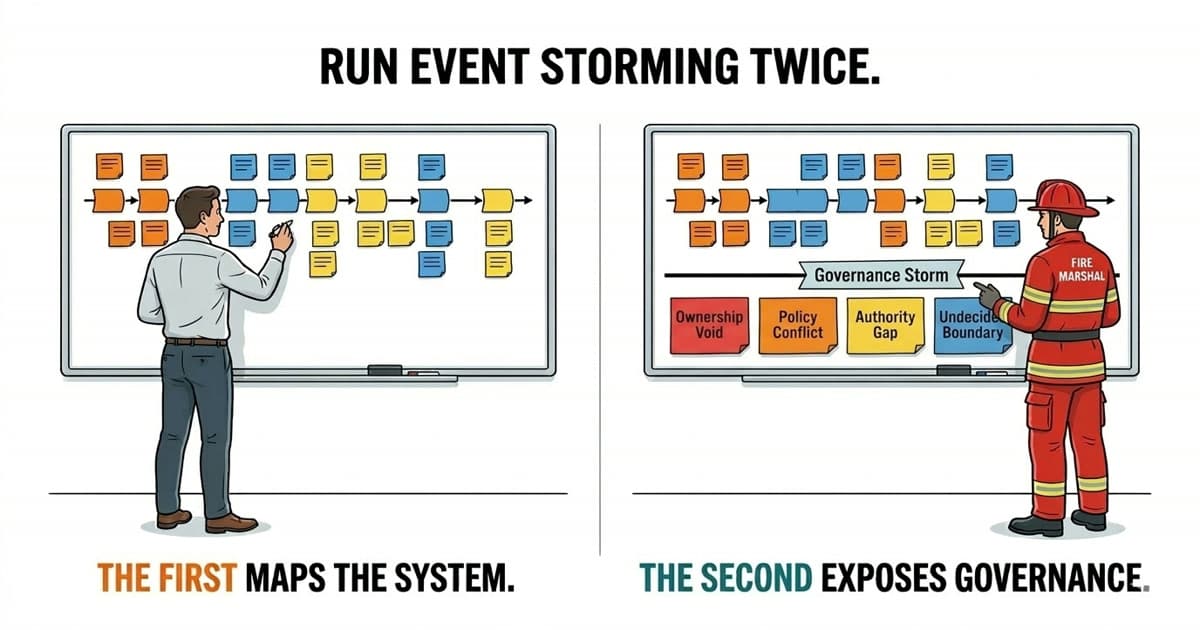
Why the second run of an Event Storming workshop — the one most teams never attempt — is the fastest way to surface governance gaps that architecture diagrams will never show.
...gap — three teams claim the right to trigger FraudDetected event Policy conflict — risk team and compliance team have different responses Customer boundary Undecided — shared between commerce and...
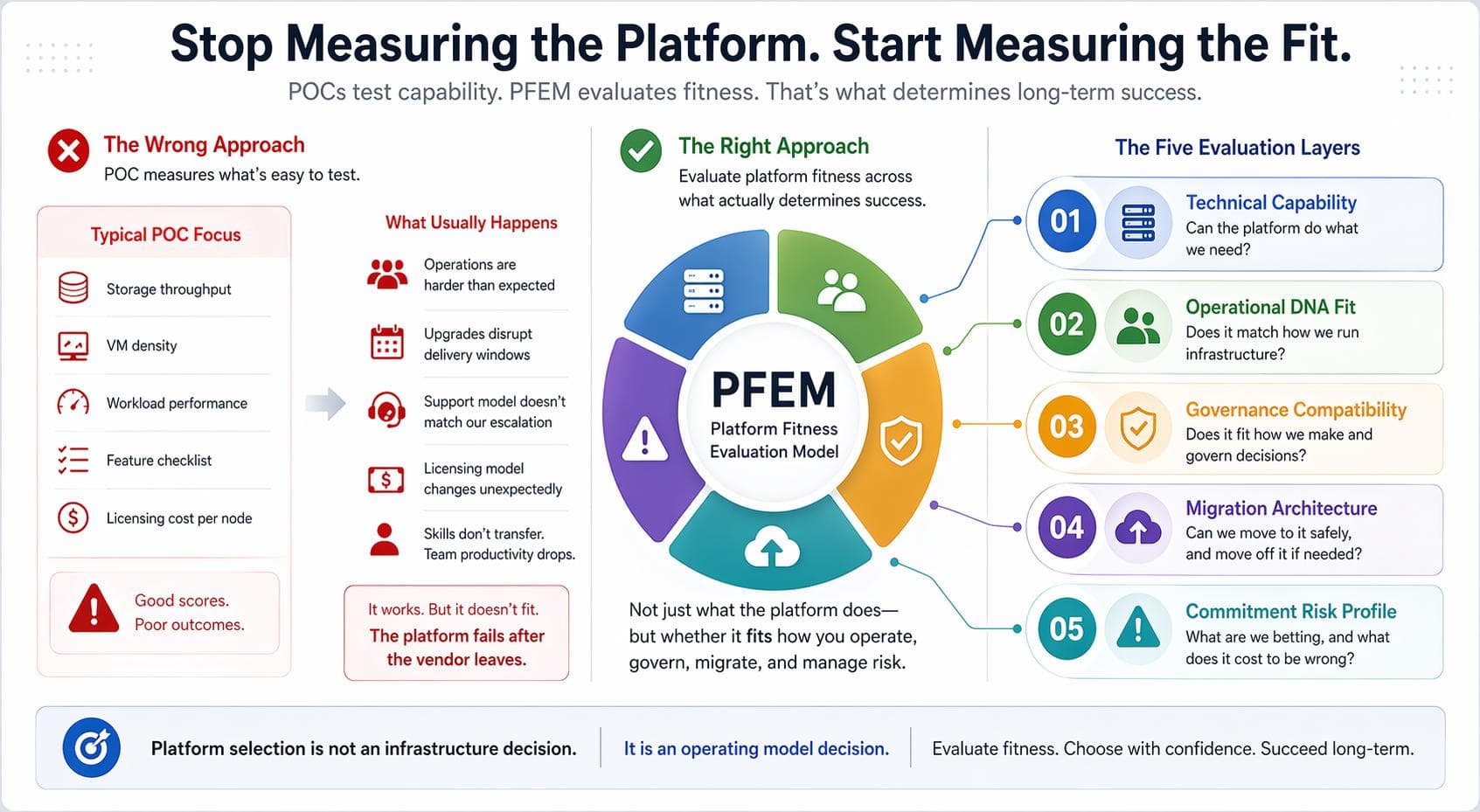
Most organizations evaluate private cloud and HCI platforms by running a technical POC. The POC passes. The platform fails. The reason is structural — and fixable. The Platform Fitness Evaluation Model (PFEM) tells you what to measure instead.
...layer entirely. The core question: Does this platform fit how we make architecture decisions, manage compliance, and maintain governance across our infrastructure? What to evaluate: Decision traceability:...
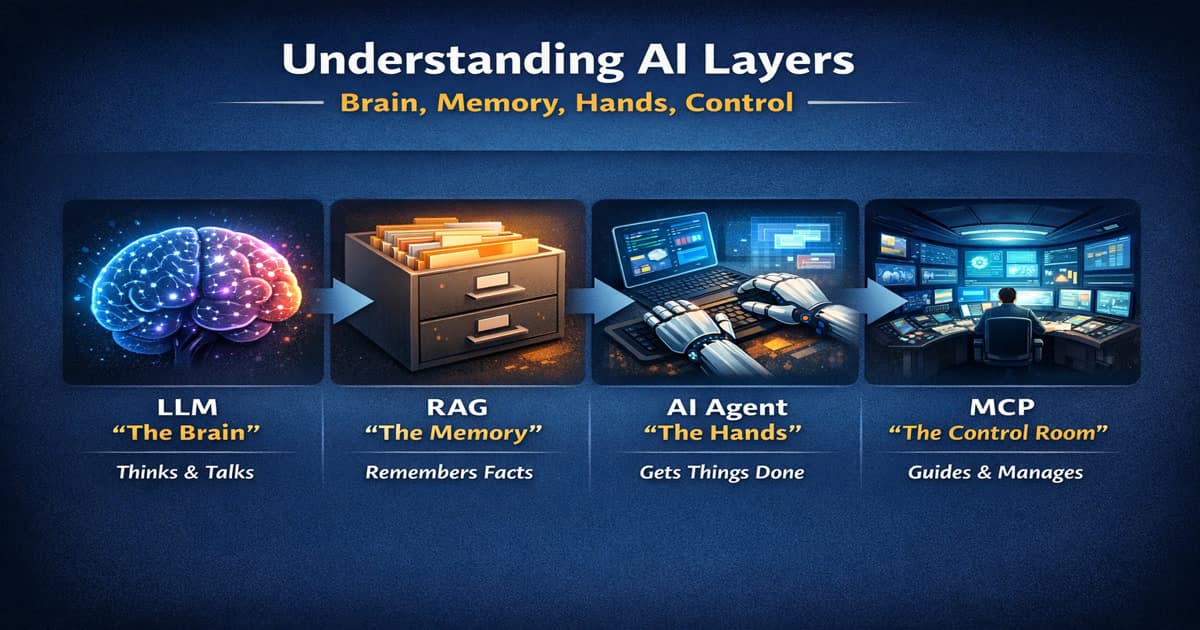
A clear executive guide explaining LLM, RAG, AI Agents, and MCP using the Brain model to prevent enterprise AI instability.
...AI governed like any core platform Resource Estimate: Enterprise Architect AI Engineer Security & Compliance representation Evidence from Practice A FinTech I worked with had teams building AI systems...
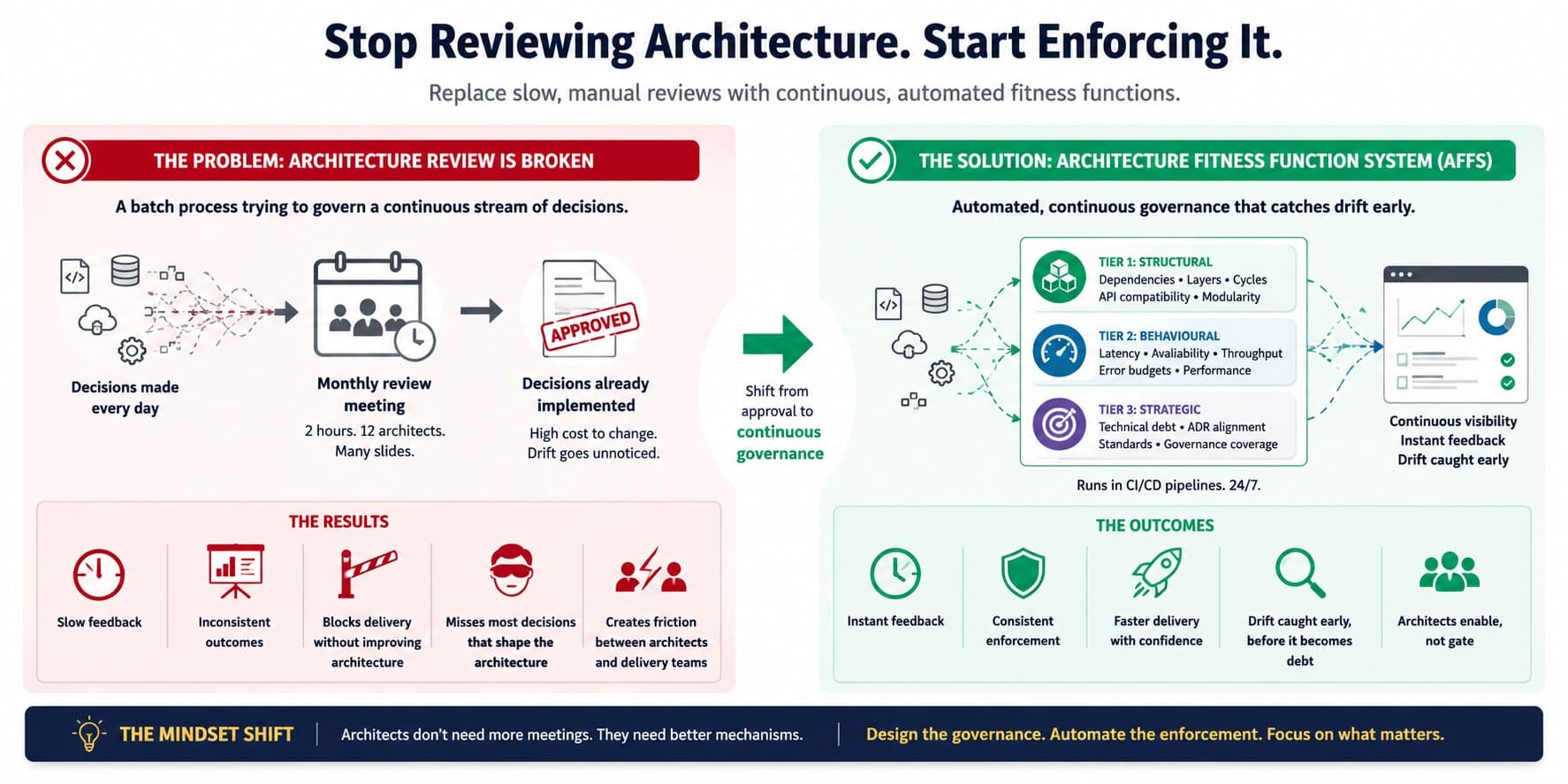
The architecture fitness function literature solved code-level governance. It never made the claim that the board itself becomes optional. Here is the missing argument — and the economics that prove the board is the slower and more expensive option.
...threshold? Architecture entropy — has the modularity score declined beyond the acceptable range? Standards compliance — does every service in the domain conform to the current architecture standard? Decision...

Just as buildings must adapt to snow, desert, or tropical climates, software architecture must align with business geography to improve predictability and reduce complexity.
...integrations. It worked perfectly for their first ten customers. Their first enterprise prospect required HIPAA compliance, multi-tenant isolation, and audit logging. The architecture that was right for the startup...
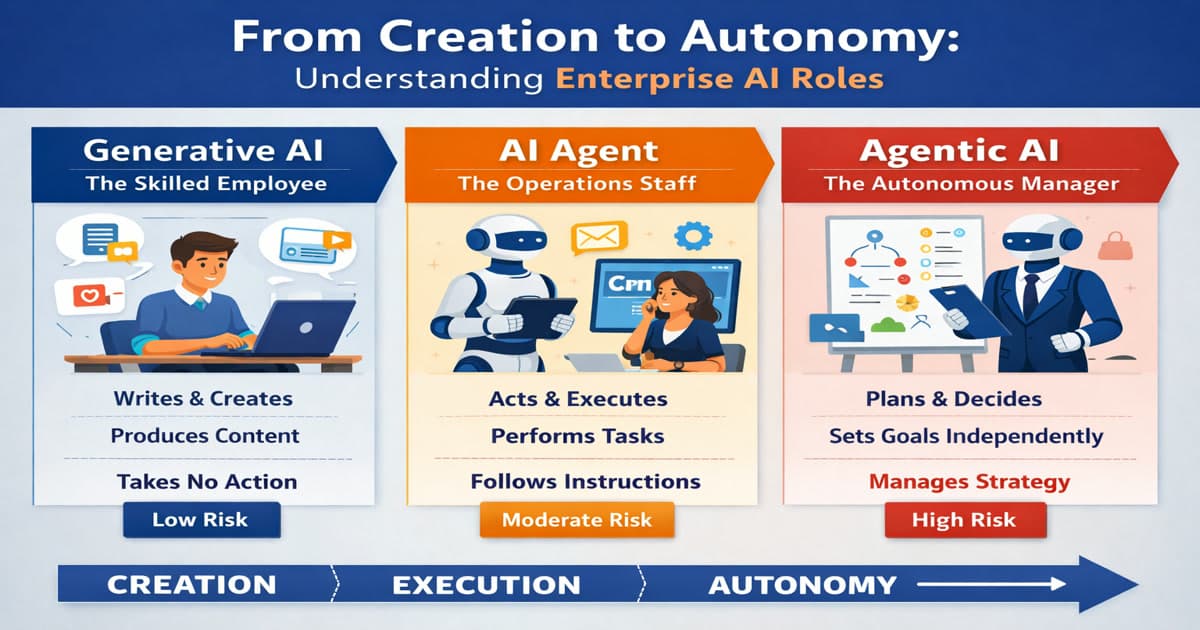
A clear executive guide explaining Generative AI, AI Agents, and Agentic AI using a corporate office analogy to prevent autonomy risks in enterprise AI.
...FinTech I worked with was deploying AI agents that could execute actions across internal systems. The compliance team had approved the data access. The security team had approved the integration. Nobody...
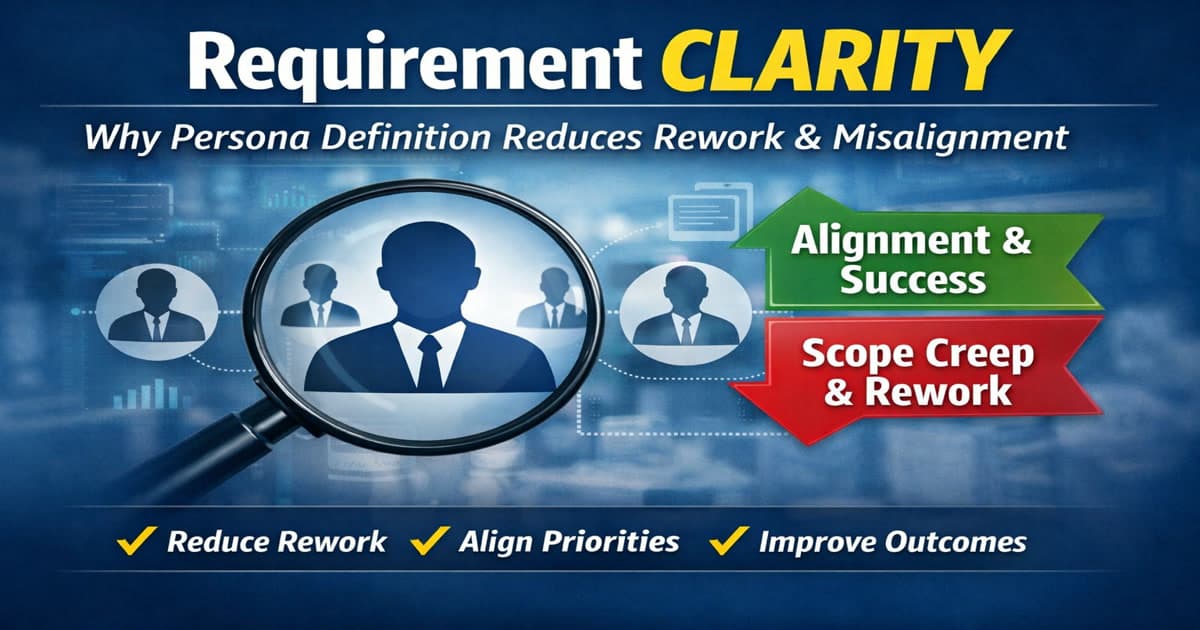
A structured framework for defining personas that eliminates scope creep, reduces rework, and aligns engineering delivery with actual user needs — before development begins.
...requirements referenced "the user" — but "the user" meant different things to the product manager, the compliance team, and the engineering lead. We introduced structured persona definitions: each persona...