Search

Find insights, training programs, and workshops

AI Use Case Discovery & Prioritization
Beginner to Intermediate4-5 hoursAI use case portfolio + prioritisation matrix + pilot shortlist

The hardest AI question is often not how to build, but what to build first. Learn how to find real use cases, assess fit, sequence experiments, and avoid expensive distractions.

...usually be rejected or paused: ideas that solve no clearly owned business problem ideas where no one will change their behaviour even if the system works ideas that depend on data or context the organisation...

1 DayWorkshop
Portfolio DesignPractical
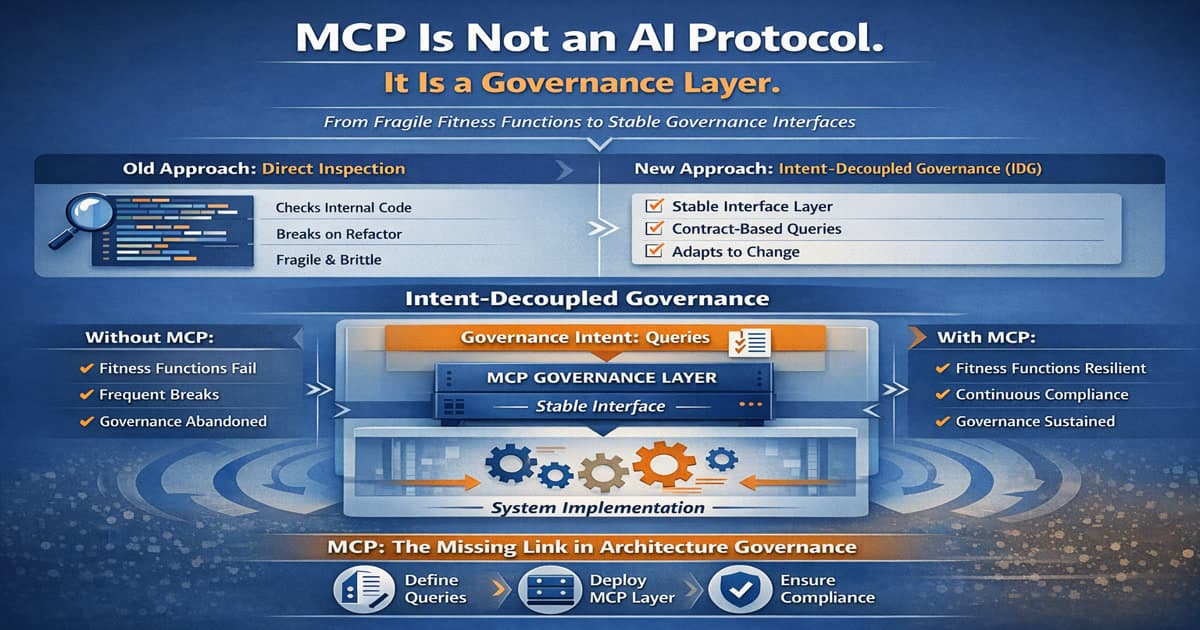
MCP Is Not an AI Protocol. It Is a Governance Layer.

MCP is classified as an AI integration protocol. It is actually a governance primitive — the stable interface layer that architecture fitness functions have been missing for years.

...CTOs, Architecture Leads Problem it solves: Architecture fitness functions that break the moment a team changes an internal implementation — making governance brittle, ignored, and eventually abandoned Key...

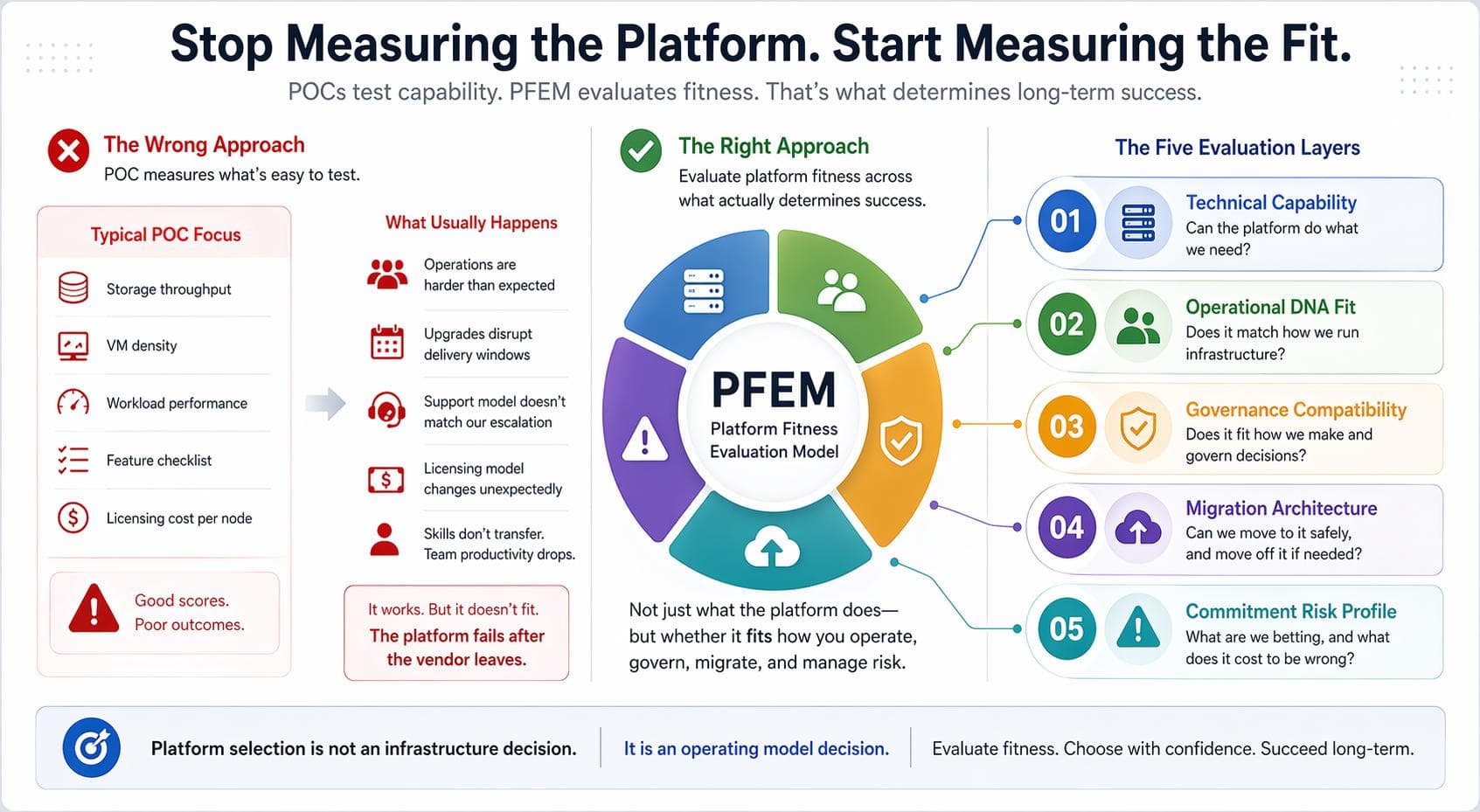
Your HCI Proof of Concept Measures the Wrong Thing.

Most organizations evaluate private cloud and HCI platforms by running a technical POC. The POC passes. The platform fails. The reason is structural — and fixable. The Platform Fitness Evaluation Model (PFEM) tells you what to measure instead.

...delivery windows. The support model does not match how our teams escalate incidents. The licensing model changed. Nobody saw it coming. The skills our team built on the old platform do not transfer. These are...

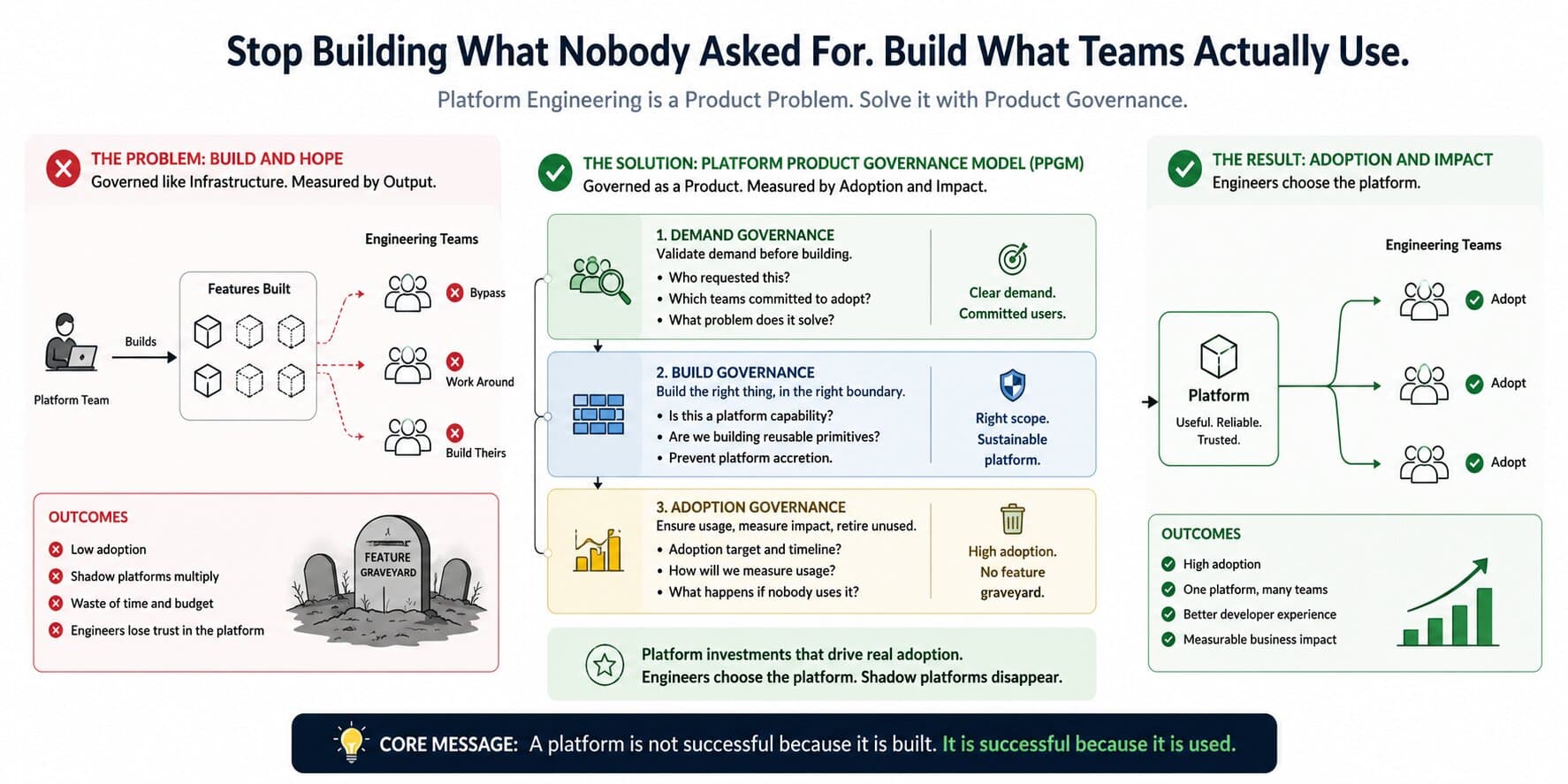
Your Platform Team Is Building a Product Nobody Asked For.

Most platform teams build internal products their engineering teams never chose. Platform adoption is not a marketing problem. It is a product governance problem. Here is the model that fixes it.

...Engineering teams are using their own deployment scripts, their own monitoring dashboards, their own secret management tools. The platform is technically sound. It is simply not being used. The platform team calls...

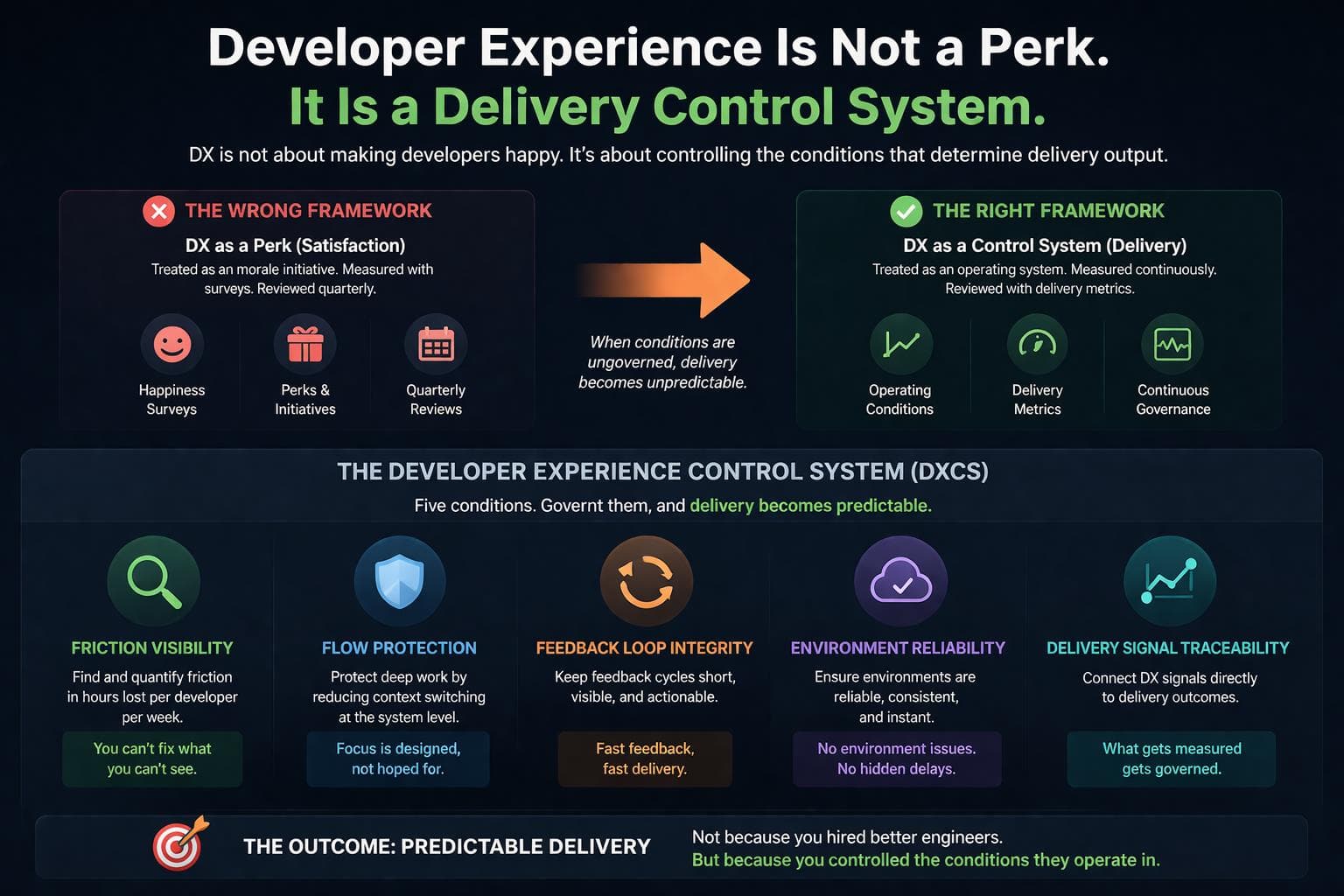
Developer Experience Is Not a Perk. It Is a Delivery Control System.

Developer experience is not about making developers happy. It is about controlling the conditions that determine delivery output. Organizations that treat DX as a perk have removed the control system from their delivery engine without knowing it.

...Architecture boundaries protect it structurally. Feedback Loop Integrity Developers learn whether their change worked hours or days after making it. Feedback is fast, local, and honest at every stage of the...

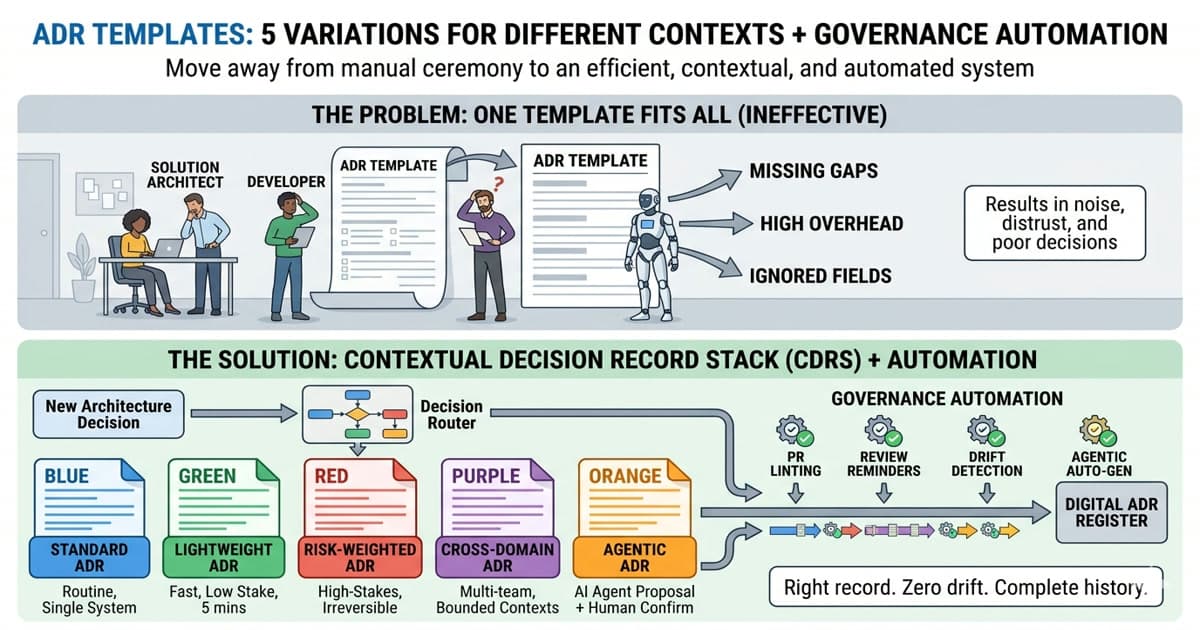
ADR Templates: 5 Variations for Different Contexts + Governance Automation

One ADR template does not fit every architectural context. Five purpose-built variations — for standard decisions, agentic AI, cross-domain impact, fast delivery, and high-risk reversals — plus governance automation to make the system run without manual follow-up.

...decision. The outpatient note captures a 10-minute consultation. The discharge summary captures what changed and what happens next. Same institution. Same patient data. Four different record formats. Because...

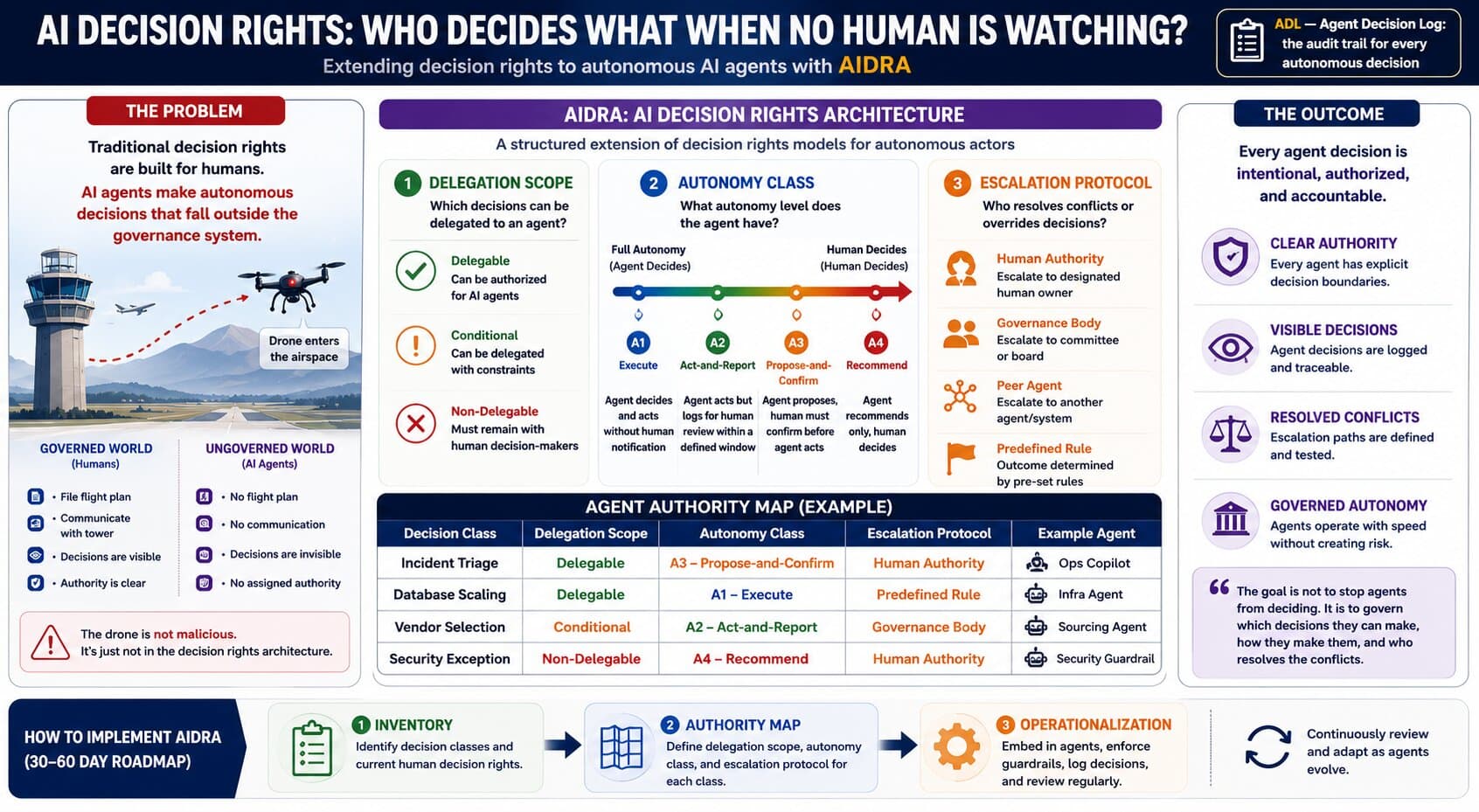
AI Decision Rights: Who Decides What When No Human Is Watching?

Decision rights models assume human decision-makers. AI agents breach that assumption silently. Here is how to extend decision rights to cover autonomous actors before the first ungoverned decision becomes a production incident.

...gate) Non-Delegable The decision class must always be resolved by a human actor Architecture principle changes, vendor selection, regulatory attestation, budget allocation, team structure The Delegation Scope...

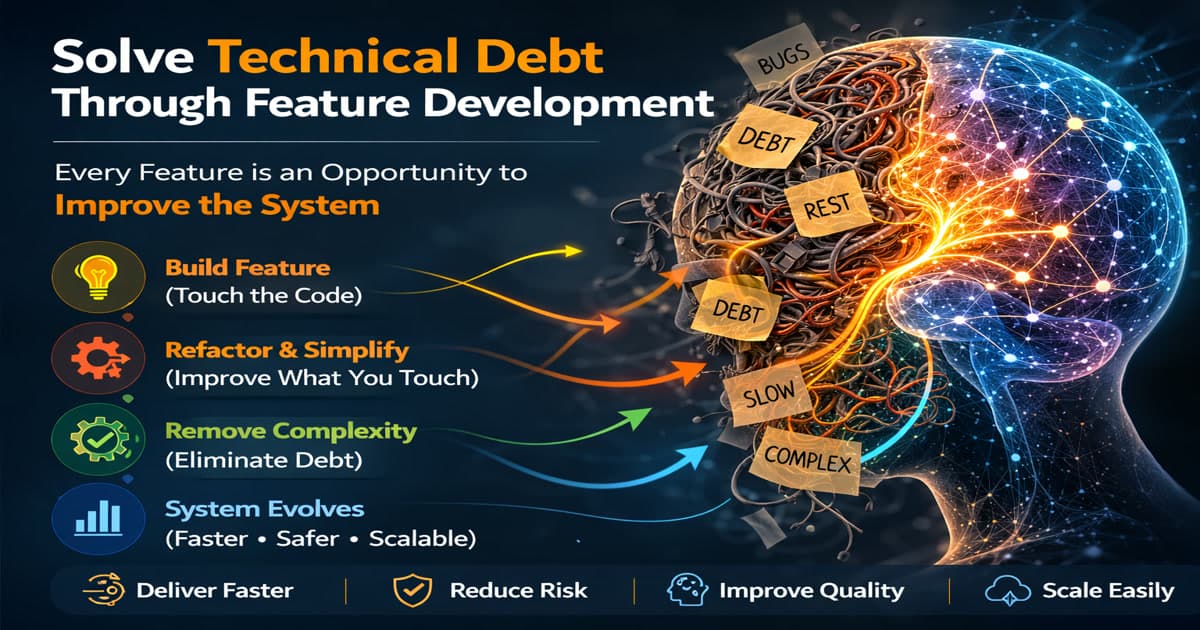
Solving Technical Debt Through Feature Development: Turning Product Delivery into Architecture Improvement

A practical framework explaining how organizations can systematically reduce technical debt while delivering new features, instead of running disruptive modernization programs.

...arrive. Product features take priority. Refactoring is postponed. Months later: Systems become harder to change Development velocity slows Incident risk increases Engineers grow frustrated Eventually leadership...

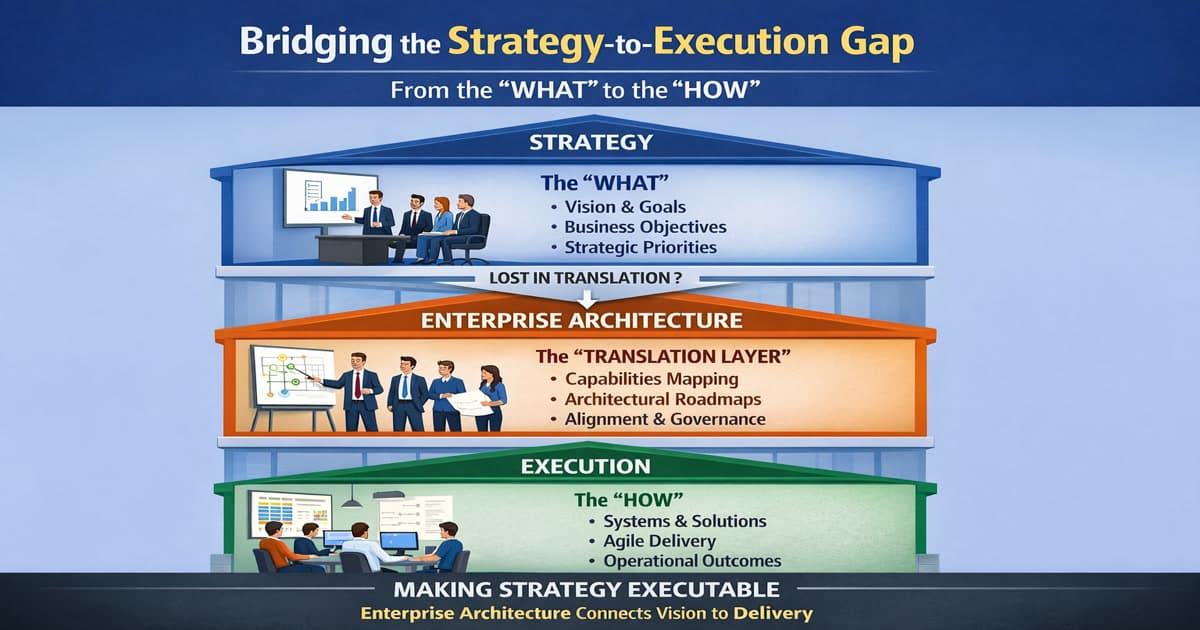
The Strategy-to-Execution Gap: How Enterprise Architecture Bridges the 'What' and the 'How'

Why strategic intent evaporates before it reaches engineering teams — and how Enterprise Architecture creates the translation layer that makes organizational strategy executable.

...shifting — why the thing they built last quarter no longer matters — the answer is never that the strategy changed. The answer is that nobody built the translation layer. The Three-Floor Building Imagine a three-storey...

Architecture Patterns That Travel Across Industries

The patterns that solve your hardest distributed systems problems were already solved — in a submarine, a postal sorting office, and an electrical panel. Most architects never look.

...language. And each domain solves the same underlying problems — concurrency, failure isolation, state management, consistency under load — independently. As if the others do not exist. This is not ignorance....