Search
Find insights, training programs, and workshops
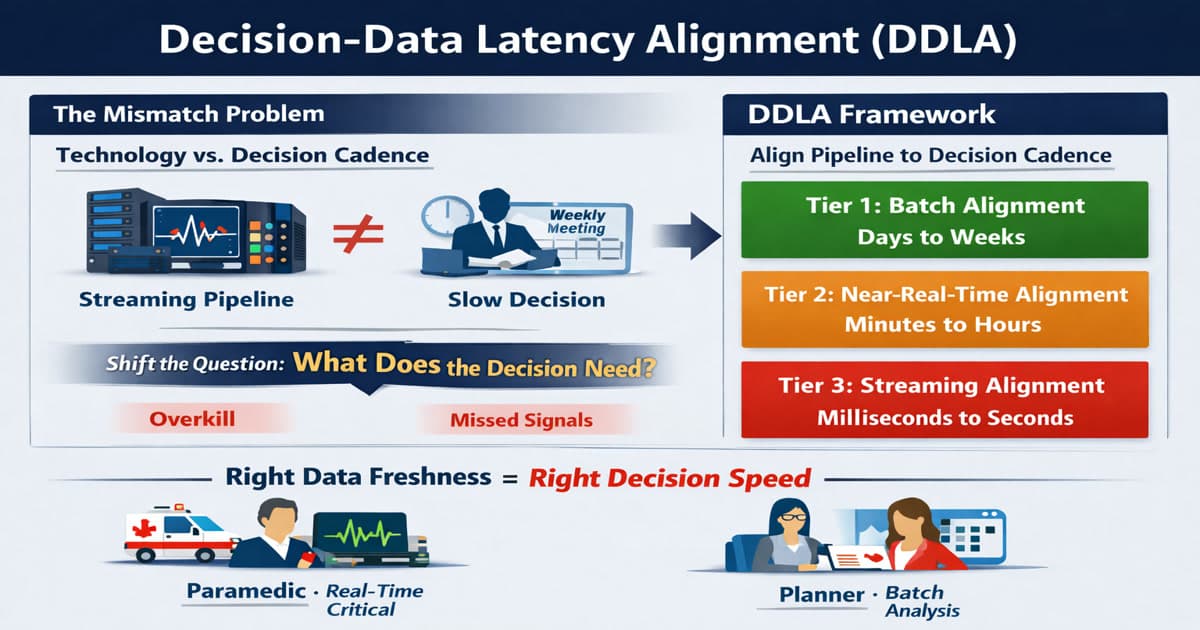
Organisations debate batch versus real-time as if it is a technical preference. It is not. It is a structural mismatch between data freshness and decision cadence — and the mismatch is where the cost lives.
...that matches data freshness to the cadence of the decisions it serves Time to implement: 30–60 days Business impact: Reduced infrastructure waste, eliminated structural failure in latency-sensitive systems,...
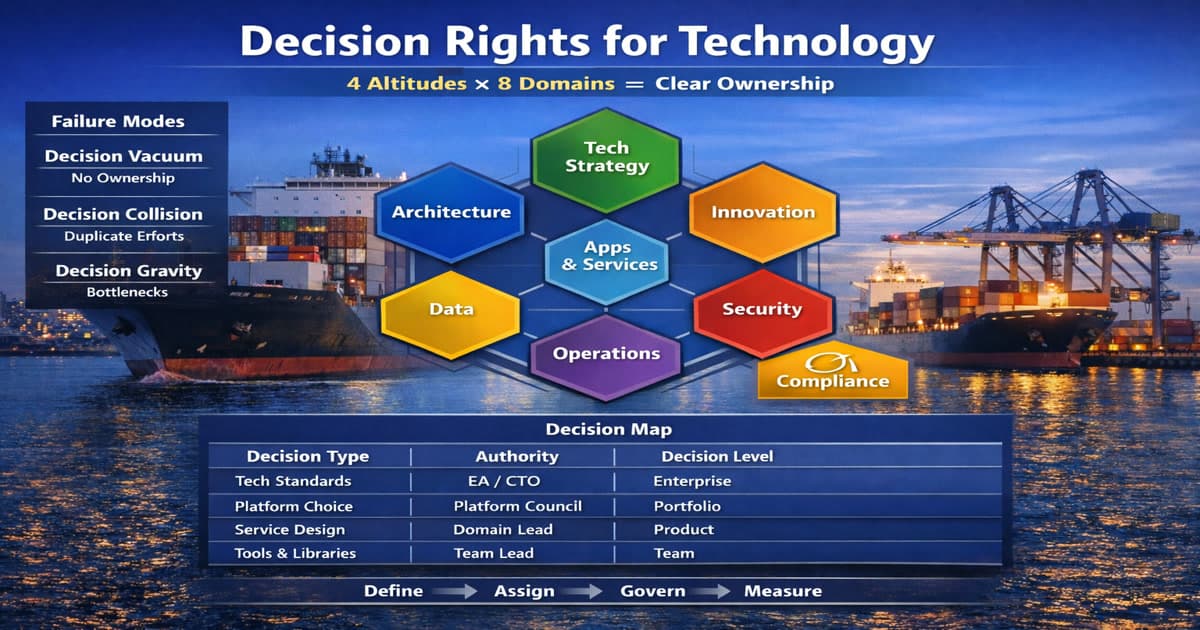
Why most enterprises confuse escalation ladders with decision rights — and how Technology Decision Domain Architecture maps exactly who decides what, at which altitude, before the conflict arrives.
...estate Time to implement: 30–60 days to build a working decision rights architecture for your organization Business impact: Faster delivery decisions, fewer escalation bottlenecks, reduced architecture conflict,...
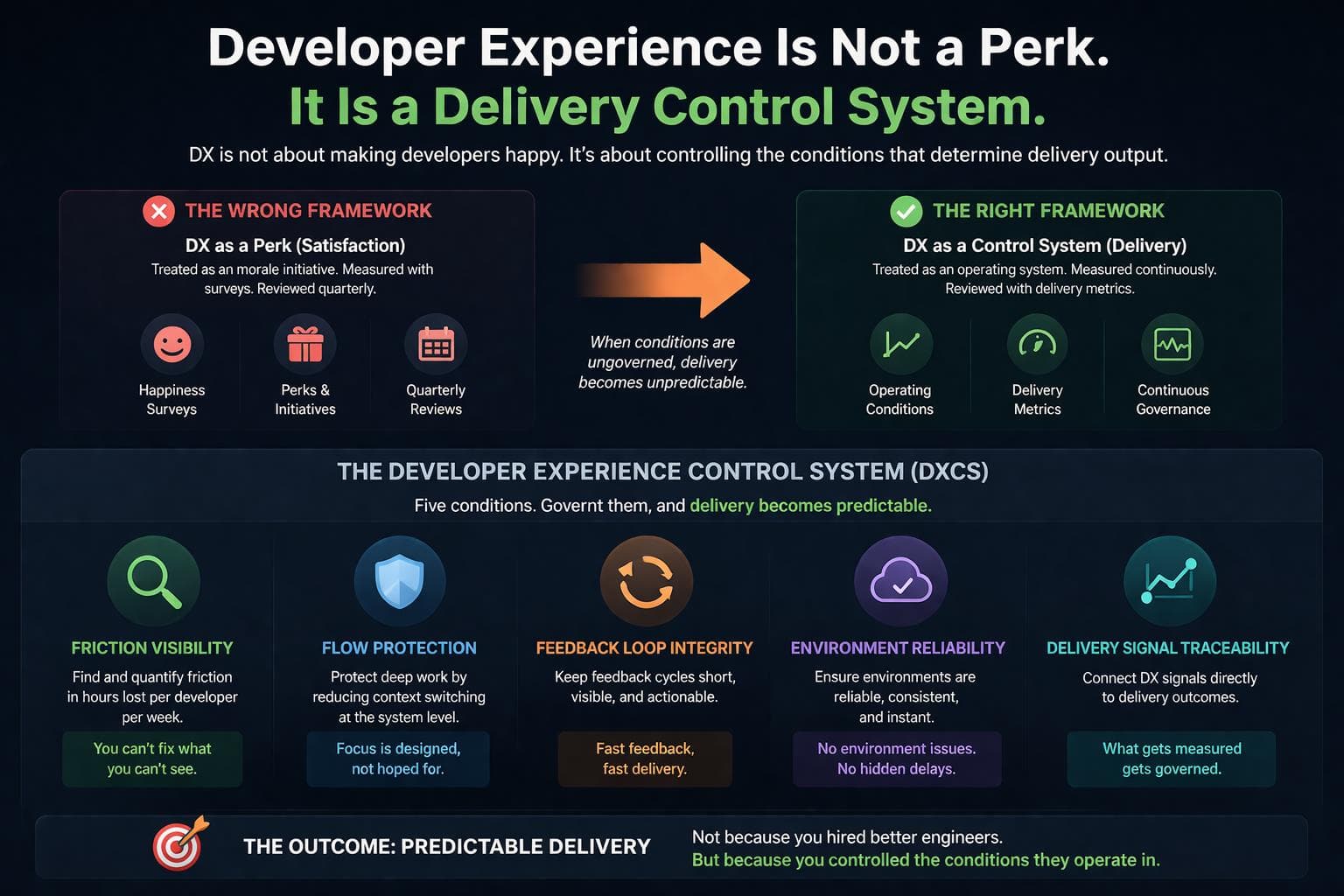
Developer experience is not about making developers happy. It is about controlling the conditions that determine delivery output. Organizations that treat DX as a perk have removed the control system from their delivery engine without knowing it.
...your delivery engine depends on — and gives you a way to govern them Time to implement: 30–60 days Business impact: Delivery becomes predictable. Not because you hired better engineers. Because you controlled...
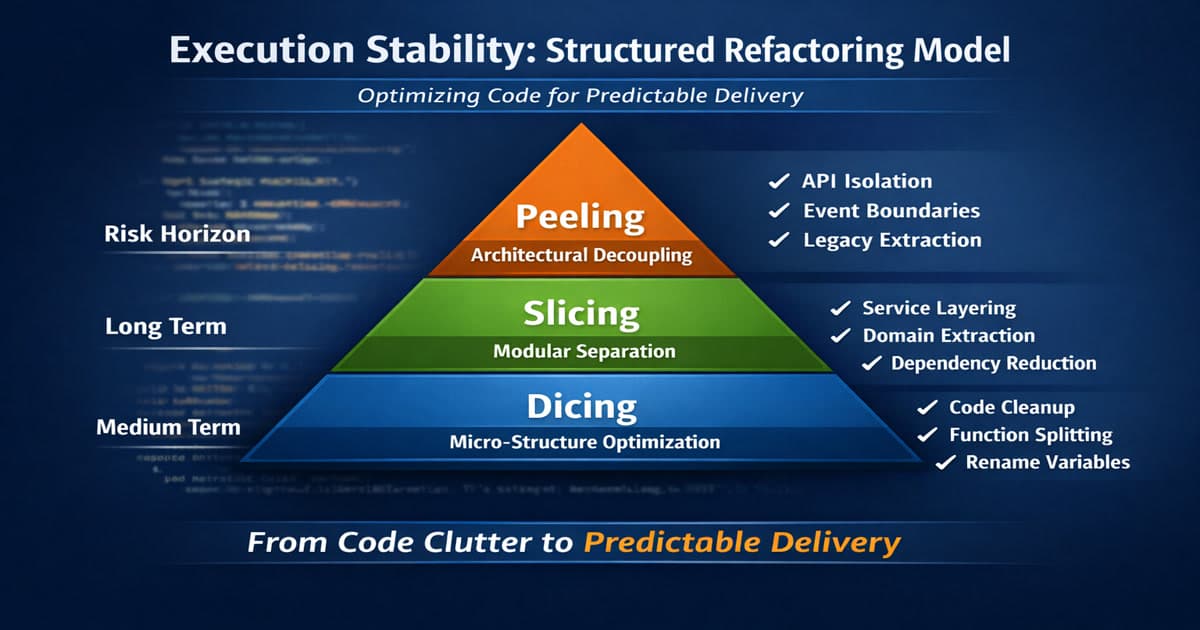
A practical framework for reducing delivery slowdown caused by unmanaged structural code complexity — improving cycle time, reducing regression risk, and clarifying ownership boundaries.
...improved cycle time, clearer ownership boundaries Time to implement: 60–90 days for structured rollout Business impact: Higher engineering throughput without increasing headcount The Silent Slowdown in Growing...
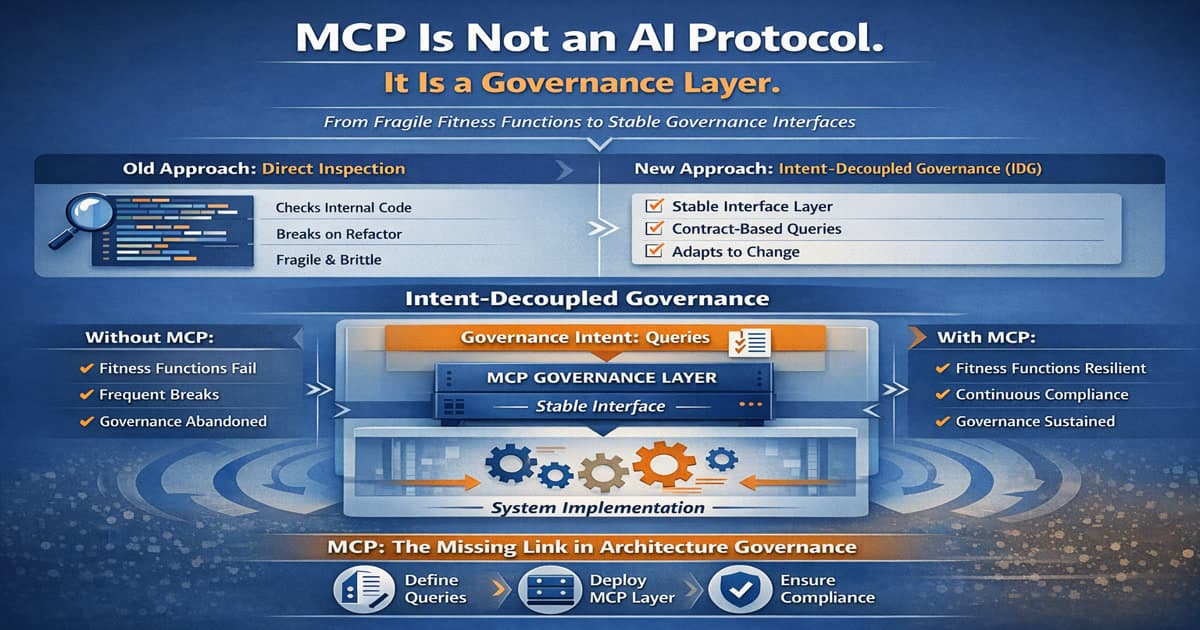
MCP is classified as an AI integration protocol. It is actually a governance primitive — the stable interface layer that architecture fitness functions have been missing for years.
...implement: 30–60 days to introduce MCP-backed governance gates across your active architecture boundaries Business impact: Fitness functions that do not break when teams refactor, governance that survives delivery...
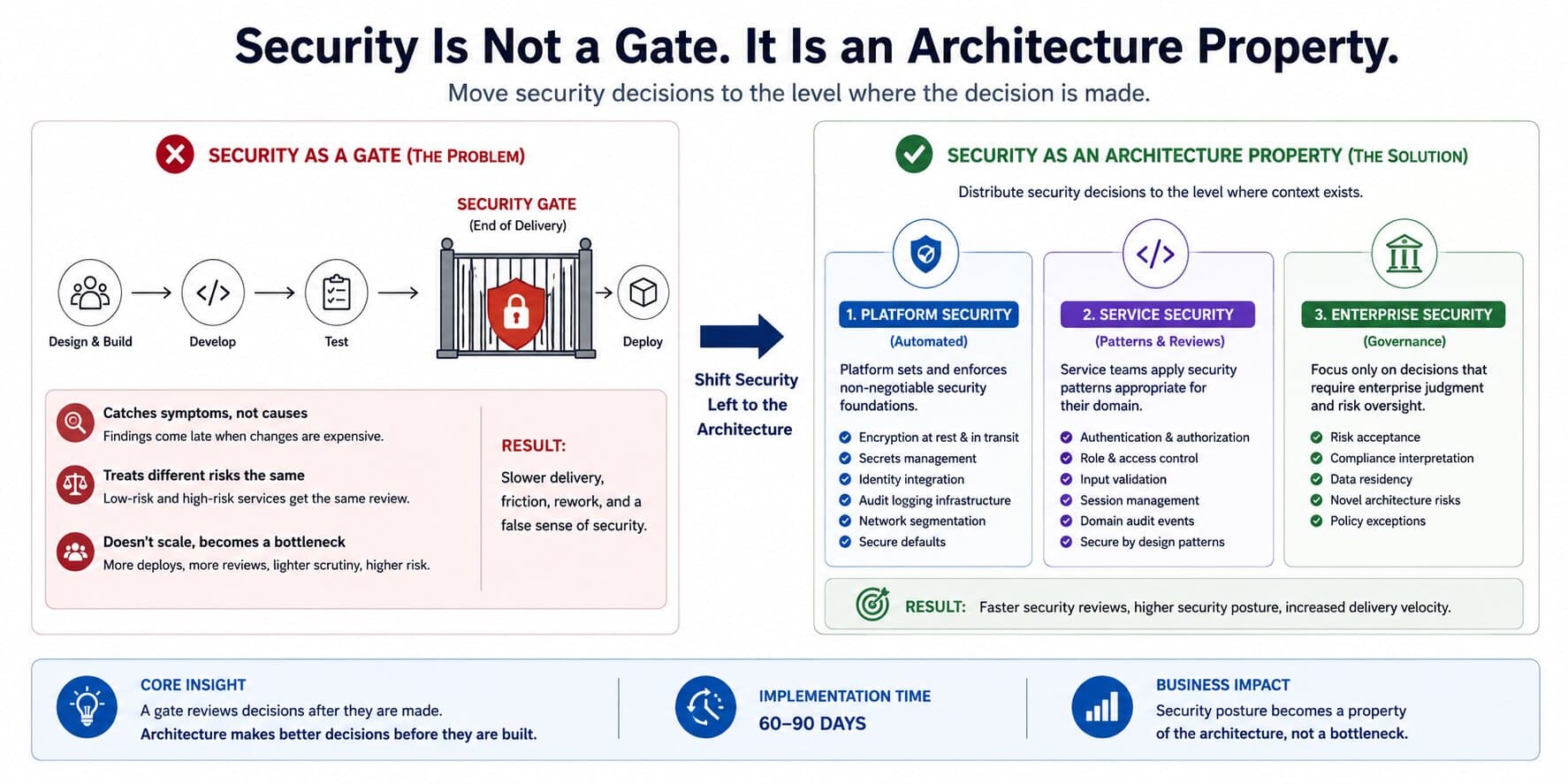
Security is treated as a gate at the end of delivery. It should be an architecture property designed into three distinct boundaries. Here is the model that fixes the friction between security and delivery.
...the level where they can be made accurately, quickly, and accountably Time to implement: 60–90 days Business impact: Security reviews get faster, delivery velocity increases, and the security posture becomes...
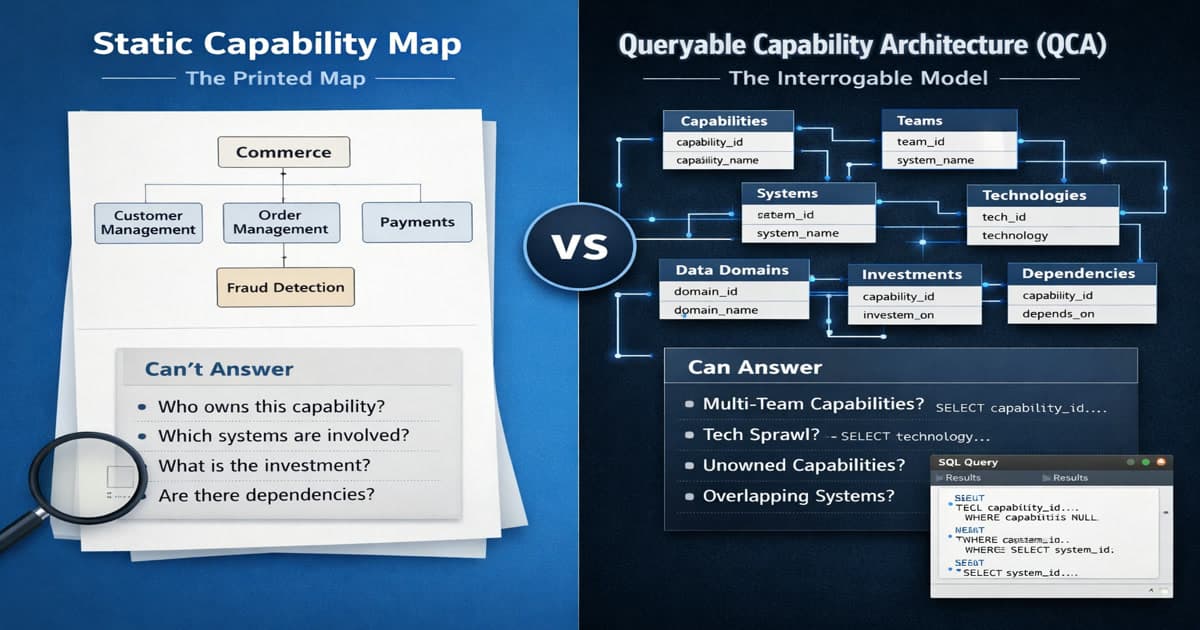
Why traditional capability maps fail to support governance decisions and how Queryable Capability Architecture turns static maps into interrogable decision systems.
...architecture intelligence Time to implement: 30–60 days to build a structured queryable capability model Business impact: Better governance decisions, clearer ownership visibility, reduced technology duplication,...
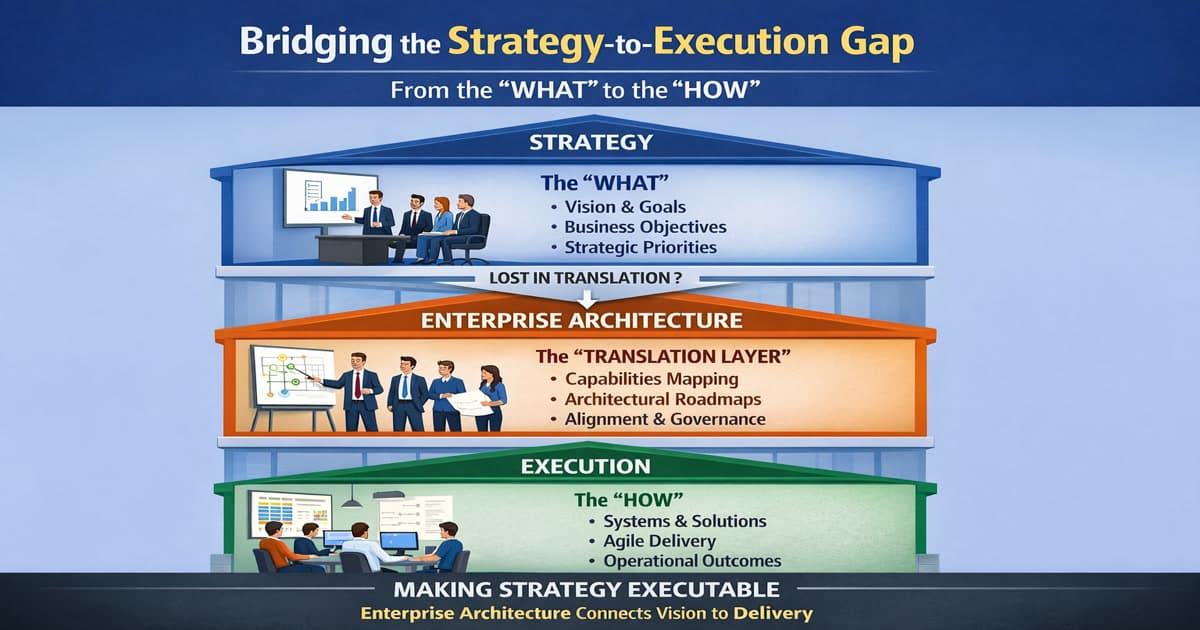
Why strategic intent evaporates before it reaches engineering teams — and how Enterprise Architecture creates the translation layer that makes organizational strategy executable.
...delivery Time to implement: 30–60 days to establish the translation architecture for one strategic priority Business impact: Delivery teams that build the right things, investment aligned to strategic intent,...
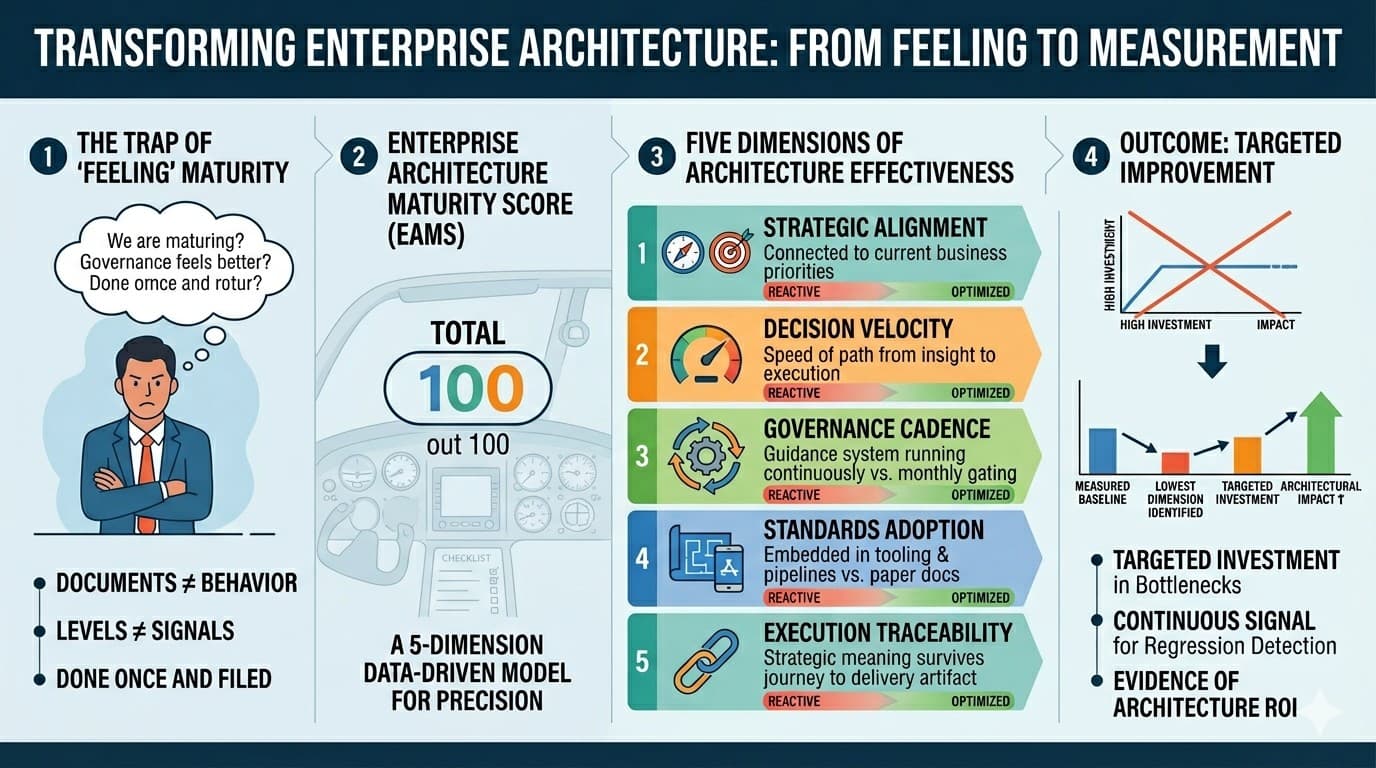
Enterprise architecture maturity is not a feeling. It is a score. Organizations that cannot measure their architecture maturity cannot improve it. The EAMS model gives you the score.
...(EAMS) that tells you exactly where you are before you decide where to go Time to implement: 30–60 days Business impact: Architecture investment targets the right layer at the right time The Pilot Does Not...
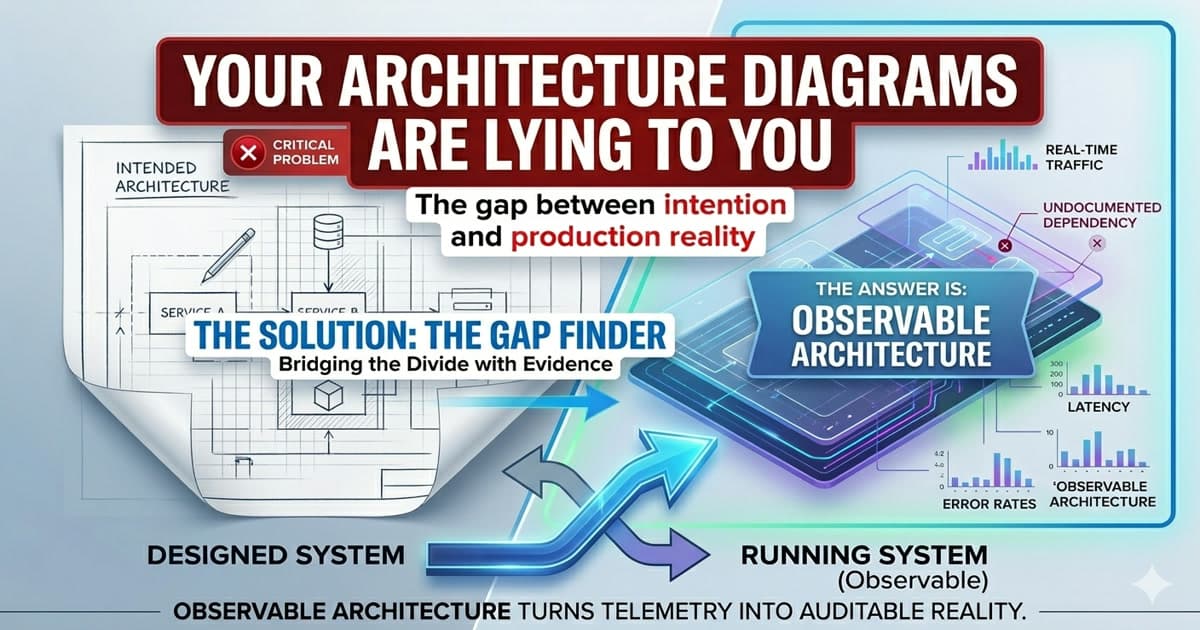
Why architecture diagrams describe a system that no longer exists, and how Observable Architecture uses production telemetry to reveal what is actually running.
...running Time to implement: 30–60 days to introduce Observable Architecture as a governance practice Business impact: Earlier risk detection, accurate security reviews, reduced production surprises, and...